

Hyundai Santa Fe Gas Tank Size: Complete Guide by Model and Year

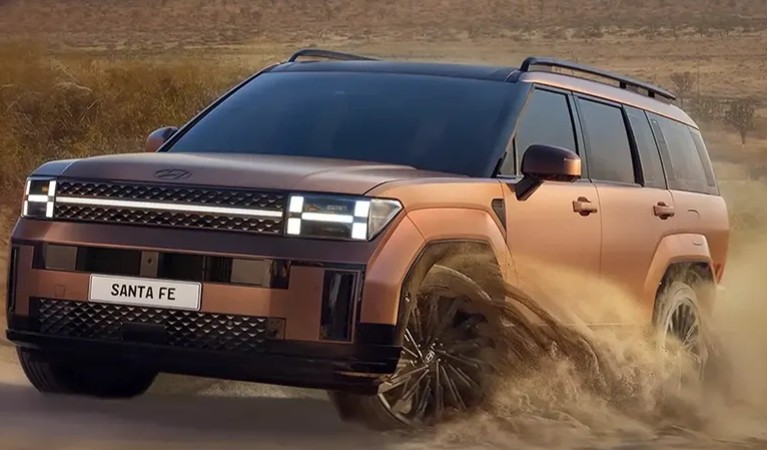
If you are wondering about the Hyundai Santa Fe gas tank size, the quick answer is that there is no single capacity that covers every Santa Fe ever made. Tank size has changed across generations, powertrains, model years, and markets.
For example, the 2026 Hyundai Santa Fe sold in the United States has a 17.7-gallon fuel tank, and Hyundai lists that same capacity across its current gasoline trims. That works out to roughly 67 liters.
Go back a few years, however, and the picture changes. The 2020 U.S.-market Santa Fe carried an 18.8-gallon tank, while the 2022 lineup varied dramatically according to powertrain: 17.7 gallons for internal-combustion and hybrid versions and only 12.4 gallons for the plug-in hybrid.
So when we ask, "How big is a Hyundai Santa Fe gas tank?" the model year matters.
Let's untangle the numbers and, more importantly, see what they mean when we actually pull into a gas station.
Content in this publication
- What Is the Hyundai Santa Fe Gas Tank Size?
- Hyundai Santa Fe Fuel Tank Capacity at a Glance
- 2026 Hyundai Santa Fe Gas Tank Size
- 2026 Hyundai Santa Fe Hybrid Gas Tank Size
- 2022 Hyundai Santa Fe Gas Tank Size
- 2021 Hyundai Santa Fe Gas Tank Size
- 2020 Hyundai Santa Fe Fuel Tank Capacity
- 2019 Santa Fe XL Gas Tank Size
- Hyundai Santa Fe Tank Capacity in Liters
- Does Every Hyundai Santa Fe Have the Same Tank Size?
- How Much Does It Cost to Fill a Hyundai Santa Fe?
- Why Can't I Put 17.7 Gallons Into My Santa Fe?
- How Far Can a Hyundai Santa Fe Go on a Full Tank?
- Does AWD Change the Hyundai Santa Fe Gas Tank Size?
- Is a Bigger Gas Tank Better?
- How to Find Your Exact Santa Fe Fuel Tank Capacity
- Why Does the Santa Fe Fuel Gauge Drop Slowly at First?
- Is It Bad to Run a Santa Fe Close to Empty?
- Gas Tank Size and Santa Fe Road Trips
- Hyundai Santa Fe Gas Tank Size by Market
- Does the Santa Fe Hybrid Have a Smaller Tank?
- What Size Gas Tank Does the Future Santa Fe Use?
- What Owners Should Remember Before Filling Up
- Conclusion: How Big Is a Hyundai Santa Fe Gas Tank?
- Frequently Asked Questions
What Is the Hyundai Santa Fe Gas Tank Size?
For the current U.S.-market Santa Fe, the number to remember is 17.7 gallons, or approximately 67 liters. Hyundai's official 2026 specifications list a 17.7-gallon fuel tank across the gasoline Santa Fe lineup.
That is a fairly substantial reservoir for a family SUV. It gives the Santa Fe enough fuel capacity for highway travel without requiring a tank so enormous that we are dragging around unnecessary fuel weight.
The latest Santa Fe Hybrid also uses gasoline alongside its electric motor. Hyundai's current U.S. Santa Fe Hybrid combines a 1.6-liter turbocharged four-cylinder engine with an electric motor and advertises fuel economy of up to 37 mpg city and 36 mpg highway, depending on configuration.
That combination means the tank's physical size tells only half the story. Efficiency determines how far those gallons can take us.
Hyundai Santa Fe Fuel Tank Capacity at a Glance
Here is the easiest way to understand several important recent U.S. Santa Fe configurations.
| Santa Fe version | Fuel tank capacity |
|---|---|
| 2026 Santa Fe gasoline | 17.7 gal / approx. 67 L |
| 2027 Santa Fe gasoline | 17.7 gal / approx. 67 L |
| 2027 Santa Fe Hybrid | 17.7 gal / approx. 67 L |
| 2022 Santa Fe gasoline | 17.7 gal |
| 2022 Santa Fe Hybrid | 17.7 gal |
| 2022 Santa Fe Plug-in Hybrid | 12.4 gal |
| 2021 Santa Fe gasoline | 18.8 gal |
| 2021 Santa Fe Hybrid | 17.7 gal |
| 2020 Santa Fe | 18.8 gal |
| 2019 Santa Fe XL | 18.8 gal |
Hyundai's official documentation supports these capacities for the referenced U.S. models.
That table also reveals something important: generation alone does not always determine tank capacity. Powertrain matters too.
2026 Hyundai Santa Fe Gas Tank Size
The 2026 Hyundai Santa Fe gas tank holds 17.7 gallons in the United States. Hyundai lists that capacity across the current gasoline trims.
In liters, we are talking about roughly 67 liters.
That figure is especially useful when comparing the Santa Fe with other midsize or three-row SUVs because fuel capacity affects how frequently we stop rather than simply how much fuel the engine burns.
Imagine two vehicles delivering identical fuel economy. Give one a bigger tank and it travels farther between fill-ups. Simple.
But the larger tank also costs more to fill from nearly empty.
How Far Can a 17.7-Gallon Santa Fe Travel?
Tank capacity alone cannot tell us precisely how far a Santa Fe will go because range changes with fuel economy, drivetrain, weather, traffic, speed, tires, elevation, cargo and driving behavior.
Still, we can estimate.
Hyundai rates the 2026 Santa Fe SE at 20 mpg city, 29 mpg highway and 24 mpg combined with front-wheel drive. HTRAC all-wheel-drive versions are rated slightly differently.
At a theoretical 24 mpg combined:
17.7 gallons × 24 mpg = approximately 425 miles
That is a mathematical estimate, not a promise of real-world range. We normally cannot consume every measurable drop in the tank, and driving conditions rarely match an EPA test perfectly.
Even so, around 400 miles between substantial refueling stops is entirely plausible for an efficiently driven gasoline Santa Fe.
Why Your Dashboard Range May Show Something Different
Ever filled the tank and wondered why the dashboard says 390 miles one week and 430 the next?
Nothing necessarily broke.
The distance-to-empty calculation typically reacts to recent fuel consumption. Spend several days crawling through city congestion and the vehicle expects the next tank to disappear faster. Finish a relaxed highway trip and the estimate can rise.
Think of it less like a ruler and more like a weather forecast: useful, intelligently calculated, but still dependent on changing conditions.
2026 Hyundai Santa Fe Hybrid Gas Tank Size
The Santa Fe Hybrid deserves special attention because owners sometimes assume hybrids must have tiny gasoline tanks.
Not necessarily.
The current U.S. Santa Fe Hybrid combines gasoline power with an electric motor and is designed to use the two energy sources strategically rather than relying exclusively on electricity. Hyundai advertises up to an EPA-estimated 37 mpg city and 36 mpg highway for the current model, depending on specification.
The clever part is not simply carrying fuel. It is stretching each gallon.
Why the Hybrid Can Travel Farther on Similar Fuel Capacity
Suppose we put equal quantities of gasoline in two Santa Fe models. If one burns fewer gallons per mile, it naturally travels farther.
That's why tank-size comparisons can mislead us.
A 20-gallon SUV averaging 20 mpg has a theoretical 400-mile range. A 17.7-gallon hybrid averaging 36 mpg could mathematically exceed 600 miles under corresponding idealized conditions.
The smaller number at the pump does not necessarily mean the shorter road trip.
Efficiency is the multiplier.
2022 Hyundai Santa Fe Gas Tank Size
The 2022 model year provides a perfect example of why we should check the powertrain before ordering replacement fuel-system parts or calculating range.
According to Hyundai's U.S. specifications, 2022 gasoline and hybrid Santa Fe models have 17.7-gallon tanks, while the Santa Fe Plug-in Hybrid has a 12.4-gallon tank.
That difference is substantial.
Why shrink the PHEV tank?
Because a plug-in hybrid carries another major energy source: a rechargeable high-voltage battery. The vehicle can complete part of its travel using electricity, reducing its dependence on gasoline.
Gasoline Santa Fe vs Hybrid vs PHEV
This is where terminology matters.
A regular gasoline Santa Fe relies on its combustion engine for propulsion.
A conventional hybrid still gets all of its external energy from gasoline but uses regenerative braking, a battery and an electric motor to improve efficiency.
A plug-in hybrid can receive significant energy directly from an electrical outlet.
Consequently, comparing tank capacities without considering powertrain design is like comparing backpacks while ignoring what is already inside them.
2021 Hyundai Santa Fe Gas Tank Size
Hyundai's U.S. specifications list the 2021 Santa Fe gasoline model at 18.8 gallons, while the hybrid is listed at 17.7 gallons.
Again, we see that the badge on the tailgate does not tell the whole story.
For owners, the difference between 18.8 and 17.7 gallons is only 1.1 gallons. Yet at highway speeds, another gallon can represent a meaningful chunk of driving range.
This is why someone upgrading from an older Santa Fe can occasionally feel as though the newer vehicle accepts less fuel even when nothing is wrong.
It may simply have a smaller tank.
2020 Hyundai Santa Fe Fuel Tank Capacity
The 2020 U.S.-market Hyundai Santa Fe has an 18.8-gallon fuel tank, according to Hyundai's official specifications.
That's approximately 71 liters.
Compared with today's 17.7-gallon U.S. capacity, the difference is about 1.1 gallons.
Is that huge?
No.
But we can notice it at the pump.
If the 2020 vehicle and a newer Santa Fe achieved identical fuel economy, the older model could theoretically travel slightly farther simply because it could carry more gasoline.
Real life, of course, adds another layer because fuel efficiency has also changed with powertrain development.
2019 Santa Fe XL Gas Tank Size
One detail that frequently creates confusion in used-car searches is the Santa Fe XL.
Hyundai's official 2019 U.S. specifications list the Santa Fe XL fuel capacity at 18.8 gallons.
The XL was the larger Santa Fe derivative from that period, so we should not casually transfer its measurements to every vehicle carrying a Santa Fe badge.
When buying a used SUV, always identify exactly what sits in front of us: model year, engine, drivetrain, body version and market specification.
That approach beats relying on a generic online answer every time.
Hyundai Santa Fe Tank Capacity in Liters
For readers outside the United States, gallons can feel about as convenient as measuring a swimming pool with coffee cups.
The common recent 17.7-gallon U.S. capacity converts to approximately 67 liters.
Interestingly, Hyundai Australia directly specifies the current Santa Fe with a 67-liter fuel tank.
An 18.8-U.S.-gallon tank, meanwhile, is approximately 71 liters.
U.S. Gallons vs Imperial Gallons
Here's an easy trap.
An American gallon and an Imperial gallon are not the same size.
When Hyundai U.S. specifications show 17.7 gallons, they mean U.S. gallons. Someone in the UK converting the figure should therefore avoid assuming those are Imperial gallons.
For international comparisons, liters are usually the cleanest common language.
Does Every Hyundai Santa Fe Have the Same Tank Size?
No.
This is probably the most important takeaway from the entire guide.
Santa Fe fuel capacity varies according to year, generation, powertrain and sales market. Hyundai's own documentation demonstrates those variations: the 2020 U.S. model was rated at 18.8 gallons, the 2022 PHEV used 12.4 gallons, and current Australian Santa Fe specifications state 67 liters.
So a generic answer such as "the Hyundai Santa Fe tank is 18.8 gallons" can be perfectly correct for one vehicle and perfectly wrong for another.
Why Hyundai Changes Fuel Tank Capacity
Several engineering considerations can influence tank size:
- Powertrain packaging and hybrid battery placement
- Vehicle platform and chassis design
- Expected fuel economy and desired driving range
- Emissions equipment and fuel-system packaging
- Passenger and cargo-space priorities
- Regional specifications and homologation requirements
- Weight and efficiency targets
A fuel tank is not an isolated plastic or metal box hiding underneath the vehicle. Engineers must fit it around suspension components, exhaust systems, driveline hardware, structural elements and, in electrified models, batteries.
Every cubic inch underneath a modern SUV has competition.
How Much Does It Cost to Fill a Hyundai Santa Fe?
Once we know the tank size, calculating a theoretical full-tank cost becomes easy.
For a 17.7-gallon Santa Fe:
Fuel price per gallon × 17.7 = theoretical tank cost
If fuel costs $3.50 per gallon, for example:
$3.50 × 17.7 = $61.95
At $4.00 per gallon:
$4.00 × 17.7 = $70.80
However, we almost never pump the full rated capacity during an ordinary fill-up. When the low-fuel warning appears, there is still fuel remaining in the system.
So don't be surprised if your 17.7-gallon Santa Fe accepts only 14, 15 or 16 gallons after the warning illuminates.
The tank did not shrink overnight.
Why Can't I Put 17.7 Gallons Into My Santa Fe?
This question comes up constantly with almost every vehicle.
Suppose our owner's information says 17.7 gallons. We drive until the low-fuel warning appears, pull into a station, and the pump stops after 15.2 gallons.
Where did the other 2.5 gallons go?
Nowhere.
Rated tank capacity is not the amount required every time the warning light appears. Manufacturers intentionally leave a usable safety margin before complete fuel exhaustion.
The pump may also shut off before the absolute physical maximum depending on nozzle sensitivity, vehicle angle, fuel foaming and vapor behavior.
Should We Keep Pumping After the Nozzle Clicks?
Generally, treating the automatic click as the finish line is the sensible habit.
Repeatedly topping off a modern vehicle is unnecessary and can interfere with space intended for fuel expansion and the evaporative-emissions system.
We gain very little useful range by squeezing a few extra drops into the neck.
Think of the click as the gas station saying, "We're done here."
How Far Can a Hyundai Santa Fe Go on a Full Tank?
Range varies tremendously.
For a gasoline Santa Fe, we can make a rough estimate by multiplying usable tank capacity by expected fuel economy.
A current 17.7-gallon Santa Fe achieving approximately 24 mpg combined would mathematically produce about 425 miles before considering reserve and real-world variation.
The hybrid changes the equation dramatically because its gasoline engine receives help from the electric system. Hyundai advertises fuel economy reaching the mid-30-mpg range for current U.S. Santa Fe Hybrid configurations.
That means a hybrid can squeeze significantly more travel from a similar volume of gasoline.
What Reduces Santa Fe Driving Range?
Cold weather can hurt economy. So can short journeys, prolonged idling, heavy acceleration, high-speed driving, roof cargo, towing, low tire pressure, mountainous terrain and heavy loads.
AWD versions can also post different official fuel-economy figures from front-wheel-drive versions. Hyundai's current U.S. specifications, for example, show different EPA estimates between some FWD and HTRAC AWD Santa Fe configurations.
In other words, two neighbors can own nearly identical Santa Fes yet travel noticeably different distances per tank.
Does AWD Change the Hyundai Santa Fe Gas Tank Size?
On many recent U.S.-market Santa Fe trims, selecting HTRAC AWD changes fuel-economy ratings but does not necessarily change the listed tank capacity. Hyundai's 2026 specifications show the current gasoline lineup with a 17.7-gallon tank while EPA estimates vary by drivetrain and trim.
That distinction matters.
Tank capacity is how much fuel we can carry.
Fuel economy is how quickly we consume it.
Driving range is the result of the two working together.
People often mix those three ideas, but separating them makes vehicle specifications much easier to understand.
Is a Bigger Gas Tank Better?
Not automatically.
A bigger tank gives us potentially longer intervals between refueling stops, which is fantastic on road trips. But carrying extra fuel also means carrying extra mass.
Meanwhile, an efficient powertrain can outperform a larger tank.
Would we rather have a 20-gallon vehicle averaging 18 mpg or a 17.7-gallon vehicle averaging 30 mpg?
The second vehicle would generally travel much farther per tank despite carrying less gasoline.
That is why modern vehicle design increasingly focuses on range through efficiency, not simply installing the biggest tank that fits underneath the floor.
How to Find Your Exact Santa Fe Fuel Tank Capacity
If absolute accuracy matters, especially when working on the fuel system or buying parts, don't rely solely on a broad internet chart.
Check the exact model year and powertrain first. Then consult the owner's documentation, Hyundai specifications for your market, the vehicle identification information or an authorized Hyundai parts/service source.
Regional differences matter more than many owners realize.
For example, Hyundai Australia currently states a 67-liter fuel capacity for the Santa Fe. Meanwhile, historical Australian specifications show that a 2020 Santa Fe could use a 71-liter tank, while a later 2022 Australian specification sheet lists 67 liters.
Same model name. Different year. Different capacity.
Why Does the Santa Fe Fuel Gauge Drop Slowly at First?
Fuel gauges are not laboratory measuring cylinders.
The shape of the tank, fuel movement and gauge calibration can make the needle or digital bars appear to fall unevenly. A tank may spend quite a while near "Full" and then seem to descend more quickly later.
That behavior alone does not prove anything is wrong.
If the gauge suddenly changes erratically, gets stuck, repeatedly gives implausible readings or disagrees wildly with actual fuel consumption, then diagnosis may be appropriate.
But a nonlinear gauge is not inherently unusual.
Fuel Tank Capacity vs Usable Fuel
Rated capacity and practical usable fuel should also be kept separate.
When the display reaches empty, manufacturers do not necessarily intend the engine to have burned literally every drop of gasoline.
A buffer helps reduce the likelihood that ordinary drivers will unexpectedly run the tank completely dry.
That does not mean we should intentionally exploit the reserve.
It's protection, not bonus mileage.
Is It Bad to Run a Santa Fe Close to Empty?
Making a habit of driving until the fuel level is extremely low does not offer any real advantage.
More importantly, the distance-to-empty display is an estimate rather than an ironclad promise.
Traffic, hills, wind and driving style can quickly alter consumption. If the display predicts 25 miles remaining, treating all 25 as guaranteed range is gambling with a variable we cannot fully control.
Refueling reasonably early is simpler.
Nobody enjoys turning an SUV into an expensive roadside lawn ornament.
Gas Tank Size and Santa Fe Road Trips
This is where the Santa Fe's capacity becomes more meaningful.
A tank around 17.7 gallons paired with decent highway efficiency gives the vehicle the flexibility expected from a family-oriented SUV. We can cover long motorway or interstate sections without planning fuel stations every hour.
For road trips, though, maximum theoretical range should not become the target.
A comfortable strategy is to refuel when practical rather than stretching every tank to fumes. That leaves room for detours, station closures, traffic jams and remote stretches.
A little reserve buys something more valuable than gasoline: flexibility.
Hyundai Santa Fe Gas Tank Size by Market
One reason online specifications sometimes seem contradictory is that websites may be describing vehicles from different countries.
The Santa Fe is a global vehicle, but engines, transmissions, emissions systems, trims and configurations vary across markets.
Hyundai Australia's current specifications, for example, give the Santa Fe a 67-liter tank. Hyundai Malaysia has also published a Santa Fe specification with a 67-liter tank capacity.
Older Australian specifications can differ; Hyundai's 2020 documentation listed 71 liters for that version.
This is why an owner in Sydney should not automatically assume that a U.S. specification found through Google describes the SUV sitting in their driveway.
Does the Santa Fe Hybrid Have a Smaller Tank?
Sometimes yes, sometimes no—it depends on the specific year and type of hybrid.
The 2021 U.S. specifications are a good illustration. Hyundai listed 18.8 gallons for the gasoline Santa Fe and 17.7 gallons for the hybrid.
By 2022, Hyundai listed both the conventional gasoline model and hybrid at 17.7 gallons, while the plug-in hybrid dropped substantially to 12.4 gallons.
So we should never make the blanket assumption that "hybrid equals smaller tank."
The precise architecture decides the answer.
What Size Gas Tank Does the Future Santa Fe Use?
Hyundai's already-published U.S. specifications for the 2027 Santa Fe list 17.7 gallons for both ICE and HEV versions.
That suggests Hyundai is continuing with the familiar recent capacity rather than chasing a larger tank.
From an engineering perspective, that makes sense. Better fuel economy can preserve or increase range without requiring the SUV to carry additional gasoline.
The tank does not have to grow when every gallon works harder.
What Owners Should Remember Before Filling Up
The easiest rule is this: identify your Santa Fe before trusting a number.
For many recent U.S. models, 17.7 gallons is the magic figure. Older versions such as the 2020 Santa Fe and 2019 Santa Fe XL were officially rated at 18.8 gallons, while the 2022 PHEV dropped to 12.4 gallons.
And if you live outside the United States, verify the local-market specification.
That tiny bit of checking prevents a surprising amount of confusion.
Conclusion: How Big Is a Hyundai Santa Fe Gas Tank?
So, what is the Hyundai Santa Fe gas tank size?
For a 2026 U.S.-spec Hyundai Santa Fe, the answer is 17.7 U.S. gallons, approximately 67 liters. Hyundai's official specifications confirm that capacity across the current gasoline lineup.
But that number is not universal.
The 2020 U.S. Santa Fe carried 18.8 gallons. The 2021 gasoline model was also rated at 18.8 gallons while the hybrid used 17.7. The 2022 PHEV carried only 12.4 gallons. Current Australian specifications state 67 liters.
The lesson is wonderfully simple: year + powertrain + market = the correct tank capacity.
And perhaps that's the more useful answer than one giant number plastered across every Santa Fe ever made.
Frequently Asked Questions
1. How many gallons does a Hyundai Santa Fe hold?
A current 2026 U.S.-market Hyundai Santa Fe holds 17.7 gallons, according to Hyundai's official specifications. Earlier versions can differ; for example, the 2020 U.S. Santa Fe had an 18.8-gallon tank.
2. How many liters is a Hyundai Santa Fe fuel tank?
A 17.7-U.S.-gallon capacity equals approximately 67 liters. Hyundai Australia currently lists the Santa Fe with a 67-liter fuel capacity.
3. How far can a Santa Fe go on a full tank?
It depends on model, drivetrain and driving conditions. A hypothetical 17.7-gallon Santa Fe averaging 24 mpg would mathematically cover around 425 miles, though actual usable range can be lower or higher.
4. Does the Hyundai Santa Fe Hybrid have the same tank size?
It depends on the year. Hyundai's 2022 U.S. specifications list 17.7 gallons for both ICE and conventional hybrid versions but only 12.4 gallons for the plug-in hybrid.
5. Why won't my 17.7-gallon Santa Fe take 17.7 gallons at the pump?
Because you normally refill before the tank is completely empty. Fuel remains when the low-fuel warning appears, and the pump automatically stops before you necessarily add the vehicle's entire rated capacity.
If you want to know other articles similar to Hyundai Santa Fe Gas Tank Size: Complete Guide by Model and Year you can visit the category Service and Parts.
Kia Sorento Service Reset: How to Reset the Service Light
Kia Sorento Fuel Tank Capacity: Gallons, Litres and Model Differences
Kia Sorento Tyre Pressure: Recommended PSI, Bar and Complete Guide
Kia Sorento Boot Space: How Much Luggage Space Does It Really Have?
Kia Sorento Towing Capacity: How Much Can a Sorento Tow?

Honda Passport Payload Capacity: How Much Weight Can It Carry?
Leave a Reply
More content of your interest