

Alfa Romeo MiTo Tyre Pressure: Complete Guide

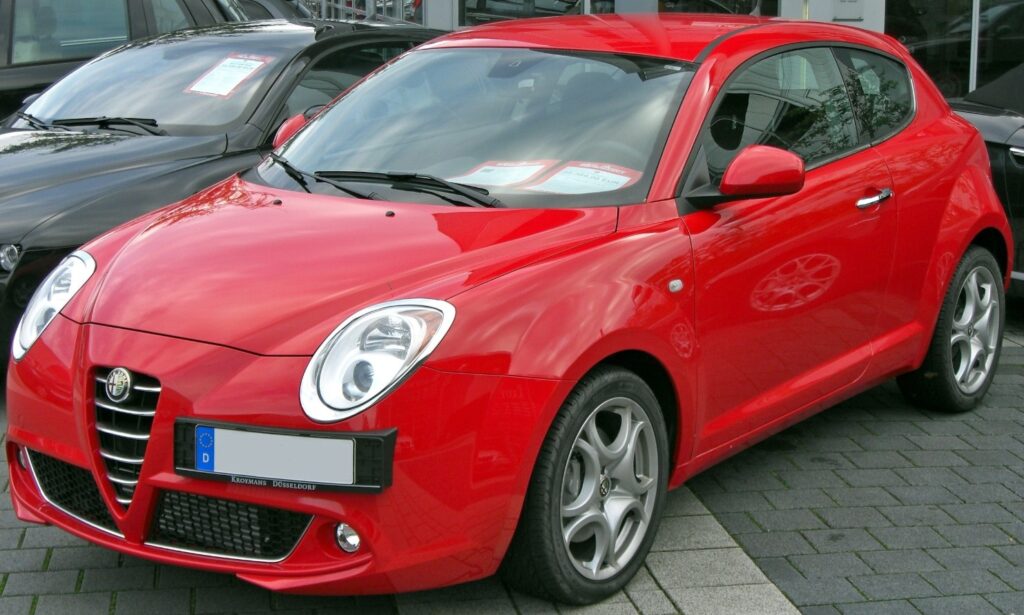
The Alfa Romeo MiTo tyre pressure may look like a tiny maintenance detail, but it has a surprisingly large influence on how this compact Italian hatchback feels on the road. Get the pressures right and the MiTo feels light on its feet, responsive and planted. Let them drift too low or pump them too high, and the car can lose some of the sharpness that makes it enjoyable in the first place.
There is no single pressure that is correct for every MiTo. The appropriate figure depends on the engine, tyre size, vehicle load and, in some cases, driving conditions. Alfa Romeo's own handbook therefore lists different values for different combinations rather than giving owners one universal number.
For many MiTo configurations, normal cold pressures fall around 2.1–2.6 bar (roughly 30–38 psi), with the front tyres commonly requiring slightly more pressure than the rear. Fully loaded cars can require noticeably higher pressures. That's why we should treat generic pressure recommendations as a starting point rather than replacing the specification for the exact car.
In this guide, we'll look at Alfa Romeo MiTo tyre pressures by wheel size and engine, explain loaded versus normal pressures, discuss TPMS warnings, cold-weather changes, pressure checking and the common mistakes that shorten tyre life.
Content in this publication
- What Is the Correct Alfa Romeo MiTo Tyre Pressure?
- Alfa Romeo MiTo Tyre Pressure in PSI
- Alfa Romeo MiTo 16-Inch Tyre Pressure
- Alfa Romeo MiTo 17-Inch Tyre Pressure
- Alfa Romeo MiTo 18-Inch Tyre Pressure
- Should Alfa Romeo MiTo Tyres Be Checked Cold?
- Normal Load Versus Full Load Pressure
- Does High-Speed Driving Change MiTo Tyre Pressure?
- What About Winter or Snow Tyres?
- How Often Should We Check MiTo Tyre Pressure?
- Where Can We Find the Correct MiTo Pressure?
- What Happens If MiTo Tyre Pressure Is Too Low?
- What Happens If MiTo Tyre Pressure Is Too High?
- Understanding the Alfa Romeo MiTo TPMS Warning
- Why Does the TPMS Light Come On in Cold Weather?
- Does Tyre Pressure Affect MiTo Handling?
- Does Correct Tyre Pressure Improve Fuel Economy?
- Tyre Pressure and Uneven Wear
- MiTo Space-Saver Spare Tyre Pressure
- What If the MiTo Has Aftermarket Wheels?
- Common Alfa Romeo MiTo Tyre Pressure Mistakes
- A Simple MiTo Tyre Pressure Routine
- Final Thoughts on Alfa Romeo MiTo Tyre Pressure
- Frequently Asked Questions
What Is the Correct Alfa Romeo MiTo Tyre Pressure?
If we're looking for the quickest answer, many commonly fitted MiTo tyres operate at around 2.3 bar at the front and 2.1 bar at the rear when cold and carrying a normal load.
For example, Michelin's MiTo fitment information lists 195/55 R16 tyres at 2.3 bar front and 2.1 bar rear, while its references for several other original-size tyres sit close to those values.
However, that neat 2.3/2.1 figure does not apply universally.
A turbocharged MiTo on 205/45 R17 tyres, for instance, can require 2.4 bar at the front and 2.2 bar at the rear under a medium load according to Alfa Romeo's handbook. Some diesel variants use even more front pressure.
Think of tyre pressure like shoe size. "About right" might get us out of the house, but the correct fit makes everything work better.
Alfa Romeo MiTo Tyre Pressure Chart
The following figures come from an Alfa Romeo MiTo owner's handbook and illustrate how pressures vary by engine, tyre and vehicle load. The figures are cold tyre pressures in bar. Because specifications can differ by model year and market, owners should confirm them against the tyre-pressure label or handbook supplied with their particular MiTo.
| MiTo version | Tyre size | Normal front | Normal rear | Full-load front | Full-load rear |
|---|---|---|---|---|---|
| 1.4 Petrol | 195/55 R16 87H | 2.3 bar | 2.1 bar | 2.3 bar | 2.3 bar |
| 1.4 Petrol | 205/45 R17 88W XL | 2.3 bar | 2.1 bar | 2.3 bar | 2.3 bar |
| 1.4 Petrol | 215/45 R17 87W | 2.2 bar | 2.1 bar | 2.3 bar | 2.3 bar |
| 1.4 Petrol | 215/40 R18 89W XL | 2.3 bar | 2.1 bar | 2.3 bar | 2.3 bar |
| 1.4 Turbo Petrol | 195/55 R16 87V | 2.3 bar | 2.1 bar | 2.5 bar | 2.3 bar |
| 1.4 Turbo Petrol | 205/45 R17 88W XL | 2.4 bar | 2.2 bar | 2.8 bar | 2.5 bar |
| 1.4 Turbo Petrol | 215/45 R17 87W | 2.3 bar | 2.1 bar | 2.6 bar | 2.3 bar |
| 1.4 Turbo Petrol | 215/40 R18 89W XL | 2.4 bar | 2.2 bar | 2.7 bar | 2.4 bar |
| 1.3/1.6 JTDM | 195/55 R16 87H | 2.3 bar | 2.1 bar | 2.6 bar | 2.3 bar |
| 1.3/1.6 JTDM | 205/45 R17 88W XL | 2.6 bar | 2.2 bar | 2.8 bar | 2.3 bar |
| 1.3/1.6 JTDM | 215/45 R17 87W | 2.4 bar | 2.2 bar | 2.6 bar | 2.3 bar |
| 1.3/1.6 JTDM | 215/40 R18 89W XL | 2.5 bar | 2.2 bar | 2.7 bar | 2.3 bar |
| Space-saver spare | 135/70 R16 | — | — | 4.2 bar | 4.2 bar |
The important lesson is hiding in plain sight: tyre size alone does not always determine pressure. Two MiTos wearing apparently similar wheels can require different pressures because their engines, axle weights and homologated configurations differ.
Alfa Romeo MiTo Tyre Pressure in PSI
Many petrol-station inflators display PSI rather than bar. We can use these approximate conversions when reading the MiTo figures:
| Bar | Approx. PSI |
|---|---|
| 2.1 | 30 psi |
| 2.2 | 32 psi |
| 2.3 | 33 psi |
| 2.4 | 35 psi |
| 2.5 | 36 psi |
| 2.6 | 38 psi |
| 2.7 | 39 psi |
| 2.8 | 41 psi |
| 4.2 | 61 psi |
So when somebody says their MiTo runs "33 front and 30 rear," they're usually talking about roughly 2.3 bar front and 2.1 bar rear.
Still, we shouldn't pick numbers merely because another MiTo owner uses them. The sticker or manual for our particular version remains the better reference.
Alfa Romeo MiTo 16-Inch Tyre Pressure
The 195/55 R16 tyre is one of the more familiar MiTo sizes. Alfa Romeo's handbook lists it across petrol, turbo-petrol and diesel configurations.
Under normal loading, 2.3 bar front and 2.1 bar rear is the reference pressure shown for the configurations listed in that handbook.
Things change when we fill the cabin and boot.
A 1.4 Turbo version with these tyres increases to 2.5 bar at the front and 2.3 rear when fully loaded. The diesel configuration listed increases farther to 2.6 bar front and 2.3 rear.
That difference is precisely why checking the full-load column matters before a holiday road trip.
Why 16-Inch Wheels Are Relatively Forgiving
A tyre such as the 195/55 R16 has more sidewall than the MiTo's lower-profile 17- or 18-inch alternatives. That additional sidewall generally gives the tyre more ability to absorb broken surfaces and pothole impacts.
Pressure still matters, though.
Allow it to fall too far and the tyre flexes excessively. Inflate it unnecessarily high and some of the comfort advantage disappears. Correct pressure lets the tyre do the job it was designed to do instead of turning it into either a marshmallow or a basketball.
Alfa Romeo MiTo 17-Inch Tyre Pressure
The MiTo appeared with more than one 17-inch tyre specification, including 205/45 R17 and 215/45 R17 in the handbook referenced here.
This is where assuming "all MiTos need 2.3 and 2.1" can become inaccurate.
For the 1.4 Turbo on 205/45 R17 tyres, Alfa Romeo specifies 2.4 bar front and 2.2 bar rear at medium load, rising to 2.8 bar front and 2.5 bar rear at full load in that handbook. The diesel entries can also call for relatively high front pressures.
The 215/45 R17 combination may use lower pressures depending on the version.
205/45 R17 Versus 215/45 R17 Pressure
These tyre sizes sound similar, yet we shouldn't interchange their inflation figures.
The 205/45 R17 is narrower, while the 215/45 R17 has a different section width and overall geometry. More importantly, Alfa Romeo approved them in particular vehicle configurations, and those combinations can have different recommended inflation pressures.
Read the complete tyre marking and match it with your model specification.
Don't stop after seeing "R17."
Alfa Romeo MiTo 18-Inch Tyre Pressure
The 215/40 R18 setup gives the MiTo an especially sporty stance. It also leaves less cushioning between the rim and the road.
In the handbook we checked, a 1.4 Turbo with 215/40 R18 tyres uses 2.4 bar front and 2.2 bar rear under medium load, while full-load pressure rises to 2.7 bar and 2.4 bar respectively. The listed diesel configuration uses 2.5 bar front and 2.2 rear normally.
With low-profile tyres, pressure neglect can become particularly noticeable. We have less rubber sidewall acting as a shock absorber, so keeping the tyres correctly inflated helps them operate within their intended shape.
Are 18-Inch MiTo Tyres Supposed to Feel Firm?
Usually, yes, compared with a taller-sidewall wheel and tyre combination.
That doesn't mean we should deliberately drop the pressure to soften the ride. Running below the recommended figure can increase tyre deformation and heat rather than magically transforming an 18-inch setup into a comfortable 16-inch one.
Alfa Romeo explicitly warns that low pressure can overheat a tyre and risk serious tyre damage.
Should Alfa Romeo MiTo Tyres Be Checked Cold?
Yes.
This is one of the most important parts of the entire subject.
Alfa Romeo states that tyre inflation pressure should be measured while the tyres are cold and at rest. If the tyres have warmed up, the handbook advises against bleeding pressure merely because the reading appears higher; instead, let the tyres cool and check them again.
Driving generates heat. Heat raises pressure. So if we drive ten miles to a filling station, see a number above the cold specification and release air, we could end up underinflating the tyre once it cools.
What If We Have to Inflate Warm Tyres?
The MiTo handbook gives useful guidance here. It says to add 0.3 bar to the prescribed pressure when tyres are warm and then recheck them once cold.
That's a practical emergency workaround, not an excuse to skip a proper cold reading forever.
For routine checks, early morning before driving is ideal.
Normal Load Versus Full Load Pressure
Why does the table contain two pressure sets?
Because four adults, luggage and a packed boot place considerably more demand on the tyres than one driver commuting to work.
Under that extra weight, manufacturers can specify greater inflation pressure so the tyres carry their additional load correctly. Alfa Romeo's pressure table therefore separates medium load from full load, with the full-load recommendations rising substantially on some MiTo configurations.
Imagine carrying groceries in a thin plastic bag. A light load is effortless. Add several heavy bottles and suddenly the bag stretches and changes shape. A loaded tyre faces a similar increase in demand.
Before a long holiday journey, check the full-load specification rather than simply sticking with your daily commuting setting.
Does High-Speed Driving Change MiTo Tyre Pressure?
According to the Alfa Romeo handbook examined for this guide, when travelling at speeds above 160 km/h, tyres should be inflated to the specified full-load pressures.
Naturally, that does not override speed limits or local laws. The point is simply that sustained high-speed operation produces greater tyre loads and heat.
For ordinary road use, we should follow the pressure specification appropriate to the vehicle's actual load and tyre combination.
What About Winter or Snow Tyres?
Alfa Romeo's handbook specifies an additional 0.2 bar for snow tyres compared with the pressure prescribed for standard tyres in the configuration covered by that manual.
Cold weather also has another effect: pressure naturally changes with temperature. Alfa Romeo notes that outdoor temperature can alter tyre pressure and may even temporarily trigger a TPMS low-pressure indication. The recommended response is to check pressures with the tyres cold and top them up if required.
That explains a familiar winter mystery. Everything looked fine last week, the temperature drops sharply overnight, and suddenly the car complains.
The tyre hasn't necessarily developed a leak. Sometimes physics simply arrived before breakfast.
How Often Should We Check MiTo Tyre Pressure?
We shouldn't wait for the car to warn us.
Alfa Romeo's handbook advises checking tyre pressure before a long journey and emphasizes that the measurement should be taken when the tyres are cold. It also makes clear that the presence of TPMS does not remove the driver's need to check inflation manually.
For everyday ownership, checking roughly every couple of weeks and before long trips is a sensible habit.
A quick routine is enough:
- Let the tyres cool.
- Find the recommended pressures for your exact MiTo.
- Remove each valve cap.
- Use a reliable pressure gauge.
- Inflate or release air until each tyre matches its target.
- Check all four tyres rather than assuming they are identical.
- Inspect the tyre at the same time for cuts, bulges, cracking or unusual tread wear.
- Refit the valve caps securely.
That tiny routine can reveal problems before they become expensive ones.
Where Can We Find the Correct MiTo Pressure?
The best specification is the one assigned to the exact vehicle.
Check the car's tyre-pressure information label and owner's handbook, paying attention to tyre size and load conditions. If the wheels or tyres have been changed from their factory specification, make sure the replacement combination is approved for the vehicle and obtain the appropriate inflation recommendation rather than blindly copying the old number.
This is particularly important with used MiTos. A car that's been through several owners may no longer be wearing the same wheels it left the factory with.
Don't Use the Maximum Pressure on the Tyre Sidewall
One surprisingly common mistake is reading the tyre sidewall and assuming its maximum inflation marking is the pressure the car should use.
It isn't.
The vehicle manufacturer specifies operating pressure for the car's weight, axle loading and approved tyre setup. The tyre's sidewall markings describe the tyre itself.
Those are different things.
We want the MiTo's recommended operating pressure—not simply the biggest pressure number printed on the rubber.
What Happens If MiTo Tyre Pressure Is Too Low?
Underinflation changes the shape of the tyre's contact with the road. Alfa Romeo's handbook illustrates that low pressure can produce greater tread wear toward the edges and warns that insufficient pressure can cause excessive heat and potentially serious tyre damage.
From the driver's seat, we may notice the car feels less precise or heavier than usual.
The warning signs worth watching for include steering that feels unusually sluggish, edge-biased tyre wear, an illuminated pressure warning, a tyre that visually looks low or one wheel repeatedly losing more pressure than the others.
That last one deserves attention. If we keep adding air to the same tyre every few days, the solution isn't to become faster with the compressor. We need to find the leak.
What Happens If MiTo Tyre Pressure Is Too High?
More pressure isn't automatically safer.
Alfa Romeo warns that excessive inflation can compromise road holding, put additional stress on suspension and wheels and increase the risk of uneven tyre wear. Its maintenance guidance also illustrates excessive pressure as producing greater wear around the middle of the tread.
Overinflation may also make bumps and broken surfaces feel sharper, particularly on the MiTo's lower-profile tyre options.
Correct inflation sits in the Goldilocks zone: neither too soft nor unnecessarily hard.
Understanding the Alfa Romeo MiTo TPMS Warning
Some MiTo versions were fitted with a Tyre Pressure Monitoring System (TPMS). The system described in Alfa Romeo's handbook uses transmitters associated with the wheels to provide tyre-pressure information to the control unit.
If tyre pressure falls below a preset value, the vehicle can display an insufficient-pressure warning.
We shouldn't ignore it.
Check the tyres for visible damage and measure them with a proper gauge. If one tyre is dramatically lower than the others, look for a puncture or valve issue instead of merely inflating it and forgetting the problem.
Can TPMS Replace Manual Pressure Checks?
No.
The owner's handbook specifically states that the presence of TPMS does not remove the need for regular pressure checks. It also says the system may not detect a sudden pressure loss quickly enough in an event such as a tyre failure.
TPMS is the guard dog, not the mechanic.
We still need to look after the tyres ourselves.
Why Does the TPMS Light Come On in Cold Weather?
Temperature changes can alter tyre pressure enough to trigger the monitoring system.
Alfa Romeo explicitly notes that outdoor temperature can influence inflation pressure and that TPMS may temporarily indicate insufficient pressure as a result. The recommended check should be performed with cold tyres.
If all four tyres suddenly show slightly low readings on the first freezing morning of the year, temperature is an obvious suspect.
If only one tyre keeps dropping, however, investigate it.
Should We Ignore a TPMS Light If It's Cold Outside?
No.
Cold weather can explain the warning, but it doesn't make the pressure magically correct.
Measure all four tyres. If they're low, restore them to the specification for your MiTo.
A warning light is information. Our job is to discover why it appeared.
Does Tyre Pressure Affect MiTo Handling?
Absolutely.
Tyres are the car's physical connection with the road. Steering, braking and cornering forces ultimately pass through four relatively small contact patches.
That matters even more in a car like the MiTo, where responsive steering and compact dimensions are part of the appeal.
Pressure that's significantly below specification allows excess tyre deformation. Pressure that's too high can reduce compliance and alter the tyre's contact behaviour. Alfa Romeo itself links correct inflation pressure with road holding and tyre wear.
We don't need to chase racetrack-style pressure experiments on a daily-driven MiTo. The factory specification gives us the sensible road-use baseline.
Does Correct Tyre Pressure Improve Fuel Economy?
Keeping tyres correctly inflated helps avoid the unnecessary rolling resistance associated with underinflated tyres. More importantly for owners, correct pressure means we're not forcing the tyre to work outside its intended operating condition.
The sensible target isn't "inflate harder for maximum economy."
It's simply inflate correctly.
Going above the recommended figure to chase a tiny efficiency gain can compromise comfort, wear and grip characteristics. The manufacturer's prescribed pressure is the balanced solution.
Tyre Pressure and Uneven Wear
The tread tells stories.
Alfa Romeo's handbook shows three classic patterns: correctly inflated tyres wearing relatively evenly, underinflated tyres wearing more heavily toward their edges, and overinflated tyres tending toward greater central wear.
That makes tread inspection a useful diagnostic clue.
Of course, pressure isn't the only possible cause of uneven wear. Alignment, worn suspension components, driving style and tyre condition can also contribute.
But if every tyre is screaming the same story, check the gauge before blaming the suspension.
MiTo Space-Saver Spare Tyre Pressure
The small 135/70 R16 space-saver spare listed in the handbook uses a considerably higher pressure: 4.2 bar, or roughly 61 psi.
That can surprise owners because it's dramatically higher than normal road-wheel pressure.
Compact temporary spare tyres are different animals. Their construction, dimensions and intended usage differ from the normal tyres, so their inflation specification can also be very different.
The annoying part? The spare is the tyre we tend to forget.
Then one rainy evening we need it, open the boot and discover it hasn't seen a pressure gauge since the previous owner owned a flip phone.
Check it occasionally.
What If the MiTo Has Aftermarket Wheels?
This is where online tyre-pressure charts become less dependable.
Suppose the car originally used 195/55 R16 tyres but now runs an aftermarket 18-inch setup with a different tyre width, load index or construction. We shouldn't simply transfer the old pressure because it's familiar.
Tyre load capacity, wheel fitment and vehicle approval all matter.
If the setup isn't one of the MiTo's factory-approved combinations, consult a qualified tyre specialist who can confirm that the tyre has appropriate dimensions, load capacity and inflation requirements for the vehicle.
Looks matter, but keeping the wheel out of the arch and the tyre attached to the road matters a little more.
Common Alfa Romeo MiTo Tyre Pressure Mistakes
Most pressure problems aren't complicated mechanical failures. They're habits.
We check after a long motorway drive, accidentally use the warm reading as a cold target, copy another owner's pressure despite having different tyres, forget to increase pressure for a heavily loaded trip, neglect the spare, rely entirely on TPMS or repeatedly reinflate a leaking tyre without investigating the cause.
None of these mistakes requires specialist knowledge to avoid.
The solution is almost boringly simple: know the correct specification, use a decent gauge and check regularly.
A Simple MiTo Tyre Pressure Routine
Here's a routine we can actually stick to.
Once every few weeks, before driving, walk around the car. Look at the tyre sidewalls and tread. Measure all four pressures. Compare them with the vehicle's specification. Adjust them if necessary.
Before a long journey, check again and use the loaded pressures where appropriate.
When winter arrives and temperatures drop, check again.
And whenever one tyre behaves differently from the other three, investigate why.
Five minutes of attention beats finding out about a slow puncture halfway through a motorway journey.
Final Thoughts on Alfa Romeo MiTo Tyre Pressure
Correct Alfa Romeo MiTo tyre pressure isn't a mysterious number buried somewhere in automotive folklore. It's a vehicle-specific setting determined by tyre size, engine version and load.
For many MiTos, 2.3 bar front and 2.1 bar rear is a familiar normal-load combination. But turbo and diesel variants—especially on some 17- and 18-inch tyres—can call for higher figures, while full-load pressures can rise considerably. Alfa Romeo's own data shows precisely why a universal MiTo pressure recommendation isn't enough.
So our rule is straightforward: use the chart as a useful reference, then confirm the specification for the exact vehicle.
Check pressures cold. Adjust for a full load when required. Don't release air merely because warm tyres show a higher reading. Pay attention when TPMS speaks up. And give the spare tyre the occasional glance too.
A MiTo is a small car with plenty of personality. Correct tyre pressure lets that personality reach the road rather than getting lost somewhere between the wheel and the tarmac.
Frequently Asked Questions
What tyre pressure should an Alfa Romeo MiTo have?
Many MiTo configurations use around 2.3 bar (33 psi) front and 2.1 bar (30 psi) rear under normal loads, but the correct figure depends on engine and tyre size. Some turbo and diesel configurations require higher pressures, particularly on 17- or 18-inch tyres.
What pressure should Alfa Romeo MiTo 195/55 R16 tyres use?
The Alfa Romeo handbook referenced here lists 2.3 bar front and 2.1 bar rear at medium load for several MiTo versions using 195/55 R16 tyres. Full-load pressure differs by engine, so check the vehicle-specific specification.
What is the Alfa Romeo MiTo 205/45 R17 tyre pressure?
It depends on the version. The handbook lists the 1.4 Turbo at 2.4 bar front and 2.2 bar rear at medium load, increasing to 2.8 and 2.5 bar when fully loaded. Listed diesel versions can use 2.6 bar front and 2.2 rear at medium load.
Should I check my MiTo tyre pressure when the tyres are hot or cold?
Check them cold whenever possible. Alfa Romeo advises that if tyres are warm, we shouldn't reduce pressure simply because the reading has risen. The handbook states that warm tyres may be set 0.3 bar above the prescribed cold value and checked again once cold.
Why is my Alfa Romeo MiTo tyre pressure warning light on?
The warning can indicate that one or more tyres have fallen below the system's preset pressure threshold. Temperature changes can also affect pressure and temporarily trigger a warning. Measure all tyres cold, correct any low pressures and inspect for leaks or damage if one tyre keeps losing air.
If you want to know other articles similar to Alfa Romeo MiTo Tyre Pressure: Complete Guide you can visit the category Service and Parts.
Kia Sorento Service Reset: How to Reset the Service Light
Kia Sorento Fuel Tank Capacity: Gallons, Litres and Model Differences
Kia Sorento Tyre Pressure: Recommended PSI, Bar and Complete Guide
Kia Sorento Boot Space: How Much Luggage Space Does It Really Have?
Kia Sorento Towing Capacity: How Much Can a Sorento Tow?

Honda Passport Payload Capacity: How Much Weight Can It Carry?
Leave a Reply
More content of your interest