

Alfa Romeo MiTo Problems: Common Faults, Symptoms and What to Check

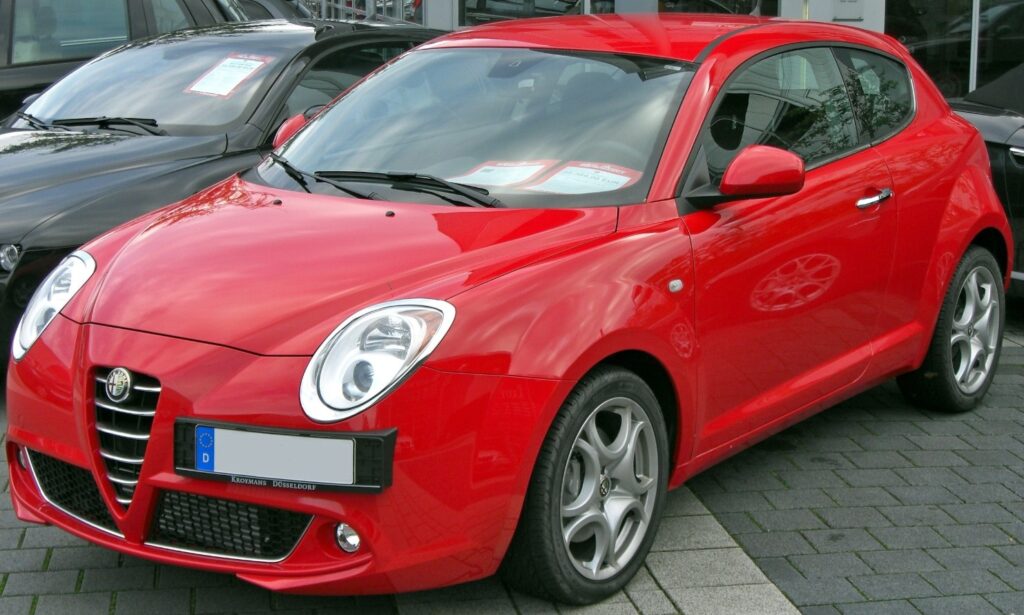
Few small hatchbacks have the personality of an Alfa Romeo MiTo. Park one beside a row of ordinary superminis and the little Alfa still manages to look as though it dressed up for the occasion. That character is a big reason used examples remain tempting. The other reason? Prices can be surprisingly attractive.
Yet cheap style can become expensive style when we buy the wrong example.
The Alfa Romeo MiTo was produced from 2008 until 2018 and appeared with several petrol and diesel engines, including 1.4-litre MultiAir petrol units, the tiny 0.9 TwinAir and JTDm diesels. MultiAir versions arrived from 2009, while the TwinAir joined the range later.
So, are Alfa Romeo MiTo problems bad enough to make us avoid the car altogether?
Not necessarily.
A carefully maintained MiTo can still be an entertaining used hatchback. However, there are several recurring weak spots we should understand before buying one. MultiAir problems, electric power-steering faults, gearbox bearing wear and electrical gremlins deserve particular attention.
Let's break them down properly.
Content in this publication
- Are Alfa Romeo MiTos Reliable?
- Most Common Alfa Romeo MiTo Problems at a Glance
- 1. Alfa Romeo MiTo MultiAir Problems
- 2. Alfa Romeo MiTo M32 Gearbox Problems
- 3. Electric Power-Steering Problems
- 4. Alfa Romeo MiTo Battery and Electrical Problems
- 5. Blue&Me Problems
- 6. Alfa Romeo MiTo Suspension Problems
- 7. Clutch Problems
- 8. TCT Automatic Gearbox Problems
- 9. Alfa Romeo MiTo Turbo Problems
- 10. 0.9 TwinAir Engine Problems
- 11. Diesel MiTo Problems
- 12. Start-Stop System Problems
- 13. Interior Quality and Rattles
- 14. Door, Window and Locking Issues
- 15. Warning Lights and Sensor Faults
- 16. Which Alfa Romeo MiTo Engines Have the Most Problems?
- 17. Alfa Romeo MiTo Problems by Mileage
- 18. Alfa Romeo MiTo Problems by Model Year
- 19. How to Inspect a Used Alfa Romeo MiTo
- 20. Red Flags That Should Make Us Walk Away
- 21. How to Reduce Alfa Romeo MiTo Problems
- 22. Is the Alfa Romeo MiTo Expensive to Maintain?
- 23. Is an Alfa Romeo MiTo a Good First Car?
- 24. Should You Buy a Used Alfa Romeo MiTo?
- 25. Best Alfa Romeo MiTo Buying Strategy
- Conclusion: Alfa Romeo MiTo Problems Are Manageable With the Right Car
- Frequently Asked Questions About Alfa Romeo MiTo Problems
Are Alfa Romeo MiTos Reliable?
Reliability is perhaps the biggest question hanging over the MiTo.
Historically, the model did not perform particularly well in some owner-satisfaction surveys. Carbuyer reported that the MiTo ranked 145th out of 150 cars for reliability in its 2016 Driver Power survey. At the same time, its published owner rating was considerably more positive, illustrating just how mixed experiences can be.
That contradiction actually tells us something useful.
The MiTo isn't necessarily a universally unreliable car. Instead, condition, engine choice and maintenance history can dramatically change the ownership experience.
A neglected MiTo can resemble an Italian espresso machine that's been fed tap water for ten years: stylish, complicated and increasingly unhappy.
A well-maintained example is another story.
For used-car buyers, we would therefore focus less on mileage alone and more on:
- documented servicing;
- correct engine oil;
- evidence of gearbox maintenance or repairs;
- electrical system health;
- smooth power steering operation;
- absence of warning lights;
- cold-start behaviour;
- previous diagnostic reports.
A 90,000-mile car with meticulous servicing can be more attractive than a 50,000-mile example with a mysterious history.
Most Common Alfa Romeo MiTo Problems at a Glance
Before diving deeper, these are the trouble areas worth putting near the top of our inspection list:
- MultiAir actuator/unit problems
- M32 manual gearbox bearing wear on applicable versions
- Electric power-steering failures
- Weak batteries and electrical warnings
- Blue&Me infotainment faults
- Suspension knocks and worn components
- Clutch wear
- Turbocharger-related issues on turbo models
- Diesel DPF and EGR trouble
- Interior rattles and ageing trim
- Start-stop malfunctions
- TCT transmission faults on automatic versions
Not every MiTo develops these faults. Engine, gearbox, model year, mileage and maintenance make a major difference.
1. Alfa Romeo MiTo MultiAir Problems
Why the MultiAir System Matters
For many buyers, this is the big one.
Fiat's MultiAir technology uses an electro-hydraulic system to control intake-valve operation rather than relying solely on conventional mechanical valve control. The technology debuted commercially in the Alfa Romeo MiTo in 2009.
When everything works, the system gives the 1.4 MultiAir engines excellent character.
When it doesn't, the engine can behave as though it woke up on the wrong side of the garage.
Alfa Romeo MiTo MultiAir Failure Symptoms
Symptoms associated with MultiAir trouble can include:
- rough idle;
- engine misfires;
- noticeable loss of power;
- difficult starting;
- engine-management warning lights;
- uneven running;
- start-stop unavailable warnings.
Specialist fault resources describe rough running, misfires and loss of power among the symptoms associated with MultiAir trouble.
However, we shouldn't instantly diagnose a failed MultiAir unit whenever an engine misfires.
Spark plugs, ignition coils, wiring, oil condition and other engine-management faults can produce similar symptoms. Proper diagnostics matter before replacing an expensive component.
Why Engine Oil Is So Important
The clever part of MultiAir is also what makes maintenance particularly important.
Because the system is hydraulically operated using engine oil, correct oil specification and sensible oil-change intervals matter enormously. Contamination can interfere with the narrow oil passages controlling the system.
When inspecting a used MultiAir MiTo, we would therefore ask one simple question:
Can the seller prove regular oil changes?
If the answer involves shrugs, lost paperwork and "my mate serviced it sometimes," we'd become cautious very quickly.
Can MultiAir Problems Be Prevented?
No maintenance routine can guarantee that a mechanical component will last forever, but good servicing certainly improves our odds.
Use the oil specification appropriate for the exact engine and model year, replace it on schedule and avoid treating servicing as optional housekeeping.
For prospective buyers, maintenance history should carry real financial value.
2. Alfa Romeo MiTo M32 Gearbox Problems
Certain six-speed MiTo variants use the M32 manual transmission, a gearbox also fitted to various Alfa Romeo, Fiat, Vauxhall and other models.
Unfortunately, the M32 has developed a reputation among gearbox specialists for bearing wear.
Specialists identify whining noises, selector movement, grinding and synchromesh-related symptoms among warning signs of M32 trouble.
What Does a Failing MiTo Gearbox Sound Like?
Listen for:
- whining that changes with road speed;
- increased noise in particular gears;
- grinding;
- difficulty engaging gears;
- gearlever movement under acceleration and deceleration.
Sixth-gear whining is frequently associated with M32 bearing problems, although the exact noise depends on which internal components are worn.
This is why a five-minute test drive around a dealership isn't enough.
Get the MiTo onto a road where you can comfortably use all gears.
Accelerate.
Lift off.
Listen.
Try the gears again.
A gearbox should fade into the background. If it sounds like a distant aircraft turbine, we'd want it inspected.
Should You Avoid Every MiTo With an M32 Gearbox?
No.
A properly repaired or rebuilt gearbox can actually make a used car more interesting because one major weak point may already have been addressed.
Ask for invoices.
A seller saying "the gearbox was done" isn't equivalent to documentation showing what was replaced, when it was repaired and which specialist performed the work.
3. Electric Power-Steering Problems
The MiTo uses electric power steering, and steering-column failures are another commonly documented fault.
Specialist rebuilders report intermittent or permanent loss of assistance, sometimes leaving the steering noticeably heavy. Fault codes including C1001 and C1002 can be associated with electric motor and torque-position sensor problems.
MiTo Power-Steering Symptoms
Drivers may encounter:
- heavy steering;
- intermittent steering assistance;
- dashboard steering warnings;
- assistance disappearing and returning after restarting;
- unusual steering vibration or groaning.
Another steering specialist identifies the torque-position sensor as a frequent source of MiTo EPS trouble.
Don't Condemn the Steering Column Immediately
Electrical faults sometimes have a simpler starting point.
A weak battery or low system voltage can create strange symptoms in modern cars. One contemporary MiTo repair-cost guide specifically notes that both weak batteries and ageing EPS columns can trigger steering warnings or heavy assistance.
Therefore, battery and charging-system testing should form part of a diagnosis.
Replacing expensive parts before testing voltage is like replacing the television because the remote batteries are flat.
4. Alfa Romeo MiTo Battery and Electrical Problems
Owner reports show electrical faults cropping up repeatedly among MiTo complaints. Carbuyer's collected owner reviews, for example, list electrics among the reported problem categories.
Modern cars depend heavily on stable voltage, and the MiTo is no exception.
A deteriorating battery can contribute to:
- start-stop warnings;
- reluctant starting;
- random dashboard warnings;
- electrical-system errors;
- steering warnings;
- infotainment oddities.
Before panicking over a dashboard illuminated like a Christmas tree, test the battery and alternator properly.
That doesn't mean every warning is harmless. It means diagnosis should start intelligently.
5. Blue&Me Problems
Many MiTos were equipped with Fiat Group's Blue&Me infotainment technology, originally developed with Microsoft and Magneti Marelli.
Time has not always been kind to these units.
Possible symptoms include:
- Bluetooth failing to connect;
- USB functionality disappearing;
- steering-wheel controls behaving incorrectly;
- flashing odometer;
- infotainment not responding;
- possible battery drain associated with a malfunctioning module.
Reports concerning Blue&Me systems note that a flashing odometer can accompany communication problems, while malfunctioning units have also been associated with battery drain.
Flashing Mileage Doesn't Always Mean the Dashboard Is Broken
A flashing odometer commonly points toward a communication or configuration problem within the vehicle's electronic network rather than mechanical engine trouble.
That distinction matters.
The car may drive perfectly while one electronic module refuses to cooperate with the rest of the network.
On a test drive, switch everything on.
Pair a phone if possible.
Test USB connectivity.
Press steering-wheel controls.
Check the display.
Small electrical issues have a sneaky habit of becoming negotiating points after purchase rather than before it.
6. Alfa Romeo MiTo Suspension Problems
The MiTo's suspension can develop the usual age-related wear we would expect from a compact car that may now be well over a decade old.
Listen for knocking, clunking or rattling over rough surfaces.
Potential wear areas can include bushes, drop links, top mounts and other suspension components.
Here context matters more than reputation.
A 15-year-old hatchback that has spent its life bouncing over potholes will inevitably have some worn suspension parts, regardless of the badge on its nose.
Uneven Tyre Wear Is a Useful Clue
Inspect each tyre rather than simply checking whether the tread looks legal.
Uneven wear may suggest:
- alignment issues;
- tired suspension;
- damaged wheels;
- incorrect pressures;
- worn steering components.
Run a hand visually along the tyre edges and compare both sides of the car.
Tyres are storytellers.
They often reveal how a vehicle has been treated.
7. Clutch Problems
Manual MiTos should have a reasonably progressive clutch.
During the test drive, watch for:
- clutch slip under hard acceleration;
- a very high biting point;
- judder when moving away;
- difficulty selecting gears;
- unusual noises when depressing the clutch pedal.
Try accelerating firmly in a higher gear at relatively low rpm.
If engine speed rises sharply without a corresponding increase in road speed, clutch slip could be developing.
Remember that difficulty changing gears doesn't automatically mean the gearbox itself has failed. Clutch operation, hydraulics and linkage should also be investigated.
8. TCT Automatic Gearbox Problems
Some higher-output MiTos were available with Alfa's TCT dual-clutch transmission.
Dual-clutch gearboxes are fundamentally different from conventional torque-converter automatics and deserve careful inspection.
Look for:
- hesitation pulling away;
- jerky low-speed behaviour beyond what is reasonable;
- delayed gear engagement;
- transmission warnings;
- failure to select gears;
- harsh shifting.
A dedicated Alfa specialist or workshop familiar with TCT systems is valuable when evaluating symptoms because software, actuator, clutch and hydraulic issues can overlap.
Don't buy an automatic MiTo simply because it behaved correctly during three minutes around the block.
Test it cold, warm, forwards, backwards and in stop-start driving.
9. Alfa Romeo MiTo Turbo Problems
Several MiTo petrol engines use turbocharging, meaning turbo condition deserves attention on higher-mileage cars.
Signs that deserve investigation include:
- blue exhaust smoke;
- unusual whistling;
- reduced boost;
- excessive oil consumption;
- engine-management lights;
- sluggish acceleration.
Not every whistle means the turbocharger is dying. Air leaks can make similar noises.
Likewise, not every puff of condensation from a cold exhaust means anything is wrong.
What worries us more is persistent smoke after the engine is fully warm.
Oil Maintenance Matters Here Too
Turbochargers live fast lives.
Their bearings operate at extremely high speeds and depend on proper lubrication.
So once again, documented oil servicing matters more than a freshly polished bonnet.
10. 0.9 TwinAir Engine Problems
The two-cylinder TwinAir is one of the MiTo's most unusual engines.
It brings plenty of character, although its sound and vibration are very different from a conventional four-cylinder petrol engine. That means buyers unfamiliar with TwinAir can sometimes mistake normal behaviour for mechanical trouble.
Still, we should inspect one carefully for:
- erratic idle beyond normal TwinAir character;
- misfires;
- oil leaks;
- poor starting;
- excessive vibration;
- warning lights;
- unusual timing-related noise.
Service history again becomes critical.
Tiny turbocharged engines work harder than their displacement figures might suggest.
11. Diesel MiTo Problems
Diesel MiTos can be excellent for drivers covering long motorway distances, but buying an ageing diesel exclusively for short urban journeys can create headaches.
DPF Trouble
A diesel particulate filter needs suitable operating conditions to regenerate properly.
Repeated short journeys may make regeneration more difficult.
Possible signs of DPF trouble include:
- warning lights;
- reduced performance;
- frequent regeneration behaviour;
- poor fuel economy;
- limp mode.
EGR Valve Problems
Exhaust gas recirculation systems can also accumulate deposits over time, especially where driving patterns encourage soot build-up.
Symptoms may include hesitation, rough running and reduced performance.
If our daily routine consists of four kilometres through traffic and back again, a petrol MiTo may make more sense than a diesel.
The cheapest fuel economy figure on paper isn't always the cheapest ownership experience.
12. Start-Stop System Problems
The MiTo was offered with start-stop technology across much of its later engine range, and from model year 2011 start-stop became standard across the range.
When it stops working, we shouldn't immediately assume the system itself has failed.
Start-stop operation depends on several conditions.
Battery condition is especially important.
A tired battery can prevent the system from operating because the car prioritises reliable restarting over saving a spoonful of fuel at the traffic lights.
If start-stop isn't functioning, begin with battery health and diagnostics before replacing components unnecessarily.
13. Interior Quality and Rattles
One area where age can show is cabin quality.
Contemporary reviews criticised some MiTo interior materials and fit, including hard plastics, trim quality and flimsy-feeling switchgear.
Owner reports also mention rattles and vibrations.
This isn't normally catastrophic.
It can simply become annoying.
Check:
- dashboard trim;
- door cards;
- glovebox;
- seat mechanisms;
- window switches;
- steering-wheel buttons;
- door handles;
- parcel shelf.
Drive over a rough road with the stereo off.
You'll soon discover whether the cabin is tight or performing its own percussion concert.
14. Door, Window and Locking Issues
Electric windows, door wiring, central locking and switches should all be tested individually.
Used-car inspections often focus almost entirely on engines.
That's understandable.
Nobody wants a failed engine.
But electrical convenience problems can still become frustrating and expensive when several appear together.
Try both keys if supplied.
Lock and unlock every door.
Open every window.
Check the boot release.
Spend five additional minutes testing equipment and you may save hours of troubleshooting later.
15. Warning Lights and Sensor Faults
A warning light shouldn't automatically scare us away from a MiTo.
But a seller saying, "Oh, they all do that," should.
Modern cars record faults for a reason.
A diagnostic scan can reveal stored trouble codes even when the dashboard currently looks clear.
Before buying an expensive or higher-performance MiTo, getting a pre-purchase scan is sensible.
Be Suspicious of Recently Cleared Fault Codes
A seller can erase diagnostic trouble codes shortly before a viewing.
The dashboard then looks spotless—temporarily.
After enough driving, the warning may return.
That's another reason a longer road test matters.
16. Which Alfa Romeo MiTo Engines Have the Most Problems?
There isn't a simple engine we can label universally "bad."
Instead, each powertrain has its own risk profile.
1.4 MultiAir
Its major concern is the MultiAir system. Evidence of correct oil servicing is especially important.
Turbo Petrol Models
Check turbo performance, oil consumption and maintenance history.
0.9 TwinAir
Listen carefully for abnormal running and confirm that servicing hasn't been neglected.
JTDm Diesel
Focus on DPF, EGR and the previous owner's driving pattern.
A motorway-driven diesel with extensive service history could be far healthier than a lower-mileage example that spent years crawling between shops.
17. Alfa Romeo MiTo Problems by Mileage
Mileage isn't destiny, but it helps frame our inspection.
Under 50,000 Miles
We'd mainly investigate:
- maintenance history;
- battery condition;
- electronic faults;
- early MultiAir symptoms;
- tyres and brakes.
50,000–80,000 Miles
Pay additional attention to:
- gearbox noise;
- clutch condition;
- suspension wear;
- steering faults;
- turbo condition;
- MultiAir operation.
Over 80,000 Miles
At this point, maintenance matters far more than the odometer itself.
Check whether expensive components have already been repaired.
Ironically, an older MiTo with invoices for a rebuilt gearbox, refreshed suspension, new clutch and properly maintained engine could be a more reassuring purchase than an untouched low-mileage car approaching all those repairs simultaneously.
18. Alfa Romeo MiTo Problems by Model Year
It's tempting to declare one year perfect and another disastrous.
Reality is less convenient.
Changes took place throughout the MiTo's long production run, and engine availability changed significantly over time. MultiAir engines appeared from 2009, while TwinAir arrived later.
Later cars can benefit from incremental development and simply being younger.
However, age doesn't erase neglect.
We'd choose a well-maintained earlier MiTo over an abused later example every time.
19. How to Inspect a Used Alfa Romeo MiTo
A good inspection should start before the engine starts.
Check the Car Cold
Ask the seller not to warm it beforehand.
Cold starts reveal:
- battery weakness;
- difficult starting;
- misfires;
- smoke;
- rattles;
- unstable idle.
Then Follow This Test-Drive Routine
Start the car and let it settle.
Turn the steering from side to side.
Watch the dashboard.
Drive slowly first.
Test the clutch.
Use every gear.
Accelerate firmly.
Listen for gearbox whine.
Drive over rough pavement.
Check suspension noise.
Try the brakes.
Use Dynamic mode if fitted and appropriate.
Test every electrical feature.
Finally, restart the car after it is hot.
A MiTo can behave beautifully when stationary and reveal its secrets once moving.
20. Red Flags That Should Make Us Walk Away
Some faults can become negotiating points.
Others should make us rethink the entire car.
We would be particularly cautious when several of these appear together:
- no service history;
- MultiAir engine misfiring badly;
- strong gearbox whine;
- intermittent power steering;
- multiple warning lights;
- overheating;
- heavy smoke;
- oil mixed with coolant;
- severe clutch slip;
- seller refusing an inspection;
- mismatched cheap tyres;
- obviously cleared diagnostic faults;
- unexplained electrical modifications.
One minor rattle isn't a disaster.
Five unrelated faults often tell us something about how the car has been maintained.
21. How to Reduce Alfa Romeo MiTo Problems
Once we own one, prevention becomes much cheaper than repair.
Stick to a sensible maintenance routine:
- use the correct engine oil;
- change oil and filters on schedule;
- investigate warning lights promptly;
- keep the battery healthy;
- don't ignore gearbox noise;
- allow diesel cars appropriate longer journeys;
- monitor coolant and oil levels;
- fix suspension knocks before wear spreads;
- maintain good-quality tyres;
- keep invoices and service records.
The MiTo responds poorly to neglect.
Treat maintenance casually and small issues may stack up like unpaid bills.
Look after it properly and ownership can be far more rewarding.
22. Is the Alfa Romeo MiTo Expensive to Maintain?
Routine servicing itself doesn't necessarily make the MiTo outrageous to run.
The financial danger comes when specialist components fail at once.
An ageing car needing a clutch, gearbox repair, steering-column work and MultiAir attention can quickly swallow a large percentage of its market value.
That's why buying condition is so important.
Spending slightly more on a good car can be cheaper than buying the cheapest MiTo online.
"Cheap to buy" and "cheap to own" are two completely different phrases.
23. Is an Alfa Romeo MiTo a Good First Car?
It can be.
The MiTo is compact, distinctive and available with relatively modest engines.
However, younger drivers looking for extremely predictable ownership may prefer something mechanically simpler.
A MiTo makes more sense for someone prepared to:
- inspect carefully before purchasing;
- maintain the car properly;
- investigate unusual noises;
- budget for age-related repairs;
- find a competent independent Alfa or Fiat specialist.
If we want a car with character and accept some additional homework, the equation changes.
24. Should You Buy a Used Alfa Romeo MiTo?
Yes—but buy the individual car, not the badge.
That's the central lesson.
The MiTo isn't automatically a mechanical nightmare, and online horror stories can exaggerate the impression that every example is waiting to explode.
At the same time, known trouble areas shouldn't be dismissed.
The strongest purchase is usually one with extensive records, a smooth cold start, quiet gearbox, healthy steering, good electrical operation and evidence that previous owners understood maintenance.
Those things matter more than shiny paint.
25. Best Alfa Romeo MiTo Buying Strategy
If we were shopping tomorrow, we'd approach it in this order.
First, decide which engine suits our driving.
Then shortlist cars with documented history.
Next, contact the seller and ask specifically about MultiAir, gearbox, clutch and steering repairs.
After that, inspect the vehicle cold.
Perform a long test drive.
Scan the electronics.
Finally, get an independent inspection if the car is expensive enough to justify one.
It sounds excessive for a small hatchback.
It isn't.
The cheapest inspection is the one carried out before money changes hands.
Conclusion: Alfa Romeo MiTo Problems Are Manageable With the Right Car
The Alfa Romeo MiTo is one of those cars we tend to buy partly with our head and partly with our heart.
The heart notices the styling, the badge and the Italian character.
The head should be listening for gearbox bearings.
Several Alfa Romeo MiTo problems deserve genuine attention, particularly MultiAir trouble on relevant engines, M32 gearbox wear on applicable models, electric power-steering faults and ageing electrical equipment. Specialist sources also document characteristic symptoms such as rough running from MultiAir trouble, gearbox whining and intermittent heavy steering.
But that doesn't automatically make the MiTo a bad used car.
Maintenance history changes everything.
A cherished example that has received proper oil changes, timely repairs and sensible servicing can still make an appealing small hatchback. Conversely, the cheapest neglected example may turn its bargain purchase price into a rather expensive joke.
So should we buy one?
Absolutely consider it.
Just bring your ears, your service-history detective skills and, ideally, a diagnostic scanner.
Italian style may attract us to the advert.
Condition should decide whether we take the keys home.
Frequently Asked Questions About Alfa Romeo MiTo Problems
1. What is the most common Alfa Romeo MiTo problem?
There isn't one fault affecting every version, but frequently discussed problem areas include MultiAir system trouble on relevant petrol engines, electric power steering, electrical faults and M32 gearbox bearing wear on models using that transmission. Owner-review data also shows electrical faults among reported MiTo issues.
2. What are the symptoms of MiTo MultiAir failure?
Typical symptoms can include rough idle, misfires, reduced power, difficult starting and engine warning lights. Because ignition and other engine faults can produce similar symptoms, diagnosis should be completed before replacing the MultiAir unit.
3. How do I know if my Alfa Romeo MiTo gearbox is failing?
Listen for whining noises, particularly noises that change depending on gear or load. Gearlever movement, grinding and difficult shifting can also indicate trouble. M32 gearbox specialists identify bearing wear as a frequent source of whining.
4. Why does my Alfa Romeo MiTo power steering stop working?
The MiTo's electric power-steering column can develop motor or torque-position-sensor faults, potentially causing intermittent or permanent loss of assistance. Battery condition should also be checked because low voltage can contribute to steering warnings.
5. Is a used Alfa Romeo MiTo worth buying?
Yes, provided the individual car has been maintained properly. Service records, correct engine behaviour, quiet transmission operation, healthy steering and functioning electrics are more important than simply choosing the lowest-mileage example. The MiTo's historical reliability results were mixed, making careful inspection especially valuable.
If you want to know other articles similar to Alfa Romeo MiTo Problems: Common Faults, Symptoms and What to Check you can visit the category Common Problems.
Kia Sorento Issues: Common Problems, Reliability and What to Watch For

Honda Passport Not Starting: Causes, Symptoms, and How to Fix It
Honda Passport Keyless Remote Battery Low: What It Means and How to Fix It

Nissan Rogue Apple CarPlay Not Working: Causes and Fixes
Nissan Rogue No Key Detected: Causes, Fixes, and What to Do
Nissan Rogue Engine Problems: Common Issues, Symptoms, Years and Solutions
Leave a Reply
More content of your interest