
Alfa Romeo MiTo Engine Size: Complete Petrol and Diesel Guide

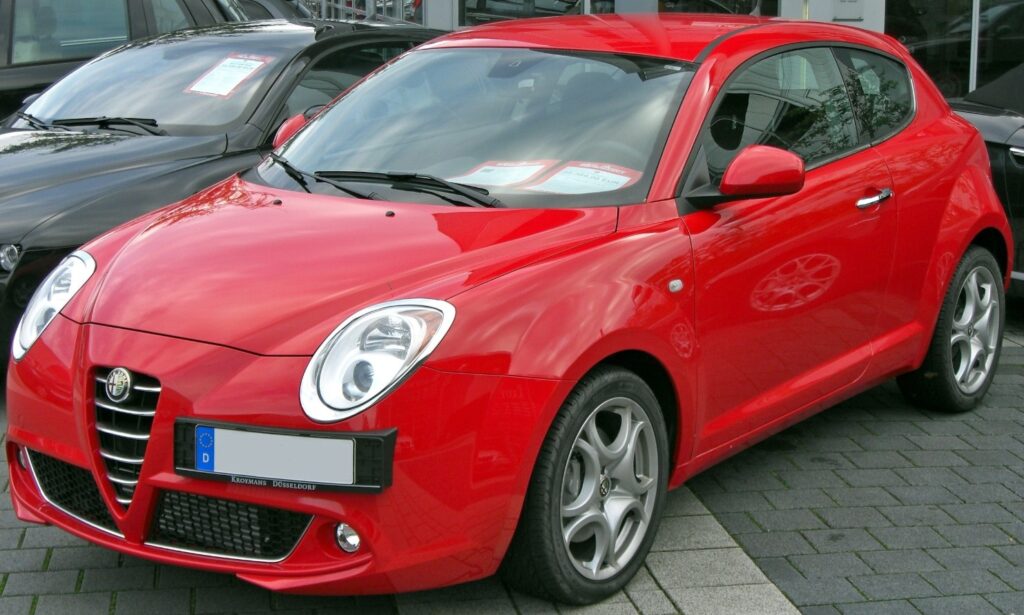
The Alfa Romeo MiTo engine size story is much more interesting than we might expect from such a compact hatchback. Over its lifetime, the MiTo was offered with engines ranging from a tiny turbocharged 0.9-litre two-cylinder petrol unit to a torquey 1.6-litre diesel. Sitting between them were several 1.3-litre diesel and 1.4-litre petrol engines, including some surprisingly powerful MultiAir versions.
So, which engine size does an Alfa Romeo MiTo have?
Broadly speaking, the MiTo was offered with 0.9, 1.3, 1.4, and 1.6-litre engines, although availability depended on model year, trim level, transmission, and market. Alfa Romeo's own technical data for the 2014 model, for example, lists exact capacities of 875cc, 1,248cc, 1,368cc, and 1,598cc.
That wide spread matters because two MiTos parked next to each other can feel like completely different cars. One might be a relaxed 1.3 diesel built for economical motorway driving, while another could have a 170 hp 1.4 MultiAir engine eager to turn every slip road into an excuse for fun.
Let's unpack the range.
Content in this publication
- What Engine Size Is the Alfa Romeo MiTo?
- Alfa Romeo MiTo Engine Size Chart
- Alfa Romeo MiTo 0.9 TwinAir Engine Size
- Alfa Romeo MiTo 1.3 Diesel Engine Size
- Alfa Romeo MiTo 1.4 Engine Size
- 1.4-Litre Naturally Aspirated MiTo Engines
- Alfa Romeo MiTo 1.4 MultiAir Engine
- Alfa Romeo MiTo 1.4 170 HP Engine
- Alfa Romeo MiTo 1.6 Diesel Engine Size
- Petrol vs Diesel Alfa Romeo MiTo Engine Sizes
- Which Alfa Romeo MiTo Engine Size Is Best?
- Which MiTo Engine Is the Fastest?
- Which MiTo Has the Smallest Engine?
- Which MiTo Has the Biggest Engine?
- What Does 875cc or 1,368cc Actually Mean?
- Does Engine Size Affect MiTo Fuel Economy?
- Does MiTo Engine Size Affect Insurance?
- Engine Size vs Horsepower: Don't Confuse Them
- How to Identify Your Alfa Romeo MiTo Engine Size
- What Alfa Romeo MiTo Engine Should We Buy Used?
- Is the 0.9 or 1.4 MiTo Better?
- Is the 1.3 or 1.6 MiTo Diesel Better?
- Why Did Alfa Romeo Use So Many Small Engines?
- Alfa Romeo MiTo Engine Size for City Driving
- Best MiTo Engine Size for Motorway Driving
- Final Thoughts on Alfa Romeo MiTo Engine Sizes
- Frequently Asked Questions
What Engine Size Is the Alfa Romeo MiTo?
The quickest answer is that there isn't one single Alfa Romeo MiTo engine size.
Across its production run, the principal capacities included:
- 0.9-litre TwinAir petrol — 875cc
- 1.3-litre JTDM diesel — 1,248cc
- 1.4-litre petrol/MultiAir — 1,368cc
- 1.6-litre JTDM diesel — 1,598cc
Depending on the year, certain markets also received different states of tune for these engines. For the 2014 European range, Alfa Romeo listed everything from naturally aspirated 70 hp and 78 hp 1.4 petrol engines through the 105 hp TwinAir and up to the 170 hp 1.4 MultiAir Turbo. Diesel buyers could choose between 1.3 and 1.6 JTDM engines.
In other words, don't assume that a larger number automatically means a sportier MiTo. The turbocharged 1.4 MultiAir could comfortably outperform the larger 1.6 diesel despite having less displacement.
Alfa Romeo MiTo Engine Size Chart
Looking at the range by displacement makes everything easier.
| Engine | Exact Capacity | Fuel | Typical Character |
|---|---|---|---|
| 0.9 TwinAir | 875cc | Petrol | Small, lively, economical |
| 1.3 JTDM/JTDM-2 | 1,248cc | Diesel | Efficient, torque-focused |
| 1.4 petrol | 1,368cc | Petrol | Simple everyday option |
| 1.4 MultiAir Turbo | 1,368cc | Petrol | Stronger performance |
| 1.4 Turbo LPG | 1,368cc | Petrol/LPG | Alternative-fuel option |
| 1.6 JTDM/JTDM-2 | 1,598cc | Diesel | Strong motorway torque |
The official 2014 UK technical specifications confirm 875cc for the TwinAir, 1,368cc for the 1.4 MultiAir engines, 1,248cc for the 1.3 JTDM-2 and 1,598cc for the 1.6 JTDM-2.
Now let's look at what those figures actually mean from behind the wheel.
Alfa Romeo MiTo 0.9 TwinAir Engine Size
The smallest MiTo engine is arguably the most unusual.
How Big Is the MiTo 0.9 TwinAir?
The TwinAir displaces just 875cc.
Yes, that's less than one litre.
It also uses only two cylinders. On paper, that may sound like the engine from a tiny economy car rather than an Alfa Romeo, but turbocharging completely changes the equation.
Alfa Romeo introduced an 85 hp version before later offering a 105 hp specification. The manufacturer described the 105 hp TwinAir as producing 145 Nm of maximum torque in Dynamic mode, despite its tiny capacity.
Think of it like a small espresso rather than a giant mug of filter coffee. The quantity is modest, but there's plenty of kick packed inside.
Is a 0.9-Litre Engine Too Small for the MiTo?
Not necessarily.
A small turbo engine works particularly well in a lightweight supermini because it doesn't need to move the mass of a large SUV or executive saloon.
The TwinAir is happiest when we allow it to rev. Its distinctive two-cylinder rhythm also gives the car a character that conventional four-cylinder engines struggle to replicate.
For drivers spending most of their time around town, the 0.9 can therefore make plenty of sense.
Who Should Choose the TwinAir?
We'd mainly consider it for urban driving, relatively low annual mileage and drivers who value character over outright speed.
Anyone regularly carrying passengers on fast roads may prefer the extra flexibility of a larger engine.
Alfa Romeo MiTo 1.3 Diesel Engine Size
The 1.3 JTDM sits at the opposite end of the personality spectrum from the TwinAir.
Its precise displacement is 1,248cc.
Rather than encouraging us to chase higher revs, the diesel relies on low-speed torque and fuel efficiency.
MiTo 1.3 JTDM Power Outputs
Several versions appeared during the MiTo's life.
For example, Alfa Romeo documentation for the 2012 range included both 85 hp and 95 hp versions of the 1.3 JTDM diesel, while the later 2014 UK range included an 85 hp 1.3 JTDM-2.
That's an important reminder when shopping used: engine displacement alone doesn't tell us the whole story.
Two cars can both say "1.3 JTDM" yet have different outputs.
Why Choose the 1.3 JTDM?
The appeal is straightforward.
It gives us diesel torque without forcing us into the larger 1.6 engine.
For drivers covering longer distances, the 1.3 can feel like the sensible shoes of the MiTo range. It isn't necessarily the engine that gets enthusiasts talking, but it can be practical.
We should nevertheless think about how we're going to use the car. Older diesel vehicles generally make more sense for sustained journeys than repeated short urban runs, particularly when their emissions-control equipment needs the engine to reach proper operating conditions.
Alfa Romeo MiTo 1.4 Engine Size
If there is one displacement that defines the MiTo range, it is probably 1.4 litres.
The actual capacity is 1,368cc, and Alfa Romeo used that basic displacement across engines with dramatically different personalities and outputs.
This is where reading only the engine size can become misleading.
1.4-Litre Naturally Aspirated MiTo Engines
Some entry-level MiTos used relatively simple 1.4-litre petrol engines.
The 2014 European range, for example, included 70 hp and 78 hp 1.4 petrol variants.
They're still 1.4s, but they shouldn't be confused with the much stronger turbocharged MultiAir versions.
Is the Basic 1.4 MiTo Fast?
Performance isn't really its purpose.
This engine makes more sense if we're interested in straightforward transportation, relatively uncomplicated power delivery and lower purchase prices on the used market.
It's the mild salsa beside the hot stuff further down the menu.
And that distinction matters when we're browsing adverts. Seeing "1.4 MiTo" tells us remarkably little without checking whether the engine is naturally aspirated, turbocharged or MultiAir.
Alfa Romeo MiTo 1.4 MultiAir Engine
This is where the MiTo starts showing its Alfa personality.
MultiAir technology allowed Alfa Romeo to extract substantially more performance from the same nominal 1.4-litre capacity.
Depending on year and specification, outputs included versions around 105, 135, 140 and 170 hp. Alfa Romeo's 2012 information also listed 1.4 MultiAir options at 105 hp, 135 hp and up to 163/170 hp depending on configuration and market.
MiTo 1.4 MultiAir 135
The 135 hp 1.4 TB MultiAir represents a particularly appealing middle ground.
For the 2014 UK model, Alfa offered it with either a conventional manual transmission or the company's TCT twin-clutch transmission.
We get substantially more performance than the basic 1.4 without necessarily jumping straight into the hottest version.
For everyday road use, that's a rather tempting balance.
Alfa Romeo MiTo 1.4 170 HP Engine
At the sporty end of the range sits the 1.4 MultiAir Turbo 170 hp engine associated with the high-performance MiTo versions, including the Quadrifoglio Verde.
Here's the surprising part: it's still just 1,368cc.
The same fundamental displacement that could appear in a modest 70 or 78 hp MiTo could also underpin a version producing roughly 170 hp. Official 2014 specifications list the 170 hp engine alongside the 135 hp 1.4 MultiAir and confirm the shared 1,368cc displacement.
That illustrates why turbocharging and engine technology matter every bit as much as capacity.
Does Bigger Engine Size Mean More Power?
The MiTo demonstrates beautifully that it doesn't.
Compare a 1.6 JTDM diesel with a 1.4 MultiAir Turbo.
The diesel is physically larger in displacement, yet the 170 hp 1.4 is the performance star.
Engine size tells us how much volume the pistons sweep inside the cylinders. It doesn't independently determine horsepower.
Turbocharger boost, airflow, fuel delivery, valve control, compression, engine mapping and maximum operating speed all influence how much power an engine can produce.
A modern turbocharged small engine can punch far above what its displacement suggests.
Alfa Romeo MiTo 1.6 Diesel Engine Size
The largest mainstream MiTo engine by displacement was the 1.6 JTDM, measuring 1,598cc.
It might not sound enormous by traditional standards, but inside a compact hatchback it delivers a very different experience from the 0.9 TwinAir.
Where the TwinAir feels light and eager, the 1.6 diesel places more emphasis on torque.
MiTo 1.6 JTDM Power
The 2014 UK MiTo range featured a 120 hp 1.6 JTDM-2. Other European specifications varied according to model year and market.
This tends to be the kind of MiTo we'd consider for frequent motorway work.
The additional low-speed pull makes maintaining speed and overtaking feel more effortless than we'd expect from the smallest engines.
Petrol vs Diesel Alfa Romeo MiTo Engine Sizes
Choosing an engine based solely on capacity would be like choosing shoes based only on their length. It tells us something useful, but nowhere near enough.
Driving pattern matters considerably more.
Petrol MiTo Engines
Petrol choices included the unusual 0.9 TwinAir plus an extensive family of 1.4-litre engines.
These generally make the most sense when we're covering modest annual mileage, using the car around town or deliberately seeking the quicker MultiAir versions.
Diesel MiTo Engines
Diesel models primarily came with 1.3 and 1.6-litre JTDM engines.
They favour low-rpm pulling power and historically appealed strongly to people covering substantial distances.
Someone commuting two miles through a congested city every day has very different requirements from somebody doing 15,000 motorway miles each year. The "best" engine changes accordingly.
Which Alfa Romeo MiTo Engine Size Is Best?
There isn't a universal winner, so we'd divide the choices by purpose.
For city use, the 0.9 TwinAir has genuine appeal. It's tiny, characterful and designed around downsizing.
For uncomplicated petrol motoring, a conventional 1.4 may be enough.
For a stronger combination of everyday usability and performance, the 1.4 MultiAir Turbo variants are more interesting.
For longer-distance economy, a 1.3 JTDM deserves consideration.
And for drivers wanting stronger diesel torque, the 1.6 JTDM is the logical step upward.
The important lesson is simple: choose the engine around your driving rather than automatically hunting for the largest displacement.
Which MiTo Engine Is the Fastest?
When comparing mainstream factory MiTo versions, the 170 hp 1.4 MultiAir Turbo sits at the performance end of the spectrum.
Its capacity sounds relatively ordinary, but its output certainly doesn't.
Alfa Romeo listed a 170 hp 1.4 Turbo MultiAir among its top MiTo powertrains, illustrating just how aggressively the company could tune the 1,368cc unit.
If we're buying specifically for driving enjoyment, engine specification matters much more than simply buying the largest capacity.
Which MiTo Has the Smallest Engine?
That honour goes to the 0.9 TwinAir.
Its official capacity is just 875cc, yet the later 105 hp version produced approximately 120 hp per litre according to Alfa Romeo.
That's an impressive demonstration of engine downsizing.
A few decades ago, an engine below one litre would generally have meant very modest performance. Turbocharging and sophisticated valve management changed that equation substantially.
Which MiTo Has the Biggest Engine?
By displacement, the 1.6 JTDM at 1,598cc is larger than the 1.4 petrol, 1.3 diesel and 0.9 TwinAir engines used in the MiTo range.
But again, bigger doesn't mean faster.
That 1.6 was designed around diesel efficiency and torque, whereas the smaller 1.4 MultiAir could be tuned for substantially greater horsepower.
It's perhaps the clearest example of why engine size and engine performance shouldn't be treated as synonyms.
What Does 875cc or 1,368cc Actually Mean?
Engine displacement describes the combined volume swept by all of the engine's pistons as they move through their cylinders.
So an 875cc TwinAir has approximately 0.875 litres of displacement.
A 1,368cc engine becomes the familiar "1.4-litre" label because manufacturers round displacement for easier identification.
Likewise:
1,248cc ≈ 1.3 litres
1,368cc ≈ 1.4 litres
1,598cc ≈ 1.6 litres
Those numbers describe physical capacity rather than performance.
Does Engine Size Affect MiTo Fuel Economy?
It can, but displacement is only one variable.
We might instinctively expect the 0.9 to consume the least fuel and the 1.6 to use the most, yet real-world driving isn't that simple.
A small turbo petrol working hard at high speed can consume more fuel than we'd imagine, while a larger diesel operating efficiently on a motorway can be remarkably economical.
For example, Alfa Romeo quoted a combined-cycle figure of 67.3 mpg for the 105 hp TwinAir in 2014 under the test standard used at the time. Those historical laboratory figures shouldn't be interpreted as guaranteed real-world consumption, but they demonstrate the efficiency objectives behind the small-capacity engine.
Driving Style Matters Too
Constant acceleration, short trips, cold starts, traffic, tyre pressure, vehicle condition and cruising speed can easily influence consumption.
Engine size provides context. It doesn't write the entire fuel bill.
Does MiTo Engine Size Affect Insurance?
Possibly, but insurers generally don't price policies from displacement alone.
Engine output, specific model, trim, repair costs, driver profile, postcode or location, accident statistics and numerous other factors can affect premiums.
That's particularly relevant with the MiTo because the 1.4-litre category stretches from relatively modest naturally aspirated cars to much faster turbocharged versions.
Two engines with identical displacement can therefore represent very different risks.
Engine Size vs Horsepower: Don't Confuse Them
This distinction deserves emphasis.
Engine size tells us capacity.
Horsepower tells us power output.
Torque measures rotational force.
They're related, but they aren't interchangeable.
The MiTo's 1.4-litre family demonstrates that perfectly. Official Alfa Romeo ranges included 70 hp, 78 hp, 135 hp and 170 hp engines under the 1.4-litre umbrella, depending on specification.
Imagine four musicians using the same-sized guitar amplifier. The box may be identical, but what comes out depends heavily on what's happening inside.
How to Identify Your Alfa Romeo MiTo Engine Size
If we've bought a used MiTo and aren't certain which engine it has, guessing from the badge isn't ideal.
The registration documents or official vehicle data are usually the best starting point. The VIN and engine code can provide more specific identification when necessary.
That's particularly valuable with the 1.4 because so many versions existed.
A seller writing simply "1.4 petrol" in an advert may leave out the most important detail: which 1.4 petrol?
Before ordering servicing components or making a purchasing decision, verify the exact engine variant.
What Alfa Romeo MiTo Engine Should We Buy Used?
Used-car buying changes the conversation.
Once these cars have accumulated years and mileage, condition becomes at least as important as the badge on the boot.
A carefully maintained smaller engine with strong documentation can easily be a more attractive purchase than a theoretically desirable high-output model with missing history.
Check the Engine, Not Just the Engine Size
We'd want to inspect service records, starting behaviour, warning lights, fluid condition, unusual noises and evidence of neglected maintenance.
On a test drive, the engine should pull cleanly and consistently.
The transmission, cooling system, suspension and electrical equipment matter too. Buying a used car is an ecosystem decision. A perfect engine attached to a neglected vehicle isn't much consolation.
Service History Can Matter More Than Capacity
If we're deciding between two otherwise similar MiTos, documentation often tips the balance.
Regular maintenance tells us far more about how a decade-old vehicle may behave tomorrow than an extra 300cc of engine displacement does.
Is the 0.9 or 1.4 MiTo Better?
For many buyers, this becomes the key petrol-engine decision.
The 0.9 TwinAir wins on novelty, character and compact engineering.
The 1.4 range offers far more variety.
If we simply want easy urban transport, the TwinAir can be appealing. If we want stronger performance, however, the turbocharged MultiAir versions of the 1.4 are in another league.
The answer therefore depends less on whether 0.9 or 1.4 is "better" and more on what we're asking the car to do.
Is the 1.3 or 1.6 MiTo Diesel Better?
Again, usage provides the answer.
The 1.3 JTDM is the smaller option at 1,248cc and suits drivers prioritising efficiency and lower-capacity diesel motoring.
The 1.6 JTDM, at 1,598cc, provides stronger performance characteristics and makes more sense when frequent higher-speed travel is involved.
If we rarely make long journeys, we'd question whether an older diesel is even the best direction in the first place.
Why Did Alfa Romeo Use So Many Small Engines?
The MiTo arrived during an era when European manufacturers were rapidly embracing engine downsizing.
Instead of relying on large naturally aspirated engines, manufacturers increasingly combined smaller capacities with turbochargers, sophisticated fuel management and technologies such as MultiAir.
Alfa explicitly described the TwinAir philosophy around downsizing, reducing displacement and weight while using turbocharging and advanced intake-valve control to recover performance.
The MiTo became a neat showcase for that approach.
Its 875cc engine could produce 105 hp, while the 1,368cc MultiAir could reach 170 hp in factory form.
Small engine, big personality.
Very Alfa.
Alfa Romeo MiTo Engine Size for City Driving
For predominantly urban driving, we'd lean toward petrol.
The 0.9 TwinAir feels almost tailor-made for the environment: compact capacity, turbocharged response and a distinctive character.
A conventional 1.4 petrol can also make sense if simplicity and predictable power delivery rank higher than novelty.
The powerful MultiAir versions are certainly enjoyable around town, but we'd be buying capability that comes alive more convincingly once the road opens up.
Best MiTo Engine Size for Motorway Driving
Long-distance driving changes our priorities.
The 1.6 JTDM's stronger diesel character makes it an obvious historical motorway candidate, while the 1.3 JTDM offers a smaller-capacity alternative.
Among petrol engines, one of the stronger 1.4 MultiAir versions provides far more flexible acceleration than the entry-level units.
We should still consider annual mileage before choosing an older diesel purely because we're attracted to headline economy.
Final Thoughts on Alfa Romeo MiTo Engine Sizes
The Alfa Romeo MiTo engine size range stretches from the tiny 875cc 0.9 TwinAir through the 1,248cc 1.3 JTDM and hugely varied 1,368cc 1.4 petrol family, ending with the 1,598cc 1.6 JTDM diesel.
Yet displacement tells only half the story.
That's what makes the MiTo such an interesting little car.
A 1.4 badge might describe an everyday 70 or 78 hp petrol model, or it might sit above an altogether fiercer MultiAir turbo engine producing far more power. Meanwhile, the largest engine in capacity isn't necessarily the quickest.
For city driving, we'd look closely at the 0.9 and conventional petrol options. For more performance, we'd turn toward the turbocharged 1.4 MultiAir family. Longer-distance drivers may find the 1.3 or 1.6 JTDM diesels more appealing.
Above everything else, though, when we're shopping for an ageing MiTo, condition and maintenance history deserve as much attention as the number printed beside the engine description.
The best engine isn't necessarily the biggest one.
It's the one that fits the journeys we're actually going to make.
Frequently Asked Questions
What engine size is an Alfa Romeo MiTo?
The Alfa Romeo MiTo was sold with several engine capacities rather than one standard engine. Major choices included the 875cc 0.9 TwinAir petrol, 1,248cc 1.3 JTDM diesel, 1,368cc 1.4 petrol/MultiAir and 1,598cc 1.6 JTDM diesel.
What is the smallest Alfa Romeo MiTo engine?
The smallest is the 0.9 TwinAir petrol engine, which has an actual displacement of 875cc. Versions included 85 hp and later 105 hp specifications.
What is the biggest Alfa Romeo MiTo engine?
The largest commonly offered MiTo engine by displacement is the 1.6 JTDM diesel, with an exact capacity of 1,598cc.
What size engine is the Alfa Romeo MiTo 1.4?
The engine marketed as a 1.4 has an actual displacement of 1,368cc. Alfa Romeo offered several versions with substantially different power outputs, including naturally aspirated and turbocharged MultiAir derivatives.
Which Alfa Romeo MiTo engine size is best?
For city driving, the 0.9 TwinAir or a regular 1.4 petrol can be attractive. Drivers seeking performance should look toward the turbocharged 1.4 MultiAir versions, while frequent long-distance drivers may prefer the characteristics of the 1.3 or 1.6 JTDM diesels. Condition and maintenance history should heavily influence any used-car decision.
If you want to know other articles similar to Alfa Romeo MiTo Engine Size: Complete Petrol and Diesel Guide you can visit the category Service and Parts.
Vauxhall Mokka Tyre Pressure Reset: Complete Guide
How to Reset the Tire Pressure System on Your Hyundai Tucson

Hyundai Kona Tire Pressure: Complete PSI Guide
Vauxhall Corsa Timing Belt Replacement Cost UK 2026
Mazda CX-5 Tire Size Chart: 2013–2026 Guide
How to Reset a Honda Civic: Complete Step-by-Step Guide
Leave a Reply
More content of your interest