

Alfa Romeo MiTo Gearbox Problems: Symptoms, Causes, and Fixes

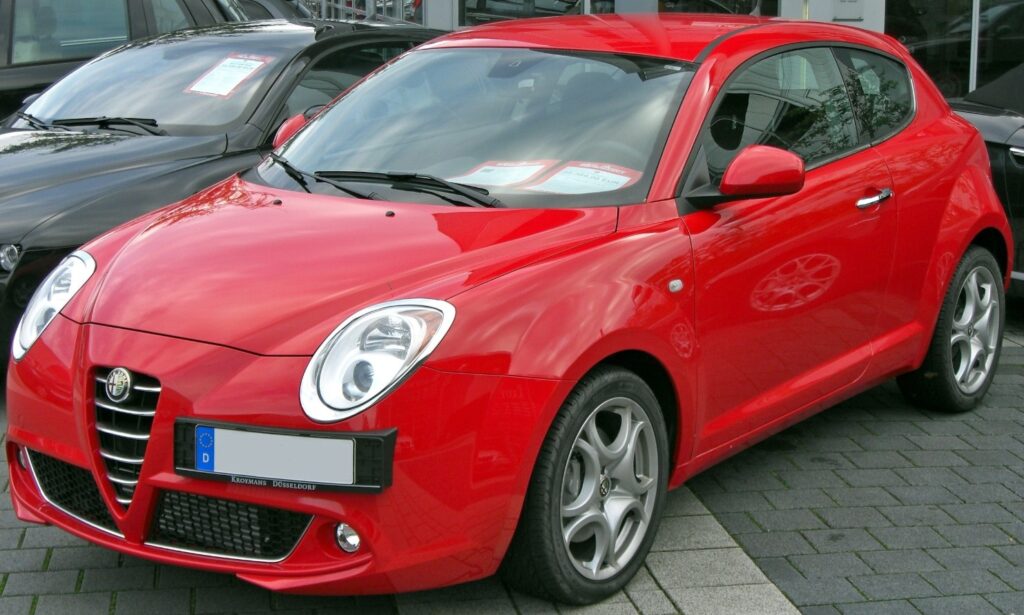
The Alfa Romeo MiTo has always been a small car with a big personality. Sharp styling, lively engines, and that unmistakable Italian character make it considerably more interesting than the average supermini. But when we shop for an older example—or already have one parked outside—Alfa Romeo MiTo gearbox problems can quickly become one of our biggest concerns.
The tricky part is that there isn't one universal MiTo gearbox issue. Different engines and model years were offered with different manual transmissions, while certain versions received Alfa Romeo's TCT twin-clutch automatic transmission. Alfa Romeo officially introduced the dry twin-clutch TCT to the MiTo with the 1.4 MultiAir, and later performance versions such as the Quadrifoglio Verde also used a six-speed TCT.
That distinction matters. A crunching manual gearbox, a slipping clutch, and a TCT transmission refusing to select a gear may all feel like "gearbox problems" from the driver's seat, but their causes—and repair bills—can be very different.
So, how worried should we actually be?
Let's dig into the common symptoms, likely causes, repair options, warning signs, and practical checks that can help us avoid turning a charming little Alfa into a very stylish driveway ornament.
Content in this publication
- Are Alfa Romeo MiTo Gearboxes Reliable?
- Which Gearboxes Does the Alfa Romeo MiTo Use?
- Most Common Alfa Romeo MiTo Gearbox Problems
- Alfa Romeo MiTo Difficult to Put Into Gear
- MiTo Gearbox Crunching Between Gears
- Alfa Romeo MiTo Gearbox Whining Noise
- MiTo Gearbox Oil Leaks
- Alfa Romeo MiTo Gear Lever Loose or Vague
- MiTo Gearbox Popping Out of Gear
- Clutch Problems That Feel Like Gearbox Failure
- Alfa Romeo MiTo TCT Gearbox Problems
- TCT Won't Select Drive or Reverse
- Why TCT Clutches Can Wear
- Can a MiTo TCT Gearbox Be Repaired?
- Alfa Romeo MiTo Gearbox Problems When Cold
- Gearbox Problems After the Car Warms Up
- Does Alfa DNA Mode Affect Gearbox Behavior?
- How Much Do Alfa Romeo MiTo Gearbox Repairs Cost?
- How to Diagnose Alfa Romeo MiTo Gearbox Problems
- Buying a Used MiTo: How to Check the Gearbox
- Which MiTo Gearbox Is Best?
- Can We Prevent MiTo Gearbox Problems?
- Should We Avoid an Alfa Romeo MiTo Because of Gearbox Problems?
- When Should We Stop Driving the Car?
- Final Thoughts on Alfa Romeo MiTo Gearbox Problems
- Frequently Asked Questions
Are Alfa Romeo MiTo Gearboxes Reliable?
Broadly speaking, a well-maintained MiTo gearbox can last for many years. We shouldn't automatically assume that every MiTo develops transmission trouble.
Age matters, though.
Even the youngest MiTos are no longer new cars, and many examples have accumulated years of commuting, short journeys, aggressive shifts, missed servicing, worn clutches, tired linkage components, and possibly several previous owners.
That creates a crucial distinction: sometimes what feels like gearbox failure is really a problem somewhere around the gearbox.
A worn clutch can make gears difficult to engage. Damaged linkage can make the gear lever vague. Engine or transmission mounts can produce bangs during shifts. Low or degraded lubricant can make a manual gearbox noisy. On a TCT-equipped car, electronic, hydraulic, clutch-control, or actuator-related faults can influence how the transmission behaves.
Diagnosis comes before parts swapping.
Which Gearboxes Does the Alfa Romeo MiTo Use?
The MiTo was sold with several petrol and diesel engines over its production life, so we shouldn't treat every version as mechanically identical.
Many MiTos use conventional manual gearboxes. Selected 1.4 MultiAir versions were also offered with Alfa Romeo's TCT transmission. Alfa described TCT as a dry twin-clutch transmission controlled electronically and hydraulically, allowing automatic operation as well as driver-controlled sequential shifting.
Later versions expanded the application. For example, Alfa Romeo's 2014 UK model information lists the 1.4 TB MultiAir 135 hp as available with either manual or Alfa TCT transmission, while the 170 hp Quadrifoglio Verde subsequently adopted the six-speed TCT.
Why does this matter?
Because searching online for "MiTo gearbox failure" without identifying the exact engine and transmission is like asking why a house is cold without saying whether its heating system is electric or gas. We may find plenty of answers, but half of them might apply to somebody else's car.
Manual vs TCT Problems
Manual MiTo issues commonly reveal themselves mechanically: noises, poor shift quality, difficulty selecting gears, clutch-related symptoms, or movement in the lever.
TCT problems can be more complicated because the gearbox combines mechanical components with electronically and hydraulically controlled clutch operation.
Alfa's own technical description explains that TCT effectively operates two parallel gear sets—one handling alternating gears and the other handling the remaining gears—with separate clutches allowing the next ratio to be prepared before the current one is released.
Fantastic when everything works.
Less entertaining when it doesn't.
Most Common Alfa Romeo MiTo Gearbox Problems
No single symptom confirms a failed transmission, but there are several behaviors we would investigate immediately.
- Difficulty engaging first or reverse
- Gear lever feeling stiff or unusually loose
- Crunching when changing gear
- Whining or humming that changes with road speed
- Gearbox jumping out of gear
- Clutch slipping under acceleration
- Clutch pedal behaving strangely
- Vibration or judder when pulling away
- TCT hesitation when selecting drive or reverse
- Jerky low-speed TCT operation
- Transmission warning messages
- TCT gearbox becoming stuck in one gear or refusing to select a gear
- Metallic noises while accelerating or slowing
- Oil leaks around the transmission
- Clunks when taking up drive
Some of those symptoms can indicate serious internal wear. Others may come from relatively ordinary external components.
That's why we shouldn't condemn the gearbox merely because the gear lever suddenly feels like we're stirring a bucket of gravel.
Alfa Romeo MiTo Difficult to Put Into Gear
One of the most common complaints owners associate with transmission trouble is difficulty selecting gears.
Suppose the engine is running and first gear or reverse becomes stubborn. Before imagining damaged gears, we'd pay close attention to the clutch.
Could the Clutch Be the Real Problem?
If the clutch doesn't disengage completely, the gearbox input shaft can continue rotating even though we've pressed the pedal.
The result?
First gear might resist engagement. Reverse might crunch. Gear changes can become progressively harder as the vehicle warms up.
A useful diagnostic clue is whether the transmission becomes noticeably easier to shift with the engine switched off.
If it does, a clutch-release problem becomes more plausible.
Potential causes can include clutch wear, hydraulic problems, release-system faults, or other clutch-control issues depending on the version.
Why Reverse Often Complains First
Reverse can make an existing clutch or selection problem especially obvious.
Owners sometimes notice that every forward gear seems acceptable but reverse crunches or refuses to engage cleanly. That doesn't automatically mean the reverse gear itself has disintegrated.
The transmission needs to be inspected properly before any major repair is authorized.
MiTo Gearbox Crunching Between Gears
A healthy manual gearbox shouldn't regularly crunch during normal shifts.
If it does, we need to look at when the crunch occurs.
Does second gear crunch only when cold? Does third gear resist rapid changes? Does every gear complain? Does double-declutching improve the shift?
These clues can point the technician toward clutch drag, selector problems, lubricant condition, or internal synchronizer wear.
Worn Synchromesh
Synchronizers help match rotational speeds inside the gearbox before a gear engages.
When a synchronizer becomes worn, a particular ratio may crunch even though the rest of the transmission still behaves normally.
Second gear often receives plenty of abuse in small, sporty cars because it gets used during brisk acceleration, urban driving, and quick downshifts.
If one specific gear repeatedly crunches while others remain smooth, internal wear deserves investigation.
Ignoring it rarely makes the mechanism magically heal itself.
Alfa Romeo MiTo Gearbox Whining Noise
A faint mechanical sound isn't automatically catastrophic, but a noticeable whine that rises or falls with speed deserves attention.
Transmission whining may originate from bearings, gears, differential components, insufficient lubrication, or general internal wear.
The sound itself matters less than its pattern.
A technician may ask whether the noise occurs while accelerating, decelerating, coasting in neutral, or only in certain gears.
Those differences help isolate the rotating component involved.
Bearing Noise and Why It Matters
Bearings allow shafts and gears to rotate with minimal friction while maintaining precise alignment.
Once a bearing wears, the components it supports may begin operating outside their ideal position.
Initially we might hear only a faint hum.
Later, the gearbox can become considerably noisier.
This is why investigating a new gearbox whine early can be far cheaper than simply turning up the radio until something dramatic happens.
MiTo Gearbox Oil Leaks
Manual transmissions live a hard life, and lubrication is their safety net.
A leak can slowly reduce the oil level until bearings and gears operate with inadequate protection. The gearbox might still work perfectly while lubricant escapes, which makes leaks surprisingly easy to ignore.
We would take wetness around the gearbox casing, driveshaft seals, drain or fill areas seriously—particularly if the transmission has also become noisy.
Does Changing Gearbox Oil Help?
Fresh lubricant can improve shift quality in some cases where old or unsuitable fluid contributes to stiffness.
But we need realistic expectations.
Oil cannot rebuild worn teeth. It cannot restore a damaged bearing. It cannot repair a worn synchronizer.
Think of fresh gearbox oil like giving an athlete proper running shoes. It can help a healthy body work correctly, but it won't mend a fractured ankle.
Using the correct lubricant specification is equally important. Guessing based purely on viscosity or pouring in whatever happens to be sitting on a garage shelf isn't a smart shortcut.
Alfa Romeo MiTo Gear Lever Loose or Vague
A sloppy gear lever can make the entire transmission feel tired even when the internal gears are perfectly serviceable.
Selector cables, linkage components, bushings, mounts, and associated hardware can all influence shift feel.
This is one of the reasons we wouldn't buy a replacement gearbox simply because the lever feels imprecise.
Check the External Components First
External inspection is usually much less invasive than opening the transmission.
If the lever suddenly becomes vague, no longer centers properly, or requires strange movements to select a ratio, the selector system should be checked before we assume that something deep inside the gearbox has failed.
A relatively modest linkage fault can impersonate an expensive transmission problem remarkably well.
MiTo Gearbox Popping Out of Gear
A gearbox that jumps out of gear needs prompt diagnosis.
Possible explanations range from external selection issues to internal wear.
If a ratio isn't engaging fully, engine load may push it back toward neutral. Worn internal components may produce similar symptoms.
This isn't something we'd treat as a harmless Alfa "quirk."
Unexpectedly losing drive can become a safety concern, especially when overtaking, entering traffic, or climbing a hill.
Clutch Problems That Feel Like Gearbox Failure
The clutch and gearbox are separate assemblies, but from behind the steering wheel they feel like one system.
That creates endless confusion.
A worn clutch can slip, judder, drag, or alter engagement. A release mechanism can create noise. Hydraulic problems may affect pedal operation.
Sometimes owners arrive at a workshop convinced the gearbox is dying only to discover that the fault sits between the engine and gearbox rather than inside the transmission itself.
Signs the Clutch May Be Responsible
If engine speed rises rapidly without an equivalent increase in vehicle speed under heavy acceleration, clutch slip becomes an obvious suspect on manual versions.
If the car struggles to enter gear with the engine running but shifts easily when it's off, incomplete clutch disengagement deserves attention.
If the clutch pedal changes feel suddenly, the hydraulic or release system should also be investigated.
None of these tests proves the diagnosis on its own, but each gives us another piece of the puzzle.
Alfa Romeo MiTo TCT Gearbox Problems
The TCT deserves its own discussion because it isn't simply a conventional automatic.
Alfa Romeo launched it in the MiTo as a twin dry-clutch transmission. Instead of a traditional torque converter, electronically and hydraulically managed clutches perform the engagement work.
That design can provide quick shifts, good efficiency, and a direct driving feel.
It also means drivability depends on several systems cooperating correctly.
TCT Jerking at Low Speed
Dual-clutch gearboxes can feel different from torque-converter automatics during crawling traffic because clutches must engage and disengage as the vehicle inches forward.
A slight difference in feel therefore isn't automatically evidence of failure.
Heavy judder, violent engagement, worsening hesitation, or repeated abnormal behavior is another story.
Those symptoms justify diagnostic work.
Potential areas for investigation include clutch condition, adaptation or calibration, control components, electrical inputs, actuator operation, and mechanical transmission condition.
Don't Diagnose TCT Trouble From Feel Alone
One owner's "slightly jerky" is another owner's "completely normal."
We need to compare the behavior against how the transmission was designed to operate and inspect any stored fault codes.
Electronic diagnosis is especially valuable because a control-system fault can change gearbox behavior dramatically without the gears themselves being physically damaged.
TCT Won't Select Drive or Reverse
This is one of the symptoms most likely to make our stomach drop.
The engine starts, the dashboard wakes up, we move the selector—and nothing useful happens.
Before assuming total gearbox failure, a proper technician should investigate electrical supply, relevant sensors and switches, control systems, clutch actuation, stored diagnostic codes, and mechanical condition.
Modern automated transmissions depend on reliable voltage and accurate sensor data. One fault elsewhere can sometimes trigger protective behavior.
Transmission Warning Messages
Warning messages should never be treated as decorative Italian flair.
If a TCT fault appears on the dashboard, retrieving the relevant diagnostic codes is far more useful than disconnecting the battery repeatedly and hoping the warning disappears.
A cleared message doesn't necessarily mean a repaired fault.
We want the cause, not temporary silence.
Why TCT Clutches Can Wear
Remember that the Alfa TCT uses dry clutches. Alfa Romeo specifically described the system as a twin dry-clutch arrangement when it was introduced.
Like clutch components in a manual transmission, these parts must manage friction during engagement.
Driving conditions can influence how hard they work.
Repeated creeping, hill holding using throttle, endless stop-start traffic, and aggressive launches may create more clutch work than relaxed cruising.
That's not an argument for avoiding the car entirely. It's simply a reminder that driving style and usage history matter when we assess a used example.
Can a MiTo TCT Gearbox Be Repaired?
Often, yes.
"TCT fault" doesn't automatically mean "replace the entire transmission."
Depending on the diagnosis, repair might involve control components, electrical work, clutch-related parts, adaptation procedures, actuator-related work, seals, or mechanical transmission repairs.
The important thing is finding a specialist who understands automated dual-clutch systems rather than approaching the unit like an old-fashioned automatic.
Replacing complete assemblies without thorough diagnosis can turn an already expensive repair into a financially painful guessing game.
Alfa Romeo MiTo Gearbox Problems When Cold
Cold operation can reveal weaknesses that become less obvious once components warm up.
Manual gear oil thickens at lower temperatures, so some increased resistance shortly after startup can be normal.
Severe stiffness isn't.
If a particular gear repeatedly crunches when cold, we would consider lubricant condition and specification, clutch operation, selector adjustment, and internal wear.
The trend matters as much as the symptom.
If shifts are becoming worse month by month, the gearbox is trying to tell us something.
Gearbox Problems After the Car Warms Up
The opposite pattern can occur too.
A transmission might initially behave normally and then become noisy, difficult, or inconsistent once everything reaches operating temperature.
Changes in fluid viscosity, component clearances, electronic operation, and clutch behavior can expose faults differently when warm.
When speaking with a mechanic, we shouldn't simply say, "The gearbox is bad."
We should describe exactly when it's bad.
Cold or hot? Accelerating or coasting? First gear or all gears? Straight line or cornering? Engine running or switched off?
Specific observations can save diagnostic time.
Does Alfa DNA Mode Affect Gearbox Behavior?
On TCT-equipped cars, Alfa's DNA driving system can influence how the vehicle responds.
Alfa Romeo's documentation for TCT-equipped MiTo models emphasizes its integration with the car's driving controls, while the TCT can operate automatically or through sequential driver commands.
Therefore, a change in shift character between driving modes isn't necessarily a fault.
What matters is whether the behavior is consistently abnormal: slipping, warning lights, refusal to engage gears, severe juddering, or erratic selection.
How Much Do Alfa Romeo MiTo Gearbox Repairs Cost?
There is no single honest figure.
Repair cost depends on country, labour rates, gearbox version, parts availability, whether new or reconditioned components are used, and—most importantly—what has actually failed.
A linkage repair and an internal gearbox rebuild aren't even in the same financial universe.
Likewise, replacing a clutch is different from repairing TCT control hardware.
That's why we should be suspicious when somebody quotes a complete transmission replacement before performing meaningful diagnostics.
Repair, Rebuild, or Used Gearbox?
If internal manual gearbox damage is confirmed, we generally have three paths.
A repair keeps the existing gearbox and replaces the failed components. A rebuild goes further, inspecting and renewing multiple wear items. A used gearbox can reduce upfront cost but brings uncertainty about its previous life.
A professionally rebuilt unit can make sense when we plan to keep the car.
A used gearbox may make economic sense on a lower-value MiTo, but we'd want the correct gearbox identification, seller warranty, and some confidence about mileage and history.
Otherwise we're simply replacing our mystery with somebody else's mystery.
How to Diagnose Alfa Romeo MiTo Gearbox Problems
Good diagnosis is about narrowing possibilities rather than immediately naming the most expensive component.
We would start with the obvious questions. What exact engine and transmission does the car have? When did the fault begin? Is it temperature dependent? Does it affect one gear or all gears? Are there warning messages? Is there evidence of leakage? Does clutch behavior seem abnormal? Have transmission-related repairs been performed previously?
For TCT cars, electronic diagnostic scanning becomes particularly important.
For manual cars, mechanical checks of the clutch, linkage, fluid condition, mounts, driveshaft area, and transmission noise can help separate external problems from internal damage.
A short road test with somebody who knows what they're listening for can reveal more than an hour of internet speculation.
Buying a Used MiTo: How to Check the Gearbox
A five-minute test drive around a dealership block isn't enough.
Start the car cold if possible. A seller who has conveniently warmed it before every viewing may have an innocent reason—but we'd still prefer to experience cold operation.
Move through every gear deliberately.
Try reverse more than once. Listen with the radio off. Check whether the gear lever moves excessively when accelerating and lifting off. Pay attention to clutch bite and pedal feel on manuals.
With TCT, test forward and reverse engagement, slow manoeuvring, normal automatic changes, firmer acceleration, and sequential shifting if equipped.
The car should then be driven until properly warm.
If we're serious about buying an older MiTo, a pre-purchase inspection by an Alfa Romeo or Italian-car specialist can be excellent value.
Which MiTo Gearbox Is Best?
There isn't a universal winner.
A conventional manual is mechanically simpler in principle and appeals to drivers who want maximum involvement. It can still suffer wear, clutch problems, bearing noise, linkage issues, and internal damage.
The TCT brings convenient automatic operation and rapid twin-clutch shifting. Alfa Romeo marketed the system specifically for its blend of performance, comfort, and efficiency.
But increased control-system complexity means diagnosis can be more specialised when something does go wrong.
Our choice should therefore depend less on internet folklore and more on the condition and maintenance history of the individual car.
A beautifully maintained TCT can be a far better purchase than an abused manual—and vice versa.
Can We Prevent MiTo Gearbox Problems?
We can't make mechanical components immortal, but we can make their lives easier.
Avoid forcing the gear lever when a manual transmission doesn't want to engage. Don't rest a foot constantly on the clutch pedal. Investigate leaks rather than waiting for the gearbox to become noisy. Use fluids that meet the correct specification. Address new noises early.
On TCT models, avoid treating the transmission like a conventional torque-converter automatic during prolonged creeping. If behavior changes noticeably, get it diagnosed rather than waiting for the problem to become severe.
Maintenance is usually less exciting than repairs, but it's considerably nicer for our bank account.
Should We Avoid an Alfa Romeo MiTo Because of Gearbox Problems?
Not automatically.
The MiTo remains an appealing small hatchback precisely because it has character that many rivals lack. Treating every example as a ticking transmission bomb would be unfair.
What we should avoid is the wrong car.
A MiTo with a slipping clutch, unexplained gearbox warning, noisy bearings, poor gear selection, no repair history, and a seller claiming that "they all do that" should set alarm bells ringing.
A well-maintained example with clean shifts and evidence of responsible ownership is a completely different proposition.
Used cars aren't bought by reputation alone. They're bought by condition.
When Should We Stop Driving the Car?
Some symptoms justify immediate attention.
If the gearbox suddenly loses drive, repeatedly jumps out of gear, produces loud grinding or knocking noises, leaks significant fluid, or displays a serious transmission fault while behaving abnormally, continuing to drive can risk additional damage.
Likewise, if gear engagement becomes unpredictable, safety becomes part of the equation.
Getting the car recovered may feel inconvenient.
Replacing several additional components because we decided to "just drive it home" can feel considerably worse.
Final Thoughts on Alfa Romeo MiTo Gearbox Problems
Alfa Romeo MiTo gearbox problems range from relatively simple clutch or linkage issues to internal manual transmission wear and more complex TCT faults. That's precisely why diagnosis matters so much.
We shouldn't assume that every difficult shift means the gearbox needs rebuilding. Nor should we dismiss grinding, whining, slipping, juddering, or warning messages as normal characteristics of an ageing Italian hatchback.
The smartest approach is wonderfully unglamorous: identify the exact transmission, observe the symptoms carefully, check external components first where appropriate, scan TCT systems for faults, and involve a specialist before purchasing expensive parts.
The MiTo may occasionally demand more attention than an anonymous runabout, but that's part of what makes buying the right example so important.
Find one whose gearbox behaves properly, maintain it sensibly, and we can spend more time enjoying that little Alfa badge—and considerably less time staring at workshop invoices.
Frequently Asked Questions
1. What are the most common Alfa Romeo MiTo gearbox problems?
Common complaints include difficult gear selection, crunching, whining, clutch-related shifting problems, vague linkage, and—in TCT models—hesitation, juddering, warning messages, or problems engaging a gear. The exact cause needs diagnosis because several clutch, linkage, electrical, hydraulic, and transmission faults can create similar symptoms.
2. Why won't my Alfa Romeo MiTo go into first or reverse?
A clutch that isn't fully disengaging can make first and reverse difficult to select, although selector/linkage faults or internal transmission wear are also possible. If the gears engage easily with the engine switched off but become difficult when it's running, clutch operation deserves particular attention.
3. Is the Alfa Romeo MiTo TCT gearbox reliable?
A properly operating TCT can provide fast, smooth shifts and efficient automatic driving. It is, however, more complex than a basic manual transmission because clutch operation is electronically and hydraulically controlled. Alfa Romeo describes it as a dry twin-clutch transmission rather than a conventional torque-converter automatic. Maintenance history and the condition of the individual car matter greatly.
4. Can changing gearbox oil fix a noisy MiTo gearbox?
Correct fresh lubricant may improve operation when poor or incorrect oil is contributing to the problem, but it cannot repair physically damaged bearings, gears, or synchronizers. A new or worsening whine should therefore be diagnosed rather than treated with an oil change alone.
5. Is an Alfa Romeo MiTo with a gearbox problem worth buying?
It can be, but only if we know what is wrong and include a realistic repair cost in the purchase decision. A cheap linkage or clutch-related repair is very different from internal transmission damage or an unresolved TCT fault. A specialist inspection before purchase can remove much of the guesswork.
If you want to know other articles similar to Alfa Romeo MiTo Gearbox Problems: Symptoms, Causes, and Fixes you can visit the category Common Problems.
Nissan Rogue AC Not Working? Causes, Diagnosis, and Fixes

Kia Sorento Issues: Common Problems, Reliability and What to Watch For

Honda Passport Not Starting: Causes, Symptoms, and How to Fix It
Honda Passport Keyless Remote Battery Low: What It Means and How to Fix It
Nissan Rogue Apple CarPlay Not Working: Causes and Fixes
Nissan Rogue No Key Detected: Causes, Fixes, and What to Do
Leave a Reply
More content of your interest