

What Year Hyundai Santa Fe to Avoid? The Complete Used-Buyer Guide

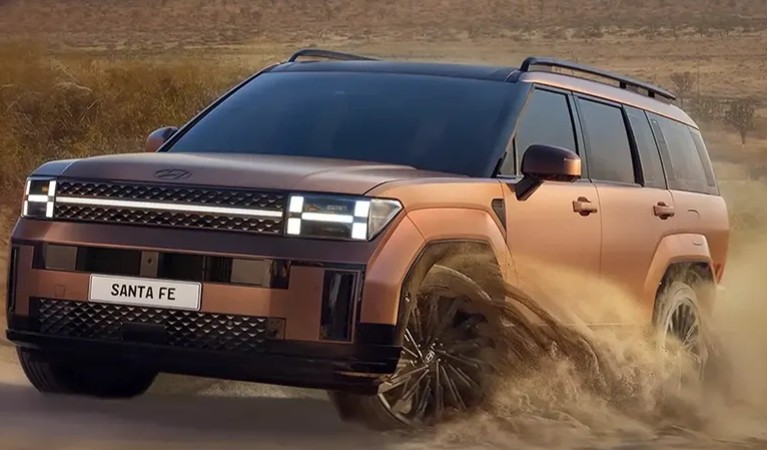
The Hyundai Santa Fe has spent more than two decades doing what a good family SUV should do: carrying people, luggage, groceries, pets, and the occasional mountain of flat-pack furniture without making a fuss. It has also earned a reputation for offering plenty of equipment for the money. But used-car shopping is rarely as simple as finding the right badge and the lowest mileage.
Some Santa Fe model years deserve considerably more scrutiny than others.
So, what year Hyundai Santa Fe should you avoid? If we're shopping in the U.S. used market, the years that deserve the greatest caution are 2012, 2013, 2014, 2017, and selected 2021, 2022, and 2024 gasoline models. That does not mean every Santa Fe built in those years is unreliable. The exact engine, transmission, manufacturing date, recall history, maintenance record, and vehicle identification number matter enormously.
Among them, the 2012 Santa Fe and 2013–2014 Santa Fe Sport deserve particular attention because Hyundai issued engine-related recalls affecting certain vehicles. The 2017 Santa Fe Sport also accumulated a troubling pattern of owner complaints concerning oil consumption, loss of power, and engine trouble. More recently, certain 2021–2022 turbocharged models and some 2024 gasoline Santa Fe vehicles have been affected by dual-clutch transmission recalls.
Let's untangle the generations, engines, recalls, and warning signs so we can tell a genuine bargain from an SUV that may quietly be carrying an expensive repair bill.
Content in this publication
- Quick Answer: Which Hyundai Santa Fe Years Should You Avoid?
- Why Model Year Matters So Much on a Used Santa Fe
- 2012 Hyundai Santa Fe: One of the Years We'd Approach Carefully
- 2013 Hyundai Santa Fe Sport: Perhaps the Biggest Red Flag
- 2014 Hyundai Santa Fe Sport: Similar Engine Concerns Continue
- 2015 Hyundai Santa Fe: Should We Avoid It Too?
- 2017 Hyundai Santa Fe Sport: Oil Consumption Deserves Attention
- 2018 Hyundai Santa Fe: Fire-Related Recall Concerns
- 2019 and 2020 Hyundai Santa Fe: Generally More Appealing Used Targets
- 2021 Hyundai Santa Fe: The DCT Era Adds a New Concern
- 2022 Hyundai Santa Fe: Similar Transmission Caution
- 2023 Hyundai Santa Fe: A More Comfortable Middle Ground
- 2024 Hyundai Santa Fe: New Design, New Transmission Recall
- The 2026 Santa Fe Changes the Transmission Story Again
- Which Hyundai Santa Fe Years Are Better to Buy?
- How to Inspect a Used Hyundai Santa Fe Before Buying
- What Mileage Is Too High for a Hyundai Santa Fe?
- Is a Replacement Engine a Bad Sign?
- Should We Buy a Santa Fe With an Open Recall?
- So, What Year Hyundai Santa Fe Should You Avoid Most?
- Conclusion: Avoid the Problem, Not Necessarily the Badge
- Frequently Asked Questions
Quick Answer: Which Hyundai Santa Fe Years Should You Avoid?
For a shopper trying to narrow down hundreds of used listings, we'd place the following years on the "inspect very carefully before buying" list:
- 2012 Santa Fe: Certain 2.4-liter Theta II engines were recalled over connecting-rod-bearing wear that could lead to engine damage.
- 2013 Santa Fe Sport: Major concern because certain 2.0T and 2.4-liter Theta II GDI engines were included in an engine recall; some 2013 vehicles were also involved in other safety campaigns.
- 2014 Santa Fe Sport: Similar Theta II engine concerns make this one of the most important years to research by VIN.
- 2017 Santa Fe Sport: Owner complaint data shows recurring engine, excessive oil consumption, loss-of-power, and transmission concerns.
- 2021–2022 Santa Fe 2.5T: Certain vehicles equipped with the eight-speed dual-clutch transmission were recalled because an internal transmission oil-pump problem could eventually cause loss of motive power.
- 2024 Santa Fe gasoline models: Certain newly redesigned vehicles were recalled because transmission-control software could damage the DCT and potentially contribute to unintended movement while parked.
These aren't automatic "never buy" vehicles. A properly repaired example with complete documentation may be much safer financially than an apparently better model year with neglected oil changes, accident damage, and no service history.
Why Model Year Matters So Much on a Used Santa Fe
Two Santa Fe SUVs parked beside each other can look almost identical yet carry dramatically different mechanical risk.
Manufacturers change engine components, transmissions, suppliers, production processes, and software throughout a vehicle's life cycle. A redesigned SUV can introduce new technology while simultaneously introducing new bugs. Likewise, the final year of an older generation can sometimes be surprisingly dependable because manufacturers have spent years ironing out the wrinkles.
It's a bit like buying a house. Two houses on the same street may share the same floor plan, but one has a new roof and documented maintenance while the other has water stains hiding beneath fresh paint.
The badge tells only part of the story.
Santa Fe vs Santa Fe Sport: Don't Mix Them Up
This distinction is especially important when discussing older Hyundai Santa Fe reliability.
During part of the 2010s, Hyundai sold different vehicles under related Santa Fe names in the United States. The smaller Santa Fe Sport typically used four-cylinder engines, while the larger three-row Santa Fe used a V6 in many configurations.
That matters because some of the most widely discussed engine issues involve specific Santa Fe Sport vehicles equipped with Theta II four-cylinder engines, not every Santa Fe carrying the badge.
Therefore, when someone online says, "Avoid every 2014 Santa Fe," that statement is too broad.
We need to know the engine.
We need to know the VIN.
And we need to know whether applicable recall work was completed.
2012 Hyundai Santa Fe: One of the Years We'd Approach Carefully
The 2012 Santa Fe deserves a prominent place in this discussion because certain vehicles equipped with the 2.4-liter Theta II MPI engine were included in Hyundai Recall 198.
According to Hyundai's technical documentation, the affected engines could experience premature connecting-rod-bearing wear. Symptoms could include abnormal engine knocking and an illuminated oil-pressure warning light. Depending on inspection results, engine replacement could be necessary.
That's significant.
A worn suspension bushing is annoying. A malfunctioning window switch is inconvenient. Internal engine-bearing damage lives in another financial universe entirely.
What Makes the 2012 Santa Fe Riskier?
The concern isn't simply that the vehicle is old.
By 2026, any 2012 SUV naturally carries age-related risks involving rubber seals, suspension components, cooling systems, electronics, corrosion, and wear items. What moves the Santa Fe into a higher-risk category is the existence of a documented safety campaign involving potentially serious internal engine problems on certain vehicles.
A well-maintained 2012 Santa Fe can still be running perfectly well. But if we're shopping for one, maintenance invoices become more important than shiny paint.
What We'd Check on a 2012 Santa Fe
Listen carefully during a cold start.
A smooth engine should settle into a consistent idle fairly quickly. Knocking, tapping that grows with engine speed, unexplained oil-pressure warnings, metallic sounds, or obvious oil consumption shouldn't be brushed away because a seller says, "They all sound like that."
We would also verify the VIN through Hyundai or NHTSA before handing over any money.
2013 Hyundai Santa Fe Sport: Perhaps the Biggest Red Flag
If we had to identify one Santa Fe version that deserves serious due diligence, the 2013 Santa Fe Sport would be near the top.
Certain 2013–2014 Santa Fe Sport models equipped with 2.4-liter and 2.0-liter turbocharged Theta II GDI engines were recalled for engine inspection and, when necessary, engine replacement. NHTSA documentation concerning Hyundai's engine recall history specifically references 2013–2014 Santa Fe Sport models equipped with these engines.
That is a much stronger warning signal than the occasional complaint about infotainment glitches.
Why the Theta II Engine Matters
The problem involved conditions that could result in connecting-rod-bearing damage.
Once bearings begin deteriorating, the engine can produce knocking noises. If deterioration progresses, the engine can suffer severe internal damage or potentially stall.
This is why a cheap 2013 Santa Fe Sport with an uncertain service history can be a false economy.
The purchase price may look like a bargain. But bargain SUVs stop feeling cheap the moment we're pricing an engine replacement.
Other Recall Considerations for the 2013 Model Year
Certain 2013 Santa Fe and Santa Fe Sport vehicles were also included in later recall activity involving the anti-lock braking system.
NHTSA documents for Recall 23V-651 included certain 2013–2015 Santa Fe models and certain 2013 Santa Fe Sport vehicles because an ABS module could develop an internal brake-fluid leak, potentially causing an electrical short and increasing engine-compartment fire risk.
Again, this doesn't mean every vehicle will catch fire or suffer engine failure.
It means we should never buy one without checking its VIN and recall completion history.
2014 Hyundai Santa Fe Sport: Similar Engine Concerns Continue
The 2014 Santa Fe Sport belongs beside the 2013 model because certain examples used the same affected family of Theta II GDI engines.
Hyundai's recall documentation called for inspection and possible engine replacement on affected 2013–2014 Santa Fe Sport vehicles.
For used buyers, that's enough to warrant extra caution.
Would We Automatically Reject a 2014 Santa Fe Sport?
No.
Imagine two examples.
The first has 125,000 miles, complete maintenance records, documented recall work, regular oil services, a replacement engine installed under Hyundai's campaign, and a clean pre-purchase inspection.
The second has 79,000 miles, no maintenance history, an oil level barely touching the dipstick, unexplained engine noise, and a seller who refuses an independent inspection.
We'd rather have the first vehicle.
Mileage alone doesn't tell the story.
Service History Can Transform the Buying Decision
Paperwork is boring until it saves us several thousand dollars.
We want invoices, oil-change history, dealer campaign records, recall completion evidence, and preferably proof that any major engine work was performed correctly.
A seller saying "the engine was replaced" isn't enough.
Ask when.
Ask where.
Ask why.
Ask for documentation.
2015 Hyundai Santa Fe: Should We Avoid It Too?
The 2015 model year is more nuanced.
Certain 2013–2015 Santa Fe vehicles were included in the ABS-related recall concerning the possibility of brake fluid leaking internally within the ABS module and creating an electrical short.
That recall is important, but an applicable recall doesn't automatically make the entire model year a poor used purchase.
If the recall remedy has been completed and the vehicle passes a professional inspection, we'd judge a 2015 Santa Fe individually rather than placing every example in the "avoid" pile.
You may be interested in reading Which Volvo XC90 to Avoid: Years, Engines, and Buyer Guide
This is an important distinction throughout this guide: a recall is a reason to investigate, not automatically a reason to run.
2017 Hyundai Santa Fe Sport: Oil Consumption Deserves Attention
The 2017 Santa Fe Sport is another year we would inspect more closely than average.
Owner-submitted complaint data collected by CarComplaints shows engine problems as a prominent complaint category, with reported issues including excessive oil consumption, loss of power while accelerating, and transmission slipping.
Hyundai also issued a crankshaft-related recall campaign affecting certain 2017 Santa Fe vehicles, calling for engine inspection and replacement when necessary.
Why Excessive Oil Consumption Is Dangerous to Ignore
Oil consumption sounds harmless until we think through what happens next.
An engine requires sufficient oil to lubricate bearings, cylinder walls, camshafts, and other moving components. If an engine burns oil faster than expected and the owner doesn't monitor the dipstick, the level can fall dangerously low between scheduled services.
That can accelerate wear.
One owner checks the oil every 1,000 miles and catches the problem.
Another assumes the dashboard will warn them.
Those two owners may end up with very different engine lives.
Watch the Exhaust and the Dipstick
When inspecting a used 2017 Santa Fe Sport, we'd be suspicious of unexplained low oil, blue exhaust smoke, oily spark plugs, persistent knocking, rough operation, or a seller who recently topped off the oil but can't explain the vehicle's consumption rate.
An independent mechanic can also look for diagnostic codes and signs of previous engine work.
Certain 2018 Santa Fe vehicles were involved in an ABS-module safety recall after Hyundai identified the possibility of an electrical short that could lead to an engine-compartment fire.
NHTSA issued a consumer alert concerning the recall and advised affected owners to park outside and away from structures until repairs were completed.
That sounds alarming—and understandably so—but completed recall work changes the equation.
Should We Completely Avoid the 2018 Santa Fe?
Not necessarily.
We would check whether the specific VIN was affected and whether the repair was performed. A documented repaired example can be significantly different from a vehicle with an unresolved recall.
This is where blanket internet advice becomes dangerous.
"2018 is terrible" tells us very little.
"VIN X has an unresolved safety recall" tells us something useful.
2019 and 2020 Hyundai Santa Fe: Generally More Appealing Used Targets
By the late 2010s, Hyundai had moved into another Santa Fe generation, and these vehicles can represent attractive used-SUV territory.
That doesn't make them bulletproof.
Owner complaints can still involve oil consumption, electronics, engine behavior, and other mechanical issues. For example, reports continue to appear concerning oil consumption on some 2019 vehicles.
However, when we're comparing the broader used market, a well-maintained 2019 or 2020 example may be easier to recommend than a questionable 2013–2014 Santa Fe Sport with uncertain engine history.
Condition still wins.
2021 Hyundai Santa Fe: The DCT Era Adds a New Concern
The reliability conversation changes again with newer turbocharged Santa Fe models.
Certain 2021–2022 Santa Fe vehicles equipped with the 2.5T engine and eight-speed dual-clutch transmission were included in Hyundai Safety Recall 236.
The issue involved the transmission's high-pressure electric oil pump. Hyundai documentation explained that an internal fault could trigger warning messages and eventually lead to a loss of motive power.
Is Every 2021 Santa Fe Bad?
Absolutely not.
Powertrain specification is crucial.
We're not talking about every engine-and-transmission combination sold under the Santa Fe name.
If we're considering a 2021 turbo model, however, we'd verify whether the VIN falls within the recall population and confirm that the required remedy was completed.
Why Transmission Behavior Matters on a Test Drive
A dual-clutch transmission doesn't always feel exactly like a conventional torque-converter automatic, particularly at very low speeds.
Still, dramatic hesitation, warning messages, severe shuddering, loss of power, or trouble engaging drive shouldn't be dismissed as "normal DCT behavior."
If something feels wrong, get it diagnosed.
2022 Hyundai Santa Fe: Similar Transmission Caution
The 2022 Santa Fe deserves similar scrutiny because certain 2.5T models were included in the same eight-speed DCT recall.
Consumer and manufacturer information confirms that certain 2021–2022 Santa Fe vehicles were part of the campaign.
A properly updated or repaired example may still make perfect sense as a used purchase.
But this is one case where checking the VIN before traveling two hours to inspect a vehicle can save us a wasted afternoon.
2023 Hyundai Santa Fe: A More Comfortable Middle Ground
The 2023 model year sits in an interesting position.
It's new enough to include modern safety equipment and conveniences but avoids being the first year of the dramatic next-generation redesign that arrived for 2024.
That doesn't automatically make 2023 the magical "best Santa Fe year." No vehicle earns that title simply by landing between two dates on a calendar.
But for shoppers nervous about first-year redesigns, a clean 2023 with full service records can be appealing.
As always, we'd still research the individual VIN, engine, drivetrain, accident history, and maintenance record.
2024 Hyundai Santa Fe: New Design, New Transmission Recall
The 2024 Santa Fe represented a major redesign.
It brought boxier styling, a dramatically different cabin, three-row packaging, and plenty of technology. It also brought a notable early issue involving the eight-speed dual-clutch transmission on certain gasoline models.
NHTSA Recall 24V-529 covered 12,349 affected 2024 Santa Fe vehicles produced during a specified production period. The report stated that Transmission Control Unit software logic could inadvertently engage the clutches and damage the transmission case and/or parking pawl. The associated concern included potential vehicle rollaway while in Park.
That's not a tiny infotainment bug.
Does That Mean We Should Avoid Every 2024 Santa Fe?
No.
The recall covered certain vehicles, not every Santa Fe configuration on the road.
It also didn't apply identically to the Santa Fe Hybrid, which uses a different transmission arrangement.
Still, if we're looking for the lowest-risk used purchase possible, there's an argument for allowing an all-new generation a little time to mature.
First-year models are where engineers sometimes discover problems that never appeared during controlled testing. Real life throws traffic jams, freezing mornings, steep driveways, aggressive towing, summer heat, potholes, and millions of unpredictable drivers into the equation.
The 2026 Santa Fe Changes the Transmission Story Again
One interesting development arrived for 2026.
Hyundai replaced the eight-speed dual-clutch transmission in non-hybrid 2026 Santa Fe models with a conventional eight-speed torque-converter automatic. The hybrid retained its six-speed automatic.
That doesn't prove the 2026 model will automatically be more reliable over 150,000 miles—we simply don't have that long-term history yet.
But the change is relevant for shoppers comparing newer Santa Fe model years.
It also illustrates why we should avoid treating every generation as mechanically identical.
Which Hyundai Santa Fe Years Are Better to Buy?
If our goal is to reduce risk rather than chase the absolute cheapest listing, we'd generally favor later, well-maintained examples that don't sit squarely inside the best-known trouble periods.
You may be interested in readingWhich Volvo XC90 to Avoid: Years, Engines, and Buyer GuideYou may be interested in reading
Which Volvo XC90 to Buy: The Complete Buyer’s GuideA clean 2019–2020 model can be worth investigating. A 2023 can also appeal to shoppers wanting relatively recent technology without jumping directly into the first year of the 2024 redesign.
For newer buyers, a Santa Fe Hybrid may deserve consideration because its powertrain architecture differs from the non-hybrid turbo/DCT combination involved in some transmission concerns.
But we'd never buy based on model year alone.
A neglected "good year" can be worse than a meticulously maintained "bad year."
How to Inspect a Used Hyundai Santa Fe Before Buying
The smartest approach combines model-year research with vehicle-specific evidence.
Check the VIN for open recalls first. Then study the maintenance history. Look for consistent oil changes rather than suspicious gaps. Confirm that recall repairs were actually completed instead of assuming a previous owner handled them.
Next comes a cold-start inspection. We'd rather hear the engine before the seller has warmed it up. Listen for knocking, rattling, or unusual mechanical noise.
During the test drive, accelerate gently and aggressively. The transmission should respond predictably. Watch for warning messages, hesitation, slipping, shuddering, or sudden loss of power.
After driving, look underneath for fresh fluid leaks. Check the oil level and condition. Scan the vehicle for stored diagnostic codes.
Finally, pay an independent mechanic for a pre-purchase inspection.
That small expense can be the cheapest part of the entire vehicle.
Don't Trust a Clean Dashboard Alone
A vehicle can have significant mechanical issues without displaying a warning light during your 15-minute test drive.
Diagnostic trouble codes can also be cleared before a sale.
That's why an inspection and scan matter.
A recently reset emissions-readiness monitor, for example, can suggest codes were cleared shortly before you arrived.
Maintenance Records Matter More Than a Seller's Story
"We've never had a problem with it."
Nice.
Show us the records.
Used-car purchases should be based on evidence, not optimism.
Receipts for routine servicing, engine work, transmission updates, recall repairs, tires, brakes, and cooling-system maintenance build a picture of how the vehicle lived before we arrived.
What Mileage Is Too High for a Hyundai Santa Fe?
There's no universal mileage cliff.
A Santa Fe with 120,000 highway miles and meticulous maintenance may be healthier than one with 65,000 neglected city miles.
Once mileage climbs, however, our inspection should widen beyond the known engine and transmission concerns.
Suspension wear, wheel bearings, engine mounts, cooling-system components, air-conditioning hardware, sensors, bushings, steering components, and electronics become increasingly relevant.
Mileage is one clue—not the verdict.
Is a Replacement Engine a Bad Sign?
Not necessarily.
This is one of the more interesting quirks of shopping for older Santa Fe models affected by engine campaigns.
Imagine finding a vehicle with a documented replacement engine installed by a Hyundai dealer relatively recently. Depending on its condition and the quality of the repair, that history may actually make the SUV more attractive than another example still carrying its original high-mileage engine.
But verify everything.
A vague Facebook Marketplace description saying "new motor" isn't documentation.
We want an invoice, mileage at replacement, repair date, part information, and confirmation of who performed the work.
Should We Buy a Santa Fe With an Open Recall?
Usually, we'd prefer to have the recall addressed before completing the purchase whenever practical.
Open recalls aren't equivalent to normal wear.
They involve manufacturer-recognized safety defects.
In the United States, buyers can check recall status using a vehicle's 17-digit VIN through NHTSA's recall lookup system. NHTSA specifically recommends VIN checking because recall applicability can differ between individual vehicles within the same model year.
If a seller refuses to provide the VIN, we'd treat that as a red flag in itself.
So, What Year Hyundai Santa Fe Should You Avoid Most?
If we want the shortest possible conclusion, we'd put the 2013 and 2014 Santa Fe Sport at the center of our caution list because of the documented Theta II engine recall history.
The 2012 Santa Fe also deserves significant caution due to the recall covering certain 2.4-liter Theta II engines.
The 2017 Santa Fe Sport merits careful inspection because of its pattern of engine and oil-consumption complaints.
For newer vehicles, we'd research the specific drivetrain before buying a 2021–2022 2.5T Santa Fe, while certain 2024 gasoline Santa Fe models require particular attention to their transmission recall history.
But here's the larger lesson.
Don't buy a year.
Buy a vehicle.
The model year narrows our search, but the VIN, inspection, maintenance history, powertrain, recall status, and previous ownership ultimately decide whether we're looking at a dependable family SUV or a financial storm cloud disguised as a bargain.
Conclusion: Avoid the Problem, Not Necessarily the Badge
The Hyundai Santa Fe can be a practical, comfortable, and surprisingly well-equipped used SUV. Plenty of owners rack up serious mileage without catastrophic problems.
But the model's history isn't perfectly smooth.
The 2012 Santa Fe, 2013–2014 Santa Fe Sport, 2017 Santa Fe Sport, certain 2021–2022 turbo/DCT models, and selected 2024 gasoline Santa Fe vehicles deserve added scrutiny.
For older models, internal engine problems are the biggest reason for caution. For newer vehicles, transmission campaigns become more relevant.
The smartest buying strategy isn't fear. It's verification.
Run the VIN.
Read the maintenance records.
Inspect the oil.
Listen to the engine cold.
Test the transmission thoroughly.
And spend the money on an independent pre-purchase inspection.
A shiny SUV in the driveway feels good for a weekend. A healthy SUV that starts every morning feels good for years.
Frequently Asked Questions
1. What is the worst Hyundai Santa Fe year to buy?
The answer depends partly on the powertrain, but 2013–2014 Santa Fe Sport models equipped with affected Theta II engines deserve some of the greatest caution. Hyundai recalled certain 2.0T and 2.4-liter GDI vehicles for engine inspection and possible replacement.
2. Should I avoid a 2012 Hyundai Santa Fe?
We wouldn't automatically reject every 2012 Santa Fe, but certain vehicles equipped with the 2.4-liter Theta II MPI engine were involved in an engine recall concerning premature connecting-rod-bearing wear. Check the VIN, maintenance history, engine condition, and recall completion before buying.
3. Is the 2017 Hyundai Santa Fe reliable?
Reliability depends on the exact configuration and maintenance history, but the 2017 Santa Fe Sport deserves extra scrutiny. Owner complaints include excessive oil consumption, loss of power, and transmission issues, and certain 2017 Santa Fe vehicles were involved in an engine-related recall campaign.
You may be interested in readingWhich Volvo XC90 to Avoid: Years, Engines, and Buyer GuideYou may be interested in reading
Which Volvo XC90 to Buy: The Complete Buyer’s GuideYou may be interested in reading
 Competitors to Hyundai Santa Fe: The Best Alternatives Worth Considering
4. Should I avoid the 2021 or 2022 Hyundai Santa Fe?
Not every one. However, certain 2021–2022 Santa Fe models equipped with the 2.5T engine and eight-speed dual-clutch transmission were recalled over a transmission oil-pump issue that could lead to loss of motive power. Verify the VIN and recall completion before purchasing.
5. Is the redesigned 2024 Hyundai Santa Fe a bad year?
It's too broad to call the entire model year bad. However, certain 2024 gasoline Santa Fe vehicles were recalled because TCU software could damage the dual-clutch transmission and potentially contribute to vehicle rollaway. A VIN check and documentation showing recall completion are especially important on early examples.
If you want to know other articles similar to What Year Hyundai Santa Fe to Avoid? The Complete Used-Buyer Guide you can visit the category Models.
Volkswagen T-Cross vs Volkswagen T-Roc: Which Is Better?
Hyundai Tucson Weight: Complete Guide to Curb, Gross, and Payload Specs

Honda Passport vs Toyota 4Runner: Which SUV Is Better?
Honda Passport vs Ford Bronco: Which SUV Is Better?
Honda Passport vs Ford Explorer: Which SUV Is Better?
Honda Passport or Pilot: Which SUV Is Better?
Leave a Reply
More content of your interest