
Are Hyundai Santa Fe Good Cars? A Complete Buyer’s Guide

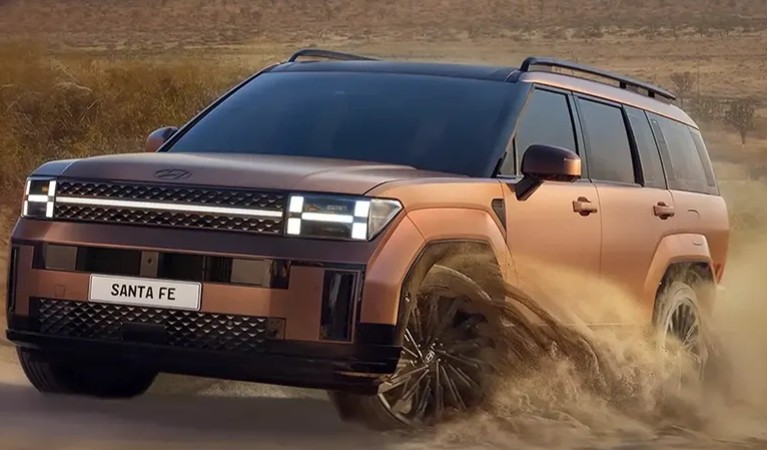
If you are shopping for a practical SUV, one question tends to appear sooner or later: are Hyundai Santa Fe good cars? The short answer is yes. For many drivers, the Hyundai Santa Fe is a very good midsize SUV, especially if comfort, interior space, technology, warranty coverage, and everyday usability matter more than sporty handling or a prestigious badge.
That does not mean every Santa Fe is equally good. Hyundai has sold the nameplate through several generations, different engines, transmissions, hybrid systems, and equipment packages. A clean, properly maintained Santa Fe from a strong model year can be an excellent family vehicle. A neglected example from a troublesome production period can become considerably less charming once repair bills arrive.
The newest generation has moved the Santa Fe in an especially interesting direction. Instead of looking like another rounded crossover, it has become boxier, roomier, and more adventure-oriented. Hyundai has also pushed the model further upmarket with large displays, sophisticated driver-assistance technology, hybrid availability, and genuinely useful cargo space. Hyundai itself describes the current Santa Fe around its expanded passenger and luggage capacity, while some markets offer six- or seven-seat configurations.
So, should we actually buy one? Let's dig deeper.
Content in this publication
- Is the Hyundai Santa Fe a Good Car Overall?
- Are Hyundai Santa Fe Reliable Cars?
- Is the New Hyundai Santa Fe Reliable?
- Is the Hyundai Santa Fe Safe?
- Is the Hyundai Santa Fe Comfortable?
- Is the Hyundai Santa Fe Spacious?
- Is the Hyundai Santa Fe Good on Gas?
- How Does the Santa Fe Drive?
- What Are the Main Hyundai Santa Fe Pros and Cons?
- Are Used Hyundai Santa Fe Good Cars?
- Are Older Hyundai Santa Fe Models Worth Buying?
- Is Hyundai Santa Fe Maintenance Expensive?
- Does the Hyundai Santa Fe Have a Good Warranty?
- Does the Hyundai Santa Fe Hold Its Value?
- Is the Hyundai Santa Fe Better Than Its Competitors?
- Who Should Buy a Hyundai Santa Fe?
- Which Hyundai Santa Fe Is Best?
- Are Hyundai Santa Fe Good Family Cars?
- Should You Buy a Hyundai Santa Fe?
- Final Verdict: Are Hyundai Santa Fe Good Cars?
- Frequently Asked Questions
Is the Hyundai Santa Fe a Good Car Overall?
For the average household, the Santa Fe gets a lot right.
It occupies an appealing middle ground. It is larger and more versatile than many compact crossovers, yet it generally feels easier to live with than the truly enormous three-row SUVs wandering around supermarket parking lots like apartment buildings on wheels.
Current models particularly emphasize passenger space and flexibility. Hyundai designed the latest generation with fold-flat second- and third-row seating and a dramatically squared-off rear area intended to maximize usable interior volume.
That makes the Santa Fe attractive for families, road trips, pets, camping equipment, groceries, sports gear, and all the miscellaneous objects that somehow migrate into a family car.
The driving experience also leans toward comfort rather than aggression. Nobody buys a Santa Fe expecting a racetrack weapon. Think of it as a comfortable pair of walking shoes: supportive, practical, and easy to spend all day with.
What Makes the Santa Fe Appealing?
Its biggest strength is balance.
Some SUVs are inexpensive but feel inexpensive. Others are luxurious but become painfully costly. Some provide enormous cargo areas while driving like delivery vans. The Santa Fe generally avoids those extremes.
Depending on the market and model year, buyers can find gasoline, diesel, conventional hybrid, and plug-in-hybrid versions. Equipment varies considerably by country, but Hyundai has increasingly positioned the Santa Fe as a technology-rich family SUV.
The latest models can offer features such as dual 12.3-inch displays, modern connectivity systems, multiple driver-assistance technologies, and sophisticated cabin conveniences. Hyundai's European specifications, for example, highlight an integrated panoramic display combining a 12.3-inch infotainment screen with a 12.3-inch digital instrument cluster.
It Feels More Expensive Than Many People Expect
This may be one of the Santa Fe's strongest cards.
Climb inside a well-equipped recent model without looking at the badge, and it may feel closer to an entry-level luxury SUV than an ordinary family crossover. Soft-touch surfaces, attractive screens, clever storage, and upscale trim treatments have dramatically changed the Hyundai experience compared with the brand's older bargain-car reputation.
That perceived value is important.
We are not simply buying horsepower and sheet metal. We spend hundreds of hours sitting inside our vehicles. A pleasant cabin can make the Monday morning commute feel noticeably less bleak.
Are Hyundai Santa Fe Reliable Cars?
Reliability is where the answer becomes more nuanced.
Modern Santa Fe reliability is generally respectable, but the vehicle's history is not flawless. Some older Hyundai powertrains developed well-publicized problems, and buyers considering a used Santa Fe should judge the individual engine, production year, maintenance history, and recall status rather than assuming that every vehicle wearing the same badge will behave identically.
Recent third-party owner data is encouraging. J.D. Power gives the 2026 Hyundai Santa Fe an 81/100 Quality & Reliability score, which it categorizes as “Great.” Its overall consumer score is 82/100.
For comparison, the redesigned 2024 Santa Fe received a 79/100 Quality & Reliability score from J.D. Power.
Those scores do not guarantee that an individual Santa Fe will be trouble-free, but they reinforce an important point: the current model is not automatically an unreliable vehicle simply because earlier Hyundais experienced notable mechanical controversies.
How Long Can a Hyundai Santa Fe Last?
A well-maintained Santa Fe can remain useful for many years, but mileage alone tells only half the story.
We would much rather buy a 100,000-mile Santa Fe that received regular oil changes, fluid servicing, recall work, and proper repairs than a 60,000-mile example whose owner treated the maintenance schedule like optional reading.
Longevity depends heavily on maintenance habits, engine choice, driving environment, climate, previous accident damage, and whether small faults were repaired before becoming large ones.
Used-car buyers should pay particular attention to service documentation. A thick folder of receipts may not look exciting, but it can be more valuable than shiny wheels or freshly polished paint.
Do Hyundai Santa Fe Have Engine Problems?
Certain older Santa Fe models and Hyundai powertrains have faced engine-related concerns, which is why researching the precise year and engine matters.
The sensible approach is not to declare every Santa Fe problematic. Instead, identify the VIN, engine, drivetrain, model year, service history, and outstanding recalls before purchasing.
Recall history deserves particular attention. For example, NHTSA issued a consumer alert regarding certain 2018 Santa Fe vehicles because an ABS module malfunction could create an electrical short and engine-compartment fire risk. Hyundai instructed affected owners to park outside until repairs were completed.
That illustrates why checking a used vehicle by VIN is essential. NHTSA explains that recalls are issued when a manufacturer or the agency identifies an unreasonable safety risk or failure to meet minimum safety standards, and its database allows owners to check affected vehicles.
A recall does not necessarily make a vehicle a bad purchase, especially when the repair has been completed. An unresolved recall, however, is something we should know about before handing over the money.
Is the New Hyundai Santa Fe Reliable?
The newest Santa Fe is still relatively young compared with models that have accumulated a decade of real-world mileage, so long-term durability cannot yet be judged with the same confidence.
Early owner-quality indicators are positive, as reflected in the 2026 J.D. Power rating, but only time will reveal how these vehicles perform after 100,000, 150,000, or 200,000 miles.
This is normal with any recently redesigned vehicle.
New generations introduce new electronics, updated powertrains, software, body structures, and manufacturing processes. They also tend to be technologically more complicated than their predecessors. More capability sometimes means more things that could theoretically need attention later.
Our takeaway? The newest Santa Fe looks promising, but conservative used-car buyers may still prefer a mature model year with a known maintenance record.
Is the Hyundai Santa Fe Safe?
Safety is one of the strongest reasons to take the current Santa Fe seriously.
The Insurance Institute for Highway Safety lists the 2025–26 Hyundai Santa Fe as a Top Safety Pick+ when built after November 2024.
Individual IIHS tests show some variation depending on the test configuration, but the vehicle earned strong marks in several crashworthiness categories, including a Good evaluation for its structure and safety cage in the relevant frontal test.
Hyundai also equips versions of the latest Santa Fe with extensive passive-safety equipment. Hyundai documentation for the model describes a ten-airbag system including a driver's knee airbag and second-row side airbags.
That does not mean we should simply see a safety badge and stop researching. Production date, trim level, market specification, and equipment can all matter.
What About NHTSA Safety Ratings?
The picture is slightly more complicated here.
J.D. Power's review of the 2025 Santa Fe notes a four-star overall NHTSA rating rather than the maximum five stars and discusses mixed performance in certain crash-test areas.
This is why looking beyond one headline score is worthwhile. Crash testing continually evolves, and different organizations evaluate different scenarios.
Safety is not simply a number printed on a brochure.
Is the Hyundai Santa Fe Comfortable?
Very.
Comfort may actually be one of the Santa Fe's greatest advantages.
The suspension is typically tuned for everyday roads rather than razor-sharp cornering. Seats in well-equipped versions are supportive, cabin isolation is generally pleasant, and the high seating position gives occupants the elevated SUV experience buyers expect.
For families, the benefit becomes more obvious on long journeys.
A stiff sports SUV can feel exciting for twenty minutes. After five hours of highway driving, we may suddenly appreciate softer suspension, comfortable seats, cupholders, charging ports, storage compartments, and enough room for passengers to stop elbowing each other.
The Santa Fe understands that reality.
Is the Third Row Actually Useful?
The newest generation makes the third row more relevant than it once was, although buyers who regularly transport adults across all three rows should still compare it with larger SUVs.
In some markets the Santa Fe is available with six or seven seats. Hyundai UK, for example, currently offers its hybrid with six- or seven-seat configurations.
For children, occasional passengers, or shorter journeys, the flexibility is extremely useful.
If seven adults will be aboard every weekend, something physically larger may make more sense.
You may be interested in reading Can Hyundai Santa Fe Go Off Road? A Complete Capability Guide
Is the Hyundai Santa Fe Spacious?
Yes, and the latest generation places unusual emphasis on cargo usability.
Hyundai engineered the vehicle's squared rear profile and broad tailgate to maximize the usefulness of the luggage area. In Australia, Hyundai quotes 642 litres of boot space for the current Santa Fe under its local measurement specification, while UK specifications list as much as 725 litres for certain hybrid configurations. Different regional measurement standards and seating arrangements mean these numbers should not be compared blindly.
What matters in the real world is the shape.
A wide opening and relatively boxy cargo area can sometimes be more useful than a larger theoretical capacity compromised by sloping bodywork.
For camping gear, suitcases, folded strollers, sports equipment, or flat-pack furniture, square inches can matter almost as much as cubic ones.
Is the Hyundai Santa Fe Good on Gas?
It depends heavily on the powertrain.
A conventional gasoline Santa Fe offers reasonable efficiency for a vehicle of its size but will not behave like a tiny economy hatchback. Hybrid versions are far more appealing for drivers trying to reduce fuel consumption, especially in urban driving where regenerative braking and electric assistance can provide their greatest benefits.
J.D. Power lists the 2025 Santa Fe Hybrid at approximately 35–36 mpg in its U.S. model information, depending on configuration.
That is an attractive figure for a spacious family SUV.
People covering large annual mileages should calculate fuel costs rather than focusing exclusively on purchase price. A slightly more expensive hybrid can potentially become cheaper to own if its fuel savings align with how and where the vehicle is driven.
Should We Choose the Santa Fe Hybrid?
For many buyers, the hybrid is arguably the sweet spot.
It combines a large SUV body with better fuel efficiency and smooth low-speed operation. Drivers who spend substantial time in traffic may appreciate it even more.
However, the best choice depends on purchase price, local fuel costs, expected annual mileage, financing, warranty provisions, and long-term ownership plans.
If you drive 4,000 miles per year, fuel economy may matter relatively little.
If you drive 25,000 miles annually, the mathematics suddenly becomes much louder.
How Does the Santa Fe Drive?
The Santa Fe is not pretending to be a sports sedan on stilts.
That is probably a good thing.
Steering is designed to feel approachable, visibility is generally SUV-friendly, and ride comfort takes priority over dramatic cornering performance. Current owner feedback reflected in J.D. Power's 2026 scoring gives the vehicle an 88/100 Driving Experience rating.
Around town, that relaxed personality works beautifully.
On the highway, the Santa Fe settles into the role of comfortable cruiser. On a twisting mountain road, enthusiastic drivers may prefer something lighter and sharper.
But how often are we actually attacking mountain switchbacks with three children, a Labrador, twelve grocery bags, and a stroller in the back?
Exactly.
What Are the Main Hyundai Santa Fe Pros and Cons?
No SUV deserves universal praise, and the Santa Fe is no exception. Its appeal becomes much clearer when we place its strengths beside its weaknesses.
- Pros: spacious and highly usable interior; comfortable ride; strong equipment levels; modern cabin technology; available hybrid powertrain; useful three-row flexibility on current models; distinctive styling; encouraging recent owner-quality scores; strong contemporary safety performance in several major tests; and generally good value compared with similarly equipped rivals.
- Cons: certain older model years and powertrains require careful reliability research; the newest generation's styling is polarizing; some competitors offer more spacious third rows; non-hybrid fuel economy can be less impressive; increasingly complex electronics may raise long-term repair questions; and resale value should be considered alongside established Japanese rivals.
Those disadvantages are not fatal flaws. They simply determine who will love the Santa Fe and who may be happier elsewhere.
Are Used Hyundai Santa Fe Good Cars?
They certainly can be.
A used Santa Fe may offer substantially more equipment for the money than a similarly priced alternative from a brand with stronger resale values. That depreciation can hurt the first owner but become the second owner's friend.
Yet buying based purely on price is dangerous.
The cheapest Santa Fe advertised locally may be cheap for a reason.
We should examine its service history, accident history, oil level, coolant condition, tire wear, transmission behaviour, warning lights, cold-start performance, electronics, suspension noises, and recall completion status.
A pre-purchase inspection from an independent mechanic is worth serious consideration.
Think of it like paying someone to inspect a house before buying it. Spending a modest amount today can reveal a problem worth thousands tomorrow.
What Should We Check Before Buying a Used Santa Fe?
Documentation comes first.
Ask whether the owner can prove regular servicing. Confirm the exact engine and transmission. Search the VIN for recalls. Test every electronic feature. Drive the SUV both cold and fully warmed up. Listen for unusual knocking, rattling, whining, or suspension noise.
Check underneath for leaks.
Inspect the exhaust.
Watch the dashboard during startup to ensure warning lights illuminate normally and then disappear.
During the test drive, apply moderate acceleration rather than merely circling the dealership at 20 mph. Transmission problems often reveal themselves under load, during shifts, or after the vehicle reaches operating temperature.
And if something feels wrong, do not allow shiny paint to negotiate with your common sense.
A Maintenance History Can Matter More Than Mileage
Mileage is useful, but context is better.
A motorway-driven Santa Fe covering 80,000 miles with meticulous servicing may have endured less mechanical stress than a neglected 45,000-mile vehicle making countless short trips on cold oil.
We should buy condition, history, specification, and evidence—not merely the smallest number displayed on the odometer.
Are Older Hyundai Santa Fe Models Worth Buying?
Potentially, but research becomes increasingly important as we move backward through the generations.
Older Santa Fe models can be inexpensive, practical transportation. Parts availability is generally reasonable in markets where Hyundai has a strong presence, and independent workshops are familiar with many versions.
But age introduces its own problems: rubber components harden, suspension parts wear, air-conditioning systems weaken, electronics fail, corrosion develops in harsh climates, and previous owners may postpone maintenance.
This is not specifically a Hyundai problem.
An inexpensive ten-year-old SUV is still a ten-year-old SUV.
The purchase price may be low, but its parts do not magically become ten-year-old prices.
Is Hyundai Santa Fe Maintenance Expensive?
Compared with premium European SUVs, routine Santa Fe ownership can be relatively manageable. However, expenses increase dramatically if maintenance has been neglected or a major component fails.
Routine servicing usually involves the familiar suspects: engine oil, filters, brake fluid, pads, rotors, tires, coolant, spark plugs where applicable, transmission-related maintenance where specified, and eventually suspension components.
Hybrid versions introduce additional electrical components but remove neither ordinary mechanical maintenance nor normal wear items.
The smartest ownership strategy is boring—and boring is wonderful when cars are involved.
Service it on time.
Use the correct fluids.
Respond to warning lights promptly.
Fix small leaks before they become large leaks.
You may be interested in readingCan Hyundai Santa Fe Go Off Road? A Complete Capability GuideYou may be interested in reading
Are Hyundai Santa Fe Good on Gas? A Complete Fuel Economy GuideIgnoring a minor symptom because the vehicle still runs is how a $150 inconvenience occasionally grows teeth and becomes a $2,000 repair.
Does the Hyundai Santa Fe Have a Good Warranty?
Warranty coverage has historically been a major Hyundai selling point, although terms vary significantly by country.
Hyundai Canada, for example, currently promotes its new-vehicle warranty program prominently as one of the stronger warranty offerings in that market.
Buyers should verify local terms rather than applying U.S., Canadian, Australian, UK, or European warranty information universally.
Coverage can vary by component, ownership status, commercial use, powertrain type, and whether the warranty transfers to subsequent owners.
For a new-car buyer intending to keep the vehicle for several years, strong warranty coverage can significantly reduce financial uncertainty.
Does the Hyundai Santa Fe Hold Its Value?
Depreciation is worth considering because purchase price is only one part of ownership cost.
Historically, Hyundai vehicles have not always retained value as strongly as the most sought-after Toyota or Honda equivalents. However, Hyundai's improving product quality, styling, technology, and reputation have narrowed the gap in many segments.
For used buyers, faster depreciation can actually be attractive.
Imagine two three-year-old SUVs that originally cost similar amounts. If the Santa Fe depreciates more heavily but offers similar space, equipment, and condition, the second owner may receive far more vehicle for the same money.
The first owner's weakness becomes the second owner's bargain.
Is the Hyundai Santa Fe Better Than Its Competitors?
“Better” depends on what we value.
The Toyota Highlander may appeal more strongly to shoppers placing maximum emphasis on historical resale strength and long-established reliability reputation. The Honda CR-V is smaller but efficient and remarkably practical. The Kia Sorento shares some conceptual territory with the Santa Fe while offering its own styling and equipment combinations. The Mazda CX-90 aims for a more premium, driver-focused experience, while the Hyundai Palisade serves buyers wanting a larger three-row package.
The Santa Fe fights back with distinctive styling, generous technology, clever packaging, available hybrid efficiency, and a cabin that often feels unusually sophisticated for its price class.
There is no universally perfect SUV.
There is only the SUV whose compromises match our priorities.
Who Should Buy a Hyundai Santa Fe?
The Santa Fe makes considerable sense for families, commuters, road-trip enthusiasts, couples needing versatile cargo capacity, and buyers who value technology and comfort.
It is particularly compelling if you want near-premium equipment without moving fully into luxury-SUV pricing territory.
Hybrid shoppers should also keep it on the shortlist.
Conversely, we might look elsewhere if we require huge third-row space every day, serious off-road capability, sports-car handling, or the strongest possible historical resale performance.
That is not criticism. A Swiss Army knife is enormously useful, but we would not use one to chop down a tree.
Which Hyundai Santa Fe Is Best?
For many modern buyers, a well-equipped hybrid version offers the most balanced package.
We get the spaciousness and comfort that define the Santa Fe while reducing one of the traditional disadvantages of larger SUVs: fuel consumption.
Those seeking a used example should avoid obsessing over trim level before mechanical condition. Heated seats are lovely. A healthy engine is lovelier.
Our preferred order is simple: condition first, service history second, powertrain third, safety and essential equipment fourth, cosmetic luxuries last.
That hierarchy may not make the most exciting dealership conversation, but it often produces the happiest owner five years later.
Are Hyundai Santa Fe Good Family Cars?
This may be the easiest question in the entire article.
Yes.
Family practicality is essentially the Santa Fe's home territory.
Its elevated seating position, generous interior dimensions, available third row, useful cargo area, comfortable suspension, storage solutions, charging options, and modern driver-assistance features align naturally with family needs.
The latest generation's design goes even further by prioritizing a wide tailgate and foldable rear seating intended to create a large, flexible interior.
Parents rarely need a vehicle that sets Nürburgring lap records.
They need one that swallows school bags, supermarket runs, suitcases, scooters, sports kits, toys, bottles, jackets, and that mysterious collection of crumbs apparently manufactured inside every family car.
The Santa Fe understands the assignment.
Should You Buy a Hyundai Santa Fe?
For most shoppers considering one, the answer should be yes—provided you choose the right example.
A new Santa Fe offers a genuinely compelling combination of space, technology, comfort, hybrid availability, and increasingly strong safety credentials. The 2025–26 model's IIHS Top Safety Pick+ recognition for qualifying production dates strengthens the case considerably.
Recent owner-quality data is encouraging as well, with the 2026 model receiving an 81/100 Quality & Reliability rating from J.D. Power.
A used Santa Fe demands more homework. Older vehicles should be evaluated according to their exact model year, engine, recall history, mileage, condition, and maintenance documentation.
That distinction matters.
We should not ask only, “Is the Hyundai Santa Fe reliable?”
We should ask, “Is this particular Santa Fe reliable, properly maintained, appropriately priced, and suitable for what we need?”
That is the better buying question.
Final Verdict: Are Hyundai Santa Fe Good Cars?
Yes, Hyundai Santa Fe are good cars overall, and the latest versions are arguably among the most complete Santa Fe models Hyundai has produced.
They are spacious without becoming absurdly enormous, comfortable without feeling completely disconnected from the road, technologically advanced without requiring a luxury badge, and practical enough to handle the chaos of ordinary family life.
They are not perfect.
Older examples require careful investigation. Certain past Hyundai recalls and mechanical issues mean we should never purchase a used one blindly. The newest generation is also too young for us to make absolute claims about 15-year durability.
Still, judged as a complete package, the Santa Fe makes a strong argument for itself.
If we want an SUV that feels modern, carries plenty of people and gear, offers hybrid efficiency in available configurations, provides lots of equipment, and remains pleasant during everyday driving, the Santa Fe deserves a serious test drive.
Sometimes a good car does not need to be spectacular at one thing.
It simply needs to make our lives easier in twenty different ways.
The Hyundai Santa Fe does exactly that.
Frequently Asked Questions
1. Are Hyundai Santa Fe reliable cars?
Recent Santa Fe models show encouraging reliability indicators. J.D. Power gives the 2026 Santa Fe an 81/100 Quality & Reliability score, categorized as “Great.” Older models vary more significantly by engine, year, maintenance history, and recall status, so used buyers should investigate the exact vehicle rather than relying on the model name alone.
2. Is a used Hyundai Santa Fe worth buying?
Yes, a used Santa Fe can represent excellent value, particularly because depreciation may allow buyers to obtain generous equipment and interior space for less money than some competitors. The key is purchasing an example with documented maintenance, satisfactory mechanical condition, and completed recall work.
3. Is the Hyundai Santa Fe good for long trips?
Yes. Comfortable seating, a relaxed ride, useful cargo capacity, generous passenger space, and available hybrid efficiency make the Santa Fe particularly suitable for road trips. The current model's flexible rear seating and cargo-focused design further improve its usefulness.
4. Is the Hyundai Santa Fe safe?
Current models perform strongly in several important safety evaluations. The IIHS lists qualifying 2025–26 Santa Fe models built after November 2024 as Top Safety Pick+ vehicles. Buyers should nevertheless verify the exact production date and safety specification of the particular vehicle they are considering.
You may be interested in readingCan Hyundai Santa Fe Go Off Road? A Complete Capability GuideYou may be interested in reading
Are Hyundai Santa Fe Good on Gas? A Complete Fuel Economy GuideYou may be interested in reading
 Is Nissan Frontier a Good Truck? A Complete Look at Reliability, Capability, and Value
5. Is the Hyundai Santa Fe Hybrid a good choice?
For many drivers, yes. The hybrid combines the Santa Fe's family-friendly space with better fuel efficiency than a conventional gasoline SUV. J.D. Power lists the 2025 Santa Fe Hybrid at roughly 35–36 mpg in the U.S., depending on configuration, making it especially attractive for people who cover significant annual mileage.
If you want to know other articles similar to Are Hyundai Santa Fe Good Cars? A Complete Buyer’s Guide you can visit the category Blog.
How to Reset the Oil Light on a Kia Sportage
Volvo S90 Reliability: Problems, Costs & Best Years
Is Haval Jolion a Good Car? Honest Review, Reliability, Pros and Cons
How to Start Haval Jolion With Spare Key: Complete Guide
How to Calculate Per Diem on an Auto Loan

How to Calculate the Residual Value of a Car
Leave a Reply
More content of your interest