
Can Hyundai Santa Fe Go Off Road? A Complete Capability Guide

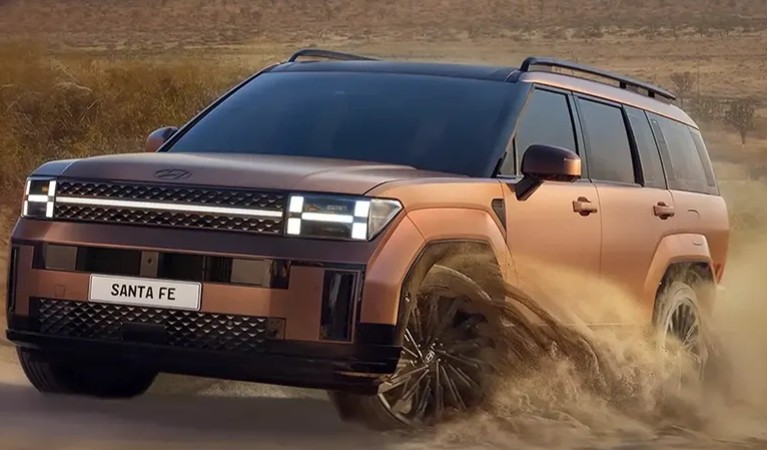
Yes, a Hyundai Santa Fe can go off road—but we need to keep our expectations realistic.
The Santa Fe is primarily a comfortable midsize SUV built for family driving, commuting, road trips, winter weather, and occasional adventures away from pavement. It is not a hardcore off-road machine designed to crawl over boulders or charge through deep mud like a purpose-built 4x4.
Still, equip a Santa Fe with all-wheel drive, appropriate tires, and a sensible driver, and it can handle gravel tracks, forest roads, muddy campsites, snow-covered routes, uneven dirt trails, and plenty of other situations that would make an ordinary passenger car nervous.
Think of the Santa Fe as a hiking boot rather than a mountaineering boot. It'll happily leave the sidewalk and explore the countryside, but there comes a point where specialized equipment becomes necessary.
So, can Hyundai Santa Fe go off road? Let's explore exactly what it can—and cannot—do.
Content in this publication
- Is the Hyundai Santa Fe Designed for Off-Road Driving?
- How Capable Is a Hyundai Santa Fe Off Road?
- Does the Hyundai Santa Fe Have All-Wheel Drive?
- How Hyundai HTRAC AWD Helps Off Road
- Can a Front-Wheel-Drive Santa Fe Go Off Road?
- Is the Hyundai Santa Fe Ground Clearance Good for Off Road?
- Can a Hyundai Santa Fe Drive Through Mud?
- Can the Hyundai Santa Fe Handle Snow?
- Can a Hyundai Santa Fe Drive on Sand?
- Can the Santa Fe Handle Steep Hills?
- What About Downhill Off-Road Driving?
- Are Santa Fe XRT Models Better Off Road?
- Best Tires for Off-Roading a Hyundai Santa Fe
- Useful Upgrades for a Santa Fe Used Off Road
- Should You Lift a Hyundai Santa Fe for Off Roading?
- What Kind of Off-Road Trails Can a Santa Fe Handle?
- Can a Hyundai Santa Fe Cross Water?
- Hyundai Santa Fe vs Traditional 4x4 Off Road
- How to Prepare a Hyundai Santa Fe Before Going Off Road
- Off-Road Driving Tips for Santa Fe Owners
- When Should We Turn Around?
- Can Off-Roading Damage a Hyundai Santa Fe?
- Is a Used Santa Fe Good for Camping and Outdoor Adventures?
- Is the Hyundai Santa Fe Good for Overlanding?
- Who Should Buy a Santa Fe for Off-Road Use?
- Final Verdict: Can Hyundai Santa Fe Go Off Road?
- Frequently Asked Questions
Is the Hyundai Santa Fe Designed for Off-Road Driving?
Not primarily.
Hyundai designs the Santa Fe as a crossover SUV. That means its priorities lean toward comfort, interior space, fuel economy, safety, technology, and predictable everyday handling.
Those characteristics aren't disadvantages. In fact, they're precisely why the Santa Fe makes sense for someone who spends 95% of the time on pavement and occasionally wants to explore a trail.
Traditional off-road vehicles generally include specialized hardware such as:
- Low-range transfer cases
- Locking differentials
- Heavy-duty skid plates
- Large approach and departure angles
- Long suspension travel
- Significant ground clearance
- Aggressive all-terrain tires
- Body-on-frame construction in many cases
The Santa Fe doesn't normally combine all of those ingredients.
What it does offer, particularly in AWD configurations, is enough traction and stability technology to handle surprisingly rough surfaces.
How Capable Is a Hyundai Santa Fe Off Road?
The answer depends heavily on what we call "off road."
Driving down a gravel forestry road? Absolutely.
Crossing a moderately muddy campsite? Usually no problem with appropriate tires.
Driving through snow on an unpaved mountain road? An AWD Santa Fe can be quite competent.
Climbing a deeply rutted trail scattered with large rocks? That's where we begin pushing beyond its intended role.
Light Off-Road Trails Are Its Sweet Spot
A Santa Fe feels most comfortable on trails that are technically off pavement but aren't extreme.
Imagine:
A long gravel road winding through the mountains.
A dirt road leading toward a remote campsite.
A sandy access road to a recreational area.
A muddy lane after a night of rain.
Those environments suit the Santa Fe surprisingly well.
Its suspension is generally comfortable enough to absorb smaller bumps, while available AWD helps distribute power when the surface gets slippery.
Moderate Terrain Requires More Care
Move onto trails with deeper ruts, larger rocks, steep slopes, or soft mud and the equation changes.
Now ground clearance becomes critical.
Wheel placement matters.
Tire grip matters even more.
We also need to remember that crossover SUVs tend to have bumpers and underbody components that weren't designed to repeatedly scrape against rocks.
A cautious driver might get through moderate terrain that an inexperienced driver couldn't, but discretion becomes part of the equipment list.
Driver Skill Makes a Big Difference
Off-roading isn't simply about horsepower.
Good drivers read terrain ahead of them. They keep momentum where necessary, slow down before large obstacles, avoid spinning the wheels unnecessarily, and understand when turning around is smarter than continuing.
That philosophy suits the Santa Fe perfectly.
Does the Hyundai Santa Fe Have All-Wheel Drive?
Many Santa Fe configurations have been offered with Hyundai's AWD system, commonly marketed under the HTRAC name.
For light off-road adventures, AWD makes a substantial difference.
Instead of depending almost entirely on the front wheels, an AWD system can send torque toward the rear axle when additional traction is required.
Picture a front tire slipping on wet grass. In a front-wheel-drive SUV, that loss of grip can quickly halt progress.
An AWD Santa Fe has additional tools available to keep the vehicle moving.
How Hyundai HTRAC AWD Helps Off Road
HTRAC is designed to automatically manage torque distribution according to driving conditions.
Most of the time, drivers don't have to think about it.
The system monitors factors such as wheel speed and traction, then adjusts power distribution accordingly.
That can help when driving across:
- Loose gravel
- Wet dirt
- Snow
- Mud
- Sandy surfaces
- Steep dirt roads
- Slippery grass
Modern electronics react considerably faster than a human driver could manually manage power between individual wheels.
However, AWD shouldn't be confused with an old-school 4WD system featuring low-range gearing.
AWD and 4WD Aren't Exactly the Same
We often hear the terms used interchangeably, but they're different approaches.
AWD systems typically operate automatically and are optimized for changing conditions.
Traditional 4WD systems often allow the driver to select specific drivetrain settings and may provide low-range gearing for extreme terrain.
The Santa Fe's AWD system works beautifully for everyday conditions and light adventures. It simply isn't intended to transform the SUV into a rock crawler.
Can a Front-Wheel-Drive Santa Fe Go Off Road?
Yes, although its capabilities are more limited.
A front-wheel-drive Santa Fe can comfortably travel across well-maintained gravel roads, dry dirt tracks, and reasonably flat campground roads.
Things become more challenging when traction disappears.
Mud, snow, steep loose climbs, wet grass, and deep sand can expose the limitations of driving only the front wheels.
Once those wheels begin spinning, there's only so much traction-control electronics can accomplish.
If off-road use forms part of your regular lifestyle, we'd strongly favor an AWD Santa Fe.
If you occasionally drive down a maintained dirt road toward a campsite, FWD may be perfectly adequate.
Is the Hyundai Santa Fe Ground Clearance Good for Off Road?
Ground clearance is one of the most important limitations we need to consider.
The Santa Fe sits higher than a normal sedan, giving it enough clearance for ordinary dirt roads and moderate irregularities.
Nevertheless, purpose-built off-road SUVs typically provide considerably more room beneath vulnerable components.
Why does this matter?
Imagine a rock sitting in the middle of the trail.
Your tires may easily straddle it, but the rock doesn't care about your AWD system. If it's taller than your available underbody clearance, contact becomes possible.
Ground Clearance Matters More Than Many Drivers Realize
On rough trails, we're constantly dealing with three questions:
Can the front bumper clear the obstacle?
Can the center of the vehicle pass over it?
Can the rear bumper clear it afterward?
A trail doesn't have to look dramatic to cause damage.
A deep rut or sharp ridge can scrape plastic underbody panels long before the vehicle loses traction.
Choose Your Line Carefully
When navigating uneven terrain, avoid simply pointing the Santa Fe straight at every obstacle.
Sometimes placing one tire over a raised section instead of straddling it gives the vehicle considerably more clearance.
Slow, deliberate movement usually beats speed.
Can a Hyundai Santa Fe Drive Through Mud?
Light mud? Yes.
Deep mud? That's another story.
An AWD Santa Fe equipped with quality tires can navigate muddy tracks surprisingly effectively.
The biggest factor is often not AWD but tire choice.
Factory road tires are designed to be quiet, comfortable, economical, and predictable on pavement. Those same traits don't necessarily translate into aggressive mud traction.
When mud fills the tire grooves, ordinary road tires can essentially become slicks.
Avoid Excessive Wheelspin
Once stuck, flooring the accelerator usually makes matters worse.
Spinning tires dig downward, turning a small traction problem into a vehicle-sized hole.
You may be interested in reading Are Hyundai Santa Fe Good on Gas? A Complete Fuel Economy Guide
Gentle throttle and steady momentum normally work better.
If we're planning regular muddy adventures, all-terrain tires become one of the smartest upgrades possible.
Can the Hyundai Santa Fe Handle Snow?
Snow is one area where an AWD Santa Fe makes plenty of sense.
AWD improves acceleration on slippery surfaces, while electronic stability and traction-control systems help manage wheelspin.
But here's the important part: AWD doesn't magically improve braking.
Good winter tires remain incredibly important.
A Santa Fe on quality winter tires can feel confident on snow-covered roads, whereas AWD paired with worn summer-biased tires may struggle.
Snow Depth Is the Limiting Factor
Traction may not be what eventually stops us.
Ground clearance might.
Once snow becomes deep enough to pack beneath the vehicle, the Santa Fe can effectively begin floating on compressed snow while its tires lose contact with firmer ground.
That's when even sophisticated AWD systems run out of tricks.
Can a Hyundai Santa Fe Drive on Sand?
Light, firm sand is possible.
Deep beach sand deserves much more caution.
Sand creates enormous rolling resistance. Tires sink, engines work harder, and momentum becomes essential.
An AWD Santa Fe can tackle compact sandy roads and certain firm beach surfaces, but deep loose sand is risky.
Tire Pressure Can Change Everything
Experienced off-road drivers sometimes reduce tire pressure on sand to enlarge the contact patch.
That can improve flotation considerably.
However, lowering tire pressure requires knowledge, careful speed management, and the ability to reinflate the tires before returning to normal road speeds.
For occasional drivers, prevention is better than recovery.
If the sand looks deep enough to swallow your shoes, think carefully before driving into it.
Can the Santa Fe Handle Steep Hills?
Moderate dirt-road climbs are well within the abilities of an AWD Santa Fe when traction is available.
Steep technical climbs are different.
Low-range gearing in traditional 4x4 vehicles allows extremely slow movement while multiplying torque. The Santa Fe's drivetrain isn't designed around that kind of obstacle.
Momentum can compensate to a point, but attacking a steep climb quickly creates new risks.
The vehicle may bounce.
Traction may disappear.
The suspension can bottom out.
And if we lose momentum halfway upward, restarting on loose terrain can become difficult.
What About Downhill Off-Road Driving?
Going down can be more intimidating than climbing up.
Gravity suddenly becomes the engine.
Depending on model year and trim, electronic driving aids may help control vehicle speed on steep descents. Even without specialized hill-descent features, careful braking and low-speed control remain essential.
Never charge downhill.
We want the tires rolling, not sliding.
Once wheels lock and slide across loose gravel, steering effectiveness drops dramatically.
Are Santa Fe XRT Models Better Off Road?
Hyundai has offered more rugged-looking Santa Fe variants such as XRT trims in certain markets and model years.
These versions may include adventure-focused styling and equipment depending on specification.
They're visually closer to what many buyers imagine when thinking about outdoor exploration.
Still, badges don't rewrite the laws of physics.
Even a rugged Santa Fe remains fundamentally a crossover SUV rather than a dedicated rock-crawling 4x4.
That isn't criticism. It simply tells us where the vehicle fits.
A Santa Fe can carry camping equipment and family members to destinations far beyond the highway while remaining comfortable enough for Monday morning commuting.
That's an appealing combination.
Best Tires for Off-Roading a Hyundai Santa Fe
If we wanted to improve one aspect of a Santa Fe before leaving pavement regularly, tires would sit near the top of our list.
Highway tires prioritize road manners.
All-terrain tires provide a compromise between paved-road comfort and loose-surface grip.
They typically offer stronger tread blocks and better resistance to cuts and punctures.
Should We Install All-Terrain Tires?
Consider them if you regularly drive across:
- Gravel
- Mud
- Snow
- Rocky roads
- Forestry tracks
- Campsite routes
- Rural dirt roads
They're less necessary if your "off-roading" consists of a smooth campground lane twice a year.
Remember the Trade-Off
More aggressive tires can introduce additional noise, rolling resistance, and sometimes reduced fuel economy.
Off-road capability always involves compromise.
Useful Upgrades for a Santa Fe Used Off Road
We don't need to turn a Santa Fe into a miniature expedition truck.
A few practical upgrades can make adventures safer and easier.
Consider:
- Quality all-terrain tires
- Full-size spare tire where practical
- Portable tire inflator
- Tire-pressure gauge
- Recovery boards
- Rated recovery equipment
- Protective floor mats
- Underbody protection where available
- Basic emergency supplies
- Compact shovel
- First-aid kit
Recovery equipment is particularly valuable when traveling away from populated areas.
The best recovery tool, however, remains judgment.
Sometimes the safest off-road modification is simply deciding that a particular trail isn't worth attempting.
Should You Lift a Hyundai Santa Fe for Off Roading?
Suspension lifts can theoretically increase clearance.
But we need to ask whether the benefit justifies the compromises.
Changing suspension geometry can affect:
- Handling
- Ride quality
- Wheel alignment
- Drivetrain angles
- Tire wear
- Electronic safety systems
- Warranty considerations
For serious off-road use, modifying a crossover extensively can quickly become less practical than purchasing a vehicle designed around that purpose.
A mild setup may make sense for enthusiasts who understand the consequences.
For everyone else, good tires and sensible driving deliver much more benefit per dollar.
What Kind of Off-Road Trails Can a Santa Fe Handle?
We can divide potential terrain into three rough categories.
Easy Trails
Ideal Santa Fe territory.
These include maintained gravel roads, dry dirt tracks, campsites, snowy roads, and relatively flat forest trails.
An AWD Santa Fe should feel comfortable in these conditions.
Moderate Trails
Possible with caution.
Expect deeper ruts, loose climbs, modest mud, uneven surfaces, or occasional rocks.
Tires, clearance, weather conditions, and driver skill become much more important here.
Hard Trails
Generally not recommended.
We're talking about:
- Large boulders
- Severe articulation
- Deep water crossings
- Thick mud
- Extremely steep climbs
- Large ledges
- Deep sand
- Trails requiring low-range gearing
Could someone force a Santa Fe through certain difficult terrain?
Probably.
Does that mean it's a good idea?
Not really.
Can a Hyundai Santa Fe Cross Water?
Shallow puddles and small water-covered sections are one thing.
Deep water crossings are another.
Water can damage engines, electronics, transmissions, differentials, and interior components.
You may be interested in readingAre Hyundai Santa Fe Good on Gas? A Complete Fuel Economy GuideYou may be interested in reading
 Is Nissan Frontier a Good Truck? A Complete Look at Reliability, Capability, and Value
Depth can also be difficult to judge.
A seemingly harmless crossing may hide a large hole beneath the surface.
Unlike purpose-built expedition vehicles, the Santa Fe isn't engineered around extreme water fording.
Our rule should be simple: if we're unsure how deep the water is, don't enter it.
Hyundai Santa Fe vs Traditional 4x4 Off Road
Comparing a Santa Fe directly with vehicles designed for serious off-road work isn't entirely fair.
A traditional 4x4 may have superior clearance, articulation, recovery points, low-range gearing, and stronger underbody protection.
But put both vehicles on a highway for four hours and the Santa Fe may suddenly feel like the smarter tool.
Its advantages typically include better everyday comfort, easier maneuverability, quieter cruising, and crossover-style road handling.
The Santa Fe's Strength Is Versatility
That's the central idea.
Most buyers don't spend every weekend crawling across rocks.
They commute.
They pick up groceries.
They transport children.
They drive hundreds of highway miles.
Then once in a while they head toward a remote cabin, hiking trail, ski area, or campground.
For that lifestyle, the Santa Fe's balance makes sense.
How to Prepare a Hyundai Santa Fe Before Going Off Road
Preparation prevents many problems before they happen.
Before heading into remote areas, check the vehicle carefully.
Make sure:
- Tires have sufficient tread.
- Tire pressures are appropriate.
- The spare tire or repair kit is usable.
- Fuel or battery range is adequate.
- Engine fluids are correct.
- No warning lights are present.
- Recovery equipment is accessible.
- Navigation works offline if cellular coverage disappears.
- Someone knows where you're going.
- Weather conditions aren't likely to make the trail dangerous.
A trail that's easy when dry can transform into a muddy mess after heavy rain.
Off-Road Driving Tips for Santa Fe Owners
The Santa Fe responds best to smooth inputs.
Use gentle throttle.
Avoid unnecessary wheelspin.
Look far ahead instead of staring immediately over the hood.
Cross obstacles slowly.
Maintain momentum through soft terrain without excessive speed.
And don't underestimate surface changes.
Gravel can turn into mud after one corner.
Firm sand can suddenly become deep.
A shallow rut may hide a rock.
Don't Follow a Dedicated 4x4 Blindly
This mistake catches people frequently.
Just because the vehicle ahead completed an obstacle doesn't mean ours can.
A lifted 4x4 may have significantly more clearance and suspension articulation.
Follow the terrain, not the vehicle in front.
When Should We Turn Around?
Knowing when to stop is arguably the most important off-road skill.
Turn around if:
- Water depth is unknown.
- Rocks appear higher than your clearance.
- Mud is becoming progressively deeper.
- There's nowhere safe to recover the vehicle.
- Weather conditions are deteriorating.
- You're traveling alone into increasingly difficult terrain.
- The trail requires extreme suspension articulation.
- Tires repeatedly lose traction.
There's no trophy waiting at the end of most trails.
Getting home without damage is the win.
Can Off-Roading Damage a Hyundai Santa Fe?
Yes.
Even gentle off-roading introduces risks rarely encountered on pavement.
Gravel can chip paint.
Branches can scratch bodywork.
Sharp stones can puncture tires.
Deep ruts can damage underbody components.
Mud may pack around suspension parts.
Repeated rough-road driving can also accelerate wear.
After demanding trips, inspect the tires and underside of the vehicle.
Listen for unusual sounds and pay attention to steering changes or warning lights.
Is a Used Santa Fe Good for Camping and Outdoor Adventures?
Absolutely, provided we choose one in good mechanical condition.
The Santa Fe's roomy interior and SUV practicality make it an appealing adventure vehicle.
Fold down the rear seats and there's space for substantial camping equipment.
With AWD, appropriate tires, and roof-mounted accessories where suitable, it can become a comfortable weekend exploration platform.
We wouldn't build an extreme overlanding rig around it without understanding the limitations, but for normal camping and travel, it can work beautifully.
Is the Hyundai Santa Fe Good for Overlanding?
That depends on how we define overlanding.
Modern overlanding covers everything from long-distance camping along gravel roads to multi-week journeys through extremely remote terrain.
For mild overlanding, the Santa Fe can make sense.
It offers passenger comfort, useful cargo capacity, and available AWD.
For technical overlanding where deep mud, river crossings, difficult rocks, and remote recoveries are routine, we'd prefer something with more specialized hardware.
The further we travel from help, the larger our safety margin should become.
Who Should Buy a Santa Fe for Off-Road Use?
A Santa Fe is ideal for someone who wants occasional off-road capability without sacrificing everyday comfort.
It suits drivers who spend most of their time on pavement but regularly visit:
- Campgrounds
- Hiking areas
- Ski resorts
- Gravel roads
- Rural properties
- Mountain cabins
- Fishing spots
- Forest roads
If those places describe your adventures, an AWD Santa Fe could be exactly the right balance.
If your weekends revolve around mud pits, rock crawling, and extreme technical trails, we'd choose a dedicated off-road vehicle instead.
Final Verdict: Can Hyundai Santa Fe Go Off Road?
So, can Hyundai Santa Fe go off road?
Yes—and more confidently than many people might expect.
An AWD Santa Fe can comfortably handle gravel roads, dirt tracks, moderate snow, light mud, campground routes, and plenty of easy recreational trails. Give it quality tires and a thoughtful driver, and its capabilities expand further.
The important thing is understanding what the Santa Fe isn't.
It isn't a hardcore 4x4.
It doesn't have the specialized hardware associated with serious rock crawling or extreme overlanding.
And that's perfectly fine.
The Santa Fe's greatest strength lies in its versatility. We can drive to work during the week, load the family and luggage on Friday evening, cruise comfortably down the highway, and then follow a gravel track toward a campsite once the pavement disappears.
That's exactly the kind of adventure most SUV owners actually need.
Treat the Santa Fe within its limits, choose the right tires, watch the terrain, and it can take us considerably farther beyond the asphalt than its polished appearance might suggest.
Frequently Asked Questions
1. Can a Hyundai Santa Fe go on dirt roads?
Yes. Dirt and gravel roads are among the easiest off-pavement environments for a Santa Fe. AWD provides additional confidence on loose or slippery surfaces, although front-wheel-drive versions can also manage well-maintained dirt roads in good conditions.
2. Is Hyundai Santa Fe AWD good in mud?
HTRAC AWD can provide useful traction in light to moderate mud, particularly with suitable tires. Deep mud is much more challenging because road-oriented tires can quickly lose grip and the Santa Fe doesn't have the ground clearance or specialized drivetrain of a hardcore 4x4.
3. Can you take a Hyundai Santa Fe camping?
Definitely. The Santa Fe works well as a camping vehicle thanks to its cargo space, comfortable road manners, and available AWD. It's particularly well suited to campgrounds reached by gravel, dirt, or moderately rough access roads.
4. Can a Hyundai Santa Fe drive on the beach?
It may handle firm, compact sand, especially with AWD, but deep loose beach sand presents a significant risk of getting stuck. Conditions vary dramatically, so we should confirm local regulations and evaluate sand firmness before driving onto a beach.
5. Is the Hyundai Santa Fe a true 4x4?
The Santa Fe is better described as an AWD crossover SUV when equipped with Hyundai's all-wheel-drive system. It doesn't generally offer the low-range transfer case and heavy-duty off-road equipment associated with traditional 4x4 vehicles. It's designed for versatile light off-roading rather than extreme terrain.
You may be interested in readingAre Hyundai Santa Fe Good on Gas? A Complete Fuel Economy GuideYou may be interested in reading
Is Nissan Frontier a Good Truck? A Complete Look at Reliability, Capability, and ValueYou may be interested in reading
 Are Volvo XC90 Easy to Steal? A Complete Look at XC90 Theft Risk
If you want to know other articles similar to Can Hyundai Santa Fe Go Off Road? A Complete Capability Guide you can visit the category Blog.
How to Reset the Oil Light on a Kia Sportage

Volvo S90 Reliability: Problems, Costs & Best Years
Is Haval Jolion a Good Car? Honest Review, Reliability, Pros and Cons
How to Start Haval Jolion With Spare Key: Complete Guide
How to Calculate Per Diem on an Auto Loan

How to Calculate the Residual Value of a Car
Leave a Reply
More content of your interest