
Are Volvo XC90 Easy to Steal? A Complete Look at XC90 Theft Risk

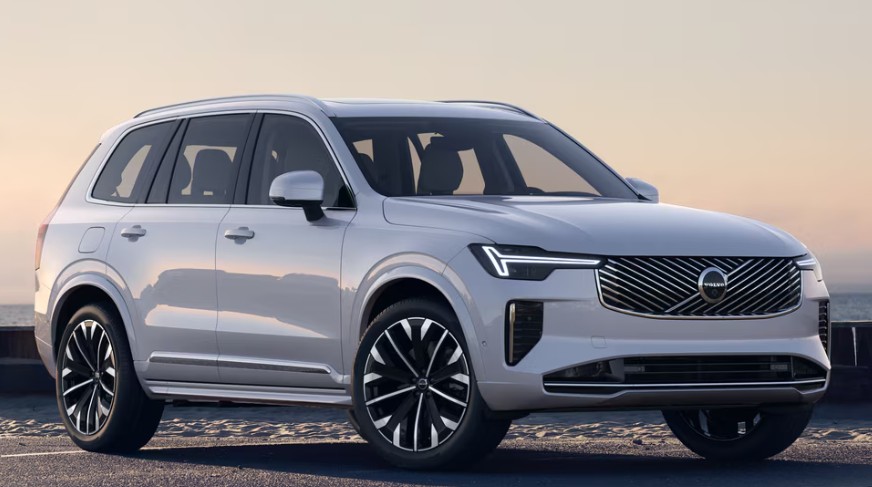
If we own a premium SUV, there is one question that can quietly creep into our minds every time we leave it parked overnight: are Volvo XC90 easy to steal?
The reassuring answer is generally, no. The Volvo XC90 is not widely regarded as an especially easy vehicle to steal, and insurance-loss research has historically placed several XC90 variants among vehicles with relatively low whole-vehicle theft claim frequencies. In fact, Highway Loss Data Institute data highlighted by IIHS has included the Volvo XC90 among luxury vehicles stolen less frequently than average.
That does not mean an XC90 is theft-proof.
No modern vehicle deserves that label. Thieves continuously change their methods, while keyless-entry technology has created new opportunities for sophisticated attacks across many brands. The XC90's electronic immobilizer, alarm system, key authentication, and connected technology create useful layers of protection, but where and how we park still matters enormously.
So, rather than simply saying "Volvos don't get stolen," let's dig deeper. We'll look at how difficult an XC90 is to steal, which security systems protect it, how keyless theft works, whether older models face greater risks, and what practical steps can make our SUV an even less appealing target.
Content in this publication
- Are Volvo XC90 Easy to Steal? The Short Answer
- Why the Volvo XC90 Is Relatively Difficult to Steal
- Does the Volvo XC90 Have an Alarm?
- Are Newer Volvo XC90 Models Harder to Steal?
- Can a Volvo XC90 Be Stolen Through a Relay Attack?
- Are Volvo XC90 Stolen Often?
- Why Aren't Volvo XC90s Bigger Theft Targets?
- Can Someone Steal a Volvo XC90 Without the Key?
- Can Thieves Clone a Volvo XC90 Key?
- What Happens If My XC90 Key Is Stolen?
- Can a Volvo XC90 Be Tracked If Stolen?
- What Makes a Volvo XC90 Attractive to Thieves?
- Is an Older Volvo XC90 Easier to Steal?
- How Can We Make a Volvo XC90 Harder to Steal?
- Does a Faraday Pouch Help Protect an XC90?
- Should We Buy a Steering-Wheel Lock for an XC90?
- Where We Park Matters Almost as Much as What We Drive
- Does Leaving an XC90 Unlocked Increase Theft Risk?
- What Should We Do If Our Volvo XC90 Is Stolen?
- How Does the XC90 Compare With High-Theft Vehicles?
- Should Theft Risk Stop Us From Buying a Volvo XC90?
- Are Volvo XC90 Easy to Break Into?
- The Biggest Mistake XC90 Owners Can Make
- So, Are Volvo XC90 Easy to Steal?
- Frequently Asked Questions
- Closing Thoughts
Are Volvo XC90 Easy to Steal? The Short Answer
For most XC90 owners, the answer is no—the Volvo XC90 is not particularly easy to steal compared with many vehicles.
Modern XC90 models use an electronic immobilizer designed to prevent the vehicle from being started without an authenticated key. Volvo states that the immobilizer prevents unauthorized starting and requires the correct remote key.
That's important because breaking a window and manipulating an ignition barrel—the stereotypical old-school theft method—isn't enough to simply drive away with a modern XC90.
There's another encouraging piece of evidence.
HLDI analyses published by IIHS have previously listed Volvo XC90 variants among vehicles experiencing some of the lowest whole-vehicle theft claim frequencies. In its analysis of 2020-22 vehicles, IIHS specifically noted that several high-end Volvo models ranked among the least frequently stolen.
That's quite a different picture from vehicles that repeatedly appear near the top of theft-loss rankings.
But Low Risk Doesn't Mean Zero Risk
Here's where we need some perspective.
A thief doesn't look at an XC90 and see an invisible force field surrounding it. It's still a valuable luxury SUV containing expensive electronics, wheels, interior components, and other parts.
And modern car theft often has less to do with physically forcing the ignition and more to do with defeating electronic security.
That means our question shouldn't only be:
"Can someone steal an XC90?"
Of course they can.
A better question is:
"How difficult can we make stealing our XC90?"
That is something owners can influence substantially.
Why the Volvo XC90 Is Relatively Difficult to Steal
The XC90 relies on several security layers rather than one giant lock guarding everything.
Think of it like a house with a locked front door, deadbolt, alarm, and motion detector. None is invincible individually, but defeating everything becomes progressively harder.
Modern XC90 protection can include:
- Electronic engine immobilization
- Digitally authenticated keys
- Alarm monitoring
- Interior movement detection on relevant versions
- Door and tailgate monitoring
- Connected vehicle functions depending on year and market
- Keyless locking technology on equipped vehicles
Volvo documentation confirms the XC90 uses an electronic immobilizer designed specifically to prevent unauthorized engine starting.
The Electronic Immobilizer Is the First Big Barrier
An immobilizer sounds complicated, but its basic purpose is wonderfully simple.
The car asks:
"Is the correct electronic key here?"
If the answer is no, the engine should not simply start.
This is dramatically different from older vehicles where mechanically defeating the steering lock or ignition switch could sometimes be enough.
Volvo describes the XC90's electronic immobilizer as a theft-protection system that prevents unauthorized starting and requires the appropriate remote key.
Why That Matters in Real Life
Suppose someone smashes the driver's window and climbs inside.
They haven't automatically won.
Getting inside a car and successfully driving it away are two completely different challenges.
That electronic barrier is one reason modern XC90 theft usually requires considerably more sophistication than the crude methods associated with much older vehicles.
Does the Volvo XC90 Have an Alarm?
Many XC90 versions have an alarm system, although exact equipment varies by production year, trim, options, and country.
Volvo documentation for the XC90 describes alarm functionality that can include passenger-compartment movement monitoring. On appropriately equipped models, movement sensors can trigger the alarm when they detect activity inside the cabin.
That's another hurdle.
A window smash may attract attention rather than silently providing access.
Of course, alarms aren't magic either. We've all heard an alarm screaming across a parking lot while everyone continues walking as though nothing happened.
Still, thieves generally favor convenience.
Noise, attention, delays, cameras, steering locks, immobilizers, and uncertain electronic security all increase friction. And friction is exactly what we want.
Are Newer Volvo XC90 Models Harder to Steal?
Generally speaking, newer vehicles benefit from more sophisticated electronic security than much older generations.
However, there's an interesting twist.
More technology doesn't automatically mean fewer potential vulnerabilities.
Older cars relied heavily on mechanical locks. Modern cars depend heavily on software, wireless communication, sensors, and digitally authenticated keys.
We've essentially replaced one battlefield with another.
Older XC90 Theft Methods
On an older vehicle, a criminal may focus on:
- Door locks
- Windows
- Ignition components
- Physical key systems
- Basic alarm vulnerabilities
Security still exists, including immobilizer technology on many earlier XC90s, but the vehicle architecture is generally simpler.
Modern XC90 Theft Methods
Modern vehicles require thieves to think more like electronics technicians.
Potential attack methods across the wider automotive industry can involve:
- Keyless relay attacks
- Key theft
- Electronic programming attacks
- Diagnostic-port abuse
- Vehicle-network manipulation
- Physical towing
- Theft using legitimately obtained keys
We should be careful not to confuse possibility with prevalence, though.
The existence of sophisticated theft techniques doesn't mean every XC90 sitting outside our house is moments away from disappearing.
Can a Volvo XC90 Be Stolen Through a Relay Attack?
Keyless-entry systems across the automotive industry have historically attracted attention because of relay attacks.
Thatcham Research has explained how relay theft can involve extending or relaying communication between a vehicle and its key, potentially allowing criminals to exploit some keyless-entry systems.
Imagine our key sitting peacefully on the hallway table.
The car is outside.
Under normal circumstances they're too far apart to communicate.
A relay attack attempts to electronically stretch that communication distance—as though someone had installed an invisible extension cord between the key and the vehicle.
Does Every XC90 Have the Same Relay-Theft Risk?
No.
XC90 technology has evolved significantly across different model years and markets.
Security hardware, software, key designs, and available features aren't identical throughout the entire XC90 production history.
That's why sweeping statements such as "all XC90s are vulnerable" or "no XC90 can be relay stolen" should make us suspicious.
Security risk depends partly on the exact year and configuration.
Are Volvo XC90 Stolen Often?
This is where the XC90's reputation becomes encouraging.
Historical HLDI insurance-loss studies published by IIHS have shown low whole-vehicle theft claim frequencies for certain Volvo XC90 versions. In the 2020-22 analysis, IIHS specifically noted that several premium Volvo models—including XC90 variants—were among the least frequently stolen vehicles in the study.
More recent HLDI reporting covering model years 2022-24 also continued to include an XC90 4WD variant among models with comparatively low whole-vehicle theft claim frequency.
That's meaningful.
It doesn't guarantee what will happen in our neighborhood tomorrow night, because theft patterns can be extremely local. But it suggests the XC90 is not broadly behaving like one of the industry's notorious theft magnets.
Why Aren't Volvo XC90s Bigger Theft Targets?
There's no single explanation, but several factors may contribute.
Security Technology Adds Difficulty
Electronic immobilization and authenticated keys increase the technical effort required.
A thief may decide another nearby vehicle presents an easier opportunity.
Criminals are businesses in the bleakest sense of the word. Time, risk, resale value, demand, and difficulty all matter.
Different Vehicles Have Different Criminal Demand
Some models become extraordinarily desirable in stolen-vehicle markets because they can be exported easily, dismantled profitably, or sold through established criminal networks.
You may be interested in reading Pros and Cons of Volvo XC90: Is This Luxury SUV Worth It?
The most expensive vehicle isn't automatically the most stolen.
A mainstream SUV with enormous global demand may sometimes be a more attractive target than a rarer luxury vehicle.
Owner Demographics and Parking Habits May Matter
Premium vehicles may also disproportionately spend nights in garages, gated parking facilities, monitored apartment buildings, or properties using security cameras.
That doesn't make the vehicle itself safer, but environment plays a huge role in theft opportunity.
Can Someone Steal a Volvo XC90 Without the Key?
Potentially, yes.
That's true of virtually any valuable modern vehicle.
But stealing one without a valid key is considerably different from simply entering it.
The XC90's electronic immobilizer is specifically intended to stop unauthorized starting without a recognized key.
Sophisticated criminals may sometimes attempt to circumvent electronic vehicle-security systems, but that requires knowledge, tools, access, opportunity, and frequently time.
For most owners, protecting the key remains one of the simplest security priorities.
Can Thieves Clone a Volvo XC90 Key?
We should separate Hollywood mythology from reality here.
Car keys contain electronic authentication technology, and unauthorized duplication or programming attacks can theoretically occur with modern vehicles.
However, it's misleading to picture someone casually standing beside us for two seconds and instantly manufacturing a fully functioning XC90 key.
Security varies according to the vehicle generation and key system.
The practical lesson is simpler: protect legitimate keys, don't leave them accessible near exterior doors, and treat lost keys seriously.
What Happens If My XC90 Key Is Stolen?
A stolen genuine key can be far more dangerous than a thief trying to defeat the entire vehicle security architecture.
If a key disappears under suspicious circumstances, contacting a Volvo retailer or qualified specialist quickly is sensible.
We may need to investigate whether missing-key authorization can be removed from the vehicle depending on its generation and security architecture.
That turns a seemingly small event into something we shouldn't postpone.
Losing a key at the beach is annoying.
Having one deliberately stolen is a security incident.
Can a Volvo XC90 Be Tracked If Stolen?
Connected functionality varies considerably by model year, country, subscription availability, and Volvo service configuration.
Some XC90 generations have supported connected services associated with Volvo On Call. Volvo documentation for certain XC90 models has also referenced Remote Vehicle Immobiliser functionality associated with Volvo On Call in some markets.
Owners shouldn't assume every XC90 provides identical remote-security functionality, however.
The safest approach is to confirm exactly what services are active on our own vehicle.
Check Your Connected Services Before You Need Them
Don't wait until the SUV disappears to discover:
- Your account isn't activated
- Your subscription has expired
- Location services are disabled
- Your app password doesn't work
- Your contact information is outdated
It's like discovering the batteries in our smoke detector are dead while the kitchen is already filling with smoke.
Test the system while everything is calm.
What Makes a Volvo XC90 Attractive to Thieves?
The XC90 may not rank among the easiest vehicles to steal, but it certainly isn't worthless.
Quite the opposite.
It's a desirable premium SUV.
That means criminals may still be interested in:
The Entire Vehicle
Whole-car theft can be driven by resale or export demand.
Parts
Headlights, wheels, electronics, airbags, body panels, interior components, and other valuable parts can have substantial replacement costs.
Personal Items
Sometimes the SUV isn't really the target.
The laptop visible through the window is.
A thief might smash the glass, grab the bag, and disappear without ever attempting to start the vehicle.
That's why "car security" involves more than preventing whole-vehicle theft.
Is an Older Volvo XC90 Easier to Steal?
Potentially, but age alone doesn't tell the entire story.
A first-generation XC90 comes from a very different technology era than today's models. Yet older XC90s still incorporated security technology, and simply being old doesn't suddenly turn one into an unprotected 1980s hatchback.
Age creates different weaknesses.
Rubber seals deteriorate. Locks wear. Alarm components fail. Previous owners modify wiring. Replacement keys of uncertain origin appear. Aftermarket electronics get installed.
A 15-year-old security system also may not be operating exactly as it did when it left the factory.
Maintenance Matters More Than We Think
When buying a used XC90, we'd inspect brakes, tires, transmission behavior, and service history.
Why not check security too?
Test every key.
Test every lock.
Test the alarm.
Confirm the remote functions.
Check that no unexplained aftermarket wiring lurks beneath the dashboard.
Security is part of the vehicle's condition.
How Can We Make a Volvo XC90 Harder to Steal?
This is where owners can take meaningful control.
We don't need to transform our driveway into Fort Knox.
The objective is simple: make stealing our XC90 slower, noisier, more visible, and less attractive than stealing something else.
Consider these practical precautions:
- Lock the vehicle every time. It sounds painfully obvious, but convenience theft thrives on unlocked doors.
- Keep keys away from doors and windows. Don't make electronic or physical key theft unnecessarily easy.
- Consider signal-shielding storage when appropriate. A properly designed key pouch or container can add another layer where keyless relay concerns exist.
- Use a visible steering-wheel lock. Old-fashioned? Absolutely. That's part of the beauty. A thief sees extra work before touching the SUV.
- Park in a garage when available. Physical barriers radically change the equation.
- Use good lighting and visible cameras. Criminals generally prefer darkness and anonymity.
- Don't leave valuables visible. A backpack can turn an otherwise ignored XC90 into an immediate target.
- Keep vehicle software current. Security and electronics evolve, so maintaining manufacturer-supported software is sensible.
- Protect spare keys carefully. The spare deserves exactly the same security as the main key.
- Verify connected services. Know what remote and location-related functionality your specific XC90 actually supports.
Does a Faraday Pouch Help Protect an XC90?
A signal-blocking pouch is commonly discussed as a defense against relay-type attacks involving passive keyless systems.
The idea is straightforward.
Place the key inside a correctly functioning signal-blocking enclosure, and wireless communication should be substantially reduced or blocked.
But there's one catch:
We need to verify that the pouch actually works.
Cheap or worn shielding products may not perform indefinitely.
Put the key inside and approach the locked vehicle. If keyless unlocking still works when it shouldn't, our fancy security pouch may be little more than a stylish key wallet.
Should We Buy a Steering-Wheel Lock for an XC90?
For owners particularly concerned about theft, it's an inexpensive extra obstacle worth considering.
A steering-wheel lock isn't technologically glamorous.
That's exactly why we like it.
While criminals develop sophisticated electronic approaches, we're dropping a giant physical chunk of metal into the equation.
Even if it isn't undefeatable, it creates three benefits:
- Extra time
- Extra effort
- Extra visibility
Vehicle security isn't always about constructing something impossible to defeat.
Sometimes we're simply trying to make the thief mutter, "Forget this one."
Where We Park Matters Almost as Much as What We Drive
We can install every security gadget under the sun and still sabotage ourselves by parking badly.
Consider two identical XC90s.
One sits overnight on an isolated, poorly lit street with no cameras.
The other sits behind a closed garage door next to motion-activated lighting and CCTV.
You may be interested in readingPros and Cons of Volvo XC90: Is This Luxury SUV Worth It?You may be interested in reading
Are Volvo XC90 Good Off Road? A Complete Capability GuideSame vehicle.
Completely different theft opportunity.
When Parking Away From Home
Look for:
- Busy areas
- Well-lit spaces
- Visible security cameras
- Controlled-entry parking
- Locations near pedestrian traffic
- Spaces that don't offer thieves easy concealment
The safest parking spot isn't always the one five steps closer to the entrance.
Does Leaving an XC90 Unlocked Increase Theft Risk?
Yes—and not only because someone can steal the vehicle.
Unlocked cars invite opportunistic crime.
Someone testing door handles may have no intention of stealing an SUV. But an unlocked door gives them access to sunglasses, electronics, documents, cash, garage remotes, and potentially other information.
A garage-door remote combined with paperwork showing our home address can create a much bigger security problem than a missing phone charger.
So take valuables and sensitive documents with us.
What Should We Do If Our Volvo XC90 Is Stolen?
If the vehicle genuinely disappears, speed matters.
Contact local police and follow their instructions. Then notify the insurer and use legitimate vehicle-location or connected services associated with the vehicle if available.
Don't personally chase a stolen vehicle.
Recovering property isn't worth turning a theft into a dangerous confrontation.
We should also secure connected accounts and think about what was inside the vehicle.
House keys?
Garage remote?
Identity documents?
Work equipment?
The secondary risks may require action even after the vehicle itself has been reported.
How Does the XC90 Compare With High-Theft Vehicles?
The difference can be surprisingly dramatic.
HLDI data has repeatedly demonstrated enormous variation between individual vehicle models. Some vehicles suffer whole-vehicle theft claim frequencies many times greater than the overall average, while others sit near the opposite end of the spectrum.
The XC90's appearance in relatively low-theft groups is therefore encouraging.
But rankings shouldn't create complacency.
A model with statistically low theft frequency can still be the wrong vehicle parked in the wrong location at the wrong moment.
Statistics describe populations.
Our driveway contains exactly one SUV.
Should Theft Risk Stop Us From Buying a Volvo XC90?
For most buyers, probably not.
If theft vulnerability is part of our buying decision, the XC90's historical insurance-loss performance is arguably a positive rather than a negative.
The electronic immobilizer also provides a meaningful foundational security layer.
Still, we should evaluate our circumstances.
Someone with a private garage in a quiet neighborhood faces a very different risk profile from someone regularly street-parking a luxury SUV in an area experiencing organized vehicle theft.
Vehicle choice is only one piece of that puzzle.
Are Volvo XC90 Easy to Break Into?
Breaking into a vehicle and stealing it aren't the same thing.
A criminal can smash glass on almost any passenger vehicle.
Security glass, alarms, locks, and sensors may increase difficulty or consequences, but no ordinary car window is an impenetrable vault door.
The XC90 alarm system on relevant configurations can detect movement within the passenger compartment, adding another layer once intrusion occurs.
Still, our best strategy is removing the incentive.
If nothing valuable is visible, there is less reason for a smash-and-grab thief to choose our vehicle.
The Biggest Mistake XC90 Owners Can Make
The biggest mistake may simply be assuming a sophisticated vehicle automatically protects itself.
Technology encourages complacency.
We walk away.
The mirrors fold.
The lights blink.
The app says everything is fine.
Security feels effortless.
But basic habits still matter enormously.
A locked garage beats clever software.
A protected key beats dealing with a stolen one.
An empty passenger seat beats leaving a $2,000 laptop clearly visible.
Modern security works best when we combine electronics with boring common sense.
So, Are Volvo XC90 Easy to Steal?
No vehicle is impossible to steal, but the available evidence doesn't suggest that Volvo XC90s are unusually easy targets.
Quite the opposite.
The XC90 uses electronic immobilization intended to prevent unauthorized starting, and HLDI insurance-loss research published by IIHS has historically placed XC90 variants among vehicles with relatively low whole-vehicle theft claim frequencies.
That's good news.
However, keyless vehicle technology means we shouldn't become careless. Relay-style attacks have been recognized as a broader automotive security concern, and sophisticated thieves don't necessarily attack cars the way they did twenty years ago.
Our strongest approach combines factory technology with simple defenses: protect the keys, lock the vehicle, remove valuables, park intelligently, consider visible physical deterrents, and understand the connected security functions available on our specific XC90.
Think of Volvo's security technology as the castle walls.
Our habits still decide whether we leave the gate open.
Frequently Asked Questions
1. Are Volvo XC90s commonly stolen?
The XC90 has not historically stood out as one of the most frequently stolen vehicles in insurance-loss research. HLDI analyses published by IIHS have included certain XC90 variants among vehicles with relatively low whole-vehicle theft claim frequencies.
2. Does the Volvo XC90 have an immobilizer?
Yes. Volvo documentation describes an electronic immobilizer on the XC90 that prevents unauthorized engine starting and requires a valid or correctly authenticated key.
3. Can thieves steal a Volvo XC90 without its key?
It is possible for sophisticated criminals to attack modern vehicle-security systems, but an XC90's immobilizer is designed specifically to prevent starting without valid key authorization. Keeping keys secure therefore remains extremely important.
4. Should XC90 owners keep their keys in a signal-blocking pouch?
Owners concerned about relay-type attacks may consider a properly functioning signal-blocking pouch, especially when using passive keyless-entry systems. Thatcham Research has documented relay attacks as a broader concern involving certain keyless-entry technologies.
5. What is the easiest way to improve Volvo XC90 theft protection?
Start with layered security. Lock the SUV, keep keys away from exterior doors, remove visible valuables, use secure or well-lit parking, verify connected services, and consider adding a visible steering-wheel lock. None of these measures alone makes an XC90 impossible to steal, but together they can dramatically increase the effort and exposure required.
Closing Thoughts
So, are Volvo XC90 easy to steal?
Generally, no.
Volvo's electronic immobilizer provides an important barrier against unauthorized starting, while historical HLDI data gives XC90 owners additional reassurance that the model hasn't behaved like many high-theft vehicles.
Still, automotive theft changes constantly.
The best security strategy isn't blindly trusting the badge or filling the SUV with dozens of gadgets. It's creating layers.
Factory immobilizer.
Alarm.
Protected keys.
Good parking.
Visible deterrents.
You may be interested in readingPros and Cons of Volvo XC90: Is This Luxury SUV Worth It?You may be interested in reading
Are Volvo XC90 Good Off Road? A Complete Capability GuideYou may be interested in reading
Is Volvo XC90 a Good Car? A Complete Look at the Luxury SUVSmart everyday habits.
Put those together and we're no longer asking a thief to defeat one obstacle. We're asking them to climb a staircase of annoyances—and criminals typically prefer an easier door.
If you want to know other articles similar to Are Volvo XC90 Easy to Steal? A Complete Look at XC90 Theft Risk you can visit the category Blog.
Is Vauxhall Agila a Good Car? Reliability, Problems and Buying Guide

Honda Passport Life Expectancy: How Many Miles Can It Last?
Honda Passport Depreciation: How Well Does It Hold Its Value?

Nissan Rogue Reliability Rating: How Reliable Is the Rogue?
Nissan Rogue Life Expectancy: How Long Does It Last?
Vauxhall Agila Reliability: Common Problems, Best Engines and What to Check
Leave a Reply
More content of your interest