

Toyota Sequoia Cargo Space: How Much Room Do You Really Get?

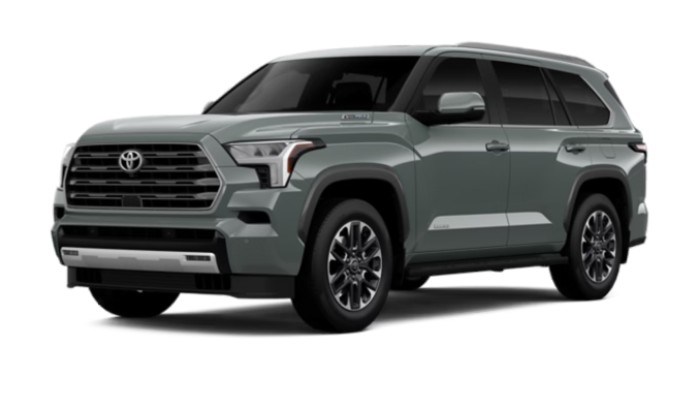
When we look at a full-size SUV, cargo room is usually part of the deal. We expect space for groceries, suitcases, sports equipment, camping supplies, strollers, coolers, and whatever else family life throws at us. That naturally makes Toyota Sequoia cargo space an important consideration before buying this big three-row SUV.
The Sequoia certainly looks enormous from the outside. Yet exterior size doesn't automatically translate into class-leading storage capacity. The current-generation Sequoia takes a slightly different approach. Toyota balances passenger seating, a hybrid powertrain, body-on-frame construction, towing capability, and a clever sliding third row rather than simply carving out the biggest possible rectangular cargo box.
For the 2026 Toyota Sequoia, maximum cargo capacity reaches 86.9 cubic feet with the rear seating folded. Toyota also equips the SUV with a sliding third row and adjustable cargo shelf system, allowing owners to change the balance between third-row passenger room and luggage space.
So, is that enough? And more importantly, does the Sequoia's cargo area actually work well in everyday life?
Let's open the tailgate and take a proper look.
Content in this publication
- Toyota Sequoia Cargo Space at a Glance
- Cargo Space With the Third Row Folded
- Maximum Toyota Sequoia Cargo Capacity
- Understanding the Adjustable Cargo Shelf System
- Toyota Sequoia Cargo Space With Eight Passengers
- Toyota Sequoia Cargo Space for Seven Passengers
- Is the Toyota Sequoia Cargo Area Good for Road Trips?
- How Practical Is the Sequoia for Groceries?
- Can a Stroller Fit Behind the Third Row?
- Is the Toyota Sequoia Good for Camping?
- Can the Toyota Sequoia Carry Bikes?
- Toyota Sequoia Cargo Space for Dogs
- Older Toyota Sequoia Cargo Space vs New Sequoia
- Cargo Space Versus Exterior Size
- How Does Toyota Sequoia Cargo Space Feel in Everyday Use?
- Best Toyota Sequoia Seating Configuration for Cargo
- Tips for Getting More From Toyota Sequoia Cargo Space
- What Should You Check Before Buying a Sequoia for Cargo?
- Who Will Find the Sequoia Cargo Space Ideal?
- Who Might Want More Cargo Room?
- Toyota Sequoia Cargo Space: Numbers vs Real Usability
- Final Verdict: Is Toyota Sequoia Cargo Space Good?
- Frequently Asked Questions
Toyota Sequoia Cargo Space at a Glance
The current Sequoia offers several different cargo capacities depending on how we arrange the seats.
Approximate cargo volume for current-generation models is:
- 11.5 to 22.3 cubic feet behind the third row
- 49.0 cubic feet behind the second row
- 86.9 cubic feet behind the first row with both rear rows folded
- Up to eight-passenger seating, depending on configuration
The unusually large range behind the third row exists because that seat can slide forward and backward. Owners can trade some third-row legroom for additional luggage capacity whenever necessary. Current 2026 specifications continue this arrangement.
That flexibility matters more than a single cargo-volume number suggests.
Think of the Sequoia's rear compartment as a room with a movable wall. Need more space for passengers? Slide the third row rearward. Carrying luggage instead? Move it forward and give the cargo area breathing room.
Toyota Sequoia Cargo Space Behind the Third Row
With all three seating rows in use, the Sequoia provides approximately 11.5 to 22.3 cubic feet behind the third row, depending on its position.
That spread is significant.
At its rearward setting, third-row passengers receive more legroom, but cargo capacity shrinks considerably. Slide the seats forward and storage space can nearly double.
This makes the Sequoia much more adaptable than a fixed third-row design.
For a typical family outing, the larger configuration can accommodate things such as grocery bags, backpacks, several pieces of carry-on luggage, a folded stroller, or smaller sports bags. It isn't an endless cave, though.
If all seven or eight seats are occupied and everyone brings a large suitcase, packing becomes a game of luggage Tetris.
Why the Third Row Changes Everything
Toyota allows roughly six inches of fore-and-aft adjustment for the third row. Toyota introduced this sliding arrangement with the current-generation Sequoia specifically to increase flexibility between passengers and cargo.
Those six inches might not sound dramatic on paper.
In practice, they're extremely useful.
A family carrying younger children in the third row might move the seats forward and gain noticeably more room behind them. Adults sitting in the back may prefer the opposite arrangement.
Instead of choosing permanently between passengers and luggage, we can negotiate the space trip by trip.
Cargo Space With the Third Row Folded
Drop the third row and the available cargo volume expands to approximately 49 cubic feet.
For many owners, this will probably be the Sequoia's sweet spot.
We still retain the entire second row for passengers while gaining enough cargo room for substantially larger loads. Weekend luggage, camping equipment, multiple grocery hauls, sports gear, coolers, and other bulky items become much easier to manage.
A family of four or five can therefore use the Sequoia almost like an oversized two-row SUV most of the time, then raise the third row whenever additional seats are necessary.
Is 49 Cubic Feet Enough for Family Trips?
Usually, yes.
Raw cubic-foot measurements can feel abstract, so it's easier to picture the space in real-world terms.
With the third row folded, we could reasonably expect to carry combinations such as several medium suitcases and backpacks, beach equipment for a family, camping supplies, golf bags, boxes from a warehouse store, or children's sports gear.
Independent testing also highlights the difference seat position makes: Car and Driver reported fitting four carry-on cases behind the third row and 18 with the third row folded in its testing.
That's much more useful than simply knowing that the cargo hold measures 49 cubic feet.
Maximum Toyota Sequoia Cargo Capacity
Fold the second and third rows and the Sequoia provides 86.9 cubic feet of maximum cargo volume according to Toyota's current specifications.
Now we're talking about genuinely substantial carrying capacity.
In this arrangement, the Sequoia becomes less like a traditional passenger SUV and more like a large gear carrier. Furniture boxes, bicycles with some preparation, camping equipment, household supplies, luggage, and bulky recreational gear become realistic possibilities.
Of course, cubic feet tell only part of the story.
Shape matters.
Height matters.
Floor design matters.
And this is where the Sequoia becomes a little more complicated.
The Cargo Floor Is Not Completely Conventional
One of the most important things prospective owners should understand is that the current Sequoia doesn't create the perfectly low, continuous cargo floor some shoppers might expect.
The hybrid hardware and rear suspension packaging influence the design of the rear compartment. Reviewers have specifically noted that the folded third row does not disappear completely into the floor in the manner found in some competing SUVs.
Toyota addresses this with its Adjustable Cargo Shelf System.
Instead of pretending the raised area doesn't exist, the system lets us configure a removable shelf at different heights. Toyota says the shelf can be positioned in multiple ways depending on storage needs.
It's clever, although whether we love the solution depends heavily on what we carry.
Understanding the Adjustable Cargo Shelf System
The Sequoia's cargo shelf deserves more attention because it changes how usable the rear compartment feels.
Rather than giving us one fixed floor, Toyota provides an adjustable platform designed to create different storage arrangements.
We can use it to help level portions of the cargo area, divide gear into upper and lower sections, or organize smaller items that would otherwise roll around.
Imagine loading muddy hiking boots, tools, emergency equipment, and clean luggage together. A configurable shelf gives us options that a simple empty cargo box doesn't.
When the Cargo Shelf Works Best
The shelf is particularly helpful when we're transporting different categories of gear.
For example, we might keep smaller emergency supplies underneath while placing suitcases above. Camping equipment can be separated from food. Sports shoes can stay away from clean clothing.
It's less about creating additional cubic feet and more about making the existing cubic feet useful.
That's an important distinction.
A cargo hold can have enormous theoretical volume yet still frustrate us if everything piles into one awkward mountain.
The Trade-Off
The downside is straightforward: shoppers who want a completely flat, deeply recessed cargo floor may prefer the packaging of certain competitors.
The Sequoia instead gives us a higher, configurable floor.
Some buyers will see ingenious flexibility.
Others will see unnecessary complexity.
Neither reaction is unreasonable.
The right answer depends on how we actually use the vehicle.
Toyota Sequoia Cargo Space With Eight Passengers
Several Sequoia configurations can accommodate up to eight passengers by using a second-row bench, while versions equipped with second-row captain's chairs generally seat seven.
Eight people inside a vehicle sounds impressive.
Eight people plus their belongings is where things become interesting.
With the third row fully occupied and positioned for generous passenger space, cargo capacity can fall toward 11.5 cubic feet. That's useful for daily errands but less ideal for an airport run involving eight travelers and eight large suitcases.
For that scenario, a roof carrier, trailer, or more creative packing might be necessary.
This is why we should never evaluate a three-row SUV using seating capacity alone.
The real question is:
How many people can it carry comfortably while still carrying everything those people bring?
Toyota Sequoia Cargo Space for Seven Passengers
A seven-seat Sequoia typically uses second-row captain's chairs.
For families, this configuration offers a different kind of practicality.
Captain's chairs make third-row access easier because passengers can move between the two second-row seats instead of constantly folding a bench. That can be invaluable when children use the third row regularly.
The trade-off is losing one passenger position.
Cargo measurements remain broadly similar, but the open space between the captain's chairs can occasionally accommodate smaller bags or provide easier access to items farther back.
For everyday family use, many of us might consider seven seats the more comfortable arrangement even if eight-passenger capacity looks better on a specification sheet.
Is the Toyota Sequoia Cargo Area Good for Road Trips?
Yes, with one important qualification: how many seats are occupied?
A couple traveling with the second and third rows folded has enormous flexibility. A family of four with the third row down also has plenty of usable room.
A family of seven or eight faces a different reality.
Four or Five Travelers
This is arguably the ideal scenario.
Keep everyone in the first two rows, fold the third row, and approximately 49 cubic feet become available. That provides enough space to pack generously without filling the cabin with loose bags.
Six or Seven Travelers
Now we have to use part or all of the third row.
The sliding seat becomes extremely valuable because we can find a compromise between passenger legroom and luggage capacity.
Eight Travelers
It can be done, but luggage becomes the limiting factor.
For airport trips, extended vacations, or camping expeditions with eight people, the Sequoia's towing ability and accessory options may become just as important as the space inside.
How Practical Is the Sequoia for Groceries?
Very practical.
Groceries rarely require maximum cargo volume, and the available space behind the third row is more than enough for routine supermarket trips.
The adjustable shelf can also help prevent smaller bags from wandering around the cargo compartment like marbles in a cardboard box.
For warehouse-club runs involving several large boxes, folding one or both portions of the third row gives us additional flexibility.
The split-folding arrangement means we don't necessarily have to choose between "all seats" and "all cargo."
We can mix both.
Can a Stroller Fit Behind the Third Row?
Many folded strollers should fit, especially when the sliding third row is moved forward to maximize cargo space.
Still, stroller dimensions vary wildly.
A compact travel stroller and a giant double stroller are practically different species.
Families should therefore bring their actual stroller to a dealership when possible. Loading it into the cargo area tells us more in 30 seconds than staring at a specification sheet for half an hour.
After all, cubic feet don't tell us whether an oddly shaped item fits through the opening.
Real dimensions win every time.
Is the Toyota Sequoia Good for Camping?
Absolutely, particularly if we're traveling with four or five people rather than using every available seat.
With the third row folded, 49 cubic feet provides substantial room for tents, sleeping bags, coolers, folding chairs, backpacks, cooking gear, and other equipment.
Fold both rear rows and the available 86.9 cubic feet allows significantly more adventurous packing.
Toyota also positions the current Sequoia as a vehicle combining utility with serious towing capability, which makes it suitable for owners who supplement interior cargo space with trailers, boats, or additional recreational equipment.
Sleeping Inside a Toyota Sequoia
Can we sleep inside?
Potentially, yes.
The maximum cargo area is long and wide enough to make sleeping arrangements possible for some owners, particularly with a suitable mattress or camping platform.
The challenge isn't simply length.
It's the floor.
Because the rear seating arrangement doesn't create the same naturally flat surface found in some SUVs, campers may need to work with the adjustable shelf system or use a custom sleeping platform.
For occasional overnight camping, that's manageable.
For someone planning frequent SUV camping, we'd recommend inspecting the floor configuration personally before buying.
Can the Toyota Sequoia Carry Bikes?
Yes, although the answer depends on bicycle size and how many passengers we're carrying.
With both rear rows folded, bicycles may fit inside after removing a front wheel or adjusting handlebars, depending on the bike.
Mountain bikes are obviously more cumbersome than children's bikes or compact road bikes.
A hitch-mounted bicycle rack may ultimately be the cleaner solution because it preserves passenger and cargo space while avoiding mud, chains, pedals, and tires inside the cabin.
Still, having nearly 87 cubic feet available gives us plenty of flexibility when keeping expensive bikes protected indoors matters.
Toyota Sequoia Cargo Space for Dogs
Large SUVs and large dogs tend to get along rather well.
With the third row folded, the Sequoia provides enough rear area for large dog crates or a combination of pets and luggage, depending on crate dimensions.
The adjustable cargo platform can also help create a more organized setup.
Owners should remember that cargo volume isn't the same thing as safe pet space. Dogs should still be properly secured using an appropriate crate, barrier, or vehicle restraint system.
A giant empty cargo hold isn't much use if every hard stop sends Rover skating toward the front seats.
Older Toyota Sequoia Cargo Space vs New Sequoia
Here's where things get interesting.
The previous-generation Sequoia offered substantially more maximum cargo capacity.
Toyota stated that the 2022 Sequoia provided 66.6 cubic feet with the third row folded and as much as 120.1 cubic feet with both rear rows folded.
Compare that with the current-generation maximum of 86.9 cubic feet, and we can see a considerable reduction in absolute cargo volume.
Why?
Because the latest model follows a fundamentally different engineering formula.
The current generation uses Toyota's i-FORCE MAX hybrid powertrain and incorporates different rear suspension and packaging choices. Toyota prioritized a mixture of power, towing, efficiency, technology, and off-road capability rather than simply preserving the cavernous cargo hold of the previous generation.
Is the Older Sequoia Better for Cargo?
If maximum interior volume is our only priority, yes—the previous generation has a clear numerical advantage.
But cargo volume isn't the only reason to buy a full-size SUV.
The current Sequoia offers newer technology, a modern hybrid powertrain, substantially updated interior design, advanced driver-assistance features, and greater configurability around its sliding third row.
So the better question isn't "Which one has more cargo space?"
That's easy.
The older one does.
The better question is:
Which combination of cargo capacity, technology, towing, passenger comfort, and driving characteristics matters most to us?
Cargo Space Versus Exterior Size
The current Sequoia stretches roughly 208 inches in overall length, so nobody will mistake it for a compact crossover.
That makes its 86.9-cubic-foot maximum capacity slightly surprising at first.
We might naturally expect something approaching a moving van inside.
But vehicle packaging is more complicated than exterior measurements.
Frame architecture, suspension components, hybrid batteries, passenger seating, crash structures, wheel wells, climate-control equipment, and dozens of mechanical components all compete for the same physical space.
The Sequoia is therefore a useful reminder that large vehicle and largest cargo area are not synonyms.
How Does Toyota Sequoia Cargo Space Feel in Everyday Use?
For normal family use, it generally feels flexible rather than enormous.
And that difference matters.
The sliding third row lets us stretch the cargo compartment without permanently sacrificing passenger seating. The shelf system lets us organize awkward loads. Split-folding seats provide several passenger-and-cargo combinations.
Those features can make the Sequoia more useful than its headline numbers initially suggest.
At the same time, shoppers coming from an older Sequoia may immediately notice the reduction in sheer volume.
Someone accustomed to 120.1 cubic feet in a previous-generation model shouldn't assume today's Sequoia offers the same warehouse-like interior.
Best Toyota Sequoia Seating Configuration for Cargo
If cargo flexibility is a major priority, we'd think carefully about how often the third row will actually be used.
For most families, there are three practical arrangements:
- All three rows upright: Best when maximum passenger capacity matters, but luggage space is limited.
- Third row folded: Probably the best everyday setup for families of four or five, delivering approximately 49 cubic feet.
- Second and third rows folded: Best for moving bulky equipment and maximizing storage, with up to 86.9 cubic feet.
The beauty lies in switching among them.
We aren't buying three different SUVs. We're rearranging one.
Tips for Getting More From Toyota Sequoia Cargo Space
The Sequoia becomes much easier to live with when we pack around its design rather than fighting against it.
Use the sliding third row aggressively. Even shifting it forward slightly can make a meaningful difference when luggage barely misses fitting.
Take advantage of split-folding seats instead of automatically dropping the entire row. One third-row seat can stay available while the other side holds longer equipment.
Use smaller soft-sided luggage on road trips. Hard-shell suitcases waste space around corners and wheel wells; duffel bags behave more like water and squeeze into irregular gaps.
Keep frequently needed items near the tailgate. Nobody wants to excavate six suitcases on the side of a highway to find one jacket.
And don't ignore vertical space. Properly secured stacking can dramatically increase practical cargo capacity.
What Should You Check Before Buying a Sequoia for Cargo?
Numbers are useful, but a dealership cargo test is even better.
Bring the items that matter most to you.
A stroller.
Dog crate.
Golf clubs.
Camping box.
Large suitcase.
Whatever normally fills your vehicle.
Open the tailgate, reposition the third row, fold seats, adjust the shelf, and physically load your gear.
We may discover that 22.3 cubic feet works perfectly.
Or we may discover that the shape of one particular object makes it frustrating.
Both discoveries are worth making before the SUV ends up in our driveway.
Who Will Find the Sequoia Cargo Space Ideal?
The Sequoia's storage setup makes the most sense for buyers who want a combination of passenger capacity and flexible cargo arrangements rather than maximum interior volume at all costs.
It's especially compelling for families that normally use four or five seats but occasionally need seven or eight.
In that scenario, we can leave the third row folded for everyday cargo duty and raise it only when grandparents, friends, or additional children come along.
Outdoor enthusiasts may also appreciate the combination of interior storage, rugged body-on-frame construction, and significant towing capability.
Who Might Want More Cargo Room?
Large families using the third row every single day should pay closer attention.
If seven or eight people routinely travel with luggage, sports equipment, strollers, or camping gear, the Sequoia can become crowded.
Likewise, anyone moving from the previous-generation Sequoia specifically because they loved its enormous 120.1-cubic-foot maximum cargo area may find the current model surprisingly restrained.
That's not necessarily a flaw.
It's a design trade-off.
But it's one worth knowing about.
Toyota Sequoia Cargo Space: Numbers vs Real Usability
Cargo specifications can become an obsession.
86.9 cubic feet sounds worse than 100.
49 sounds better than 45.
22.3 sounds better than 20.
But real utility isn't a mathematics contest.
A well-shaped 40-cubic-foot compartment can occasionally be more useful than an awkward 45-cubic-foot one. Seat flexibility, opening width, floor height, loading height, storage shelves, and the shape of the items we carry all influence the experience.
That's why the Sequoia deserves to be evaluated as a system rather than a single number.
Its sliding third row is genuinely useful.
Its cargo shelf is unusual.
Its maximum capacity is respectable.
Its non-flat rear-floor arrangement won't suit everyone.
Put those characteristics together and we get a much more realistic picture.
Final Verdict: Is Toyota Sequoia Cargo Space Good?
The Toyota Sequoia cargo space is versatile and family-friendly, but it isn't the cavernous selling point we might expect from such a physically large SUV.
Current-generation models provide approximately 11.5 to 22.3 cubic feet behind the third row, 49 cubic feet behind the second row, and 86.9 cubic feet with both rear rows folded.
More importantly, Toyota gives us a sliding third row and adjustable cargo shelf that allow the interior to adapt depending on whether passengers or possessions have priority.
For a family of four or five, the Sequoia can be an excellent road-trip machine because the third row can remain folded and provide a generous 49-cubic-foot luggage area.
For seven or eight people carrying substantial baggage, things become tighter.
And buyers familiar with the previous Sequoia should remember that the older generation offered dramatically greater maximum interior volume.
So, does the Sequoia have enough cargo space?
For most everyday situations, absolutely.
Is it the ultimate full-size SUV for someone whose number-one requirement is maximum cargo volume?
Probably not.
The Sequoia's strength is flexibility. It treats cargo space like a Swiss Army knife rather than an empty warehouse—and depending on how we live, that may actually be the more useful approach.
Frequently Asked Questions
1. How much cargo space does a Toyota Sequoia have?
The current Toyota Sequoia offers approximately 11.5 to 22.3 cubic feet behind the third row, 49 cubic feet behind the second row, and up to 86.9 cubic feet with the second and third rows folded. The amount behind the third row changes because those seats can slide forward and backward.
2. Does the Toyota Sequoia third row fold flat?
The third-row seatbacks fold, but the current-generation Sequoia does not create the same completely flat, low cargo floor found in some competing SUVs. Toyota compensates with an adjustable cargo shelf system that can be configured at different heights.
3. Can the Toyota Sequoia fit luggage behind the third row?
Yes. With the third row moved forward, cargo capacity can reach approximately 22.3 cubic feet, providing useful luggage space even while all three rows remain available. Independent testing has demonstrated room for several carry-on cases behind the third row.
4. Which Toyota Sequoia has the most cargo space?
In terms of generations, the previous-generation Sequoia offers more maximum interior cargo volume than today's model. Toyota listed the 2022 Sequoia at as much as 120.1 cubic feet with both rear seating rows folded, versus 86.9 cubic feet for the current generation.
5. Is a Toyota Sequoia good for a large family?
Yes, especially for families needing three-row seating, towing capability, and flexible storage. However, families regularly carrying seven or eight passengers plus substantial luggage should test the cargo area carefully because space behind the occupied third row is considerably smaller than the SUV's 86.9-cubic-foot maximum.
If you want to know other articles similar to Toyota Sequoia Cargo Space: How Much Room Do You Really Get? you can visit the category Service and Parts.
Kia Sorento Service Reset: How to Reset the Service Light
Kia Sorento Fuel Tank Capacity: Gallons, Litres and Model Differences
Kia Sorento Tyre Pressure: Recommended PSI, Bar and Complete Guide
Kia Sorento Boot Space: How Much Luggage Space Does It Really Have?
Kia Sorento Towing Capacity: How Much Can a Sorento Tow?

Honda Passport Payload Capacity: How Much Weight Can It Carry?
Leave a Reply
More content of your interest