
Toyota Sequoia Weight: Curb Weight, GVWR, Payload and Towing Explained

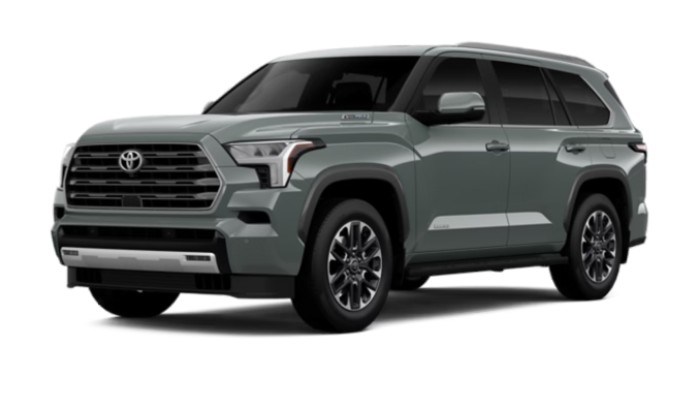
The Toyota Sequoia weight tells us far more about this full-size SUV than whether a garage floor can handle it. Weight influences acceleration, braking, fuel consumption, payload, towing behavior, tire wear, suspension feel, and even which trailer combination makes sense.
And the Sequoia is certainly no lightweight.
Current Toyota Sequoia models generally weigh well above 5,500 pounds, with the exact curb weight changing according to trim, drivetrain, equipment, wheels, seating configuration, and options. Published 2026 specifications from third-party databases put configurations roughly within the 5,600-to-6,200-pound neighborhood, while Toyota itself lists configuration-specific figures and a 7,350-pound GVWR for certain Sequoia specifications.
That puts this SUV firmly in heavyweight territory. Yet simply saying, "The Sequoia weighs about three tons," doesn't tell the whole story.
What is curb weight? How different is GVWR? Does 4WD make a Sequoia heavier? How does passenger weight affect towing capacity? And why might two apparently identical Sequoias have different payload ratings?
Let's unpack it without turning this into an engineering textbook.
Content in this publication
- How Much Does a Toyota Sequoia Weigh?
- Toyota Sequoia Curb Weight Explained
- 2026 Toyota Sequoia Weight
- Toyota Sequoia Weight by Trim
- Does 4WD Make the Toyota Sequoia Heavier?
- Toyota Sequoia GVWR: The Number That Matters More Than You Think
- Toyota Sequoia Payload Capacity and Weight
- How Toyota Sequoia Weight Affects Towing
- How Heavy Is a Toyota Sequoia in Tons?
- Toyota Sequoia Weight in Kilograms
- Why Is the Toyota Sequoia So Heavy?
- Does Toyota Sequoia Weight Affect Fuel Economy?
- How Weight Affects Braking and Handling
- Toyota Sequoia Weight Compared With Other Full-Size SUVs
- Older Toyota Sequoia Weight
- Does More Weight Make the Sequoia Safer?
- Does Weight Matter for Parking and Garages?
- How to Find the Exact Weight Rating of Your Toyota Sequoia
- Is the Toyota Sequoia Too Heavy?
- What Toyota Sequoia Weight Means Before You Buy
- Conclusion: Understanding Toyota Sequoia Weight
- Frequently Asked Questions About Toyota Sequoia Weight
How Much Does a Toyota Sequoia Weigh?
For the current-generation Toyota Sequoia, think roughly 5,600 to more than 6,000 pounds of curb weight, depending on configuration.
Toyota's own comparison data, for example, lists a 2026 Sequoia configuration at 5,635 pounds, alongside a 7,350-pound gross vehicle weight rating (GVWR) and 1,730 pounds of payload. Other published specification databases show heavier configurations, illustrating why there isn't one universal Sequoia weight that applies to every trim.
That's approximately 2,550 to 2,800 kg for many versions.
So, yes, we're dealing with a substantial SUV.
For perspective, when we climb into a modern Sequoia, we're not simply driving a tall family crossover wearing oversized boots. The Sequoia uses truck-based architecture and carries a hybrid powertrain, three-row cabin, substantial chassis, large wheels, safety hardware, four-wheel-drive equipment on certain versions, and plenty of luxury equipment.
All of that hardware has mass.
Quick Toyota Sequoia Weight Overview
Depending on model year and configuration, the figures buyers will most commonly encounter include:
- Curb weight: roughly 5,600-6,200 pounds on many current configurations
- Weight in kilograms: approximately 2,540-2,810 kg
- GVWR: around 7,350 pounds on certain current configurations
- Payload: configuration-dependent and potentially around 1,700 pounds on lighter versions
- Maximum towing capacity: up to approximately 9,500 pounds on the current model
Toyota advertises a maximum towing capability of up to 9,500 pounds for the 2026 Sequoia.
The crucial phrase here is "up to."
The same logic applies to weight.
Toyota Sequoia Curb Weight Explained
Curb weight is usually the figure people mean when they search for "Toyota Sequoia weight."
What Is Curb Weight?
Curb weight is essentially the vehicle's weight in operating condition with its normal equipment and necessary fluids, but without the passengers and everyday cargo you're going to add.
Imagine a Sequoia parked at the dealership before your family climbs inside.
That's the idea.
Once we add four adults, luggage, a cooler, roof-mounted equipment, tools, and perhaps the tongue weight of a trailer, the actual working weight rises rapidly.
That's why curb weight shouldn't be confused with the maximum allowable loaded weight.
Why Does Toyota Sequoia Curb Weight Vary?
A Sequoia isn't manufactured as one identical machine with different badges glued onto the tailgate.
Different versions can receive:
- Four-wheel-drive hardware
- Larger wheels and tires
- Off-road equipment
- Skid plates
- Different suspension components
- Additional luxury equipment
- Different seating arrangements
- Running boards
- Tow equipment
- Premium interior components
- Optional accessories
Each piece may seem relatively insignificant by itself.
Stack enough of them together, though, and it's like filling a suitcase one shirt at a time. Eventually, we're wondering why the thing suddenly weighs 70 pounds.
2026 Toyota Sequoia Weight
The 2026 Toyota Sequoia continues with Toyota's i-FORCE MAX hybrid powertrain. Toyota specifies 437 horsepower and 583 lb-ft of torque, paired with substantial towing capability.
The 2026 lineup includes SR5, Limited, Platinum, TRD Pro, 1794 Edition, and Capstone trims.
Weight varies within that family.
Published specifications indicate a curb-weight spread ranging from the mid-5,000-pound range into the low-6,000-pound range according to drivetrain and equipment.
Why Published Sequoia Weight Numbers Sometimes Disagree
This is worth emphasizing.
Search five automotive websites for Toyota Sequoia curb weight and we may get several slightly different answers.
That doesn't automatically mean somebody is wrong.
One number may refer to:
- RWD
- 4WD
- A particular trim
- Standard equipment
- Optional equipment
- A different seating configuration
- A slightly different model year
When payload or trailer calculations matter, generic internet figures shouldn't be the final authority.
Use the information attached to the specific vehicle.
Toyota Sequoia Weight by Trim
The Sequoia trim structure is partly responsible for its range of curb weights.
Rather than treating every published number as interchangeable, it makes more sense to understand why each version can land differently on the scale.
Toyota Sequoia SR5 Weight
The SR5 occupies the lower end of the lineup and generally avoids some of the extra luxury hardware fitted to expensive versions.
That can help keep curb weight relatively low.
And "relatively" is doing some heavy lifting here.
Even an SR5 remains a massive three-row SUV with a body-on-frame platform and hybrid powertrain.
Its lower curb weight can offer another advantage: payload and towing calculations may be more favorable, assuming other ratings remain compatible.
Less empty vehicle weight potentially leaves more room before we reach certain maximum weight limits.
Toyota Sequoia Limited Weight
Moving into the Limited adds comfort and technology equipment.
Additional equipment can raise curb weight compared with a simpler version, although the exact amount depends heavily on drivetrain and installed packages.
For most families, these differences won't dramatically alter everyday driving.
They matter much more when we're approaching payload or trailer limits.
Toyota Sequoia Platinum Weight
The Platinum pushes farther toward the luxury side.
More features mean more components, wiring, motors, insulation, seating equipment, and other pieces hiding beneath the polished interior.
None feels heavy while we're pressing a switch.
Together, they add up.
Toyota Sequoia TRD Pro Weight
Here's where things get interesting.
The TRD Pro isn't merely an appearance package. It's the more serious off-road member of the family, with dedicated hardware and standard four-wheel drive. Current descriptions include off-road-focused suspension components, skid plates, all-terrain tires, a locking rear differential and other trail-oriented equipment.
Naturally, serious hardware isn't weightless.
Think of the TRD Pro as hiking with boots, tools, water and a backpack rather than strolling through the airport wearing sneakers.
The equipment has a purpose.
It also brings mass.
Toyota Sequoia 1794 Edition Weight
The 1794 Edition leans into a premium Western-inspired personality.
Once again, we're adding comfort and luxury equipment rather than stripping the SUV down for minimum mass.
For someone researching payload, the individual vehicle label becomes much more valuable than assuming that every 1794 Edition carries exactly the same usable capacity.
Toyota Sequoia Capstone Weight
Capstone sits near the luxurious peak of the Sequoia family.
Luxury SUVs tend to accumulate weight for a simple reason: premium equipment is physical equipment.
Fancy doesn't float.
Power-adjustable hardware, additional trim materials, technology, large wheels, audio components and comfort features all contribute to the package.
That helps explain why highly equipped full-size SUVs often carry less payload than simpler versions of the same vehicle.
Does 4WD Make the Toyota Sequoia Heavier?
Generally, yes.
Four-wheel drive requires hardware that a rear-wheel-drive configuration doesn't need in exactly the same form.
Transfer-case components, additional driveline hardware and related pieces bring weight.
Current Sequoias also illustrate an important distinction: 4WD is available on several versions, while the TRD Pro is specifically oriented around a four-wheel-drive setup.
RWD vs 4WD Sequoia Weight
If two Sequoias were otherwise similarly configured, we'd normally expect the 4WD version to weigh more.
The trade-off?
RWD may offer advantages in simplicity, weight and potentially payload or fuel efficiency, while 4WD provides extra capability when traction becomes difficult.
Which is better depends entirely on what we're asking the SUV to do.
A suburban commuter in Texas and an owner regularly driving snowy mountain roads aren't shopping with the same priorities.
Toyota Sequoia GVWR: The Number That Matters More Than You Think
Curb weight gets the Google searches.
GVWR gets the responsibility.
What Does GVWR Mean?
GVWR means Gross Vehicle Weight Rating.
It's the maximum allowable weight of the vehicle itself plus the load it's carrying, subject to the manufacturer's specifications.
That can include:
- Driver
- Passengers
- Luggage
- Accessories
- Tools
- Camping gear
- Cargo
- Trailer tongue weight
Toyota lists a 7,350-pound GVWR for a current Sequoia configuration in its comparison specifications.
The actual number applicable to your particular Sequoia should be verified using its certification information.
Curb Weight vs GVWR
Let's make the distinction simple.
Suppose a hypothetical Sequoia has:
Curb weight: 5,620 lb
and
GVWR: 7,350 lb
The difference would be:
7,350 - 5,620 = 1,730 lb
That theoretical difference is why the same Toyota comparison specification shows a 1,730-pound payload figure.
But don't blindly calculate your usable payload from internet curb-weight numbers.
Toyota explains that payload is essentially related to GVWR minus curb weight, while the specific Load Carrying Capacity label on the driver's doorjamb should be used to determine how much passenger and cargo weight a particular vehicle can carry.
That's the sticker we trust.
Toyota Sequoia Payload Capacity and Weight
Payload sounds like cargo.
In reality, payload isn't limited to whatever we're throwing into the trunk.
Passengers count.
That's where owners sometimes get caught out.
A Realistic Family Payload Example
Imagine we have approximately 1,500 pounds of available payload.
Then we add:
Four occupants: 650 lb
Luggage: 200 lb
Cooler and food: 75 lb
Accessories and miscellaneous equipment: 75 lb
We've already consumed:
1,000 lb
That leaves roughly:
500 lb
Now hook up a trailer with substantial tongue weight.
Suddenly, the comfortable-looking payload margin may disappear.
That's why a big SUV doesn't automatically mean unlimited carrying capacity.
The Sequoia may look like a moving fortress, but physics still sends the bill.
How Toyota Sequoia Weight Affects Towing
The current Sequoia's towing ability is impressive.
Toyota advertises up to 9,500 pounds of maximum towing capability, while configuration-specific figures can vary. Car and Driver, for example, reports a range from about 8,980 pounds for one 4WD configuration to 9,520 pounds for a RWD SR5 configuration.
Why wouldn't the heaviest, fanciest version automatically tow the most?
Because towing is a balancing act between several ratings.
Curb Weight and Towing Capacity Work Together
Trailer capacity isn't determined by engine strength alone.
Yes, the current i-FORCE MAX produces 437 hp and 583 lb-ft of torque.
That's plenty of muscle.
But towing safely also involves:
- GVWR
- GCWR
- Axle ratings
- Payload
- Trailer weight
- Tongue weight
- Passenger load
- Cargo load
- Hitch equipment
A strong engine can pull.
That doesn't mean the rest of the vehicle is allowed to carry infinite weight.
Trailer Tongue Weight Counts
This part deserves a spotlight.
A trailer doesn't simply exist behind the vehicle like a balloon on a string.
Part of its weight presses downward on the hitch.
That tongue weight contributes to the load carried by the tow vehicle.
If we're hauling seven people and luggage, we can chew through payload before the trailer ever rolls one inch.
How Heavy Is a Toyota Sequoia in Tons?
Let's convert the numbers into something easier to visualize.
A Sequoia weighing:
5,600 lb = 2.8 U.S. tons
6,000 lb = 3.0 U.S. tons
6,200 lb = 3.1 U.S. tons
So a current Sequoia is essentially a three-ton SUV before we load the family and their belongings.
That's significant.
Yet because modern powertrains are so strong, the vehicle doesn't necessarily feel as ponderous as that figure suggests from behind the wheel.
Toyota Sequoia Weight in Kilograms
For readers using metric measurements:
5,600 lb ≈ 2,540 kg
5,800 lb ≈ 2,631 kg
6,000 lb ≈ 2,722 kg
6,200 lb ≈ 2,812 kg
A current Sequoia therefore sits around the 2.5-to-2.8-metric-ton range in many configurations.
Add passengers and cargo, and loaded operating weight can climb considerably higher.
Why Is the Toyota Sequoia So Heavy?
We can't point at one component and blame it.
The Sequoia is heavy because almost everything about the vehicle is substantial.
Body-on-Frame Construction
The current Sequoia shares Toyota's rugged GA-F body-on-frame architecture concept with other large Toyota trucks and SUVs.
This isn't a lightweight unibody crossover designed primarily around urban efficiency.
Its underlying design targets strength, towing, hauling and demanding use.
Hybrid Powertrain
The i-FORCE MAX hybrid system combines a twin-turbo V6 with electric assistance.
Toyota rates the system at 437 horsepower and 583 lb-ft of torque.
Hybrid hardware brings considerable capability, but batteries, an electric motor and associated components also contribute to overall vehicle mass.
Three Rows of Seating
Seats look simple until we remember what's inside modern ones.
Frames.
Tracks.
Motors.
Heating and ventilation equipment on certain models.
Occupant sensors.
Airbag systems.
Wiring.
Padding.
Mounts.
Multiply that through a large cabin and weight piles up quickly.
Large Wheels and Tires
Full-size SUV wheels aren't exactly bicycle rims.
Off-road-oriented tires and larger premium wheel packages can weigh substantially more than smaller combinations.
That contributes not just to overall mass but also to unsprung and rotating weight.
Safety and Luxury Equipment
Modern vehicles carry cameras, radar hardware, multiple airbags, sound insulation, screens, electric motors, control modules and miles of wiring.
We've gained remarkable comfort and capability over the decades.
We've also gained pounds.
Does Toyota Sequoia Weight Affect Fuel Economy?
Absolutely.
Every time the vehicle accelerates, energy must move that mass.
The heavier the object, the more energy it generally requires to accelerate.
Yet vehicle efficiency isn't determined by weight alone.
Aerodynamics, gearing, engine efficiency, tires, drivetrain losses, hybrid operation, driving speed and weather all matter.
Toyota's modern hybrid approach helps a large SUV perform better than we'd expect if we judged efficiency only by its three-ton footprint.
Still, we're not going to confuse the Sequoia with a Prius.
That's rather like expecting a linebacker to win a marathon because he bought lightweight running shoes.
How Weight Affects Braking and Handling
Weight doesn't disappear when we press the brake pedal.
A heavier vehicle carries more energy at a given speed than a lighter one.
Modern brakes, tires, suspension systems and electronic aids are engineered accordingly, but drivers still benefit from respecting the SUV's size.
Stopping Distance
Road surface, tire condition, brakes, speed and vehicle load all influence stopping.
A heavily loaded Sequoia deserves more margin than an empty one.
Cornering
The Sequoia's high seating position is part of its appeal.
But a tall, heavy SUV will never change direction exactly like a low sports sedan.
Nor should we expect it to.
Ride Quality
Weight isn't always the enemy.
A substantial vehicle can feel planted and calm on the highway.
Small pavement imperfections sometimes feel less dramatic when several thousand pounds of SUV are cruising over them.
There's a reassuring solidity to that sensation.
Toyota Sequoia Weight Compared With Other Full-Size SUVs
The Sequoia lives among other genuinely large SUVs.
Toyota's own comparison data places one Sequoia configuration at 5,635 pounds versus figures around 5,404 pounds and 5,473 pounds for certain competing Ford Expedition and Chevrolet Tahoe configurations.
The lesson isn't that one is universally "better" because it's lighter.
A lighter vehicle could offer advantages for payload, acceleration or efficiency.
A heavier configuration may include equipment, driveline components or structural features the owner specifically wants.
Weight needs context.
Older Toyota Sequoia Weight
Toyota has sold the Sequoia across multiple generations, so searches for Toyota Sequoia weight can produce dramatically different specifications.
The newest generation debuted for the 2023 model year, bringing Toyota's i-FORCE MAX hybrid system and major platform changes.
Earlier Sequoias used different chassis, engines, transmissions and suspension arrangements.
Therefore, never assume a 2005, 2015 and 2026 Sequoia have interchangeable weight ratings.
They don't.
First-Generation Sequoia
Early Sequoias were already large SUVs but came from a very different technological era.
They lacked the hybrid hardware, advanced electronic systems and extensive luxury equipment found in today's models.
If we're researching an older Sequoia for towing or transporting, the owner's manual and vehicle certification labels should be our starting point.
Second-Generation Sequoia
The second generation became a familiar sight among buyers who wanted a traditional Toyota V8-powered full-size SUV.
Depending on configuration, these models could also weigh well above 5,000 pounds.
Third-Generation Sequoia
The current generation shifted dramatically.
The old naturally aspirated V8 disappeared in favor of the standard twin-turbo hybrid V6 system.
Despite engine downsizing, nobody should mistake "V6" for "lightweight."
The complete vehicle remains enormous.
Does More Weight Make the Sequoia Safer?
This question needs nuance.
Vehicle mass can influence crash dynamics, particularly when two vehicles of different sizes collide.
But "heavier equals safer" is far too simplistic.
Crashworthiness depends on structural engineering, restraint systems, crash-energy management, active-safety technology, collision type, speed, occupant positioning and many other variables.
A Sequoia's size may offer certain advantages in some situations, but mass also creates additional kinetic energy that brakes and tires must manage.
So we'd never choose a vehicle based on curb weight alone.
Does Weight Matter for Parking and Garages?
Usually, dimensions receive more attention than weight when we're parking.
Still, weight can matter in unusual situations.
Think:
- Vehicle lifts
- Mechanical parking systems
- Ferries
- Certain bridges
- Transport trailers
- Shipping platforms
- Commercial parking structures with restrictions
If we're loading the Sequoia onto another vehicle or specialized platform, we need its actual operating weight, not merely a generic curb-weight figure from Google.
How to Find the Exact Weight Rating of Your Toyota Sequoia
When accuracy matters, forget averages.
Look at the vehicle itself.
Check:
- The driver's doorjamb certification label
- Tire and loading information label
- Owner's manual
- Toyota documentation for the exact VIN/configuration
- Trailer and hitch ratings when towing
Toyota specifically notes that the driver's doorjamb load-carrying label is the appropriate reference for a particular vehicle's passenger-and-cargo capacity.
Want the Actual Loaded Weight? Use a Scale
For serious towing, a public vehicle scale can tell us something brochures cannot:
what our particular SUV weighs today with our actual equipment inside it.
That's enormously useful.
Load the passengers, cargo, fuel and towing equipment as realistically as possible and weigh the setup correctly.
Now we're working with reality rather than assumptions.
Is the Toyota Sequoia Too Heavy?
That depends on what we want from it.
If the goal is squeezing through old European city streets, achieving economy-car fuel consumption and feeling featherlight in corners, yes, three tons sounds ridiculous.
But that's not the Sequoia's job.
The Sequoia is designed to be a full-size three-row SUV capable of towing significant loads, carrying families, covering long highway distances and tackling rougher terrain depending on configuration.
Its weight is partly the consequence of those abilities.
The better question isn't:
"Is the Sequoia heavy?"
Of course it is.
The better question is:
"Does its weight make sense for what I need?"
For many owners, the answer will be yes.
What Toyota Sequoia Weight Means Before You Buy
Here's where we bring everything together.
If you're comparing trims purely for comfort and daily transportation, a few hundred pounds of difference probably won't define the ownership experience.
But if towing or carrying large loads is central to your purchase, weight specifications become much more important.
A heavily equipped model can eat into usable capacity.
Seven passengers can eat into it further.
Cargo uses more.
Trailer tongue weight takes another bite.
Suddenly those abstract figures on a specification sheet become very real.
Before buying a Sequoia primarily for towing, compare the exact payload label and towing rating of the actual vehicle, not merely the maximum figures advertised for the model line.
That one habit can prevent a lot of confusion.
Conclusion: Understanding Toyota Sequoia Weight
The Toyota Sequoia weight reflects exactly what this vehicle is: a substantial, truck-based, three-row SUV engineered for people who want serious capability.
Many current Sequoia configurations fall broadly between about 5,600 and 6,200 pounds of curb weight, although exact figures vary significantly with trim, drivetrain and equipment. Toyota lists a 7,350-pound GVWR for certain current configurations and advertises up to approximately 9,500 pounds of maximum towing capability.
But the brochure's biggest number isn't necessarily your number.
That's the key takeaway.
When we're casually comparing SUVs, general curb weights are perfectly useful. When we're calculating passengers, payload, trailers and tongue weight, the label on the actual Sequoia becomes far more important.
This SUV may be built like a heavyweight boxer, but even a heavyweight has limits.
Know them, and the Sequoia's considerable mass becomes part of its capability rather than a mystery printed in tiny type.
Frequently Asked Questions About Toyota Sequoia Weight
1. How much does a Toyota Sequoia weigh?
A current Toyota Sequoia generally weighs roughly 5,600 to more than 6,000 pounds, depending on trim, drivetrain and equipment. Some published specifications extend into approximately the 6,200-pound range for heavier configurations. Always verify the exact vehicle specification when payload or towing calculations are involved.
2. How much does a Toyota Sequoia weigh in kilograms?
Depending on configuration, many current Sequoias fall around 2,540 to 2,810 kg. The exact figure changes with drivetrain, trim and optional equipment.
3. What is the Toyota Sequoia GVWR?
Toyota lists a 7,350-pound GVWR for certain current Sequoia configurations. GVWR represents the maximum permitted loaded vehicle weight and is different from curb weight.
4. Does a 4WD Toyota Sequoia weigh more than a RWD model?
Generally, yes. Four-wheel-drive systems require additional driveline hardware, which typically increases curb weight. Exact differences depend on the trim and equipment selected.
5. Does Toyota Sequoia weight reduce towing capacity?
Vehicle weight can influence the towing and payload equation. Heavier trims may have less capacity available before relevant vehicle ratings are reached. Toyota advertises up to approximately 9,500 pounds of towing capability, but the actual rating depends on configuration and loading.
If you want to know other articles similar to Toyota Sequoia Weight: Curb Weight, GVWR, Payload and Towing Explained you can visit the category Service and Parts.
How to Replace a Toyota Camry Tail Light: Step-by-Step Guide
How to Reset the Oil in Your 2014 Fiat 500L
Renault Megane Boot Space: Size, Litres & Dimensions
Vauxhall Mokka Tyre Pressure Reset: Complete Guide
How to Reset the Tire Pressure System on Your Hyundai Tucson
Hyundai Kona Tire Pressure: Complete PSI Guide
Leave a Reply
More content of your interest