

How Long Does a Holden Colorado Last? Lifespan, Mileage, and Reliability Guide

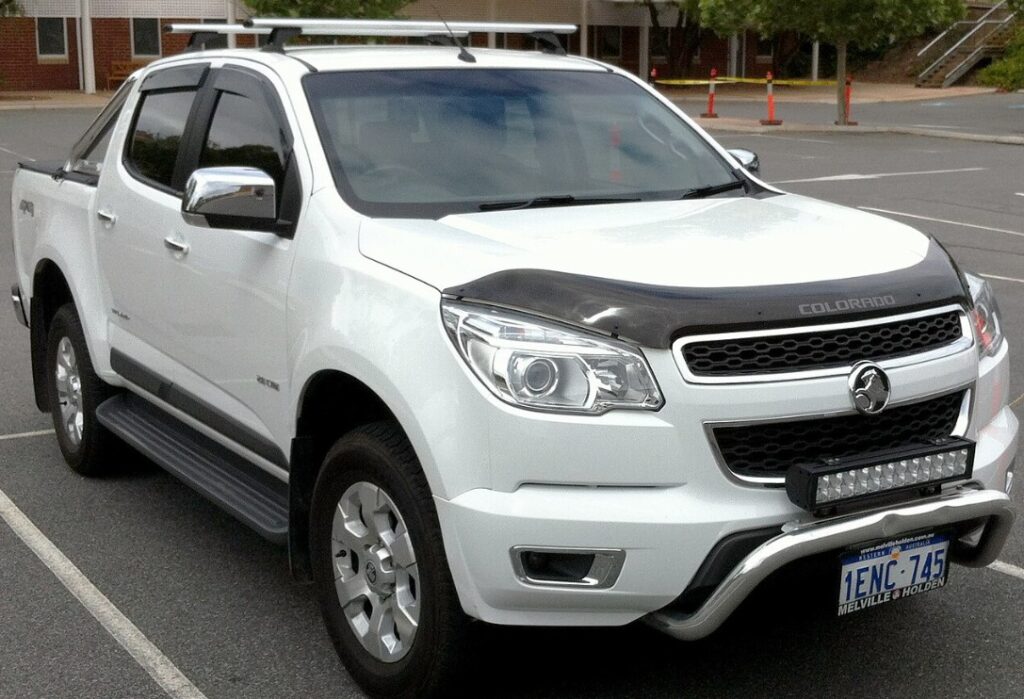
If we are shopping for a used Holden Colorado, one question matters more than almost anything else: how long does a Holden Colorado last? After all, a ute can look fantastic in the driveway, but good looks mean very little if its engine, transmission, or diesel system is already approaching an expensive retirement.
The encouraging answer is that a properly maintained Holden Colorado can be a genuinely long-lasting vehicle. Around 250,000 to 350,000 km is a realistic lifespan for a well-cared-for example, while some Colorados can travel beyond 400,000 km when maintenance has been consistent and the vehicle has not spent its entire life overloaded, towing at its limits, or battling harsh off-road conditions.
That does not mean every Colorado automatically reaches those numbers. Mileage is only part of the story. A 180,000-km ute that has been serviced meticulously can be a far better purchase than one showing 110,000 km but carrying a patchy history and years of neglect.
So, rather than treating the odometer like a countdown clock, we need to look at how the vehicle has actually lived.
Let's dig into what determines Holden Colorado longevity, which components tend to matter most as the kilometres rise, and what we can do to keep one running for as long as possible.
Content in this publication
- How Long Does a Holden Colorado Last on Average?
- How Many Years Can a Holden Colorado Last?
- Can a Holden Colorado Reach 300,000 km?
- How Long Does the Holden Colorado Diesel Engine Last?
- How Long Does a Holden Colorado Transmission Last?
- What Determines How Long a Holden Colorado Lasts?
- What Mileage Is High for a Holden Colorado?
- Is 200,000 km Too Much for a Holden Colorado?
- Signs a Holden Colorado Has Plenty of Life Left
- Warning Signs a Colorado May Be Near an Expensive Phase
- How Can We Make a Holden Colorado Last Longer?
- Does Modifying a Colorado Reduce Its Lifespan?
- Does Highway Driving Help a Colorado Last Longer?
- Can a Holden Colorado Last 400,000 km?
- How Does Holden Colorado Longevity Compare With Other Utes?
- Should We Buy a High-Mileage Holden Colorado?
- How Much Life Is Left in a Colorado With 150,000 km?
- How Much Life Is Left at 250,000 km?
- Is a Holden Colorado Worth Keeping Past 200,000 km?
- The Real Secret to Holden Colorado Longevity
- Conclusion: So, How Long Does a Holden Colorado Last?
- Frequently Asked Questions
How Long Does a Holden Colorado Last on Average?
For most Holden Colorados that receive regular servicing, 250,000 km or more should not be considered an unrealistic target.
A particularly well-maintained diesel Colorado can potentially cover:
- 200,000–250,000 km: Easily achievable with routine maintenance.
- 250,000–350,000 km: Realistic for properly serviced vehicles.
- 350,000–400,000 km: Possible when the engine, transmission, cooling system, and diesel equipment are carefully maintained.
- 400,000 km and beyond: Achievable in exceptional cases, although major components may have required repair or replacement along the way.
We should remember that reaching 400,000 km does not mean driving 400,000 km without replacing anything.
A high-mileage ute may have received new suspension bushes, wheel bearings, injectors, hoses, alternators, starters, cooling-system components, or transmission work during its lifetime. That is normal.
Think of longevity less like keeping an appliance untouched and more like maintaining a house. The structure can last decades, but occasionally the plumbing needs attention.
How Many Years Can a Holden Colorado Last?
Kilometres tell only half the story.
If we assume a Colorado travels somewhere around 15,000 to 25,000 km annually, a vehicle capable of reaching 300,000 km could theoretically remain useful for roughly 12 to 20 years.
Some examples may remain on Australian and New Zealand roads considerably longer.
A lightly driven Colorado covering only 10,000 km per year could reach 20 years old before showing 200,000 km.
Age, however, introduces its own problems.
Rubber seals deteriorate. Hoses harden. Bushings crack. Electrical connections corrode. Fluids absorb contamination. Plastic cooling components become brittle.
That means an older low-mileage ute is not automatically healthier than a younger high-mileage one.
Mileage Versus Age: Which Matters More?
Neither number should be considered alone.
Suppose we have two Colorados:
Colorado A: 2015 model, 140,000 km, incomplete service history.
Colorado B: 2015 model, 220,000 km, comprehensive service records and mostly highway use.
At first glance, Colorado A looks better.
But Colorado B may actually have considerably more life left if its engine oil, transmission fluid, cooling system, filters, and other components have been maintained correctly.
Service history often tells us more than mileage alone.
Can a Holden Colorado Reach 300,000 km?
Yes. A Holden Colorado can reach 300,000 km, particularly when equipped with a diesel engine that has received appropriate servicing throughout its life.
Diesel utes are often built with sustained workloads in mind. Their engines generally operate at lower engine speeds than small petrol engines, and the underlying engine architecture can handle substantial mileage.
But there is an important catch.
Modern diesel engines contain considerably more emissions equipment, turbocharging hardware, sensors, and fuel-system components than old-school mechanical diesels.
The engine block itself might happily continue for hundreds of thousands of kilometres while a peripheral component causes the expensive repair bill.
The Engine Isn't Always What Ends a Colorado's Life
This point is easy to overlook.
When someone says a vehicle "only lasted 220,000 km," we might imagine a catastrophic engine failure.
Often, that is not what happens.
Instead, owners eventually face several repairs simultaneously:
- Transmission work
- Diesel particulate filter problems
- Injector replacement
- Turbocharger issues
- Air-conditioning repairs
- Suspension refurbishment
- Cooling-system repairs
- Electrical faults
Eventually, the repair bill becomes larger than what the owner believes the vehicle is worth.
So vehicle lifespan is partly mechanical and partly economic.
A Colorado may technically remain repairable for another decade, but owners need to decide when continuing to repair it no longer makes financial sense.
How Long Does the Holden Colorado Diesel Engine Last?
Diesel-powered Colorados are particularly attractive to buyers who need towing ability, strong torque, and long-distance durability.
With proper maintenance, 300,000 km is certainly possible from a healthy diesel drivetrain, and significantly greater mileage can occur.
The biggest factor is maintenance discipline.
Diesel engines dislike neglect.
Skipping oil changes might save money today, but contaminated or degraded oil affects some of the most expensive components in the vehicle, including the turbocharger.
Similarly, ignoring fuel-filter replacement can put the high-pressure diesel injection system at unnecessary risk.
Why Diesel Maintenance Matters So Much
Modern common-rail diesel systems operate with extremely precise tolerances.
Contaminated fuel, water in the system, or neglected filters can quickly transform a cheap maintenance shortcut into a painful repair bill.
If we want long life from a Colorado diesel, preventative maintenance is cheaper than gambling.
That rule sounds boring.
It is also one of the smartest pieces of ownership advice we can follow.
How Long Does a Holden Colorado Transmission Last?
A transmission does not have a fixed expiration date.
A well-treated automatic gearbox may continue operating for hundreds of thousands of kilometres. One subjected to heavy towing, excessive heat, delayed servicing, or repeated abuse could develop problems far earlier.
Heat is especially important.
Automatic transmissions produce significant heat when towing, climbing steep roads, travelling through sand, or carrying heavy loads.
Heat breaks down fluid.
Degraded fluid reduces lubrication and protection.
That is why transmission servicing deserves serious attention if our objective is maximum Holden Colorado lifespan.
Should We Change Transmission Fluid?
For a vehicle we intend to keep long term, transmission fluid should not be treated as something that magically lasts forever.
The correct servicing schedule depends on the specific model, year, transmission, and operating conditions, so we should follow the appropriate maintenance documentation rather than guessing.
Vehicles regularly used for towing or severe-duty driving deserve even closer attention.
If buying used, evidence of sensible transmission servicing is a very reassuring sign.
What Determines How Long a Holden Colorado Lasts?
Two identical Colorados can leave the showroom on the same day and have completely different futures.
One might still feel healthy at 280,000 km.
The other could be exhausted at 170,000 km.
Why?
Because longevity is created kilometre by kilometre.
1. Service History
This is arguably the biggest factor.
A vehicle serviced at appropriate intervals has a much better chance of reaching high mileage than one maintained only when something starts making noise.
Routine maintenance should include attention to:
- Engine oil and filter
- Air filter
- Fuel filter
- Coolant
- Brake fluid
- Transmission fluid where applicable
- Differential oils
- Transfer-case fluid on 4WD models
- Belts and hoses
- Brakes
- Suspension components
Skipping maintenance is like borrowing money at an outrageous interest rate. We save a little now and potentially repay a fortune later.
2. Towing History
The Holden Colorado is a working ute, so towing is hardly unusual.
Towing itself does not automatically ruin a Colorado.
Constantly towing heavy loads without appropriate servicing is another matter.
You may be interested in reading Mazda 6 Reliability: Is the Mazda6 a Dependable Used Car?
Heavy trailers increase stress on:
- Transmission
- Cooling system
- Engine
- Differential
- Brakes
- Suspension
- Wheel bearings
A Colorado used to tow occasionally can still have an excellent lifespan.
One that has spent hundreds of thousands of kilometres dragging a heavy caravan or machinery deserves a more careful inspection.
3. Driving Conditions
Highway kilometres and urban kilometres are not equal.
A Colorado travelling 200 km along open roads experiences relatively little braking, shifting, idling, or thermal cycling.
A vehicle covering the same distance in stop-start traffic may endure vastly more mechanical activity.
Short journeys can be particularly challenging for some diesel vehicles because the engine and emissions system may not spend enough time operating at ideal temperature.
4. Off-Road Use
A Colorado that occasionally explores a gravel track is one thing.
A Colorado regularly buried axle-deep in mud is something else.
Serious off-road use increases wear on suspension, steering, wheel bearings, underbody components, driveline joints, seals, and electrical connections.
Water crossings can be especially problematic if water enters components that were never meant to become aquariums.
Look Underneath Before Buying
A shiny body can hide a difficult life.
Before buying a used Colorado, inspect underneath for:
- Bent protection plates
- Scraped chassis areas
- Fluid leaks
- Damaged suspension components
- Corrosion
- Mud packed into difficult areas
- Damaged wiring
- Differential or transfer-case leaks
The underside often tells the story the polished paint does not.
What Mileage Is High for a Holden Colorado?
Once a Colorado passes 200,000 km, most buyers will understandably describe it as high mileage.
But high mileage does not automatically mean bad.
At that point, condition and maintenance become far more important than the number itself.
We should ask questions such as:
Has the transmission been maintained?
Have the cooling system and hoses received attention?
Are the injectors healthy?
Does the turbocharger operate properly?
Is the suspension still tight?
Are there warning lights?
Does the engine start cleanly from cold?
Does it smoke excessively?
Has the diesel emissions system caused problems?
A Colorado with 230,000 km and answers to all those questions may be a much safer purchase than a suspiciously cheap example showing 150,000 km.
Is 200,000 km Too Much for a Holden Colorado?
Not necessarily.
At 200,000 km, we should stop thinking of the vehicle as "nearly dead" and start thinking of it as a machine that needs a thorough health assessment.
A properly maintained Colorado could still have another 100,000 km or considerably more ahead of it.
However, buying at this mileage requires realistic expectations.
Wear items may soon need replacement even when the engine itself is strong.
We should budget for maintenance rather than assuming the only expense will be fuel.
What Should We Check Around 200,000 km?
At higher kilometres, a pre-purchase inspection becomes extremely valuable.
Areas worth examining include:
- Engine oil leaks
- Cooling-system condition
- Turbocharger operation
- Injector performance
- Transmission shifting quality
- Driveshaft and universal joints
- Differential noise
- Wheel bearings
- Steering components
- Suspension bushes and shock absorbers
- Diesel emissions equipment
- Air-conditioning
- Battery and charging system
Listen as much as we look.
Clicks, clunks, whining noises, hesitation, vibration, harsh shifts, and abnormal smoke can all reveal issues that a freshly polished dashboard cannot hide.
Signs a Holden Colorado Has Plenty of Life Left
Mileage may be high, yet the vehicle can still show encouraging signs.
A healthy Colorado should generally start confidently, idle smoothly, accelerate consistently, and shift without major hesitation or violent engagement.
We also want to see evidence that somebody cared about it.
A folder full of invoices may not look exciting, but to a used-car buyer it can be worth more than shiny aftermarket wheels.
Positive signs include documented servicing, clean fluids, matching quality tyres, tidy wiring, minimal leaks, a clean cooling system, smooth transmission behaviour, and an owner who can explain what maintenance has been performed.
Warning Signs a Colorado May Be Near an Expensive Phase
No single symptom automatically condemns a ute, but combinations should make us cautious.
Be particularly wary of:
- Hard starting
- Excessive diesel smoke
- Rough idle
- Engine warning lights
- Transmission slipping
- Harsh or delayed gear engagement
- Overheating history
- Coolant disappearing
- Significant oil leaks
- Loud turbo noises
- Differential whining
- Heavy vibration
- Poorly installed modifications
- Missing service records
An unusually cheap Colorado with several of these symptoms may not be a bargain.
It may simply be an invoice wearing number plates.
How Can We Make a Holden Colorado Last Longer?
The smartest longevity strategy is wonderfully unglamorous: maintain it properly.
We do not need secret additives, miracle treatments, or mechanical superstition.
We need consistency.
Change Engine Oil on Time
Oil is the bloodstream of the engine.
It lubricates bearings, protects internal surfaces, manages contamination, and plays an especially important role in protecting turbocharged engines.
Using the correct specification matters just as much as changing it on schedule.
Cheap oil of the wrong specification is not really saving money.
Never Ignore Cooling-System Problems
Overheating can turn an otherwise healthy engine into an extremely expensive problem.
If temperature behaviour changes, coolant begins disappearing, or leaks appear, investigate promptly.
Cooling-system maintenance becomes increasingly important as vehicles age because hoses, seals, radiators, thermostats, and associated components do not last forever.
Service the Fuel System Properly
Clean fuel is crucial for modern diesel engines.
Use suitable fuel sources, keep up with filter changes, and investigate rough running or abnormal starting behaviour rather than hoping it disappears.
Fuel-system problems generally become more expensive when ignored.
Give the Transmission Some Respect
Avoid shifting between reverse and drive while the vehicle is still moving.
Do not repeatedly overload the vehicle.
Be sensible when towing.
Keep servicing appropriate to operating conditions.
A transmission is a tough piece of equipment, but toughness should not be confused with immortality.
Let a Diesel Work Properly
Diesel engines generally suit owners who regularly complete longer journeys.
Constant ultra-short trips can create less-than-ideal operating conditions for modern diesel systems.
If our lifestyle is almost entirely five-minute urban drives, a diesel ute may not be operating in the environment it likes best.
Does Modifying a Colorado Reduce Its Lifespan?
Not necessarily.
Thoughtful modifications can improve a vehicle for specific tasks.
You may be interested in readingMazda 6 Reliability: Is the Mazda6 a Dependable Used Car?You may be interested in reading
Mazda 6 Insurance Group: UK Costs, Ratings and Buying GuidePoor modifications can make reliability much worse.
Large tyres, aggressive engine tuning, oversized suspension lifts, heavy accessories, and increased towing demands can all add stress somewhere else in the system.
More engine output means more load on the drivetrain.
Heavier tyres affect acceleration, braking, gearing, wheel bearings, and suspension.
Extra accessories add weight.
There is rarely a free lunch in vehicle modification.
Stock Vehicles Are Often Easier to Assess
When buying used, an unmodified Colorado can be easier to evaluate because we know roughly how Holden intended the components to operate together.
A modified vehicle is not automatically bad, but we need to understand who performed the modifications, why they were made, and whether supporting components were upgraded appropriately.
Does Highway Driving Help a Colorado Last Longer?
Generally, steady highway use can be mechanically easier than repeated stop-start urban operation.
Highway driving allows the engine to remain at normal operating temperature for extended periods while reducing the number of gear changes, cold starts, braking events, and acceleration cycles.
That is why a 220,000-km country vehicle can sometimes feel remarkably tight.
Meanwhile, a 120,000-km ute that has spent its life crawling between construction sites might feel much older.
Kilometres are useful.
The type of kilometres matters too.
Can a Holden Colorado Last 400,000 km?
It is possible, but we should treat 400,000 km as an achievement rather than a guaranteed expectation.
By this point, even a healthy vehicle is likely to have required significant maintenance and perhaps replacement of several major peripheral components.
That does not necessarily mean the vehicle is unreliable.
Mechanical parts wear.
The important question is whether maintaining the vehicle continues to make financial sense.
A Colorado that reaches 400,000 km with a healthy engine and drivetrain has already delivered an enormous amount of service.
How Does Holden Colorado Longevity Compare With Other Utes?
The Colorado competed in a tough field containing vehicles such as the Toyota HiLux, Ford Ranger, Mitsubishi Triton, Nissan Navara, Mazda BT-50, and Isuzu D-Max.
All of these can reach substantial mileage when cared for correctly.
Brand reputation matters, but individual vehicle history matters more when we are shopping at the high-mileage end of the used market.
A neglected example of a famously durable model can still be a terrible purchase.
A meticulously serviced Colorado can be excellent.
Rather than asking only, "Which badge lasts longest?" we should ask, "Which specific vehicle has been treated best?"
That question usually leads us toward the smarter purchase.
Should We Buy a High-Mileage Holden Colorado?
Potentially, yes.
High-mileage vehicles often represent good value because many buyers instinctively avoid large odometer numbers.
That creates opportunity—but only when we perform proper checks.
A high-mileage Colorado makes the most sense when it has:
- Comprehensive maintenance history
- No major warning lights
- Healthy engine performance
- Smooth transmission operation
- No overheating history
- Minimal problematic modifications
- Evidence of responsible ownership
- A successful independent mechanical inspection
Price matters too.
We should not pay low-mileage money for a ute with 280,000 km simply because it looks clean.
The price should leave room in our budget for age-related maintenance.
How Much Life Is Left in a Colorado With 150,000 km?
There is no mathematical formula, but 150,000 km is not inherently concerning for a properly maintained Colorado.
If we assume a potential working life around 300,000 km, it is tempting to say the vehicle is "halfway through its life."
Mechanical wear does not work that neatly.
A superbly maintained 150,000-km vehicle might eventually reach 350,000 km.
A neglected one could suffer a major failure next month.
The number gives context, not certainty.
How Much Life Is Left at 250,000 km?
At 250,000 km, inspection becomes even more important.
We should evaluate the entire vehicle rather than just the engine.
A strong drivetrain surrounded by worn suspension, tired wheel bearings, leaks, faulty air conditioning, electrical problems, and overdue tyres could still require thousands in spending.
If the major systems have already been refreshed and the vehicle has a strong maintenance record, though, 250,000 km does not necessarily mean retirement is approaching.
Some Colorados may continue reliably for many more years.
Is a Holden Colorado Worth Keeping Past 200,000 km?
If we already own a well-maintained Colorado, keeping it can often make more sense than replacing it simply because the odometer crossed 200,000 km.
We know its history.
We know whether it has overheated.
We know whether it has been serviced.
We know what noises are normal.
Buying another used ute means trading known history for unknown history.
Sometimes spending money maintaining a familiar vehicle is smarter than spending much more buying a newer vehicle whose history we cannot fully verify.
The decision changes when repair costs begin arriving faster than we can comfortably justify them.
The Real Secret to Holden Colorado Longevity
There is no magical mileage at which a Colorado suddenly expires.
Vehicles do not read their odometers.
What kills them is wear, contamination, heat, corrosion, neglect, abuse, and eventually economics.
If we service a Colorado correctly, investigate problems early, avoid chronic overloading, use suitable fluids, and respect what the vehicle is telling us, we dramatically improve its chances of living a long life.
That approach is not exciting.
But reliability rarely is.
The most reliable ute in the neighbourhood is usually the boring one whose owner changes the fluids before warning lights appear.
Conclusion: So, How Long Does a Holden Colorado Last?
A realistic expectation for a well-maintained Holden Colorado is around 250,000 to 350,000 km, with carefully maintained examples potentially travelling 400,000 km or more.
The diesel engine itself can be capable of impressive mileage, but longevity depends on much more than the engine block. Transmission condition, turbocharger health, fuel-system maintenance, cooling performance, diesel emissions equipment, towing history, suspension wear, and previous ownership all influence how long the vehicle remains dependable.
For used buyers, we would rather own a Colorado showing 220,000 km with excellent service records than one showing 140,000 km with no evidence of maintenance.
Mileage tells us where a vehicle has been.
Maintenance tells us where it might still go.
Treat a Holden Colorado properly, and it can remain a capable workhorse long after many ordinary vehicles would have hung up their keys.
Frequently Asked Questions
1. How many kilometres can a Holden Colorado last?
A well-maintained Holden Colorado can reasonably reach around 250,000 to 350,000 km. Some examples may surpass 400,000 km, although they will normally require replacement of various wear-related components during such a long service life.
2. Is 200,000 km high for a Holden Colorado?
Yes, 200,000 km would generally be considered high mileage, but it is not automatically excessive. A Colorado with strong maintenance records and good mechanical condition could still provide many years of service beyond 200,000 km.
3. Can a Holden Colorado diesel reach 300,000 km?
Yes. A properly serviced diesel Colorado can reach 300,000 km. Regular engine-oil changes, fuel-system maintenance, cooling-system care, and sensible transmission servicing are especially important for maximizing its lifespan.
4. Should I buy a Holden Colorado with 250,000 km?
It can be worthwhile if the price reflects the mileage and the vehicle has a comprehensive service history. Before buying, have the engine, transmission, turbocharger, fuel system, suspension, cooling system, drivetrain, and emissions equipment inspected by a qualified mechanic.
You may be interested in readingMazda 6 Reliability: Is the Mazda6 a Dependable Used Car?You may be interested in reading
Mazda 6 Insurance Group: UK Costs, Ratings and Buying GuideYou may be interested in reading
 Toyota Sequoia Depreciation: How Well Does It Hold Its Value?
5. What is the biggest factor affecting Holden Colorado lifespan?
Maintenance history is one of the biggest factors. Driving style, towing frequency, off-road use, operating environment, modifications, and how quickly previous owners repaired problems can also dramatically influence longevity.
If you want to know other articles similar to How Long Does a Holden Colorado Last? Lifespan, Mileage, and Reliability Guide you can visit the category Blog.
Is Nissan Rogue a Good Car? Reliability, Pros, Cons & What to Know
Nissan Rogue Not Starting? Common Causes and How to Fix It
Is Vauxhall Agila a Good Car? Reliability, Problems and Buying Guide

Honda Passport Life Expectancy: How Many Miles Can It Last?
Honda Passport Depreciation: How Well Does It Hold Its Value?
Nissan Rogue Reliability Rating: How Reliable Is the Rogue?
Leave a Reply
More content of your interest