
Ram 1500 Tire Size: Complete Guide to Stock Sizes, Upgrades, and Fitment

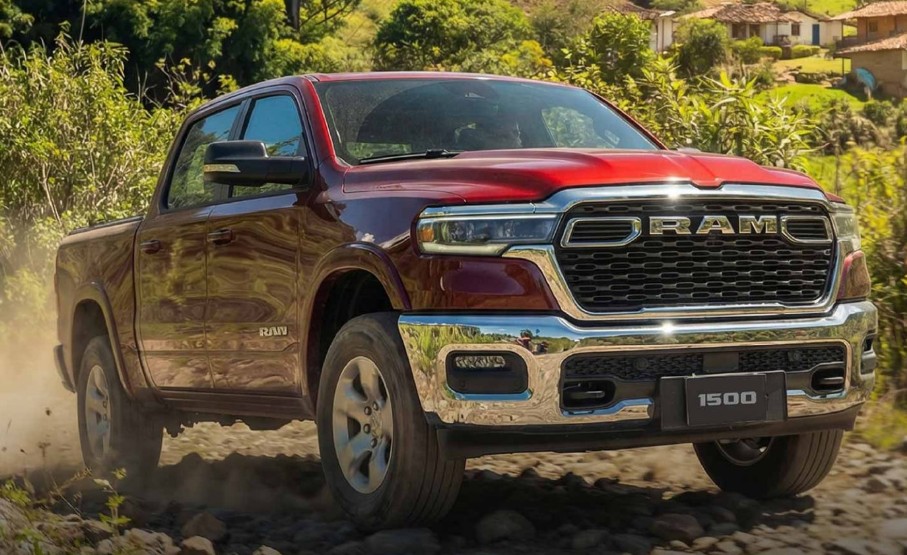
Choosing the right Ram 1500 tire size sounds simple until we actually start shopping. One truck may roll out of the factory on modest 18-inch wheels, another wears chunky all-terrain rubber, and a sportier configuration might sit on massive 22-inch wheels. Then we add different model years, trims, suspension packages, four-wheel drive systems, and aftermarket lifts into the equation. Suddenly, tire shopping feels less like buying rubber and more like solving a puzzle.
Fortunately, it does not need to be complicated.
The most important thing to remember is that there is no single tire size that fits every Ram 1500. The correct size depends on the exact truck. We need to consider the model year, wheel diameter, factory package, load requirements, and whether the suspension remains stock.
In this guide, we'll explain common Ram 1500 tire sizes, show how to decode the numbers printed on a tire, discuss larger replacements, explain possible rubbing and speedometer issues, and help determine what size makes sense for everyday driving, towing, winter conditions, or off-road use.
Content in this publication
- What Tire Size Does a Ram 1500 Use?
- Ram 1500 Tire Size by Wheel Diameter
- How to Read a Ram 1500 Tire Size
- Where to Find the Correct Ram 1500 Tire Size
- Common Ram 1500 Tire Sizes at a Glance
- What Is the Stock Ram 1500 Tire Size?
- Can We Put Bigger Tires on a Ram 1500?
- What Is the Biggest Tire Size for a Stock Ram 1500?
- Ram 1500 Tire Size and Speedometer Accuracy
- Does Tire Size Affect Ram 1500 Fuel Economy?
- Ram 1500 Tire Size for Towing
- Ram 1500 Tire Size for Off-Road Driving
- Ram 1500 Tire Size for Winter
- All-Terrain vs Highway Tires on the Ram 1500
- Should We Change Wheel Size Too?
- How Tire Size Affects Ram 1500 Ride Quality
- Does Tire Pressure Change With Tire Size?
- How to Choose the Best Ram 1500 Tire Size
- Mistakes to Avoid When Buying Ram 1500 Tires
- OEM Size vs Aftermarket Tire Size
- Ram 1500 Tire Replacement: Should All Four Match?
- How Often Should We Check Ram 1500 Tire Size and Condition?
- Final Thoughts on Ram 1500 Tire Size
- Frequently Asked Questions
What Tire Size Does a Ram 1500 Use?
A Ram 1500 can use several tire sizes depending on its configuration. Across different generations and trims, common factory-style sizes include tires designed for 17-, 18-, 20-, and 22-inch wheels.
Examples frequently encountered on Ram 1500 trucks include sizes such as 265/70R17, 275/65R18, 275/60R20, 285/45R22, and other closely related dimensions. Specialized trims and off-road packages can use larger tires.
These examples should not be treated as universal replacements. Two trucks sitting beside each other at a dealership can look nearly identical yet have different wheel and tire requirements.
The safest reference is always the tire information placard on the driver's door jamb. It normally identifies the manufacturer-recommended tire size and inflation pressure for that specific vehicle.
Think of that label as the truck's birth certificate. Internet charts are useful, but the placard tells us how our particular Ram left the factory.
Ram 1500 Tire Size by Wheel Diameter
Wheel diameter provides one of the easiest ways to narrow down tire choices. If our Ram has 18-inch wheels, we obviously cannot install a tire ending in R20 without changing the wheels as well.
Ram 1500 17-Inch Tire Sizes
Seventeen-inch wheels appear most commonly on work-oriented trucks and certain off-road configurations.
A frequently seen size is 265/70R17.
The advantage of a 17-inch setup is sidewall depth. We get more rubber between the wheel and the road, which helps absorb bumps and can be useful on gravel roads, trails, construction sites, and rough pavement.
That taller sidewall can also provide a little more protection against wheel damage.
Owners interested in off-road tires often like smaller-diameter wheels for precisely that reason. Compared with a huge wheel wrapped in a thin tire, the combination is more forgiving when terrain gets ugly.
Ram 1500 18-Inch Tire Sizes
Eighteen-inch wheels strike a nice middle ground between utility and appearance.
A commonly encountered factory-style Ram 1500 tire size is 275/65R18.
This configuration provides enough sidewall for comfort while still giving the truck a modern stance. For drivers who commute during the week, tow occasionally, and venture onto dirt roads on weekends, an 18-inch wheel can be something of a sweet spot.
It also leaves plenty of replacement tire choices in highway-terrain, all-terrain, winter, and light-truck categories.
Ram 1500 20-Inch Tire Sizes
Twenty-inch wheels are extremely popular on modern full-size pickups.
One common size associated with Ram 1500 configurations is 275/60R20.
Why are 20-inch wheels so popular? They fill the wheel arches nicely without requiring extremely low-profile tires. The truck still looks muscular, but there is enough tire sidewall left for respectable comfort.
The tradeoff is that replacing 20-inch tires can cost more than purchasing equivalent 17- or 18-inch tires.
Ram 1500 22-Inch Tire Sizes
Twenty-two-inch wheels emphasize style.
A size such as 285/45R22 can be encountered on certain Ram 1500 configurations equipped with larger wheels.
Visually, the setup can be dramatic. The big wheels nearly fill the arches and give the truck a road-focused appearance.
However, there is less sidewall between the wheel and pavement. That can produce sharper reactions to potholes and potentially make the wheels more vulnerable on rough roads.
For predominantly urban or highway driving, that may be perfectly acceptable. For frequent trail use, many owners prefer more sidewall rather than more wheel.
How to Read a Ram 1500 Tire Size
Suppose the sidewall says:
275/60R20
Those numbers may initially look like a Wi-Fi password, but each has a straightforward meaning.
What Does 275 Mean?
The first number represents the approximate width of the tire in millimetres.
A 275 tire is therefore roughly 275 mm wide at its specified measuring conditions.
Wider tires can create a more aggressive stance and may increase the size of the contact patch, but wider is not automatically better. Extra width can increase rolling resistance, change steering feel, affect clearance, and sometimes create rubbing problems.
What Does 60 Mean?
The second number is the tire's aspect ratio.
In 275/60R20, the sidewall height is approximately 60% of the tire's nominal section width.
It is not a 60-mm sidewall.
That distinction matters because changing width while retaining the same aspect ratio also changes sidewall height and overall tire diameter.
What Does R20 Mean?
The R indicates radial construction, which is standard for modern passenger and light-truck tires.
The 20 tells us the tire is designed for a 20-inch wheel.
A 20-inch tire needs a 20-inch wheel. We cannot stretch an R20 tire onto an 18-inch rim or squeeze an R18 tire onto a 20-inch rim.
Where to Find the Correct Ram 1500 Tire Size
Before ordering tires, we should verify our original specification rather than relying on what is currently mounted.
Why?
Because a previous owner may have changed the wheels.
The most useful places to check are the driver's door-jamb tire placard, the vehicle documentation, and the markings on the existing tires. If those disagree, the factory placard is generally the better starting point for determining the original configuration.
This matters particularly when buying a used Ram.
A truck might currently wear oversized tires that look fantastic but differ significantly from its original specification. Copying that size blindly can perpetuate someone else's questionable fitment decision.
Common Ram 1500 Tire Sizes at a Glance
Although exact applications vary by year and trim, shoppers commonly encounter Ram 1500 fitments around the following range:
- 265/70R17 — commonly associated with smaller factory wheels and practical truck configurations.
- 275/65R18 — a balanced size offering substantial sidewall and everyday versatility.
- 275/60R20 — a popular larger-wheel configuration balancing appearance and ride quality.
- 285/45R22 — a low-profile setup associated with certain large-wheel configurations.
- Larger all-terrain sizes — found on some off-road-oriented trims or aftermarket setups.
Always confirm your individual truck's specification before purchasing.
What Is the Stock Ram 1500 Tire Size?
When people ask for the "stock Ram 1500 tire size," the real answer is: which Ram 1500?
Ram has offered numerous combinations over the years.
A basic work truck and a luxury-oriented model can have dramatically different wheels. An off-road package can differ from both. Even vehicles within the same trim family may have optional wheel packages.
That is why searching exclusively by "Ram 1500 tire size" without specifying a year can lead to conflicting answers.
The differences are not necessarily errors. Multiple answers may all be correct for different configurations.
Does Trim Level Change the Tire Size?
Absolutely.
Trim level and optional packages can determine wheel diameter, tire type, tread style, and overall diameter.
A road-focused luxury configuration may favor large wheels with comparatively short sidewalls, while an off-road package may prioritize taller sidewalls and all-terrain tread.
Even optional appearance packages can change tire specifications.
Why Option Packages Matter
Imagine two trucks with the same engine, cab, and bed.
One has standard wheels. The second receives an upgraded appearance package with larger rims. Mechanically they may be very similar, but their replacement tires are no longer identical.
This is why entering the full vehicle details when shopping online is much safer than shopping only by model name.
Can We Put Bigger Tires on a Ram 1500?
Usually, yes—but "bigger" has limits.
Slight increases in tire diameter may fit a stock truck depending on wheel width, offset, suspension, tire construction, and exact trim. Once we start chasing substantially larger tires, clearance becomes increasingly important.
A tire does not need to touch the body while parked to cause trouble.
When the steering turns, the suspension compresses, or the truck encounters uneven terrain, a tire moves through a much larger envelope. What looks perfectly clear in the driveway can rub during a tight turn or while crossing a bump.
What Happens When Tire Diameter Increases?
Increasing tire diameter changes more than appearance.
The truck effectively travels farther with each wheel rotation. That can alter indicated road speed, effective gearing, acceleration feel, braking behaviour, and transmission shift characteristics.
Larger tires also weigh more in many cases.
That additional rotating mass is like giving the drivetrain heavier shoes. The engine can still run, but it has more mass to accelerate and stop.
What Happens When Tire Width Increases?
Going wider may create a stronger visual stance and potentially change traction characteristics, but it reduces clearance around suspension and steering components.
Wheel offset becomes critical here.
Two identical tires mounted on wheels with different offsets can sit in completely different positions relative to the fender and suspension.
That is why statements such as "35s fit a Ram 1500" need context. Fitment depends on the complete wheel-and-tire package, not only the number printed on the sidewall.
What Is the Biggest Tire Size for a Stock Ram 1500?
There is no universal maximum tire size for every stock Ram 1500.
The practical limit changes with generation, suspension configuration, wheel dimensions, trim, alignment, tire brand, and how much rubbing the owner is willing to tolerate.
Even tires marketed under the same nominal size can measure slightly differently between manufacturers.
For that reason, we should treat online claims about a "largest possible tire" as starting points rather than guarantees.
Can 33-Inch Tires Fit a Ram 1500?
Tires in roughly the 33-inch overall-diameter range are commonly considered when owners want a more aggressive stance without transforming the entire truck.
Whether they fit cleanly depends on the original setup.
Certain factory combinations are already close to this neighborhood, while others leave less room.
Clearance should be checked at full steering lock and through suspension travel.
Can 35-Inch Tires Fit a Ram 1500?
A 35-inch tire is a much more significant step.
Some Ram 1500 builds can accommodate tires around this size with the right combination of suspension changes, wheel offset, trimming, or other modifications. That does not mean every stock Ram 1500 can accept them without rubbing.
Anyone considering 35-inch tires should approach fitment as a complete system.
We need to evaluate suspension height, wheel width, offset, clearance, alignment, gearing, speedometer calibration, and intended use.
Why "No Rub" Claims Can Be Misleading
A truck that never rubs during highway driving might rub badly off-road.
One owner's definition of "fits" may mean nothing touches during normal commuting. Another expects full steering lock with suspension articulation on a trail.
Those are very different standards.
Ram 1500 Tire Size and Speedometer Accuracy
Changing the overall tire diameter can alter speedometer readings.
If the replacement tire is taller than stock, each revolution covers more ground. The truck may therefore be travelling faster than the displayed speed suggests unless the system is recalibrated appropriately.
Smaller tires produce the opposite effect.
A very small diameter difference usually creates a relatively small change, but the discrepancy grows as we move farther from the factory dimensions.
This is one reason why tire professionals often recommend keeping replacement diameter reasonably close to the original when no other modifications are planned.
Does Tire Size Affect Ram 1500 Fuel Economy?
It can.
Larger and heavier tires may increase rolling resistance and rotational mass. Aggressive all-terrain or mud-terrain tread can also require more energy than road-oriented tires.
In practical terms, a Ram running big, heavy off-road rubber may consume more fuel than the same truck on lighter highway tires.
Aerodynamics and driving habits still matter enormously, but tire choice is part of the equation.
A giant tire may look like it could climb a mountain. The fuel pump may notice that confidence too.
Ram 1500 Tire Size for Towing
Towing changes the conversation.
When pulling a trailer, load capacity and tire construction become more important than visual appearance.
We need tires capable of safely carrying the loads placed upon them at the correct inflation pressure. Simply installing the largest tire that fits does not automatically improve towing.
In fact, dramatically increasing diameter can effectively make the gearing taller, potentially changing how readily the truck accelerates or holds gears while pulling weight.
For serious towing, selecting an appropriate load rating and using a tire designed for the application usually matters more than chasing maximum diameter.
Load Rating Matters as Much as Size
Two tires with identical dimensions can have different load capabilities.
That is an important distinction.
The numbers describing width and diameter tell only part of the story. Load index, construction, pressure capability, tread design, and service category also matter.
Never downgrade the required load capability simply because another tire is cheaper or looks more aggressive.
Ram 1500 Tire Size for Off-Road Driving
Off-road drivers often want three things: more ground clearance, stronger sidewalls, and better traction.
Larger-diameter tires can help with the first objective because they raise the axle slightly relative to the ground.
However, diameter alone does not make a great off-road tire.
Tread design and construction matter enormously.
An appropriately sized all-terrain tire may outperform an unnecessarily oversized highway tire the moment pavement disappears.
Why Sidewall Height Helps Off Road
A taller sidewall gives the tire more flexibility.
When conditions allow appropriate pressure adjustment, a tire with adequate sidewall can conform more effectively to uneven terrain and absorb impacts more gently than a very low-profile setup.
That is why enormous wheels are not always ideal for actual off-road use.
Big rims look impressive in the parking lot. Extra sidewall often becomes more valuable once the rocks begin.
Ram 1500 Tire Size for Winter
Winter fitment deserves its own strategy.
Some owners move to a smaller wheel diameter for dedicated winter tires while maintaining an overall tire diameter reasonably close to stock.
Why?
A smaller wheel often allows more tire sidewall and may reduce the cost of winter tires. Depending on the chosen size, a narrower winter tire can also perform well in certain snow conditions.
Any alternative wheel must still clear the truck's brakes and meet appropriate load requirements.
We should never assume that a smaller wheel fits simply because earlier Ram trucks used that diameter.
All-Terrain vs Highway Tires on the Ram 1500
Size gets most of the attention, but tread type often affects daily driving more.
Highway-terrain tires generally prioritize quietness, comfort, road manners, and long-distance driving.
All-terrain tires sacrifice some refinement to provide stronger performance on gravel, dirt, mud, and loose surfaces.
For someone driving 95% on pavement, an aggressive all-terrain tire may be unnecessary. It can add road noise and weight without providing much benefit during daily commuting.
For someone regularly heading into fields, worksites, campsites, or trails, the tradeoff may make perfect sense.
The smartest tire is the one that matches the truck's real life—not the adventure we imagine it having.
Should We Change Wheel Size Too?
Sometimes changing wheel diameter makes more sense than squeezing a different tire onto the factory wheels.
For example, someone with 22-inch wheels who wants better rough-road comfort might consider an appropriately engineered smaller-wheel package with more sidewall.
Conversely, an owner focused on appearance might choose larger wheels while using lower-profile tires to maintain a similar overall diameter.
The key phrase is overall diameter.
Wheel size can change substantially while the tire's outside diameter remains fairly similar. This concept is often called plus-sizing.
What Is Plus-Sizing?
Plus-sizing increases wheel diameter while reducing tire sidewall height enough to keep the complete wheel-and-tire assembly near its original diameter.
Done correctly, this can preserve approximate gearing and speedometer behaviour while changing steering feel and appearance.
Done poorly, it can create clearance problems and dramatically alter ride quality.
Bigger Wheels Do Not Mean Bigger Tires
This point causes endless confusion.
A 22-inch wheel is larger than an 18-inch wheel, but a truck equipped with 22-inch rims does not necessarily have a dramatically taller tire overall.
The sidewall may simply be shorter.
So when comparing Ram 1500 tire size options, look at the complete diameter rather than wheel diameter alone.
How Tire Size Affects Ram 1500 Ride Quality
More sidewall generally provides more cushioning between the wheel and the road.
That means an 18-inch setup with a relatively tall sidewall may feel softer over broken pavement than a 22-inch setup with a lower-profile tire, assuming other variables are comparable.
The smaller wheel is not performing magic.
There is simply more flexible rubber available to absorb impact.
Lower-profile tires can provide sharper steering response and a sportier feel, but potholes become harder to ignore.
For a truck used on imperfect rural roads, comfort may be more valuable than giant wheels.
Does Tire Pressure Change With Tire Size?
Never determine inflation pressure purely from the number molded into a tire's sidewall.
For an original-size tire, the vehicle placard provides the manufacturer's cold inflation recommendation for the factory configuration.
Alternative tire sizes or substantially different tire constructions can require more careful load-and-pressure evaluation.
The maximum pressure printed on the tire is not automatically the pressure we should use every day.
That distinction is critical.
Running inappropriate pressure can affect tire wear, handling, braking, comfort, and load capacity.
How to Choose the Best Ram 1500 Tire Size
Rather than beginning with the biggest tire we can physically install, it is smarter to begin with how the truck is actually used.
For commuting and highway travel, staying near the original dimensions usually keeps things simple.
For towing, load capability becomes a priority.
For winter driving, tire compound and snow performance can matter far more than aggressive size.
For off-roading, sidewall strength, tread design, clearance, and overall diameter become more important.
And for appearance? Well, that is personal. A larger setup can transform the Ram's stance, but we should understand the compromises before buying four expensive pieces of rubber.
Mistakes to Avoid When Buying Ram 1500 Tires
One of the biggest mistakes is assuming all Ram 1500s use the same tire size.
Another is copying someone else's aftermarket setup without checking wheel offset or suspension configuration.
We should also avoid choosing tires based exclusively on appearance, ignoring load ratings, assuming the maximum sidewall pressure equals recommended operating pressure, or making a dramatic diameter change without considering speedometer and clearance effects.
Tires are the truck's only direct connection with the road.
Saving a little research here can cost far more later.
OEM Size vs Aftermarket Tire Size
For most owners, the factory size remains the simplest option.
It preserves the basic engineering relationship between the wheel wells, gearing, electronic systems, ride height, and speedometer calibration.
Aftermarket sizes make sense when we have a specific objective.
Maybe we want extra trail clearance. Maybe we prefer more sidewall. Maybe we want a tougher stance.
There is nothing inherently wrong with changing size. We simply want the modification to solve a real problem rather than create several new ones.
Ram 1500 Tire Replacement: Should All Four Match?
Matching tires across the truck is generally the cleanest approach, particularly regarding size, construction, and tread characteristics.
On four-wheel-drive vehicles, substantial differences in tire circumference can also be undesirable because the drivetrain expects the wheels to rotate at compatible rates.
If replacing only one or two tires, tread-depth differences deserve attention.
This becomes another reason not to treat tire replacement like buying ordinary accessories. The tires function together as a system.
How Often Should We Check Ram 1500 Tire Size and Condition?
The printed size will not mysteriously change, of course, but tire condition absolutely does.
Pressure, tread depth, cracking, uneven wear, punctures, and sidewall damage should be checked regularly.
We should also inspect tires after hard off-road impacts or pothole strikes.
A correct tire size does little good if the tire itself is unsafe.
Rotation intervals, alignment, and proper pressure can also help maximize tread life—especially on a heavy pickup where neglected tires can disappear surprisingly quickly.
Final Thoughts on Ram 1500 Tire Size
Finding the correct Ram 1500 tire size is less about memorizing one magic number and more about understanding the truck in front of us.
Ram has used numerous wheel-and-tire combinations across different years, trims, and packages. Sizes around 17, 18, 20, and 22 inches are common, with specifications varying considerably between configurations.
Our best starting point remains the driver's door-jamb placard.
From there, we can decide whether staying stock or moving to an alternative size better serves the way we use the truck.
If reliability, quietness, fuel economy, and easy replacement matter most, sticking close to the original diameter is usually the straightforward route.
If off-road performance or appearance is the goal, larger tires can work—but clearance, wheel offset, load rating, speedometer accuracy, suspension geometry, and extra weight all deserve attention.
In other words, tire size is a balancing act.
A properly selected tire should complement the Ram rather than fight it. Get the combination right, and the truck feels natural beneath us—like a good pair of boots that happen to weigh about three tons less than the vehicle wearing them.
Frequently Asked Questions
1. What is the most common Ram 1500 tire size?
There is no single universal size, although 275/65R18 and 275/60R20 are examples of commonly encountered configurations on Ram 1500 trucks. Other models may use 17- or 22-inch wheels, and specialized packages can differ significantly. Always verify the driver's door placard for your specific truck.
2. Can I put larger tires on my Ram 1500 without a lift?
A modest increase may be possible on some configurations, but the maximum size depends on model year, suspension, wheel width, offset, tire dimensions, and intended use. A tire that appears to fit while parked may still rub during full steering lock or suspension compression.
3. Will bigger tires hurt Ram 1500 fuel economy?
They can. Larger tires are often heavier and may have greater rolling resistance. Aggressive all-terrain tread can add further resistance. The exact effect depends on the size increase, tire construction, driving style, gearing, and operating conditions.
4. Do larger tires affect the Ram 1500 speedometer?
Changing overall tire diameter can affect indicated speed. A taller tire travels farther per revolution than the original tire, potentially causing the actual road speed to differ from the displayed speed. Significant size changes may therefore warrant recalibration.
5. Where can I find my exact Ram 1500 factory tire size?
Check the tire information placard on the driver's door jamb. It provides the original tire specification and recommended cold inflation information for the truck's factory configuration. You can compare this with the tires currently installed to determine whether a previous owner changed the setup.
If you want to know other articles similar to Ram 1500 Tire Size: Complete Guide to Stock Sizes, Upgrades, and Fitment you can visit the category Service and Parts.
Nissan Rogue Oil Change Cost: Prices, Service Options, and What to Expect
Nissan Rogue Key Battery Replacement: Easy Step-by-Step Guide
Nissan Rogue Oil Change Interval: Complete Guide by Model Year
Nissan Rogue Brake Pads and Rotors Cost: Complete 2026 Guide

Kia Sorento Service Reset: How to Reset the Service Light
Kia Sorento Fuel Tank Capacity: Gallons, Litres and Model Differences
Leave a Reply
More content of your interest