
Ram 1500 Weight: Curb Weight, GVWR, Payload and More

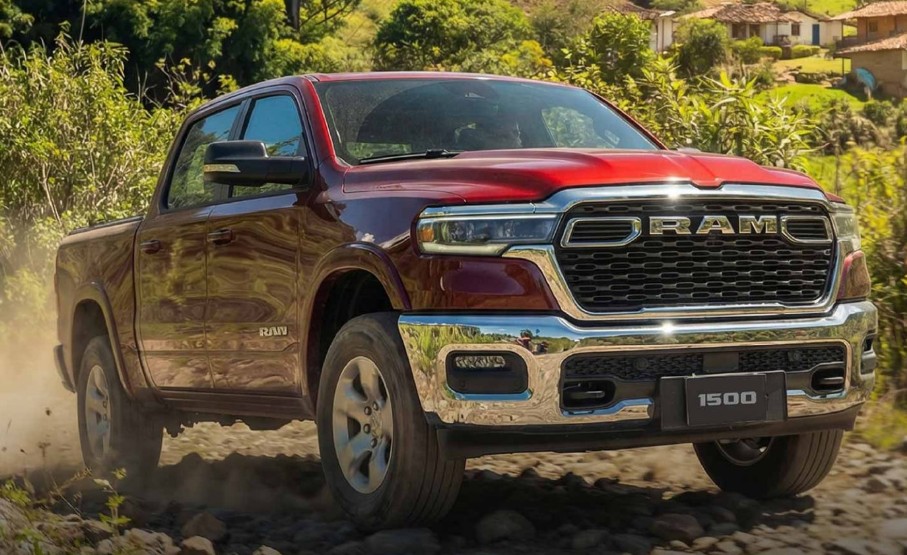
When we ask, “How much does a Ram 1500 weigh?” it sounds like a question that should have a one-line answer. Pickup trucks rarely make things that simple, though. Cab style, drivetrain, trim level, engine, bed length, wheels, equipment packages, and optional hardware can all change the final number.
For the 2026 Ram 1500, Ram states that vehicle weight generally ranges from approximately 4,820 to 6,440 pounds across the lineup. That is a spread of more than 1,600 pounds, which tells us why searching for a single Ram 1500 weight can be misleading.
And curb weight is only the beginning.
We also have gross vehicle weight rating, payload capacity, gross combined weight rating, trailer weight, tongue weight, and axle limits to think about. These numbers interact like pieces of the same puzzle. Ignore one, and the rest can suddenly stop making sense.
So, whether we're checking whether a Ram 1500 will fit a trailer, calculating payload for a camping trip, comparing it with another half-ton pickup, or simply satisfying our curiosity, this guide breaks down Ram 1500 weight in plain English.
Content in this publication
- How Much Does a Ram 1500 Weigh?
- What Does Ram 1500 Curb Weight Mean?
- Ram 1500 Weight by Trim
- Ram 1500 4x2 vs 4x4 Weight
- Crew Cab vs Quad Cab Ram 1500 Weight
- What Is Ram 1500 GVWR?
- Ram 1500 Payload Capacity Explained
- Ram 1500 Weight vs Towing Capacity
- What Is Ram 1500 GCWR?
- Does the Engine Affect Ram 1500 Weight?
- Ram 1500 Weight in Pounds and Kilograms
- Why Ram 1500 Weight Matters in Everyday Driving
- How Accessories Increase Ram 1500 Weight
- How to Find the Exact Weight of Your Ram 1500
- Ram 1500 Weight vs Ram 2500 Weight
- Is a Lighter Ram 1500 Better?
- How Ram 1500 Weight Influences Payload Planning
- Can You Reduce Ram 1500 Weight?
- Ram 1500 Weight and Fuel Economy
- Should We Worry About Ram 1500 Weight When Buying?
- The Most Important Ram 1500 Weight Number
- Conclusion: Understanding Ram 1500 Weight Makes Us Smarter Truck Owners
- Frequently Asked Questions About Ram 1500 Weight
How Much Does a Ram 1500 Weigh?
The short answer is that a modern Ram 1500 typically weighs somewhere in the neighborhood of 4,820 to 6,440 pounds, depending on its exact configuration. Those figures represent the approximate range Ram provides for its 2026 lineup.
That translates to roughly 2,186 to 2,921 kilograms.
A basic work-oriented truck can therefore weigh substantially less than a heavily equipped luxury or performance-oriented version.
Think of the Ram 1500 lineup like a family of people wearing different backpacks. They're related, but some are carrying far more equipment than others.
Ram 1500 Weight at a Glance
For quick reference, here are some useful figures from the current 2026 lineup:
| Specification | Approximate/Available Figure |
|---|---|
| Ram 1500 overall weight range | 4,820–6,440 lb |
| Maximum available payload | 2,360 lb |
| Maximum available towing | 11,610 lb |
| Ram 1500 RHO curb weight example | 5,767 lb |
| RHO GVWR | 7,100 lb |
| RHO payload example | 1,330 lb |
Ram lists the general weight range for the lineup at approximately 4,820–6,440 pounds and advertises up to 2,360 pounds of maximum available payload and up to 11,610 pounds of maximum available towing when properly equipped.
These maximum figures do not necessarily occur on the same configuration. That's an important distinction we'll keep coming back to.
What Does Ram 1500 Curb Weight Mean?
Curb weight is essentially the truck's weight in ready-to-drive condition before we add occupants or cargo.
It includes the vehicle itself and its standard operating fluids. It does not mean we've loaded the bed with lumber, invited four friends aboard, hooked up a camper, and filled every storage compartment.
That's why curb weight is one of the cleanest numbers for comparing the physical mass of two trucks.
For example, Ram lists a 2026 Ram 1500 RHO curb weight of 5,767 pounds on its specifications page.
Meanwhile, another configuration can weigh considerably less.
Why Curb Weight Changes So Much
A pickup isn't manufactured in one universal form.
Change the drivetrain from 4x2 to 4x4 and we add hardware. Pick a larger cab and there's more body structure, glass, seating, interior material, and equipment. Move into an upscale trim and we may add larger wheels, upgraded seats, sound insulation, powered components, additional electronics, panoramic glass, and other features.
Every addition is a pebble. Add enough pebbles and eventually we're carrying a boulder.
Ram 1500 Weight by Trim
Trim is one of the easiest ways to understand why Ram 1500 weight varies.
A Tradesman is designed with work and utility high on the priority list. Higher trims add comfort and technology, while off-road and performance-oriented versions may bring additional structural and mechanical equipment.
We shouldn't assume, however, that trim alone determines weight.
The engine, cab, drivetrain, bed, axle specification, packages, and individual options still matter.
Ram 1500 Tradesman Weight
The Tradesman sits toward the practical end of the lineup and can be configured in several ways.
One useful benchmark is its capability. Ram lists a 7,200-pound GVWR and up to 2,360 pounds of payload for an applicable 2026 Ram 1500 configuration on its specifications information.
If we're primarily interested in hauling cargo rather than filling the truck with luxury equipment, lighter configurations tend to be advantageous because every pound the truck itself doesn't consume can potentially leave more room under its GVWR for people and cargo.
Why Work-Truck Buyers Should Care
Imagine two pickups with the same GVWR.
Truck A weighs 4,900 pounds empty.
Truck B weighs 5,500 pounds empty.
Before adding anything, Truck B has already consumed another 600 pounds of the available weight envelope.
That is why curb weight isn't merely trivia. For commercial users, contractors, landscapers, and anyone carrying heavy equipment, it can directly affect practical payload.
Ram 1500 Laramie Weight
The Laramie introduces more comfort and convenience equipment, so we'd naturally expect certain configurations to be heavier than simpler work-oriented trucks.
Ram's published 2026 specifications show one Laramie configuration with a 6,900-pound GVWR and 1,670-pound payload rating.
Using those values illustrates the relationship between truck weight and available payload beautifully.
If options add weight to the vehicle without increasing its GVWR, the amount left for occupants and cargo shrinks.
Ram 1500 Rebel Weight
The Rebel is built with an off-road personality, which means we're dealing with equipment intended for tougher terrain rather than just parking-lot polish.
Ram lists a 7,100-pound GVWR, a 1,600-pound payload figure, and up to 11,140 pounds of towing capacity on the cited 2026 Rebel specification page.
Again, exact numbers vary with configuration.
Off-road tires, suspension components, skid plates, four-wheel-drive hardware, and other rugged equipment are useful when the pavement ends, but hardware doesn't float. It adds mass.
Ram 1500 Limited Weight
Luxury pickups are fascinating because they ask one machine to behave like both a workhorse and a premium road-trip vehicle.
Ram publishes a 7,100-pound GVWR and a 1,330-pound payload figure for the 2026 Limited configuration shown in its specifications.
That lower payload figure relative to some work-oriented configurations shows exactly why we should never assume that the most expensive version automatically carries the most weight in its bed.
Luxury equipment consumes part of the truck's allowable mass.
Ram 1500 RHO Weight
The Ram 1500 RHO is another great example of how specialized equipment changes the equation.
Ram lists the RHO configuration at a 5,767-pound curb weight, with a 7,100-pound GVWR, 1,330-pound payload, and 9,120-pound towing capacity on its 2026 specification page.
That's a substantial truck.
But the extra mass isn't simply dead weight. Performance-oriented suspension, drivetrain equipment, wheels, tires, structural components, and other specialized hardware contribute to what the RHO is designed to do.
Ram 1500 4x2 vs 4x4 Weight
Four-wheel drive generally adds weight because we're adding mechanical equipment.
Instead of sending power to one axle, a 4x4 truck needs additional driveline components to distribute power through the four-wheel-drive system.
For buyers, this creates a familiar trade-off.
A 4x2 configuration may offer:
- Lower curb weight
- Potentially greater payload in certain configurations
- Fewer drivetrain components
- Suitability for primarily paved-road use
A 4x4 can provide significantly more traction capability where conditions demand it, particularly on loose surfaces, trails, snow, mud, or difficult job sites.
So the better configuration isn't automatically the lighter one. It depends on what we're actually asking the truck to do.
Crew Cab vs Quad Cab Ram 1500 Weight
Cab configuration also matters.
A larger cab means more passenger space, but passenger space requires additional body structure, doors, seats, glass, trim, and related hardware.
That tends to add weight.
This creates another practical balance.
A smaller cab can leave more of the truck's capacity available for hauling, while a larger passenger compartment makes family use and long-distance travel much more comfortable.
For many owners, the Crew Cab earns its extra pounds every single morning.
Does Bed Length Affect Ram 1500 Weight?
Yes.
A longer bed requires additional body material and associated structure, so otherwise comparable configurations can have different curb weights.
The difference may seem small compared with the truck's entire mass, but payload calculations live in a world where every pound counts.
A toolbox, tonneau cover, side steps, bed liner, hitch, and cargo management equipment can gradually nibble away at the remaining capacity as well.
What Is Ram 1500 GVWR?
GVWR stands for Gross Vehicle Weight Rating.
This isn't how much the truck currently weighs.
It is the maximum allowable loaded weight specified for the vehicle.
In other words:
GVWR = truck + occupants + cargo + installed equipment + applicable hitch/tongue load
Suppose our truck has a 7,100-pound GVWR.
If the loaded truck weighs 6,700 pounds, we've got about 400 pounds before reaching that rating.
The moment we understand GVWR, payload becomes much easier to understand.
Ram 1500 GVWR Examples
Current Ram specification pages illustrate how GVWR can vary.
For example:
- Certain 2026 Ram 1500 specifications show a 7,200-pound GVWR.
- The cited Rebel configuration has a 7,100-pound GVWR.
- The cited Laramie configuration has a 6,900-pound GVWR.
- The RHO specification page lists a 7,100-pound GVWR for the configuration shown there.
This is precisely why the certification label on the actual truck matters more than a generalized internet chart.
Ram 1500 Payload Capacity Explained
Payload is the amount of weight we can add to the truck, subject to its ratings.
People sometimes imagine payload means whatever we throw into the pickup bed.
Not quite.
Payload has to account for more than bags of cement or camping gear. Passengers and other added weight count too.
If five people climb aboard, their combined weight consumes part of the available payload before we put a single suitcase in the bed.
Ram advertises a maximum available payload of 2,360 pounds for the 2026 Ram 1500 when properly configured.
The important word is maximum.
Our individual truck may be rated considerably lower.
Why Heavier Ram 1500 Models Often Have Less Payload
Here's the easiest way to visualize it.
Imagine the GVWR as the ceiling of a room.
The empty truck is a stack of boxes already sitting inside that room.
A light truck leaves plenty of space between the boxes and the ceiling.
A heavy truck fills more of the room before we've added anything.
That's essentially why added luxury equipment can reduce available payload.
It's also why maximum payload figures are typically achieved by carefully selected configurations rather than the heaviest, most luxurious truck in the showroom.
Ram 1500 Weight vs Towing Capacity
Truck weight and towing capacity are related, but they are not interchangeable.
The Ram 1500's maximum available towing capacity reaches 11,610 pounds for 2026 when properly equipped, according to Ram.
That doesn't mean we can simply find an 11,600-pound trailer, attach it to any Ram 1500, and head for the highway.
Actual towing capability depends on the truck's configuration and ratings.
Trailer Tongue Weight Matters
Part of a conventional trailer's weight pushes downward on the hitch.
That load effectively becomes part of the burden carried by the truck, which means it can consume payload.
This catches people by surprise.
Imagine we've loaded four adults, luggage, tools, a bed cover, and camping equipment into the truck. Then we attach a large travel trailer.
Even if the trailer itself is within the maximum towing rating, the truck could potentially run out of available payload first.
That's why experienced towers don't look at only one giant number in an advertisement.
What Is Ram 1500 GCWR?
GCWR means Gross Combined Weight Rating.
Where GVWR focuses on the loaded truck, GCWR looks at the loaded truck and trailer combination.
The concept can be summarized as:
Loaded truck + loaded trailer = combined weight
That combination needs to remain within the applicable vehicle ratings.
It's easy to see why a pickup's weight becomes important here. A heavier truck contributes more to the combined total before we've accounted for the trailer.
Does the Engine Affect Ram 1500 Weight?
Yes.
Engines aren't identical blocks of magic hidden underneath the hood.
Different powertrains use different components, supporting systems, and hardware. Those differences can alter vehicle weight.
The 2026 Ram 1500 offers multiple engine choices, including the available 5.7-liter HEMI V8 with eTorque and Hurricane inline-six options. Ram's 2026 performance information lists different maximum towing and payload capabilities depending on engine configuration.
For instance, Ram lists up to 1,630 pounds of payload with the available 5.7-liter HEMI V8 configuration described on its engine-performance page, while the 3.0-liter Hurricane configuration is listed with up to 1,910 pounds of payload.
Those figures underline the larger lesson: engine choice can influence the truck's capability profile.
Ram 1500 Weight in Pounds and Kilograms
For readers outside the United States, pounds don't always make the Ram's size immediately intuitive.
Using the approximate 2026 overall range supplied by Ram:
4,820 lb ≈ 2,186 kg
6,440 lb ≈ 2,921 kg
So we're essentially looking at a truck weighing roughly 2.2 to 2.9 metric tonnes, depending on configuration. Ram identifies approximately 4,820–6,440 pounds as the general lineup range.
That's quite a spread.
A lightweight configuration and a heavily equipped configuration may share the same Ram 1500 badge while feeling like very different machines on a scale.
Why Ram 1500 Weight Matters in Everyday Driving
We don't need to tow a construction trailer to care about vehicle weight.
Mass influences numerous aspects of everyday ownership.
A heavier truck has more momentum once moving. Its suspension, tires, brakes, and drivetrain all have to manage that mass. Acceleration and efficiency can also change with vehicle configuration and loading.
Then there are more practical situations.
Maybe we're using:
- A parking structure with weight restrictions
- A vehicle lift
- A ferry
- A transport trailer
- An automotive scale
- A garage jack
- Specialized equipment
- A commercial road with weight restrictions
Suddenly, “How much does a Ram 1500 weigh?” isn't trivia anymore.
It's the question standing between us and an expensive mistake.
How Accessories Increase Ram 1500 Weight
Here's where things become sneaky.
We buy a truck with a known payload rating, then gradually bolt things onto it.
Running boards? Add weight.
Heavy tonneau cover? More weight.
Toolbox? More weight.
Bed rack? More weight.
Winch? More weight.
Aftermarket bumper? Definitely more weight.
None of those items may seem dramatic individually. Together, though, they can eat through hundreds of pounds of payload.
It's like filling a suitcase one T-shirt at a time. Nothing feels heavy until we try to lift the finished bag.
Common Additions That Can Affect Payload
Pay particular attention to:
- Bed covers and toppers
- Toolboxes
- Replacement bumpers
- Winches
- Larger wheels and tires
- Running boards
- Recovery equipment
- Bed storage systems
- Camper shells
- Spare fuel or water
- Hitch equipment
The safest approach is to treat permanently installed accessories as part of the truck's real operating weight.
How to Find the Exact Weight of Your Ram 1500
Internet specifications are excellent for research.
Your truck's own documentation is better for operating decisions.
If we need an exact answer, the first place to look is the vehicle certification label and other manufacturer-provided labels, typically located around the driver's door or door-jamb area.
These provide ratings applicable to the individual vehicle.
Use the Payload Label Instead of Guessing
This is especially important with highly optioned pickups.
Two Ram 1500 trucks parked beside one another can look nearly identical but have different payload ratings because one carries heavier equipment.
If towing or hauling close to the limits, use the actual vehicle's information rather than assuming that a maximum figure from an advertisement applies.
For the Most Accurate Real-World Weight, Use a Scale
A certified vehicle scale can tell us what the truck weighs in its actual traveling condition.
For towing, a useful weighing process can involve measuring the truck:
- In normal operating condition
- With passengers and cargo
- With the trailer connected
- With individual axle loads where available
That's much more informative than guessing based on brochure figures.
Ram 1500 Weight vs Ram 2500 Weight
The Ram 1500 is a light-duty pickup, while the Ram 2500 belongs to the heavy-duty class.
That distinction matters because the HD truck is engineered around greater load-carrying and towing requirements.
For context, Ram publishes 10,000 pounds of GVWR for the 2026 Ram 2500 configuration displayed on its specifications page, noticeably above the GVWR examples we see for the Ram 1500.
That doesn't automatically mean everyone who tows should buy a 2500.
A Ram 1500 often makes more sense for buyers who want a truck balancing capability with everyday comfort and easier daily use.
But if we're repeatedly nudging against the 1500's payload limits, moving to a heavy-duty truck can provide the extra capacity we're really looking for.
Is a Lighter Ram 1500 Better?
Sometimes.
A lighter configuration can leave more room for payload, all else being equal.
But “lighter” and “better” aren't synonyms.
A 4x4 system may add weight, yet we'd gladly carry those extra pounds if we're regularly navigating mud or snow.
A larger cab weighs more, but parents may value rear passenger space far more than an extra slice of theoretical payload.
Luxury equipment adds weight too, yet someone spending hours behind the wheel may consider ventilated seats, additional comfort equipment, and better cabin features completely worthwhile.
The right question isn't:
Which Ram 1500 weighs the least?
It's:
Which Ram 1500 gives us the right balance of weight, payload, comfort, traction, and capability for our actual use?
That question leads to much smarter buying decisions.
How Ram 1500 Weight Influences Payload Planning
Let's create a simple hypothetical example.
Suppose a truck offers 1,500 pounds of available payload.
Now add:
- Driver: 190 lb
- Passenger: 150 lb
- Two additional passengers: 300 lb combined
- Bed cargo: 250 lb
- Accessories and miscellaneous equipment: 150 lb
We've already accounted for 1,040 pounds.
That leaves about 460 pounds before reaching our hypothetical payload allowance.
Attach a trailer whose tongue weight places several hundred additional pounds on the truck and suddenly the margin becomes surprisingly thin.
This is why maximum towing numbers tell only part of the story.
Can You Reduce Ram 1500 Weight?
To an extent.
We're obviously not going to remove doors before every road trip, but avoiding unnecessary cargo can make a real difference.
Take a look inside many pickups and you'll find something resembling a mobile garage: tools that haven't been touched in six months, tow straps, spare parts, boxes, sports equipment, bottles of fluids, and miscellaneous gear.
If we don't need it, removing it gives some capacity back.
However, removing aftermarket equipment does not change the manufacturer's certified GVWR or other official ratings. We're simply reducing the truck's actual loaded weight and therefore preserving more room within applicable limits.
Ram 1500 Weight and Fuel Economy
Physics doesn't negotiate.
Moving mass takes energy.
That doesn't mean curb weight alone determines fuel economy. Aerodynamics, engine technology, gearing, tires, speed, temperature, terrain, traffic, and driving style matter tremendously.
Still, loading hundreds of unnecessary pounds into the truck forces the powertrain to move that additional mass every time we accelerate.
Think about climbing stairs.
Carrying an empty backpack is one thing.
Fill that backpack with bricks and our legs immediately notice.
A truck's engine experiences its own version of that equation.
Should We Worry About Ram 1500 Weight When Buying?
We shouldn't obsess over weight, but we definitely shouldn't ignore it.
Most buyers don't need the lightest truck possible.
They need enough payload and towing headroom for their intended use.
Before choosing a Ram 1500 configuration, ask:
- How many passengers will we usually carry?
- Will we haul tools or equipment every day?
- Are we towing a travel trailer?
- Do we need four-wheel drive?
- Will we install heavy accessories?
- Are we carrying motorcycles, ATVs, or construction materials?
- Do we need maximum payload, or is comfort more important?
- How much unused capacity do we want as a safety margin?
Answering those questions tells us far more than staring at horsepower figures.
The Most Important Ram 1500 Weight Number
If we had to pick one lesson from this entire article, it would be this:
Use the ratings for your actual truck.
Ram advertises impressive maximum figures, including up to 2,360 pounds of available payload and 11,610 pounds of available towing capability for the 2026 Ram 1500, but those are maximum values achieved with appropriate configurations.
A different engine, cab, drivetrain, trim, axle setup, or equipment package can change what an individual truck is rated to carry or tow.
That's why the label on our truck deserves the final word.
Conclusion: Understanding Ram 1500 Weight Makes Us Smarter Truck Owners
The Ram 1500 weight question looks simple until we open the hood—figuratively and literally.
For the 2026 lineup, Ram says overall vehicle weight generally runs from roughly 4,820 to 6,440 pounds, giving us a useful starting point. But curb weight is only one part of the equation.
GVWR tells us how heavy the truck can be when loaded. Payload tells us how much additional weight the truck can carry. GCWR becomes critical when a trailer enters the picture. Cab configuration, drivetrain, engine, trim, accessories, passengers, and cargo can influence how much useful capacity remains.
The beauty of the Ram 1500 is that we're not dealing with one rigid formula. We can configure the truck for work, family use, towing, off-road adventures, luxury, or a blend of all four.
That flexibility is exactly why its weight varies so much.
So don't simply ask, “How much does a Ram 1500 weigh?”
Ask, “How much does my configuration weigh, and how much capacity does that leave for what I actually want to do?”
That's where the useful answer lives.
Frequently Asked Questions About Ram 1500 Weight
1. How much does a Ram 1500 weigh?
The 2026 Ram 1500 lineup generally weighs approximately 4,820 to 6,440 pounds, depending on configuration, according to Ram. Different trims, engines, drivetrains, cab styles, and equipment packages can significantly change the final curb weight.
2. How much does a Ram 1500 weigh in kilograms?
Using Ram's approximate 2026 range of 4,820–6,440 pounds, the Ram 1500 weighs roughly 2,186 to 2,921 kilograms, depending on configuration.
3. What is the maximum payload of a Ram 1500?
Ram advertises a maximum available payload of 2,360 pounds for the 2026 Ram 1500 when properly configured. Actual payload can be significantly lower on heavier or differently equipped models, so owners should verify their individual vehicle rating.
4. What is the GVWR of a Ram 1500?
There isn't one universal Ram 1500 GVWR because it changes with configuration. Current Ram specification pages show examples including 6,900, 7,100, and 7,200 pounds depending on the model and setup. Check the certification label on the individual truck for its applicable GVWR.
5. Does a heavier Ram 1500 have less payload?
Often, yes, when comparing trucks operating under similar GVWR limits. More vehicle weight leaves less room between the truck's own weight and its allowable loaded weight. However, different configurations can also have different GVWRs, so we shouldn't calculate payload from generic figures alone.
If you want to know other articles similar to Ram 1500 Weight: Curb Weight, GVWR, Payload and More you can visit the category Service and Parts.
Nissan Qashqai Fuel Tank Capacity: Complete Guide

Suzuki Swift Fuel Tank Capacity: Complete Guide
Mazda CX-5 Weight (2013–2026): Complete Guide in Pounds and KG
Kia Sportage Dashboard Symbols and Warning Lights

MINI Cooper Weight (2002–2027): Complete Weight Chart & Guide

Toyota RAV4 Engine Sizes: Complete Guide (1994–2026)
Leave a Reply
More content of your interest