

Ram 1500 Towing Capacity Chart: Complete 2026 Guide

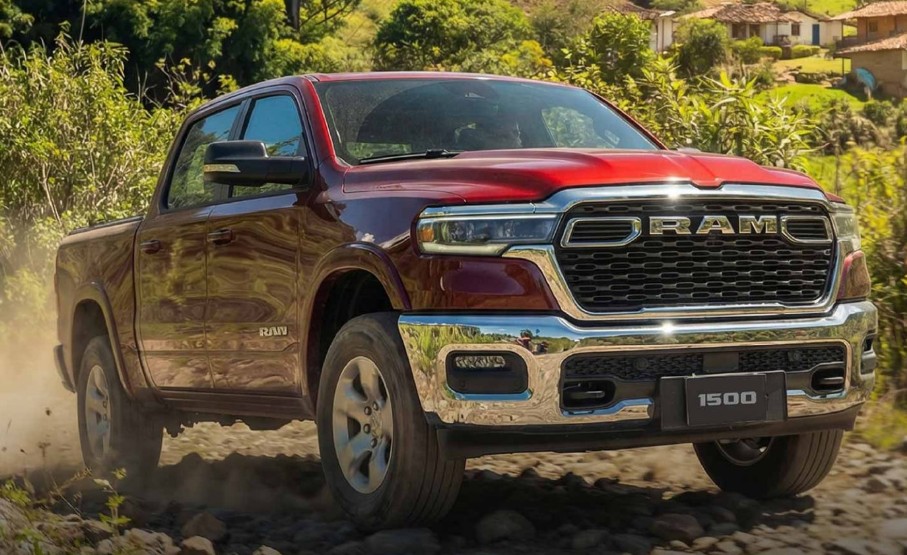
The Ram 1500 towing capacity chart tells a more interesting story than a single headline number ever could. Yes, the 2026 Ram 1500 can tow up to 11,610 pounds when properly equipped, but that figure is only the ceiling. Your actual towing capacity depends on the engine, drivetrain, axle ratio, cab, bed configuration, payload, passengers, optional equipment, and even the weight pressing down on the hitch.
Think of towing capacity like the weight limit on an elevator. The sign might say it can carry a certain maximum, but what actually fits safely depends on everything already inside. Your Ram works the same way. Add four adults, camping equipment, a bed full of tools, and a heavy trailer tongue, and the truck's remaining capacity changes quickly.
That's why we're going beyond the marketing number. In this guide, we'll break down the current Ram 1500 towing ratings, explain the differences between its engines, show how axle ratios affect capacity, and help you determine what your particular truck can realistically tow.
Content in this publication
- 2026 Ram 1500 Towing Capacity at a Glance
- Detailed Ram 1500 Towing Capacity Chart
- 3.6L Pentastar V6 Towing Capacity
- 3.0L Hurricane Standard-Output Towing Capacity
- 5.7L HEMI V8 Towing Capacity
- 3.0L Hurricane High-Output Towing Capacity
- Ram 1500 4x2 vs 4x4 Towing Capacity
- How Cab Style Changes Ram 1500 Towing Capacity
- Payload Capacity Can Limit You Before Towing Capacity Does
- What Do GVWR and GCWR Mean?
- Why Your Door Sticker Is More Important Than an Online Chart
- How Much Ram 1500 Towing Capacity Do You Actually Need?
- Can a Ram 1500 Tow a Travel Trailer?
- Ram 1500 Towing Technology
- Which Ram 1500 Is Best for Maximum Towing?
- How to Find Your Exact Ram 1500 Towing Capacity
- Ram 1500 Towing Capacity: The Bottom Line
- Frequently Asked Questions
2026 Ram 1500 Towing Capacity at a Glance
For the 2026 model year, Ram lists a maximum available towing capacity of 11,610 pounds and a maximum available payload capacity of 2,360 pounds. Both figures require specific configurations rather than applying automatically to every truck on a dealer lot.
Here's the simplified engine-level picture.
| 2026 Ram 1500 Engine | Horsepower | Torque | Maximum Towing Capacity |
|---|---|---|---|
| 3.6L Pentastar V6 with eTorque | 305 hp | 269 lb-ft | 8,130 lb |
| 3.0L Hurricane Standard Output | 420 hp | 469 lb-ft | 11,610 lb |
| 5.7L HEMI V8 with eTorque | 395 hp | 410 lb-ft | 11,320 lb |
| 3.0L Hurricane High Output | 540 hp | 521 lb-ft | Up to 10,000 lb |
These are manufacturer maximums for 2026 and should not be interpreted as the rating for every configuration using that engine. Ram's own towing documentation shows significant differences among 4x2 and 4x4 trucks, axle ratios, cab styles, beds, and trims.
That distinction matters. Two Ram 1500s parked side by side may look nearly identical while having noticeably different trailer ratings.
Detailed Ram 1500 Towing Capacity Chart
The official 2026 towing chart provides a clearer picture of just how much configuration matters. For Tradesman models, for example, the standard-output Hurricane engine paired with the 3.92 axle ratio reaches the headline 11,610-pound maximum in the appropriate Quad Cab 4x2 configuration. Other versions equipped with the same engine can be rated lower.
Here is a condensed version of the most useful figures.
| Engine | Axle Ratio | Selected Maximum Trailer Rating |
| 3.6L Pentastar V6 | 3.21 | Around 6,340–6,570 lb depending on configuration |
| 3.6L Pentastar V6 | 3.55 | Up to 8,130 lb |
| 3.0L Hurricane SO | 3.21 | Up to 8,510 lb |
| 3.0L Hurricane SO | 3.55 | Up to 8,270 lb |
| 3.0L Hurricane SO | 3.92 | Up to 11,610 lb |
| 5.7L HEMI V8 | 3.21 | Up to 8,220 lb in listed configuration |
| 5.7L HEMI V8 | 3.55 | Up to 7,640 lb in listed configuration |
| 5.7L HEMI V8 | 3.92 | Up to 11,320 lb |
| 3.0L Hurricane HO | 3.92 | Up to 10,000 lb depending on trim |
Ram notes that its stated trailer weights are rounded, assume proper equipment, and can change depending on configuration. Its published calculations also account for specified passenger weight, while actual cargo, passengers, accessories, and tongue weight still matter when checking a particular vehicle.
Why the Highest Number Isn't Always the Best Number
People often shop for trucks by searching one question: How much can it tow?
That's understandable, but maximum capacity shouldn't automatically determine which configuration we choose.
If our camper weighs 6,000 pounds loaded, do we really need to configure a Ram exclusively around an 11,610-pound maximum? Maybe not. A truck offering comfortable capacity above our real trailer weight may be a better fit, especially if interior equipment, four-wheel drive, passenger space, or everyday usability matters more.
Maximum ratings are useful benchmarks. Real-world suitability is the bigger question.
3.6L Pentastar V6 Towing Capacity
The 3.6-liter Pentastar V6 with eTorque remains the entry point into the 2026 Ram 1500 powertrain family. Ram rates it at 305 horsepower and 269 lb-ft of torque, with maximum towing reaching 8,130 pounds in the correct configuration. Its maximum available payload reaches 2,360 pounds, making payload one of its particularly useful strengths.
That towing figure puts the Pentastar in territory that can cover many recreational trailers, utility trailers, smaller boats, and equipment trailers.
It also proves why horsepower alone doesn't tell us how capable a truck is. The V6 produces less horsepower than every other engine discussed here, yet it may still provide more towing capacity than a buyer actually needs.
Who Should Choose the Pentastar V6?
We'd consider the Pentastar when regular towing loads are moderate rather than extreme.
It's especially sensible when the truck spends most of its life commuting, carrying equipment, handling household jobs, and occasionally pulling a trailer. Instead of buying capability we'll rarely use, we're matching the drivetrain to the workload.
That said, buyers planning to tow near the upper limit regularly should compare available configurations carefully. A heavier trailer can make the stronger Hurricane or HEMI engines more appealing, particularly when grades, highway merging, or frequent long-distance towing enter the equation.
3.0L Hurricane Standard-Output Towing Capacity
Here's where the Ram 1500 towing chart gets especially interesting.
The standard-output 3.0-liter twin-turbo Hurricane inline-six produces 420 horsepower and 469 lb-ft of torque, and Ram lists maximum towing at 11,610 pounds. That makes it the highest-towing engine configuration in the current 2026 Ram 1500 lineup.
Those numbers show how much modern turbocharged engines have changed the pickup landscape. Years ago, many buyers naturally associated maximum towing with a big V8. Today, Ram's inline-six sits at the top of the chart.
Why the 3.92 Axle Ratio Matters
The official chart makes the axle-ratio effect impossible to ignore.
A standard-output Hurricane Ram with a 3.21 axle can be rated around the low-to-mid 8,000-pound range depending on configuration. Move to the 3.92 axle in the right setup, and the rating can climb beyond 11,000 pounds, topping out at 11,610 pounds.
That's not a tiny difference. It's more like changing hiking shoes halfway up a mountain: we're still using the same legs, but the equipment now suits the task much better.
A numerically higher axle ratio generally improves mechanical leverage for moving heavy loads. For towing-focused shoppers, axle ratio deserves almost as much attention as engine choice.
5.7L HEMI V8 Towing Capacity
The 5.7-liter HEMI V8 returned to selected 2026 Ram 1500 models, bringing the familiar V8 formula back into the lineup. Ram rates this engine at 395 horsepower and 410 lb-ft of torque, with maximum towing of 11,320 pounds and maximum payload of 1,650 pounds in its top published configurations.
The HEMI therefore lands only a few hundred pounds behind the highest-rated Hurricane setup.
For many owners, that difference will be less important than the character of the truck itself. Engine response, sound, familiarity, availability, equipment package, purchase price, and how frequently we tow can all influence the choice.
HEMI vs Hurricane for Towing
If we look purely at the highest numbers, the standard-output Hurricane wins: 11,610 pounds versus 11,320 pounds for the HEMI.
Yet towing isn't a drag race between specification sheets.
A properly configured HEMI Ram pulling a 7,000-pound camper is hardly deficient because another configuration technically carries a higher maximum rating. Both provide substantial capability when the actual vehicle and trailer remain within their specified limits.
When the HEMI Makes Sense
The HEMI becomes particularly appealing to buyers who specifically want V8 power while retaining strong conventional towing capability.
It can make a compelling middle ground: plenty of towing strength, traditional V8 characteristics, and a capacity comfortably above many recreational trailer weights.
3.0L Hurricane High-Output Towing Capacity
The high-output Hurricane is the horsepower champion rather than the towing champion.
Ram rates the HO version at 540 horsepower and 521 lb-ft of torque. Yet its published maximum towing capacity reaches 10,000 pounds in certain Limited configurations, while the performance-oriented RHO is rated lower.
This seems strange until we remember that towing capacity belongs to the entire vehicle, not merely the engine.
Suspension tuning, curb weight, tire specifications, chassis configuration, cooling, GVWR, axle ratings, and intended use can all affect the final number.
More Horsepower Does Not Automatically Mean More Towing
This is one of the biggest lessons hiding inside the Ram 1500 towing capacity chart.
The 540-horsepower Hurricane HO makes dramatically more power than the 420-horsepower standard-output version, yet the SO configuration achieves Ram's higher maximum trailer rating.
We should therefore resist the instinct to buy whichever engine has the largest horsepower figure when towing is our priority.
Horsepower tells us something.
The truck's certification label and towing documentation tell us what we're actually allowed to pull.
Ram 1500 4x2 vs 4x4 Towing Capacity
Four-wheel drive is valuable for snow, dirt roads, muddy boat ramps, construction sites, and off-road travel. But adding a 4x4 system also changes vehicle weight and configuration.
Ram's 2026 towing chart frequently shows different ratings between 4x2 and 4x4 versions of the same general cab-and-engine combination. For example, the highest-rated Hurricane SO configuration reaches 11,610 pounds in the listed 4x2 setup, while comparable 4x4 variants can carry somewhat lower trailer ratings.
So should we avoid 4x4?
Not necessarily.
If we routinely launch boats on slippery ramps or camp far from pavement, the traction may be far more valuable than squeezing out every last pound of theoretical towing capacity.
How Cab Style Changes Ram 1500 Towing Capacity
The 2026 Ram 1500 towing documentation includes both Quad Cab and Crew Cab configurations, and their ratings aren't interchangeable. Different cab structures alter vehicle weight, passenger capacity, bed combinations, and ultimately the amount of weight available within the truck's ratings.
The Quad Cab is often worth considering for towing-oriented buyers who don't need maximum rear-seat space.
Crew Cab trucks, meanwhile, make tremendous sense for families and work crews because passengers gain much more usable room.
Again, we're choosing a complete vehicle rather than merely chasing a chart champion.
Does Bed Length Affect Towing Capacity?
Yes, indirectly.
Ram lists a 6-foot-4-inch bed with the Quad Cab, while Crew Cab configurations can be paired with either a 5-foot-7-inch or 6-foot-4-inch bed. Those combinations carry different weights and appear separately in Ram's official towing tables.
Bed length therefore becomes another piece of the configuration puzzle.
A longer bed might be invaluable if we're hauling lumber, motorcycles, or bulky camping equipment. A shorter truck might be easier to maneuver and park.
Towing is only one chapter of ownership.
Payload Capacity Can Limit You Before Towing Capacity Does
This is where many trailer calculations go sideways.
Suppose a truck is rated to tow 10,000 pounds. That doesn't necessarily mean loading a 10,000-pound trailer behind it automatically keeps everything within limits.
The trailer places tongue weight on the truck. Passengers sit in the truck. Coolers, tools, hitch equipment, pets, and luggage ride in the truck. All of those loads use available payload.
Ram specifically states that trailer-weight and payload ratings are mutually exclusive and that vehicle GVWR, GAWR, and GCWR limits must not be exceeded.
In other words, maximum towing and maximum payload aren't two trophies we can claim simultaneously.
What Is Trailer Tongue Weight?
Tongue weight is the downward force the trailer applies to the hitch.
For its published conventional towing chart, Ram calculates tongue weight at 10% of gross trailer weight and notes a maximum tongue-weight limit of 1,100 pounds for the Class IV receiver, while emphasizing that other manufacturer limits still apply.
Imagine a 9,000-pound trailer using that 10% assumption. That's roughly 900 pounds pressing onto the truck before we count people or cargo.
Suddenly, payload doesn't look like a secondary number anymore.
Simple Payload Example
Suppose our truck's door label says it can carry 1,500 pounds of payload.
We add 900 pounds of trailer tongue weight, 400 pounds of occupants, and 150 pounds of gear.
That's 1,450 pounds.
We're nearly at the truck's payload ceiling even though the trailer itself could still be below the advertised maximum towing capacity.
This is why experienced towing decisions start with several numbers, not one.
What Do GVWR and GCWR Mean?
Two acronyms matter enormously when reading any Ram 1500 towing chart.
GVWR, or Gross Vehicle Weight Rating, is the maximum permitted loaded weight of the truck itself.
GCWR, or Gross Combined Weight Rating, is the permitted combined weight of the loaded truck and trailer.
Ram publishes different GCWR values according to drivetrain and axle configuration. Some Hurricane SO setups, for example, move from a 13,900-pound GCWR to a 17,000-pound GCWR when paired with the towing-oriented 3.92 axle arrangement.
That change helps explain why the trailer rating rises so dramatically.
Why Your Door Sticker Is More Important Than an Online Chart
Online towing charts are fantastic for research, but the certification and payload labels on the actual truck should drive the final calculation.
Why?
Because the web tells us what a configuration can theoretically achieve.
The truck label tells us what this truck was built to carry.
A panoramic roof, larger wheels, luxury equipment, four-wheel drive, powered accessories, or other factory hardware adds weight. Every pound permanently attached to the truck can influence how much capacity remains for passengers, cargo, and hitch load.
So when we're shopping used or comparing dealer inventory, we shouldn't stop at "2026 Ram 1500 Hurricane."
We need the complete configuration.
How Much Ram 1500 Towing Capacity Do You Actually Need?
The right towing capacity isn't the biggest available number. It's a comfortable rating above the loaded weight of what we intend to tow.
For example, a travel trailer may have an attractive dry-weight figure on its brochure. But once we load water, batteries, propane, kitchen supplies, chairs, food, clothes, bikes, and camping gear, the number creeping down the highway can look quite different.
Rather than shopping against dry weight alone, consider the trailer's loaded operating weight and all relevant vehicle limits.
A sensible towing check should account for:
- The truck's exact maximum trailer rating
- Truck payload from the vehicle's label
- Trailer GVWR and realistic loaded weight
- Actual or expected tongue weight
- Passenger and cargo weight
- Hitch and towing-equipment weight
- GVWR, GCWR, and axle ratings
- Terrain and frequency of towing
Ram also recommends a weight-distributing system for trailers above 5,000 pounds in its 2026 towing documentation.
Can a Ram 1500 Tow a Travel Trailer?
Absolutely, within the limits of the individual truck and trailer.
With towing capacities extending from roughly the mid-6,000-pound range in certain configurations to 11,610 pounds at the top end, the 2026 Ram 1500 can cover a broad range of recreational trailers when properly configured.
But travel trailers bring a special complication: frontal area and wind resistance.
A tall camper punches through air like a rolling wall. Two trailers of similar weight can therefore feel dramatically different behind a pickup if one is low and aerodynamic while the other is tall and boxy.
Weight ratings are mandatory boundaries, not promises that every trailer below the limit will deliver the same driving experience.
Can a Ram 1500 Tow a Boat?
Many of them, yes.
The number we need is the combined loaded weight of the boat, trailer, fuel, batteries, equipment, coolers, and whatever else travels to the lake.
Boat owners should also consider traction. A 4x4 configuration might sacrifice a little maximum paper capacity compared with the highest-rated 4x2 configuration, but its extra traction can become extremely useful on a wet or algae-covered launch ramp.
That's a perfect example of why the "highest number wins" mentality can mislead us.
Ram 1500 Towing Technology
Modern towing isn't just about engines and axle ratios.
Ram lists available towing technologies for the 2026 truck including Trailer Hitch Assist, Trailer Reverse Guidance with Dynamic Gridlines, a Digital Rearview Mirror with Tow Mode, Integrated Trailer Health Monitor, and power telescoping trailer tow mirrors.
Those systems don't magically increase the legal towing rating.
What they can do is make hitching, monitoring, reversing, and maneuvering a trailer less stressful.
Anyone who has tried to back a camper into a narrow campsite while three well-meaning relatives wave contradictory hand signals knows how valuable that can be.
Does Air Suspension Increase Towing Capacity?
Available air suspension can improve convenience and vehicle leveling, but buyers shouldn't assume it independently raises the certified towing number.
Ram describes its available Active-Level four-corner air suspension as automatically load-leveling and offers it on certain Crew Cab configurations. The actual towing limit still comes from the complete truck configuration and its published ratings.
Suspension technology can make towing feel more controlled.
It doesn't rewrite the sticker on the truck.
Which Ram 1500 Is Best for Maximum Towing?
If raw towing capacity is our priority, the 2026 chart points toward the standard-output 3.0L Hurricane with a 3.92 axle ratio in the appropriate configuration, which reaches the official 11,610-pound maximum.
The 5.7L HEMI V8 follows closely at up to 11,320 pounds, while the Pentastar V6 tops out at 8,130 pounds and the high-output Hurricane reaches as much as 10,000 pounds in its highest published towing configuration.
Yet the "best" truck still depends on what we're towing.
If we pull 5,000 pounds a few weekends per year, the V6 might be perfectly adequate.
If we're hauling a large camper across mountain highways every summer, the stronger Hurricane configuration may make more sense.
If we want V8 character with substantial towing ability, the returned HEMI deserves attention.
And if horsepower and high-performance character matter more than winning the towing chart, the Hurricane HO occupies its own corner of the lineup.
How to Find Your Exact Ram 1500 Towing Capacity
Start with your truck rather than a generic internet number.
Confirm its model year, engine, 4x2 or 4x4 drivetrain, cab configuration, bed length, axle ratio, payload label, GVWR, and any factory towing package information.
Then compare that configuration with Ram's official towing guide.
For a 2026 truck, Ram's official documentation remains the better reference because the manufacturer explicitly warns that additional options, equipment, passengers, and cargo can affect towing and payload capacity.
This extra homework takes a few minutes.
It can prevent a very expensive mistake.
Ram 1500 Towing Capacity: The Bottom Line
A headline like "Ram 1500 tows 11,610 pounds" is useful, but incomplete.
The real Ram 1500 towing capacity chart is a matrix of engines, axle ratios, drivetrains, cabs, beds, payload limits, and combined-weight ratings. For 2026, the standard-output Hurricane claims the maximum rating at 11,610 pounds, closely followed by the HEMI V8 at 11,320 pounds. The Pentastar V6 reaches 8,130 pounds, while the high-output Hurricane can reach 10,000 pounds in its top published towing setup.
The smartest way to shop isn't asking, "What's the biggest trailer a Ram 1500 can possibly tow?"
Instead, ask, "Which Ram 1500 configuration gives us comfortable capacity for the trailer we actually own?"
That's the question that transforms towing from a specification-sheet contest into a truck that genuinely fits our life.
Frequently Asked Questions
1. What is the maximum towing capacity of a 2026 Ram 1500?
The 2026 Ram 1500 can tow up to 11,610 pounds when properly equipped. The maximum is associated with the standard-output 3.0-liter Hurricane engine in a qualifying configuration.
2. How much can a Ram 1500 with the 5.7L HEMI tow?
Ram lists a maximum towing capacity of 11,320 pounds for the 2026 5.7L HEMI V8 when properly equipped. The engine produces 395 horsepower and 410 lb-ft of torque.
3. How much can the Ram 1500 V6 tow?
The 2026 3.6L Pentastar V6 with eTorque can tow up to 8,130 pounds in its highest-rated configuration. Other configurations have lower ratings, so the axle ratio, drivetrain, cab, and bed must be checked.
4. Does a 3.92 axle ratio increase Ram 1500 towing capacity?
It can significantly increase towing capacity in qualifying configurations. In Ram's 2026 chart, the standard-output Hurricane paired with a 3.92 axle reaches up to 11,610 pounds, while configurations with 3.21 or 3.55 ratios carry lower published maximum trailer weights.
5. Is payload or towing capacity more important when pulling a camper?
Both matter. Trailer tongue weight uses truck payload, and passengers, cargo, accessories, and hitch equipment use it too. A truck can therefore remain below its maximum trailer rating while reaching another limit such as payload, GVWR, GAWR, or GCWR first. Ram explicitly states that these vehicle limits should not be exceeded.
If you want to know other articles similar to Ram 1500 Towing Capacity Chart: Complete 2026 Guide you can visit the category Service and Parts.
Nissan Rogue Oil Change Cost: Prices, Service Options, and What to Expect
Nissan Rogue Key Battery Replacement: Easy Step-by-Step Guide
Nissan Rogue Oil Change Interval: Complete Guide by Model Year
Nissan Rogue Brake Pads and Rotors Cost: Complete 2026 Guide

Kia Sorento Service Reset: How to Reset the Service Light
Kia Sorento Fuel Tank Capacity: Gallons, Litres and Model Differences
Leave a Reply
More content of your interest