

Ram 1500 Oil Type: The Complete Guide to Choosing the Right Oil

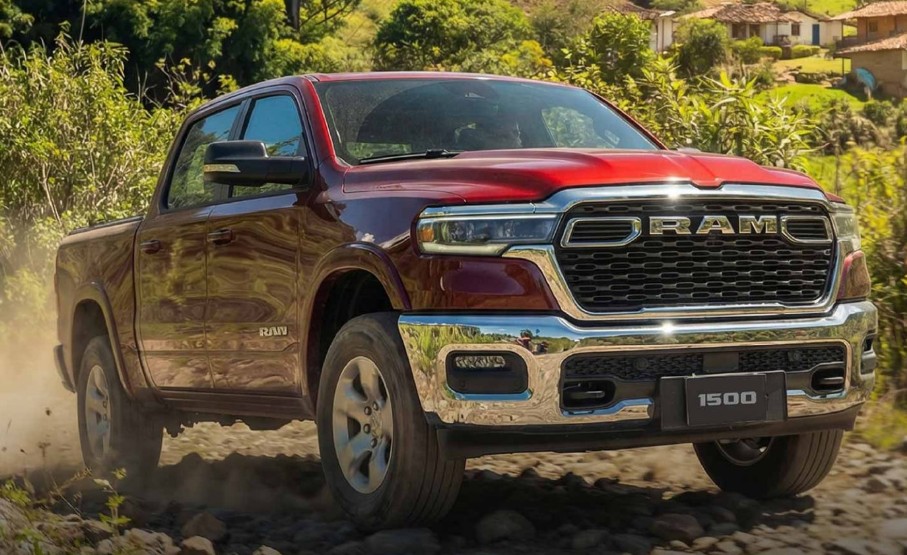
Choosing the correct Ram 1500 oil type sounds simple until we walk into an auto-parts store and face a wall of bottles marked 0W-20, 5W-20, 0W-40, full synthetic, high mileage, API SP, and several other specifications. Suddenly, an oil change feels less like routine maintenance and more like decoding alphabet soup.
The good news? We can simplify the whole thing.
The correct oil depends primarily on the model year and engine installed in your Ram 1500. That detail matters because today's truck is available with engines whose lubrication requirements are very different from one another. Even two engines offered in the same model year may require different viscosities.
For example, Ram's official 2026 specifications call for SAE 0W-20 full synthetic oil in the 3.0L Standard Output Hurricane, 3.6L Pentastar V6, and 5.7L HEMI V8, while the high-performance 3.0L High Output engine used in the Ram 1500 RHO requires SAE 0W-40 full synthetic oil.
That's why we should never choose oil based solely on the words "Ram 1500" printed on a parts catalog. Engine, year, viscosity, certification, and capacity all matter.
Content in this publication
- What Oil Does a Ram 1500 Take?
- Why Ram 1500 Oil Type Depends on the Engine
- Ram 1500 3.6L Pentastar Oil Type
- Ram 1500 5.7 HEMI Oil Type
- Ram 1500 3.0 Hurricane Oil Type
- Does the Ram 1500 Need Full Synthetic Oil?
- What Is Ram MS-6395?
- Ram 1500 Oil Capacity
- How Often Should We Change Ram 1500 Oil?
- Best Oil for a Ram 1500
- Ram 1500 Oil Type for Towing
- Ram 1500 Oil Type in Hot Weather
- Should We Use High-Mileage Oil in an Older Ram 1500?
- What Happens If We Use the Wrong Oil?
- How to Find the Correct Oil for Your Exact Ram 1500
- Common Ram 1500 Oil Change Mistakes
- Can We Mix Different Oil Brands?
- How Much Oil Should We Keep on Hand?
- Final Thoughts on Ram 1500 Oil Type
- Frequently Asked Questions
What Oil Does a Ram 1500 Take?
For many modern Ram 1500 models, full synthetic motor oil is the safest starting point, but the required viscosity varies by engine and year.
On the current 2026 Ram 1500, Ram specifies 0W-20 full synthetic oil meeting its MS-6395 requirement for the 3.0L Standard Output Hurricane, 3.6L V6, and 5.7L V8. The RHO's 3.0L High Output engine steps up to 0W-40 and the MS-A0921 specification.
Older trucks can have different recommendations, particularly older HEMI V8 and EcoDiesel models, so we should always verify the owner's manual for the exact model year before buying oil.
Think of viscosity like shoe size. A great pair of shoes in the wrong size is still the wrong pair of shoes. Premium motor oil with an incorrect viscosity can be just as unsuitable.
Ram 1500 Oil Type at a Glance
Here is the practical framework we can use when shopping:
- 3.6L Pentastar V6: commonly uses 0W-20 on newer trucks; verify the specific year.
- 3.0L Hurricane Standard Output: 0W-20 full synthetic on the current-generation specification.
- 3.0L Hurricane High Output/RHO: 0W-40 full synthetic on the current RHO specification.
- 5.7L HEMI V8: viscosity depends on model year; the 2026 specification calls for 0W-20 full synthetic.
- 3.0L EcoDiesel V6: has diesel-specific oil requirements that differ from gasoline engines; check the manual for the exact year.
- Older Ram 1500 engines: verify the oil cap and owner's manual rather than assuming the recommendation matches today's trucks.
Ram's 2026 handbook also specifies approximately 5 quarts with filter for the 3.6L V6, 7 quarts for the 5.7L V8, and 7.5 quarts for the 3.0L engine, illustrating another reason engine identification matters before an oil change.
Why Ram 1500 Oil Type Depends on the Engine
Motor oil does far more than make metal surfaces slippery.
Inside an engine, oil forms a microscopic protective film between moving components. It carries heat away from critical areas, suspends contaminants, helps control deposits, assists hydraulic systems, and reduces friction.
Modern engines make this job harder.
Turbochargers spin at extraordinary speeds. Variable valve timing relies on carefully controlled oil pressure. Cylinder-deactivation systems and tighter internal clearances may also depend on oil flowing at the rate engineers intended.
So when Ram specifies a particular viscosity, it isn't merely choosing between "thin oil" and "thick oil." The recommendation is part of the engine's design.
What Do 0W-20, 5W-20, and 0W-40 Mean?
Oil viscosity numbers look cryptic, but the concept is straightforward.
The number before the W describes the oil's behavior at low temperatures. The second number describes its viscosity once the engine reaches operating temperature.
Therefore, 0W-20 is engineered to flow very well during cold starts while behaving like a 20-grade oil when hot. A 0W-40 oil also flows well when cold but remains substantially more viscous at operating temperature.
That difference helps explain why the high-output Hurricane engine uses 0W-40 while the standard-output engine uses 0W-20. Ram explicitly gives those two 3.0L variants different specifications even though both belong to the Hurricane engine family.
Is a Higher Number Automatically Better?
No.
The thicker oil is not automatically the stronger, safer, or more premium choice. Likewise, thinner oil isn't automatically chosen only to improve fuel economy.
What matters is whether the oil matches the engine.
Putting 0W-40 into an engine designed around 0W-20 simply because it seems "more protective" ignores how oil passages, bearings, pumps, variable valve timing systems, and operating temperatures were engineered.
For an unmodified street-driven Ram 1500, following the manufacturer's required viscosity remains the sensible approach.
Ram 1500 3.6L Pentastar Oil Type
The 3.6L Pentastar V6 has served as one of the familiar engines in the Ram 1500 lineup.
For the 2026 Ram 1500 3.6L, Ram recommends SAE 0W-20 full synthetic engine oil meeting Material Standard MS-6395. An equivalent 0W-20 full synthetic oil can be used as long as it carries the required API certification marking.
Ram lists the 2026 3.6L engine's oil capacity with filter at approximately 5 quarts, or 4.7 litres.
We shouldn't automatically apply that figure to every Pentastar-equipped Ram ever built, however. Manufacturers can revise specifications across model years.
Why 0W-20 Works Well in the Pentastar
A modern 0W-20 synthetic reaches critical components rapidly after startup, which matters because a considerable amount of engine wear can occur while the engine transitions from cold to normal operating temperature.
Synthetic oil also tends to maintain its characteristics better across a wide temperature range than basic conventional oil.
For drivers dealing with freezing winter mornings, summer highway driving, frequent starts, or changing temperatures, that consistency can be valuable.
Ram 1500 5.7 HEMI Oil Type
Few engines are as closely associated with the Ram 1500 as the 5.7L HEMI V8.
But this is also where internet advice can become confusing.
Search for "Ram 1500 HEMI oil type," and we'll encounter recommendations for different viscosities. That's partly because the HEMI has appeared across numerous model years and its specifications have not remained identical forever.
For the 2026 Ram 1500 5.7L engine, Ram specifies SAE 0W-20 full synthetic oil meeting MS-6395. The listed capacity is approximately 7 quarts, or 6.6 litres, with the filter.
If we're maintaining an older HEMI, though, we should use the viscosity specified for that particular model year rather than assuming the latest recommendation applies retroactively.
HEMI Engines and Correct Viscosity
The HEMI is a good example of why oil recommendations aren't something we should casually improvise.
Engine lubrication interacts with systems beyond the crankshaft and pistons. Oil pressure and viscosity can influence hydraulic components and valve-control hardware.
Using the proper oil is therefore about keeping the engine operating as an integrated system.
Can We Put Thicker Oil in a HEMI?
Owners sometimes switch to thicker oil because the truck has accumulated mileage, operates in extreme heat, tows regularly, or has developed engine noise.
That decision deserves more thought than simply moving one number higher on the bottle.
If an engine has abnormal oil consumption, low oil pressure, ticking, or mechanical wear, thicker oil can sometimes change the symptom without correcting the underlying problem. Diagnosis should come before experimentation.
For a healthy stock engine, the owner's manual remains our primary guide.
Ram 1500 3.0 Hurricane Oil Type
The twin-turbocharged 3.0L Hurricane has reshaped the modern Ram 1500 engine lineup, and its lubrication requirements deserve attention.
The important detail is that there are different output versions.
The 2026 Standard Output 3.0L engine calls for SAE 0W-20 full synthetic oil meeting MS-6395. Ram additionally specifies API SP or later for equivalent oils and states that API SN+ is acceptable.
Its oil capacity is approximately 7.5 quarts, or 7.1 litres, including the filter.
That's considerably more oil than the 3.6L V6 takes.
Ram 1500 Hurricane High Output Oil Type
Here's where reading the label carefully really matters.
The 3.0L High Output engine used in the 2026 Ram 1500 RHO requires SAE 0W-40 full synthetic motor oil meeting Ram Material Standard MS-A0921, rather than the 0W-20 used by the Standard Output engine. Ram calls for API SP or later and also recognizes API SN+ in this application.
Two engines can share displacement, cylinder count, and architecture yet require dramatically different oil.
That's why asking, "What oil does a 3.0 Ram take?" isn't quite enough. We need to know which 3.0.
Does the Ram 1500 Need Full Synthetic Oil?
For the current 2026 engine specifications discussed above, Ram explicitly recommends full synthetic engine oil.
Synthetic oil is particularly attractive in modern engines because it offers strong resistance to oxidation and thermal breakdown while maintaining predictable viscosity across a broad range of temperatures.
Turbocharged engines give us another reason to take oil quality seriously. Turbochargers operate under significant heat and speed, meaning the lubricant has an unusually demanding job.
Still, we shouldn't reduce oil selection to "synthetic equals good." The correct viscosity and required manufacturer/API standard matter just as much.
Premium synthetic oil that doesn't meet the engine's required specification isn't automatically the right oil.
Synthetic Blend vs Full Synthetic
A synthetic blend combines conventional and synthetic base oils. Full synthetic oils use more highly engineered base stocks and additive packages.
For trucks where the manufacturer explicitly calls for full synthetic oil, we wouldn't downgrade simply to save a few dollars per oil change.
Consider what the oil protects: an engine that can cost thousands of dollars to repair or replace.
The difference in oil price starts looking pretty small.
What Is Ram MS-6395?
Viscosity gets most of the attention, but there's another important code hiding on the specification sheet: MS-6395.
This is a Stellantis/Ram material specification associated with approved engine oils for applicable engines. In the 2026 Ram 1500 manual, MS-6395 appears with the recommended 0W-20 oil for the Standard Output Hurricane, 3.6L V6, and 5.7L V8.
The lesson is simple: don't shop by viscosity alone.
Two bottles can both say 0W-20 yet carry different certifications.
API Certification Matters Too
For the 2026 3.0L Standard Output Hurricane, Ram specifies equivalent full synthetic 0W-20 oil carrying the API Starburst trademark with API SP or later certification, while also noting that API SN+ is acceptable. The RHO's 0W-40 specification similarly references API certification requirements.
We can think of viscosity as the oil's size and certifications as its résumé.
We want both to match the job.
Ram 1500 Oil Capacity
Oil capacity is almost as important as oil viscosity.
Too little oil can starve components of lubrication. Too much can also cause problems because the crankshaft may aerate or whip excess oil, potentially affecting lubrication and crankcase operation.
According to Ram's 2026 specifications, oil capacity with filter is approximately 7.5 quarts for the 3.0L engine, 5 quarts for the 3.6L engine, and 7 quarts for the 5.7L engine.
We should treat these as model-year-specific examples, not universal Ram 1500 capacities.
Why We Should Check the Dipstick After an Oil Change
Even when we know the listed capacity, measuring the finished oil level is good practice.
After filling the engine, we can start it briefly to circulate oil and fill the new filter, shut it off, allow the oil to settle according to the owner's manual procedure, and then verify the level on the dipstick.
Capacity tells us approximately how much to buy.
The dipstick tells us where the oil actually ended up.
How Often Should We Change Ram 1500 Oil?
Modern Ram trucks use an oil-life monitoring system to help determine when service is required based on operating conditions rather than relying exclusively on an old-fashioned fixed mileage rule.
That matters because two identical trucks can live dramatically different lives.
One may cruise 40 highway miles every morning. Another might crawl through city traffic, idle at job sites, tow a camper through mountain passes, and spend weekends on dusty trails.
Mileage alone doesn't tell the whole story.
The appropriate interval should therefore follow the maintenance guidance and oil-life system for the specific model year rather than a generic number from a quick-lube sticker.
Severe Driving Changes the Equation
Oil has an easier life during long, steady highway journeys than during repeated short trips where the engine barely reaches operating temperature.
Heavy towing increases thermal load. Extended idling adds running hours without adding many odometer miles. Dust can make filtration more demanding. Stop-and-go traffic repeatedly cycles temperatures.
So instead of asking only, "How many miles has it been?" we should also ask, "What has the truck been doing during those miles?"
Best Oil for a Ram 1500
There isn't one universal brand that automatically becomes the best Ram 1500 oil.
The better question is whether the oil meets the required viscosity, API classification, manufacturer specification, and synthetic requirement for our exact engine.
Ram naturally recommends Mopar-branded lubricants in its official documentation, but the 2026 manual also explicitly permits equivalent oils that satisfy the stated requirements.
That gives owners flexibility without turning oil selection into guesswork.
A reputable 0W-20 meeting the required standards is a better choice for an engine designed around 0W-20 than an expensive boutique 5W-30 that doesn't match the manual.
Does Oil Brand Really Matter?
Brand matters less than many marketing campaigns would have us believe, provided the product is genuine and meets every specification required by the engine manufacturer.
That doesn't mean every lubricant is identical. Additive packages, volatility, detergent chemistry, and formulation quality can differ.
But for the typical street-driven Ram 1500, choosing a reputable oil that satisfies the official specification and changing it appropriately is more important than obsessing over which logo appears on the bottle.
Ram 1500 Oil Type for Towing
Towing puts additional heat and load into the powertrain, so it can make us wonder whether we should automatically switch to heavier oil.
Normally, no.
We should first follow the factory viscosity specified for the engine and operating conditions rather than creating our own viscosity formula.
The manufacturer already knows that a Ram 1500 is likely to tow. The recommended lubricant is selected with the truck's intended workload in mind.
What towing may influence more noticeably is how quickly the oil deteriorates, particularly when towing heavy loads in hot conditions or through steep terrain.
That makes checking oil level and monitoring service intervals especially important.
Ram 1500 Oil Type in Hot Weather
A common belief says hot climates automatically demand thicker oil.
Modern multigrade synthetic oils complicate that old rule.
Today's engines are designed around specific lubrication characteristics and electronically controlled systems. We shouldn't substitute a higher viscosity merely because summer temperatures climb unless the owner's manual provides an alternative viscosity for those conditions.
The oil specification is designed around the engine's expected operating temperature, not just the number displayed on the weather forecast.
Ram 1500 Oil Type in Cold Weather
Cold weather places particular importance on the first viscosity number.
A 0W oil is engineered for strong low-temperature flow, helping lubricant reach engine components quickly after a freezing start.
That doesn't mean 0W oil is "watery" once the engine gets hot. The second number describes its high-temperature viscosity grade.
This is why 0W-20 can behave like an effective 20-grade oil at operating temperature while still performing well during cold startup.
Should We Use High-Mileage Oil in an Older Ram 1500?
High-mileage oils typically contain additive packages aimed at aging engines and seals. They can make sense once a truck has accumulated substantial mileage, but the words high mileage do not override viscosity or manufacturer specifications.
If our older Ram requires a certain viscosity and certification, the high-mileage oil we choose should still satisfy those requirements.
A truck with 150,000 miles doesn't suddenly forget how its lubrication system was designed.
If the engine is consuming oil, leaking, ticking, or losing pressure, we should also investigate the underlying condition rather than expecting a bottle of oil to perform mechanical surgery.
What Happens If We Use the Wrong Oil?
One accidental top-up with a slightly different viscosity is not automatically an engine catastrophe. But repeatedly using oil outside the required specification can affect cold-start lubrication, oil pressure, variable valve timing operation, fuel economy, hydraulic systems, deposits, and long-term protection.
On the 2026 Hurricane engines, Ram goes further and specifically cautions against certain earlier API certification levels, warning that using unsuitable certification levels can result in engine damage and may affect warranty coverage.
That warning is a good reminder that oil isn't merely a commodity poured into a hole under the hood.
It's an engineered component of the powertrain.
How to Find the Correct Oil for Your Exact Ram 1500
When we're uncertain, the safest method is wonderfully boring: identify the year and engine, look at the oil-fill cap, and then verify the specifications in the owner's manual.
We should prioritize the manufacturer's documentation over generic online charts because engine offerings and specifications can change from one model year to another.
This is especially important with the Ram 1500 because the lineup has included naturally aspirated gasoline engines, HEMI V8s, turbocharged Hurricane engines, and diesel powertrains over the years.
A search result saying simply "Ram 1500 uses 0W-20" leaves out half the story.
Don't Forget the Oil Filter
Good oil paired with a poor-quality filter is like installing expensive water in a dirty coffee maker.
The oil filter traps contaminants while maintaining the flow the lubrication system needs. We should use a filter specified for the exact engine rather than assuming all Ram 1500 filters interchange.
Changing the filter with the oil also explains why official capacities are commonly quoted as oil capacity with filter.
Common Ram 1500 Oil Change Mistakes
Many lubrication mistakes happen not because owners neglect their trucks, but because they apply a rule that sounds reasonable.
More viscosity isn't automatically more protection. More oil isn't better than the correct oil level. A premium brand doesn't override the wrong certification. A recommendation for a 2020 truck shouldn't automatically be applied to a 2026 truck.
We can avoid most problems by keeping the process simple: match the year, match the engine, match the viscosity, match the specification, fill to the proper level, and follow the appropriate service interval.
That's not glamorous maintenance.
It is effective maintenance.
Can We Mix Different Oil Brands?
In an emergency, compatible engine oils of the proper specification can generally coexist, but routine maintenance is easier when we use one appropriate product consistently.
The more important concern is not whether Bottle A has a different logo from Bottle B. It's whether both products meet the requirements of the engine.
If the oil level is dangerously low, getting the correct compatible oil into the engine matters more than maintaining brand loyalty.
But during a planned oil change, there's little reason to create a cocktail of leftovers from the garage shelf.
How Much Oil Should We Keep on Hand?
Keeping one compatible quart in the garage—or in the truck during long journeys—can be useful, especially on an older or heavily worked vehicle.
We should periodically check the oil level rather than assuming the dashboard will alert us before the engine becomes dangerously low.
Ram's current handbook even advises checking engine oil frequently during the break-in period and adding oil when required.
A thirty-second dipstick check can reveal something a 3,000-mile assumption won't.
Final Thoughts on Ram 1500 Oil Type
The answer to what oil does a Ram 1500 take? isn't one viscosity printed in giant letters.
It depends on the truck.
For the 2026 lineup, Ram specifies 0W-20 full synthetic for the 3.0L Standard Output Hurricane, 3.6L Pentastar, and 5.7L HEMI, while the 3.0L High Output RHO engine requires 0W-40 full synthetic. Ram also specifies different material and API requirements depending on the engine.
Older Ram 1500s may require something different, so we shouldn't treat the current specification as a universal recommendation.
If there's one idea worth remembering, it's this: the best Ram 1500 oil isn't the thickest, most expensive, or most heavily advertised oil. It's the oil that matches the requirements of our particular engine.
Get that right, keep the level where it belongs, change it when required, and we've handled one of the most important maintenance jobs our truck will ever need.
Frequently Asked Questions
1. What kind of oil does a Ram 1500 take?
It depends on model year and engine. As one current example, the 2026 Ram 1500 uses 0W-20 full synthetic in its 3.0L Standard Output, 3.6L, and 5.7L engines, while the 3.0L High Output RHO requires 0W-40 full synthetic. Always verify the owner's manual for your specific truck.
2. What oil does a Ram 1500 5.7 HEMI take?
The required viscosity depends on year. For the 2026 5.7L HEMI, Ram specifies SAE 0W-20 full synthetic meeting MS-6395. An older HEMI may carry a different recommendation, so check its manual rather than applying the 2026 specification automatically.
3. How much oil does a Ram 1500 need?
Capacity varies by engine. For 2026, Ram lists approximately 5 quarts with filter for the 3.6L, 7 quarts for the 5.7L, and 7.5 quarts for the 3.0L engine. Other model years and engines can differ.
4. Does a Ram 1500 require synthetic oil?
Current 2026 Ram specifications recommend full synthetic oil for the gasoline engines discussed in this guide, including the Hurricane, Pentastar, and HEMI applications. For older trucks, follow the lubrication requirements published for the exact model year and engine.
5. Is 0W-20 or 5W-20 better for a Ram 1500?
Neither viscosity is universally "better." The correct choice is the one specified for the engine and model year. Using the manufacturer's recommended viscosity gives us the intended cold-start flow, operating-temperature protection, and compatibility with the engine's lubrication systems.
If you want to know other articles similar to Ram 1500 Oil Type: The Complete Guide to Choosing the Right Oil you can visit the category Service and Parts.
Vauxhall Mokka Tyre Pressure Reset: Complete Guide

How to Reset the Tire Pressure System on Your Hyundai Tucson

Hyundai Kona Tire Pressure: Complete PSI Guide

Vauxhall Corsa Timing Belt Replacement Cost UK 2026

Mazda CX-5 Tire Size Chart: 2013–2026 Guide

How to Reset a Honda Civic: Complete Step-by-Step Guide
Leave a Reply
More content of your interest