

Toyota Sequoia Fuel Mileage: MPG, Hybrid Efficiency, and Real-World Expectations

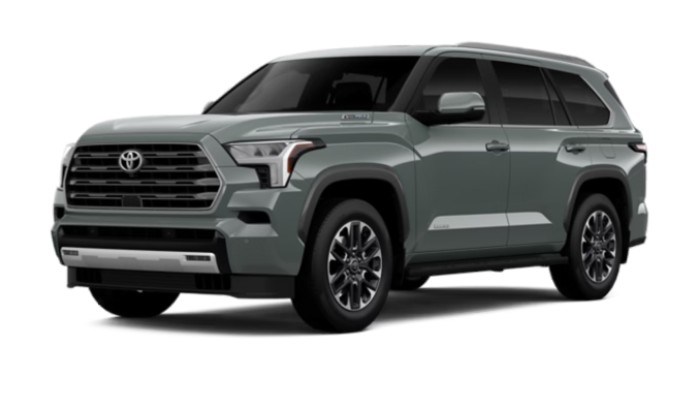
The Toyota Sequoia has never been the SUV we buy because we want to squeeze every possible mile out of a gallon of fuel. It is large, powerful, capable of carrying the family and luggage, and built with serious towing capability. Fuel efficiency has traditionally been the price we pay for all that muscle.
But the story has changed considerably.
The arrival of the third-generation Sequoia and Toyota's standard i-FORCE MAX hybrid powertrain transformed the SUV's fuel-mileage numbers. A modern Sequoia can achieve an EPA-estimated up to 22 mpg combined, something that would have sounded surprisingly optimistic during the V8 era.
Does that suddenly make the Sequoia an economy SUV? Not quite. Think of it more like teaching a heavyweight boxer how to move efficiently. The vehicle remains enormous and powerful, but it no longer has to gulp fuel quite as enthusiastically as its predecessors.
In this guide, we'll break down Toyota Sequoia fuel mileage, explain how the hybrid compares with older V8 models, explore 2WD versus 4WD efficiency, and look at what owners can realistically expect in everyday driving.
Content in this publication
- What Is the Toyota Sequoia Fuel Mileage?
- Toyota Sequoia MPG at a Glance
- Why the Modern Sequoia Gets Better Fuel Mileage
- Toyota Sequoia Hybrid MPG Explained
- Toyota Sequoia City MPG
- Toyota Sequoia Highway MPG
- Toyota Sequoia 4WD vs 2WD Fuel Mileage
- How Much Better Is the New Sequoia Than the Old V8?
- Toyota Sequoia Fuel Mileage by Generation
- Does Sequoia Trim Level Affect Fuel Economy?
- Real-World Toyota Sequoia Fuel Mileage
- How Towing Affects Toyota Sequoia MPG
- How Driving Style Changes Sequoia Fuel Economy
- Can You Improve Toyota Sequoia Gas Mileage?
- Toyota Sequoia Fuel Tank and Driving Range
- Is the Toyota Sequoia Fuel Efficient for Its Size?
- Is Buying an Older Sequoia Worth the Fuel Cost?
- Which Toyota Sequoia Gets the Best Fuel Mileage?
- Toyota Sequoia Fuel Mileage vs Expectations
- Should Fuel Mileage Stop You From Buying a Sequoia?
- Final Thoughts on Toyota Sequoia Fuel Mileage
- Frequently Asked Questions
What Is the Toyota Sequoia Fuel Mileage?
For the 2026 Toyota Sequoia, the most efficient configurations reach an EPA-estimated 21 mpg city, 24 mpg highway, and 22 mpg combined. Toyota specifically lists those figures for certain SR5 and Limited 4x2 configurations.
That's impressive by full-size SUV standards, especially considering the Sequoia's performance. Every current Sequoia uses Toyota's i-FORCE MAX twin-turbo V6 hybrid powertrain, producing 437 horsepower and 583 lb-ft of torque.
So we're not talking about a slow SUV that sacrifices performance for fuel economy. The Sequoia still has plenty of punch.
Depending on drivetrain, trim, tires, and equipment, however, fuel economy varies. Toyota lists other configurations at approximately 19 mpg city, 22 mpg highway, and 20 mpg combined.
In simple terms, we can expect modern Sequoia mileage to sit roughly around the low-20-mpg range under EPA testing, with rear-wheel-drive versions generally delivering the strongest numbers.
Toyota Sequoia MPG at a Glance
Here is the easiest way to understand the fuel-economy picture:
- 2026 Sequoia efficient 4x2 configurations: up to 21 city / 24 highway / 22 combined mpg.
- Less-efficient current configurations: around 19 city / 22 highway / 20 combined mpg.
- 2023-present generation: standard twin-turbo V6 hybrid powertrain rather than the old naturally aspirated V8.
- Older second-generation models: commonly lived in the mid-teens for combined fuel economy, with 4WD generally consuming more fuel.
- Highway driving: usually gives the modern Sequoia its strongest EPA mileage.
- Towing, aggressive acceleration, large off-road tires, cold weather, and heavy loads: can substantially reduce real-world MPG.
Toyota's own current model page advertises up to 22 combined mpg for the 2026 Sequoia.
That "up to" matters. Two Sequoias wearing different wheels, drivetrains, and equipment packages can return noticeably different mileage.
Why the Modern Sequoia Gets Better Fuel Mileage
The biggest reason is hiding under the hood.
The Old V8 Formula
For years, the Sequoia relied on large naturally aspirated engines. The second generation eventually became closely associated with Toyota's 5.7-liter V8.
That engine earned plenty of admiration for its smooth power delivery and heavy-duty personality. Unfortunately, fuel efficiency was never its party trick.
Toyota's published figures for older V8-era vehicles illustrate just how different that period was. For example, Toyota listed a 4WD configuration from the previous generation at approximately 13 mpg city, 17 mpg highway, and 15 mpg combined.
Drive one through stop-and-go traffic and the fuel gauge could seemingly move faster than the scenery.
The i-FORCE MAX Hybrid Changes the Equation
The third-generation Sequoia took a radically different route.
Instead of another naturally aspirated V8, Toyota installed a twin-turbocharged V6 paired with an electric motor. The resulting i-FORCE MAX system delivers 437 horsepower and 583 lb-ft of torque.
The hybrid system is not designed primarily to turn the Sequoia into a giant Prius. Its job is also to provide strong low-end torque and responsive performance.
That's an important distinction.
Some hybrids are built almost entirely around minimizing fuel consumption. The Sequoia's hybrid system has to balance efficiency with towing capability, acceleration, off-road performance, and the demands of moving a massive body-on-frame SUV.
Yet the efficiency improvement is still substantial.
Toyota Sequoia Hybrid MPG Explained
When people hear "hybrid," they sometimes expect 35 or 40 mpg.
The Sequoia isn't that kind of hybrid.
Its body is large, its tires are substantial, its aerodynamics resemble a moving wall more than a slippery sedan, and its drivetrain is engineered for serious work.
The fact that Toyota can extract up to 22 mpg combined from this package represents meaningful progress rather than economy-car efficiency.
Why Doesn't the Sequoia Hybrid Get 30 MPG?
Physics always sends the bill eventually.
A vehicle's fuel consumption is influenced by its mass, frontal area, aerodynamic drag, rolling resistance, drivetrain losses, gearing, tires, and the amount of energy required for acceleration.
A full-size SUV carries disadvantages in almost every one of those categories.
The electric motor can help the gasoline engine operate more effectively, particularly during acceleration and changing load conditions, but it cannot erase the energy required to push a large SUV through the air at highway speed.
Hybrid Doesn't Automatically Mean Maximum Economy
This is where the Sequoia differs from something like a compact hybrid crossover.
Toyota uses electrification here as part of a broader performance strategy. We gain torque and improved efficiency simultaneously instead of maximizing MPG at the expense of capability.
That makes more sense once we consider the Sequoia's mission.
Toyota Sequoia City MPG
Modern Sequoia city fuel economy can reach about 21 mpg in its most efficient configurations.
City driving is exactly where hybrid technology can help.
Traditional gasoline vehicles waste considerable energy during braking and repeated acceleration. Hybrid systems can recover some braking energy through regeneration and use electric assistance during acceleration.
That doesn't make urban driving free, of course.
Repeated hard launches from traffic lights can still destroy fuel economy. If we're constantly waking up all 437 horsepower, the hybrid system can't rewrite the laws of thermodynamics.
Smooth acceleration matters.
Toyota Sequoia Highway MPG
Highway fuel economy can reach an EPA-estimated 24 mpg on certain current configurations.
At first glance, 24 mpg might not sound remarkable compared with a crossover. For a large body-on-frame SUV capable of producing 583 lb-ft of torque, though, it's a far more respectable figure.
Highway mileage also depends heavily on speed.
Driving at 65 mph and cruising at 80 mph are two very different things. Aerodynamic resistance climbs dramatically as speed increases, and a vehicle as tall and wide as the Sequoia has plenty of air to move out of the way.
The difference can show up quickly at the pump.
Toyota Sequoia 4WD vs 2WD Fuel Mileage
If fuel economy sits high on our priority list, drivetrain choice deserves attention.
Why 2WD Usually Wins
Rear-wheel-drive configurations typically carry less drivetrain hardware and suffer fewer mechanical losses than comparable 4WD versions.
That means the engine has slightly less work to do.
Toyota's current figures show its strongest Sequoia fuel-economy rating reaching 21 city, 24 highway, and 22 combined mpg on certain 4x2 models.
If we primarily drive on pavement and don't genuinely need four-wheel drive, 2WD can therefore make sense.
Why 4WD Still Makes Sense for Many Buyers
Fuel economy isn't everything.
Anyone regularly dealing with snow, mud, trails, loose surfaces, boat ramps, or remote terrain may happily sacrifice a couple of MPG for the added traction and capability.
Buying the more economical configuration only to discover it doesn't suit our lifestyle would be false economy.
The better question isn't simply, "Which one uses less gas?"
It's, "Which drivetrain actually matches how we're going to use the SUV?"
How Much Better Is the New Sequoia Than the Old V8?
This is where the generational change becomes fascinating.
Older Sequoia 4WD models could carry EPA numbers around 13 city and 17 highway, depending on model year and configuration.
Compare that with as much as 21 city and 24 highway from an efficient current version.
That's not a tiny improvement.
It's the difference between accepting fuel consumption as an unavoidable weakness and having mileage that is genuinely reasonable for such a capable full-size SUV.
The Improvement Is Especially Important in Daily Driving
Imagine commuting 12,000 or 15,000 miles per year.
A few MPG can make a substantial difference in annual fuel usage. The more miles we travel, the more the newer powertrain's advantage compounds.
And that's before considering range.
Better MPG means fewer fuel stops, which matters on long interstate drives, family vacations, and remote journeys where gas stations aren't sitting on every corner.
Toyota Sequoia Fuel Mileage by Generation
Understanding Sequoia MPG becomes easier when we divide the SUV into its three major generations.
First-Generation Sequoia: 2001-2007
The original Sequoia arrived when inexpensive fuel and naturally aspirated V8 engines still defined the full-size SUV formula.
Efficiency was secondary to size, durability, towing strength, and smooth power.
Anyone shopping for an early Sequoia today should therefore approach fuel consumption realistically. These are older, large V8 SUVs.
Their appeal comes from simplicity, space, capability, and Toyota's reputation—not from fuel savings.
Second-Generation Sequoia: 2008-2022
The second-generation vehicle grew substantially and eventually became synonymous with Toyota's powerful 5.7-liter V8.
This generation can be immensely appealing on the used market, but MPG is arguably its greatest everyday weakness.
For example, Toyota previously published ratings around 13 city, 18 highway for some 4x2 applications and 13 city, 17 highway for 4x4 versions.
That's thirsty even by full-size SUV standards.
Yet buyers continue to value these trucks because fuel economy is only one part of ownership.
Third-Generation Sequoia: 2023-Present
Then Toyota turned the page.
The third-generation Sequoia moved to the standard i-FORCE MAX twin-turbo V6 hybrid system. The current powertrain produces 437 horsepower while allowing certain configurations to reach an EPA-estimated 22 mpg combined.
This generation represents the clear choice if fuel efficiency matters substantially.
Does Sequoia Trim Level Affect Fuel Economy?
Absolutely.
It's tempting to assume every Sequoia gets identical mileage because the same basic hybrid powertrain sits beneath the hood.
Reality is more complicated.
Different trims can bring different wheels, tires, suspension setups, drivetrain configurations, equipment, and curb weights.
A pavement-focused model on road-oriented tires won't necessarily consume fuel at exactly the same rate as a Sequoia designed to look at a rocky trail and say, "Why not?"
TRD Pro Fuel Mileage
The TRD Pro exists for capability rather than winning an MPG contest.
Off-road tires create additional rolling resistance, and specialized equipment adds weight. The result is usually lower official fuel efficiency than the most economical rear-drive Sequoia.
That's not a flaw. It's a tradeoff.
Choosing a TRD Pro for maximum fuel economy would be like buying hiking boots because they're lightweight running shoes. You're judging the product by the wrong mission.
SR5 and Limited Fuel Mileage
For shoppers prioritizing efficiency, the SR5 and Limited deserve close attention.
Toyota's 2026 brochure identifies SR5 and Limited 4x2 models at an EPA-estimated 21 city, 24 highway, and 22 combined mpg.
That's essentially the sweet spot for buyers who want Sequoia capability without adding unnecessary MPG penalties.
Real-World Toyota Sequoia Fuel Mileage
EPA estimates are useful because they give us standardized comparisons between vehicles.
They aren't promises.
Your Sequoia doesn't know what number appeared on the window sticker.
Real-world fuel economy responds to driving conditions.
A driver cruising gently on open highways may approach the official rating. Someone towing a large trailer uphill into a headwind is playing an entirely different game.
The dashboard average will tell the story.
Why Your Sequoia MPG May Be Lower Than Expected
Short trips can hurt fuel economy because the engine and drivetrain spend more time below ideal operating temperature.
Cold weather can reduce efficiency.
Aggressive acceleration demands more energy.
Roof racks and cargo boxes disrupt aerodynamics.
Low tire pressure increases rolling resistance.
Large aftermarket tires can alter both resistance and effective gearing.
Heavy cargo forces the powertrain to move more mass.
Individually, these factors may seem modest. Stack several together and the difference can become dramatic.
How Towing Affects Toyota Sequoia MPG
Here's where fuel-economy expectations need a reset.
Toyota advertises a maximum towing capacity of up to 9,500 pounds for the 2026 Sequoia, depending on configuration.
That's serious capability.
But towing thousands of pounds adds rolling resistance, mass, and often enormous aerodynamic drag.
A tall travel trailer is essentially a parachute with furniture inside.
Trailer Shape Can Matter as Much as Weight
Two trailers weighing the same amount can produce surprisingly different MPG.
A compact aerodynamic trailer presents less frontal area. A tall box-shaped camper punches a much bigger hole through the atmosphere.
Once highway speeds rise, aerodynamic drag becomes an increasingly dominant factor.
That's why owners shouldn't expect official unloaded EPA mileage while towing.
The Sequoia may have enough torque to make the trailer feel easy, but the fuel tank knows it's there.
How Driving Style Changes Sequoia Fuel Economy
Our right foot may be the cheapest fuel-saving modification available.
The i-FORCE MAX drivetrain has enormous low-end torque. We don't need to floor the accelerator every time traffic starts moving.
Progressive throttle input lets the powertrain work more efficiently.
Anticipating traffic also reduces unnecessary braking and acceleration.
On the highway, maintaining a steady speed usually helps more than continuously surging and backing off.
The trick is simple: drive like there's a cup of coffee without a lid sitting in the center console.
Smooth inputs usually translate into smoother fuel consumption.
Can You Improve Toyota Sequoia Gas Mileage?
Yes, although there's no magic trick that turns a Sequoia into a Prius.
Start with basics.
Keep tires properly inflated according to Toyota's specification for the vehicle. Remove unnecessary external cargo equipment when it isn't being used. Avoid carrying hundreds of pounds of tools or gear indefinitely. Combine short journeys where possible. Accelerate progressively rather than aggressively.
Highway speed matters too.
Dropping cruising speed modestly can have an outsized effect on a large SUV because aerodynamic drag is such a substantial part of the equation.
Maintenance also matters. A properly functioning drivetrain, correctly specified fluids, healthy sensors, and appropriate tires give the SUV its best chance to operate as designed.
Don't Chase MPG at the Expense of Safety
There is a sensible limit.
We shouldn't overinflate tires, coast dangerously, drive excessively slowly in unsuitable traffic, or perform questionable modifications just to increase the number on the MPG display.
Saving a fraction of a gallon isn't worth compromising handling or safety.
Toyota Sequoia Fuel Tank and Driving Range
Fuel economy is only half the road-trip equation.
Tank size and MPG work together to determine theoretical range.
Toyota lists a 22.5-gallon fuel tank for the current Sequoia in its comparison specifications.
If we theoretically multiply 22 mpg by 22.5 gallons, we get around 495 miles.
Real usable range will typically be lower because driving conditions vary and drivers don't normally consume every last drop of fuel before refilling.
Still, the calculation demonstrates why the newer Sequoia is much friendlier on long trips than an older low-teens-MPG version.
Fewer fuel stops can make an enormous SUV feel surprisingly easy to live with.
Is the Toyota Sequoia Fuel Efficient for Its Size?
Context matters.
Compare it with a compact hybrid and the answer is obviously no.
Compare it with what the Sequoia actually is—a powerful, full-size, body-on-frame SUV with substantial towing ability—and its current fuel economy becomes far more impressive.
The 2026 vehicle combines up to 22 mpg combined with 437 horsepower, 583 lb-ft of torque, and up to 9,500 pounds of maximum towing capacity.
Those numbers belong in the same conversation.
Fuel economy alone doesn't describe the engineering challenge.
Toyota isn't simply trying to move passengers efficiently. It is trying to move passengers, luggage, trailers, and substantial vehicle mass while preserving strong acceleration and off-road capability.
Viewed through that lens, low-20s MPG is respectable.
Is Buying an Older Sequoia Worth the Fuel Cost?
Sometimes.
Used-car decisions rarely boil down to one number.
An older Sequoia may cost dramatically less to purchase than a newer hybrid model. If we only drive a few thousand miles each year, the additional fuel expense might not outweigh the difference in purchase price.
On the other hand, a high-mileage commuter can feel the fuel penalty every week.
Calculate Fuel Cost Before Buying
Before choosing between generations, estimate annual fuel consumption rather than staring at MPG alone.
Suppose one vehicle averages 15 mpg and another averages 21 mpg.
At 12,000 miles annually, the first requires roughly 800 gallons, while the second needs about 571 gallons.
That's a difference of approximately 229 gallons every year.
Multiply that by local fuel prices, then repeat the calculation over five years.
Suddenly, MPG stops being an abstract number.
Which Toyota Sequoia Gets the Best Fuel Mileage?
Among current U.S. configurations, certain rear-wheel-drive SR5 and Limited models offer the headline EPA-estimated 21 city, 24 highway, and 22 combined mpg rating.
Those are the versions we'd focus on if maximum Sequoia efficiency were the goal.
But maximum MPG isn't automatically the best configuration.
A buyer who needs four-wheel drive should buy four-wheel drive. Someone regularly heading deep into rough terrain might prefer a TRD-oriented setup. A luxury-focused owner may happily accept different efficiency for equipment they use every day.
Cars make more sense when we optimize them for our lives rather than one specification.
Toyota Sequoia Fuel Mileage vs Expectations
The Sequoia's MPG reputation deserves updating.
For years, saying "Sequoia fuel economy" almost felt like telling a joke. The big V8 delivered durability and effortless power, but efficiency was rarely part of the sales pitch.
The hybrid generation changed that perception.
No, 20-22 combined MPG territory won't make hypermilers excited.
But we've moved from "How much fuel does this thing drink?" to "That's actually pretty good for something this big."
That's meaningful progress.
Should Fuel Mileage Stop You From Buying a Sequoia?
For most prospective owners, fuel mileage should be part of the decision rather than the entire decision.
If our priorities are maximum economy, easy urban parking, and inexpensive commuting, the Sequoia probably isn't the right tool.
There are far smaller and more efficient SUVs.
But if we need three-row practicality, towing ability, substantial torque, body-on-frame construction, and full-size dimensions, the current Sequoia's fuel economy is far easier to justify.
The crucial step is buying with realistic expectations.
Don't compare a Sequoia to a Corolla Hybrid.
Compare it with other vehicles capable of doing what we expect the Sequoia to do.
Final Thoughts on Toyota Sequoia Fuel Mileage
The Toyota Sequoia has traveled a remarkable distance without moving an inch.
Older V8 versions were famously thirsty, with some previous 4WD configurations carrying EPA figures near 13 mpg city and 17 mpg highway.
Today's Sequoia tells a very different story.
Toyota's i-FORCE MAX twin-turbo hybrid system delivers 437 horsepower and 583 lb-ft of torque, while the most efficient 2026 configurations can achieve an EPA-estimated 21 city, 24 highway, and 22 combined mpg.
That's the central takeaway.
The Sequoia hasn't become small, lightweight, or timid. Toyota improved fuel efficiency while keeping the characteristics that make the vehicle attractive in the first place.
For buyers coming from an older V8 Sequoia, the improvement can feel enormous. For drivers moving from a compact crossover, the fuel bill will still require some adjustment.
Either way, expectations matter.
Drive smoothly, choose the drivetrain that actually suits your needs, understand how towing and highway speed affect consumption, and today's Sequoia can deliver surprisingly reasonable mileage for such a powerful full-size SUV.
Frequently Asked Questions
1. What is the Toyota Sequoia's fuel mileage?
The most efficient 2026 Toyota Sequoia configurations are EPA-estimated at 21 mpg city, 24 mpg highway, and 22 mpg combined. Other configurations can return lower figures depending on trim and drivetrain.
2. Is the Toyota Sequoia good on gas?
For a full-size body-on-frame SUV, the latest Sequoia is reasonably efficient. Toyota advertises up to 22 mpg combined, although it remains much less economical than smaller hybrid SUVs and cars.
3. Does the Toyota Sequoia hybrid save gas?
Yes. The current i-FORCE MAX hybrid generation offers substantially better EPA fuel-economy numbers than many older V8 Sequoias. The hybrid also delivers strong performance, producing 437 horsepower and 583 lb-ft of torque.
4. Why is my Toyota Sequoia getting bad gas mileage?
Traffic, short journeys, aggressive acceleration, high highway speeds, towing, heavy cargo, cold weather, low tire pressure, off-road tires, and exterior accessories can all reduce real-world fuel economy. A sudden unexplained MPG drop may also justify checking vehicle maintenance and mechanical condition.
5. Which Toyota Sequoia has the best MPG?
For the 2026 model year, certain SR5 and Limited 4x2 configurations deliver the strongest published EPA estimates at 21 city, 24 highway, and 22 combined mpg.
If you want to know other articles similar to Toyota Sequoia Fuel Mileage: MPG, Hybrid Efficiency, and Real-World Expectations you can visit the category Service and Parts.
Kia Sorento Service Reset: How to Reset the Service Light
Kia Sorento Fuel Tank Capacity: Gallons, Litres and Model Differences
Kia Sorento Tyre Pressure: Recommended PSI, Bar and Complete Guide
Kia Sorento Boot Space: How Much Luggage Space Does It Really Have?
Kia Sorento Towing Capacity: How Much Can a Sorento Tow?

Honda Passport Payload Capacity: How Much Weight Can It Carry?
Leave a Reply
More content of your interest