
Toyota Sequoia Engine Specs: Complete Powertrain Guide

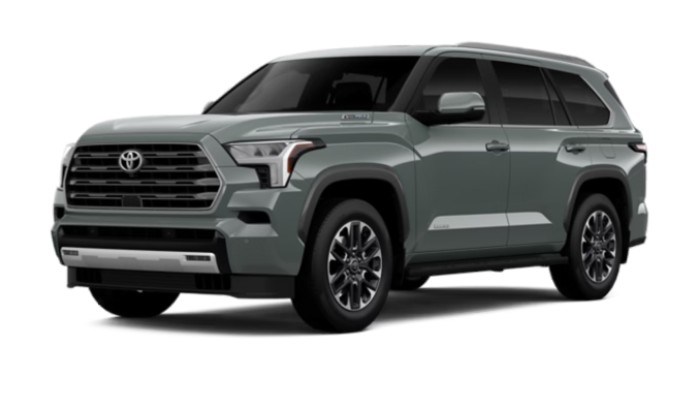
The Toyota Sequoia has never been shy about power. Since its arrival, this full-size SUV has been built around a fairly simple idea: give families the space of a large utility vehicle while supplying enough engine muscle to tow, travel, and haul without feeling like the drivetrain is constantly gasping for air.
Yet the story underneath the hood has changed dramatically. Early Sequoias relied on naturally aspirated V8 engines. Later models embraced Toyota's muscular 5.7-liter i-FORCE V8, an engine that became almost synonymous with the SUV. Then Toyota flipped the script for the third generation, replacing eight-cylinder simplicity with a sophisticated twin-turbocharged V6 hybrid.
Today, Toyota Sequoia engine specs tell a much more interesting story than displacement alone. Horsepower has climbed, torque has exploded, transmission technology has improved, and electrification now plays a major role in how the Sequoia delivers its strength.
So, which engine is the most powerful? How does the current hybrid compare with the legendary V8? And does a smaller engine actually make today's Sequoia stronger?
Let's dig underneath the hood.
Content in this publication
- Toyota Sequoia Engine Specs at a Glance
- What Engine Does the Current Toyota Sequoia Have?
- 2026 Toyota Sequoia Horsepower
- Toyota Sequoia Transmission Specs
- Toyota Sequoia V8 Engine Specs
- Toyota Sequoia 4.6-Liter V8 Specs
- Toyota Sequoia 4.7-Liter V8 Engine
- Toyota Sequoia Engine Generations Explained
- Toyota Sequoia V8 vs Twin-Turbo Hybrid V6
- Toyota Sequoia Towing and Engine Power
- Does the Toyota Sequoia Require Premium Gas?
- Is the Hybrid Sequoia Faster Than the V8?
- Is the Sequoia Hybrid Designed Mainly for Fuel Economy?
- Does Every New Toyota Sequoia Have the Same Engine?
- Which Toyota Sequoia Engine Has the Most Horsepower?
- Which Toyota Sequoia Engine Is Best?
- What to Check Before Buying a Used Sequoia
- Toyota Sequoia Engine Specs: What the Numbers Really Tell Us
- Final Thoughts
- Frequently Asked Questions
Toyota Sequoia Engine Specs at a Glance
For the current 2026 Toyota Sequoia, every trim uses Toyota's i-FORCE MAX twin-turbo V6 hybrid powertrain, producing 437 horsepower and 583 lb-ft of torque. Toyota pairs the system with a 10-speed automatic transmission.
That alone shows how dramatically the Sequoia has evolved.
The final second-generation model, the 2022 Sequoia, used a 5.7-liter naturally aspirated V8 generating 381 horsepower and 401 lb-ft of torque, paired with a six-speed automatic transmission.
Here is the simplified progression:
| Sequoia Era | Engine | Horsepower | Torque | Transmission |
|---|---|---|---|---|
| Early first generation | 4.7L V8 | Varied by year | Varied by year | Automatic |
| Later second generation | 5.7L i-FORCE V8 | 381 hp | 401 lb-ft | 6-speed automatic |
| 2023-present generation | 3.4L twin-turbo V6 hybrid | 437 hp | 583 lb-ft | 10-speed automatic |
The striking part isn't simply the extra 56 horsepower in the newest Sequoia. It's the 182 lb-ft increase in torque compared with the outgoing 5.7-liter V8.
That transforms how the SUV feels when pulling weight or accelerating from lower speeds.
What Engine Does the Current Toyota Sequoia Have?
The current Sequoia uses Toyota's i-FORCE MAX twin-turbo V6 hybrid system across the lineup. For 2026, Toyota lists output at 437 horsepower and 583 lb-ft of torque.
Instead of treating the electric component primarily as a fuel-saving device, Toyota designed the system around performance and heavy-duty capability.
Toyota Sequoia 3.4-Liter Twin-Turbo V6
At the center of the current powertrain is a twin-turbocharged V6 engine.
You'll sometimes see the engine described as a 3.4-liter and elsewhere as roughly 3.5 liters because manufacturers and publications may round displacement differently. What matters more in the real world is the architecture surrounding it: twin turbochargers, direct power assistance from an electric motor, and a transmission designed to keep the engine operating in a useful portion of its power band.
Compared with the old naturally aspirated V8, the philosophy is completely different.
The V8 relied heavily on displacement.
The newer engine uses boost and electrification.
Think of it as swapping a giant hammer for a slightly smaller hammer attached to a pneumatic launcher. The tool shrinks, but the force certainly doesn't.
How the i-FORCE MAX Hybrid System Works
Toyota positions an electric motor generator inside the bell housing between the gasoline engine and the 10-speed automatic transmission. Toyota says the design was engineered to support both performance and heavy-duty operation.
That's an important distinction.
Traditional hybrids often make us think about quiet city driving and maximizing miles per gallon. The Sequoia's system has another priority: torque.
The electric motor can contribute immediate assistance while the turbocharged gasoline engine builds output. That helps create the thick, low-rpm punch drivers want from a large SUV.
Why Electric Torque Matters in a Heavy SUV
A full-size SUV frequently operates under load.
Passengers, luggage, camping equipment, roof cargo, and trailers all increase the work the powertrain has to perform.
Electric motors can deliver torque extremely quickly, which complements a turbocharged combustion engine nicely. Instead of waiting for engine speed to climb dramatically before meaningful thrust arrives, the hybrid system can reinforce acceleration earlier.
That's particularly useful when:
- merging onto a highway,
- climbing a steep grade,
- pulling away with a trailer,
- passing at moderate speeds,
- or moving a heavily loaded SUV from a stop.
The result is a drivetrain that feels less dependent on high rpm than its displacement might suggest.
2026 Toyota Sequoia Horsepower
The 2026 Toyota Sequoia produces 437 horsepower. Toyota lists that figure consistently for the current i-FORCE MAX powertrain.
For perspective, that's comfortably above the 381 horsepower delivered by the old 5.7-liter V8.
But horsepower only tells half the story.
437 Horsepower Sounds Good—583 lb-ft Is the Bigger Deal
The current Sequoia generates 583 lb-ft of torque.
That's the number we'd pay closest attention to if towing and everyday drivability matter.
Torque is essentially the twisting force available to move the vehicle. A big SUV benefits enormously from having plenty of it, especially lower in the rev range.
Toyota's related i-FORCE MAX application specifies the 583 lb-ft peak at 2,400 rpm, illustrating just how early the powertrain can deliver substantial pulling force.
Horsepower vs Torque in the Sequoia
A simple way to visualize the difference is this:
Torque gets the mass moving. Horsepower helps keep it moving as speed increases.
For a lightweight sports car, we'd obsess over horsepower.
For a three-row body-on-frame SUV expected to tow and carry a family across mountains, torque deserves equal billing.
And 583 lb-ft is a serious number.
Toyota Sequoia Transmission Specs
The current Sequoia pairs its hybrid drivetrain with a 10-speed automatic transmission. Toyota's hybrid motor generator sits between the engine and transmission within the powertrain architecture.
That's a huge technological leap from the previous generation's six-speed automatic.
Why Ten Gears Help the Sequoia
More ratios allow the transmission to choose a gear that better matches the situation.
When accelerating, shorter lower gears can help multiplication of engine torque. During highway cruising, taller upper gears can reduce unnecessary engine speed.
In practice, that gives engineers more flexibility.
The transmission can attempt to balance:
- acceleration,
- towing performance,
- highway refinement,
- engine rpm,
- responsiveness,
- and fuel consumption.
A six-speed transmission has fewer cards to play. A ten-speed box walks into the same game holding nearly the whole deck.
Toyota Sequoia V8 Engine Specs
For many enthusiasts, however, "Sequoia engine" still means V8.
And that's understandable.
Toyota used V8 power for roughly two decades before the third-generation hybrid arrived.
The most famous of those engines was unquestionably the 5.7-liter i-FORCE V8.
5.7-Liter i-FORCE V8 Specs
The 2022 Sequoia's all-aluminum 5.7-liter V8 generated 381 horsepower and 401 lb-ft of torque.
Toyota paired it with a six-speed electronically controlled automatic transmission.
Those figures remained familiar to Sequoia shoppers for years. Toyota's 2018 documentation, for example, listed the engine at 381 horsepower at 5,600 rpm and 401 lb-ft at 3,600 rpm.
That consistency helped turn the 5.7 into something of an old friend.
It wasn't particularly exotic. It didn't depend on hybrid assistance or turbocharging. It simply had displacement, eight cylinders, and a broad appetite for work.
Toyota Sequoia 5.7 V8 Performance Character
Driving characteristics matter just as much as numbers.
Naturally aspirated V8 engines tend to build power progressively with engine speed. Press the throttle and there's a predictable connection between pedal position, rpm, sound, and acceleration.
The 5.7-liter Sequoia delivered that traditional large-SUV character.
Toyota noted that the engine could produce 90 percent of its peak torque by just 2,200 rpm in the TRD Pro application, giving it useful low-speed muscle despite reaching peak torque at 3,600 rpm.
Why Owners Still Like the 5.7 V8
There's a mechanical simplicity to the experience that appeals to enthusiasts.
No turbochargers changing the power curve.
No hybrid motor blending into the drivetrain.
Just a naturally aspirated V8 doing naturally aspirated V8 things.
That doesn't automatically make it better than the modern powertrain, but it certainly gives it personality.
Toyota Sequoia 4.6-Liter V8 Specs
The Sequoia hasn't always depended exclusively on the 5.7.
Toyota introduced a 4.6-liter V8 for the 2010 Sequoia, producing 310 horsepower and 327 lb-ft of torque. Toyota specifically noted that its torque improved over the previous 4.7-liter engine's 314 lb-ft figure.
The 4.6-liter engine occupied an interesting middle ground.
It wasn't meant to challenge the 5.7-liter engine for outright muscle. Instead, it offered buyers a smaller V8 alternative while still delivering substantial performance.
4.6 V8 vs 5.7 V8
The numbers make the hierarchy pretty obvious.
The 4.6-liter engine offered 310 horsepower and 327 lb-ft.
The 5.7 delivered 381 horsepower and 401 lb-ft.
So if maximum power or towing ability was the priority, the 5.7 was the natural choice.
But the 4.6 still represented an important step in Sequoia history because it showed Toyota refining the SUV's engine lineup rather than simply chasing displacement.
Toyota Sequoia 4.7-Liter V8 Engine
Earlier Sequoias used Toyota's 4.7-liter V8.
Power output changed during its lifespan as Toyota updated the engine, so shoppers comparing older used Sequoias should pay attention to model year rather than displacement alone.
That's a recurring lesson with this SUV.
Two Sequoias can both carry V8 badges yet deliver noticeably different output, transmission behavior, and overall capability.
Why Early Sequoia Specs Vary by Year
Engine families evolve.
Manufacturers change cylinder-head designs, valve timing systems, engine management, emissions hardware, intake systems, and transmissions over time.
Consequently, searching simply for "Toyota Sequoia 4.7 engine specs" without specifying the year can produce conflicting numbers that may all be technically correct for different versions.
When we're shopping used, the VIN and exact model year matter more than a generic generation label.
Toyota Sequoia Engine Generations Explained
The easiest way to understand Sequoia engines is to divide the SUV into three broad generations.
First-Generation Sequoia: Traditional V8 Foundation
The first generation established the recipe.
Large body.
Truck-based construction.
Three-row utility.
V8 power.
Toyota wasn't trying to reinvent the full-size SUV. It was competing using familiar American-market ingredients wrapped in Toyota engineering.
The early 4.7-liter V8 defined this era.
Second-Generation Sequoia: Bigger Engines and More Muscle
The second generation expanded the formula and ultimately became closely associated with Toyota's 5.7-liter V8.
By 2018, Toyota specified the 5.7-liter engine at 381 horsepower and 401 lb-ft, paired with a six-speed automatic.
That powertrain carried through the final 2022 model year, when Toyota again listed the same 381-horsepower output.
It was a long production run, and that's part of why the 5.7-liter Sequoia remains so recognizable in the used market.
Third-Generation Sequoia: Turbo-Hybrid Transformation
Then came 2023.
Toyota fundamentally changed the drivetrain by adopting i-FORCE MAX hybrid power.
The redesigned 2023 Sequoia arrived with 437 horsepower, 583 lb-ft of torque, and maximum towing capability reaching 9,520 pounds in properly configured versions.
The current 2026 model continues with the same headline 437-horsepower and 583-lb-ft output.
That's not an incremental change.
It's a new philosophy.
Toyota Sequoia V8 vs Twin-Turbo Hybrid V6
Here's where things become interesting.
On paper, the hybrid wins.
It makes more horsepower and dramatically more torque.
But specifications don't tell us what every owner will prefer.
Power Comparison
The outgoing 5.7-liter V8:
381 hp / 401 lb-ft
The modern i-FORCE MAX:
437 hp / 583 lb-ft
That represents approximately:
- 15% more horsepower,
- 45% more peak torque,
- and four additional forward transmission ratios.
The current Sequoia therefore has substantially more theoretical pulling force available from its powertrain despite losing two cylinders.
Driving Character Comparison
The V8 feels conventional.
The hybrid V6 feels technologically dense.
With the old engine, acceleration depends mainly on combustion power flowing through the transmission.
With i-FORCE MAX, turbocharging and an electric motor work together.
One feels like a large mechanical engine.
The other feels like a coordinated power system.
Neither description is an insult.
They're simply different approaches to moving a very large SUV.
Which One Would We Pick?
For maximum performance, torque, and modern towing capability, we'd lean toward the current i-FORCE MAX.
For buyers specifically attracted to naturally aspirated V8 simplicity and traditional engine character, a late second-generation Sequoia remains compelling.
It's a bit like choosing between a mechanical watch and a modern smartwatch. The newer device objectively does more, but capability isn't the only reason people become attached to machinery.
Toyota Sequoia Towing and Engine Power
An engine doesn't tow by itself.
Transmission gearing, cooling, chassis design, axle ratios, tires, suspension, hitch equipment, and vehicle configuration all play a part.
Still, powertrain development has allowed the Sequoia's towing capability to move upward.
Toyota launched the redesigned 2023 Sequoia with maximum towing capacity of up to 9,520 pounds, depending on configuration.
For comparison, Toyota described the 2022 Sequoia as capable of towing up to 7,400 pounds.
That difference demonstrates why we shouldn't judge capability by cylinder count.
Six cylinders can outperform eight when turbocharging, electric assistance, gearing, and chassis engineering all work together.
One pleasant characteristic of the old 5.7-liter V8 was its ability to operate on regular-grade gasoline. Toyota specifically listed 87 AKI regular gasoline for the 2020 Sequoia's 5.7-liter engine.
Fuel requirements can vary by generation and market, though, so owners should always follow the fuel specification printed in the owner's manual or near the fuel filler for their exact vehicle.
That tiny detail matters more than internet folklore.
Using a higher octane fuel than required doesn't magically turn an engine into a stronger version of itself.
Is the Hybrid Sequoia Faster Than the V8?
Raw specifications certainly favor the hybrid.
With 437 horsepower and 583 lb-ft compared with the old V8's 381 horsepower and 401 lb-ft, the newer drivetrain has significantly more output available.
But performance depends on far more than peak power.
Vehicle weight, gearing, traction, tires, weather, elevation, and drivetrain configuration can all affect acceleration.
What we can confidently say is that the newer powertrain has a considerably stronger torque specification, particularly relevant during initial acceleration and towing.
Is the Sequoia Hybrid Designed Mainly for Fuel Economy?
Not really.
Efficiency is part of the equation, but Toyota explicitly describes i-FORCE MAX as an architecture intended for maximum performance and efficiency with heavy-duty demands in mind.
That's why the Sequoia hybrid shouldn't be mentally grouped with small economy hybrids.
The electric motor is there partly to help the gasoline engine do hard work.
Performance Hybrid vs Economy Hybrid
An economy-focused hybrid might use electrification primarily to minimize fuel consumption during low-load operation.
A performance-oriented hybrid can instead use electric power to:
- reinforce low-rpm torque,
- fill gaps in combustion-engine response,
- improve acceleration,
- assist during heavy loads,
- and allow a smaller gasoline engine to deliver larger-engine performance.
The Sequoia follows the latter philosophy much more closely.
Does Every New Toyota Sequoia Have the Same Engine?
For 2026, yes.
Toyota states that all 2026 Sequoias feature the twin-turbo V6 hybrid i-FORCE MAX powertrain, rated at 437 horsepower and 583 lb-ft.
That simplifies the buying process considerably.
Choosing among SR5, Limited, Platinum, 1794, TRD Pro, and Capstone configurations isn't primarily about selecting a stronger engine.
You're choosing equipment, luxury, appearance, off-road hardware, seating details, and other features while the fundamental powertrain remains consistent.
Which Toyota Sequoia Engine Has the Most Horsepower?
Among mainstream production Sequoias, the current i-FORCE MAX powertrain takes the crown.
Its 437 horsepower exceeds the long-running 381-horsepower rating of the 5.7-liter V8.
But horsepower isn't where the gap becomes dramatic.
Torque is.
583 lb-ft versus 401 lb-ft is a difference you'll notice on a specification sheet before you even turn the key.
And in a vehicle designed to move serious weight, that matters.
Which Toyota Sequoia Engine Is Best?
The answer depends on what "best" means.
Best for Maximum Power: i-FORCE MAX
If we judge by outright output, the modern hybrid is the winner.
437 horsepower.
583 lb-ft.
10-speed transmission.
Those are formidable specifications for a family SUV.
Best for Traditional V8 Character: 5.7 i-FORCE
If your idea of the perfect full-size SUV includes eight cylinders and naturally aspirated throttle response, the 5.7-liter engine deserves attention.
Its 381 horsepower remains respectable even today, and its long run in the Sequoia makes it familiar territory for many Toyota enthusiasts.
Best for Used Buyers: Condition Matters More Than the Spec Sheet
Once vehicles become older, the theoretical superiority of one engine matters less than how a specific example was treated.
A beautifully maintained lower-output Sequoia can be a far smarter purchase than a neglected higher-output model.
Service history matters.
Cooling-system condition matters.
Fluid maintenance matters.
Previous towing matters.
And a clean inspection matters.
A used SUV isn't merely an engine specification attached to a price tag. It's a mechanical biography.
What to Check Before Buying a Used Sequoia
When evaluating a used Sequoia, we'd look beyond horsepower.
A practical inspection should consider:
- Service documentation. Consistent maintenance is more reassuring than vague claims that the previous owner "always took care of it."
- Cold-start behavior. Listen for unusual rattles, knocking, squealing, or prolonged rough running.
- Transmission operation. Shifts should be appropriately smooth and consistent for the particular drivetrain.
- Cooling system condition. Large SUVs operating under load create plenty of heat.
- Evidence of heavy towing. A tow hitch isn't automatically a problem, but frequent hard use makes maintenance history more important.
- Fluid leaks. Inspect underneath the engine, transmission, and drivetrain.
- Warning lights and diagnostic codes. Don't accept "it's probably just a sensor" without proper diagnosis.
- Pre-purchase inspection. An independent professional inspection can reveal issues that a ten-minute test drive won't.
Numbers attract us to a vehicle.
Condition determines whether we enjoy owning it.
Toyota Sequoia Engine Specs: What the Numbers Really Tell Us
The evolution of the Sequoia is almost a miniature history lesson in modern engine development.
The SUV started with comparatively straightforward V8 power.
Toyota then increased displacement and output until the 5.7-liter V8 became the defining engine of the second-generation truck.
Next came downsizing—but not down-powering.
Turbocharging and electrification allowed Toyota to replace the 5.7-liter V8 with a V6 system that produces substantially more torque and more horsepower.
And that's the fascinating part.
If we'd told a Sequoia owner twenty years ago that a future version would lose two cylinders, shrink engine displacement, gain hybrid hardware, and become considerably more powerful, it might have sounded like science fiction.
Today, it's sitting in Toyota showrooms.
Final Thoughts
Looking purely at Toyota Sequoia engine specs, the current generation represents the biggest technological leap in the SUV's history.
The 2026 Sequoia's i-FORCE MAX twin-turbo hybrid system produces 437 horsepower and 583 lb-ft of torque, and Toyota pairs it with a 10-speed automatic transmission.
The previous 5.7-liter V8 made 381 horsepower and 401 lb-ft, backed by a six-speed automatic.
So the newer Sequoia isn't simply more efficient technology replacing old-fashioned displacement. It's a considerably stronger powertrain.
Does that make the old V8 irrelevant?
Hardly.
Its linear response, familiar architecture, and traditional character ensure the 5.7-liter engine will remain attractive in the used market.
But if we're asking which drivetrain represents the Sequoia at its most powerful and technologically ambitious, the answer is clear: i-FORCE MAX.
Toyota replaced the rumbling hammer with a turbocharged, electrified sledgehammer.
And somehow, the Sequoia ended up stronger than before.
Frequently Asked Questions
1. What engine is in the 2026 Toyota Sequoia?
The 2026 Toyota Sequoia uses an i-FORCE MAX twin-turbo V6 hybrid powertrain. Toyota rates the system at 437 horsepower and 583 lb-ft of torque.
2. Does the Toyota Sequoia still have a V8?
No. Current Sequoias use a twin-turbo V6 hybrid instead of a V8. The previous generation continued using its 5.7-liter i-FORCE V8 through the 2022 model year.
3. How much horsepower does the Toyota Sequoia 5.7 V8 have?
The 5.7-liter i-FORCE V8 used in later second-generation Sequoias produces 381 horsepower at 5,600 rpm and 401 lb-ft of torque at 3,600 rpm.
4. Is the Sequoia hybrid more powerful than the V8?
Yes. The current hybrid produces 437 horsepower and 583 lb-ft of torque, compared with 381 horsepower and 401 lb-ft from the outgoing 5.7-liter V8.
5. Which Toyota Sequoia engine is best for towing?
The current i-FORCE MAX powertrain offers the strongest factory output and supports significantly higher maximum towing capability than the final V8 generation when properly configured. Toyota launched the redesigned 2023 Sequoia with towing capacity of up to 9,520 pounds, while the 2022 model was rated up to 7,400 pounds.
If you want to know other articles similar to Toyota Sequoia Engine Specs: Complete Powertrain Guide you can visit the category Service and Parts.
Vauxhall Mokka Tyre Pressure Reset: Complete Guide
How to Reset the Tire Pressure System on Your Hyundai Tucson
Hyundai Kona Tire Pressure: Complete PSI Guide
Vauxhall Corsa Timing Belt Replacement Cost UK 2026
Mazda CX-5 Tire Size Chart: 2013–2026 Guide
How to Reset a Honda Civic: Complete Step-by-Step Guide
Leave a Reply
More content of your interest