
Hyundai Veloster Weight: Complete Guide by Year and Trim

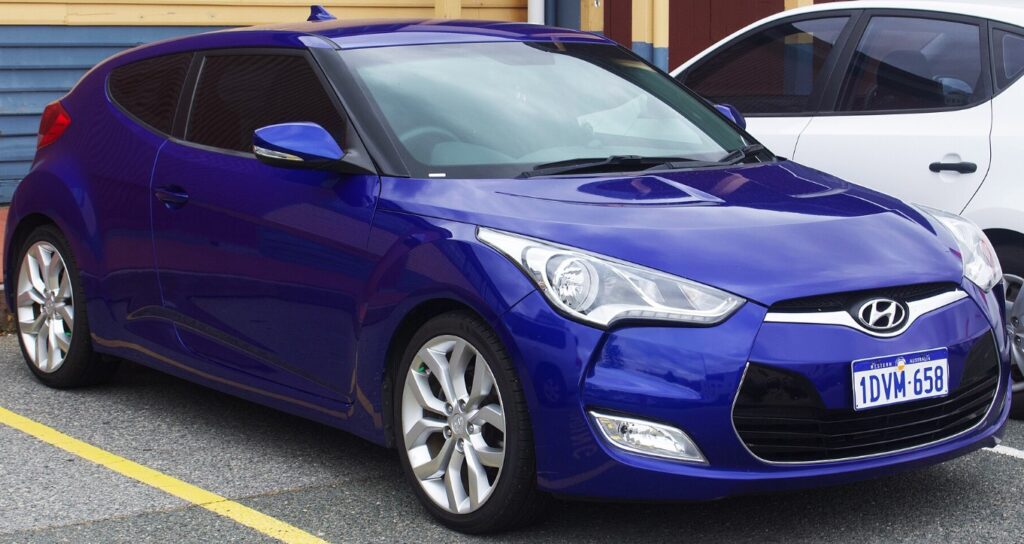
The Hyundai Veloster weight is one of those specifications that seems simple until we start comparing model years, engines, transmissions, and trims. Ask how much a Veloster weighs, and we could reasonably hear answers ranging from roughly 2,700 pounds to more than 3,200 pounds. Strangely enough, those answers can all be correct.
Why such a wide range?
The Veloster was sold with naturally aspirated engines, turbocharged engines, manual transmissions, automatic transmissions, dual-clutch gearboxes, and eventually the considerably more serious Veloster N performance package. Each mechanical change added or removed a little mass.
For the second-generation 2019 Veloster, Hyundai's specifications show curb weights starting around 2,700 pounds depending on configuration, while the considerably more powerful Veloster N exceeded 3,000 pounds. Later Veloster N configurations became heavier still, particularly when equipped with the eight-speed dual-clutch transmission.
So instead of throwing one number at the wall and calling it finished, we're going to unpack what the numbers actually mean.
We'll look at Hyundai Veloster curb weight, Veloster N weight, gross vehicle weight, payload, why different trims weigh different amounts, and how weight affects acceleration, handling, fuel economy, braking, and everyday driving.
Content in this publication
- How Much Does a Hyundai Veloster Weigh?
- Hyundai Veloster Weight at a Glance
- What Does Hyundai Veloster Curb Weight Mean?
- Hyundai Veloster Gross Weight Explained
- Hyundai Veloster Weight in Kilograms
- First-Generation Hyundai Veloster Weight
- 2019 Hyundai Veloster Weight
- Hyundai Veloster N Weight
- 2021 Hyundai Veloster N Weight
- 2022 Hyundai Veloster N Weight
- Does Transmission Affect Hyundai Veloster Weight?
- Does the Engine Affect Veloster Weight?
- Does Veloster Weight Affect Acceleration?
- How Weight Affects Veloster Handling
- How Weight Affects Fuel Economy
- Hyundai Veloster Payload Capacity
- How Much Does a Fully Loaded Veloster Weigh?
- Can We Reduce Hyundai Veloster Weight?
- Why Lightweight Wheels Can Make a Veloster Feel Different
- Is the Hyundai Veloster Heavy for a Small Car?
- Why Hyundai Veloster Weight Matters When Buying Used
- How to Find the Exact Weight of Your Hyundai Veloster
- Hyundai Veloster Weight vs Performance: Finding the Sweet Spot
- Does Hyundai Veloster Weight Change With Fuel Level?
- Why Weight Matters More on a Performance Veloster
- The Most Important Hyundai Veloster Weight Numbers to Remember
- Conclusion: What Does a Hyundai Veloster Really Weigh?
- Frequently Asked Questions About Hyundai Veloster Weight
How Much Does a Hyundai Veloster Weigh?
Most Hyundai Veloster models weigh roughly 2,700 to 3,250 pounds, depending on model year, engine, transmission, equipment, and market.
That's the useful short answer.
Second-generation non-N models typically occupy the lighter end of that range. Hyundai's official 2019 specifications list curb weights spanning approximately 2,701 to 2,921 pounds across the relevant configurations.
The performance-focused Veloster N sits noticeably higher. Hyundai listed the 2019 Veloster N at approximately 3,036–3,117 pounds, depending on equipment.
Later versions could be heavier. For example, published specifications for the 2022 Veloster N show how transmission and configuration can push curb weight upward; Edmunds lists a 2022 configuration at 3,247 pounds.
Think of the Veloster family like runners wearing different backpacks. The basic car carries relatively little. Add a turbocharger, larger brakes, stronger drivetrain components, performance hardware, wider wheels, and an automatic transmission, and that backpack gradually fills up.
Hyundai Veloster Weight at a Glance
Rather than treating every Veloster as identical, it makes more sense to divide the range into broad categories.
| Veloster Version | Approximate Curb Weight |
|---|---|
| Second-generation Veloster 2.0 | Around 2,700–2,850 lb |
| Veloster Turbo | Roughly upper-2,700 to low-2,900-lb range |
| Early Veloster N | About 3,036–3,117 lb |
| Later Veloster N | Roughly 3,100–3,250 lb depending on transmission/configuration |
These figures should be treated as general guidance rather than universal specifications because equipment and market differences matter. Hyundai's own 2019 specification sheet illustrates this clearly by publishing weight ranges rather than pretending every configuration weighs exactly the same amount.
Why Do Different Sources Give Different Veloster Weights?
This catches plenty of owners by surprise.
One site might say a Veloster weighs 2,734 pounds. Another says 2,822 pounds. Yet another reports more than 3,000 pounds.
They aren't necessarily contradicting one another.
For example, Edmunds lists a 2019 Veloster configuration with a curb weight of 2,734 pounds, while Car and Driver lists a 2019 2.0 manual configuration at 2,822 pounds. Different trim specifications, equipment assumptions, and transmission combinations can produce different published figures.
That's why we always want to know which Veloster we're talking about before comparing numbers.
What Does Hyundai Veloster Curb Weight Mean?
Curb weight is the number most people mean when asking, "How much does a Hyundai Veloster weigh?"
It refers to the vehicle's weight in ready-to-drive condition, including its required operating fluids and standard equipment, but without adding passengers or normal cargo.
In everyday language, imagine our Veloster sitting in the driveway ready for a trip—but nobody has climbed aboard yet and we haven't packed the trunk.
That's essentially curb weight.
Curb Weight Isn't the Same as Empty Shell Weight
A common misunderstanding is that curb weight represents the bare vehicle.
It doesn't.
The engine, transmission, seats, dashboard, fluids, fuel allowance as defined by the applicable specification method, electrical equipment, wheels, tires, safety equipment, and normal factory hardware are already part of the vehicle.
So when we say a Veloster weighs around 2,800 pounds, we're not talking about an empty steel shell waiting to be assembled.
We're talking about the actual car.
Hyundai Veloster Gross Weight Explained
Another number we may encounter is gross vehicle weight or GVW.
This is different from curb weight.
Gross vehicle weight represents the vehicle after occupants, luggage, and other allowable loads have been added. Related to this is GVWR, or Gross Vehicle Weight Rating, which is the maximum allowable loaded weight established for the vehicle.
A 2019 Veloster configuration cited by Edmunds, for example, shows a curb weight of 2,734 pounds, maximum payload of 1,014 pounds, and gross weight of 3,748 pounds.
That distinction matters.
If someone asks whether four passengers and luggage make a Veloster weigh more than 3,000 pounds, the answer can easily be yes—even though the car itself may have a curb weight well below 3,000 pounds.
Hyundai Veloster Weight in Kilograms
For readers outside the United States, kilograms are usually more useful than pounds.
A second-generation Veloster weighing 2,700 pounds is approximately 1,225 kg, while a 3,000-pound model is roughly 1,361 kg. Once we reach a 3,200-pound Veloster N, we're around 1,451 kg.
Hyundai's international specifications also demonstrate the variation between configurations. One official Veloster specification page lists curb weight ranging from 1,230 to 1,300 kg, with a gross weight of 1,650 kg for that market/configuration.
Regional specifications can differ, which is another reason we shouldn't automatically apply a North American figure to an Australian, European, Asian, or other-market Veloster.
First-Generation Hyundai Veloster Weight
The first-generation Veloster established the formula: relatively compact dimensions, unusual asymmetrical doors, hatchback practicality, and moderate weight.
One of its strongest characteristics was that Hyundai hadn't turned it into a heavyweight disguised as a sporty compact.
Hyundai's own media information for an earlier Veloster Turbo cited a curb weight of just 2,679 pounds.
That's light by modern-car standards.
And that relatively modest mass helped give the original Veloster its playful personality even when outright engine output wasn't enormous.
Why the Early Veloster Felt Light
A vehicle doesn't need supercar power to feel lively.
Take weight away and suddenly braking, steering response, direction changes, and low-speed acceleration all become easier.
That's basic physics working in our favor.
The original Veloster wasn't a stripped racing machine, of course. It still carried air conditioning, airbags, infotainment systems, sound insulation, rear seating, and useful cargo space.
Yet its relatively small footprint and compact mechanical package helped keep curb weight under control.
2019 Hyundai Veloster Weight
The 2019 model year brought the redesigned second-generation Veloster.
Hyundai's official specifications show curb weight varying significantly by version. Depending on drivetrain and equipment, published figures range from approximately 2,701 to 2,921 pounds for mainstream configurations.
That's a difference of more than 200 pounds inside the same basic model family.
Two hundred pounds might not sound dramatic until we imagine carrying a large adult passenger around permanently. Suddenly the difference feels much more tangible.
2019 Veloster 2.0 Weight
The naturally aspirated 2.0-liter Veloster sits toward the lighter portion of the second-generation range.
Edmunds lists a representative 2019 version at 2,734 pounds, while individual transmission and equipment configurations may differ.
That makes the standard Veloster quite light compared with many modern vehicles.
Its lower weight also explains why a relatively modest naturally aspirated engine can still provide reasonable everyday performance.
2019 Veloster Turbo Weight
Moving to the Turbo generally adds mass.
Why?
The turbocharger itself isn't the whole story.
A turbo model may require additional cooling hardware, stronger drivetrain components, different exhaust equipment, larger wheels and tires, upgraded braking components, and more equipment depending on trim.
It's like ordering a hamburger and discovering the cheese, sauce, bacon, and toppings collectively matter more than the extra patty alone.
Every component adds something.
Hyundai Veloster N Weight
Now we reach the muscular member of the family.
The Veloster N was engineered as a genuine performance car rather than simply a cosmetic sport package.
That meant more power—but also more hardware.
Hyundai's official 2019 Veloster N specifications list curb weight beginning around 3,036 pounds, with certain configurations reaching approximately 3,117 pounds. GVWR was listed at 4,079 pounds.
In other words, the N is several hundred pounds heavier than the lightest regular Veloster.
Yet nobody should interpret that as Hyundai simply getting careless with the scale.
The extra pounds are doing work.
Why Is the Veloster N Heavier?
The Veloster N carries equipment designed to make the car survive—and thrive—under much harder driving conditions.
That includes a larger turbocharged engine package, upgraded cooling, larger brakes, performance suspension hardware, stronger drivetrain components, larger wheels and tires, structural changes, and N-specific performance equipment.
The 2019 Performance Package also added equipment such as larger brakes, 19-inch wheels, an electronically controlled limited-slip differential, and an active exhaust while increasing output from 250 to 275 horsepower.
Those features aren't made of air.
They add mass.
But they also transform what the vehicle can do.
Performance Hardware Can Be Worth the Extra Pounds
In a normal economy car, extra weight is usually undesirable.
In a performance car, we need more nuance.
A larger brake rotor adds weight, but if it dramatically improves repeated stopping performance, we'll probably accept the trade.
A limited-slip differential adds hardware, but it helps put power down when exiting a corner.
Wider tires and larger wheels can weigh more, yet they provide additional grip.
So the real question isn't simply whether the N gained weight.
It's whether Hyundai spent those pounds wisely.
For the most part, it did.
2021 Hyundai Veloster N Weight
The 2021 Veloster N introduced another important factor: an available eight-speed wet dual-clutch transmission alongside the six-speed manual.
Hyundai's N specifications confirm that both the six-speed manual and N DCT were offered with the turbocharged 2.0-liter engine.
And transmissions aren't weightless.
Automatic and dual-clutch units typically bring additional components compared with a straightforward manual gearbox.
Published specifications illustrate the difference between configurations. Edmunds lists one 2021 Veloster N at 3,106 pounds, while later DCT-equipped specifications can sit higher.
Manual vs DCT Veloster N Weight
This is one of the most useful distinctions for enthusiasts.
If we're shopping for the lightest possible Veloster N, the manual transmission deserves attention.
The DCT, however, trades some additional mass for extremely quick shifting, easier everyday operation, and extra performance functionality.
It's less like choosing between "good" and "bad" and more like picking hiking boots versus running shoes. Each makes sense in a different situation.
2022 Hyundai Veloster N Weight
By 2022, the Veloster N had effectively become the star of the lineup in the United States.
Car and Driver lists a base curb weight of 3,106 pounds in its 2022 Veloster N specifications. Edmunds, meanwhile, lists a 2022 configuration at 3,247 pounds, illustrating the significant effect specification and transmission choice can have on published curb-weight figures.
This is exactly why quoting a single "2022 Veloster weight" without mentioning the configuration can be misleading.
Does Transmission Affect Hyundai Veloster Weight?
Absolutely.
Transmission choice is one of the easiest ways two otherwise similar Velosters can have different curb weights.
A manual gearbox is mechanically straightforward. An automatic or dual-clutch transmission needs additional clutch assemblies, hydraulic or electronic control hardware, cooling provisions, and related components.
Every extra gear, pump, housing, clutch pack, and control mechanism contributes something to the scale.
Weight isn't the only consideration, though.
A sophisticated transmission may improve acceleration enough to offset its extra mass.
That's especially relevant in the Veloster N, where rapid DCT shifts can keep the turbocharged engine operating in a highly effective portion of its power band.
Does the Engine Affect Veloster Weight?
Yes, although once again the engine itself tells only part of the story.
A naturally aspirated Veloster doesn't need the same complete supporting system as a high-output turbocharged N.
A turbo model may incorporate additional plumbing, intercooling hardware, larger exhaust components, and cooling equipment.
The N takes that concept further.
Its turbocharged 2.0-liter engine produces 275 horsepower in later specification, accompanied by the performance equipment necessary to handle that output.
So when comparing engine variants, we're really comparing whole systems rather than isolated blocks of metal.
Does Veloster Weight Affect Acceleration?
Definitely.
Acceleration is essentially a battle between force and mass.
Give two cars the same horsepower, but make one significantly lighter, and the lighter vehicle normally has the easier job.
It's the difference between pushing an empty shopping cart and one loaded with bottled water.
The same force creates more noticeable acceleration when there's less mass to move.
This is one reason enthusiasts obsess over power-to-weight ratio rather than horsepower alone.
Power-to-Weight Ratio Matters More Than Big Horsepower Numbers
Imagine a lightweight Veloster with moderate power next to a much heavier crossover with similar output.
On paper, the horsepower numbers may look close.
From behind the steering wheel, they may feel nothing alike.
The Veloster asks each horsepower to move fewer pounds.
The result is often sharper response, quicker changes of direction, and a more energetic personality.
With the N, Hyundai increased both power and weight—but power grew enough to transform the performance envelope.
How Weight Affects Veloster Handling
Weight doesn't only influence straight-line acceleration.
It affects nearly everything a car does.
When we enter a corner, the tires have to manage the vehicle's mass as it changes direction. When braking, the braking system has to dissipate kinetic energy. When accelerating, the powertrain has to overcome inertia.
Less weight generally makes all three jobs easier.
That's why the Veloster's relatively modest curb weight remains one of its biggest dynamic advantages.
Weight Distribution Matters Too
Total mass isn't everything.
Where that mass sits matters nearly as much.
An extra 80 pounds positioned close to the center of the vehicle has a different effect than 80 pounds positioned high above the road or hanging over an axle.
Engine location, passenger placement, fuel, transmission weight, suspension components, and even battery placement influence how the car feels.
Two vehicles could weigh exactly 3,000 pounds and still respond completely differently through corners.
That's why we shouldn't treat the curb-weight number as the entire handling story.
How Weight Affects Fuel Economy
Moving mass requires energy.
All else being equal, a lighter vehicle typically needs less energy to accelerate than a heavier one.
That can improve real-world fuel consumption, particularly in stop-and-go driving where the car repeatedly accelerates from low speed.
On the highway, aerodynamics become increasingly influential, so the relationship isn't quite as simple.
Still, reduced weight generally helps efficiency.
This partially explains why automakers spend enormous engineering effort shaving seemingly tiny amounts from seats, wheels, suspension pieces, and body structures.
A few pounds here and there look meaningless.
Hundreds of components later, they aren't.
Hyundai Veloster Payload Capacity
Payload is the weight we add to the vehicle.
That means passengers, luggage, equipment, and other cargo.
The difference between curb weight and allowable loaded weight gives us a general sense of how much the car can carry, although owners should always rely on the specific door-jamb certification label for their own vehicle.
One 2019 Veloster configuration listed by Edmunds carries a maximum payload figure of 1,014 pounds.
A 2020 Veloster N example lists 1,043 pounds of maximum payload and a gross weight of 4,079 pounds.
The exact number can vary.
Passengers Count Toward Payload
This detail is easy to forget.
Suppose four occupants collectively weigh 650 pounds.
Add 150 pounds of luggage, and we've already added 800 pounds.
The suspension doesn't care whether the load came from suitcases, people, or camping equipment.
Weight is weight.
That's why payload limits shouldn't be treated as cargo-only ratings.
How Much Does a Fully Loaded Veloster Weigh?
A loaded Veloster can approach its Gross Vehicle Weight Rating once passengers and cargo are aboard.
For context, Hyundai's 2019 Veloster N specification lists a 4,079-pound GVWR.
That doesn't mean the empty N weighs 4,079 pounds.
Far from it.
It means we're looking at the maximum permitted loaded vehicle weight under that specification.
Confusing GVWR with curb weight is one of the easiest ways to publish a wildly inaccurate answer to "How much does a Veloster weigh?"
Can We Reduce Hyundai Veloster Weight?
Technically, yes.
But whether we should depends on how the vehicle is used.
Enthusiasts sometimes chase weight reduction because removing mass can improve acceleration, braking, and responsiveness without touching engine output.
A serious build might investigate lightweight wheels, exhaust components, seats, batteries, or other equipment.
However, sensible weight reduction should never compromise structural integrity, road legality, restraint systems, airbags, crash protection, or critical equipment.
For a street-driven Veloster, lightweight wheels are particularly interesting because they can reduce both overall and rotating/unsprung mass.
That's a more sophisticated conversation than simply throwing the rear seat into the garage.
Why Lightweight Wheels Can Make a Veloster Feel Different
Imagine wearing heavy boots and sprinting.
Now imagine wearing lightweight running shoes.
The total weight difference isn't enormous, yet our legs notice immediately because we're repeatedly accelerating and decelerating that weight.
Wheels behave in a somewhat similar way.
Because they're rotating and partially unsprung components, changes in wheel mass can influence steering response, suspension behavior, and acceleration more noticeably than the same static weight removed from certain other parts of the vehicle.
That doesn't mean lighter is automatically better. Strength, dimensions, tire compatibility, load ratings, and quality remain crucial.
Is the Hyundai Veloster Heavy for a Small Car?
Generally, no.
The regular Veloster is relatively light by modern standards.
A curb weight starting around the 2,700-pound range puts second-generation mainstream versions firmly on the lighter side of today's vehicle spectrum. Hyundai's 2019 specifications support that characterization, with mainstream configurations beginning around 2,701 pounds.
Even the heavier Veloster N stays relatively compact for a modern performance car filled with turbocharging, active suspension technology, substantial brakes, safety equipment, infotainment, and everyday comfort features.
That's part of its appeal.
The Veloster didn't need 400 horsepower to feel exciting because Hyundai wasn't asking those horses to drag around two tons of automobile.
Why Hyundai Veloster Weight Matters When Buying Used
Weight itself probably won't determine whether we buy a particular Veloster.
But it reveals quite a bit about the configuration we're considering.
If a specification shows roughly 2,700–2,800 pounds, we're probably looking at a lighter mainstream version.
Cross the 3,000-pound threshold and we're likely entering Veloster N territory or another heavily equipped configuration.
Before buying, it makes sense to identify the exact engine, trim, transmission, equipment package, model year, and market rather than relying on a generic database entry.
That gives us a much more accurate picture of the car.
How to Find the Exact Weight of Your Hyundai Veloster
If we need the exact specifications for a particular car rather than a general internet estimate, several sources deserve attention:
- Check the certification label on the driver's door jamb for vehicle weight ratings.
- Consult the owner's documentation and model-year specifications.
- Match the VIN to the exact trim and powertrain configuration.
- Verify whether the car has a manual, conventional automatic, or DCT transmission.
- Account for aftermarket wheels, audio systems, suspension components, exhaust systems, or other modifications.
- If actual rather than published weight matters, use a certified vehicle scale.
That final method settles the argument once and for all.
A scale doesn't care what a brochure says.
It tells us what our particular car weighs at that moment, including fuel, modifications, tools, loose cargo, and anything else aboard.
Hyundai Veloster Weight vs Performance: Finding the Sweet Spot
The Veloster is an interesting case study because Hyundai never treated weight as an isolated number.
The regular car prioritized accessibility, efficiency, practicality, and nimble handling.
The Turbo added performance.
The N added considerably more serious hardware.
Each step increased capability, and some steps increased mass.
Yet the finished product still stayed reasonably light.
That's the sweet spot.
A featherweight vehicle with inadequate brakes, cooling, chassis strength, or safety equipment isn't automatically better. Neither is an enormously powerful vehicle so heavy that every corner feels like steering a sofa downhill.
Good engineering balances the equation.
And the Veloster—particularly the N—shows how adding the right weight can produce a faster, more durable, and more entertaining car.
Does Hyundai Veloster Weight Change With Fuel Level?
Yes.
Published curb-weight methodology gives us a standardized comparison point, but the car's actual scale weight changes constantly.
Fuel has mass.
Passengers have mass.
That backpack in the rear has mass.
A subwoofer installation, aftermarket wheel set, roof rack, tool kit, spare parts, or forgotten case of drinks in the cargo area changes the number too.
That's why an owner's Veloster may not reproduce a brochure specification exactly when placed on a scale.
Nothing is necessarily wrong.
We're simply comparing standardized specification weight with real-world operating weight.
Why Weight Matters More on a Performance Veloster
On a basic commuter, an extra 50 pounds probably won't dominate the driving experience.
On a performance hatchback, enthusiasts notice details.
They care about steering feel, braking zones, corner entry, rotation, tire temperatures, acceleration, and lap consistency.
Weight influences all of them.
That's why Hyundai even paid attention to relatively small savings in the Veloster N's performance-oriented components. The philosophy makes sense: once we're chasing response rather than merely transportation, every pound becomes part of the conversation.
The Most Important Hyundai Veloster Weight Numbers to Remember
If we strip away all the technical detail, a simple mental map works surprisingly well.
A regular second-generation Veloster generally lives around the high-2,000-pound range.
The Veloster N moves into the low-3,000-pound range.
Some later N configurations equipped with heavier drivetrain hardware can climb past 3,200 pounds. Official and major reference specifications demonstrate precisely why trim and transmission must accompany any weight figure.
If somebody tells us, "A Hyundai Veloster weighs exactly 2,800 pounds," they're simplifying too much.
The better response is:
Which year, trim, engine, and transmission?
That's where the correct answer begins.
Conclusion: What Does a Hyundai Veloster Really Weigh?
So, how much does a Hyundai Veloster weigh?
For most versions, we're looking at approximately 2,700 to 3,250 pounds, with naturally aspirated mainstream cars occupying the lower end and performance-focused Veloster N models sitting toward the upper end.
The redesigned 2019 mainstream lineup included configurations starting at roughly 2,701 pounds, according to Hyundai's specifications. The 2019 Veloster N started above 3,000 pounds, while later configurations—particularly those involving different transmission setups—could become heavier.
But the number alone doesn't tell the whole story.
Weight influences acceleration, braking, efficiency, cornering, payload, and overall driving character. More importantly, Hyundai's performance versions demonstrate that extra mass isn't automatically bad. Sometimes we're adding bigger brakes, stronger drivetrain hardware, better cooling, or a sophisticated transmission—the automotive equivalent of putting muscle on an athlete rather than simply stuffing rocks into a backpack.
For shoppers, owners, and enthusiasts, the smartest approach is simple: use general weight figures for comparison, but check the exact model year, trim, drivetrain, and certification information when accuracy matters.
That's the difference between knowing what a Veloster roughly weighs and knowing what your Veloster actually weighs.
Frequently Asked Questions About Hyundai Veloster Weight
1. How much does a Hyundai Veloster weigh in pounds?
Most Hyundai Veloster versions fall roughly between 2,700 and 3,250 pounds, depending on year, engine, trim, transmission, and equipment. Second-generation mainstream versions can begin near 2,700 pounds, while Veloster N variants typically exceed 3,000 pounds.
2. How much does a Hyundai Veloster weigh in kilograms?
Depending on configuration, a Veloster weighing between approximately 2,700 and 3,250 pounds corresponds to roughly 1,225 to 1,474 kg. Hyundai also published international Veloster specifications ranging from 1,230 to 1,300 kg for certain configurations and markets.
3. How much does a Hyundai Veloster N weigh?
The Veloster N generally weighs a little over 3,000 pounds. Hyundai's 2019 specifications listed approximately 3,036–3,117 pounds depending on configuration, while some later configurations can exceed 3,200 pounds.
4. Why does the Veloster N weigh more than the regular Veloster?
The N carries additional performance equipment, including a more powerful turbocharged powertrain, larger brakes, upgraded suspension components, performance wheels and tires, additional cooling equipment, and other N-specific hardware. Some configurations also use an eight-speed dual-clutch transmission rather than a lighter manual gearbox.
5. What is the difference between Veloster curb weight and gross weight?
Curb weight describes the ready-to-drive vehicle before normal passenger and cargo loads are added. Gross vehicle weight reflects the vehicle after loading, while GVWR establishes its permitted maximum loaded weight. For example, one 2019 Veloster specification lists a 2,734-pound curb weight, 1,014-pound payload, and 3,748-pound gross weight.
If you want to know other articles similar to Hyundai Veloster Weight: Complete Guide by Year and Trim you can visit the category Service and Parts.
Vauxhall Mokka Tyre Pressure Reset: Complete Guide
How to Reset the Tire Pressure System on Your Hyundai Tucson
Hyundai Kona Tire Pressure: Complete PSI Guide
Vauxhall Corsa Timing Belt Replacement Cost UK 2026
Mazda CX-5 Tire Size Chart: 2013–2026 Guide
How to Reset a Honda Civic: Complete Step-by-Step Guide
Leave a Reply
More content of your interest