
Ford Edge Fuel Economy: MPG, Engines, Costs, and Real-World Efficiency

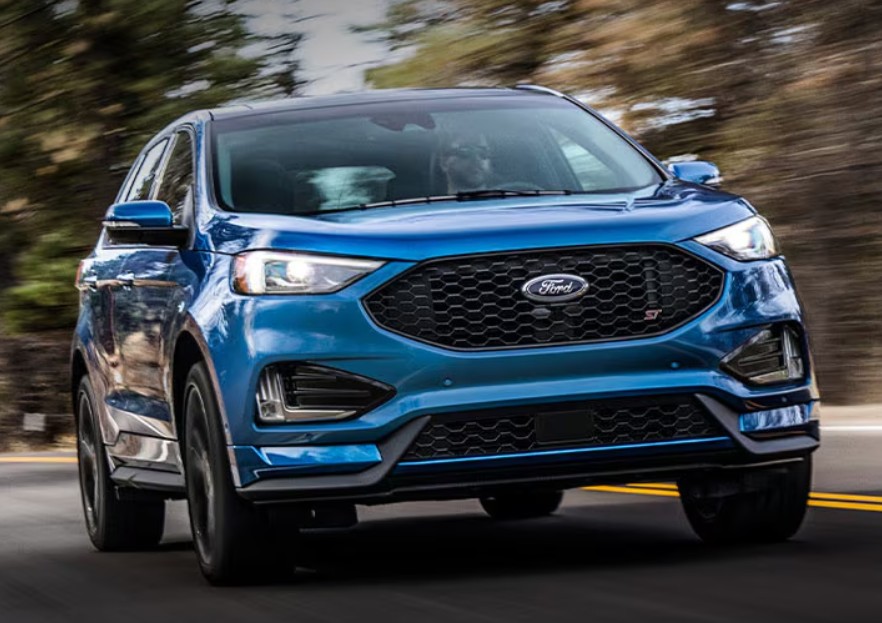
The Ford Edge has always occupied an interesting middle ground. It is roomier and more substantial than a compact crossover, yet it avoids the size, weight, and thirst of many three-row SUVs. That balance makes Ford Edge fuel economy an important part of the buying decision, particularly for drivers who want SUV comfort without watching the fuel gauge fall like a countdown timer.
So, how economical is a Ford Edge?
The short answer is that most later four-cylinder Ford Edge models deliver respectable fuel economy for a midsize SUV, while the performance-oriented Edge ST trades a few miles per gallon for significantly more power. Driving style, model year, engine, wheel size, weather, traffic, and maintenance can all shift the numbers considerably.
For reference, Ford lists the 2024 Edge with the 2.0-liter EcoBoost engine at an EPA-estimated 21 mpg city and 28 mpg highway. Those figures give us a useful baseline, but they certainly do not tell the whole story.
In this guide, we'll break down Ford Edge MPG figures, explain which versions are most economical, look at real-world fuel consumption, and explore what owners can do to squeeze more miles from every gallon.
Content in this publication
- What Is the Ford Edge Fuel Economy?
- Ford Edge MPG at a Glance
- Why the 2.0L EcoBoost Is the Fuel Economy Sweet Spot
- Ford Edge City MPG
- Ford Edge Highway MPG
- Ford Edge Combined MPG
- Ford Edge ST Fuel Economy
- 2.0L Ford Edge vs 2.7L Edge ST Fuel Consumption
- Does AWD Reduce Ford Edge Fuel Economy?
- How Fuel Efficient Are Older Ford Edge Models?
- Ford Edge Fuel Economy in L/100 km
- How Far Can a Ford Edge Travel on One Tank?
- Real-World Ford Edge Fuel Economy
- What Makes a Ford Edge Use More Gas?
- Do Larger Wheels Affect Ford Edge MPG?
- Does Tire Pressure Affect Ford Edge Fuel Economy?
- How Driving Style Changes Ford Edge MPG
- Does Eco Mode Improve Ford Edge Fuel Economy?
- Does Auto Start-Stop Save Fuel?
- Does Towing Reduce Ford Edge MPG?
- Ford Edge Fuel Cost Per Year
- How to Improve Ford Edge Fuel Economy
- Is the Ford Edge Good on Gas for an SUV?
- Ford Edge vs Smaller SUVs for Fuel Economy
- Ford Edge vs Three-Row SUVs for Fuel Economy
- Which Ford Edge Has the Best Fuel Economy?
- Should You Buy an Edge ST If Fuel Economy Matters?
- Is Ford Edge Fuel Economy Good for Long Road Trips?
- Is the Ford Edge Expensive to Fuel?
- Final Thoughts on Ford Edge Fuel Economy
- Frequently Asked Questions
What Is the Ford Edge Fuel Economy?
Fuel economy varies considerably depending on which Ford Edge we're talking about.
Later models generally use one of two EcoBoost engines: a turbocharged 2.0-liter four-cylinder or the much more muscular twin-turbocharged 2.7-liter V6 found in the Edge ST.
The four-cylinder engine is the obvious fuel-saving choice.
A 2024 Ford Edge equipped with the 2.0-liter EcoBoost and all-wheel drive is officially rated at approximately:
| Driving condition | 2024 Ford Edge 2.0L |
|---|---|
| City | 21 mpg |
| Highway | 28 mpg |
| Combined | Roughly 23 mpg |
Ford's published inventory information confirms the 21-city/28-highway EPA estimate for 2024 2.0-liter Edge models.
That means a driver covering a mixture of urban roads and highways can reasonably use the low-to-mid-20s MPG range as a starting point.
Of course, EPA numbers are measured under standardized conditions. Your morning commute probably isn't.
A cold engine, five red lights, aggressive acceleration, roof-mounted luggage, strong winds, and 20 minutes of stop-and-go traffic can quickly turn a respectable SUV into a considerably thirstier one.
Ford Edge MPG at a Glance
If we're shopping used, the picture becomes more complicated because the Edge has been sold with several engines, transmissions, and drivetrain configurations throughout its life.
Earlier versions were available with naturally aspirated V6 engines, while later generations increasingly relied on turbocharged EcoBoost power.
In general, we can think of Edge fuel economy like this:
- 2.0L EcoBoost models: usually the strongest option for fuel-conscious buyers.
- Front-wheel-drive versions: typically consume slightly less fuel than equivalent AWD models where FWD was offered.
- AWD four-cylinder models: sacrifice a little efficiency for additional traction.
- 2.7L EcoBoost ST: noticeably thirstier but considerably faster.
- Older naturally aspirated V6 models: generally consume more fuel than later four-cylinder versions.
The exact rating always depends on model year and configuration, so anyone buying a particular used Edge should check the EPA specification for that exact vehicle rather than assuming every Edge returns the same MPG.
Why the 2.0L EcoBoost Is the Fuel Economy Sweet Spot
The turbocharged 2.0-liter EcoBoost engine is arguably the most sensible Ford Edge powertrain for everyday driving.
Why?
Because it doesn't make the Edge feel underpowered while still delivering reasonable fuel consumption.
Turbocharging allows a smaller engine to produce the torque needed to move a midsize crossover without relying on the displacement of a traditional large V6.
Think of it as packing a larger punch into a smaller glove.
When we're cruising gently, the engine doesn't need to work particularly hard. When we press the accelerator, the turbocharger provides additional boost and power.
There is a catch, though.
Turbo Power Isn't Free
EcoBoost does not mean the laws of physics have disappeared.
Drive gently, and the 2.0-liter engine can be surprisingly economical for the Edge's size.
Keep the turbocharger working hard with repeated full-throttle acceleration, and fuel consumption rises rapidly.
This is one reason two owners driving identical Edge models can report very different MPG figures.
One might average 26 mpg.
Another might struggle to reach 20.
Same SUV. Completely different right foot.
Ford Edge City MPG
City driving is usually where fuel economy takes the biggest hit.
The 2024 2.0-liter Ford Edge carries a 21 mpg EPA city estimate. That's reasonable for an AWD midsize crossover, although conditions can push actual consumption below that figure.
Every time we accelerate from a stop, the engine must overcome the Edge's substantial weight.
Then we brake.
Then we accelerate again.
Fuel is effectively being spent building momentum that disappears at the next traffic light.
Why Short Trips Hurt MPG
Short journeys can be particularly inefficient.
Engines operate best once they reach normal operating temperature. If we're repeatedly driving three or four miles, shutting the vehicle down, and starting again later, the Edge spends a disproportionate amount of time warming up.
Winter makes the situation even worse.
Cold oil creates additional resistance, engines require richer fuel mixtures during warm-up, tire pressure often drops, and heaters or defrosters add further demand.
Consequently, an owner who mostly takes short urban trips shouldn't be surprised if fuel economy sits below the official combined figure.
Ford Edge Highway MPG
The highway is where the Edge begins to stretch its legs.
Later 2.0-liter models can reach an EPA-estimated 28 mpg highway. Under favorable conditions, steady cruising can produce excellent results for a vehicle this spacious.
Once we're maintaining speed rather than repeatedly accelerating, the engine's workload becomes much more predictable.
But highway MPG has a hidden enemy.
Speed.
Why 75 MPH Can Cost More Than 65 MPH
Air resistance increases dramatically as speed rises.
At 55 or 60 mph, pushing the Edge through the atmosphere requires considerably less energy than doing the same thing at 75 or 80 mph.
It's almost like running with a sheet hanging behind us: the faster we move, the harder the air fights back.
Drivers attempting to maximize fuel economy will usually see better results cruising moderately than racing along at the fastest legal speed available.
Ford Edge Combined MPG
Combined MPG is often the most useful number because few people drive exclusively in a city or exclusively on a highway.
For later AWD 2.0-liter models, something around 23 mpg combined provides a useful benchmark.
Interestingly, the Edge's efficiency remained relatively consistent during portions of its later production run.
For example, Ford's 2019 specifications listed the 2.0-liter EcoBoost AWD model at 21 mpg city, 28 highway, and 23 combined, while the FWD version was rated at 22/29/25 mpg.
That tells us something important.
Ford didn't transform the Edge into an economy vehicle. Instead, it gradually refined a midsize crossover that emphasized a combination of power, comfort, space, and acceptable efficiency.
Ford Edge ST Fuel Economy
And now we get to the troublemaker.
The Ford Edge ST uses a 2.7-liter twin-turbocharged EcoBoost V6 designed to provide significantly stronger performance than the regular Edge.
Fuel economy naturally suffers.
Earlier published Ford specifications for the Edge ST rated the 2.7-liter AWD powertrain around 19 mpg city, 26 mpg highway, and 21 mpg combined.
Those numbers aren't disastrous for a powerful midsize SUV.
Still, anyone choosing the ST purely because it looks better should understand the trade-off.
Performance Changes the Equation
The Edge ST wasn't created to win fuel-economy contests.
Its appeal lies in effortless acceleration, stronger torque, sportier tuning, and a more energetic personality.
Press the accelerator and the ST moves with authority.
Unfortunately, enthusiastic acceleration has roughly the same relationship with fuel economy as dessert has with dieting.
We can enjoy it.
We just can't pretend it doesn't count.
2.0L Ford Edge vs 2.7L Edge ST Fuel Consumption
The difference between the two engines may look small when we compare combined ratings on paper.
Over thousands of miles, however, those few MPG begin to matter.
Suppose one Edge averages around 23 mpg while another averages closer to 20 or 21.
A driver traveling 15,000 miles per year may use noticeably more gasoline in the thirstier model. Multiply that difference across five years of ownership, and the performance upgrade carries a genuine running-cost penalty.
Does that mean we shouldn't buy an Edge ST?
Not at all.
It simply means we should choose it because we actually value the extra performance.
If fuel economy ranks above acceleration on our priority list, the 2.0-liter Edge makes considerably more sense.
Does AWD Reduce Ford Edge Fuel Economy?
Usually, yes.
All-wheel-drive systems introduce additional weight and mechanical components. Those components require energy to operate, creating additional drivetrain losses.
The difference isn't necessarily dramatic, but it exists.
Ford's 2019 ratings illustrate the effect clearly. The 2.0-liter FWD Edge was rated at 22 city/29 highway/25 combined mpg, while the equivalent AWD version fell to 21/28/23 mpg.
Is AWD Worth the MPG Penalty?
That depends entirely on where we drive.
Someone living in a warm climate and spending most of the year on dry pavement might gain little from AWD.
A driver regularly dealing with snow, steep roads, mud, or poor weather may happily sacrifice one or two MPG for additional traction.
Fuel economy shouldn't be considered in isolation.
Saving gasoline isn't particularly useful if we've bought the wrong vehicle for our environment.
How Fuel Efficient Are Older Ford Edge Models?
Older Edge models deserve separate consideration.
Before the turbocharged four-cylinder became such a central part of the lineup, naturally aspirated V6 engines were common.
These engines tend to be smooth and relatively straightforward, but they weren't designed during an era when every drop of fuel received quite the scrutiny it does today.
A used Edge from the late 2000s or early 2010s may therefore return MPG numbers in the high teens or low 20s depending on engine, drivetrain, driving conditions, and maintenance.
That doesn't automatically make an older Edge a bad purchase.
Purchase Price Can Matter More Than MPG
Here's where fuel economy comparisons become interesting.
Imagine an older Edge costs thousands less than a newer model.
Even if the newer vehicle saves several hundred dollars per year in gasoline, it may take many years for those fuel savings to overcome the difference in purchase price.
That's why we shouldn't evaluate MPG inside a vacuum.
The smarter calculation includes depreciation, insurance, financing, maintenance, repairs, registration, and fuel.
Sometimes the cheapest vehicle to fuel isn't the cheapest vehicle to own.
Ford Edge Fuel Economy in L/100 km
Drivers outside the United States commonly measure fuel consumption in liters per 100 kilometers rather than miles per gallon.
The relationship works in reverse.
With MPG, higher is better.
With L/100 km, lower is better.
A Ford Edge achieving roughly 23 US mpg translates to approximately 10.2 L/100 km.
At 28 mpg, consumption drops to around 8.4 L/100 km.
At 20 mpg, we're closer to 11.8 L/100 km.
These figures provide rough conversions rather than model-specific official ratings, since testing procedures and vehicle specifications vary between markets.
How Far Can a Ford Edge Travel on One Tank?
Tank range depends on fuel capacity and actual MPG.
Under steady highway conditions, a later Edge can potentially travel well beyond 400 miles between fill-ups.
In everyday mixed driving, range will naturally be lower.
And we shouldn't multiply the entire stated tank capacity by the EPA highway figure and assume that's guaranteed range.
Vehicles preserve a fuel reserve, driving conditions constantly change, and few of us drive a tank from completely full until literally empty.
Why the Dashboard Range Changes So Much
Ever noticed that the estimated distance-to-empty figure suddenly falls after a few days of city driving?
Nothing is necessarily wrong.
The vehicle estimates future range partly from recent fuel consumption.
Drive gently on the highway and the computer becomes optimistic.
Spend two days crawling through traffic and it adjusts its expectations.
It's essentially saying, "If you keep driving like this, here's what we're working with."
Real-World Ford Edge Fuel Economy
Official fuel economy ratings are useful because they allow standardized comparisons.
Real roads aren't standardized.
A driver living in flat terrain with a 40-mile highway commute may consistently exceed someone else's MPG despite owning an identical vehicle.
Meanwhile, a driver living in a mountainous city may average much less.
Real-world Ford Edge fuel economy is influenced by traffic density, elevation, temperature, driving speed, trip length, tire pressure, passengers, cargo, towing, gasoline quality, mechanical condition, and driving habits.
That's quite a list.
The key point is simple: EPA ratings are comparison tools, not promises.
What Makes a Ford Edge Use More Gas?
When fuel economy suddenly drops, many owners immediately suspect an engine problem.
Sometimes they're right.
Often they're not.
The most common explanations are surprisingly ordinary.
Low tire pressure increases rolling resistance. Roof boxes increase aerodynamic drag. Heavy cargo increases mass. Aggressive acceleration forces the turbocharger to work harder. Winter fuel blends and cold temperatures reduce efficiency. Stop-and-go traffic eliminates the advantage of steady cruising.
Even a strong headwind can noticeably affect highway MPG.
Mechanical Problems Can Also Lower MPG
If consumption deteriorates significantly without an obvious change in driving conditions, maintenance deserves attention.
Potential contributors include dirty air filters on applicable models, worn spark plugs, dragging brakes, incorrect tire pressure, alignment problems, malfunctioning oxygen sensors, fuel-system issues, or engine-management faults.
A check-engine light should never be ignored simply because the vehicle appears to drive normally.
Poor efficiency can sometimes be an early symptom rather than the main problem.
Do Larger Wheels Affect Ford Edge MPG?
Potentially.
Large wheels look fantastic on a midsize crossover, which is exactly why manufacturers offer them.
But style can demand payment at the pump.
Larger wheel-and-tire combinations may weigh more and can increase rolling resistance. Wider tires can also create additional aerodynamic and road friction.
The effect won't necessarily transform a 25-mpg vehicle into a 17-mpg one, but owners chasing maximum efficiency generally benefit from lighter, smaller factory-approved wheel combinations.
There is another advantage.
Smaller wheels usually use tires with taller sidewalls, which can improve ride comfort and often cost less to replace.
Sometimes practicality quietly wins the argument.
Does Tire Pressure Affect Ford Edge Fuel Economy?
Absolutely.
Underinflated tires deform more as they roll.
That deformation consumes energy, and energy ultimately comes from fuel.
Think about riding a bicycle with soft tires. Suddenly every pedal stroke feels like work.
Your Edge experiences the same principle, just on a much larger scale.
Checking tire pressure regularly is one of the easiest and cheapest efficiency improvements available.
Always use Ford's recommended pressure for the specific vehicle rather than simply inflating tires to the maximum number printed on the tire sidewall.
How Driving Style Changes Ford Edge MPG
Driving technique can produce a surprisingly large difference.
Turbocharged engines especially reward moderation.
If we accelerate smoothly and allow the transmission to shift efficiently, the EcoBoost engine can move the Edge with relatively little drama.
If every green light feels like qualifying at Daytona, the fuel gauge will respond accordingly.
Good efficiency doesn't require crawling around town.
It mostly requires avoiding unnecessary bursts of acceleration followed immediately by braking.
Look farther down the road.
Maintain momentum.
Leave space.
Ease off the accelerator early when traffic is slowing.
Smooth driving feels slower than aggressive driving, but over many journeys the arrival-time difference is often tiny.
The fuel difference isn't.
Does Eco Mode Improve Ford Edge Fuel Economy?
Where equipped, selectable drive modes or efficiency-oriented programming can help encourage economical behavior, but no button can magically overcome physics.
An economy-focused mode might soften throttle response or modify transmission behavior.
That can make efficient driving easier.
Yet if we continue flooring the accelerator, carrying excessive weight, driving at 85 mph, and leaving tires underinflated, an Eco setting won't rescue the MPG figure.
The biggest efficiency upgrade remains the driver.
Does Auto Start-Stop Save Fuel?
Later Ford Edge models use Auto Start-Stop technology, which can switch the engine off while the vehicle is stationary and restart it when we're ready to move.
Ford equipped both 2.0-liter and 2.7-liter EcoBoost versions with this technology in later model years.
The benefit is straightforward.
An idling engine gets zero miles per gallon.
If the vehicle is sitting at a long traffic light, shutting the engine down temporarily prevents unnecessary fuel consumption.
Savings on a single stop are tiny.
Across thousands of urban stops, however, tiny savings begin adding up.
Does Towing Reduce Ford Edge MPG?
Yes—and potentially by a lot.
A trailer adds weight, rolling resistance, and aerodynamic drag.
The aerodynamic penalty can be especially severe with tall, box-shaped trailers.
The Edge's engine must work harder during acceleration and continue working harder simply to maintain highway speed.
Ford lists towing configurations for the 2024 Edge with both the 2.0-liter EcoBoost and 2.7-liter EcoBoost V6, depending on equipment.
Maximum towing capacity and fuel economy are separate subjects, though.
Just because the SUV can tow a particular trailer doesn't mean it will do so while maintaining normal MPG.
Expect a noticeable increase in fuel consumption whenever towing.
Ford Edge Fuel Cost Per Year
Fuel cost ultimately matters more than MPG itself.
Suppose we drive 12,000 miles annually and average 23 mpg.
We would use roughly 522 gallons of gasoline.
At $3.50 per gallon, that's around $1,827 per year.
Now suppose another driving pattern drops the average to 19 mpg.
The same 12,000 miles would require about 632 gallons, costing approximately $2,211 at the same fuel price.
That's nearly $400 extra each year simply because of a four-MPG difference.
Stretch that over five years and we're approaching $2,000.
Suddenly driving style doesn't seem like such a small detail.
How to Improve Ford Edge Fuel Economy
We don't need hypermiling tricks or a spreadsheet attached to the steering wheel.
A few basic habits produce most of the available benefits.
Keep tires properly inflated, accelerate progressively rather than aggressively, avoid excessive idling, remove unused roof racks or cargo boxes, reduce unnecessary weight, maintain sensible highway speeds, keep up with scheduled maintenance, use the recommended engine oil, address warning lights promptly, and combine short trips when practical.
The boring stuff works.
That's the inconvenient truth of fuel economy.
There isn't usually one spectacular secret.
Efficiency comes from dozens of small decisions repeated consistently.
Cruise Control Can Help—Sometimes
Cruise control can reduce unnecessary speed fluctuations on flat highways.
That can improve efficiency.
On steep hills, however, cruise control may aggressively open the throttle to maintain exactly the selected speed.
A human driver willing to lose a little speed uphill can occasionally do better.
Momentum Is Your Friend
Whenever traffic allows, maintaining momentum is cheaper than constantly rebuilding it.
Every hard braking event throws away energy we've already paid for in gasoline.
Predicting traffic and easing off the throttle earlier can therefore make a measurable difference without slowing the trip dramatically.
Is the Ford Edge Good on Gas for an SUV?
We'd call it reasonably efficient rather than exceptionally efficient.
That's an important distinction.
The Edge isn't a hybrid.
It isn't a lightweight compact crossover.
It's a roomy midsize SUV with strong turbocharged engines and, in later years, widespread all-wheel drive.
Against that background, highway figures approaching the high 20s are respectable.
If maximum fuel economy is the priority above everything else, a smaller crossover or hybrid SUV will easily beat it.
But if we want spacious seating, generous cargo room, substantial road presence, strong acceleration, and decent highway economy, the Edge strikes a convincing balance.
Ford Edge vs Smaller SUVs for Fuel Economy
Compact crossovers typically have the advantage.
They're lighter, often use smaller engines, and present less frontal area to the wind.
A Ford Escape, Toyota RAV4, Honda CR-V, or similar compact model—particularly in hybrid form—can deliver significantly better economy.
But raw MPG doesn't describe utility.
The Edge offers a broader cabin and a substantial amount of passenger space without jumping into three-row SUV territory.
Comparing it with smaller vehicles solely on fuel economy is a little like comparing running shoes with hiking boots based only on weight.
They're designed around different compromises.
Ford Edge vs Three-Row SUVs for Fuel Economy
Against larger three-row SUVs, the Edge starts looking more economical.
Big SUVs often weigh hundreds or even thousands of pounds more, carry larger engines, and have greater aerodynamic drag.
The Edge therefore appeals to buyers who don't need seven seats but still want something more substantial than a compact crossover.
That's arguably where its fuel economy makes the most sense.
It gives us much of the comfort and road-going feel of a larger SUV without fully accepting the larger vehicle's appetite.
Which Ford Edge Has the Best Fuel Economy?
For most used buyers, four-cylinder EcoBoost versions are the ones to target when MPG matters.
Front-wheel-drive 2.0-liter models from years where FWD was available can be particularly attractive.
Ford rated the 2019 2.0-liter FWD Edge at 25 mpg combined versus 23 mpg for AWD.
Later models moved toward standard AWD, so shoppers comparing model years should pay attention to drivetrain as well as trim level.
An SE, SEL, Titanium, or ST-Line with the 2.0-liter engine will generally make more sense from a fuel-cost perspective than the V6-powered ST.
Should You Buy an Edge ST If Fuel Economy Matters?
Probably not if MPG is your number-one priority.
The ST exists because some drivers want their practical crossover to have a mischievous side.
Its twin-turbo V6 offers substantially more performance, but that additional power requires fuel.
If we rarely accelerate hard and don't care about performance, buying the ST makes little financial sense.
If we genuinely enjoy its power, handling character, appearance, and equipment, the additional gasoline cost may be easy to justify.
Cars aren't spreadsheets.
Sometimes paying a little more for something we enjoy is perfectly rational.
The important thing is understanding the compromise before signing the paperwork.
Is Ford Edge Fuel Economy Good for Long Road Trips?
The Edge makes a strong case for highway travel.
A comfortable cabin, generous cargo capacity, stable road manners, and highway MPG potentially reaching the upper 20s form a useful combination.
A smaller crossover might use less gasoline.
But passengers may appreciate the Edge's extra elbow room after six hours behind the windshield.
Highway trips are also where the Edge's economy usually looks best because cruising eliminates much of the stop-start energy loss experienced around town.
Pack carefully, keep the tires inflated, avoid roof-mounted cargo when possible, and resist turning every interstate into a high-speed test track.
The Edge can be an impressively competent road-trip companion.
Is the Ford Edge Expensive to Fuel?
Relative to a compact hybrid? Yes.
Relative to many traditional midsize or large SUVs? Not particularly.
The answer depends mainly on annual mileage.
Someone driving 6,000 miles per year may barely notice a two-MPG difference.
A commuter covering 25,000 miles annually absolutely will.
Before buying, calculate your own annual fuel requirement using realistic MPG rather than the most optimistic highway number.
If most of your driving happens in traffic, use something close to city MPG.
If your commute is 80% open highway, a figure closer to the highway rating may be realistic.
Personal driving patterns matter far more than brochure bragging rights.
Final Thoughts on Ford Edge Fuel Economy
The Ford Edge fuel economy story is really a story about balance.
The Edge isn't trying to be the cheapest SUV in America to fuel. It's trying to deliver midsize comfort, strong turbocharged performance, useful cargo space, and respectable efficiency in one package.
Later 2.0-liter EcoBoost versions are the standout choice for drivers who want to control fuel costs. Official figures around 21 mpg city and 28 mpg highway for the 2024 2.0-liter AWD Edge demonstrate that a roomy midsize SUV doesn't automatically need to be painfully thirsty.
The Edge ST asks for more gasoline in exchange for significantly stronger performance, while older V6 models generally fall behind the newer four-cylinder versions in efficiency.
But the number on the EPA label is only the opening chapter.
Your commute, speed, tire pressure, climate, cargo, maintenance habits, and driving style ultimately determine what happens at the pump.
Drive smoothly, keep the vehicle healthy, and treat 80 mph as something other than the default cruise setting, and an Edge can return surprisingly sensible numbers.
For many buyers, that's the appeal.
It's big enough to feel substantial without drinking fuel like a full-size SUV—and sometimes, that middle ground is exactly where we want to be.
Frequently Asked Questions
1. What is the average fuel economy of a Ford Edge?
Later Ford Edge models with the 2.0-liter EcoBoost generally achieve fuel economy in the low-to-mid-20s MPG range during mixed driving. The 2024 2.0-liter AWD Edge, for example, is EPA-estimated at 21 mpg city and 28 mpg highway. Actual consumption varies with driving conditions and habits.
2. Which Ford Edge engine gets the best gas mileage?
The turbocharged 2.0-liter EcoBoost four-cylinder is generally the better option for fuel economy. Older front-wheel-drive versions can be particularly efficient compared with AWD variants. The 2.7-liter EcoBoost V6 in the Edge ST uses more fuel because it prioritizes performance.
3. Why is my Ford Edge getting poor gas mileage?
Low tire pressure, cold weather, short trips, stop-and-go traffic, aggressive acceleration, high highway speeds, roof cargo, towing, heavy loads, or overdue maintenance can all reduce MPG. A sudden unexplained decline may also justify checking for mechanical or engine-management problems.
4. Can a Ford Edge get 30 mpg?
Some drivers may briefly see 30 mpg or better under favorable highway conditions, but it shouldn't be treated as the normal expectation for most Edge models. Later four-cylinder versions are officially rated closer to the upper-20s MPG range on the highway.
5. Is the Ford Edge economical for long-distance driving?
For a midsize non-hybrid SUV, yes. The 2.0-liter Edge can return respectable highway economy while offering significantly more passenger and cargo space than many smaller crossovers. Drivers prioritizing maximum MPG, however, will find hybrids and compact SUVs considerably more efficient.
If you want to know other articles similar to Ford Edge Fuel Economy: MPG, Engines, Costs, and Real-World Efficiency you can visit the category Driving.
Can Nissan Rogue Pull a Boat? Complete Towing Guide
Can Nissan Rogue Be Flat Towed? Complete Towing Guide
Are Nissan Rogue Good on Gas? MPG, Fuel Economy, and Real-World Costs
Can Nissan Rogue Drive in Snow? Complete Winter Driving Guide

Kia Sorento Diesel Fuel Consumption: MPG, Efficiency and Real-World Range
Haval Jolion Hybrid Fuel Consumption: How Efficient Is It Really?
Leave a Reply
More content of your interest