
Ford Edge Competitors: The Best Alternatives to Ford’s Midsize SUV

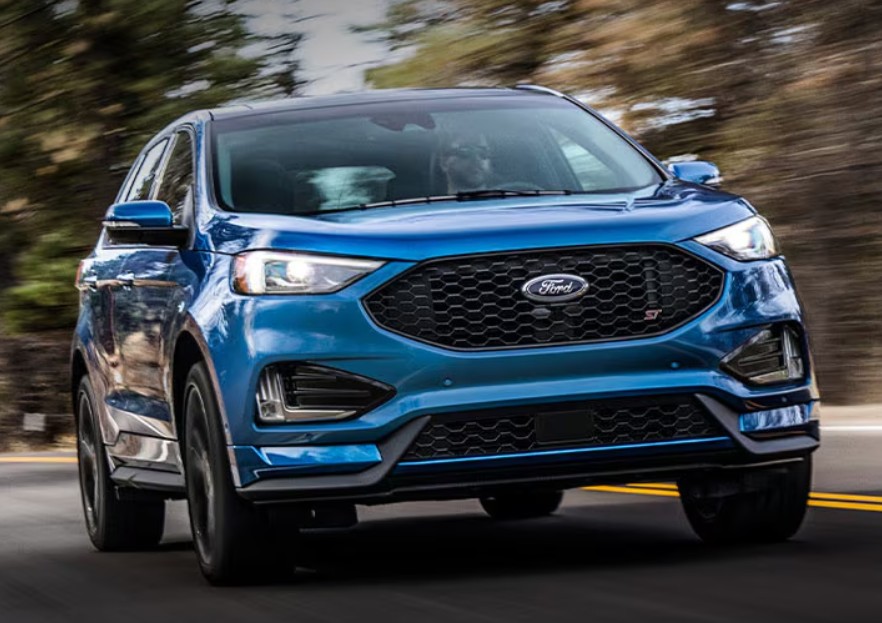
For years, the Ford Edge occupied an interesting sweet spot in the SUV world. It was bigger and roomier than compact crossovers such as the Ford Escape, yet it avoided the bulk and third-row compromises of larger vehicles such as the Ford Explorer. Five seats, generous cargo room, available performance, and a comfortable highway personality made the Edge an appealing middle ground.
There is one important twist for shoppers today: Ford has retired the Edge in North America. Ford confirms that 2024 marked the end of the SUV's run and now directs prospective Edge shoppers toward models including the Escape, Explorer, Bronco Sport, and Mustang Mach-E.
That doesn't make the Edge irrelevant. Far from it. Thousands of shoppers are still comparing used Ford Edge models with newer SUVs, while former Edge owners are wondering what they should buy next.
And that's where things become interesting.
Today's Ford Edge competitors range from rugged two-row SUVs to efficient hybrids and stylish near-luxury crossovers. Some are faster. Some use less fuel. Others offer considerably more cargo space or towing capacity.
So, which one really replaces the Edge?
Let's dig in.
Content in this publication
- What Kind of SUV Was the Ford Edge?
- Top Ford Edge Competitors at a Glance
- Honda Passport: Perhaps the Most Natural Ford Edge Competitor
- Nissan Murano: The Comfort-Focused Ford Edge Alternative
- Hyundai Santa Fe: More SUV for the Money
- Chevrolet Blazer: Ford Edge vs Its American Rival
- Mazda CX-70: A More Premium Ford Edge Alternative
- Subaru Outback: The Unconventional Edge Competitor
- Toyota Crown Signia: The Efficient Wild Card
- Ford Explorer: The Obvious In-House Replacement
- Ford Escape: The Smaller Alternative
- Ford Edge vs Honda Passport
- Ford Edge vs Nissan Murano
- Ford Edge vs Hyundai Santa Fe
- Ford Edge vs Mazda CX-70
- Ford Edge vs Toyota Crown Signia
- Which Ford Edge Competitor Has the Most Cargo Space?
- Which Ford Edge Alternative Is Best for Towing?
- Which Ford Edge Competitor Gets the Best Gas Mileage?
- Which Ford Edge Competitor Is the Most Reliable Choice?
- Best Ford Edge Competitor for Different Buyers
- Should You Buy a Used Ford Edge Instead of a Competitor?
- How to Choose the Right Ford Edge Alternative
- The Ford Edge's Biggest Legacy
- Conclusion: What Is the Best Ford Edge Competitor?
- Frequently Asked Questions About Ford Edge Competitors
What Kind of SUV Was the Ford Edge?
Before comparing alternatives, we need to understand why people bought the Edge in the first place.
The Edge wasn't trying to crawl over boulders or carry seven people. It was primarily a comfortable, roomy two-row crossover designed for everyday driving.
Its strongest qualities included:
- Seating for five adults
- Spacious second-row accommodations
- Useful cargo capacity
- Available all-wheel drive
- Comfortable highway manners
- Strong turbocharged performance
- Sportier ST models
- More interior room than many compact SUVs
Think of the Edge as the SUV equivalent of a roomy pair of running shoes: comfortable enough for everyday use, capable when pushed, and without unnecessary bulk.
That's why finding an exact replacement isn't quite as easy as picking another Ford.
Top Ford Edge Competitors at a Glance
The strongest alternatives currently include:
- Honda Passport – best rugged two-row replacement
- Nissan Murano – best comfort-focused alternative
- Hyundai Santa Fe – best choice for extra versatility
- Chevrolet Blazer – closest sporty American rival
- Mazda CX-70 – best premium-driving alternative
- Subaru Outback – best adventure-oriented option
- Toyota Crown Signia – best fuel-efficient premium alternative
- Ford Explorer – best Ford-branded replacement
- Ford Escape – best smaller and more efficient Ford alternative
No single SUV copies the Edge perfectly. Instead, the smartest choice depends on what we liked about the Edge in the first place.
Honda Passport: Perhaps the Most Natural Ford Edge Competitor
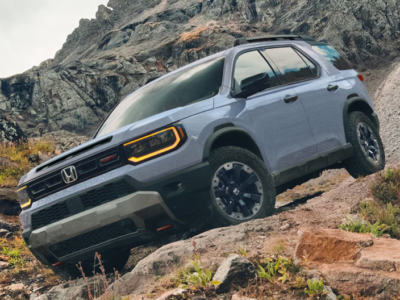
If someone told us they loved the size and five-seat layout of the Ford Edge but wanted something newer and tougher, we'd immediately put the Honda Passport on the shopping list.
The Passport remains a genuine two-row midsize SUV rather than a compact crossover masquerading as one.
Why the Passport Makes Sense
Honda has pushed the current Passport toward a considerably more rugged personality. The 2026 Passport uses a 285-horsepower 3.5-liter V6, a 10-speed automatic transmission, and Honda's i-VTM4 all-wheel-drive system. It can also tow up to 5,000 pounds.
That's substantial capability for a five-passenger crossover.
Honda also lists an impressive 44 cubic feet of cargo volume behind the second row, giving the Passport the sort of practical interior that Edge owners are likely to appreciate.
Where the Passport Beats the Edge
The Passport offers stronger towing capability and noticeably more adventurous hardware. TrailSport versions bring all-terrain tires, skid plates, an off-road-tuned suspension, and additional trail equipment.
It feels like the Edge packed hiking boots and headed into the mountains.
Where the Edge Still Has an Advantage
A used Ford Edge, especially a regular four-cylinder model, can feel more road-focused and less rugged. The Edge ST also offered a performance personality that isn't really the Passport's mission.
Best For
Families wanting Edge-like passenger space with additional towing and outdoor capability.
Nissan Murano: The Comfort-Focused Ford Edge Alternative
The Nissan Murano has always marched to a slightly different beat.
While many SUVs try to look aggressive enough to intimidate a mountain, the Murano has traditionally focused on style and comfort.
That's exactly why it belongs on our list.
Edge vs Murano Driving Personality
Both vehicles prioritize everyday usability over hardcore off-road ability. The Murano tends to lean further toward relaxed cruising and upscale cabin ambience.
If our normal routine involves commuting, school runs, shopping, and long interstate drives rather than towing boats across muddy fields, that matters.
Why Former Edge Owners May Like It
The Murano preserves several characteristics that made the Ford Edge appealing:
- Two-row seating
- Room for five
- Comfortable ride
- Upscale styling
- Available all-wheel drive
- Strong emphasis on technology
- Midsize dimensions without a third row
The basic philosophy is remarkably similar.
The Key Difference
The Murano feels more like a near-luxury cruiser, whereas sporty Edge versions—especially the Edge ST—placed greater emphasis on power and performance.
Best For
Drivers who want a quiet, comfortable five-seat SUV and don't care about serious off-road ability.
Hyundai Santa Fe: More SUV for the Money
The Hyundai Santa Fe has evolved dramatically.
Today's model has bold, almost box-shaped styling, impressive technology, and additional seating flexibility. In other words, it doesn't look like a traditional Edge replacement at first glance.
Look closer, though, and the comparison makes plenty of sense.
Power and Capability
The 2026 gasoline Santa Fe uses a turbocharged 2.5-liter four-cylinder producing 277 horsepower and 311 lb-ft of torque. Hyundai offers both front-wheel and HTRAC all-wheel drive depending on configuration.
Standard models can tow up to 3,500 pounds when properly equipped, while the more adventure-focused XRT can reach 4,500 pounds.
That's a useful jump in versatility.
Why the Santa Fe Stands Out
The Santa Fe brings something the Edge doesn't: greater seating flexibility.
For households that occasionally wish their Edge had room for one or two additional passengers, that alone could make the Hyundai more attractive.
Fuel Economy Matters Too
Hyundai lists EPA estimates as high as 20 mpg city, 29 highway, and 24 combined for front-wheel-drive gasoline configurations. AWD changes those numbers slightly.
Hybrid versions broaden the appeal further.
Best For
Families wanting an Edge alternative with newer technology, more seating flexibility, and strong value.
Chevrolet Blazer: Ford Edge vs Its American Rival
If the Edge and Blazer were sitting at the same bar, they'd probably recognize each other immediately.
Both take a more road-focused approach than rugged SUVs. Both emphasize styling. Both sit between smaller crossovers and larger family SUVs.
That makes the Chevrolet Blazer one of the most obvious traditional Ford Edge competitors.
Why the Blazer Appeals to Edge Shoppers
The Blazer's strongest ingredients include aggressive exterior styling, five-passenger seating, a driver-oriented cockpit, and available stronger powertrains.
It's particularly appealing if we enjoyed the Edge ST's slightly mischievous personality.
Ford Edge ST vs Chevy Blazer
Here's where things get fun.
The Edge ST gave buyers something unusual: family-friendly practicality mixed with genuine performance. The Blazer similarly tries to inject some attitude into an otherwise practical crossover formula.
Neither becomes a sports car simply because we press the accelerator hard, of course.
But compared with anonymous family crossovers, both have personality.
Best For
Shoppers wanting an American, sporty-looking midsize crossover without needing a third row.
The Mazda CX-70 deserves special attention because it attacks the same basic problem from another direction.
It gives us two rows of seating and midsize SUV practicality, then wraps everything in a more premium package.
Driving Experience Comes First
Mazda has long prioritized steering feel and chassis tuning. The CX-70 follows that tradition.
Where many crossovers feel like household appliances with license plates, the Mazda attempts to make the road itself part of the experience.
That doesn't mean the ride is harsh or impractical. It simply means people who enjoy driving are less likely to feel forgotten.
Interior Quality
This is another area where the Mazda can pull ahead of an older Edge.
Materials, dashboard presentation, switchgear, and overall cabin design push the CX-70 closer to premium territory.
The Catch
That sophistication can come with higher pricing than shoppers might expect from a mainstream brand.
The Edge traditionally delivered a lot of space without pretending to be a luxury SUV. The CX-70 asks us to pay more for refinement.
Best For
Former Edge owners who want something more luxurious and engaging without moving to a premium badge.
Subaru Outback: The Unconventional Edge Competitor
Is the Subaru Outback really an SUV?
You may be interested in reading Ford Edge Trim Levels: SE, SEL, ST-Line, Titanium and ST Explained
We could argue about that over coffee for an hour.
What matters is that people shopping for a Ford Edge should absolutely consider it.
The Outback blends station-wagon proportions with crossover ground clearance, standard all-wheel-drive philosophy, and excellent everyday utility.
Why the Outback Works
It offers the ingredients many Edge drivers actually need:
- Five-passenger seating
- Substantial cargo room
- Comfortable road manners
- Strong all-weather capability
- Useful roof-loading potential
- Available turbocharged performance
It simply delivers those ingredients in a lower, more wagon-like shape.
Where It Beats Traditional SUVs
The lower roof and car-like proportions can make the Outback feel easier to manage in everyday driving.
Meanwhile, Subaru's outdoor-focused personality gives it more genuine adventure credibility than many pavement-oriented crossovers.
Best For
Drivers who want all-weather versatility and cargo practicality without driving a conventional boxy SUV.
Toyota Crown Signia: The Efficient Wild Card
The Toyota Crown Signia might not be the first vehicle that comes to mind when searching for Ford Edge alternatives.
It should be.
Toyota essentially blends crossover practicality, wagon-like styling, standard hybrid power, and a premium interior into one unusual package.
Fuel Economy Changes the Equation
Toyota rates the 2025 Crown Signia at an EPA-estimated 38 mpg combined, with standard electronic on-demand all-wheel drive. Its hybrid system produces 240 net horsepower.
That is the kind of efficiency that can make a conventional gasoline midsize SUV feel thirsty by comparison.
Toyota also lists up to 68.8 cubic feet of cargo space with the rear seats folded and a towing capacity of up to 2,700 pounds.
Who Should Consider It?
Imagine we liked the comfortable five-seat concept of the Edge but rarely used its maximum performance.
Wouldn't dramatically lower fuel consumption be more useful?
For many commuters, the answer is yes.
Where It Falls Short
The Crown Signia isn't designed to replace the muscular personality of an Edge ST. Its lower stance and refined personality also make it feel more crossover-wagon than conventional SUV.
Best For
Drivers prioritizing fuel economy, standard AWD, quiet cruising, and premium comfort.
Ford Explorer: The Obvious In-House Replacement
Some Edge owners simply want another Ford.
In that case, the Explorer is the logical place to begin.
Ford itself describes the Explorer as a step up from the Edge in space and capability, with seating for up to seven passengers.
Why Move From Edge to Explorer?
The Explorer gives families:
- Three-row seating
- More overall space
- Greater capability
- Strong engine choices
- Familiar Ford technology
- Available advanced driver-assistance features
The transition should feel relatively natural.
The Downside
Bigger isn't automatically better.
One of the Edge's hidden strengths was precisely that it didn't have a third row. The cabin could dedicate more space to five occupants and cargo without stretching into a larger SUV footprint.
The Explorer is longer, heavier, and generally more vehicle than an Edge owner may actually need.
Best For
Loyal Ford buyers whose family or cargo requirements have grown.
Ford Escape: The Smaller Alternative
Ford also points former Edge shoppers toward the Escape.
The Escape attacks the problem from the opposite direction.
Instead of giving us more SUV, it gives us less.
Why Downsizing Can Make Sense
Most of us don't fill every cubic inch of our SUV every day.
If we're driving alone to work 90% of the time, hauling around unnecessary size is like carrying an empty suitcase everywhere because we might take a vacation.
The Escape offers gasoline, hybrid, and plug-in-hybrid options, depending on configuration, giving efficiency-focused shoppers significantly more powertrain variety. Ford also offers AWD on select versions.
What We Give Up
Rear-seat space and overall cargo flexibility won't feel quite as generous as they did in the Edge.
That's the trade.
Best For
Edge owners who want easier parking, lower fuel consumption, and don't truly need midsize dimensions.
Ford Edge vs Honda Passport
Let's make the comparison simple.
Choose the Ford Edge If…
A used Edge makes sense when we want strong value, comfortable road manners, a spacious cabin, and potentially sporty ST performance without spending new-car money.
Choose the Honda Passport If…
Pick the Passport if ruggedness, towing, cargo space, and long-term outdoor versatility matter more.
Its 285-horsepower V6 and 5,000-pound towing capacity give it legitimate capability.
Our Pick
For someone replacing an Edge with a new two-row SUV, the Passport is one of the strongest overall answers.
Ford Edge vs Nissan Murano
These two are closer philosophically.
Both work best as comfortable five-passenger road vehicles.
Choose the Edge for Performance
Especially when discussing the ST, the Ford carries more of a performance-oriented identity.
Choose the Murano for Comfort
The Nissan makes more sense when quiet cruising, interior design, and relaxed everyday driving dominate our priorities.
Our Pick
Murano for comfort; Edge ST for personality.
Ford Edge vs Hyundai Santa Fe
This comparison reveals how much the SUV market has changed.
The Edge was intentionally simple: two rows, five seats, plenty of room.
The Santa Fe now packs more flexibility into roughly the same general family-use conversation.
Choose the Santa Fe If Family Flexibility Matters
Its combination of strong turbocharged output, modern cabin technology, and additional seating versatility makes it difficult to ignore.
Choose the Edge If You Don't Want Three Rows
Sometimes simplicity wins.
Unused seats are still unused seats.
Our Pick
Santa Fe for growing families; Edge for shoppers who want an uncomplicated five-passenger crossover.
Ford Edge vs Mazda CX-70
These two appeal to slightly different buyers.
The Edge traditionally competed through space and approachable practicality.
The Mazda competes through refinement and driving character.
CX-70 Advantages
We'd favor the Mazda for:
- Premium cabin design
- More upscale road manners
- Strong driver engagement
- Modern powertrain choices
- Distinctive styling
Edge Advantages
A used Edge can deliver much more value for the money.
Our Pick
CX-70 if budget allows; Edge if value matters more.
Ford Edge vs Toyota Crown Signia
This may be the most interesting comparison on our list.
The Crown Signia delivers 38 mpg combined while maintaining five-passenger crossover utility and AWD.
That makes it extremely attractive for high-mileage drivers.
Choose the Toyota for Efficiency
It's not close.
You may be interested in readingFord Edge Trim Levels: SE, SEL, ST-Line, Titanium and ST ExplainedYou may be interested in reading
Ford Edge Generations: Complete Guide by YearA hybrid powertrain fundamentally changes operating costs for someone driving thousands of miles every year.
Choose the Edge for Traditional SUV Character
The Edge sits taller visually and offers a more conventional SUV experience, particularly in performance-oriented configurations.
Our Pick
Crown Signia for commuters; Edge for traditional crossover shoppers.
Which Ford Edge Competitor Has the Most Cargo Space?
Cargo capacity is one of the first things Edge owners should compare because numbers can vary dramatically between vehicles.
The Honda Passport is particularly strong here. Honda lists 44 cubic feet behind the second row and up to 83.8 cubic feet in its standard measurement behind the first row, with even larger maximum figures depending on how underfloor and other storage areas are calculated.
Toyota's Crown Signia provides up to 68.8 cubic feet with the rear seats folded on certain configurations.
Don't just stare at cubic-foot numbers, though.
A wide square cargo opening can be more useful than theoretically larger volume hidden behind sloping bodywork. Bring the stroller, golf clubs, dog crate, or luggage to the dealership if cargo practicality genuinely matters.
Which Ford Edge Alternative Is Best for Towing?
Among the alternatives discussed here, the Honda Passport stands out with towing capability of up to 5,000 pounds when properly equipped.
The gasoline Hyundai Santa Fe reaches up to 3,500 pounds in many configurations, while the XRT can reach 4,500 pounds.
Toyota's Crown Signia, meanwhile, is rated for up to 2,700 pounds.
Don't Shop by Maximum Towing Number Alone
Remember that trailer weight isn't the entire story.
Passengers, luggage, hitch equipment, tongue weight, payload capacity, and vehicle configuration all matter.
A 5,000-pound rating doesn't mean we should casually attach any trailer weighing 4,999 pounds and drive into the sunset.
Which Ford Edge Competitor Gets the Best Gas Mileage?
Among our conventional and hybrid alternatives, the Toyota Crown Signia is an obvious efficiency standout with its EPA-estimated 38 mpg combined rating.
Hybrid versions of vehicles such as the Hyundai Santa Fe and Ford Escape are also worth investigating when fuel expenses are a priority.
Do We Really Need Maximum Horsepower?
This is worth asking.
SUV advertising loves horsepower because horsepower is exciting.
Fuel bills aren't.
If our daily trip consists of traffic lights, supermarket parking lots, and a 55-mph commute, a good hybrid could save us more money than a powerful turbo engine will ever save us time.
Which Ford Edge Competitor Is the Most Reliable Choice?
Reliability cannot be reduced to a badge.
Different engines, transmissions, model years, maintenance histories, and manufacturing changes can dramatically affect ownership experience.
For a new SUV, we would focus less on internet folklore and more on:
- Powertrain complexity
- Warranty coverage
- Maintenance requirements
- Recall history
- Dealer support
- Parts availability
- Proven versus newly introduced components
For a used Edge or competing used SUV, service history often matters more than reputation.
A meticulously maintained vehicle with 70,000 miles can easily be a smarter purchase than a neglected example with 40,000.
Best Ford Edge Competitor for Different Buyers
If we had to narrow everything down quickly, we'd approach it this way:
Best Overall Replacement: Honda Passport
It preserves the Edge's five-passenger midsize formula while adding serious cargo and towing capability.
Best for Comfort: Nissan Murano
A strong option for drivers who simply want to relax behind the wheel.
Best for Families: Hyundai Santa Fe
More passenger flexibility and plenty of modern technology make it a compelling family tool.
Best for Driving Enthusiasts: Mazda CX-70
This is where we'd look if steering feel and premium presentation matter.
Best for Fuel Economy: Toyota Crown Signia
An EPA-estimated 38 mpg combined is difficult to ignore.
Best Ford Replacement: Explorer
If we want to stay within the Ford family and need more room, the Explorer is the obvious progression. Ford itself positions it as a step up from the Edge.
Should You Buy a Used Ford Edge Instead of a Competitor?
Absolutely—provided the specific vehicle checks out.
The end of Edge production doesn't magically make existing models bad vehicles.
In fact, discontinuation can create interesting used-car opportunities. Buyers who don't care about having the newest model year may find an Edge with plenty of equipment for considerably less money than a brand-new competitor.
When a Used Edge Makes Sense
Consider one when:
- Purchase price matters more than having the latest design
- You specifically want two rows
- You enjoy the Edge's spacious cabin
- You find a well-maintained example
- You want Edge ST performance
- New midsize SUVs feel unnecessarily expensive
When We Would Choose a New Competitor
A newer rival makes more sense if we prioritize hybrid efficiency, the newest safety technology, longer warranty coverage, more advanced infotainment, serious towing, or off-road capability.
Remember the Bigger Ownership Picture
Purchase price is only chapter one.
Insurance, depreciation, fuel, tires, repairs, servicing, financing, and eventual resale value tell the rest of the story.
How to Choose the Right Ford Edge Alternative
Forget finding the SUV that wins the most specifications.
Find the one that solves our problems.
A simple shopping order can make the decision much easier:
- Decide whether five seats are enough.
- Determine how much cargo room we genuinely use.
- Choose between FWD and AWD.
- Establish realistic towing requirements.
- Calculate annual mileage.
- Compare gasoline and hybrid operating costs.
- Set a purchase-price ceiling.
- Test the rear seats, not just the driver's seat.
- Drive competitors on imperfect roads.
- Compare insurance quotes before purchasing.
That last point is often overlooked.
Two similarly priced SUVs can carry surprisingly different insurance premiums.
The Ford Edge's Biggest Legacy
The Edge proved that not every family SUV needs seven seats.
That sounds obvious, but the market keeps pushing midsize crossovers toward three-row layouts.
There are plenty of families who would rather have five excellent seats than seven mediocre ones.
The Ford Edge understood that.
Fortunately, several manufacturers still do.
Today's competitors simply reinterpret the recipe. The Passport adds toughness. The Murano adds luxury. The Crown Signia adds hybrid efficiency. The CX-70 adds sophistication. The Santa Fe adds passenger flexibility.
The question isn't really, "Which SUV is another Ford Edge?"
It's:
Which part of the Edge do we want to preserve?
Answer that, and the shopping list becomes much shorter.
Conclusion: What Is the Best Ford Edge Competitor?
There isn't one universal winner among Ford Edge competitors, but the Honda Passport comes closest to being a natural modern replacement for drivers who still want a spacious midsize SUV with two rows. Its five-seat layout, strong V6, generous cargo capacity, standard AWD configuration, and 5,000-pound towing capability make it particularly compelling.
The Nissan Murano deserves attention if comfort comes first, while the Mazda CX-70 makes sense for drivers seeking a more upscale experience. Families needing extra flexibility should look closely at the Hyundai Santa Fe, and high-mileage drivers may find the hybrid Toyota Crown Signia hard to resist.
Want to remain loyal to Ford? The Explorer gives us additional space, while the Escape offers better downsizing opportunities. Ford now explicitly presents both among the alternatives for former Edge shoppers.
And we shouldn't automatically dismiss the Edge itself.
A clean, well-maintained used Ford Edge can still deliver exactly what made the model successful: lots of room, easy everyday usability, comfortable cruising, and—in ST form—a surprising amount of attitude.
The badge may have left Ford's new-vehicle lineup, but the idea behind the Edge is very much alive.
Frequently Asked Questions About Ford Edge Competitors
1. What SUV is most comparable to the Ford Edge?
The Honda Passport is one of the closest modern alternatives because it combines a midsize footprint with five-passenger seating and substantial cargo space. The Nissan Murano is another strong match for buyers who prioritize comfort and road manners rather than rugged capability.
2. What did Ford replace the Edge with?
Ford did not introduce one direct successor carrying the same formula. Instead, after ending Edge production, Ford began directing shoppers toward vehicles including the Escape, Explorer, Bronco Sport, and Mustang Mach-E. The Explorer is the logical choice for additional room, while the Escape suits buyers willing to downsize.
3. Is the Honda Passport bigger than the Ford Edge?
They occupy a similar midsize two-row SUV space, but the current Passport places greater emphasis on cargo volume and rugged capability. Honda lists 44 cubic feet of cargo volume behind the second row for the 2026 model. Actual usability also depends on cargo shape, seating position, and individual configuration.
4. What Toyota competes with the Ford Edge?
There is no perfect one-for-one Toyota equivalent. The Toyota Crown Signia is an interesting five-passenger alternative for buyers prioritizing comfort and efficiency, while other Toyota SUVs may appeal to shoppers wanting more conventional SUV styling or different levels of capability. The Crown Signia stands out with standard electronic on-demand AWD and an EPA-estimated 38 mpg combined rating.
You may be interested in readingFord Edge Trim Levels: SE, SEL, ST-Line, Titanium and ST ExplainedYou may be interested in reading
Ford Edge Generations: Complete Guide by YearYou may be interested in reading
Ford Edge Comparable Vehicles: The Best Alternatives to Consider5. Is buying a Ford Edge still worth it after it was discontinued?
Yes, a used Ford Edge can still be worth buying if its price, condition, maintenance history, and configuration make sense. Ford continues to support existing Edge owners even though production has ended. As with any used SUV, a pre-purchase inspection and review of service and recall history are smart steps.
If you want to know other articles similar to Ford Edge Competitors: The Best Alternatives to Ford’s Midsize SUV you can visit the category Models.
Honda Passport vs Toyota 4Runner: Which SUV Is Better?
Honda Passport vs Ford Bronco: Which SUV Is Better?
Honda Passport vs Ford Explorer: Which SUV Is Better?
Honda Passport or Pilot: Which SUV Is Better?
Honda Passport vs Jeep Grand Cherokee: Which SUV Is Better?
Honda Passport vs Nissan Pathfinder: Which SUV Is Better?
Leave a Reply
More content of your interest