

Ford Edge Generations: Complete Guide by Year

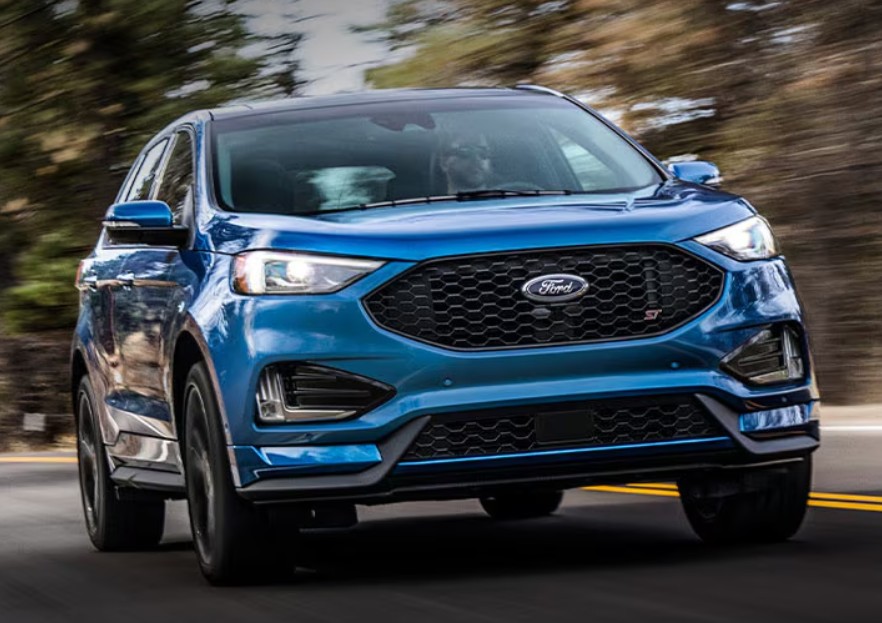
The Ford Edge has occupied an interesting place in Ford's SUV lineup since its arrival for the 2007 model year. It has always been larger and roomier than a compact crossover, yet easier to maneuver and more practical for many families than a bulky three-row SUV.
Over the years, the Edge changed dramatically. Styling became sharper, cabins became more sophisticated, turbocharged engines grew more important, safety technology expanded, and performance versions such as the Edge ST gave the model a personality nobody would have expected from the original crossover.
Understanding Ford Edge generations, however, isn't quite as straightforward as looking at a simple list of years. Some updates were full redesigns, while others were major facelifts. On top of that, the Ford Edge sold in China eventually followed a different path from the model offered in North America.
For buyers looking at used examples, knowing these differences matters. A 2014 Edge and a 2015 Edge might sit beside each other on a dealer lot, yet they belong to completely different generations. Likewise, a 2018 and 2019 Edge share the same basic generation, even though the 2019 received several important changes.
In this guide, we'll walk through every major Ford Edge era, explain what changed, compare the generations, and help determine which version may make the most sense for a used-car buyer.
Content in this publication
- Ford Edge Generations at a Glance
- How Many Ford Edge Generations Are There?
- First-Generation Ford Edge: 2007–2014
- 2011–2014 Ford Edge Facelift
- Second-Generation Ford Edge: 2015–2024
- 2015–2018 Ford Edge Interior
- 2019–2024 Ford Edge Facelift
- Ford Co-Pilot360 and Safety Technology
- Ford Edge ST: Performance Joins the Family
- 2021–2024 Ford Edge: Later Second-Generation Models
- Ford Edge L: The China-Market Evolution
- Which Ford Edge Generation Is Best?
- Ford Edge Generations Compared
- First Generation vs Second Generation Ford Edge
- Ford Edge Generation Buying Checklist
- Does Mileage Matter More Than Generation?
- How Ford Edge Generations Reflect Changing SUV Trends
- Why the Two-Row Ford Edge Formula Worked
- Should We Buy an Older or Newer Ford Edge?
- Which Ford Edge Generation Has the Most Modern Feel?
- Is the Ford Edge Still Worth Buying Used?
- Ford Edge Generations: Final Thoughts
- Frequently Asked Questions About Ford Edge Generations
Ford Edge Generations at a Glance
The Ford Edge sold in North America can essentially be divided into two principal generations, with significant mid-cycle updates inside each one.
| Ford Edge version | Approximate years | Main change |
|---|---|---|
| First generation | 2007–2014 | Original midsize two-row crossover |
| First-generation facelift | 2011–2014 | Revised styling, interior and technology |
| Second generation | 2015–2018 | Complete redesign |
| Second-generation facelift | 2019–2024 | Updated styling, technology and Edge ST |
| Ford Edge L | 2023 onward | Newer China-market seven-seat evolution |
The important thing to remember is that a facelift isn't automatically a new generation.
Automakers frequently update headlights, grilles, infotainment systems, engines, transmissions, and safety equipment halfway through a vehicle's life cycle. Underneath, however, the basic architecture can remain largely the same.
That's exactly what happened with the Edge.
How Many Ford Edge Generations Are There?
For the United States and Canada, there are two main Ford Edge generations.
The first covers the original model introduced for 2007 and continuing through 2014. The second debuted for 2015 as a completely redesigned crossover and continued through the later years of North American production.
Things become slightly more complicated when we look outside North America.
China eventually received the newer Ford Edge L, a substantially different SUV with a longer body, three rows of seating, and available hybrid power. Because of that, some sources may describe the Edge L as another generation of the Edge.
For someone shopping for a used Edge in North America, however, thinking in terms of two primary generations is the easiest and most useful approach.
Why Ford Edge Generation Dates Sometimes Differ
We often see conflicting dates online because a vehicle can be revealed in one calendar year and sold as the next model year.
For example, Ford unveiled the redesigned second-generation Edge before it appeared in dealerships as a 2015 model.
That creates situations where one website may say the second generation arrived in 2014 while another lists 2015.
For used-car shopping, model year is generally the better reference point.
Facelift vs New Generation
This distinction is worth understanding.
A new generation normally involves major changes to the vehicle's structure, platform, body, suspension, interior, and technology.
A facelift usually keeps the same underlying vehicle but introduces visible and mechanical improvements.
Think of it like renovating a house versus demolishing it and building another one.
The 2011 Edge was a renovated version of the original.
The 2015 Edge was the new house.
First-Generation Ford Edge: 2007–2014
The first-generation Ford Edge arrived when the crossover boom was gaining serious momentum.
Traditional SUVs were still popular, but many buyers were discovering that they didn't actually need body-on-frame construction, heavy-duty towing hardware, or truck-like driving characteristics.
They wanted the commanding seating position and cargo space of an SUV without feeling like they were piloting a small delivery truck.
The Edge fit that requirement beautifully.
It combined passenger-car-like driving manners with a roomy two-row cabin, decent cargo capacity, available all-wheel drive, and V6 power.
2007–2010 Ford Edge: The Original Formula
Early Ford Edge models had a distinctive look.
The large chrome grille dominated the front end, while rounded lines gave the crossover a softer appearance than many traditional SUVs of the period.
Inside, things were comparatively simple.
Buttons handled most functions. Screens were smaller or absent. Driver-assistance technology was limited compared with today's vehicles.
That simplicity can actually appeal to used-car shoppers who don't want every vehicle function buried inside software menus.
What Defined Early Ford Edge Models?
The early first generation focused on straightforward family transportation.
Typical characteristics included:
- Five-passenger seating
- Two-row interior layout
- V6 engine power
- Automatic transmission
- Available all-wheel drive
- Spacious rear seating
- Generous cargo capacity
- Comfortable highway manners
The Edge wasn't designed as a serious off-road vehicle.
Instead, it was built primarily for commuting, road trips, family duties, and everyday driving.
That distinction helped define the model throughout most of its North American life.
Who Should Consider a 2007–2010 Ford Edge?
These models mainly appeal to buyers working with a smaller budget.
They can still provide plenty of interior space for relatively little money, but age becomes an increasingly important consideration.
Rubber components deteriorate.
Suspension parts wear.
Fluids may have been neglected.
Electronic components can begin showing their age.
Even a relatively low-mileage example may require maintenance simply because of the number of years it has spent on the road.
For that reason, vehicle condition matters more than finding the lowest odometer reading.
2011–2014 Ford Edge Facelift
Ford substantially refreshed the first-generation Edge for 2011.
The basic architecture remained familiar, but the updated model looked and felt considerably more modern.
Styling became sharper.
Interior materials improved.
Technology became increasingly important.
And the Edge started transitioning from a relatively simple crossover into a more sophisticated family SUV.
Exterior Changes
Ford redesigned several exterior elements, giving the Edge a more contemporary appearance.
The grille became bolder and more integrated with the front fascia.
Lighting elements changed.
Bumpers were revised.
Small changes added up to a vehicle that looked noticeably younger even though its underlying platform remained largely unchanged.
Interior and Technology Improvements
The cabin represented an equally significant shift.
This was the period when touchscreen infotainment systems were becoming major selling points.
Ford embraced that trend aggressively.
The Edge increasingly incorporated digital interfaces, connectivity features, improved displays, and more premium interior options.
Of course, early-generation infotainment systems weren't always as quick or intuitive as today's software.
Using one now can feel like opening an old laptop. It still works, but every tap reminds us how far technology has moved.
Why 2011–2014 Models Can Be Attractive Used Buys
Later first-generation models occupy an interesting position in the used market.
They're newer and more refined than the earliest Edge vehicles but generally cheaper than second-generation versions.
A clean, well-maintained 2013 or 2014 Edge can therefore make more sense than stretching the budget toward a neglected 2015.
Used-car shopping isn't always about buying the newest possible year.
Sometimes the smarter move is buying the best-maintained example within the budget.
Second-Generation Ford Edge: 2015–2024
The arrival of the second-generation Edge for 2015 represented the biggest transformation in the model's North American history.
This wasn't simply a new grille and revised dashboard.
Ford redesigned the vehicle extensively.
The new Edge became sleeker, more refined, more technology-focused, and more globally oriented.
Compared with the outgoing generation, it felt like Ford had moved the Edge upmarket without abandoning the practical qualities that made the original successful.
2015–2018 Ford Edge: A Complete Redesign
The 2015 Edge looked noticeably different.
Body lines became cleaner and more aerodynamic.
The front fascia looked wider.
Headlights became narrower.
The overall stance felt more sophisticated.
Inside, the redesign continued.
The cabin looked less utilitarian and considerably more polished.
Materials improved, controls became more modern, and technology moved closer to what buyers expected from premium crossovers.
How the Driving Experience Changed
The second generation also felt more mature on the road.
Suspension tuning became more sophisticated, helping the Edge deliver a comfortable ride while maintaining respectable handling.
The original model already drove more like a car than a truck, but the second generation pushed that feeling further.
It became quieter.
More composed.
More stable.
More refined.
For long highway trips, those improvements could make a noticeable difference.
Turbocharged Engines Became More Important
Another defining change was the growing use of Ford's EcoBoost engine technology.
Turbocharged engines allowed Ford to pursue a balance between stronger low-end torque, performance, and fuel efficiency.
Depending on year and trim level, Edge buyers could choose among different four-cylinder and V6 powertrains.
The exact engine lineup changed over time, but turbocharging became a much larger part of the Edge identity.
Why EcoBoost Matters on a Used Edge
Turbocharged engines can provide excellent performance, but maintenance becomes especially important.
Oil quality matters.
Oil-change intervals matter.
Cooling-system maintenance matters.
You may be interested in reading Ford Edge Comparable Vehicles: The Best Alternatives to Consider
Previous-owner behavior matters.
A properly maintained turbocharged engine can deliver years of service.
A neglected one can turn into a wallet-sized black hole.
For this reason, service history deserves careful attention when comparing second-generation examples.
2015–2018 Ford Edge Interior
Inside, the second generation made a substantial leap forward.
The dashboard became cleaner.
Storage improved.
Seats became more supportive.
Technology became more integrated into everyday driving.
Later examples equipped with Ford's SYNC 3 system are especially attractive because they offer a more responsive infotainment experience than earlier systems.
Why Infotainment Matters More Than We Think
People often focus entirely on engines when comparing used vehicles.
But think about how often we actually use full throttle.
Now think about how often we touch the infotainment screen, connect a phone, use navigation, adjust audio, or activate a camera.
Technology can influence everyday satisfaction more than another 20 horsepower ever will.
That's why later second-generation Edge models can feel considerably newer than their production year might suggest.
2019–2024 Ford Edge Facelift
Ford refreshed the second-generation Edge for 2019.
Technically, it remained part of the same generation.
Practically, however, enough changed that buyers should treat 2019 as an important dividing line.
Styling was updated.
Driver-assistance equipment expanded.
The transmission changed.
And Ford introduced the most performance-oriented Edge ever offered in North America.
The Edge ST.
2019 Styling Changes
The refreshed Edge received redesigned front and rear styling.
The grille became more modern.
Lighting changed.
Bumpers were revised.
The result was subtle rather than revolutionary, but it helped the Edge remain competitive as newer rivals entered the market.
This is often how successful facelifts work.
They don't necessarily make owners of last year's model gasp in horror.
Instead, they quietly shave several years off the vehicle's visual age.
Eight-Speed Automatic Transmission
One important mechanical change involved the transmission.
Ford introduced an eight-speed automatic on updated Edge models.
More gears allowed the transmission to keep the engine closer to its ideal operating range while potentially improving highway efficiency and acceleration characteristics.
The updated interior also adopted Ford's rotary gear selector.
Some drivers love rotary shifters.
Others stare at them like someone replaced the steering wheel with a kitchen appliance.
Either way, the design created additional usable space around the center console.
Ford Co-Pilot360 and Safety Technology
Driver-assistance technology became increasingly central to the Edge during this period.
Ford's Co-Pilot360 suite bundled several useful safety features together.
Depending on trim and equipment, shoppers could find technologies such as:
- Blind-spot monitoring
- Rear cross-traffic alert
- Automatic emergency braking
- Forward collision warning
- Lane-keeping assistance
- Automatic high beams
- Rearview camera
- Adaptive cruise control on certain models
These systems can make later Edge models considerably more attractive to families.
Why Safety Equipment Should Be Checked Individually
Don't assume every 2019 or newer Edge has identical equipment.
Trim levels, packages, markets, and optional features can produce major differences.
Two vehicles that appear almost identical in online photos may have completely different levels of driver-assistance technology.
When comparing listings, examine the actual equipment rather than relying on the model year alone.
Ford Edge ST: Performance Joins the Family
The 2019 refresh introduced something unexpected.
The Ford Edge ST.
Until then, the Edge had mainly been associated with comfort, cargo space, family use, and practical transportation.
The ST suddenly added a performance angle.
Ford equipped it with a 2.7-liter twin-turbocharged EcoBoost V6 producing around 335 horsepower, paired with all-wheel drive and an eight-speed automatic transmission.
Suddenly, the school-run crossover had discovered caffeine.
What Makes the Ford Edge ST Different?
The ST wasn't simply an appearance package.
Performance-oriented changes included:
- Twin-turbo V6 power
- Standard all-wheel drive
- Sportier suspension tuning
- Sport driving mode
- Paddle shifters
- More aggressive exterior styling
- Unique interior details
- Available upgraded braking hardware
It remained a large two-row crossover, so nobody should expect the handling of a lightweight sports coupe.
Still, the Edge ST offered dramatically more personality than the average family SUV.
Ford Edge Sport vs Edge ST
Before the ST arrived, Ford offered a performance-oriented Edge Sport.
That can cause confusion in used listings.
The Sport and ST aren't simply different names for exactly the same vehicle.
The Edge Sport represented the earlier performance trim.
The Edge ST followed with Ford Performance branding and additional chassis and drivetrain tuning.
For enthusiasts, the ST is usually the more desirable version.
2021–2024 Ford Edge: Later Second-Generation Models
As the Edge moved through the early 2020s, Ford continued refining the second generation rather than replacing it.
That meant the basic architecture was aging, but technology and convenience features kept evolving.
Later models continued emphasizing the qualities that had always made the Edge appealing:
roomy seating, large cargo capacity, comfortable highway manners, available all-wheel drive, and a footprint that remained more manageable than many three-row SUVs.
Was the 2024 Ford Edge a Third Generation?
No.
The later North American Edge still belonged to the second generation.
That's important because model-year gaps can sometimes give the impression that a newer vehicle must belong to another generation.
A 2024 Edge is certainly more modern in terms of equipment than a 2015 version, but the two vehicles share the same basic generational foundation.
Ford Edge L: The China-Market Evolution
The Ford Edge story eventually took a different direction in China.
Ford introduced the Edge L as a substantially larger and more family-oriented SUV.
Unlike the traditional North American Edge, the Edge L adopted three-row seating.
That alone changed the vehicle's character considerably.
Edge L Dimensions and Layout
The Edge L stretches roughly five meters in length and uses a substantially longer wheelbase.
The expanded dimensions allow for a seven-seat configuration arranged in a 2+2+3 layout.
That means second-row passengers can get individual captain's chairs while the third row accommodates additional passengers.
This is a major departure from the familiar North American Edge formula.
Why the Edge L Is So Different
The original Edge succeeded partly because Ford refused to squeeze in a third row.
The Edge L does the opposite.
It expands the vehicle into a larger family SUV designed to compete in a market where three-row utility vehicles are increasingly popular.
In that sense, the Edge L isn't merely an updated Edge.
It's a reinterpretation of what the Edge nameplate can represent.
Ford Edge L Hybrid
Another major development is hybrid power.
The Edge L has been offered with an electrified powertrain combining a turbocharged gasoline engine with hybrid assistance.
Hybridization helps improve efficiency while preserving the stronger performance expected from a relatively large SUV.
The shift also illustrates how much the automotive market has changed.
The original Edge arrived when naturally aspirated V6 engines dominated midsize crossovers.
The newer Edge L exists in an era when turbocharging, electrification, digital cabins, and advanced driver-assistance systems are becoming normal.
Which Ford Edge Generation Is Best?
There's no universal winner.
The best Ford Edge generation depends on budget, priorities, maintenance expectations, and desired features.
Someone shopping for the cheapest practical SUV may prefer a late first-generation model.
A buyer seeking modern styling without paying top used-car prices may prefer an early second-generation Edge.
Technology-focused shoppers will probably gravitate toward 2019 and newer models.
Performance enthusiasts will naturally look toward the ST.
Best Ford Edge Generation for Overall Value
For most used buyers, the second-generation Ford Edge offers the strongest balance.
Compared with the first generation, it delivers significant improvements in:
- Interior design
- Driving refinement
- Safety equipment
- Infotainment
- Engine choices
- Exterior styling
- Comfort
- Technology
Early second-generation models can also cost considerably less than newer facelifted examples.
You may be interested in readingFord Edge Comparable Vehicles: The Best Alternatives to ConsiderYou may be interested in reading
Ford Edge AWD or Similar: What Does It Really Mean?That makes them an appealing middle ground.
Best Ford Edge Years for Technology
If technology is a priority, focus on 2019 and newer second-generation models.
These vehicles benefited from expanded driver-assistance features and more modern infotainment equipment.
Later production years naturally tend to offer the most contemporary user experience.
Best Ford Edge for Performance
The Ford Edge ST is the clear choice.
Its twin-turbo V6 delivers substantially more power than ordinary Edge configurations.
The sportier suspension and AWD system also make it more engaging to drive.
However, used performance vehicles deserve especially careful inspection.
High-performance tires are expensive.
Brakes are expensive.
Turbocharged engines reward proper maintenance.
And enthusiastic previous owners may have treated the accelerator like an on/off switch.
A detailed pre-purchase inspection becomes particularly important.
Ford Edge Generations Compared
Here's a simplified comparison of the major Edge eras.
| Feature | First generation | Second generation | Edge L |
| Main years | 2007–2014 | 2015–2024 | 2023 onward |
| Seating | Five | Five | Seven |
| Overall character | Simple family crossover | Refined, technology-focused SUV | Larger three-row family SUV |
| Turbo engines | Limited early emphasis | Major role | Yes |
| Hybrid option | No | No major North American hybrid | Available |
| Performance version | Sport-oriented trims | Sport and ST | Different market positioning |
| Safety technology | Basic by modern standards | Much more advanced | Modern driver-assistance systems |
| Best for | Budget shoppers | Most used buyers | China-market families |
First Generation vs Second Generation Ford Edge
This is probably the most important comparison for used buyers.
The first generation is simpler.
The second generation is more refined.
If both vehicles have similar mileage and maintenance histories, most buyers will likely prefer the newer generation.
But price can change the equation.
Why Choose the First Generation?
Reasons include:
- Lower purchase prices
- Simpler technology
- Straightforward controls
- Spacious interior
- Potentially cheaper entry into midsize SUV ownership
A well-maintained late first-generation Edge can still be perfectly suitable for basic family transportation.
Why Choose the Second Generation?
Advantages include:
- More modern styling
- Better interior materials
- Improved ride refinement
- More advanced safety technology
- Better infotainment
- Wider engine selection
- More contemporary driving experience
For buyers planning to keep their vehicle for several years, these improvements may justify the higher purchase price.
Ford Edge Generation Buying Checklist
Regardless of which generation we're considering, the individual vehicle's condition matters enormously.
Before purchasing a used Edge, inspect the following:
- Service history – Look for consistent maintenance records.
- Engine operation – Check for leaks, abnormal noises, warning lights, or rough running.
- Transmission behavior – Test shifts when cold and fully warmed up.
- AWD system – Listen for unusual drivetrain noises and verify operation.
- Cooling system – Check fluid condition and signs of leaks.
- Suspension – Listen for clunks and inspect uneven tire wear.
- Infotainment – Test screens, cameras, Bluetooth, USB ports, and audio.
- Safety systems – Confirm sensors and driver-assistance features operate correctly.
- Accident history – Look for poor panel alignment or signs of structural repairs.
- VIN recalls – Verify outstanding recall campaigns before purchase.
- Pre-purchase inspection – Have an independent mechanic examine the vehicle.
A detailed inspection can reveal far more than a polished dealer photo ever will.
Does Mileage Matter More Than Generation?
Not always.
Suppose we have two choices.
One is a 2014 Edge with excellent maintenance records and 90,000 miles.
The other is a 2016 Edge with 70,000 miles but virtually no documentation.
Which one is automatically better?
Neither.
Maintenance history matters enormously.
A vehicle driven regularly and serviced correctly can often be a safer purchase than a lower-mileage example that spent years receiving the automotive equivalent of "I'll deal with it later."
Highway Mileage vs City Mileage
Mileage type also matters.
Highway miles tend to involve fewer cold starts, less braking, fewer gear changes, and less suspension abuse than dense city driving.
A high-mileage Edge used primarily for long interstate trips may therefore show less mechanical wear than a lower-mileage example used for constant short trips.
Again, context matters.
How Ford Edge Generations Reflect Changing SUV Trends
Looking at the full Edge timeline tells us something bigger than the history of one model.
It mirrors how SUVs changed over nearly two decades.
The original Edge emphasized space and comfort.
The second generation added turbocharging, connectivity, and premium refinement.
The facelifted version embraced advanced safety systems.
The Edge ST added performance.
The Edge L moved toward three-row seating and hybridization.
The market kept changing, and the Edge changed with it.
From Mechanical Simplicity to Digital Cabins
Early Edge models relied heavily on physical controls.
Later versions increasingly incorporated touchscreen interfaces and digital systems.
That evolution has advantages and disadvantages.
Modern technology can make vehicles safer and more convenient.
At the same time, older vehicles can sometimes be easier and cheaper to repair when electronic problems appear.
There's no universally correct preference.
Some buyers want the newest possible technology.
Others would happily trade a giant touchscreen for a simple knob that works every time.
Why the Two-Row Ford Edge Formula Worked
The North American Edge avoided one trend for most of its life.
It didn't try to cram in a tiny third row.
That decision gave rear passengers more space and allowed the cargo area to remain highly usable.
For families that regularly carry six or seven people, that limitation is significant.
For households that rarely need more than five seats, it can actually be an advantage.
Why carry around a third row we never use?
That's essentially the question the Edge answered.
Should We Buy an Older or Newer Ford Edge?
Buying newer generally brings more technology, improved safety equipment, and a more modern design.
But newer isn't automatically better.
A clean older Edge with full service records can be far more appealing than a newer vehicle with accident damage, overdue maintenance, worn tires, or mysterious dashboard warnings.
When comparing used examples, prioritize condition in roughly this order:
- Maintenance history
- Mechanical condition
- Accident history
- Inspection results
- Equipment
- Mileage
- Model year
Model year matters.
It just shouldn't be the only thing that matters.
Which Ford Edge Generation Has the Most Modern Feel?
The facelifted 2019–2024 second-generation Edge naturally provides the most contemporary experience among North American models.
Updated styling helps.
Better safety technology helps.
Later infotainment systems help.
The ST also gives performance-oriented buyers something unavailable in earlier generations.
For shoppers who want an Edge that still feels relatively modern today, these later examples should probably sit near the top of the list.
Is the Ford Edge Still Worth Buying Used?
The Edge remains attractive because its basic formula is still useful.
Not everyone needs three rows.
Not everyone wants a compact SUV.
Not everyone wants something enormous.
The Edge offers a lot of passenger and cargo space without becoming excessively bulky.
Used examples can also represent strong value because they're often priced below some better-known rivals.
The key is finding the right combination of generation, engine, trim, maintenance history, mileage, and condition.
Ford Edge Generations: Final Thoughts
The history of the Ford Edge becomes much easier to understand once we separate genuine generations from mid-cycle facelifts.
For North America, there are essentially two major Ford Edge generations.
The first generation runs from 2007 through 2014 and includes a significant facelift beginning around 2011.
The second generation arrived for 2015 as a complete redesign and continued through the Edge's later North American years. A substantial 2019 refresh brought new styling, additional safety technology, an eight-speed automatic transmission, and the performance-focused Edge ST.
Outside North America, the Edge story eventually moved in another direction with the Ford Edge L, which added a larger body, seven-seat layout, and available hybrid power.
So which Ford Edge generation should we buy?
For shoppers prioritizing affordability, a well-maintained late first-generation model can make sense.
For overall value, refinement, and technology, the second generation is usually the stronger choice.
For newer safety technology, focus on 2019 and later models.
And if we want a family crossover that can surprise people at a traffic light, the Edge ST is the obvious answer.
Ultimately, the smartest purchase isn't simply the newest Ford Edge we can afford.
It's the best-maintained Edge we can find.
A vehicle with service records, good tires, healthy fluids, smooth transmission behavior, and a clean inspection report will usually beat a neglected example wearing a newer model-year badge.
Frequently Asked Questions About Ford Edge Generations
1. How many Ford Edge generations are there?
For the North American market, there are two main Ford Edge generations. The first spans approximately 2007–2014, while the second began with the redesigned 2015 model and continued through the later North American production years. The newer Edge L sold in China represents a separate evolution of the nameplate.
2. What year did the Ford Edge change generations?
The major generation change occurred for the 2015 model year. The 2015 Ford Edge received a complete redesign with new styling, improved interior quality, updated technology, revised powertrains, and more sophisticated driving characteristics.
3. Is the 2019 Ford Edge a new generation?
No. The 2019 Ford Edge is a heavily refreshed version of the second generation rather than a completely new generation. Major changes included revised styling, additional driver-assistance technology, an eight-speed automatic transmission, and the introduction of the Ford Edge ST.
4. Which Ford Edge generation is best to buy used?
For most shoppers, the second-generation Edge offers the best combination of modern styling, refinement, technology, safety equipment, engine choices, and used-market value. Models from 2019 onward may be especially attractive for buyers prioritizing newer driver-assistance features.
5. Is the Ford Edge L the third generation?
The Edge L can be considered a newer evolution of the Edge name in China, but it isn't a direct third-generation replacement for the North American Edge. It differs substantially by offering a larger body, three-row seating, and available hybrid power.
You may be interested in readingFord Edge Comparable Vehicles: The Best Alternatives to ConsiderYou may be interested in reading
Ford Edge AWD or Similar: What Does It Really Mean?You may be interested in reading
 Subaru Impreza Alternatives: The Best Cars to Consider
If you want to know other articles similar to Ford Edge Generations: Complete Guide by Year you can visit the category Models.
Honda Passport vs Toyota 4Runner: Which SUV Is Better?
Honda Passport vs Ford Bronco: Which SUV Is Better?
Honda Passport vs Ford Explorer: Which SUV Is Better?
Honda Passport or Pilot: Which SUV Is Better?
Honda Passport vs Jeep Grand Cherokee: Which SUV Is Better?
Honda Passport vs Nissan Pathfinder: Which SUV Is Better?
Leave a Reply
More content of your interest