
Subaru Impreza Alternatives: The Best Cars to Consider

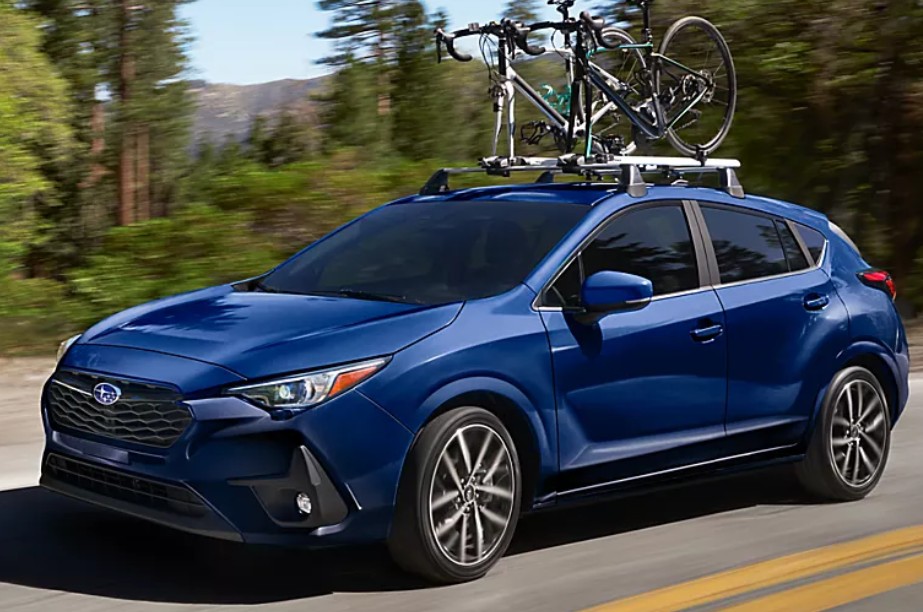
The Subaru Impreza has always occupied an interesting corner of the compact-car world. It is practical without feeling like a tiny crossover, affordable without looking painfully basic, and—most importantly—it gives us standard all-wheel drive in a segment where front-wheel drive still dominates.
For 2026, the formula remains familiar. The Impreza is a five-door hatchback with standard Symmetrical All-Wheel Drive, up to 33 mpg on the highway, and 20.4 cubic feet of cargo space behind the rear seats. Subaru currently offers the Sport and RS trims, with the RS getting the stronger 2.5-liter boxer engine.
Sounds pretty convincing, right?
It is. But that does not automatically make the Impreza the best compact car for everyone.
Maybe fuel economy matters more to us than AWD. Perhaps we want a cabin that feels genuinely premium. Maybe we would rather have stronger acceleration, hybrid efficiency, a sedan body style, or simply a different driving personality. The compact market may have shrunk over the years, but there are still several excellent Subaru Impreza alternatives worth putting on the shopping list.
So, which vehicles should we actually consider? Let's break them down.
Content in this publication
- Why Look at Subaru Impreza Alternatives?
- What Should We Compare Against the Impreza?
- 1. Honda Civic Hatchback: The Best All-Round Alternative
- 2. Mazda3 Hatchback: The Premium-Feeling Alternative
- 3. Toyota Corolla Hatchback: The Sensible Alternative
- 4. Toyota Corolla Sedan: A Better Choice for Traditional Buyers
- 5. Hyundai Elantra: The Value-and-Technology Alternative
- 6. Kia K4: A Fresh Alternative to the Impreza
- 7. Nissan Sentra: The Budget-Friendly Alternative
- 8. Volkswagen Jetta: The Highway-Cruising Alternative
- 9. Subaru Crosstrek: The Obvious In-House Alternative
- 10. Subaru WRX: The Performance Alternative
- 11. Honda Civic Hybrid: Best Impreza Alternative for Fuel Economy
- 12. Mazda3 AWD: Best Alternative for AWD Buyers
- 13. Which Subaru Impreza Alternative Has the Best Interior?
- 14. Which Alternative Offers the Most Practicality?
- 15. Which Impreza Alternative Is Best for Winter Driving?
- 16. Which Alternative Is Best for Long Commutes?
- 17. Which Alternative Is Most Fun to Drive?
- 18. Best Subaru Impreza Alternative by Buyer Type
- 19. Should We Buy an Impreza or One of Its Rivals?
- 20. Are Subaru Impreza Alternatives Better Value?
- 21. New vs Used Subaru Impreza Alternatives
- 22. Final Thoughts: What Is the Best Subaru Impreza Alternative?
Why Look at Subaru Impreza Alternatives?
Before comparing competitors, we should understand what makes the Impreza appealing in the first place.
Its biggest calling card is obvious: standard AWD. Subaru does not make us climb through expensive trim levels or tick an option box to get four driven wheels. That alone makes the Impreza especially attractive to people living around snow, heavy rain, steep roads, or unpredictable weather.
The hatchback body also gives the car everyday usefulness that many traditional compact sedans cannot quite duplicate. Fold the back seats and the Impreza becomes surprisingly useful for luggage, bicycles, groceries, camping equipment, or whatever else our weekend throws at it.
But every strength comes with a trade-off.
The Impreza's fuel economy is respectable rather than exceptional. The continuously variable transmission will not thrill drivers who want an engaging gearbox. And although the RS gives us 180 horsepower, some rivals feel considerably faster. In a recent 2026 compact-car comparison, Car and Driver noted that the Impreza was the only AWD vehicle among the tested Civic, K4, Sentra, Corolla, Jetta, and Impreza models, but the Subaru was not the segment's performance or efficiency leader.
That is where the alternatives become interesting.
What Should We Compare Against the Impreza?
A sensible comparison goes beyond horsepower and sticker price.
We should think about how the car fits everyday life. Do we spend most of our time commuting through traffic? Are winter roads a concern? Do we keep cars for ten years? Are rear-seat passengers common? Is fuel economy more important than outright acceleration?
The best Impreza alternative changes depending on those answers.
Broadly speaking, these are the qualities worth comparing:
- Fuel economy: hybrids can dramatically reduce fuel consumption.
- AWD availability: essential for some buyers and irrelevant for others.
- Cargo capacity: especially important when replacing a hatchback.
- Performance: acceleration and handling vary substantially among compact cars.
- Interior quality: some competitors feel noticeably more upscale.
- Technology: screen layouts and infotainment usability matter every day.
- Purchase price: a cheaper starting price may matter more than extra equipment.
- Long-term ownership: reliability reputation, depreciation, maintenance, and dealer availability all deserve consideration.
With those priorities in mind, we can find competitors that genuinely make sense instead of simply naming every compact car currently on sale.
1. Honda Civic Hatchback: The Best All-Round Alternative
If we were forced to recommend one Subaru Impreza alternative to the widest range of buyers, the Honda Civic Hatchback would be exceptionally difficult to ignore.
Honda's current Civic balances efficiency, handling, interior space, refinement, and technology remarkably well. The hatchback format also means we do not sacrifice the flexible cargo access that makes the Impreza attractive.
The 2026 Civic Hatchback starts with the Sport model, while Hybrid versions use a 200-horsepower powertrain.
Where the Civic Beats the Impreza
Efficiency is the obvious advantage, particularly when we choose the hybrid.
The Civic Hybrid offers a combination of fuel economy and acceleration that the Subaru cannot really match. Car and Driver's comparison notes that the Civic hybrid powertrain produces 200 horsepower, while the Impreza offers 152 horsepower in its lower-output configuration or 180 horsepower in RS form.
That difference changes the character of the car.
The Civic can feel light on its feet, responsive, and energetic without becoming uncomfortable. Think of it as the friend who somehow manages to arrive early, look relaxed, and still use less fuel than everyone else.
Its interior also feels unusually polished for the compact class. Controls are generally straightforward, visibility is good, and the driving position suits a broad range of body types.
Where the Impreza Still Wins
There is one giant asterisk beside the Civic recommendation: no AWD.
For buyers who specifically want the Impreza because all-wheel drive comes standard, the Civic does not replace that capability. The difference is fundamental rather than cosmetic.
If we live somewhere where winter traction matters constantly, the Impreza may remain the smarter choice.
If not? The Civic is arguably the more complete everyday car.
The Mazda3 Hatchback takes a different approach.
Where the Impreza says, "Let's throw our muddy hiking gear in the back," the Mazda3 feels more like, "Should we take the scenic road home?"
Its cabin design is one of its greatest strengths. Mazda has spent years nudging its cars toward premium territory, and the Mazda3 continues that theme with restrained styling, attractive materials, and a driving position that feels more intimate than utilitarian.
Mazda3 vs Subaru Impreza
The Mazda's biggest advantage is personality.
Steering feels deliberate, the chassis feels composed, and the interior creates an atmosphere closer to entry-level luxury cars than many mainstream compacts. Buyers who dislike enormous tablet-style dashboards may also appreciate Mazda's relatively restrained approach to infotainment.
The Mazda3 is one of the few compact competitors that can also be configured with AWD, making it particularly relevant for someone attracted to Subaru's traction advantage. Car and Driver specifically identifies the Mazda3 as another AWD-capable option when discussing the current compact segment.
The Practicality Trade-Off
The Mazda is less convincing when maximum usefulness becomes the priority.
Its dramatic exterior styling creates a smaller-feeling rear environment, and Subaru claims the Impreza provides greater total interior volume than either the Mazda3 Hatchback or Toyota Corolla Hatchback.
So we can think of the choice this way: the Mazda3 is the tailored jacket; the Impreza is the weatherproof backpack.
Both are good. They simply solve different problems.
3. Toyota Corolla Hatchback: The Sensible Alternative
Few automotive names communicate practicality quite like Corolla.
That may sound boring, but boring becomes strangely attractive when the monthly payment is due, fuel prices climb, and the car simply starts every morning.
The Toyota Corolla Hatchback competes directly with the Impreza in size and everyday usability. It is easy to maneuver, straightforward to own, and supported by Toyota's enormous dealer network.
Why Choose the Corolla Hatchback?
The Corolla appeals most strongly to buyers who prioritize uncomplicated transportation.
Its compact dimensions make city driving easy, fuel consumption is competitive, and Toyota's long-standing reputation makes the Corolla particularly appealing to owners thinking five or ten years ahead rather than chasing the latest gadget.
The Impreza, however, offers more cargo room according to Subaru's published comparison figures, and standard AWD remains a major advantage.
Who Should Pick It?
We would lean toward the Corolla Hatchback when efficiency, predictable ownership costs, and urban driving matter more than AWD or maximum cargo flexibility.
We would lean toward the Impreza when weather capability and interior versatility rank higher.
Simple distinction. Big difference.
4. Toyota Corolla Sedan: A Better Choice for Traditional Buyers
Not everybody actually needs a hatchback.
If our cargo mostly consists of shopping bags, backpacks, and the occasional suitcase, a traditional trunk may work perfectly well. In that situation, the Corolla Sedan opens another path.
It typically emphasizes value and efficiency rather than sporty character.
Corolla Hybrid Changes the Equation
Toyota's hybrid technology makes the Corolla particularly interesting for high-mileage commuters.
The Impreza's 33-mpg highway figure is perfectly reasonable, but hybrid compact cars can shift our fuel spending considerably if most driving happens in stop-and-go traffic.
If AWD is not important and we drive thousands of city miles annually, the financial argument for a hybrid becomes increasingly difficult to ignore.
5. Hyundai Elantra: The Value-and-Technology Alternative
The Hyundai Elantra is the wildcard in this group.
Its styling is sharper and more angular than the Subaru's relatively conservative shape, while its trim lineup tends to give buyers several different personalities to choose from.
Want inexpensive transportation? There is an Elantra for that.
Want a hybrid? Hyundai has an answer.
Want something sportier? Higher-performance versions push the platform far beyond ordinary commuter territory.
Why the Elantra Deserves Attention
Value is where Hyundai frequently makes life difficult for rivals.
We often find features such as large digital displays, driver-assistance technology, connected services, and comfort equipment appearing at prices that make competing option sheets look stingy.
Fuel-efficient powertrains also make the Elantra attractive to commuters.
The compromise is familiar: the mainstream Elantra is fundamentally a front-wheel-drive car, while Subaru makes AWD central to the Impreza experience.
Elantra or Impreza?
Choose the Hyundai when technology, highway commuting, distinctive styling, and efficiency dominate the decision.
Choose the Subaru when snow, slippery roads, hatchback practicality, and AWD confidence matter more.
You may be interested in reading Hyundai Palisade Years: A Complete Guide to Every Model Year
6. Kia K4: A Fresh Alternative to the Impreza
The Kia K4 represents a newer interpretation of what an affordable compact should look like.
Rather than blending quietly into traffic, the K4 uses dramatic styling, a technology-heavy cabin, and generous dimensions to attract buyers who might otherwise move into a larger vehicle.
It has already become a serious player in contemporary compact-car comparisons. Car and Driver included the 2026 K4 alongside the Civic, Sentra, Impreza, Corolla, and Jetta in its six-car comparison.
Kia K4 Strengths
The K4 makes a strong first impression.
Interior presentation is modern, rear-seat space can be generous for the segment, and Kia understands that buyers increasingly judge a vehicle by its screens and cabin technology before they ever care about suspension geometry.
That makes the K4 compelling for younger buyers or anyone moving down from a larger sedan.
Why the Impreza Remains Different
Again, traction separates the Subaru.
The K4 may offer more visual theater, but the Impreza's standard AWD gives it a mechanical advantage that cannot be recreated by a bigger touchscreen.
We should decide whether we want the car that looks more futuristic in the driveway or the one designed around year-round traction.
7. Nissan Sentra: The Budget-Friendly Alternative
The Nissan Sentra makes sense when the purchase price carries more weight than nearly everything else.
It remains a straightforward compact sedan aimed at drivers who want comfortable, economical transportation without paying for features they may never use.
Recent industry research also keeps the Sentra relevant. JD Power reported that Nissan Sentra ranked highest in the compact-car category in its 2025 Initial Quality Study, ahead of several rivals.
Sentra vs Impreza for Everyday Driving
The Sentra can feel perfectly at home doing ordinary things.
Commuting. School runs. Grocery shopping. Highway trips.
It does not need to pretend that every drive is a rally stage.
Neither does the Impreza, of course, but Subaru adds AWD and hatchback versatility that the Sentra cannot duplicate.
If we simply want affordable transportation, the Nissan can make sense.
If we regularly carry awkward cargo or drive through difficult weather, the Subaru earns back its premium through functionality.
8. Volkswagen Jetta: The Highway-Cruising Alternative
The Volkswagen Jetta is almost an old-school proposition now: a compact sedan with clean styling, a turbocharged engine, and a distinctly European driving flavor.
That simplicity can actually feel refreshing.
While many competitors chase crossover styling and oversized visual drama, the Jetta behaves like a traditional small sedan—and does that job rather well.
Why Consider the Jetta?
Highway drivers may particularly appreciate it.
The turbocharged engine provides useful torque without demanding an enormous displacement, and the sedan shape works nicely for commuters who rarely need hatchback cargo flexibility.
In Car and Driver's 2026 compact comparison, the Jetta competed directly alongside the Impreza and other major compact sedans.
Jetta vs Impreza
The decision comes down to philosophy.
The Jetta feels like a compact road car designed around efficient pavement driving.
The Impreza feels like a compact hatch designed to remain useful when the pavement turns wet, snowy, broken, or inconvenient.
Neither philosophy is inherently better.
9. Subaru Crosstrek: The Obvious In-House Alternative
Here is where things become interesting.
One of the strongest Impreza alternatives comes from Subaru itself.
The Crosstrek shares much of the Impreza's underlying philosophy but wraps it in a more adventure-oriented package with increased ground clearance and crossover styling.
For buyers who like everything about the Impreza but keep thinking, "I wish it sat a little higher," the Crosstrek deserves immediate consideration.
Why Move Up to the Crosstrek?
Ground clearance is the main attraction.
That extra height can make rough roads, deep snow, poorly maintained driveways, and mild off-pavement excursions less stressful. The higher seating position also appeals to drivers migrating away from sedans.
Why Stay With the Impreza?
Because lower can be better.
The Impreza feels more car-like, costs less in comparable configurations, and does not pretend that we are crossing the Andes every Tuesday just because we occasionally encounter a pothole.
If our adventures mostly involve paved roads and supermarket parking lots, we may not need the crossover treatment.
10. Subaru WRX: The Performance Alternative
What if our main complaint about the Impreza is simply that it is not fast enough?
Then we should look at the WRX.
The WRX occupies an entirely different performance tier. It retains Subaru's AWD identity but adds substantially more power and a much sharper performance focus.
Impreza RS vs WRX
The Impreza RS looks sporty and offers the stronger 2.5-liter engine, but we should not confuse it with a true high-performance model. Subaru lists the RS engine separately from the 2.0-liter Sport configuration, while independent testing places its output at 180 horsepower.
The WRX is the answer when acceleration and driver engagement sit near the top of the priority list.
The Impreza remains better suited to buyers who want lower running costs, easier everyday manners, and hatchback practicality.
11. Honda Civic Hybrid: Best Impreza Alternative for Fuel Economy
Yes, we already discussed the Civic—but the hybrid deserves its own spotlight because it fundamentally changes the comparison.
If fuel economy sits at the top of our checklist, the Civic Hybrid attacks the Impreza's weakest area.
Car and Driver reports an EPA combined figure of 49 mpg for the Civic Hybrid sedan versus 29 mpg combined for the Impreza RS, while the Civic's hybrid system produces 200 horsepower.
That is not a small difference.
It is the automotive equivalent of running faster while carrying a lighter backpack.
When AWD Matters More Than MPG
Numbers do not tell the entire story.
A Civic Hybrid may save fuel brilliantly, but those savings do not suddenly give it Subaru's standard AWD hardware.
Drivers in mild climates may happily take the Honda's efficiency.
Drivers dealing with snow-covered mountain roads may value the Subaru's drivetrain more.
12. Mazda3 AWD: Best Alternative for AWD Buyers
Most Impreza alternatives lose one of Subaru's defining characteristics as soon as we compare drivetrains.
The Mazda3 AWD does not.
That makes it perhaps the most natural competitor for buyers who specifically refuse to give up four driven wheels.
Mazda3 AWD vs Impreza AWD
The Mazda feels more premium and arguably more driver-focused.
The Subaru answers with greater cargo usefulness and a cabin shaped around practicality rather than style.
We should also remember that AWD is standard across the Impreza range, whereas alternative models may restrict AWD to particular configurations.
That difference can significantly affect the real transaction price.
13. Which Subaru Impreza Alternative Has the Best Interior?
Among mainstream competitors, the Mazda3 probably makes the strongest emotional case.
Its design feels intentionally restrained rather than merely inexpensive. Buttons, surfaces, and proportions work together cohesively.
The Civic follows closely with a clean, mature layout that tends to favor usability.
The Impreza's interior is more functional. Subaru's current 2026 model features an 11.6-inch touchscreen along with wireless Apple CarPlay and Android Auto, so it certainly does not lack modern technology.
Still, functionality and luxury are different things.
If cabin ambience matters every single morning, we should sit in a Mazda3 before buying anything.
You may be interested in readingHyundai Palisade Years: A Complete Guide to Every Model YearYou may be interested in reading
Hyundai Palisade Elite vs Calligraphy: Which Trim Is Better?14. Which Alternative Offers the Most Practicality?
This is where the Impreza fights back hard.
Subaru quotes 20.4 cubic feet of cargo capacity and up to 120.9 cubic feet of total interior volume for the 2026 Impreza. The company also states that its total interior space exceeds that of the Corolla Hatchback and Mazda3 Hatchback.
Numbers aside, hatchbacks simply make awkward objects easier to carry.
A sedan may offer a respectable trunk volume but still struggle with a large box because the opening itself is restrictive.
Among alternatives, the Civic Hatchback provides one of the strongest combinations of passenger room and cargo flexibility.
If maximum rough-road versatility matters, however, the Crosstrek moves beyond conventional compact-car territory entirely.
15. Which Impreza Alternative Is Best for Winter Driving?
If winter driving is our central concern, the answer becomes surprisingly short.
The Mazda3 AWD is the most direct mainstream alternative.
The Crosstrek is even more capable for drivers who also want additional ground clearance.
Many other competitors can certainly function well in winter—particularly with quality winter tires—but they do not replicate the Impreza's standard AWD formula.
That distinction matters.
Tires determine a huge portion of winter grip, but drivetrain layout still influences how confidently a vehicle puts power down when conditions deteriorate.
16. Which Alternative Is Best for Long Commutes?
For long daily commutes, we would prioritize fuel efficiency, seat comfort, road noise, and driver-assistance systems before AWD.
That pushes the Honda Civic Hybrid near the front of the pack.
The Corolla Hybrid is another natural choice for commuters who care more about reducing fuel stops than enjoying lively acceleration.
The Volkswagen Jetta also deserves consideration for buyers spending large amounts of time cruising at highway speed.
The Impreza remains competitive when the commute includes unpredictable winter weather, but otherwise its fuel economy can become harder to justify against efficient hybrid rivals.
17. Which Alternative Is Most Fun to Drive?
"Fun" depends on what makes us smile.
If we want balanced handling and responsive steering without entering performance-car territory, the Honda Civic is excellent.
If we prefer a heavier, more premium-feeling driving experience, the Mazda3 has plenty of appeal.
If our definition of fun begins with turbocharging and ends with empty back roads, the WRX changes the conversation entirely.
The regular Impreza is pleasant rather than thrilling.
That is not criticism. A refrigerator does not become worse because it cannot make espresso.
The Impreza's job is practical, secure transportation with AWD. It fulfills that mission well.
18. Best Subaru Impreza Alternative by Buyer Type
Different cars win for different people.
For commuters, the Civic Hybrid is hard to beat.
For drivers wanting an upscale cabin, the Mazda3 shines.
For conservative long-term ownership, the Corolla deserves attention.
For technology and value, the Kia K4 and Hyundai Elantra become compelling.
For AWD without buying another Subaru, look closely at the Mazda3 AWD.
For additional ride height, the Crosstrek makes obvious sense.
For performance, graduate to the WRX.
And for buyers who want all-weather traction, useful hatchback cargo space, and straightforward pricing in one package?
Well, we may circle all the way back to the Impreza.
19. Should We Buy an Impreza or One of Its Rivals?
Here is the simplest way to decide.
Ask what problem we are actually trying to solve.
If the answer is "I need an efficient commuter," the Civic Hybrid may solve it better.
If it is "I want something that feels expensive inside," choose the Mazda3.
If it is "I want dependable, uncomplicated transportation," the Corolla deserves a drive.
If it is "I need all-wheel drive and practical cargo space without buying an SUV," the Subaru suddenly becomes much harder to replace.
That last combination is exactly why the Impreza continues to exist even as the compact-car market changes around it.
20. Are Subaru Impreza Alternatives Better Value?
Sometimes.
But value is more complicated than starting price.
Suppose one competitor costs less but requires us to move into a substantially more expensive trim to obtain the equipment we want. Suddenly the bargain disappears.
Subaru's advantage is that AWD is built into the equation from the beginning. For 2026, Subaru lists the Impreza Sport from $26,595 and the RS from $29,495 before applicable destination and other charges.
That makes comparison shopping relatively straightforward.
Buyers who do not need AWD, however, are paying for hardware they may rarely exploit.
In that situation, a front-wheel-drive alternative can make better financial sense.
21. New vs Used Subaru Impreza Alternatives
The used market expands our choices dramatically.
Suddenly discontinued hatchbacks and compact sedans enter the conversation alongside current models. Previous-generation Volkswagen Golfs, older Mazda3s, earlier Civic hatchbacks, Toyota Corollas, and even performance-oriented cars may fit within the same budget as a newer Impreza.
But used vehicles require a different comparison.
Condition matters more than badge.
Maintenance history matters more than touchscreen size.
A carefully maintained three-year-old competitor may be a far better purchase than a neglected newer vehicle with an attractive price.
Always compare individual cars rather than assuming one model name automatically guarantees a good used purchase.
22. Final Thoughts: What Is the Best Subaru Impreza Alternative?
There is no single car that perfectly replaces the Subaru Impreza because the Impreza itself combines several characteristics that rarely appear together: hatchback practicality, compact dimensions, standard AWD, reasonable pricing, and everyday comfort.
The Honda Civic Hatchback is our strongest overall alternative because it blends space, efficiency, refinement, performance, and usability exceptionally well. Buyers focused on fuel economy should look even harder at the Civic Hybrid.
The Mazda3 Hatchback is the alternative for drivers who want richer interior design and a more premium driving atmosphere. AWD availability makes it especially relevant to Subaru shoppers.
The Toyota Corolla remains the safe, sensible choice for owners prioritizing efficient, straightforward transportation.
The Hyundai Elantra and Kia K4 deserve attention when technology and value dominate the decision, while the Volkswagen Jetta works particularly well for traditional sedan buyers and highway commuters.
And if what we really want is the Impreza formula with more ground clearance or much more performance, Subaru already has answers in the Crosstrek and WRX.
Ultimately, alternatives matter because they force us to identify what we genuinely value. The best car is rarely the one that wins every specification comparison. It is the one whose compromises happen to be the compromises we barely notice.
FAQs About Subaru Impreza Alternatives
1. What is the closest alternative to a Subaru Impreza?
The Mazda3 Hatchback with AWD is one of the closest alternatives because it combines compact dimensions, hatchback practicality, and available all-wheel drive. The Honda Civic Hatchback is another excellent competitor if AWD is not required.
2. Is a Honda Civic better than a Subaru Impreza?
The Civic can be better for buyers prioritizing fuel economy, acceleration, refinement, and road manners. The Impreza has the advantage for shoppers wanting standard AWD and all-weather capability. Current Civic Hybrid versions also offer significantly stronger efficiency than the Impreza.
3. What Toyota is comparable to the Subaru Impreza?
The Toyota Corolla Hatchback is the most direct Toyota competitor because both are compact five-door cars. The Corolla Sedan and Corolla Hybrid are worth considering if hatchback cargo access is less important.
You may be interested in readingHyundai Palisade Years: A Complete Guide to Every Model YearYou may be interested in reading
Hyundai Palisade Elite vs Calligraphy: Which Trim Is Better?You may be interested in reading
 Audi A4 Years to Avoid: The Used Buyer’s Reliability Guide
4. What should I buy instead of an Impreza if I want AWD?
The Mazda3 AWD is a strong non-Subaru choice. If we are open to a crossover, the Subaru Crosstrek is another logical alternative because it retains Subaru's AWD philosophy while adding ground clearance.
5. Is the Subaru Impreza still worth buying?
Yes, particularly for buyers who genuinely benefit from AWD. The 2026 Impreza continues to offer standard Symmetrical AWD, a practical hatchback body, and up to 33 mpg highway, giving it a combination that remains uncommon among mainstream compact cars.
If you want to know other articles similar to Subaru Impreza Alternatives: The Best Cars to Consider you can visit the category Models.
Volkswagen T-Cross vs Volkswagen T-Roc: Which Is Better?
Hyundai Tucson Weight: Complete Guide to Curb, Gross, and Payload Specs

Honda Passport vs Toyota 4Runner: Which SUV Is Better?
Honda Passport vs Ford Bronco: Which SUV Is Better?
Honda Passport vs Ford Explorer: Which SUV Is Better?
Honda Passport or Pilot: Which SUV Is Better?
Leave a Reply
More content of your interest