

Ford Edge Model Years: Complete Guide From 2007 to 2024

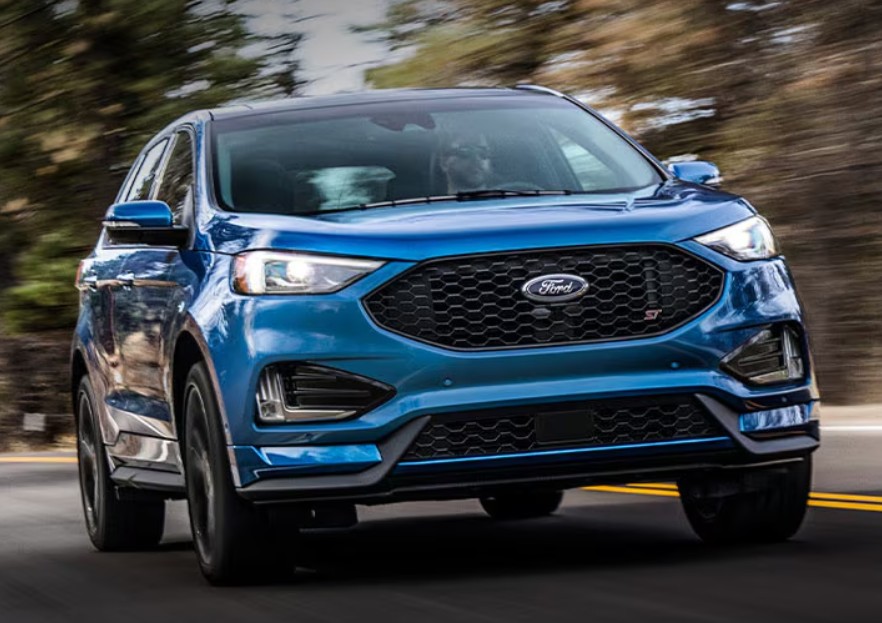
If we look back at the Ford Edge model years, we see something more interesting than a simple timeline of annual updates. The Edge essentially followed the evolution of the modern crossover itself. It arrived when two-row midsize SUVs were becoming mainstream, grew more sophisticated as turbocharged engines and touchscreen technology became normal, and eventually disappeared from Ford's North American lineup as the market shifted yet again.
The Ford Edge debuted for the 2007 model year and remained available in North America through 2024. Ford now describes the Edge as a retired SUV and confirms 2024 as the end of its model-year run in the U.S. lineup.
Over those 18 model years, the Edge went through two major generations, several significant refreshes, numerous technology upgrades, different engine combinations, and the introduction of the performance-oriented Edge ST.
That creates an obvious question for used-SUV shoppers: are all Ford Edge years basically the same?
Not even close.
Some model years represented major redesigns, while others brought smaller equipment changes. Certain years are attractive because they combine mature engineering with newer technology. Others may appeal mainly because depreciation has made them inexpensive.
In this guide, we'll walk through the Ford Edge years from 2007 to 2024, explain the generations, identify the important turning points, and help make sense of which versions belong on a used-car shopping list.
Content in this publication
- Ford Edge Model Years at a Glance
- How Many Ford Edge Generations Were There?
- First-Generation Ford Edge: 2007–2014
- 2011 Ford Edge: The First Major Turning Point
- Second-Generation Ford Edge: 2015–2024
- 2015 Ford Edge: A Complete Redesign
- Ford Edge Trim Levels Changed the Experience
- 2019 Ford Edge: Another Major Model-Year Change
- 2019 Edge Also Brought More Safety Technology
- 2020 Ford Edge: Refining the Updated Formula
- 2021 Ford Edge: Technology Moves Forward
- 2022 Ford Edge: A Mature Second-Generation SUV
- 2023 Ford Edge: Nearing the End
- 2024 Ford Edge: The Final North American Model Year
- Ford Edge Model Years Comparison
- Which Ford Edge Model Years Feel the Most Modern?
- Which Ford Edge Years Offer the Best Value?
- Should We Buy the First Year of a Ford Edge Generation?
- What Matters More Than the Ford Edge Model Year?
- Ford Edge Generations: Which One Should We Choose?
- Why the Ford Edge Lasted So Long
- Final Thoughts on Ford Edge Model Years
- Frequently Asked Questions About Ford Edge Model Years
Ford Edge Model Years at a Glance
Before diving under the hood, here's the simple timeline.
| Generation | Model Years | Major Characteristics |
|---|---|---|
| First generation | 2007–2014 | Original Edge design, V6-focused lineup, major 2011 refresh |
| Second generation | 2015–2024 | New platform, EcoBoost expansion, improved technology |
| Second-generation refresh | 2019–2024 | New styling, 8-speed transmission, Co-Pilot360, Edge ST |
Ford introduced the original Edge as a 2007 crossover, while production of the completely redesigned second-generation 2015 model began at Ford's Oakville Assembly plant in Ontario in February 2015.
That division matters because a 2014 and a 2015 Edge may sit next to one another on a used-car lot, yet underneath the familiar badge they're substantially different vehicles.
How Many Ford Edge Generations Were There?
For the North American model most shoppers encounter, there were two main Ford Edge generations.
The first covered the 2007 through 2014 model years. The second arrived for 2015 and continued through 2024.
This is refreshingly simple compared with some vehicles that change platforms, engines, names, and body styles every few years.
But don't mistake simplicity for sameness.
Within those two generations were several distinct phases:
- 2007–2010: early first-generation Edge
- 2011–2014: refreshed first generation
- 2015–2018: early second generation
- 2019–2024: refreshed second generation
If we're buying used, thinking about the Edge in these four groups is often more useful than treating every year individually.
First-Generation Ford Edge: 2007–2014
The first Ford Edge helped Ford establish a strong presence in the growing crossover market.
Rather than following the old truck-based SUV formula, the Edge used unibody construction. That gave it the kind of road manners buyers increasingly wanted: comfortable, relatively car-like and spacious without feeling like we were piloting a delivery truck through the supermarket parking lot.
2007 Ford Edge: Where Everything Started
The 2007 Ford Edge was the first model year.
Ford launched it with a 3.5-liter V6 producing 265 horsepower, paired with a six-speed automatic transmission. Front-wheel drive was standard on applicable versions, while all-wheel drive was available.
For its time, the formula made plenty of sense.
We got seating for five rather than a cramped third row, a practical rear cargo area, elevated driving position and styling that felt considerably less utilitarian than traditional SUVs.
Today, however, we're talking about a vehicle approaching two decades of age.
With a 2007 Edge, therefore, age and maintenance history matter at least as much as the specification sheet.
A carefully maintained example could still provide inexpensive transportation. A neglected one may turn into the automotive equivalent of buying a cheap house with a leaking roof: attractive price, expensive consequences.
2008–2010 Ford Edge Model Years
The 2008, 2009 and 2010 Edges largely developed the original formula instead of rewriting it.
These vehicles still feel unmistakably like first-generation crossovers. Their cabins and infotainment systems look dated beside later Edges, but there's an upside: they're comparatively straightforward.
For buyers interested mainly in affordable transportation, that simplicity can actually be appealing.
The important question isn't necessarily whether a 2009 is inherently better than a 2008. At this age, we'd pay greater attention to:
- Service records
- Transmission behavior
- Fluid leaks
- Suspension wear
- Cooling-system condition
- Corrosion
- Tire condition
- Previous accident repairs
- Warning lights
- AWD operation, when equipped
When vehicles reach this age, a pristine 2008 can easily be a smarter purchase than an abused 2010.
Why Condition Becomes Critical With Early Edge Years
Mileage tells only part of the story.
Imagine two Edge SUVs.
One has 110,000 miles but received regular maintenance, lived in a garage and accumulated most of those miles cruising steadily along highways.
Another has 80,000 miles but spent its life making short urban trips, missed oil changes and endured years of potholes.
Which would we rather own?
Probably the first.
That's why early Ford Edge model years should be evaluated as individual vehicles rather than bought purely according to year.
2011 Ford Edge: The First Major Turning Point
The 2011 Ford Edge marked an important refresh.
Instead of simply changing a grille or adding new wheels, Ford modernized the Edge's appearance, interior, technology and powertrain choices.
This is the point where the first generation starts feeling noticeably more contemporary.
For used buyers comparing early Edge years, 2011 therefore represents an important dividing line.
Why the 2011 Refresh Matters
The refreshed Edge brought a more polished personality.
Exterior styling became sharper, cabin technology grew more ambitious and additional powertrain options appeared during this period.
From behind the wheel, the Edge was becoming less like one of the early crossover experiments of the 2000s and more like the technology-heavy family SUVs we recognize today.
That doesn't automatically mean every 2011–2014 Edge is preferable to every 2007–2010 example. More technology also means additional electronics to inspect on an older vehicle.
Still, shoppers who find the original cabin too dated will probably be happier starting their search around 2011.
2012–2014 Ford Edge Years
The 2012, 2013 and 2014 model years represented the mature stage of the first generation.
And maturity can be valuable.
Manufacturers typically spend years refining components, calibrations and manufacturing processes. By the final years of a generation, the vehicle is no longer the new kid figuring out where everything belongs.
For someone who wants an older Edge without stepping all the way back to the original 2007 design, a well-maintained late first-generation example can make sense.
Just remember that these are now older vehicles. Purchase price shouldn't consume the entire budget.
We would leave room for preventative maintenance and age-related repairs.
Second-Generation Ford Edge: 2015–2024
Then came the big reset.
The 2015 Ford Edge was completely redesigned, beginning the SUV's second generation. Ford said the vehicle was new from the wheels to the roof and moved it onto its global midsize vehicle architecture. Production began at Oakville Assembly in Canada.
This wasn't an Edge wearing a new suit.
It was the beginning of a substantially more modern vehicle.
2015 Ford Edge: A Complete Redesign
Ford improved interior space, ride quality, technology, structural design and powertrain options for 2015.
One particularly important development was the expanded use of EcoBoost engines.
Ford made a twin-scroll 2.0-liter EcoBoost four-cylinder standard, while the performance-oriented Edge Sport introduced a 2.7-liter EcoBoost V6. The familiar naturally aspirated V6 remained part of the broader powertrain picture during the early second-generation years.
That gave buyers more choice.
Want everyday efficiency? The four-cylinder turbo made sense.
Prefer traditional naturally aspirated power? There was an option for that during this era.
Want considerably more punch? The Sport sat at the top of the range.
What Changed With the Second Generation?
The changes extended far beyond engines.
The redesigned Edge offered technologies such as enhanced active parking assistance, side parking sensors and an available front camera system. Ford also redesigned the suspension and body structure with a focus on improving ride quality, quietness and handling.
The result was a much more grown-up crossover.
If the first Edge established the recipe, the second generation polished it.
2016–2018 Ford Edge Model Years
The 2016, 2017 and 2018 models continued the second-generation formula before the major 2019 refresh.
For used buyers, this group occupies an interesting middle ground.
They're substantially more modern than first-generation examples but typically older and less expensive than late-production Edges.
You may be interested in reading Ford Edge Lincoln Equivalent: Which Luxury SUV Matches It?
Depending on trim and model year, features such as smartphone connectivity, upgraded driver assistance, premium audio, panoramic roofs and more sophisticated infotainment became part of the Edge experience.
This is also where trim level becomes increasingly important.
A modestly equipped Edge and a high-spec Titanium from the same year can feel like surprisingly different vehicles.
Ford Edge Trim Levels Changed the Experience
When shopping by model year, we shouldn't ignore trims.
Across its history, the North American Edge lineup used familiar names including SE, SEL, Titanium, Sport and ST, with equipment varying according to year and market.
Ford Edge SE
The SE typically served as the entry point.
These models tend to make the most sense for shoppers who value the Edge's space and basic practicality but aren't particularly interested in luxury equipment.
On the used market, fewer features can sometimes work in our favor because there are fewer expensive gadgets to worry about.
Ford Edge SEL
SEL models generally occupied the sweet spot between basic transportation and premium equipment.
That's why used buyers often gravitate toward middle trims.
We get many of the conveniences that make everyday ownership pleasant without necessarily paying the premium attached to the fanciest version.
Ford Edge Titanium
Titanium pushed the Edge further toward the upscale end of mainstream crossovers.
Expect the exact feature set to vary by year, but Titanium models commonly added more comfort, appearance and technology equipment.
For buyers cross-shopping entry-level luxury SUVs, a used Edge Titanium can be an interesting alternative.
Ford Edge Sport
The Sport was the performance-oriented choice during the early part of the second generation.
Its 2.7-liter EcoBoost V6 transformed the personality of the Edge.
Think of it as the family crossover after drinking a strong espresso.
Then Ford went further.
2019 Ford Edge: Another Major Model-Year Change
If 2015 began the second generation, 2019 gave it a substantial second act.
Ford refreshed the styling, introduced a new eight-speed automatic transmission and brought significant driver-assistance upgrades to the lineup.
Most importantly for enthusiasts, 2019 introduced the Ford Edge ST.
Ford's 2019 documentation lists SE, SEL, Titanium and ST trims and confirms the 2.0-liter EcoBoost four-cylinder for mainstream versions and the 2.7-liter EcoBoost V6 for the ST.
The Ford Edge ST Arrives
The Edge ST wasn't merely a cosmetic package.
Ford positioned it as its first performance SUV to wear the ST badge.
Its 2.7-liter twin-turbocharged EcoBoost V6 produced 335 horsepower and 380 lb-ft of torque in the North American specification, while all-wheel drive, ST-tuned suspension, selectable Sport Mode and an eight-speed automatic helped differentiate it from ordinary Edge models.
For anyone researching sporty Ford Edge model years, 2019 is therefore the landmark year.
Why the ST Matters
The Edge had always been reasonably competent from behind the wheel, but ST gave the SUV a genuine performance identity.
We still had room for five people and luggage.
We just gained considerably more enthusiasm when pressing the accelerator.
That combination makes used Edge ST models particularly interesting today, especially for drivers who don't want the size of a three-row performance SUV.
2019 Edge Also Brought More Safety Technology
Performance stole the headlines, but the broader lineup also received important technology changes.
Ford introduced Co-Pilot360 as standard equipment on the 2019 Edge. The package bundled technologies including automatic emergency braking, blind-spot monitoring with cross-traffic alert, a lane-keeping system, rearview camera and automatic high beams.
This matters enormously when comparing used model years.
A shopper deciding between an inexpensive older Edge and a 2019-plus example isn't simply comparing styling.
They're comparing generations of safety technology.
2020 Ford Edge: Refining the Updated Formula
The 2020 Edge largely continued what Ford established for 2019.
That can actually be a good thing for secondhand shoppers.
The excitement surrounding an all-new or newly refreshed vehicle often focuses attention on its first year. But the following model years sometimes provide an appealing balance: relatively new technology without being the first version of a major update.
We shouldn't automatically declare 2020 better than 2019, of course.
Maintenance condition, mileage, trim and price still matter.
But it belongs firmly in the more modern chapter of Edge history.
2021 Ford Edge: Technology Moves Forward
By the early 2020s, the battle among family SUVs was increasingly happening on screens.
Infotainment had become just as important to many buyers as horsepower.
The later Edge years embraced larger displays and more connected features, helping an aging underlying platform remain competitive.
That's something worth remembering when comparing, say, a 2016 Edge with a 2021 version. Mechanically they belong to the same broad generation, but sitting inside them can feel like stepping between different technological eras.
2022 Ford Edge: A Mature Second-Generation SUV
By 2022, the second-generation Edge had been around for several years.
Normally that would sound like criticism.
For used buyers, however, mature platforms can be attractive.
Major redesigns generate excitement, but they're also when manufacturers introduce the greatest number of new systems at once. Later model years benefit from years of accumulated production experience.
A late Edge therefore offers a very different proposition from a first-year 2015 example despite belonging to the same generation.
Later Edge Years Put AWD in the Spotlight
Drivetrain availability changed over the Edge's long lifespan, so shoppers should check the specification of the exact model they're considering rather than assuming every Edge follows the same front-wheel-drive/all-wheel-drive formula.
This is especially important when comparing vehicles across several years.
For buyers in snowy climates, AWD can significantly influence which listings make the shortlist.
For someone living where winter means occasionally putting on a sweater, the value equation may be different.
2023 Ford Edge: Nearing the End
The 2023 Edge represented one of the final chapters of the North American model.
By this point, Ford wasn't reinventing the Edge.
Instead, buyers received a vehicle based on a thoroughly established platform with the styling, connectivity, turbocharged performance and driver-assistance equipment developed throughout the second generation.
On the used market, these late examples have an obvious attraction: they're among the newest traditional Edge SUVs available.
The trade-off is price.
A newer vehicle generally costs more, and the depreciation advantage that makes older Edge models appealing becomes smaller.
2024 Ford Edge: The Final North American Model Year
The 2024 Ford Edge became the final model year of the familiar North American Edge.
Ford's current U.S. website officially categorizes the Edge as retired and states that 2024 marked the end of the SUV's travels in its lineup.
That makes the 2024 Edge historically significant even if it wasn't an all-new generation.
It closed an 18-model-year run stretching back to 2007.
Did Ford Make a 2025 Edge?
This question can become confusing because vehicle names and product availability differ between international markets.
For the familiar North American Ford Edge covered in this guide, 2024 was the final model year.
Ford's U.S. site says the Edge was being discontinued for 2025 and directs former Edge shoppers toward SUVs such as the Escape, Explorer, Bronco Sport and Mustang Mach-E.
So when shopping for the North American Edge, we should generally think 2007 through 2024.
Ford Edge Model Years Comparison
Now let's compress almost two decades of history into something useful.
| Model Years | Edge Era | Why It Matters |
| 2007 | Launch year | Original Edge debuts |
| 2008–2010 | Early first generation | Affordable, simple older examples |
| 2011 | Major refresh | Updated styling, technology and powertrain choices |
| 2012–2014 | Late first generation | Mature version of original platform |
| 2015 | Full redesign | Second generation begins |
| 2016–2018 | Early second generation | Modern platform before facelift |
| 2019 | Major refresh | ST arrives, 8-speed automatic, Co-Pilot360 |
| 2020–2021 | Refined facelift years | Modern technology and updated styling |
| 2022–2023 | Late production | Mature second-generation models |
| 2024 | Final year | Last North American Edge model year |
Which Ford Edge Model Years Feel the Most Modern?
If modern technology is important, we'd naturally focus on the 2019–2024 Edge.
You may be interested in readingFord Edge Lincoln Equivalent: Which Luxury SUV Matches It?You may be interested in reading
 BMW M5 Years to Avoid: The Generations and Model Years We’d Approach Carefully
The 2019 refresh brought updated styling, an eight-speed transmission, Co-Pilot360 driver-assistance technology and the introduction of ST.
Later years build on that foundation.
However, “modern” and “best value” aren't necessarily synonyms.
A late Edge may have the technology we want but cost considerably more than a clean 2017 or 2018.
That's why the ideal year depends on our priorities.
Which Ford Edge Years Offer the Best Value?
There's no universal winner because used-car pricing varies dramatically according to mileage, condition and location.
Still, the broad strategy is easy to understand.
Budget Buyers
Late first-generation Edge models can offer plenty of vehicle for relatively little money.
The catch?
They're old enough that maintenance history becomes crucial.
Value-Focused Buyers
Early second-generation models can occupy an appealing middle ground.
A 2016–2018 Edge gives us the redesigned body and more modern driving experience without necessarily carrying the prices of the final years.
Technology-Focused Buyers
Start around 2019.
The refreshed design and expanded driver-assistance equipment make this group considerably more relevant to shoppers who prioritize modern safety technology.
Performance Buyers
The obvious target is the 2019–2024 Edge ST.
Its twin-turbo V6 and performance-oriented setup make it substantially different from a normal family crossover.
Should We Buy the First Year of a Ford Edge Generation?
First-year models generate a lot of excitement, but buying used requires a slightly different mindset.
The major first-year turning points were essentially:
- 2007: original Edge launch
- 2015: second-generation redesign
- 2019: major refresh and ST introduction
None should automatically be rejected simply because it introduced significant changes.
Instead, the smarter approach is checking the individual vehicle's history and researching service campaigns, recalls and known problems for its exact engine, drivetrain and production date.
The badge on the liftgate tells us only part of the story.
What Matters More Than the Ford Edge Model Year?
Here's where used-car shopping gets interesting.
People often type something like “best Ford Edge year” into Google expecting one magic number.
Unfortunately, vehicles aren't lottery tickets.
A supposedly desirable model year with 160,000 neglected miles may be a worse purchase than a less fashionable year with complete maintenance records and careful ownership.
Service History
Regular oil changes are particularly important with turbocharged engines.
Ask for documentation whenever possible rather than accepting “the previous owner took great care of it” as evidence.
Receipts beat promises.
Engine and Transmission Behavior
Start the Edge cold if possible.
Listen for unusual noises.
Make sure acceleration feels smooth and gear changes occur normally.
Test the vehicle at city and highway speeds.
Electronics
Modern Edge models can contain a considerable amount of technology.
Try everything.
That means the touchscreen, cameras, power seats, climate control, heated or ventilated functions, liftgate, parking sensors, driver-assistance systems and panoramic roof where fitted.
Don't Ignore Small Electronic Problems
A malfunctioning feature may seem trivial during a 15-minute test drive.
After six months of ownership, that persistent warning message or unreliable touchscreen can become as irritating as a mosquito buzzing beside our ear at 2 a.m.
Test before buying.
Tires and Suspension
Uneven tire wear can reveal alignment or suspension problems.
Meanwhile, clunks over bumps, vibrations and vague steering deserve investigation.
Pre-Purchase Inspection
For an older Edge, an independent inspection can be one of the smartest purchases we make.
Spending a relatively small amount before buying may uncover problems that would cost far more afterward.
Ford Edge Generations: Which One Should We Choose?
The answer depends largely on budget.
The 2007–2014 generation makes sense when affordability comes first. We'd generally prefer a clean, documented example over obsessing about a particular year.
The 2015–2024 generation is the stronger choice if we want a more contemporary driving experience, cabin and technology package.
Within that generation, 2019 and newer models stand out because of the substantial refresh and expanded driver-assistance technology.
If performance matters, the ST adds another dimension entirely.
There really isn't one Edge for everybody.
And that's precisely why understanding the model years matters.
Why the Ford Edge Lasted So Long
The Edge occupied an interesting position in Ford's lineup.
It gave buyers more room and road presence than smaller crossovers without forcing them into the three-row layout of larger family SUVs.
That middle ground proved useful.
Five seats.
Generous cargo room.
Available AWD.
Comfortable highway manners.
Enough engine options to satisfy both ordinary commuters and performance-oriented drivers.
It was the SUV equivalent of a comfortable pair of jeans: not designed for every occasion, but remarkably easy to live with.
The fact that the Edge survived from the 2007 model year through 2024 shows how durable that basic concept proved.
Final Thoughts on Ford Edge Model Years
Looking across all Ford Edge model years, the history divides neatly into two generations and four meaningful phases.
The 2007–2010 models represent the original Edge. The 2011–2014 versions modernized that first-generation formula. The 2015 redesign introduced a much more sophisticated second generation, while the 2019 refresh brought another leap in styling, transmission technology, driver assistance and performance with the arrival of the Edge ST.
Then, after years of incremental refinement, the North American journey ended with the 2024 Ford Edge.
Which year should we buy?
Instead of hunting for a mythical perfect model year, start with the generation that fits the budget and features we want. Then compare mileage, maintenance records, drivetrain, trim, accident history and overall condition.
For buyers wanting an inexpensive crossover, a carefully maintained older Edge may still make sense. For those wanting a more modern SUV without jumping into a brand-new vehicle, second-generation models deserve greater attention. And if contemporary safety technology matters, the post-2019 Edge lineup is the logical place to concentrate the search.
Model year gets us through the front door.
Condition tells us whether we should actually buy the car.
Frequently Asked Questions About Ford Edge Model Years
1. What years was the Ford Edge made?
The familiar North American Ford Edge was sold from the 2007 through 2024 model years. The original Edge launched for 2007, while Ford now lists the SUV as retired and identifies 2024 as its final North American model year.
2. How many generations of Ford Edge are there?
There are two primary generations of the North American Ford Edge. The first covers 2007–2014, while the redesigned second generation began with the 2015 Edge and continued through 2024. Ford officially described the 2015 vehicle as an all-new model when production began in Oakville, Canada.
3. What year did the Ford Edge change body styles?
The biggest body and platform change occurred for 2015, when Ford introduced the completely redesigned second-generation Edge. The vehicle received another significant exterior and technology refresh for 2019, although it remained part of the second generation.
You may be interested in readingFord Edge Lincoln Equivalent: Which Luxury SUV Matches It?You may be interested in reading
BMW M5 Years to Avoid: The Generations and Model Years We’d Approach CarefullyYou may be interested in reading
 Subaru Impreza Trim Levels: Complete Guide to Sport, RS, and Earlier Models
4. What year did the Ford Edge ST come out?
The Ford Edge ST debuted for the 2019 model year. Ford described it as the first Ford SUV to receive the ST performance treatment. Its North American-specification 2.7-liter twin-turbo EcoBoost V6 produced 335 horsepower and was paired with standard all-wheel drive and an eight-speed automatic transmission.
5. What was the last Ford Edge model year?
The 2024 Ford Edge was the final model year in the North American lineup. Ford's U.S. website now identifies the Edge as retired and directs shoppers toward other SUVs in its current range.
If you want to know other articles similar to Ford Edge Model Years: Complete Guide From 2007 to 2024 you can visit the category Models.
Honda Passport vs Toyota 4Runner: Which SUV Is Better?
Honda Passport vs Ford Bronco: Which SUV Is Better?
Honda Passport vs Ford Explorer: Which SUV Is Better?
Honda Passport or Pilot: Which SUV Is Better?
Honda Passport vs Jeep Grand Cherokee: Which SUV Is Better?
Honda Passport vs Nissan Pathfinder: Which SUV Is Better?
Leave a Reply
More content of your interest