

Ford Edge Years to Buy: The Best Model Years for a Used SUV

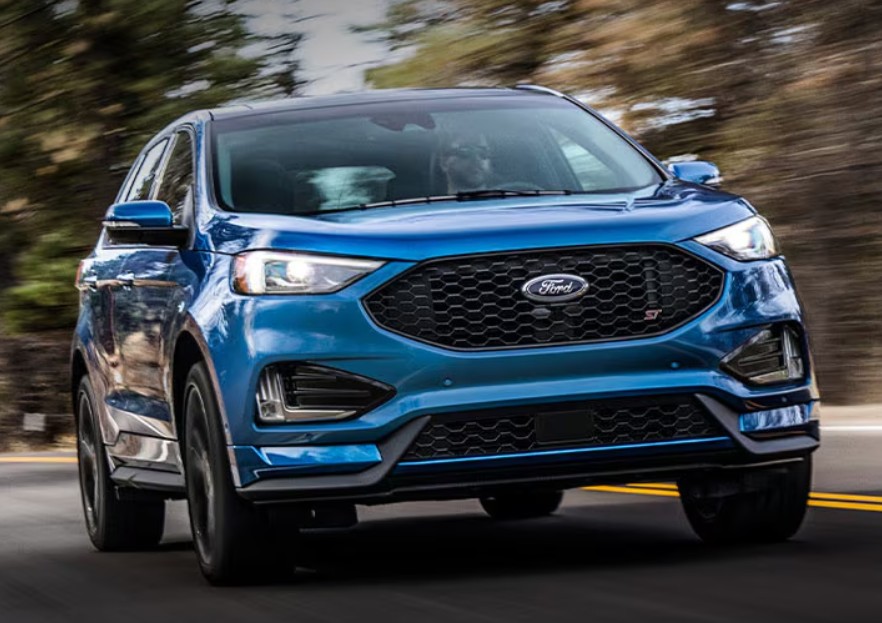
Buying a used Ford Edge can feel a little like shopping for a house in a neighborhood you barely know. Two vehicles may look almost identical from the curb, yet one could give us years of quiet service while the other starts collecting repair bills before we've even memorized the buttons on the dashboard.
That is why choosing the right model year matters.
If we're searching for the best Ford Edge years to buy, the strongest candidates tend to come from the later years of the second generation, particularly 2021, 2022, and 2023. Buyers shopping on a tighter budget may also find certain 2019 and 2020 Ford Edge models attractive, although those years deserve more careful inspection and recall verification.
Older examples can certainly be worthwhile, but the picture becomes more complicated. Complaint databases show considerably more reported problems among some 2013–2018 Edge models, with 2016 and 2017 standing out for potentially expensive engine-related complaints.
So instead of simply asking, "Is the Ford Edge reliable?" we should ask a smarter question:
Which Ford Edge year gives us the best combination of reliability, price, equipment, mileage, and remaining useful life?
Let's break it down.
Content in this publication
- What Are the Best Ford Edge Years to Buy?
- 2023 Ford Edge: One of the Strongest Used Choices
- 2022 Ford Edge: Perhaps the Sweet Spot
- 2021 Ford Edge: A Strong Value Pick
- 2020 Ford Edge: Good Value With a Few Checks
- 2019 Ford Edge: Worth Buying, but Inspect Carefully
- What About the 2018 Ford Edge?
- 2017 Ford Edge: A Year We'd Approach Cautiously
- 2016 Ford Edge: Engine History Matters
- 2015 Ford Edge: First-Year Redesign Caution
- How About 2014 and Older Ford Edge Models?
- Which Ford Edge Generation Should We Buy?
- Ford Edge Engine Choice Matters as Much as the Year
- Mileage vs Model Year: Which Matters More?
- How Much Mileage Is Too Much for a Ford Edge?
- What to Check Before Buying Any Used Ford Edge
- Check Every Ford Edge Recall Before Buying
- Service History Can Make or Break a Ford Edge
- Ford Edge AWD: Worth Buying?
- Ford Edge ST: Should We Buy One?
- How to Test-Drive a Used Ford Edge
- Best Ford Edge Year for a Tight Budget
- Best Ford Edge Year for Long-Term Ownership
- Our Overall Ford Edge Years-to-Buy Ranking
- Final Thoughts: Which Ford Edge Year Should We Actually Buy?
- Frequently Asked Questions
What Are the Best Ford Edge Years to Buy?
For most used-SUV shoppers, we'd place the Ford Edge years into three broad groups.
| Ford Edge Model Year | Our Buying View | Main Reason |
|---|---|---|
| 2023 | Excellent choice | Newer, few reported complaints |
| 2022 | Excellent choice | Mature second-generation design |
| 2021 | Very good choice | Strong balance of age and features |
| 2020 | Good with inspection | Attractive value but verify recalls |
| 2019 | Good with caution | Major refresh, but more complaints |
| 2018 | Inspect carefully | Engine complaints worth investigating |
| 2016–2017 | Higher risk | Expensive coolant/engine complaints |
| 2013 | Higher risk | Very high complaint volume |
No used vehicle should be purchased purely because its model year appears on a "best years" list. Mileage, maintenance history, previous ownership, accident repairs, climate, and driving conditions can easily make a supposedly excellent year worse than a meticulously maintained older Edge.
Still, model-year patterns give us an excellent starting point.
2023 Ford Edge: One of the Strongest Used Choices
If our budget allows it, the 2023 Ford Edge is one of the easiest years to recommend.
By this stage, Ford had been building the second-generation Edge for years. Most of the vehicle's basic architecture was mature, meaning buyers were no longer dealing with the uncertainty that sometimes surrounds the first year of a redesigned vehicle.
Complaint data currently shows relatively few owner-reported problems for the 2023 model compared with several earlier Edge years.
That doesn't guarantee perfection, of course. Newer vehicles naturally have had less time and mileage to develop problems. Still, the combination of age, refinement, technology, and relatively limited complaint history makes the 2023 Edge appealing.
Why We Like the 2023 Ford Edge
The biggest advantage is balance.
We're getting a vehicle modern enough to offer contemporary driver-assistance technology and infotainment without paying the original new-car price.
Depending on trim and specification, used examples may include features such as:
- All-wheel drive
- Ford Co-Pilot360 driver-assistance technology
- Large SYNC infotainment display
- Apple CarPlay and Android Auto
- Heated seats
- Power liftgate
- Adaptive cruise control
- Premium audio
- Sportier ST performance options
For families who want something newer without jumping into a brand-new SUV payment, a well-maintained 2023 Edge deserves a place near the top of the shopping list.
2022 Ford Edge: Perhaps the Sweet Spot
Sometimes the smartest used-car purchase isn't the newest vehicle we can afford. It's the one sitting just behind it.
The 2022 Ford Edge can occupy that sweet spot.
It is new enough to deliver modern safety features and technology but old enough that depreciation may have already knocked a meaningful chunk off its original price.
Why 2022 Makes Sense
The 2022 Edge came late in the second generation. That's usually something we like when buying used.
Automakers tend to refine vehicles as a generation ages. Production processes stabilize, software evolves, suppliers make revisions, and problems discovered during earlier years can sometimes be corrected.
We still need to examine an individual vehicle carefully, but a clean 2022 Edge with documented service history can be an appealing combination of affordability and modern equipment.
Who Should Consider One?
We'd particularly consider the 2022 Edge if we want:
- A relatively recent midsize crossover
- AWD capability
- Two spacious seating rows
- Strong highway comfort
- Modern infotainment
- More cargo room than many compact SUVs
Think of it as the comfortable middle child of the Edge lineup—not excessively old and not painfully expensive.
2021 Ford Edge: A Strong Value Pick
The 2021 Ford Edge may be one of the better targets for shoppers who want to keep purchase costs under control without entering genuinely old-vehicle territory.
By 2021, the second-generation Edge had already received its mid-cycle refresh, so we benefit from a more modern appearance and technology than early second-generation models.
It's also far removed from some of the more concerning engine complaint patterns associated with certain 2016–2018 vehicles.
Why the 2021 Edge Deserves Attention
Used SUV buyers often underestimate the importance of depreciation.
A three-to-six-year-old vehicle can lose a substantial percentage of its original value while still having plenty of usable life remaining. That is exactly the sort of territory where a 2021 Edge can become interesting.
We get a relatively modern SUV without paying for the privilege of being its first owner.
Naturally, service records still matter.
A neglected 2021 Edge with overdue oil changes and questionable accident repairs isn't automatically better than an immaculate 2019 model.
2020 Ford Edge: Good Value With a Few Checks
Moving another year backward brings us to the 2020 Ford Edge.
This can be a smart value purchase, particularly when the price difference between it and a 2021–2023 example is substantial.
However, we'd become more methodical here.
Check the VIN for Outstanding Recalls
Recall status should be checked on every used vehicle, regardless of brand.
NHTSA recommends searching by the vehicle's unique 17-character VIN because that allows buyers to determine whether a specific vehicle is affected by an outstanding safety recall.
This is especially relevant to 2019–2020 Edge shoppers. A 2025 Ford recall involving rearview-camera image problems included certain 2019 and 2020 Ford Edge vehicles among numerous Ford and Lincoln models.
That doesn't automatically make those model years bad purchases.
Recalls are often repaired at no cost through authorized dealers. What matters is knowing whether the particular Edge we're considering has completed all applicable recall work.
Our Rule Before Buying
Never accept:
"I think all the recalls were done."
Check the VIN.
Documentation beats memory every time.
2019 Ford Edge: Worth Buying, but Inspect Carefully
The 2019 Ford Edge is particularly interesting because it received significant updates.
That can make it attractive to buyers who want fresher styling and technology without paying later-model prices.
However, complaint data suggests 2019 accumulated more reported issues than 2020–2023 models in the CarComplaints database. The site currently lists 32 complaints for 2019 compared with 12 for 2020 and lower totals for several subsequent years.
We should interpret those figures carefully because newer vehicles have had less time to accumulate mileage and owner reports.
Still, they give us another reason to conduct a serious pre-purchase inspection.
A Good 2019 Edge Can Still Be an Excellent Buy
A vehicle doesn't become undesirable just because owners have reported problems with others from the same year.
If we find a 2019 Edge with:
- Complete maintenance records
- Clean transmission behavior
- No unexplained coolant loss
- No warning lights
- Smooth acceleration
- Clean accident history
- Completed recall work
- Reasonable mileage
…it may easily be preferable to a poorly maintained newer example.
Condition always gets a vote.
What About the 2018 Ford Edge?
This is where we'd start becoming more cautious.
The 2018 Edge can offer attractive prices, but complaint records include significant engine concerns.
CarComplaints lists engine problems among the more notable issues for 2018 and identifies a reported coolant-related engine failure as one of the model's expensive complaints, with an average reported repair cost of roughly $7,100 on the site's complaint data.
That doesn't mean every 2018 Edge will fail.
Far from it.
But it does mean we'd investigate the engine carefully rather than treating the inspection like a formality.
Questions to Ask About a 2018 Edge
Ask the seller whether the vehicle has ever experienced unexplained:
- Coolant loss
- White exhaust smoke
- Engine overheating
- Rough running
- Misfires
- Check-engine warnings
- Cylinder-related repairs
Then have an independent mechanic verify the vehicle.
Saving $3,000 on the purchase price isn't much of a bargain if we inherit a several-thousand-dollar engine problem six months later.
2017 Ford Edge: A Year We'd Approach Cautiously
Among used Edge model years, 2017 deserves particular attention.
CarComplaints currently identifies the 2017 Edge as its worst Edge model year overall and lists coolant leaking into a cylinder as its highest-ranked serious Edge complaint. The site's owner-reported figures place the average repair cost for that specific complaint around $5,900.
That's enough to change our buying strategy.
Does That Mean Never Buy a 2017 Ford Edge?
Not necessarily.
Used-car reliability is never that black and white.
We might encounter a 2017 model that:
- Has extremely low mileage
- Received meticulous maintenance
- Had relevant repairs already completed
- Uses an engine configuration without the same history
- Passes an extensive mechanical inspection
- Is priced appropriately for the risk
Still, when comparable 2020–2022 vehicles are available, we'd generally prefer moving toward the newer Edge.
The potential savings need to justify the increased uncertainty.
2016 Ford Edge: Engine History Matters
The 2016 Ford Edge deserves similar scrutiny.
Complaint data identifies serious coolant-related cylinder problems among reported 2016 Edge engine failures. CarComplaints lists an average reported repair cost of approximately $6,800 for its highlighted "engine light on/coolant in cylinder" complaint.
Again, that's owner-submitted complaint data rather than a guarantee about every vehicle.
But when we're spending thousands of dollars on a used SUV, patterns matter.
Why Expensive Engine Problems Change the Equation
Small problems rarely frighten us away from an otherwise good used vehicle.
You may be interested in reading Ford Edge Model Years: Complete Guide From 2007 to 2024
A battery? Normal.
Worn brakes? Expected.
Tires approaching replacement? Negotiating material.
A potentially damaged engine is different.
That's the financial equivalent of noticing storm clouds while we're already standing in a canoe.
A cheaper purchase price suddenly doesn't feel so cheap.
2015 Ford Edge: First-Year Redesign Caution
The 2015 model introduced the second-generation Ford Edge.
First-year redesigns can be appealing because they bring major improvements, but we're usually more cautious with them when shopping used.
Manufacturers can perform millions of miles of testing, yet ordinary owners inevitably discover issues engineers didn't encounter during development.
For the 2015 Edge, owner complaints include engine stalling as well as electrical and drivetrain concerns. CarComplaints specifically notes reports of vehicles dying while driving and associates some cases with throttle-body replacement.
Would We Buy a 2015 Edge?
Only after a thorough inspection and at the right price.
With later second-generation examples now widely available on the used market, we don't have a compelling reason to target 2015 unless the particular vehicle is exceptionally well maintained or significantly cheaper.
How About 2014 and Older Ford Edge Models?
Older first-generation Edges can still work well for budget-conscious buyers.
The problem isn't simply age—it is the uncertainty that age brings.
A 12-to-18-year-old SUV may now require replacement of components that have little to do with the vehicle's original design quality.
Rubber hardens.
Bushings wear.
Seals leak.
Sensors age.
Suspension components loosen.
Plastic cooling-system parts become brittle.
Even a historically reliable vehicle eventually starts behaving like an aging house: the foundation may remain strong, but little maintenance jobs begin appearing in every room.
The 2013 Edge Deserves Extra Investigation
Complaint statistics make the 2013 Ford Edge particularly notable.
CarComplaints currently shows substantially more complaints for 2013 than surrounding Edge years and identifies the persistent "door ajar" warning as a frequently reported issue.
If we're considering one because the price is attractive, we'd want the inspection to cover its electrical equipment and door-latch operation carefully.
Which Ford Edge Generation Should We Buy?
Ford sold the Edge across two primary generations in North America.
First Generation: 2007–2014
These vehicles can be inexpensive today.
Their main advantage is price. Buyers seeking basic transportation may find a clean example attractive, especially if the SUV has been owned by someone who treated maintenance like religion.
Their disadvantage is simply age.
Even if the drivetrain is healthy, wear-and-tear repairs become increasingly likely.
Second Generation: 2015–2024
This is where we'd focus most used Edge shopping.
The second-generation vehicle is more modern in virtually every respect, but reliability isn't identical across the entire production run.
Our Preferred Window
For most buyers, we'd begin with:
2021–2023
Then expand to:
2019–2020
if the budget demands it.
That strategy avoids much of the uncertainty associated with early second-generation models while keeping us away from near-new pricing.
Ford Edge Engine Choice Matters as Much as the Year
Here's something many "best year" guides overlook:
Two Ford Edges from the same year can have different engines.
That matters.
Engine availability varied by trim and model year, with turbocharged EcoBoost engines becoming increasingly important throughout the second generation.
We shouldn't assume that a reliability complaint about one powertrain automatically applies equally to every Edge sold during that model year.
Always Confirm the Exact Powertrain
Before buying, identify:
- Engine displacement
- Turbocharger configuration
- Transmission
- Front-wheel-drive or AWD configuration
- Production date
- Service history
Then research that exact combination.
The badge on the tailgate tells us surprisingly little.
Mileage vs Model Year: Which Matters More?
Suppose we're comparing:
2021 Ford Edge — 95,000 miles
versus
2019 Ford Edge — 48,000 miles
Which should we buy?
There isn't an automatic answer.
A Lower-Mileage Older Edge Can Be Better
Mileage matters because nearly every mechanical component wears with use.
Yet low mileage can occasionally hide its own problems, especially if the vehicle spent years sitting unused or only traveled short distances.
Maintenance history remains the deciding factor.
We'd Prefer Evidence Over Odometer Numbers
A folder full of invoices showing regular oil changes, fluid services, tires, brakes, inspections, and recall work tells us more than an unusually shiny steering wheel.
Documentation turns guesswork into evidence.
How Much Mileage Is Too Much for a Ford Edge?
There isn't a cliff at which an Edge suddenly becomes unreliable.
Still, our buying strategy changes as mileage climbs.
Below roughly 60,000 miles, we're mostly evaluating condition and maintenance.
Between approximately 60,000 and 100,000 miles, wear items become increasingly important.
Past 100,000 miles, we'd budget more aggressively for future maintenance.
At 150,000 miles and beyond, price must compensate us for the additional mechanical uncertainty.
Don't Fear Highway Miles Automatically
A 100,000-mile Edge that spent its life cruising interstate highways may have experienced less mechanical stress than a 60,000-mile example used for endless stop-and-go city trips.
Mileage tells us how far the vehicle traveled.
It doesn't tell us how difficult the journey was.
What to Check Before Buying Any Used Ford Edge
Model-year research gets us into the right neighborhood.
The inspection tells us whether we're choosing the right house.
Before purchasing, we'd investigate the vehicle systematically.
Mechanical Inspection
Have a qualified independent mechanic check:
- Engine leaks
- Coolant condition and level
- Cooling-system pressure
- Transmission operation
- Turbocharger condition where applicable
- Suspension wear
- Wheel bearings
- Steering components
- Brake condition
- AWD system
- Battery and charging system
Electronic Inspection
Modern vehicles are computers with wheels.
A proper diagnostic scan can reveal stored fault codes even when the dashboard currently looks clean.
Don't Ignore Intermittent Warnings
If the seller says:
"It only does that occasionally."
Treat that sentence like a flashing neon sign.
Intermittent problems can be harder and more expensive to diagnose than permanent ones.
Check Every Ford Edge Recall Before Buying
Recalls aren't necessarily reasons to reject a vehicle.
You may be interested in readingFord Edge Model Years: Complete Guide From 2007 to 2024You may be interested in reading
Ford Edge Lincoln Equivalent: Which Luxury SUV Matches It?Ignoring them is.
NHTSA allows owners and prospective buyers to search recall information using the vehicle's VIN. That is the safest way to determine whether an individual Edge has unresolved safety recalls.
Run the VIN before money changes hands.
If an applicable recall remains incomplete, determine whether a Ford dealer can complete the repair.
Why VIN-Level Research Is Better Than Year-Level Research
A recall may apply only to vehicles built during particular production periods or equipped with particular components.
So saying:
"2020 Edges had a recall"
doesn't necessarily mean:
"This 2020 Edge has an outstanding recall."
The VIN settles the question.
Service History Can Make or Break a Ford Edge
We would gladly pay somewhat more for the Edge with documented maintenance.
Why?
Because maintenance records reduce uncertainty.
Oil changes are particularly important with turbocharged engines. Clean, correctly specified oil protects internal engine components and turbocharger bearings under enormous heat.
Skipping services to save a few dollars can eventually become a spectacularly expensive experiment.
Look for Consistency
We like seeing maintenance every year—not one enormous invoice immediately before the vehicle goes up for sale.
A freshly serviced SUV isn't necessarily a well-maintained SUV.
Sometimes it's simply an SUV whose seller finally started paying attention.
Ford Edge AWD: Worth Buying?
For drivers dealing with snow, wet roads, steep terrain, or frequent poor-weather travel, AWD can be appealing.
But additional drivetrain components create additional maintenance possibilities.
When test-driving an AWD Edge, pay attention to:
- Vibration
- Clunking
- Humming
- Binding during tight turns
- Drivetrain warning messages
- Uneven tire wear
Tires Matter More on AWD Vehicles
Ideally, all four tires should be similar in brand, model, size, tread depth, and overall diameter.
Large differences in tire circumference can place additional strain on AWD hardware.
A bargain set of mismatched tires might therefore reveal something about how carefully the vehicle was maintained.
Ford Edge ST: Should We Buy One?
The Edge ST transforms the personality of the vehicle.
Instead of merely being a comfortable midsize crossover, it adds stronger performance and sportier styling.
That's fun.
But performance models deserve additional scrutiny.
Assume It May Have Been Driven Harder
Not every ST owner spends weekends pretending the freeway entrance ramp is a qualifying lap.
But some do.
Check:
- Tires
- Brakes
- Suspension
- Engine modifications
- Aftermarket tuning
- Service records
A stock, meticulously maintained ST is far more attractive than one covered in aftermarket modifications with no documentation.
How to Test-Drive a Used Ford Edge
Don't spend the entire test drive talking to the salesperson.
Listen to the vehicle.
Start it cold if possible.
A seller who has already warmed the engine before our arrival may have an innocent reason—but we'd still prefer seeing how it behaves from a true cold start.
During the Drive
Check for:
- Smooth idle.
- Predictable throttle response.
- Clean transmission shifts.
- Straight tracking.
- Quiet suspension operation.
- Strong braking without vibration.
- Consistent engine temperature.
- Functional climate control.
- Proper infotainment operation.
- No warning messages.
Then Drive It Again
A five-minute lap around the dealership isn't enough.
City driving, highway speeds, parking maneuvers, acceleration, braking, and rough pavement reveal different things.
Cars can behave beautifully for four minutes.
Problems often need fifteen.
Best Ford Edge Year for a Tight Budget
If minimizing purchase price is the priority, we'd shop by condition rather than blindly chasing the newest year.
A clean 2019 or 2020 model may offer better value than stretching the budget for a newer SUV with high mileage or poor history.
Older 2014–2015 vehicles can be inexpensive, but we'd reserve money for repairs.
Think beyond the purchase price.
Create a Repair Reserve
If our entire automotive budget is $15,000, spending the complete $15,000 on the vehicle may be risky.
Keeping perhaps $1,000–$2,000 available for tires, fluids, batteries, brakes, or unexpected repairs can make used-car ownership considerably less stressful.
The cheapest SUV isn't necessarily the one with the lowest price tag.
It's the one that costs us the least during the years we own it.
Best Ford Edge Year for Long-Term Ownership
If we planned to keep an Edge for another seven or eight years, we'd lean heavily toward 2021–2023 examples.
Why?
Starting with a younger vehicle means we reach major age-related maintenance milestones later.
We're also more likely to benefit from:
- Modern safety technology
- Newer infotainment
- Lower accumulated mileage
- Better cosmetic condition
- More available service history
- More years before corrosion and rubber-component aging become major considerations
A 2022 Edge may cost more today than a 2017 Edge.
But ownership is a marathon, not a checkout receipt.
Our Overall Ford Edge Years-to-Buy Ranking
If we had to simplify everything into a shopping order, we'd approach the used market like this:
First choices: 2023, 2022, 2021
Value alternatives: 2020, 2019
Buy only after careful inspection: 2018, 2015
Approach with considerably more caution: 2016, 2017, 2013
This isn't a declaration that every newer Edge is excellent or every older Edge is troublesome. Complaint databases themselves are based on voluntarily submitted reports and don't tell us how many trouble-free examples exist.
They are clues—not crystal balls.
That's why the individual vehicle remains more important than the spreadsheet.
Final Thoughts: Which Ford Edge Year Should We Actually Buy?
For most shoppers asking about Ford Edge years to buy, we'd start our search with the 2021, 2022, and 2023 Ford Edge.
They offer a compelling combination of modern equipment, relatively recent production, mature second-generation engineering, and currently lower complaint volumes than several earlier years. Buyers seeking a less expensive alternative can widen the search to 2019 and 2020, provided the vehicle passes a pre-purchase inspection and its VIN is checked for outstanding recalls.
We'd be substantially more careful around certain 2016–2018 vehicles because owner complaint data contains expensive coolant-related engine failures, particularly for 2016 and 2017.
But remember the golden rule of used-car shopping:
Buy the vehicle, not just the year.
An immaculate 2020 Edge with one careful owner, complete records, four matching tires, fresh fluids, and no accident history can be a much smarter purchase than a neglected 2023 Edge wearing a suspiciously low price.
Do the homework. Check the VIN. Inspect the engine. Drive it properly. Pay an independent mechanic to look underneath it.
A few hundred dollars spent before the purchase can protect thousands afterward.
And when we find the right Ford Edge?
That's when used-car shopping stops feeling like gambling and starts feeling like a genuinely smart deal.
Frequently Asked Questions
What are the best Ford Edge years to buy?
The 2021, 2022, and 2023 Ford Edge are among our preferred used-model targets because they combine relatively modern equipment with mature second-generation engineering. Current complaint databases also show fewer reports for these later years than several older Edge models, although newer vehicles naturally have had less time to accumulate problems.
Is a 2020 Ford Edge a good used SUV?
A well-maintained 2020 Ford Edge can be a good value. We'd check its maintenance history, perform a mechanical inspection, scan the electronics, and verify its VIN for recalls. Certain 2019–2020 Edge vehicles were included in a later Ford rearview-camera recall, making VIN verification especially worthwhile.
Which Ford Edge years should we be careful with?
We'd investigate 2016, 2017, and 2018 models especially carefully because complaint records contain costly coolant-related engine problems. CarComplaints currently ranks 2017 as the worst Edge model year in its database.
Is a Ford Edge with 100,000 miles worth buying?
It can be. At that mileage, maintenance history becomes more important than the odometer alone. We'd inspect the engine, cooling system, transmission, AWD components where equipped, suspension, brakes, tires, and electronics. A well-maintained 100,000-mile Edge may still be preferable to a neglected vehicle with considerably fewer miles.
You may be interested in readingFord Edge Model Years: Complete Guide From 2007 to 2024You may be interested in reading
Ford Edge Lincoln Equivalent: Which Luxury SUV Matches It?You may be interested in reading
 BMW M5 Years to Avoid: The Generations and Model Years We’d Approach Carefully
Should we buy a newer Ford Edge with high mileage or an older one with low mileage?
Neither is automatically better. Compare service records, driving history, mechanical condition, accident history, tire wear, engine behavior, and price. Highway mileage can sometimes be relatively gentle, while a lower-mileage vehicle driven mainly on short urban journeys may have experienced substantial wear. A professional pre-purchase inspection should ultimately help settle the decision.
If you want to know other articles similar to Ford Edge Years to Buy: The Best Model Years for a Used SUV you can visit the category Models.
Honda Passport vs Toyota 4Runner: Which SUV Is Better?
Honda Passport vs Ford Bronco: Which SUV Is Better?
Honda Passport vs Ford Explorer: Which SUV Is Better?
Honda Passport or Pilot: Which SUV Is Better?
Honda Passport vs Jeep Grand Cherokee: Which SUV Is Better?
Honda Passport vs Nissan Pathfinder: Which SUV Is Better?
Leave a Reply
More content of your interest