
Kia Carnival Boot Space: Dimensions, Capacity and Practicality Guide

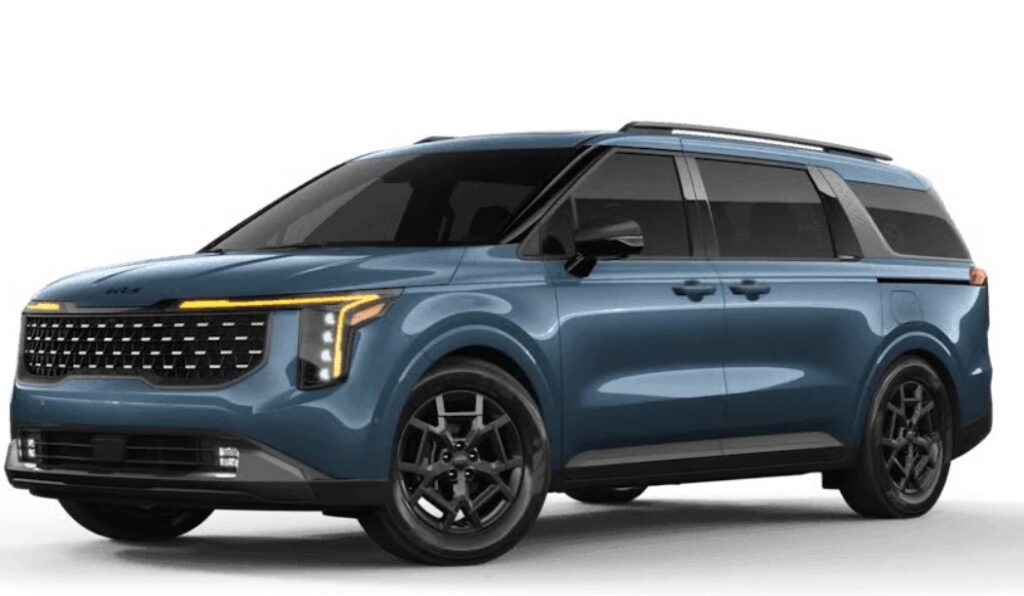
When we buy a large family vehicle, passenger space usually gets most of the attention. Yet there is another question that can make or break everyday ownership: how much stuff can we actually fit behind those seats?
That is where the Kia Carnival boot space becomes one of the vehicle's strongest selling points.
The Carnival is designed as a people mover—or MPV, depending on where we live—but its cargo area behaves almost like a small van when we start folding seats. Even with every seating row available for passengers, there is a genuinely useful luggage area behind the third row.
For the current Australian-specification Carnival, Kia quotes 627 litres of VDA luggage space with all seats upright and 2,827 litres with the rear seating folded/configured for maximum cargo capacity.
In the United States, where Kia measures cargo volume using SAE methodology, the 2026 Carnival is rated at 40.2 cubic feet minimum and 145.1 cubic feet maximum.
Those numbers sound impressive, but numbers alone never tell us whether a boot works in real life. Can it handle suitcases for a family holiday? A stroller? Sports equipment? Furniture? What happens when all three seating rows are occupied?
Let's unpack it.
Content in this publication
- How Big Is the Kia Carnival Boot?
- Kia Carnival Boot Space With All Seats Up
- Why the Deep Cargo Well Makes Such a Difference
- Kia Carnival Boot Space With the Third Row Folded
- Maximum Kia Carnival Cargo Capacity
- Kia Carnival Boot Space in Litres
- Kia Carnival Boot Space in Cubic Feet
- Why Kia Carnival Cargo Figures Vary Online
- How Practical Is the Kia Carnival Boot in Everyday Life?
- Can a Kia Carnival Fit Several Suitcases?
- Kia Carnival Third-Row Flexibility
- What About the Kia Carnival Second Row?
- Kia Carnival Hybrid Boot Space
- Is the Kia Carnival Boot Bigger Than an SUV Boot?
- Kia Carnival Boot Space for Large Families
- Loading the Kia Carnival for a Road Trip
- Is the Kia Carnival Good for Moving Large Items?
- Kia Carnival Boot Access and Tailgate Convenience
- Does the Kia Carnival Have Enough Boot Space for Eight People?
- How the Carnival's Size Helps Cargo Capacity
- Who Will Appreciate the Kia Carnival Boot Most?
- Is There a Downside to Such a Large Boot?
- What Should We Check Before Buying a Kia Carnival?
- Kia Carnival Boot Space: Final Verdict
- Frequently Asked Questions
- 1. How much boot space does the Kia Carnival have?
- 2. Does the Kia Carnival have good boot space with the third row up?
- 3. Do the Kia Carnival third-row seats fold into the floor?
- 4. Does the Kia Carnival Hybrid lose boot space?
- 5. Why do some websites give different Kia Carnival boot-space figures?
How Big Is the Kia Carnival Boot?
For the Australian-market Carnival, the headline number is straightforward: 627 litres with all seats up.
That is particularly impressive because we are not talking about boot capacity after sacrificing the third row. This is available luggage volume while the vehicle remains configured to carry passengers across all three rows.
Fold and rearrange the rear seating and the Carnival transforms dramatically. Kia lists 2,827 litres of VDA luggage capacity in its Australian specifications.
Think of the difference like opening an accordion. From the outside, the Carnival has fixed dimensions. Inside, however, the usable cargo area can expand dramatically depending on how we arrange the seats.
That flexibility is arguably more important than the headline capacity itself.
Kia Carnival Boot Space With All Seats Up
This is the configuration most families should pay attention to.
Why?
Because enormous maximum cargo figures are easy for manufacturers to advertise. Almost any large vehicle becomes spacious after we remove or fold most passenger seats. The tougher test is how much luggage space remains when everyone actually comes along for the ride.
The Carnival performs particularly well here.
With its three seating rows in use, Kia Australia lists 627 litres of luggage space measured using the VDA method.
That makes the cargo area practical for considerably more than a few shopping bags.
We can realistically think about fitting combinations such as:
- several medium suitcases for a family trip;
- a folded stroller plus shopping;
- school bags and sporting equipment;
- airport luggage for several passengers;
- boxes, groceries and everyday family gear.
Actual fit obviously depends on the shape of the items rather than litres alone. A rigid suitcase behaves differently from soft duffel bags, and a bulky stroller can consume awkwardly shaped space surprisingly quickly.
Still, the Carnival begins with a considerable advantage: it doesn't leave us with a tiny shelf behind the third row.
Why the Deep Cargo Well Makes Such a Difference
One of the clever aspects of the Carnival is not merely the quantity of space but how that space is created.
The third-row seating uses a 60:40 split sinking design. Kia specifically highlights that the third row can sink away while the second-row seats can fold and slide forward.
When the third-row seats are upright, their storage cavity effectively contributes to a deeper cargo area behind them.
And that depth matters.
Imagine packing groceries into two boxes. One is wide but shallow; the other offers substantial vertical depth. Their theoretical volume might be similar, yet the deeper box can often swallow tall bags and irregular objects more naturally.
The Carnival's boot benefits from the same principle.
That makes the area behind the third row feel more useful than we'd expect simply by looking through the rear window.
Kia Carnival Boot Space With the Third Row Folded
Fold the third-row seats away and things become much more interesting.
We no longer have a conventional family-car boot. We have a broad cargo floor capable of accommodating significantly larger loads.
This configuration can be particularly useful when we need passenger seating in the first and second rows but don't require the third row.
That might describe plenty of everyday situations: four or five people heading to the airport, parents carrying children's bicycles, a camping trip, or simply a weekend visit to a home-improvement store.
The beauty here is flexibility rather than sheer capacity.
We don't have to choose permanently between carrying people and carrying cargo.
Maximum Kia Carnival Cargo Capacity
Configure the interior for maximum luggage carrying and Kia Australia quotes 2,827 litres VDA for the current Carnival.
That's a huge jump from the already substantial 627-litre figure with all seats available.
Kia's broader luggage-volume documentation also illustrates why regional specification matters. Depending on seating configuration, Kia documentation lists different maximum VDA volumes, including 2,905 litres for certain seven-seat layouts and 2,827 litres for an eight-seat configuration.
So whenever we encounter a slightly different Carnival boot-space figure online, it isn't necessarily wrong.
It could reflect another seating layout, market, model generation or measurement standard.
That context is essential.
Kia Carnival Boot Space in Litres
For shoppers in Australia and other markets where litres are the familiar measurement, the current Australian figures provide a useful reference:
627 litres with all seats upright and 2,827 litres in its expanded luggage configuration.
Those measurements use the VDA standard.
VDA testing effectively uses standardized blocks to calculate usable cargo volume. That's helpful because it attempts to quantify practical space rather than filling every tiny interior crevice mathematically.
Still, we shouldn't assume a VDA litre figure can be directly compared with an SAE figure from an American specification sheet.
The methods differ.
Kia Carnival Boot Space in Cubic Feet
American shoppers will encounter different-looking numbers.
Kia lists the 2026 Carnival at 40.2 cubic feet of minimum cargo volume and 145.1 cubic feet maximum under SAE measurements across its trim comparison specifications.
Kia's 2026 U.S. brochure also identifies 40.2 cubic feet behind the third row on applicable configurations.
At first glance, converting 40.2 cubic feet mathematically into litres might appear to conflict with the 627-litre Australian figure.
That's exactly why measurement standards matter.
We shouldn't take an SAE figure, convert it into litres and assume it should equal a VDA measurement. Different testing protocols define and measure cargo volume differently.
For an SEO article comparing models, this distinction is worth stating clearly rather than presenting incompatible numbers side by side as though one manufacturer—or one website—made a mistake.
Why Kia Carnival Cargo Figures Vary Online
Search for "Kia Carnival boot space" and we're likely to find multiple answers.
Some pages mention litres. Others quote cubic feet. Others refer to older Carnival generations altogether.
There are several reasons.
Market specifications can differ. Seating layouts can differ. Model generations change. Different testing methods produce different results. Even manufacturers sometimes publish capacity according to particular seat positions rather than one universal configuration.
Older versions also shouldn't be confused with today's vehicle.
For example, previous Kia documentation for another Carnival specification cited a 540-litre boot figure, demonstrating how easily an old specification can appear beside current-generation search results.
Whenever we're researching a Carnival, matching the figure to the model year, country and seat configuration is essential.
VDA vs SAE Cargo Measurements
This technical difference deserves a little attention.
VDA measurements are common in Europe, Australia and numerous international markets. SAE measurements are commonly published for U.S.-market vehicles.
Neither number magically makes the boot larger or smaller.
They're simply different rulers for measuring the same type of space.
It's a little like comparing fuel economy expressed in miles per gallon with litres per 100 kilometres. Both describe efficiency, but directly comparing the raw numbers makes no sense until we understand the methodology.
The same idea applies here.
Should We Trust Litres or Cubic Feet More?
Both can be useful.
What matters more is consistency.
If we're comparing the Kia Carnival with another vehicle in Australia, we'd ideally compare manufacturer-supplied VDA figures against VDA figures.
If we're shopping in the United States, SAE cubic-foot measurements from U.S.-specification vehicles make more sense.
That avoids creating misleading comparisons through casual unit conversions.
How Practical Is the Kia Carnival Boot in Everyday Life?
Very.
And that statement isn't based solely on its maximum cargo capacity.
Family vehicles live messy lives. One morning we're carrying seven or eight people. That afternoon we're moving a bicycle. Tomorrow we're collecting a flat-packed desk.
A useful family vehicle needs to adapt without turning seat management into a wrestling match.
The Carnival's split-folding third row helps here. Rather than forcing us to choose between "passenger mode" and "cargo mode," the split design allows mixed configurations.
We can retain part of the third row while folding the other section for longer or bulkier cargo.
That seemingly simple feature can be more valuable in real life than another hundred litres on a specification sheet.
Can a Kia Carnival Fit Several Suitcases?
For most family trips, luggage capacity is one of the Carnival's strong suits.
With 627 litres quoted behind the occupied rear seating in the Australian model, there is enough theoretical capacity to work with before we begin folding seats.
Exactly how many suitcases fit will depend on their dimensions.
That's why statements such as "fits six suitcases" should always be treated cautiously unless someone specifies the actual suitcase sizes and loading orientation.
Soft luggage gives us an advantage because it can squeeze around wheel-arch intrusions and other irregular shapes.
Hard-shell luggage demands more careful packing.
In practice, we'd load the largest rectangular suitcases first, use smaller bags to fill the remaining cavities, and keep frequently needed items near the tailgate.
It's essentially three-dimensional Tetris—only the prize is getting everyone to the airport without somebody balancing a backpack on their knees.
What About a Stroller?
This is probably a more relevant question for many Carnival buyers.
A large family MPV that can't easily accommodate a stroller while carrying passengers would miss the point entirely.
The deep rear loading area makes the Carnival particularly useful for bulky family equipment.
Compact folding strollers should present relatively little difficulty. Larger double strollers consume substantially more room, of course, and owners may need to experiment with vertical versus horizontal loading.
The important distinction is that we begin with a meaningful cargo area behind the third row.
That gives us options.
Can We Carry Sports and Camping Equipment?
This is where folding one or both portions of the third row becomes useful.
Camping chairs, tents, coolers, sports bags and similarly awkward items rarely pack neatly into conventional suitcase-shaped spaces.
By sacrificing unused rear seating positions, we can create a longer and flatter loading area without abandoning the second row.
For families who regularly alternate between school-run duties and weekend adventures, that's arguably the Carnival's sweet spot.
Kia Carnival Third-Row Flexibility
The third row is central to the Carnival's cargo strategy.
Kia describes it as a 60:40 split sinking third-row seat, while the second row can fold and slide forward.
That 60:40 split is especially valuable because cargo requirements rarely arrive in perfect all-or-nothing packages.
Suppose six people are travelling but we also need room for a long bag, camping equipment or sporting gear. Folding only part of the third row can create the necessary cargo channel while leaving another passenger position available.
That's the kind of flexibility that doesn't look spectacular in a brochure but becomes extremely useful after six months of ownership.
The Advantage of Sinking Third-Row Seats
A seat that disappears into the floor is much more convenient than one that needs to be physically removed and stored in a garage.
We don't want a people mover that requires advance logistics every time plans change.
The Carnival's sinking-seat arrangement means cargo transformation can happen as requirements change.
Passengers today. Boxes tomorrow.
No spare seat sitting against the garage wall.
What About the Kia Carnival Second Row?
Here we need to be careful because seating systems can vary depending on specification and market.
Kia Australia's current model information states that the second-row seats can fold down and slide forward.
Other markets and certain trims can use alternative arrangements, including more comfort-oriented seating.
This matters because the maximum theoretical cargo volume isn't always the same as having a perfectly empty van-like floor.
If maximum cargo practicality matters more to us than luxury second-row seating, we should inspect the exact trim we're considering rather than assuming every Carnival interior works identically.
Seven-Seat vs Eight-Seat Kia Carnival Boot Space
The number of seats can influence quoted cargo capacity.
Kia's luggage-volume documentation illustrates this clearly: it lists minimum volumes around 627 litres for certain seven- and eight-seat configurations, while maximum capacity can differ according to seating arrangement.
That's another reason to avoid claiming there is one universal Carnival cargo figure covering every version sold worldwide.
The better question is:
How much space does the specific Carnival configuration we want provide?
Once we ask that, the specifications become much easier to understand.
Kia Carnival Hybrid Boot Space
Hybrid buyers often worry about sacrificing luggage space because batteries need somewhere to live.
In the Australian Carnival Hybrid, Kia's specifications place the hybrid battery beneath the second-row seat on the driver's side. The same specification sheet lists 627 litres with all seats up and 2,827 litres with the third row folded/configured for luggage, across the listed powertrain variants.
That's significant.
It means choosing the hybrid doesn't automatically turn the Carnival into a compromised luggage carrier in that market specification.
In the U.S., Kia's current Carnival Hybrid specifications similarly list 40.2 cubic feet minimum and 145.1 cubic feet maximum using SAE measurements.
For families considering the hybrid primarily for improved fuel efficiency, retaining substantial cargo flexibility is a major practical advantage.
Is the Kia Carnival Boot Bigger Than an SUV Boot?
Often, yes—but this comparison needs context.
A large SUV may appear enormous externally, yet three-row SUVs face a packaging problem. Their rear suspension, higher floor, drivetrain hardware and third-row arrangement can squeeze cargo space when all seats are occupied.
A dedicated people mover like the Carnival approaches packaging differently.
The body is shaped around passengers and cargo from the beginning.
That often means more efficient use of the vehicle's overall footprint.
So while an SUV might look tougher and sit higher off the ground, the Carnival can feel like a magician's hat when we open the tailgate: there is often more useful space inside than its styling suggests.
Kia Carnival Boot Space for Large Families
For large families, maximum cargo capacity isn't necessarily the most important measurement.
The all-seats-up capacity is.
Think about why.
If we're travelling with four people, virtually any large vehicle allows us to fold unused seats. But when seven or eight occupants are aboard, those seats can't disappear.
Suddenly, the space behind the final row becomes precious real estate.
That's where a 627-litre VDA figure in the Australian specification becomes particularly compelling.
We can carry people without automatically surrendering the luggage bay.
That is exactly what a proper people mover should accomplish.
Loading the Kia Carnival for a Road Trip
Raw volume gets us only halfway there.
Packing intelligently can make a surprisingly large difference.
Heavy suitcases should generally sit low and close to the seatbacks. Soft bags can occupy irregular gaps. Frequently needed items—snacks, jackets, children's gear or overnight bags—should remain accessible near the rear rather than becoming archaeological discoveries beneath everything else.
And there's one safety principle we shouldn't ignore: cargo should be secured properly rather than stacked recklessly.
Kia's U.S. material specifically warns that cargo should be evenly distributed, secured and not piled beyond safe limits.
A huge boot is useful only when we load it responsibly.
Is the Kia Carnival Good for Moving Large Items?
Within reason, absolutely.
Once we're using the expanded cargo configuration, the Carnival becomes remarkably useful for furniture boxes, bicycles, large purchases and household equipment.
It isn't a commercial van, and we shouldn't pretend otherwise.
Interior trim, seats and carpeting remain designed around passenger comfort rather than construction-site abuse.
But for occasional large-item transport, the Carnival's enormous potential cargo area gives owners much more flexibility than a conventional sedan or compact SUV.
This is one of those vehicles where a spontaneous furniture-store purchase doesn't automatically require calling a friend with a pickup.
Kia Carnival Boot Access and Tailgate Convenience
Capacity is only part of cargo usability.
A massive boot behind an irritating tailgate would lose some of its charm.
Depending on Australian grade, Kia offers features including a Smart Power Tailgate with Auto-Close, designed to provide easier access when our hands are occupied. Kia lists this equipment on selected grades.
This sounds like a luxury detail until we're standing behind the car carrying shopping bags while supervising children.
Then it suddenly feels essential.
Good family-car design often works like that: the least glamorous features become the ones we appreciate most.
Does the Kia Carnival Have Enough Boot Space for Eight People?
This is perhaps the central question.
And for most everyday requirements, the answer is yes.
Having every seat occupied obviously places the greatest pressure on luggage capacity. Yet the Carnival is specifically designed for this job.
Its Australian specification retaining 627 litres with all seats upright means we aren't left with the token cargo shelf sometimes found behind the third row of smaller three-row vehicles.
For unusually luggage-heavy trips, such as eight people each carrying a large checked suitcase, we may still need to pack carefully or consider external luggage solutions where appropriate.
No vehicle contains infinite space.
But the Carnival starts from a far stronger position than many passenger vehicles.
How the Carnival's Size Helps Cargo Capacity
The current Australian Carnival measures 5,155 mm long, 1,995 mm wide and has a 3,090 mm wheelbase, according to Kia's specifications.
Those are substantial dimensions.
But the crucial point is what Kia does with them.
A long wheelbase helps create passenger room while allowing the rear of the body to remain useful for cargo. A broad body helps with cabin width, and the boxier roofline preserves vertical volume.
This is why MPVs can be so spatially efficient.
Rather than sacrificing interior volume to dramatically sloping rooflines or heavily sculpted rear bodywork, they tend to prioritize the rectangular box humans and luggage actually need.
Form follows function.
And luggage loves rectangles.
Who Will Appreciate the Kia Carnival Boot Most?
The Carnival's cargo area makes particular sense for parents, large households, airport-transfer users, road-trip enthusiasts, sporting families and anyone regularly switching between passenger and cargo duties.
It also works surprisingly well for people who don't need eight seats every day.
Why buy such a large vehicle if we aren't always carrying a crowd?
Because unused passenger space can become cargo versatility.
A family of four can travel with an enormous amount of equipment. A couple can use the Carnival almost like an adventure van. Grandparents can carry several relatives without abandoning room for luggage.
The ability to change roles is its defining strength.
Is There a Downside to Such a Large Boot?
There is always a compromise somewhere.
The Carnival achieves impressive interior capacity partly because it is a genuinely large vehicle. At more than five metres long in Australian specification, parking and manoeuvring naturally require more space than they would in a compact crossover.
Some buyers may prefer a smaller SUV if they rarely use more than five seats.
Others may decide the Carnival's passenger and cargo flexibility easily outweighs its exterior dimensions.
That's less about which vehicle is objectively better and more about how we actually live.
If the car spends Monday through Friday navigating tight urban parking spaces with one occupant, size can feel excessive.
If Saturday arrives with children, grandparents, a stroller, three sports bags and a supermarket run, suddenly that same size feels brilliant.
What Should We Check Before Buying a Kia Carnival?
Don't evaluate the boot solely from the specification sheet.
Visit the vehicle with the equipment we regularly carry whenever possible. Bring the stroller. Measure the largest suitcase. Check whether bicycles fit the way we expect. Test how easily the third row folds. Look at loading height and the shape of the opening.
Most importantly, verify the exact trim and seating configuration.
A few minutes of real-world experimentation can answer questions that thousands of words—and litres—cannot.
Cargo capacity is mathematical.
Cargo practicality is personal.
Kia Carnival Boot Space: Final Verdict
The Kia Carnival is one of those vehicles whose luggage space makes more sense the longer we live with the idea.
At first, 627 litres with all seats upright sounds like another specification. Then we imagine the family seated across three rows with luggage still fitting behind them. Suddenly the number matters.
Configure the Australian model for expanded cargo duties and Kia quotes as much as 2,827 litres VDA, turning the Carnival into an exceptionally versatile load carrier.
American measurements tell the same general story through a different standard: Kia quotes 40.2 cubic feet minimum and 145.1 cubic feet maximum for the U.S.-market 2026 Carnival.
We shouldn't directly compare those VDA and SAE values without accounting for their different measurement methods. What we can confidently conclude is simpler: the Kia Carnival combines genuine three-row passenger capacity with unusually serious luggage capability.
For everyday shopping, strollers and school bags, it's generous. For holidays, camping gear and airport runs, it's exceptionally useful. Fold the rear seating and the Carnival reveals its other personality—a family vehicle that can swallow loads more like a van.
If our priority is moving both people and their belongings, that's exactly the trick we want it to perform.
Frequently Asked Questions
1. How much boot space does the Kia Carnival have?
The current Australian Kia Carnival is officially listed with 627 litres of VDA luggage space with all seats up. Kia lists 2,827 litres in its expanded cargo configuration. U.S. specifications use SAE measurements instead and quote 40.2 cubic feet minimum and 145.1 cubic feet maximum, so figures from different countries shouldn't be compared directly without considering the measurement method.
2. Does the Kia Carnival have good boot space with the third row up?
Yes. This is one of the Carnival's biggest advantages. The Australian specification offers 627 litres with all seats upright, meaning we retain substantial luggage space even when all three seating rows are available for passengers.
3. Do the Kia Carnival third-row seats fold into the floor?
Kia Australia describes the Carnival as having 60:40 split sinking third-row seats. This allows the rear seating to be stored away to create considerably more cargo room without requiring us to remove the seats and store them elsewhere.
4. Does the Kia Carnival Hybrid lose boot space?
Not according to Kia's current Australian specification figures. Kia lists the same 627-litre all-seats-up and 2,827-litre expanded VDA luggage figures across the listed petrol, diesel and hybrid powertrains. The hybrid battery is positioned beneath the second-row seat on the driver's side.
5. Why do some websites give different Kia Carnival boot-space figures?
Different markets use different measurement standards, and Carnival versions can have different seating layouts. Model generations also matter. For example, current Australian specifications use VDA litres while U.S. Kia specifications publish SAE cubic feet. Older Carnival documentation can contain entirely different capacities, so the safest approach is to match every boot-space figure with the correct country, model year and seating configuration.
If you want to know other articles similar to Kia Carnival Boot Space: Dimensions, Capacity and Practicality Guide you can visit the category Service and Parts.
Volvo S90 Engine Oil: Type, Capacity & Change Guide
Volvo S90 Boot Space: Size, Capacity and Practicality
SEO Title: Volvo S90 Oil Capacity: Complete Guide by Engine

Kia Sorento Oil Type: Complete Guide by Year & Engine
Kia Sorento Engine Capacity: Complete Guide by Year
Peugeot 308 Clutch Replacement Cost: Complete UK Guide for 2026
Leave a Reply
More content of your interest