
Kia Carnival Towing Capacity: Complete Guide for Drivers

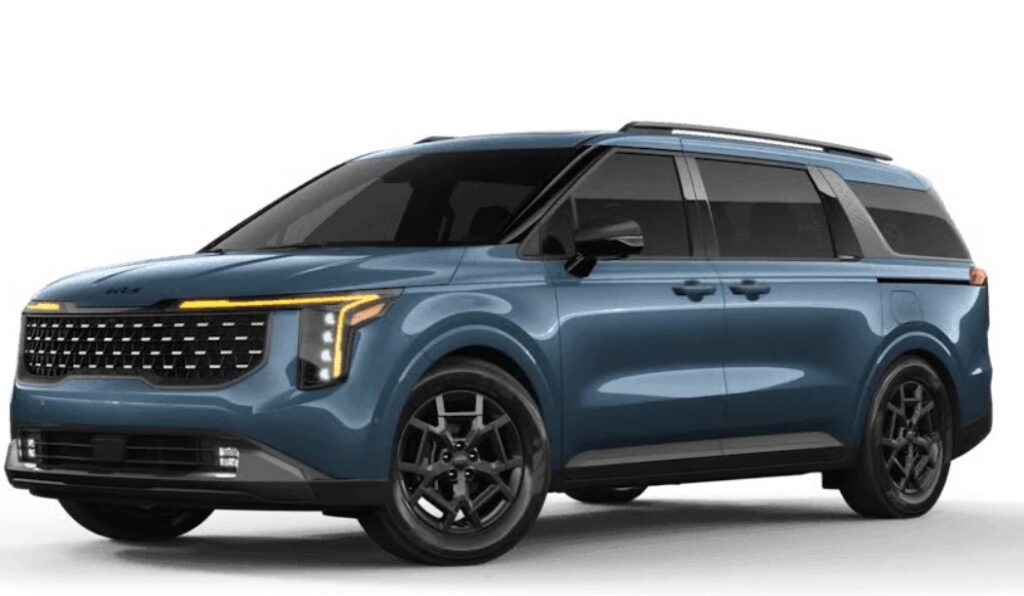
The Kia Carnival towing capacity is one of those specifications that can completely change how we view Kia’s family-focused MPV. At first glance, the Carnival looks built primarily for school runs, road trips, airport pickups, and carrying a small army of passengers. Hook a trailer to the back, though, and this comfortable people mover becomes considerably more versatile.
For the current U.S.-market gasoline Carnival, Kia lists a maximum towing capacity of 3,500 pounds when properly equipped. The 2026 Carnival brochure, for example, advertises a 3,500-pound towing capacity, while Kia's specifications note that towing requires additional equipment.
That headline number does not tell the whole story, however.
Hybrid versions have different limits. Specifications also change between countries. An Australian Carnival can have a different official rating from an American one, and an unbraked trailer may face a much lower limit than a properly braked trailer.
So, rather than throwing one number at the wall and calling it a day, let’s dig into what the Kia Carnival can realistically tow, what affects its limits, and how we can tow without turning a relaxing family getaway into a white-knuckle drive.
Content in this publication
- What Is the Kia Carnival Towing Capacity?
- Why the Kia Carnival's Towing Rating Varies
- Kia Carnival Hybrid Towing Capacity
- Kia Carnival Towing Capacity in Australia
- Braked vs Unbraked Towing Capacity
- Can a Kia Carnival Tow a Camper?
- Can a Kia Carnival Tow a Boat?
- Can a Kia Carnival Tow a Utility Trailer?
- Understanding Tongue Weight
- Passengers and Cargo Affect Towing
- Does the Kia Carnival Need a Towing Package?
- Is the Kia Carnival Good for Towing?
- Where the Carnival Starts to Struggle
- Should We Tow Right at the Maximum Capacity?
- How Towing Changes Fuel Economy
- How the Carnival Compares With SUVs for Towing
- Front-Wheel Drive and Towing
- Towing Safety Tips for the Kia Carnival
- What Should We Check Before Buying a Trailer?
- Is the 3,500-Pound Towing Capacity Enough?
- Kia Carnival Towing Capacity vs Everyday Practicality
- Who Should Tow With a Kia Carnival?
- Final Thoughts on Kia Carnival Towing Capacity
- Frequently Asked Questions
What Is the Kia Carnival Towing Capacity?
For a current U.S. gasoline-powered Kia Carnival, the figure most shoppers need to remember is:
Up to 3,500 pounds with trailer brakes and the required towing equipment.
Kia lists the same 3,500-pound maximum across the gasoline Carnival trim lineup in its current U.S. specifications.
That equals roughly 1,588 kg.
It's enough capacity for several recreational trailers, but the Carnival shouldn't be confused with a body-on-frame SUV or pickup designed around serious towing duties.
Think of it like a strong family backpack. It can carry much more than we might expect, but that doesn't mean we should fill every pocket with bricks.
Kia Carnival Towing Capacity at a Glance
Here are the main figures worth remembering:
- U.S. gasoline Carnival: up to 3,500 lb with brakes and required equipment.
- U.S. Carnival Hybrid: up to 3,000 lb with trailer brakes according to Kia's 2026 load-limit information.
- Australian-spec Carnival: up to 2,000 kg with trailer brakes in Kia's applicable specifications.
- Unbraked towing limits: significantly lower and dependent on market and specification.
- Payload still matters: passengers, luggage, accessories, and trailer tongue weight all count toward vehicle load limits.
Kia's 2026 U.S. hybrid documentation specifically lists 3,000 pounds (1,361 kg) with trailer brakes and 1,001 pounds (454 kg) without them. Australian specifications list up to 2,000 kg (4,409 lb) with brakes and 750 kg without brakes for the applicable Type B specification.
Those differences explain why two perfectly legitimate websites can display different Carnival towing figures.
Why the Kia Carnival's Towing Rating Varies
Whenever we research towing capacities online, there's a temptation to find the biggest number and treat it as universal.
That's risky.
The exact capacity can depend on the model year, engine, market, trailer braking system, installed towing equipment, vehicle loading, and sometimes other factory specifications.
In other words, asking, "How much can a Kia Carnival tow?" is a bit like asking, "How much can a suitcase hold?"
Well… which suitcase?
Gasoline Kia Carnival Towing Capacity
The conventional gasoline Carnival sold in the United States uses a 3.5-liter V6 engine. For the 2026 model, Kia lists 287 horsepower and 260 lb-ft of torque, coupled to an eight-speed automatic transmission and front-wheel drive.
Its maximum braked towing capacity is 3,500 pounds.
That combination makes sense for moderate recreational towing. The V6 has enough output to move a trailer without transforming the Carnival into something it was never designed to be.
Does Trim Level Change the Rating?
For the current U.S. gasoline model, Kia lists the same 3,500-pound towing capacity across the Carnival trims shown in its official specification comparison.
That simplifies shopping considerably.
Rather than choosing a premium trim simply to unlock a higher headline towing number, buyers can focus more heavily on comfort, seating configuration, technology, and other equipment.
Still, "maximum towing capacity" assumes the vehicle is correctly equipped.
That small phrase matters enormously.
Kia Carnival Hybrid Towing Capacity
Hybrid power makes the Carnival more appealing to families trying to reduce fuel consumption, but hybrid and gasoline towing capacities should not be assumed to be identical.
Kia's 2026 U.S. documentation lists the Carnival Hybrid at 3,000 pounds with trailer brakes, or 1,361 kg. Its unbraked limit is listed at 1,001 pounds, or 454 kg.
So if towing is one of our biggest purchasing priorities, the conventional gasoline version provides more rated capacity in the United States.
Is 500 Pounds Really a Big Difference?
It can be.
A 500-pound difference sounds modest until we remember that trailer weights normally include more than the empty shell.
Camping equipment, batteries, propane, water, coolers, bicycles, food, tools, and accessories can pile weight onto a trailer surprisingly fast.
A trailer advertised at 2,500 pounds dry might creep much closer to a 3,000-pound ceiling once prepared for a weekend away.
That's why shopping according to loaded trailer weight is much smarter than shopping exclusively according to dry weight.
Kia Carnival Towing Capacity in Australia
Here things become particularly interesting.
Kia documentation for applicable Australian specifications lists a maximum trailer weight of 2,000 kg with brakes and 750 kg without trailer brakes. Maximum permissible static vertical load on the coupling device is listed at 200 kg.
Two thousand kilograms converts to roughly 4,409 pounds.
That's substantially higher than the 3,500-pound U.S. gasoline rating.
Why Can the Same Vehicle Have Different Limits?
Vehicle specifications aren't necessarily copied and pasted from one country to another.
Manufacturers certify models according to regional configurations, equipment, regulations, testing procedures, and engineering requirements. Consequently, we should never take an American towing rating and automatically apply it to an Australian Carnival—or vice versa.
For an owner, the safest source is always the documentation corresponding to the exact model year, engine, and country.
Braked vs Unbraked Towing Capacity
This distinction is crucial.
A braked trailer has its own braking system. An unbraked trailer depends far more heavily on the tow vehicle's brakes to slow the combined mass.
Naturally, manufacturers generally allow a heavier trailer when it has suitable brakes.
Consider the Australian specification mentioned above: Kia lists 2,000 kg with brakes but only 750 kg without them.
That's not a tiny technical difference. It's enormous.
Why Trailer Brakes Matter
Imagine running down a hill carrying a heavy backpack.
Now imagine somebody behind us pushing another loaded backpack into our back every time we try to stop.
That's roughly the problem an unbraked trailer creates.
The tow vehicle isn't merely responsible for stopping itself. It must manage the additional mass behind it.
Trailer brakes help share that workload.
Can a Kia Carnival Tow a Camper?
Yes, some campers fall comfortably within Carnival towing limits.
The key word is "some."
Small travel trailers, lightweight campers, teardrops, and compact pop-up campers can potentially work well with the Carnival. Larger travel trailers generally become questionable quickly.
For a U.S. gasoline Carnival rated to 3,500 pounds, we'd want to calculate the camper's actual ready-to-camp weight—not simply the manufacturer's optimistic empty number.
Dry Weight Isn't the Number That Matters Most
Trailer brochures love dry weight because it looks friendly.
Real life isn't dry.
We add equipment. Then clothes. Then food. Then water. Then a battery. Maybe propane tanks. Camping chairs somehow reproduce inside storage compartments when nobody is watching.
Before long, a supposedly lightweight camper isn't particularly lightweight anymore.
The number that ultimately matters is how much the trailer actually weighs when we're towing it.
Can a Kia Carnival Tow a Boat?
Potentially, yes.
A lightweight fishing boat, personal watercraft trailer, small aluminum boat, or modest recreational boat package may sit inside the Carnival's limits.
But again, we must calculate the entire package.
That means boat, trailer, fuel, batteries, equipment, coolers, anchors, fishing gear, and anything else riding aboard.
A "2,500-pound boat" isn't necessarily a 2,500-pound towing load.
Boat Ramps Add Another Challenge
Boat towing also introduces something ordinary road towing doesn't: slippery launch ramps.
The Carnival is front-wheel drive in its current U.S. gasoline configuration.
Front-wheel drive works perfectly well for normal family driving and can tow within the manufacturer's limits, but wet or steep launch ramps can test available traction.
That's worth considering if launching boats is going to be a regular part of ownership.
Can a Kia Carnival Tow a Utility Trailer?
Absolutely, provided we remain within all applicable limits.
In fact, utility trailers may be among the more sensible towing partners for a Carnival.
Trips to the hardware store, garden center, recycling facility, or furniture warehouse don't necessarily require owning a pickup every day of the year.
A utility trailer allows the Carnival to remain a comfortable family vehicle Monday through Friday and gain some pickup-like hauling versatility when necessary.
Understanding Tongue Weight
Trailer weight is only one part of the equation.
The trailer also presses downward on the hitch. That force is commonly called tongue weight.
And tongue weight matters because it becomes load carried by the vehicle itself.
Kia's load-limit documentation notes that vehicle capacity weight covers occupants and cargo and that trailer tongue load must be included when the vehicle is towing.
That means we can't simply fill every seat, pack the cargo area to the roof, attach a maximum-weight trailer, and automatically assume everything remains within specification.
Suppose we've loaded the Carnival with several adults, children, luggage, a cooler, and accessories.
Now add the trailer's tongue weight.
Even if the trailer itself sits below the maximum towing capacity, we could encounter another limit relating to vehicle payload or axle loading.
This is why experienced towers look beyond one flashy towing number.
Passengers and Cargo Affect Towing
Here's where the Carnival's greatest strength can collide with towing.
It's designed to carry people.
Lots of them.
But people weigh something. So does their luggage.
The more load we place inside the vehicle, the less flexibility we may have elsewhere before reaching applicable vehicle limits.
A Full Carnival Isn't an Empty Tow Vehicle
Picture a family road trip.
Seven people climb aboard. The luggage area is packed. There's a stroller, food, camping equipment, maybe a rooftop accessory, and finally a trailer attached behind us.
Suddenly, the towing calculation isn't simply "Trailer weighs 3,200 pounds, Carnival can tow 3,500, we're good."
We have to consider the complete loaded vehicle.
That's why the driver's-door loading label and owner's manual deserve considerably more attention than they usually get.
Does the Kia Carnival Need a Towing Package?
Additional towing equipment is required for the U.S.-market Carnival. Kia explicitly states this alongside its official towing specification and directs owners to the owner's manual for towing instructions.
Depending on model year and market, proper equipment may include an approved hitch and electrical connections along with other recommended components.
We shouldn't assume that because a Carnival can theoretically tow 3,500 pounds, any random aftermarket hitch automatically transforms it into a 3,500-pound tow vehicle.
The Weakest Component Sets the Practical Limit
Think about towing as a chain.
The engine is one link. The transmission is another. The hitch, trailer, tires, braking system, cooling requirements, payload limit, and legal requirements are others.
A chain doesn't become stronger because one link has an impressive rating.
The lowest relevant limit wins.
Is the Kia Carnival Good for Towing?
For occasional light-to-moderate towing, yes.
For dedicated heavy towing, there are better tools.
That's not a criticism. It's simply about matching the vehicle to the job.
The Carnival is fundamentally a spacious family MPV. Its ability to pull a modest camper, boat, or utility trailer makes it more versatile, but towing isn't its sole reason for existing.
Where the Carnival Makes Sense
The Carnival becomes especially compelling when we're primarily carrying passengers and only occasionally towing recreational equipment.
Maybe we take a small camper out six weekends per year.
Maybe there's a lightweight boat sitting in the garage.
Perhaps we rent a utility trailer a few times annually.
In situations like those, buying a large truck solely for towing duties might feel like wearing hiking boots to walk across the kitchen.
The Carnival gives us a useful middle ground.
Where the Carnival Starts to Struggle
The closer our trailer gets to the vehicle's maximum rating, the more carefully we need to think about conditions.
Hills matter.
Heat matters.
Altitude can matter.
Cargo matters.
Trailer aerodynamics matter.
Kia itself notes in its towing guidance that factors such as speed, altitude, road grades, outside temperature, usage, and special equipment can affect what constitutes an ideal trailer weight.
A tall travel trailer also presents far more aerodynamic resistance than a low utility trailer of identical weight.
At highway speed, we're towing through air as much as we're towing against gravity.
Should We Tow Right at the Maximum Capacity?
Being technically below the limit doesn't necessarily make a combination enjoyable.
A Carnival rated for 3,500 pounds can theoretically accommodate a trailer close to that maximum when every other requirement is satisfied.
But regularly operating near a vehicle's maximum capacity leaves less margin for unexpected cargo, difficult weather, steep grades, or estimation errors.
For occasional short journeys in favorable conditions, that's one thing.
For long-distance camper travel through mountains, we'd personally want more breathing room.
Comfort Matters Too
Towing isn't merely about whether the engine can make something move.
Stopping, stability, acceleration, transmission behavior, steering feel, crosswinds, and overall confidence all contribute to the experience.
The difference between "capable of towing" and "pleasant to tow with" can be surprisingly large.
How Towing Changes Fuel Economy
There's no magical way around this one: towing normally increases fuel consumption.
We're moving additional mass and, frequently, pushing a large trailer through the air.
At highway speeds, aerodynamic drag can become brutal.
A lightweight but tall camper may sometimes hurt fuel economy more dramatically than we'd expect based on weight alone.
Speed Makes a Difference
Increasing speed increases aerodynamic resistance, meaning slowing down can improve both stability and efficiency.
Moderate speeds are particularly important while towing.
Even where legal limits permit faster travel, calmer driving generally reduces drivetrain stress and gives us more time to react.
How the Carnival Compares With SUVs for Towing
The Carnival's 3,500-pound U.S. gasoline rating places it in useful territory for family recreation, but several larger SUVs offer substantially greater capacity.
That's where we need to decide what matters most.
Do we tow a 6,000-pound trailer regularly?
Then the Carnival isn't the right tool.
Do we primarily need comfortable three-row seating, sliding doors, excellent passenger access, a huge interior, and enough capacity for a lightweight camper twice a month?
Now the Carnival begins looking much more appealing.
Front-Wheel Drive and Towing
Some shoppers hesitate when they discover that the U.S. Carnival is front-wheel drive rather than rear-wheel drive or all-wheel drive.
For towing within its approved limits on ordinary paved roads, FWD itself doesn't make the Carnival unsuitable.
But the differences become more noticeable on loose gravel, snow, mud, steep boat ramps, or other low-traction surfaces.
Traction Isn't the Same as Towing Capacity
This distinction is easy to miss.
Towing capacity tells us the maximum trailer load approved under specified conditions.
Traction tells us whether the powered tires can effectively put power onto the road surface.
Those are related but separate questions.
A vehicle can have sufficient rated towing capacity and still encounter traction difficulty on a slippery incline.
Towing Safety Tips for the Kia Carnival
We don't need to turn towing into advanced physics homework, but we shouldn't approach it casually either.
Kia's guidance emphasizes moderate towing speeds and points owners toward appropriate towing equipment. Manufacturer instructions should always override generic internet advice.
Before each trip, we should know the loaded trailer weight, confirm appropriate tongue loading, verify tire pressures, connect the electrical plug and safety equipment correctly, test trailer lights and brakes, distribute cargo sensibly, secure loose items, adjust mirrors, and leave considerably more stopping distance.
Once moving, smooth inputs beat dramatic ones. Accelerate progressively, brake early, leave room ahead, and remember there's a surprisingly large object following us everywhere we go.
What Should We Check Before Buying a Trailer?
This is where five minutes of homework can save thousands of dollars.
Don't shop for a camper solely by matching its advertised dry weight against the Carnival's maximum towing capacity.
Instead, look at its expected loaded weight and confirm every relevant vehicle and hitch restriction.
A trailer that appears comfortably under the limit in a brochure can become far less comfortable once everything needed for a real trip is aboard.
Check the Exact Owner's Manual
Model-year differences matter.
Regional differences matter.
Powertrain differences matter.
For that reason, the owner's manual belonging to the exact Carnival we own should always be the final authority.
The figures in this guide are useful for understanding the vehicle, but they aren't a substitute for the specifications attached to an individual Carnival.
Is the 3,500-Pound Towing Capacity Enough?
For many families, surprisingly, yes.
Three thousand five hundred pounds isn't heavy-duty territory, but it opens the door to a meaningful range of recreational equipment.
The real question shouldn't be:
"Can the Carnival tow?"
It clearly can.
The better question is:
"Can it comfortably and legally tow the specific trailer we want after passengers and cargo are included?"
That distinction saves us from buying the wrong trailer—or the wrong vehicle.
Kia Carnival Towing Capacity vs Everyday Practicality
This may be the Carnival's strongest argument.
Most large towing vehicles ask us to compromise somewhere. A truck may tow beautifully but be awkward in crowded parking garages. A body-on-frame SUV can be exceptionally capable but may cost more to operate and feel less van-like inside.
The Carnival goes the opposite direction.
It starts with family practicality and adds moderate towing ability.
Sliding doors, multiple seating rows, generous cargo space, and a comfortable road-trip-oriented cabin remain the core attractions. Towing is the bonus tool tucked into the Swiss Army knife.
Who Should Tow With a Kia Carnival?
A Carnival makes sense for someone whose trailer fits comfortably within its ratings and whose primary need remains passenger transportation.
If towing becomes the central mission—particularly with large travel trailers, heavy boats, or frequent mountain driving—we would move toward a vehicle engineered around substantially greater towing capacity.
Buying extra capacity isn't always wasteful.
Sometimes it buys peace of mind.
Final Thoughts on Kia Carnival Towing Capacity
The Kia Carnival towing capacity reaches 3,500 pounds for the current U.S. gasoline model when properly equipped, while the U.S. Carnival Hybrid carries a lower 3,000-pound braked rating. Australian specifications can allow up to 2,000 kg with trailer brakes, demonstrating why country-specific figures matter.
Those numbers make the Carnival remarkably useful for a vehicle primarily designed around family transportation.
Small campers? Potentially.
Utility trailers? Absolutely possible within the limits.
Light boats? Often.
A giant travel trailer loaded for a month-long expedition? That's where we'd choose something more substantial.
The trick is resisting the temptation to treat maximum towing capacity as the only number that matters. Trailer brakes, tongue weight, passenger load, cargo, hitch equipment, road conditions, and the exact model specification all influence the real-world equation.
Treat those limits with respect and the Carnival becomes something genuinely useful: a family hauler that can take considerably more than just the family along for the ride.
Frequently Asked Questions
1. How much can a Kia Carnival tow?
A current U.S.-market gasoline Kia Carnival can tow up to 3,500 pounds when properly equipped. Kia states that additional towing equipment is required. Always check the owner's manual for the exact model year because specifications can change.
2. What is the Kia Carnival Hybrid towing capacity?
For the 2026 U.S. Carnival Hybrid, Kia lists a maximum 3,000-pound braked trailer capacity, equivalent to approximately 1,361 kg. The listed unbraked capacity is 1,001 pounds or 454 kg.
3. Can a Kia Carnival tow a travel trailer?
Yes, provided the trailer's actual loaded weight, tongue load, and all other applicable limits remain within the Carnival's specifications. Lightweight campers, teardrops, and some pop-up trailers are more realistic candidates than large conventional travel trailers.
4. Can a Kia Carnival tow 4,000 pounds?
A U.S.-spec gasoline Carnival with a 3,500-pound maximum rating should not tow a 4,000-pound trailer. However, ratings differ internationally; applicable Australian specifications can reach 2,000 kg, or approximately 4,409 pounds, with trailer brakes. Follow the rating specified for your exact vehicle rather than importing another country's limit.
5. Does the Kia Carnival need trailer brakes?
Trailer-brake requirements depend on trailer weight and applicable regulations, but the Carnival's higher advertised towing capacities are associated with braked trailers. Unbraked limits can be dramatically lower. Check the vehicle manual and local towing laws before connecting a trailer.
If you want to know other articles similar to Kia Carnival Towing Capacity: Complete Guide for Drivers you can visit the category Service and Parts.
Volvo S90 Engine Oil: Type, Capacity & Change Guide
Volvo S90 Boot Space: Size, Capacity and Practicality
SEO Title: Volvo S90 Oil Capacity: Complete Guide by Engine

Kia Sorento Oil Type: Complete Guide by Year & Engine
Kia Sorento Engine Capacity: Complete Guide by Year
Peugeot 308 Clutch Replacement Cost: Complete UK Guide for 2026
Leave a Reply
More content of your interest