
Audi A6 Models: Complete Guide to Versions, Generations, and Choices

Few executive cars have evolved as gracefully as the Audi A6. It has spent decades occupying that sweet spot between everyday usability and premium-car sophistication, offering the space of a serious family vehicle without feeling like a limousine designed only for the back seat.
Yet searching for Audi A6 models can quickly become confusing.
There are sedans. There are Avant estates. There have been allroad models, S6 performance versions, mighty RS6 derivatives, plug-in hybrids, diesels, petrol engines, quattro variants, and now a separate fully electric A6 e-tron family. Then we have Audi's internal generation codes—C4, C5, C6, C7, C8 and C9—which can make the family tree look more complicated than it really is.
So, let's untangle it.
In this guide, we'll explore the major Audi A6 models, explain how the generations differ, look at the current range, and help determine which version makes the most sense depending on what we actually want from the car.
Content in this publication
- What Is the Audi A6?
- Audi A6 Models at a Glance
- Audi A6 Generations Explained
- Audi A6 Sedan
- Audi A6 Avant
- Audi A6 allroad
- Audi A6 e-hybrid Models
- Audi A6 e-tron Models
- Audi S6 Models
- Audi RS6 Avant
- Front-Wheel Drive or quattro?
- Audi A6 Engine Choices
- Audi A6 Trim Levels
- Which Audi A6 Model Is Best?
- Which Used Audi A6 Generation Should We Buy?
- What Is the Difference Between the A6 and A6 e-tron?
- How the Audi A6 Has Changed Over Time
- Is an Audi A6 a Luxury Car?
- Audi A6 vs A4 and A8
- Are Audi A6 Models Reliable?
- Should We Buy an Audi A6?
- Conclusion: Understanding Audi A6 Models Makes Choosing One Easier
- Frequently Asked Questions About Audi A6 Models
What Is the Audi A6?
The Audi A6 is Audi's executive-class passenger car, positioned traditionally above the Audi A4/A5 family and below the flagship A8.
Audi has used the A6 name since 1994, and the company now describes the current combustion-powered version as the sixth generation of the A6.
Think of the A6 as something of a Swiss Army knife wearing a tailored suit.
It can be a quiet motorway cruiser. An Avant can swallow family luggage. A quattro-equipped version can deal with ugly winter conditions. An S6 adds meaningful performance, while the RS6 has historically turned the practical estate-car recipe into something bordering on supercar territory.
More recently, electrification has widened the family further.
That means the phrase Audi A6 model no longer describes one simple sedan with several engines. It describes an entire premium-car ecosystem.
Audi A6 Models at a Glance
Before diving into individual generations, it helps to understand the main types of A6 we've encountered over the years.
| Audi A6 version | Basic character | Best suited to |
|---|---|---|
| A6 Sedan | Traditional executive saloon | Commuting, business use, long-distance driving |
| A6 Avant | Estate/wagon body | Families, luggage, touring |
| A6 allroad | Raised, ruggedized Avant | Mixed-road use and extra versatility |
| A6 e-hybrid | Plug-in hybrid | Drivers able to charge regularly |
| S6 | Performance-oriented A6 | Fast daily driving |
| RS6 Avant | Extreme performance estate | Buyers wanting practicality and huge performance |
| A6 e-tron Sportback | Fully electric fastback | EV-focused executive-car buyers |
| A6 e-tron Avant | Fully electric estate | Electric touring and family use |
Availability differs considerably by country and model year, so we should always verify a particular local market before assuming every derivative is sold there.
Audi A6 Generations Explained
The A6 story becomes much easier once we understand Audi's C-series generation codes.
Audi A6 C4: 1994–1997
The first car officially carrying the Audi A6 badge was the C4 generation.
However, it didn't appear entirely from a blank sheet of paper. The C4 platform had already existed as the Audi 100 before Audi updated the model and changed its badge to A6.
That makes the C4 fascinating because it acts as a bridge between two periods of Audi history.
Its styling was comparatively restrained, its technology simple by modern standards, and its cabin noticeably more traditional. Yet it already contained many characteristics that became synonymous with the A6: solid build quality, understated luxury and available quattro all-wheel drive.
Today, a C4 is more likely to attract enthusiasts than typical executive-car buyers.
Audi A6 C5: 1997–2004
With the C5 A6, Audi began giving the model a much stronger identity of its own.
The body became smoother and more aerodynamic. The cabin looked significantly more sophisticated. Engine choice expanded, and quattro remained an important part of the equation.
The C5 period also produced one of the most interesting developments in A6 history: the Audi allroad quattro, based around the A6 Avant concept.
Why the C5 Still Matters
The C5 helped establish the idea that Audi could genuinely compete with BMW and Mercedes-Benz in the executive-car segment rather than merely offering an alternative.
It also showed just how flexible the A6 platform could be.
Luxury sedan? Yes.
Practical estate? Absolutely.
High-performance derivative? Certainly.
Raised quasi-SUV estate? Audi could do that too.
Audi A6 C6: 2004–2011
The C6 generation pushed the A6 toward the technology-heavy luxury car we recognize today.
Its large single-frame grille gave Audi's design language considerably more presence, while increasingly sophisticated infotainment and electronic systems transformed the cabin experience.
This generation also offered numerous petrol and diesel powertrains depending on market.
The A6 had matured. It no longer felt like a car trying to squeeze into the premium establishment. It was part of it.
C6 A6 Sedan and Avant
The Sedan remained the conventional executive choice, but the Avant became particularly appealing because it managed to hide enormous practicality beneath elegant bodywork.
That's always been part of the A6 Avant trick.
Some wagons visually shout, "I needed more luggage space."
The A6 Avant tends to whisper, "I wanted the better-looking one."
Audi A6 C7: 2011–2018
The C7 Audi A6 represented a substantial refinement of the formula.
Design became sharper. Weight-saving technology gained importance. Engines generally became more efficient, and driver-assistance technology became increasingly prominent.
Inside, the car balanced physical controls with the expanding world of digital interfaces.
For many used-car shoppers, the C7 remains particularly interesting because it can feel modern without being completely dominated by touchscreens.
Audi A6 C8: 2018–2025
The C8 pushed Audi firmly into the digital era.
Its cabin brought extensive touchscreen operation, digital instrumentation, sophisticated lighting and more advanced driver-assistance technology.
Visually, it was sharper and more muscular than earlier A6 models while still avoiding excessive flamboyance.
That's important.
An A6 rarely tries to be the person shouting loudest at the party. Its attraction generally comes from precision, polish and controlled confidence.
Audi now categorizes this previous A6 family as running until 2025 within its model-history material.
Audi A6 C9: The New Generation
The latest combustion-engine A6 moves onto Audi's Premium Platform Combustion, or PPC.
Audi identifies the current car as the sixth-generation A6 and offers petrol, diesel and plug-in-hybrid configurations depending on market.
Official 2026 documentation identifies this new generation internally as the A6 C9.
Rather than abandoning combustion cars immediately, Audi now effectively operates two A6 worlds: the PPC-based A6 and the PPE-based electric A6 e-tron.
That distinction matters when shopping.
Audi A6 Sedan
The Sedan is the classic A6.
It's the model we picture when imagining a traditional European executive car: four doors, a separate trunk and a long, low profile.
The formula works particularly well for people who spend substantial time on highways. An A6 Sedan typically places comfort, refinement and stability above playful compact-car agility.
With the latest generation, Audi continues offering the A6 Sedan with combustion powertrains, including petrol and diesel configurations in markets where those engines are sold.
Who Should Choose the Sedan?
The Sedan makes the most sense when luggage capacity isn't the first priority.
We'd lean toward it when we value a traditional premium-car silhouette, primarily travel with one or two passengers, or simply prefer the visual proportions of a saloon over an estate.
There's also something timeless about it.
SUVs may dominate sales charts, but an elegant executive sedan still looks as natural outside an airport hotel as it does parked beside a country road.
Audi A6 Avant
Now things get more practical.
The Audi A6 Avant takes the fundamental A6 recipe and adds a wagon-style rear body, giving us substantially more useful cargo versatility without abandoning the premium atmosphere.
Audi continues to offer the latest-generation A6 in Avant form alongside the Sedan.
Why the Avant Has Such a Loyal Following
The Avant works because it rarely feels like a compromise.
We aren't necessarily giving up luxury for luggage space. Instead, we're getting much of the Sedan's refinement with a body better suited to bicycles, suitcases, dogs, family holidays and the strange collection of things real life occasionally requires us to transport.
Its proportions are arguably even more distinctive than the Sedan's.
For buyers who don't need SUV ride height, an A6 Avant can be one of the most rational premium-family cars around.
Audi A6 allroad
The A6 allroad essentially asks a mischievous question: what if we took the Avant and made it more adventurous?
Historically, allroad models have combined wagon practicality with increased ground clearance, quattro all-wheel drive and more rugged exterior treatment.
The concept sits somewhere between a conventional estate and an SUV.
And interestingly, the allroad idea remains alive in the latest A6 family. Audi's current global model material includes both an A6 allroad diesel and an A6 allroad e-hybrid plug-in hybrid, although specific availability depends on market.
Is the A6 allroad Better Than an SUV?
It can be.
The allroad generally appeals to drivers who appreciate an SUV's all-weather flexibility but would rather keep the lower seating position and road manners of an estate.
You may be interested in reading Audi A6 Generations: Complete Guide From C4 to C9
Picture hiking boots worn with a tailored jacket.
That's essentially the allroad philosophy.
Audi A6 e-hybrid Models
Plug-in hybrid technology gives the A6 another personality.
Audi's current A6 lineup includes A6 Sedan e-hybrid and A6 Avant e-hybrid variants in applicable markets.
The idea is straightforward: combine a combustion engine with a rechargeable battery and electric motor.
Shorter journeys can potentially be completed using electric power, while the combustion engine remains available for longer distances.
Audi describes its latest plug-in-hybrid system as combining electric driving for shorter journeys with combustion-engine flexibility for longer trips.
When Does an A6 Plug-In Hybrid Make Sense?
A PHEV works best when we actually plug it in.
That sounds obvious, but it's crucial.
If most journeys are relatively short and we can charge at home or work, the electric portion of the powertrain can do meaningful work.
If we never charge it, we're carrying around battery hardware without extracting its biggest advantage.
So choosing the e-hybrid isn't simply about selecting the most technologically complicated A6. It's about matching the powertrain to our routine.
Audi A6 e-tron Models
Here's where the naming becomes especially important.
The Audi A6 e-tron is not simply an electric engine option inside the combustion A6.
It belongs to a dedicated electric family based on Audi's Premium Platform Electric, or PPE. Audi calls the A6 e-tron the second production model based on PPE.
The electric range includes both Sportback and Avant body styles.
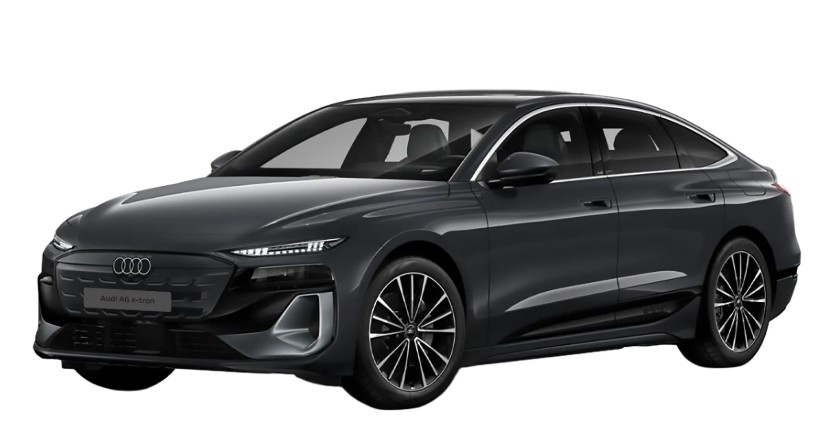
Audi A6 Sportback e-tron
Unlike the traditional A6 Sedan, the A6 Sportback e-tron uses a sleek fastback shape.
It blends executive-car dimensions with an aerodynamically focused profile and practical rear hatch.
The result sits visually somewhere between sedan, coupe and hatchback.
It is arguably the most futuristic interpretation of the A6 formula yet.
Audi A6 Avant e-tron
Audi wisely hasn't abandoned wagon enthusiasts in its electric transition.
The A6 Avant e-tron combines the EV platform with an estate body, giving drivers a relatively rare proposition: a large premium electric wagon.
Audi's A6 e-tron family officially includes A6 and S6 electric derivatives in both Sportback and Avant forms.
Range and Battery Options
Configurations vary, but Audi has offered A6 e-tron versions using a smaller battery as well as models with a larger battery measuring 100 kWh gross and 94.9 kWh usable.
For selected versions, Audi has quoted WLTP range figures exceeding 700 km under favorable configuration and test conditions, including up to 756 km for the A6 Sportback e-tron performance in its published European figures.
Real-world range will naturally depend on temperature, wheels, speed, driving style and equipment.
Audi S6 Models
Suppose the standard A6 feels a little too polite.
That's where the S6 traditionally enters.
S models sit between ordinary Audi models and the extreme RS family. They deliver considerably stronger performance but generally remain comfortable enough to use every day.
The exact powertrain has changed dramatically through S6 history.
We've seen everything from naturally aspirated engines to turbocharged V8s and diesel-powered versions in certain markets.
That variability means buying an older S6 requires paying close attention to the particular generation rather than judging the badge alone.
S6 e-tron
Electrification has also reached the S6 name.
Audi currently offers S6 Sportback e-tron and S6 Avant e-tron versions within the electric A6 e-tron family.
This gives the S6 badge an intriguing new role.
Instead of creating speed mainly through cylinders, turbochargers and exhaust drama, the electric version generates its performance through powerful electric motors and quattro traction.
Different soundtrack. Same basic mission: make the A6 considerably quicker.
Audi RS6 Avant
We can't discuss Audi A6 models without acknowledging the elephant—or perhaps missile—in the room.
The Audi RS6 Avant has historically represented the wildest interpretation of the A6-based formula.
Rather than producing a traditional sports coupe, Audi has repeatedly taken a family estate and equipped it with immense power, serious chassis technology and huge brakes.
That's wonderfully irrational.
The brilliance of the RS6 has always come from its split personality. It can transport luggage one moment and deliver astonishing acceleration the next.
Used examples require a very different ownership budget from ordinary A6 models, however.
Tyres, brakes, suspension components, insurance and maintenance can all cost significantly more.
Performance is intoxicating. The bills can be sobering.
Front-Wheel Drive or quattro?
Another factor separating Audi A6 models is drivetrain.
Not every A6 has quattro.
Entry-level or efficiency-focused variants in some generations and markets have used front-wheel drive, while more powerful engines commonly receive Audi's quattro all-wheel-drive system.
Electric A6 e-tron configurations add another twist because some versions use rear-wheel drive while others feature quattro electric all-wheel drive. Audi, for example, has offered rear-wheel-drive A6 e-tron versions alongside a quattro model.
When Is quattro Worth Having?
If we regularly encounter snow, steep wet roads or challenging conditions, quattro can provide reassuring traction.
For ordinary dry-road driving, though, we shouldn't automatically assume all-wheel drive is essential.
More hardware can mean additional weight, mechanical complexity and potentially greater running costs.
Choose it because the use case justifies it, not simply because the badge looks good on the trunk.
Audi A6 Engine Choices
One of the hardest things about discussing A6 engines globally is that specifications vary enormously by generation and country.
Across its history, the A6 has used four-cylinder, five-cylinder, V6, V8, diesel, petrol, mild-hybrid, plug-in-hybrid and fully electric powertrains.
That's quite a family reunion.
With the latest combustion-generation A6, Audi continues to support petrol, diesel and plug-in-hybrid propulsion rather than limiting the car to one drivetrain strategy.
Meanwhile, the A6 e-tron operates as the dedicated battery-electric branch.
TFSI Audi A6
Audi generally uses TFSI branding for its petrol-powered engines.
These can make sense when annual mileage is moderate, journeys vary considerably or diesel isn't appropriate for local regulations and driving patterns.
TDI Audi A6
TDI identifies Audi diesel engines.
Diesel A6 models became especially popular among European long-distance drivers because executive cars and high annual motorway mileage have traditionally made a natural pairing.
Modern emissions systems mean diesel is no longer automatically ideal for every buyer, though.
Frequent short journeys can be less suitable than sustained longer-distance use.
Electric and Hybrid A6 Versions
The newest lineup broadens the equation further.
We now effectively have three electrification levels: conventional combustion models with varying degrees of electrical assistance, plug-in A6 e-hybrid cars, and the fully electric A6 e-tron family.
That's excellent for choice—but it means buyers should focus less on prestige and more on how they actually drive.
Audi A6 Trim Levels
Trim names can be maddening because they vary by country.
Depending on generation and region, we may encounter names such as Sport, S line, Black Edition, Premium, Premium Plus or Prestige.
Those aren't interchangeable global specifications.
An S line in one country may come with equipment that is optional—or unavailable—somewhere else.
Therefore, when comparing two used Audi A6 models, looking at the badge alone isn't enough.
You may be interested in readingAudi A6 Generations: Complete Guide From C4 to C9You may be interested in reading
 Alfa Romeo Tonale vs Mazda CX-5: Which SUV Wins?
Check the actual equipment fitted to the individual vehicle.
What Does S Line Mean?
S line is primarily a sport-oriented trim or styling package rather than the same thing as owning an S6.
That's an important distinction.
An A6 S line remains fundamentally an A6.
An S6 is a dedicated higher-performance derivative.
Similarly, seeing sporty bumpers and large alloy wheels doesn't automatically tell us what's sitting under the bonnet.
Which Audi A6 Model Is Best?
There's no universally best A6.
There's only the A6 that fits a particular driver better.
For mainly executive commuting and highway use, the Sedan remains beautifully suited to the job. Families needing extra carrying capacity should seriously consider the Avant. The allroad makes sense when we want wagon practicality with extra rough-road versatility. Plug-in hybrids work particularly well when charging is convenient. EV-focused buyers should investigate the A6 e-tron, while the S6 and RS6 exist for those who consider "adequate performance" an unacceptable phrase.
That's the beauty of the A6 range.
We're not choosing one car.
We're choosing what personality we want the same underlying idea to have.
Which Used Audi A6 Generation Should We Buy?
Used shoppers should resist the temptation to choose purely by generation number.
Newer doesn't automatically mean better for every budget.
A well-maintained older A6 with comprehensive history can make far more sense than a neglected newer example stuffed with expensive technology.
The C7 often occupies an attractive middle ground for buyers wanting contemporary luxury without the latest generation's complexity.
The C8 offers a much more digital experience and newer driver-assistance systems.
Older C5 and C6 cars can be surprisingly affordable to purchase, but age-related repairs can rapidly erase the apparent bargain.
Service History Matters More Than the Badge
A used A6 with questionable maintenance is rarely cheap in the long run.
We should pay particular attention to engine-specific issues, transmission servicing, cooling systems, suspension components, electrical equipment and diesel emissions hardware where applicable.
With plug-in hybrids and EVs, battery condition and charging-system functionality become additional considerations.
The golden rule is boring but valuable: buy condition and history before specification.
What Is the Difference Between the A6 and A6 e-tron?
This deserves special emphasis because the names look extremely similar.
The newest A6 combustion family uses Audi's PPC architecture and is available with petrol, diesel and plug-in-hybrid configurations.
The A6 e-tron is a dedicated electric vehicle built on the PPE architecture and sold in Sportback and Avant formats.
They're relatives, not simply the same car with different engines.
That distinction is likely to matter increasingly as used examples enter the market.
How the Audi A6 Has Changed Over Time
The fascinating thing about the A6 isn't simply that it became faster or more powerful.
Most cars do that.
The deeper transformation has been technological.
Early models focused heavily on mechanical engineering, build quality and drivetrain choice. Later generations added sophisticated navigation and infotainment. Then came configurable digital instruments, elaborate lighting technology and expansive driver-assistance systems.
Now we're entering an era where propulsion itself is being reinvented.
Yet the mission remains strangely consistent.
The A6 is still supposed to make a long journey feel easier when we arrive than it looked when we left.
That's arguably the ultimate executive-car test.
Is an Audi A6 a Luxury Car?
Yes. The A6 sits firmly within the premium executive class.
But its interpretation of luxury is generally subtler than simply piling chrome onto every surface.
A6 luxury traditionally comes from cabin materials, noise isolation, seat comfort, technology, confident high-speed stability and the sense that controls have been engineered rather than decorated.
That understated character helps explain why the model appeals to both private owners and business users.
It can look expensive without desperately asking everybody nearby to notice.
Audi A6 vs A4 and A8
Within Audi's traditional sedan hierarchy, the A6 occupies the middle ground.
The smaller Audi A4 historically offered easier maneuverability and lower ownership costs, while the flagship A8 prioritized limousine-level comfort, space and technology.
The A6 sits between them.
We get considerably more presence and space than Audi's smaller executive offering without entering the physical dimensions or ownership territory of the A8.
For many drivers, that's exactly why the A6 works.
It's big without feeling absurdly big.
Premium without becoming ceremonial.
Are Audi A6 Models Reliable?
Reliability varies enormously by engine, transmission, age and maintenance history, so sweeping statements don't help much.
A six-year-old diesel covering motorway mileage lives a completely different mechanical life from a twelve-year-old petrol car making repeated three-mile urban journeys.
Likewise, an RS6 is subjected to different stresses and running costs than an ordinary A6.
When evaluating reliability, we should investigate the exact combination of model year, engine code, transmission and drivetrain.
The words Audi A6 alone aren't specific enough.
Preventive maintenance is particularly important because luxury-car problems have a habit of arriving with luxury-car repair invoices.
Should We Buy an Audi A6?
The A6 remains compelling because it avoids forcing us into one narrow category.
Want a sophisticated sedan? There's an A6 for that.
Need wagon practicality? Choose an Avant.
Want extra versatility? Consider the allroad.
Need plug-in capability? Look toward the e-hybrid.
Ready to go fully electric? The A6 e-tron now creates a dedicated EV route.
Want performance? The S and RS branches take the concept in considerably wilder directions.
Few premium models have stretched one basic identity across so many different use cases without completely losing the plot.
Conclusion: Understanding Audi A6 Models Makes Choosing One Easier
The Audi A6 family initially looks complicated because decades of generations, engines, trims and body styles sit beneath one familiar badge.
Once we separate them, though, the picture becomes much clearer.
The C4 established the A6 name. The C5 strengthened its identity. The C6 pushed it deeper into premium territory. The C7 polished the formula. The C8 embraced digital technology. And today's C9 generation continues the combustion and plug-in-hybrid side of the story while the A6 e-tron builds a parallel electric future.
Audi's current global portfolio reflects that transition, listing both the A6 and A6 e-tron among its active model families.
Which Audi A6 should we choose?
That depends far less on which badge looks most impressive and far more on what we need the car to do.
And perhaps that's the A6's greatest strength. It has never really been one car. It has been a flexible idea—luxury, technology and long-distance ability reshaped for different kinds of drivers.
Frequently Asked Questions About Audi A6 Models
1. What are the different Audi A6 models?
The A6 family has included the A6 Sedan, A6 Avant, A6 allroad, plug-in-hybrid A6 e-hybrid, S6 and RS6 performance derivatives. Audi also offers the separate fully electric A6 e-tron family in Sportback and Avant forms. Exact configurations vary between countries.
2. What are the Audi A6 generations?
The A6 name began with the C4 generation in 1994. Subsequent families are commonly identified as C5, C6, C7, C8 and C9. Audi identifies its newest combustion-based A6 as the sixth generation and uses the C9 designation in current model-year documentation.
3. What is the difference between an Audi A6 and an S6?
The A6 is the mainstream executive model, while the S6 is its higher-performance relative. S6 versions typically receive stronger powertrains, performance-oriented chassis tuning, upgraded brakes and sportier styling while retaining much of the A6's everyday comfort.
4. Is the Audi A6 e-tron the electric version of the normal A6?
Not exactly. Although both carry A6 branding, the current combustion A6 is based on Audi's Premium Platform Combustion, while the fully electric A6 e-tron uses the separate Premium Platform Electric architecture. The e-tron is offered as a Sportback and Avant.
You may be interested in readingAudi A6 Generations: Complete Guide From C4 to C9You may be interested in reading
Alfa Romeo Tonale vs Mazda CX-5: Which SUV Wins?You may be interested in reading
Alfa Romeo Tonale Competitors: The Best Alternatives Compared5. Which Audi A6 model is best for a family?
For most families, the A6 Avant is one of the strongest options because it combines passenger comfort with more flexible luggage space. The A6 allroad adds extra versatility, while buyers wanting an EV can consider the A6 Avant e-tron. The best choice ultimately depends on budget, charging access, annual mileage and local model availability.
If you want to know other articles similar to Audi A6 Models: Complete Guide to Versions, Generations, and Choices you can visit the category Models.
Volkswagen T-Cross vs Volkswagen T-Roc: Which Is Better?
Hyundai Tucson Weight: Complete Guide to Curb, Gross, and Payload Specs

Honda Passport vs Toyota 4Runner: Which SUV Is Better?
Honda Passport vs Ford Bronco: Which SUV Is Better?
Honda Passport vs Ford Explorer: Which SUV Is Better?
Honda Passport or Pilot: Which SUV Is Better?
Leave a Reply
More content of your interest