
Is BMW M4 All Wheel Drive? A Complete Guide to M xDrive

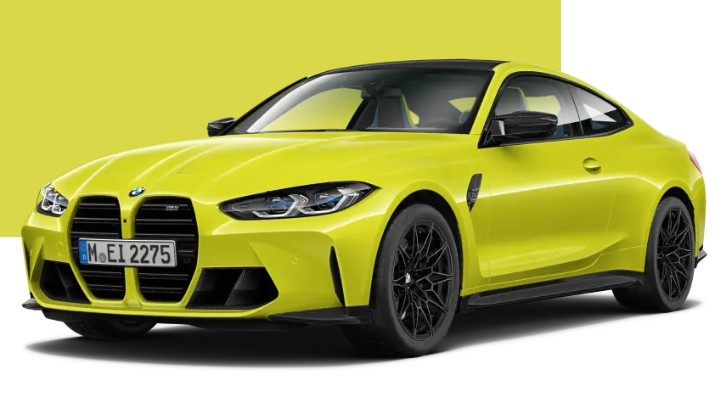
The short answer is: some BMW M4 models are all-wheel drive, but not every M4 is.
Modern BMW M4 Competition models are available with M xDrive, BMW M's performance-focused all-wheel-drive system. Other M4 versions remain rear-wheel drive, preserving the traditional layout enthusiasts have associated with BMW M cars for decades.
And that distinction matters.
When we ask, “Is BMW M4 all wheel drive?”, we are really asking a bigger question: which drivetrain should we choose? Rear-wheel drive gives the M4 its classic sports-car personality, while M xDrive adds another layer of traction, acceleration, and everyday usability.
The clever part is that BMW hasn't simply turned the M4 into a conventional AWD coupe. M xDrive is designed to retain a strongly rear-biased character, so the car can put its considerable power onto the road without losing the playful behavior expected from an M car.
Let's dig into how it works, which M4s have AWD, and whether M xDrive is actually worth choosing.
Content in this publication
- Is the BMW M4 AWD or RWD?
- Which BMW M4 Is All Wheel Drive?
- How Does BMW M4 M xDrive Work?
- BMW M4 xDrive Driving Modes Explained
- BMW M4 xDrive vs Rear-Wheel Drive
- Is the BMW M4 xDrive Faster Than the RWD M4?
- Is the First-Generation BMW M4 AWD?
- Is the BMW M4 Good in Snow?
- Is the BMW M4 xDrive Better in Rain?
- Does the BMW M4 xDrive Still Drift?
- Is M xDrive the Same as Regular BMW xDrive?
- Should We Buy a BMW M4 xDrive?
- BMW M4 AWD vs RWD: Quick Comparison
- What Should We Check When Buying a Used M4?
- Is xDrive Worth It on a BMW M4?
- Conclusion: So, Is BMW M4 All Wheel Drive?
- Frequently Asked Questions
Is the BMW M4 AWD or RWD?
The BMW M4 can be rear-wheel drive or all-wheel drive, depending on the model, model year, and market.
Historically, the M4 started life as a rear-wheel-drive performance coupe. That was hardly surprising. Rear-wheel drive has long been part of BMW M's recipe: powerful engine at the front, driven wheels at the back, and a chassis engineered to make the two work together.
The second-generation G82 M4 changed the formula.
BMW introduced an M xDrive version of the M4 Competition, giving buyers the possibility of combining serious M-car performance with all-wheel-drive traction.
So we shouldn't simply describe the BMW M4 as an AWD car. A more accurate description is:
The BMW M4 is available in both rear-wheel-drive and M xDrive all-wheel-drive configurations, depending on the version.
Which BMW M4 Is All Wheel Drive?
If AWD is on our shopping checklist, we need to look specifically for an M4 equipped with M xDrive.
The name itself usually makes identification straightforward. An M4 advertised as an M4 Competition with M xDrive uses BMW's performance AWD system.
Other versions may use rear-wheel drive.
That means we should never assume an M4 is AWD just because it is a Competition model. The exact specification matters.
What Does M xDrive Mean on the BMW M4?
M xDrive is BMW M's interpretation of all-wheel drive.
That's important because the system isn't designed merely to provide extra traction on slippery roads. Its job is also to make the M4 faster while maintaining the handling characteristics of a rear-driven performance car.
Think of conventional AWD as a practical pair of hiking boots.
M xDrive is more like a pair of racing shoes that happens to have extra grip.
The system can distribute torque between the front and rear axles according to available traction and the driver's demands. Under normal performance driving, the car retains a strong rear-wheel-drive bias.
When the rear tires need assistance putting the engine's power down, the front axle joins the party.
Is BMW M xDrive Permanent AWD?
Calling M xDrive simply “permanent AWD” doesn't really explain what makes the system interesting.
Its torque distribution is variable. Instead of blindly sending a fixed percentage of power to each axle all the time, the system adjusts how power is deployed according to conditions.
This makes the drivetrain feel more dynamic than many traditional AWD systems.
The philosophy is simple: preserve rear-wheel-drive behavior whenever possible, then use the front wheels when additional traction is beneficial.
How Does BMW M4 M xDrive Work?
The G82 M4 produces enough power to make traction a serious engineering challenge.
With rear-wheel drive, all that output ultimately has to pass through two rear contact patches. Modern tires are remarkably capable, but physics eventually sends us the bill.
M xDrive gives the drivetrain four potential contact patches through which it can deploy power.
That doesn't mean every wheel receives identical torque.
Instead, the system works with the car's stability control, differential, drivetrain electronics, and sensors to determine where torque can be used most effectively.
Why the Rear Bias Matters
BMW could have created a neutral AWD setup and called it a day.
It didn't.
A strong rear bias matters because it helps retain the traditional M4 driving experience. When we accelerate through a corner, the car still feels as though it is being pushed from behind rather than pulled around by its front wheels.
That distinction might sound subtle on paper.
Behind the wheel, it isn't.
A front-heavy AWD system can sometimes feel like it's dragging a car through a bend. The M4's system is designed to make the rear axle the star while letting the front axle play a supporting role.
AWD Without Losing the M Character
This is arguably the biggest achievement of M xDrive.
Adding AWD can introduce extra weight and complexity. It can also reduce some of the throttle-adjustable character enthusiasts love about rear-wheel-drive cars.
BMW's solution is to make AWD another performance tool rather than simply a safety feature.
That's why an M4 xDrive doesn't feel like a normal luxury AWD coupe wearing an M badge. The drivetrain is integrated into the performance character of the car.
BMW M4 xDrive Driving Modes Explained
One of the fascinating aspects of M xDrive is how much control it can give the driver.
Depending on specification and settings, the system can provide different drivetrain behaviors.
The key configurations associated with the M xDrive concept include:
- 4WD: maximum everyday traction with rear-biased AWD behavior.
- 4WD Sport: sends an even greater proportion of torque toward the rear axle for more dynamic driving.
- 2WD: allows rear-wheel-drive operation under the appropriate settings and conditions.
This flexibility is what separates the M4's system from ordinary AWD.
We're not simply buying extra driven wheels. We're buying a drivetrain whose personality can change.
What Is 4WD Mode?
The standard AWD configuration is the sensible default.
It gives us the traction advantage of M xDrive while retaining the rear-biased character BMW wants the M4 to have.
For everyday driving, changing weather, highway use, and rapid acceleration, this is likely where most owners will spend the majority of their time.
It's the “best of both worlds” setting.
What Is 4WD Sport?
4WD Sport moves the personality farther toward the rear axle.
The front wheels remain available to help with traction, but the setup encourages more rear-driven behavior.
For enthusiastic driving, this can be the sweet spot.
We still have AWD waiting in the wings, but the car feels more willing to rotate and respond to throttle inputs.
Can the BMW M4 xDrive Become Rear-Wheel Drive?
This is where things get especially interesting.
Properly equipped M xDrive cars can provide a 2WD mode, effectively sending power only to the rear wheels.
However, this isn't simply an everyday button designed for commuting.
The system is intended for experienced drivers and appropriate controlled environments, and electronic stability intervention may need to be reduced or disabled depending on the configuration.
In other words, BMW gives us the keys to the playground—but expects us to understand what happens when the safety net is removed.
BMW M4 xDrive vs Rear-Wheel Drive
Now we reach the question that really matters.
Which one should we buy?
The answer depends less on which drivetrain is objectively “better” and more on what we want the M4 to do.
Advantages of the BMW M4 xDrive
M xDrive brings several obvious benefits.
Better traction: Four driven wheels make it easier to transfer power to the road.
Quicker launches: AWD dramatically improves the M4's ability to accelerate from a standstill without overwhelming the rear tires.
More confidence in poor weather: Rain and low-grip surfaces become easier to manage, although proper tires remain essential.
Greater usability: Owners who drive their M4 throughout the year may appreciate the extra versatility.
Huge real-world performance: Being able to deploy power consistently can matter more than having impressive horsepower figures on a specification sheet.
For many drivers, the biggest benefit isn't outright speed.
It's accessibility.
The xDrive model can make enormous performance feel easier to use.
Advantages of the Rear-Wheel-Drive BMW M4
Rear-wheel drive still has plenty going for it.
For enthusiasts, simplicity is part of the attraction.
A RWD M4 can offer:
- A more traditional BMW M experience
- Lower drivetrain complexity
- Less drivetrain weight
- Pure rear-driven handling
- Greater involvement when managing traction
- A classic sports-coupe character
The RWD M4 asks more from the driver.
For some people, that's a disadvantage.
For others, that's exactly why they want one.
Is the BMW M4 xDrive Faster Than the RWD M4?
From a standing start, the xDrive M4 generally has a substantial traction advantage.
Imagine two powerful sprinters.
One starts on dry pavement wearing running shoes. The other starts on the same pavement wearing socks.
Their muscles might be similar, but only one can properly use them.
That's essentially what happens when a high-output performance car tries to launch through two tires instead of four.
AWD allows the M4 to deploy its engine output more effectively, particularly from low speeds.
Does AWD Add Weight to the M4?
Yes.
All-wheel drive requires additional components.
There is no magic wand here. Extra hardware means extra mass, and performance engineers generally fight weight like gardeners fight weeds.
But weight is only one side of the equation.
The question is whether the additional traction compensates for that extra mass.
During hard acceleration, the answer is often yes.
On a tight circuit where responsiveness, tire management, and mass become increasingly important, the equation gets more complicated.
Which Feels More Engaging?
This comes down to personal preference.
A rear-wheel-drive M4 can feel more transparent because the rear axle handles the job of transferring engine power to the road.
The driver has to think about throttle application.
Push too hard, too early, and the rear tires will remind us who's really in charge.
M xDrive smooths some of that drama away. It allows us to apply more power earlier and lets the drivetrain electronics find traction.
That makes the AWD car brutally effective.
But effectiveness and involvement aren't always the same thing.
Is the First-Generation BMW M4 AWD?
No. The original F82-generation BMW M4 was rear-wheel drive.
This generation established the M4 name after BMW separated its coupe and sedan naming strategy, with the M3 continuing as the sedan and the M4 becoming the two-door counterpart.
The F82 remained faithful to the traditional M formula.
Front-mounted turbocharged inline-six engine.
Rear-wheel drive.
Lots of performance.
Lots of personality.
If we're shopping for an older F82 M4, we shouldn't expect factory M xDrive.
When Did the BMW M4 Get AWD?
AWD arrived with the G82 generation through the M4 Competition M xDrive.
This represented a significant philosophical change.
For decades, rear-wheel drive was practically part of BMW M's identity. But engine outputs had climbed dramatically, and modern AWD technology had become sophisticated enough to improve acceleration without completely erasing the character enthusiasts expected.
M xDrive offered a solution.
BMW could increase usable performance without turning the M4 into something dull.
Is the BMW M4 Good in Snow?
An M4 xDrive has an obvious traction advantage over a rear-wheel-drive M4 in winter conditions.
But we need to squash one common misconception:
AWD does not magically turn summer performance tires into winter tires.
Tires determine how effectively the car can accelerate, corner, and—crucially—stop.
M xDrive can distribute torque among four wheels, but if those tires cannot grip cold or snowy pavement, AWD cannot rewrite the laws of physics.
M xDrive Plus Winter Tires
If we genuinely intend to use an M4 through snowy winters, the winning combination is:
M xDrive + appropriate winter tires.
Now we're giving the drivetrain something useful to work with.
With suitable tires, AWD can provide excellent traction when pulling away and climbing slippery roads.
Without them, even sophisticated AWD has limitations.
Does AWD Help the M4 Stop Faster?
Not directly.
This is worth remembering.
All-wheel drive helps us accelerate because more tires can receive engine torque.
Under braking, every modern car already uses all four tires.
Therefore, buying an M4 xDrive shouldn't make us think stopping distances on snow suddenly become sports-car short.
Tire grip remains critical.
Is the BMW M4 xDrive Better in Rain?
Generally, AWD can make the M4 easier to manage when accelerating on wet roads.
A powerful RWD car demands restraint when grip decreases. Apply too much throttle, and the rear tires can exceed their available traction.
M xDrive has more options.
The system can transfer torque through the front axle and help the car accelerate without relying exclusively on the rear tires.
But again, tires and driving behavior matter enormously.
AWD is an advantage—not immunity from aquaplaning or low grip.
Does the BMW M4 xDrive Still Drift?
This is probably the question enthusiasts were waiting for.
Yes, the M4's performance drivetrain is engineered to retain playful rear-driven behavior, and its available configurations can make the car far more adjustable than a conventional AWD vehicle.
But drifting belongs in controlled environments such as appropriate tracks or closed courses.
What's more interesting for road drivers is how the same engineering affects ordinary cornering.
Because M xDrive is rear biased, the M4 can still feel alive under throttle. Instead of simply neutralizing every hint of rear movement, the drivetrain is designed around the dynamic behavior expected from an M car.
Is M xDrive the Same as Regular BMW xDrive?
Not exactly.
Both systems are forms of BMW all-wheel drive, but M xDrive is specifically engineered around high-performance driving.
A normal BMW xDrive system prioritizes factors such as stability, everyday traction, predictability, and all-weather usability.
M xDrive has another mission:
fun.
It works with the M-specific differential, chassis systems, stability electronics, and driving modes to create a more rear-oriented experience.
That distinction is essential.
The M4 isn't merely an AWD BMW with more horsepower.
Its drivetrain is part of the performance package.
Should We Buy a BMW M4 xDrive?
For many buyers, yes.
The xDrive version arguably makes the M4 a more complete everyday performance car.
If we're spending serious money on a high-powered coupe, being able to actually use that power more often has enormous value.
M xDrive particularly makes sense if we:
- Regularly drive in rain
- Experience cold or variable weather
- Want maximum acceleration
- Use the M4 as a daily driver
- Prefer confidence over traditional RWD purity
- Want AWD without giving up a strongly rear-biased character
In those situations, xDrive is difficult to ignore.
Who Should Choose the RWD M4?
Rear-wheel drive remains appealing if the driving experience matters more than outright acceleration.
We'd seriously consider RWD if we:
- Live somewhere with consistently good weather
- Mostly drive recreationally
- Prefer mechanical simplicity
- Value traditional BMW M character
- Enjoy managing traction ourselves
- Plan frequent performance driving in controlled environments
The RWD M4 is less about winning a specification-sheet battle.
It's about interaction.
And sometimes interaction is exactly what makes a performance car memorable.
BMW M4 AWD vs RWD: Quick Comparison
| Feature | M4 M xDrive | M4 RWD |
|---|---|---|
| Driven wheels | Four | Rear |
| Launch traction | Excellent | More limited |
| Wet-weather acceleration | Better | Requires more restraint |
| Traditional M feel | Strong | Strongest |
| Drivetrain weight | Higher | Lower |
| Driver involvement | High | Very high |
| Everyday versatility | Excellent | Good |
| Performance accessibility | Excellent | More demanding |
| Snow potential | Better with winter tires | More challenging |
| Enthusiast appeal | Huge | Huge |
Neither drivetrain automatically wins.
They simply approach performance differently.
What Should We Check When Buying a Used M4?
If AWD is mandatory, never rely solely on the words “M4 Competition” in an advertisement.
Confirm that the vehicle is specifically equipped with M xDrive.
Check the VIN, original specification, model designation, documentation, and equipment.
This is particularly important when browsing used cars because listings aren't always perfectly accurate.
We should also consider the usual performance-car inspection points: maintenance history, tires, brakes, accident history, modifications, drivetrain condition, and evidence of hard track use.
Are Tires More Important on an M4 xDrive?
Absolutely.
AWD does not make tires less important.
If anything, a car with this level of performance makes tire quality even more critical.
Four inexpensive or badly worn tires can undermine the benefits of a sophisticated AWD system.
We should also pay attention to matching tire specifications and wear levels, particularly on a high-performance AWD vehicle where drivetrain systems are calibrated around appropriate wheel and tire dimensions.
Is xDrive Worth It on a BMW M4?
For a daily-driven M4, xDrive can absolutely be worth considering.
It broadens the car's abilities.
Instead of waiting for perfect weather before enjoying the engine, we get more opportunities to deploy its performance. Instead of carefully feeding power through the rear wheels from every low-speed launch, we can lean on the additional traction.
But there is a trade-off.
The extra hardware adds weight and complexity, while some purists will always prefer the simplicity and involvement of RWD.
That's why the “better” drivetrain depends on our priorities.
The Case for xDrive
Choose xDrive if the M4 is going to be a genuine all-purpose performance machine.
Commute Monday.
Road trip Friday.
Mountain drive Saturday.
Track session Sunday.
That breadth is where M xDrive shines.
The Case for Rear-Wheel Drive
Choose RWD if the journey matters more than the stopwatch.
There's something satisfying about a powerful engine feeding a single driven axle. It forces us to communicate with the car through the throttle.
The RWD M4 isn't necessarily the easiest way to go quickly.
That's partly the point.
Performance vs Personality
Ultimately, this debate reflects a broader change in modern performance cars.
Technology keeps making cars faster.
AWD, adaptive suspension, active differentials, sophisticated stability systems, and increasingly intelligent electronics let us access performance levels that would once have been intimidating.
Yet enthusiasts still crave personality.
The brilliance of the M4's M xDrive concept is that BMW tries to give us both.
It says: “Here's the traction.”
Then it whispers: “Don't worry—the rear wheels are still having most of the fun.”
Conclusion: So, Is BMW M4 All Wheel Drive?
Yes, certain BMW M4 models are all-wheel drive—but not all BMW M4s are AWD.
The key term to look for is M xDrive.
The first-generation F82 M4 followed the classic rear-wheel-drive formula. The G82 generation expanded the lineup by introducing M xDrive on selected high-performance variants, giving buyers the choice between traditional rear-wheel drive and BMW M's rear-biased AWD system.
For outright acceleration, changing weather, and everyday usability, M xDrive makes a compelling argument.
For purity, simplicity, and old-school engagement, rear-wheel drive still has its magic.
So which should we choose?
If we want to put down serious power with maximum confidence, we'd lean toward M xDrive. If every small movement of the rear axle is part of the reason we're buying an M4 in the first place, RWD deserves a long look.
Either way, we're still dealing with an M4.
And that's hardly a bad dilemma to have.
Frequently Asked Questions
1. Are all BMW M4 models all-wheel drive?
No. BMW M4 models can be rear-wheel drive or all-wheel drive depending on generation, variant, model year, and market. Models specifically equipped with M xDrive use AWD.
2. Which BMW M4 has xDrive?
Selected G82-generation BMW M4 variants, including versions of the M4 Competition, have been offered with M xDrive. Exact availability depends on the model year and country, so buyers should verify the individual vehicle's specification.
3. Can the BMW M4 xDrive switch to rear-wheel drive?
M xDrive's performance-oriented configuration can provide a 2WD setting on appropriately equipped versions and under the required vehicle settings. This mode is intended primarily for experienced drivers and controlled driving environments.
4. Is BMW M4 xDrive better than rear-wheel drive?
It depends on our priorities. M xDrive provides better launch traction and greater all-weather versatility, while RWD offers a simpler and more traditional BMW M driving experience.
5. Is an M4 xDrive good for winter driving?
It can be significantly more capable than a RWD M4 when paired with appropriate winter tires. AWD improves acceleration and traction, but tire quality remains crucial for braking and cornering on snow and ice.
If you want to know other articles similar to Is BMW M4 All Wheel Drive? A Complete Guide to M xDrive you can visit the category Service and Parts.
Volvo S90 Engine Oil: Type, Capacity & Change Guide
Volvo S90 Boot Space: Size, Capacity and Practicality
SEO Title: Volvo S90 Oil Capacity: Complete Guide by Engine

Kia Sorento Oil Type: Complete Guide by Year & Engine
Kia Sorento Engine Capacity: Complete Guide by Year
Peugeot 308 Clutch Replacement Cost: Complete UK Guide for 2026
Leave a Reply
More content of your interest