

Is BMW M4 Faster Than M3? A Complete M3 vs M4 Speed Comparison

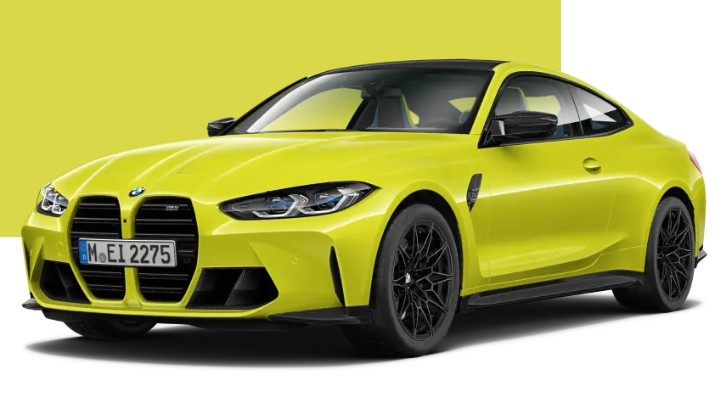
The BMW M3 and BMW M4 have spent years causing the same argument among performance-car fans: is BMW M4 faster than M3?
At first glance, the answer seems obvious. The M4 looks like the more aggressive machine. It has two doors, a lower coupe roofline, and the kind of silhouette that suggests it should disappear down a straightaway while the M3 carries groceries home.
But appearances are deceptive.
When we compare equivalent versions of the current BMW M3 and M4, their performance is remarkably similar. In fact, BMW lists identical official 0–60 mph figures for comparable trims. The standard M3 and M4 are both rated at 4.1 seconds, while the M3 Competition and M4 Competition are both rated at 3.8 seconds. Move up to Competition xDrive, and both are officially rated at 3.4 seconds.
So, is the M4 faster than the M3?
Not necessarily. In equivalent specifications, the modern BMW M3 and M4 are essentially equally fast.
There are circumstances in which one can edge ahead of the other, though, and that's where things get interesting.
Let's break it all down.
Content in this publication
- BMW M3 vs M4: The Short Answer
- Why Do People Assume the BMW M4 Is Faster Than the M3?
- Do the M3 and M4 Use the Same Engine?
- BMW M3 vs M4 0–60 MPH: Which Is Quicker?
- Real-World Testing Can Be Even Faster
- Is the M4 Lighter Than the M3?
- Why xDrive Changes the M3 vs M4 Conversation
- What About the M3 and M4 Top Speed?
- Is the M4 More Aerodynamic Than the M3?
- Which Is Faster Around a Track: M3 or M4?
- Does the M4 Handle Better Than the M3?
- M3 vs M4 Quarter-Mile Performance
- Does the M4 Feel Faster Than the M3?
- Is the M3 Faster Because It Has Better Weight Distribution?
- Which BMW Is Faster: M3 Competition or M4 Competition?
- What About Older BMW M3 and M4 Generations?
- Is M4 Competition Faster Than M3 Competition?
- Is the BMW M4 CS Faster Than the M3?
- BMW M3 vs M4: Which Is Better for Drag Racing?
- Which One Is Better for Track Driving?
- Which One Is Better as a Daily Driver?
- Should You Buy an M3 or M4 If Speed Is Your Priority?
- M3 vs M4: Which Feels More Special?
- Is BMW M4 Faster Than M3 in Real Life?
- The Biggest Mistake People Make Comparing M3 and M4 Speed
- Why the M4 Convertible Is a Different Story
- M3 vs M4 Speed: Our Final Verdict
- Frequently Asked Questions
BMW M3 vs M4: The Short Answer
If we're comparing matching versions, there is basically no meaningful straight-line speed advantage.
Current BMW figures show:
| Model | Horsepower | Drivetrain | Official 0–60 mph |
|---|---|---|---|
| BMW M3 | 473 hp | RWD | 4.1 sec |
| BMW M4 | 473 hp | RWD | 4.1 sec |
| BMW M3 Competition | 503 hp | RWD | 3.8 sec |
| BMW M4 Competition | 503 hp | RWD | 3.8 sec |
| BMW M3 Competition xDrive | 523 hp | AWD | 3.4 sec |
| BMW M4 Competition xDrive | 523 hp | AWD | 3.4 sec |
BMW therefore treats the sedan and coupe as performance twins rather than placing the M4 above the M3 in outright acceleration.
The important phrase here is matching versions.
Comparing an M4 Competition xDrive against a manual M3 would obviously make the M4 look considerably faster. But that's primarily because we're comparing different transmissions, power outputs, and drivetrains—not because the M4 badge itself guarantees extra speed.
Why Do People Assume the BMW M4 Is Faster Than the M3?
The confusion makes sense.
BMW's naming strategy gives us the impression that the M4 sits above the M3. Four sounds higher than three, after all.
But the relationship isn't really hierarchical.
Today's M3 is primarily the four-door performance sedan, while the M4 serves as its two-door coupe counterpart. When BMW reorganized its naming system, the coupe version of the 3 Series became the 4 Series, effectively turning what used to be an M3 Coupe into the modern M4.
Think of them as siblings rather than rivals from different weight classes.
One wears a business suit.
The other arrives wearing a fitted leather jacket.
Underneath, however, their DNA is extraordinarily similar.
Do the M3 and M4 Use the Same Engine?
Yes.
Within equivalent versions, the M3 and M4 use the same fundamental 3.0-liter twin-turbocharged inline-six engine.
BMW enthusiasts know it as the S58, and it is one of the key reasons these cars feel so brutally quick.
Depending on specification, current versions produce roughly:
- 473 hp in the standard manual models
- 503 hp in Competition versions
- 523 hp in Competition xDrive versions
The current M3 Competition xDrive, for example, produces 523 horsepower and 479 lb-ft of torque.
Since comparable M3 and M4 variants receive the same engine tune, neither vehicle starts the race with an inherent power advantage.
Does the M4 Have More Horsepower Than the M3?
Not when we compare equivalent trims.
A 523-hp M4 Competition xDrive isn't stronger than the equivalent M3 Competition xDrive. Both are working with essentially the same firepower.
This is important because some online comparisons accidentally compare, for example:
M3: standard 473-hp manual
versus
M4: 523-hp Competition xDrive
Then they conclude that the M4 is faster.
Well, of course it is.
That's like comparing two runners after giving one of them roller skates.
Match the specifications, and the difference nearly disappears.
BMW M3 vs M4 0–60 MPH: Which Is Quicker?
Officially, it's a tie across equivalent current models.
Standard M3 vs Standard M4
Both have:
- 473 horsepower
- Rear-wheel drive
- Six-speed manual transmission
- Official 4.1-second 0–60 mph time
There's no published acceleration advantage for either.
M3 Competition vs M4 Competition
Both produce 503 horsepower and use an eight-speed automatic transmission.
BMW lists both at approximately 3.8 seconds from 0–60 mph.
Again: tie.
M3 Competition xDrive vs M4 Competition xDrive
Here's where things get properly ridiculous.
Both receive 523 horsepower and BMW's M xDrive all-wheel-drive system.
BMW quotes 3.4 seconds to 60 mph for both cars.
That makes the practical four-door M3 nearly as capable of bending your perception of time as its two-door sibling.
Real-World Testing Can Be Even Faster
Manufacturer acceleration figures don't always tell the whole story.
Independent testing has shown that BMW's modern M cars can substantially outperform their official numbers under favorable conditions.
Car and Driver, for example, recorded an M3 Competition xDrive hitting 60 mph in approximately 2.8 seconds in testing. Its M4 testing has similarly produced extremely rapid results, including a 2.8-second run from a Competition model.
That tells us something more important than deciding whether one is a tenth faster:
Both cars are absurdly quick.
Once we're talking about sub-three-second launches in instrumented testing, tiny differences are more academic than noticeable on ordinary roads.
Is the M4 Lighter Than the M3?
This is where the M4 sometimes gains a theoretical advantage.
A coupe can occasionally weigh slightly less than its four-door equivalent, depending on specification and equipment.
Less weight helps nearly every performance metric:
- Acceleration
- Braking
- Cornering
- Direction changes
- Tire workload
- Overall responsiveness
But we're not talking about a featherweight sports car versus a luxury sedan.
The M3 and M4 share so much architecture that their weight difference generally isn't large enough to completely alter their character.
Does Lower Weight Automatically Make the M4 Faster?
No.
Acceleration involves far more than curb weight.
Factors include:
- Tire grip
- Launch-control calibration
- Transmission behavior
- Temperature
- Surface conditions
- Fuel load
- Driver input
- Aerodynamics
- Optional equipment
A lighter rear-wheel-drive M4, for example, could still struggle to deploy its power more effectively than a heavier M3 xDrive.
Traction can beat weight.
And with more than 500 horsepower available, traction matters—a lot.
Why xDrive Changes the M3 vs M4 Conversation
If we wanted to choose the single feature that transforms these cars' acceleration most dramatically, it wouldn't be the number of doors.
It would be M xDrive.
Traditional rear-wheel-drive BMW M cars can overwhelm their rear tires when launching aggressively.
BMW's all-wheel-drive system allows power to reach all four tires, helping the car claw itself away from the starting line like a cat digging into carpet.
That's why an xDrive version can annihilate a rear-wheel-drive model from a standstill even when their basic engines are closely related.
Is an M3 xDrive Faster Than an M4 RWD?
Yes, generally.
And this perfectly illustrates why asking only, “Is the BMW M4 faster than the M3?” can be misleading.
A current M3 Competition xDrive can accelerate considerably quicker than a rear-wheel-drive standard M4.
The M3 may have four doors, but when all four tires start working together, it doesn't care.
What About the M3 and M4 Top Speed?
Here the comparison becomes even simpler.
BMW electronically limits many M3 and M4 variants to approximately 155 mph in standard configuration. BMW lists a 155-mph electronically limited top speed for current M3 variants, for example.
Depending on market and optional performance packages, higher limits may be available.
When both vehicles have equivalent electronic limits, however, one doesn't magically outrun the other.
Could the M4 Be Faster Without a Speed Limiter?
Potentially, but we're entering theoretical territory.
The M4's coupe-shaped body may offer subtle aerodynamic differences at very high speeds.
A lower roofline and different body profile can influence drag and high-speed stability.
But we're talking about conditions far beyond normal public-road driving.
For most owners, this distinction has essentially zero practical importance.
You may be interested in reading Audi A6 or A5: Which Audi Should You Choose?
Is the M4 More Aerodynamic Than the M3?
Generally speaking, the M4's coupe configuration creates a shape that feels naturally suited to aerodynamic efficiency and high-speed stability.
But we shouldn't imagine the M3 as a brick with headlights.
BMW engineers developed both cars as serious high-performance machines.
Aerodynamics affect more than drag, too.
Designers must balance:
- Cooling
- Downforce
- Lift reduction
- Brake ventilation
- High-speed stability
- Drag
The large front openings aren't there just to frighten nearby hatchbacks. These cars need substantial airflow through their cooling systems.
Does Aerodynamics Matter in a 0–60 Race?
Barely.
At low speeds, aerodynamic resistance isn't the biggest obstacle.
Traction and power delivery matter far more.
At 100, 120, or 150 mph, aerodynamic differences become increasingly relevant.
That's why a shape that offers little benefit during the first seconds of acceleration can matter more toward the end of a long straight.
Which Is Faster Around a Track: M3 or M4?
This question is far harder to answer universally.
Track performance depends enormously on:
- Circuit layout
- Tires
- Suspension setup
- Alignment
- Brake condition
- Driver skill
- Weather
- Fuel load
- Vehicle specification
On paper, the M4's coupe configuration might suggest a slight dynamic advantage.
But in reality, an equally equipped M3 is extraordinarily close.
We're not comparing an SUV to a race car.
We're comparing two interpretations of effectively the same high-performance platform.
M4 Advantage on Fast Circuits
The M4 may feel particularly at home on high-speed tracks where its lower coupe profile and body configuration suit the environment.
Long sweeping corners and fast transitions play directly into the M4's sports-coupe personality.
M3 Advantage in the Real World
Meanwhile, the M3 gives away remarkably little performance while gaining two additional doors and easier rear-seat access.
That's arguably one of the M3's greatest tricks.
It can drop someone at the airport on Friday and attack a racetrack on Saturday.
Few cars combine practicality and pace this convincingly.
Does the M4 Handle Better Than the M3?
“Better” becomes subjective very quickly.
Both are exceptionally capable.
The M4 may feel slightly more like a traditional sports coupe because of the driving position, proportions, and visual experience from behind the wheel.
The M3 feels like a super sedan.
That difference in personality can influence our perception of speed even when the stopwatch says they're nearly identical.
A low coupe often feels faster.
Trees seem closer.
The roof seems lower.
The cabin feels tighter.
Our brain translates those sensations into speed.
That's one reason some drivers may swear the M4 feels quicker even when the data says otherwise.
M3 vs M4 Quarter-Mile Performance
Quarter-mile performance follows a similar pattern to 0–60 acceleration.
Equivalent versions tend to remain extremely close because they share:
- Engines
- Transmissions
- Drivetrain technology
- Chassis architecture
- Similar weight
Car and Driver recorded a standard manual M4 at around 12.0 seconds at 121 mph in one test. A manual M3 previously tested by the publication ran approximately 12.2 seconds at 117 mph, illustrating how small variations can appear between individual tests and configurations.
Those figures shouldn't be interpreted as proof that every M4 beats every M3.
Different test dates, conditions, vehicles, tires, and specifications matter.
The bigger takeaway is how close they are.
Does the M4 Feel Faster Than the M3?
It can.
And this is one of those cases where emotion matters more than spreadsheets.
The M4 has:
- A lower coupe roof
- Longer-looking doors
- Sportier proportions
- A more enclosed rear cabin
- A stronger visual association with traditional performance coupes
That creates theater.
The M3, by comparison, resembles a traditional sedan that has swallowed a race-car engine.
There's something hilarious about that.
The M4 tells everyone it's fast.
The M3 looks slightly more restrained and then proceeds to launch with enough violence to rearrange your coffee.
Is the M3 Faster Because It Has Better Weight Distribution?
Not automatically.
BMW spends considerable engineering effort on weight distribution and chassis balance across both models.
Neither car holds a simple universal advantage that guarantees better acceleration or lap times.
Also remember that weight distribution affects different situations differently.
Under hard acceleration, weight shifts rearward.
During braking, it shifts forward.
During cornering, lateral load transfer becomes important.
The best performance car isn't simply the one that looks better on one specification line.
It's the car whose entire chassis works cohesively.
And both M cars are extraordinarily sophisticated in that department.
Which BMW Is Faster: M3 Competition or M4 Competition?
If both have the same drivetrain configuration, call it essentially a tie.
That's the most accurate answer.
BMW publishes identical official acceleration numbers for corresponding M3 and M4 Competition versions.
Instead of asking which nameplate is faster, ask:
Which specification is faster?
That's a much better question.
For example:
M3 Competition xDrive > standard M4 manual
But:
M3 Competition xDrive ≈ M4 Competition xDrive
Now the hierarchy makes sense.
What About Older BMW M3 and M4 Generations?
Historical comparisons require some context because the M4 name hasn't existed for nearly as long as the M3 name.
Before BMW reorganized its model naming strategy, the two-door M car was still called the M3 Coupe.
The first M4 arrived alongside the F80-generation M3 after BMW separated the 3 Series sedan and 4 Series coupe naming structures.
That means comparisons before this era technically involve different M3 body styles rather than an M3-versus-M4 battle.
F80 M3 vs F82 M4
These cars established the modern relationship.
The F80 represented the sedan.
The F82 represented the coupe.
Mechanically, they were extremely closely related.
Performance differences were tiny, and equipment, transmission, tires, and driver execution often mattered more than body style.
G80 M3 vs G82 M4
The current-generation relationship follows essentially the same philosophy, although performance has reached another universe.
Turbocharged six-cylinder power, sophisticated electronics, launch control, advanced traction management, and optional xDrive have turned both cars into genuine supercar hunters.
Is M4 Competition Faster Than M3 Competition?
Not according to BMW's current official acceleration claims when both vehicles have equivalent drivetrains.
For the rear-wheel-drive Competition versions, both are rated at approximately 3.8 seconds to 60 mph.
You may be interested in readingAudi A6 or A5: Which Audi Should You Choose?You may be interested in reading
Audi A6 vs A4: Which Audi Sedan Is the Better Choice?For Competition xDrive versions, both are rated around 3.4 seconds.
That's about as conclusive as we can get.
Individual magazine tests may produce different numbers, but a tenth of a second can disappear simply because the track surface changed temperature.
Is the BMW M4 CS Faster Than the M3?
Now things become interesting.
Special editions such as the M4 CS aren't equivalent to a standard M3.
CS models typically receive performance-focused changes involving areas such as:
- Increased engine output
- Reduced weight
- Revised suspension
- More aggressive chassis calibration
- Performance tires
- Aerodynamic changes
So yes, a special high-performance M4 variant can absolutely outrun a lower-tier M3.
But again, that's a trim comparison rather than proof that every M4 is inherently faster.
A hypothetical equivalent M3 CS changes the argument once more.
The badge matters less than the hardware.
BMW M3 vs M4: Which Is Better for Drag Racing?
If straight-line acceleration is your obsession, we'd prioritize specification in roughly this order:
- xDrive
- Competition-level power
- Tire condition and temperature
- Launch-control optimization
- Vehicle weight
- Body style
Notice how far down the list “M3 versus M4” appears.
That's intentional.
A properly launched M3 Competition xDrive will embarrass many cars that look considerably more exotic.
The equivalent M4 will do essentially the same thing.
Which One Is Better for Track Driving?
If track driving is our primary goal, the M4 feels like the more natural choice simply because of its coupe format.
But we wouldn't dismiss the M3.
For many amateur drivers, differences in tires and technique will dwarf the difference between these two bodies.
Put an experienced driver in the M3 and an inexperienced driver in the M4, and the sedan will probably disappear.
Performance specifications are only potential.
The driver still has to unlock them.
Which One Is Better as a Daily Driver?
Here the M3 lands a powerful punch.
It offers supercar-like straight-line acceleration without sacrificing its four-door format.
That means easier access to the rear seats and generally better family usability.
If we regularly carry passengers, children, or luggage, the M3 can make more sense.
The M4 demands slightly more compromise.
But some buyers won't care.
Opening one enormous coupe door before dropping into that low cabin is part of the experience.
Should You Buy an M3 or M4 If Speed Is Your Priority?
If outright speed is the only criterion, don't make your choice based primarily on M3 versus M4.
Choose the drivetrain and trim.
For the quickest launches, we'd want a Competition xDrive model.
Once both cars have matching power and drivetrain configurations, their acceleration becomes so similar that choosing one because it's supposedly “faster” misses the point.
Pick the M3 if you want:
- Four-door practicality
- Easier rear-seat access
- Classic super-sedan character
- Maximum versatility
Pick the M4 if you want:
- Coupe styling
- Two-door proportions
- A more overt sports-car appearance
- A slightly more focused emotional experience
Either way, you're getting astonishing performance.
M3 vs M4: Which Feels More Special?
This comes down to personality.
The M3 has history on its side.
For decades, those two characters—M3—have represented one of the defining performance cars of the modern era.
The M4 is younger, but its mission is equally compelling.
We might describe the difference this way:
The M3 is the assassin wearing a suit.
The M4 is the assassin who doesn't bother hiding the knife.
Both get the job done.
They just arrive differently.
Is BMW M4 Faster Than M3 in Real Life?
Usually, not by enough for us to care.
A launch on slightly different pavement could reverse the result.
One driver could react faster.
One car could have warmer tires.
One could be carrying half a tank of fuel while the other is full.
Once machines become this closely matched, small environmental variables start deciding the winner.
That's why claiming that every M4 is definitively faster than every M3 oversimplifies the comparison.
The Biggest Mistake People Make Comparing M3 and M4 Speed
The biggest mistake is comparing model names instead of specifications.
Before looking at an acceleration figure, check:
1. Engine output
Is it the standard or Competition tune?
2. Drivetrain
Rear-wheel drive or xDrive?
3. Transmission
Manual or automatic?
4. Body style
Sedan, coupe, or convertible?
5. Special edition
Standard, Competition, CS, CSL, or another derivative?
Only after matching those variables does a meaningful M3-versus-M4 comparison emerge.
Why the M4 Convertible Is a Different Story
We should also separate the M4 Convertible from the coupe.
Convertible mechanisms add weight because the body requires additional structural reinforcement plus the roof hardware itself.
BMW currently lists the M4 Competition xDrive Convertible at about 4,306 pounds and gives it an official 0–60 mph time of 3.6 seconds.
Compare that with the 3.4-second official figure of the M3 Competition xDrive sedan, and suddenly the M3 is faster.
That's another perfect example of why body configuration matters more than badge hierarchy.
The M4 isn't automatically the fastest simply because it's an M4.
M3 vs M4 Speed: Our Final Verdict
So, is BMW M4 faster than M3?
Not when we're comparing equivalent current versions.
The BMW M3 and M4 share their core engines, transmissions, drivetrain technology, and much of their underlying engineering. BMW even publishes identical official acceleration figures for matching standard, Competition, and Competition xDrive variants.
An M4 can certainly be faster than an M3 if the M4 has a more powerful specification, xDrive, lighter configuration, or special performance package.
But the opposite is equally possible.
An M3 Competition xDrive can easily outrun a lower-spec M4—and even the heavier M4 Convertible gives the M3 sedan an acceleration advantage in equivalent xDrive Competition form.
So instead of thinking:
M4 = faster M3
Think:
M3 = performance sedan
M4 = performance coupe
Choose based on how you want to use the car.
The stopwatch probably won't settle the argument.
Your garage might.
Frequently Asked Questions
1. Is a BMW M4 Competition faster than an M3 Competition?
Not necessarily. When comparing equivalent current Competition models with the same drivetrain, BMW quotes essentially identical 0–60 mph figures. Differences recorded in independent testing can come from road conditions, tires, temperatures, equipment, and testing methods.
2. Is an M3 xDrive faster than an M4?
An M3 Competition xDrive can be faster than a rear-wheel-drive M4 because the all-wheel-drive system provides considerably better launch traction. Against an equivalent M4 Competition xDrive, however, their straight-line performance is virtually identical.
3. Which is faster, BMW M3 or M4 from 0–60 mph?
Current equivalent versions have the same official BMW 0–60 mph figures. Standard M3 and M4 models are rated at 4.1 seconds, Competition models at 3.8 seconds, and Competition xDrive versions at 3.4 seconds.
You may be interested in readingAudi A6 or A5: Which Audi Should You Choose?You may be interested in reading
Audi A6 vs A4: Which Audi Sedan Is the Better Choice?You may be interested in reading
Audi A6 vs BMW 5 Series: Which Luxury Sedan Is Better?4. Does the BMW M4 have more horsepower than the M3?
Not in equivalent trims. Matching M3 and M4 variants generally receive the same engine output. Differences appear when comparing different versions such as a standard M3 against an M4 Competition or a special-edition model.
5. Should I buy an M3 or M4 for performance?
Choose based more on body style and intended use than raw speed. The M3 gives us four-door practicality with extraordinary performance, while the M4 delivers almost identical capability in a more dramatic two-door coupe package.
If you want to know other articles similar to Is BMW M4 Faster Than M3? A Complete M3 vs M4 Speed Comparison you can visit the category Models.
Honda Passport vs Toyota 4Runner: Which SUV Is Better?
Honda Passport vs Ford Bronco: Which SUV Is Better?
Honda Passport vs Ford Explorer: Which SUV Is Better?
Honda Passport or Pilot: Which SUV Is Better?
Honda Passport vs Jeep Grand Cherokee: Which SUV Is Better?
Honda Passport vs Nissan Pathfinder: Which SUV Is Better?
Leave a Reply
More content of your interest