

Audi A6 vs Mercedes E Class: Which Luxury Sedan Is Better?

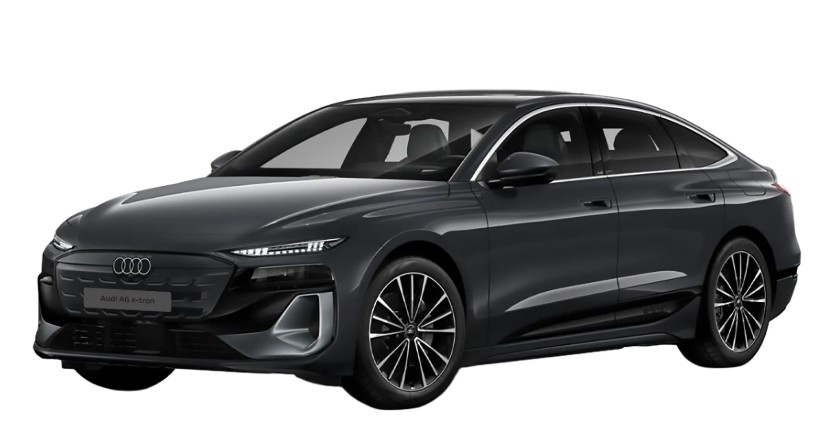
The Audi A6 vs Mercedes E Class debate is one of those luxury-car arguments that never really disappears. Both cars occupy the sweet spot between compact executive sedans and oversized flagship limousines. They are sophisticated enough for the corporate parking garage, comfortable enough for a cross-country drive, and fast enough in the right configuration to make an empty back road surprisingly entertaining.
Yet they approach the luxury-sedan formula differently.
The Audi A6 tends to feel precise, understated, and technologically focused. It is the tailored navy suit of the executive-car world: elegant, serious, and rarely desperate for attention. The Mercedes-Benz E-Class takes a slightly different route. It traditionally places greater emphasis on comfort, atmosphere, and that unmistakable Mercedes sense of occasion.
So, which one should we buy?
That depends on what we expect from a premium sedan. Let's dig deeper than badges and brochures and compare how these two cars actually fit into everyday life.
Content in this publication
- Audi A6 vs Mercedes E Class at a Glance
- The Fundamental Difference Between the A6 and E-Class
- Exterior Design: Understatement vs Presence
- Audi A6 vs Mercedes E Class Interior
- Technology and Infotainment
- Comfort: Where the E-Class Makes Its Case
- Driving Experience: Audi A6 vs Mercedes E Class
- Performance and Engine Choices
- Audi Quattro vs Mercedes 4MATIC
- Ride Quality on Long Trips
- Seats and Passenger Space
- Boot Space and Practicality
- Fuel Economy
- Reliability: Audi A6 vs Mercedes E Class
- Maintenance Costs
- Insurance Costs
- Safety and Driver Assistance
- Audi A6 vs Mercedes E Class for City Driving
- Which Is Better for Highway Driving?
- Prestige and Brand Image
- Used Audi A6 vs Used Mercedes E-Class
- Depreciation and Resale Value
- Audi A6 vs Mercedes E Class: Which Feels More Premium?
- Which Is More Fun to Drive?
- Audi A6 vs Mercedes E Class for Families
- Which Car Has the Better Value Proposition?
- Who Should Buy the Audi A6?
- Who Should Buy the Mercedes E-Class?
- Audi A6 vs Mercedes E Class: Pros and Cons
- The Smartest Way to Choose Between Them
- Audi A6 vs Mercedes E Class: Our Verdict
- Frequently Asked Questions
Audi A6 vs Mercedes E Class at a Glance
If we want the short version before getting into the details, the difference can be summarized fairly easily.
| Category | Audi A6 | Mercedes E-Class |
|---|---|---|
| Overall character | Understated and technical | Luxurious and expressive |
| Interior design | Clean and modern | More dramatic and elegant |
| Comfort | Excellent | Usually a key strength |
| Handling | Precise and controlled | Comfortable yet composed |
| Technology | Strong digital focus | Highly sophisticated |
| AWD availability | Quattro on selected versions | 4MATIC on selected versions |
| Highway driving | Excellent | Excellent |
| Rear-seat comfort | Very good | Very good to excellent |
| Styling approach | Conservative | More prestigious |
| Best for | Drivers wanting subtle luxury | Drivers prioritizing comfort and ambience |
Specifications, engines, equipment, and drivetrain availability vary significantly by generation, model year, trim, and country, so we should always compare the exact cars available in our market.
The Fundamental Difference Between the A6 and E-Class
The two models may compete in the same segment, but their personalities are not identical.
The Audi A6 Philosophy
Audi tends to build the A6 around precision.
The steering, dashboard layout, switchgear, drivetrain, suspension, and general design all give us the impression that someone in Ingolstadt spent a very long evening making sure everything lined up perfectly.
The result is a car that rarely feels theatrical.
Instead, it feels controlled.
There is something appealing about that restraint. An A6 can arrive at an expensive hotel without screaming, "Look what I bought!" Yet anyone familiar with premium cars immediately knows what it is.
The Mercedes E-Class Philosophy
Mercedes approaches the equation from the opposite direction.
The E-Class wants us to notice the luxury.
Depending on generation and specification, we may find sweeping dashboard displays, elaborate ambient lighting, sculpted air vents, decorative trim, intricate seat designs, and countless convenience features.
It often feels less like sitting inside a sophisticated machine and more like stepping into a miniature luxury lounge.
Neither philosophy is objectively better.
The question is whether we prefer Audi's disciplined understatement or Mercedes' richer sense of occasion.
Exterior Design: Understatement vs Presence
Place an A6 and an E-Class next to each other and their design philosophies become obvious.
The A6 normally relies on sharp lines, strong proportions, a wide grille, and restrained detailing. It looks expensive without becoming overly decorative.
We could call it stealth wealth on four wheels.
The E-Class generally has more visual presence. Mercedes designers tend to borrow styling cues from the larger S-Class, giving the E-Class a prestigious appearance that can make it look more expensive than it actually is.
Which Car Looks Better?
That depends entirely on personality.
Choose the Audi A6 if we prefer:
- Sharp and minimalist styling
- A discreet executive appearance
- Strong geometric design
- A car that ages quietly rather than following fashion
Choose the Mercedes E-Class if we prefer:
- More visual prestige
- Elegant luxury-car proportions
- A stronger connection to flagship Mercedes models
- Styling designed to attract a little more attention
Neither vehicle needs aggressive spoilers or enormous wings to appear important. Their confidence comes from proportion rather than decoration.
Audi A6 vs Mercedes E Class Interior
Here is where the rivalry becomes particularly interesting.
Audi A6 Interior
Audi has spent years building its reputation around excellent cabin quality, clean interfaces, and tight construction.
Depending on generation, the A6 can feature multiple digital displays, Audi's Virtual Cockpit instrumentation, advanced infotainment systems, premium materials, and configurable lighting.
The cabin generally looks logical.
Buttons, screens, vents, and trim pieces appear positioned with architectural precision.
Some buyers absolutely love this.
Others may find it slightly clinical.
Mercedes E-Class Interior
The E-Class often creates a stronger first impression.
Mercedes frequently uses lighting, large displays, flowing dashboard surfaces, metal detailing, wood or gloss trim, and sculpted seats to give the cabin more theater.
At night, particularly with ambient lighting activated, an E-Class can resemble an expensive cocktail lounge.
Whether that is sophisticated or excessive depends on our tastes.
Which Has the Better Interior?
For minimalist design and technical precision, we lean toward the Audi A6.
For visual luxury and atmosphere, the Mercedes E-Class usually has the advantage.
But interior quality deserves a test drive rather than a verdict based on photographs. Materials can differ dramatically between trims, and optional equipment can transform either cabin.
Technology and Infotainment
Modern luxury cars sometimes feel like smartphones that happen to have engines.
The A6 and E-Class are prime examples.
Both can offer sophisticated digital instrument panels, navigation, smartphone connectivity, premium sound systems, driver profiles, voice control, configurable displays, and numerous connected services, depending on specification.
Audi's Technology Approach
Audi traditionally emphasizes clarity.
Its Virtual Cockpit system remains one of the brand's standout features, presenting navigation, driving information, and vehicle data directly ahead of the driver.
The larger infotainment interfaces in recent A6 generations can look impressively integrated into the dashboard.
There is a learning curve, though.
Touch-sensitive controls may never provide the same tactile satisfaction as physical switches.
Mercedes Technology
Mercedes has increasingly pushed toward large screens and sophisticated digital interfaces.
Its MBUX infotainment system offers extensive customization, voice commands, navigation features, and connected functions.
Some versions can feel genuinely futuristic.
However, more technology does not automatically mean better usability. We may appreciate the spectacular display on day one but eventually discover that changing a simple setting requires several taps.
Comfort: Where the E-Class Makes Its Case
Comfort has traditionally been one of the E-Class's strongest arguments.
Mercedes understands that executive-car buyers often spend enormous amounts of time on highways, airport runs, and long commutes.
The suspension is therefore generally tuned with comfort high on the priority list.
Road imperfections are handled calmly, especially when the car is fitted with comfort-oriented wheels and suspension.
The Audi A6 is hardly uncomfortable. In fact, it can be superb over long distances.
However, depending on wheel size and suspension configuration, some versions feel slightly firmer and more controlled.
That firmness may actually appeal to drivers who dislike excessive body movement.
Wheel Size Matters More Than We Think
Here is an important buying tip.
A luxury sedan on enormous wheels may look fantastic in photographs but ride considerably worse than the same car on smaller rims.
Large wheels usually mean lower-profile tires.
Lower-profile tires provide less cushioning.
So, if comfort is our priority, we should resist the temptation to automatically choose the biggest available wheels.
Luxury should not mean feeling every pothole through our spine.
Driving Experience: Audi A6 vs Mercedes E Class
Both vehicles are designed primarily as executive cruisers, but they still have distinct driving personalities.
Audi A6 Handling
The Audi typically feels stable and predictable.
Steering responses are clean, body control is strong, and quattro-equipped versions can provide excellent traction where fitted.
An A6 often feels happiest covering distance quickly without drama.
Think of it as a high-speed train wearing a business suit.
It is not necessarily playful, but it feels secure.
Mercedes E-Class Handling
The E-Class tends to put comfort before aggression, although sportier versions can be remarkably capable.
The steering is usually light enough for effortless urban driving while retaining sufficient accuracy on highways and winding roads.
We might say the Mercedes flows down the road while the Audi attacks it with a ruler and calculator.
That is an exaggeration, of course, but it captures the difference in character.
Performance and Engine Choices
Engine availability varies dramatically by region and generation, but both models have historically offered a broad selection of petrol, diesel, hybrid, and performance-oriented powertrains.
Some markets favor four-cylinder engines.
Others receive six-cylinder options.
Plug-in hybrid configurations have also become increasingly important as manufacturers work toward lower emissions and greater electrification.
Do We Really Need the Most Powerful Engine?
Probably not.
Most mainstream versions of both cars already provide enough power for overtaking, highway merging, and daily commuting.
More powerful versions can be exciting, but they typically bring:
- Higher purchase prices
- Greater fuel consumption
- More expensive insurance
- Potentially higher servicing costs
- More expensive tires and brakes
A mid-range engine often represents the smartest balance.
Audi Quattro vs Mercedes 4MATIC
All-wheel drive is another major consideration.
You may be interested in reading Audi A6 vs A3: Which Audi Is the Better Choice?
Audi's quattro branding is famous and has become almost inseparable from the company's identity.
Mercedes uses the 4MATIC name for its all-wheel-drive systems.
Both can provide valuable additional traction in rain, snow, and slippery conditions.
However, we should remember something important: all-wheel drive helps us accelerate.
It does not magically shorten braking distances.
Good tires remain crucial.
Which AWD System Is Better?
For normal road use, most drivers will struggle to find a meaningful difference under everyday conditions.
Rather than choosing purely because of the AWD badge, we should compare:
- Tire quality
- Engine output
- Suspension setup
- Fuel economy
- Vehicle price
- Local weather conditions
The complete package matters more than the logo attached to the drivetrain.
Ride Quality on Long Trips
Imagine a six-hour highway journey.
This is where both cars earn their reputations.
Cabin noise is generally low, seats are supportive, stability is excellent, and powerful engines rarely feel strained.
The Mercedes may have a small advantage if our priority is outright softness and relaxation.
The Audi may appeal more if we enjoy feeling slightly better connected to the road.
Either way, both models are vastly better suited to long-distance touring than a stiff performance crossover on giant wheels.
Seats and Passenger Space
Both vehicles provide genuine adult-friendly accommodation.
Front occupants receive plenty of adjustment, while rear passengers usually enjoy enough legroom for business travel or family duties.
However, exact interior dimensions vary by generation.
Rear-Seat Comfort
If we frequently carry passengers, the E-Class deserves particular attention.
Mercedes has long targeted chauffeur and executive customers, and rear-seat comfort often reflects that philosophy.
The A6 is also spacious, but its cabin can feel more driver-oriented.
What About Tall Passengers?
Anyone above average height should physically sit in the rear seat before buying.
Numbers in brochures tell only part of the story.
Seat height, cushion angle, headroom, and foot space matter just as much as quoted legroom.
Boot Space and Practicality
Luxury sedans are often more useful than buyers expect.
Both the A6 and E-Class generally provide substantial luggage compartments capable of handling suitcases, shopping, golf equipment, and everyday family cargo.
But practicality changes depending on drivetrain.
Plug-in hybrid versions, for example, may package batteries beneath or near the cargo area, potentially influencing luggage capacity.
Avant and Estate Models
Where available, wagon versions change the equation entirely.
Audi's A6 Avant and Mercedes E-Class Estate combine luxury-car refinement with family-SUV levels of usefulness.
For many drivers, these versions are the hidden gems of the range.
We get:
- Better cargo access
- More usable luggage volume
- Easier transportation of large objects
- Lower driving position than an SUV
- Excellent highway efficiency
If we value practicality but do not want an SUV, the estate versions deserve serious consideration.
Fuel Economy
Fuel consumption depends heavily on engine choice.
A smaller diesel used for long motorway journeys may return dramatically different efficiency from a powerful petrol six-cylinder driven around town.
Hybrid versions further complicate comparisons.
A plug-in hybrid can produce impressive official consumption figures, but those numbers make sense primarily when we charge the battery regularly.
If we never plug it in, we may end up carrying a heavy battery around without receiving the full efficiency benefit.
Real-World Efficiency Depends on How We Drive
When comparing Audi A6 vs Mercedes E Class fuel economy, we should ask:
- How many miles do we drive each year?
- Are most trips urban or highway?
- Can we charge at home?
- How expensive is electricity locally?
- How expensive is petrol or diesel?
- Do we drive aggressively?
The correct engine for a city commuter may be completely wrong for someone covering 25,000 highway miles every year.
Reliability: Audi A6 vs Mercedes E Class
This is one of the most searched questions surrounding both cars.
Unfortunately, there is no useful one-word answer.
Reliability differs by model year, engine, gearbox, electronics package, maintenance history, and previous ownership.
Both cars are complicated premium vehicles.
That means neglect can become expensive.
The Bigger Reliability Factor: Maintenance History
A well-maintained higher-mileage luxury sedan may be a safer purchase than a lower-mileage example that has missed services and been driven carelessly.
Before buying used, we would prioritize:
- Complete maintenance records
- Evidence of correct oil changes
- Gearbox service history where applicable
- Diagnostic scan results
- Suspension condition
- Electronic system checks
- Cooling system inspection
- Tire condition
- Brake wear
- Recall completion
- Independent pre-purchase inspection
The badge on the bonnet matters less than the life the car has lived.
Maintenance Costs
Neither vehicle should be mistaken for a budget car once the factory warranty disappears.
Premium engineering usually comes with premium parts prices.
Routine servicing may be manageable, but major repairs can become expensive.
Air suspension components, adaptive dampers, sophisticated lighting systems, infotainment hardware, electronic modules, turbochargers, hybrid components, and high-end braking systems are not economy-car parts.
Audi A6 Maintenance
Audi owners may encounter costs related to complex electronics, suspension systems, drivetrains, and engine-specific components as mileage increases.
Quattro versions also contain additional drivetrain hardware compared with simpler two-wheel-drive models.
Mercedes E-Class Maintenance
The Mercedes is equally sophisticated.
Highly equipped examples can contain an enormous amount of technology, creating more potential failure points as the vehicle ages.
That does not mean either model is unreliable.
It means we should budget realistically.
Buying a depreciated luxury car for the price of a new economy car does not magically give it economy-car maintenance costs.
Insurance Costs
Insurance prices vary enormously by driver, location, engine, trim, claims history, and insurer.
Still, powerful versions of either model can cost significantly more to insure than basic variants.
Performance models can move into a completely different category.
If we are buying used, obtaining an insurance quote before signing anything is surprisingly important.
A tempting purchase price can lose some shine when the insurance premium arrives.
Safety and Driver Assistance
Luxury executive sedans are often showcases for safety technology.
Depending on year and specification, the A6 and E-Class may offer features such as:
- Adaptive cruise control
- Lane-keeping assistance
- Blind-spot monitoring
- Automatic emergency braking
- Parking assistance
- Surround-view cameras
- Traffic-sign recognition
- Cross-traffic alerts
- Advanced LED or matrix-style headlights
The actual availability of these technologies should always be confirmed on the specific car.
Manufacturers sometimes make valuable safety features optional, particularly on older versions.
Audi A6 vs Mercedes E Class for City Driving
Neither car is tiny.
In narrow streets or crowded parking garages, their length and width become obvious.
Fortunately, parking sensors, cameras, automated parking systems, and excellent steering assistance can make urban maneuvering easier.
The Audi's clean driving position and predictable dimensions make it easy to place on the road.
The Mercedes also feels manageable, especially when equipped with comprehensive parking technology.
Still, if 90% of our driving involves squeezing through congested city streets, we should ask ourselves whether a smaller A4, C-Class, 3 Series, or compact crossover would make more sense.
Which Is Better for Highway Driving?
This is where the A6 and E-Class truly belong.
Both settle into high-speed cruising beautifully.
The Audi feels planted and composed.
The Mercedes feels relaxed and effortless.
If we regularly spend hours on motorways, either can transform tiring journeys into remarkably calm experiences.
The distinction becomes personal preference.
Do we want the road to disappear beneath us?
Choose the Mercedes.
Do we want to feel the car confidently managing the road beneath us?
The Audi might speak our language more clearly.
Prestige and Brand Image
Mercedes-Benz probably carries slightly more traditional luxury prestige worldwide.
You may be interested in readingAudi A6 vs A3: Which Audi Is the Better Choice?You may be interested in reading
Audi A6 vs BMW 3 Series: Which Luxury Sedan Should You Buy?The three-pointed star has spent generations appearing on limousines, executive sedans, and flagship luxury cars.
Audi's reputation is different.
It often appeals to buyers who want premium quality without the same old-school luxury image.
The A6 can feel younger, more technical, and less ceremonial.
Does Brand Prestige Actually Matter?
Only if it matters to us.
Buying a car primarily because other people may be impressed by it is a fast route to choosing the wrong vehicle.
We are the ones sitting behind the wheel every morning.
That matters more than what the neighbor thinks.
Used Audi A6 vs Used Mercedes E-Class
Buying either model used can be extraordinarily tempting.
Luxury cars depreciate.
Sometimes dramatically.
A vehicle that cost a substantial amount when new may become surprisingly affordable after several years.
But depreciation has two sides.
The purchase price falls.
Repair prices generally do not fall at the same speed.
What Should We Check Before Buying Used?
A careful inspection should include:
- Full service documentation
- Cold-start behavior
- Gearbox operation
- Suspension noises
- Warning lights
- Infotainment functionality
- Air-conditioning performance
- Driver-assistance systems
- Tire wear patterns
- Signs of accident repair
- Oil or coolant leaks
- Battery condition
- Electronic accessories
- Diagnostic fault codes
- Independent mechanical inspection
Never let a shiny paint job replace proper due diligence.
Depreciation and Resale Value
Both vehicles can experience significant depreciation, especially during their early years.
That is unpleasant for the first owner.
It can be wonderful for the second.
High-specification luxury cars sometimes lose more money in absolute terms because options that were extremely expensive when new may add surprisingly little value later.
This creates opportunities.
A three- or four-year-old car with desirable equipment can sometimes represent far better value than buying new.
However, resale demand also depends on engine choice.
Very thirsty engines, unusual specifications, or unpopular configurations may be harder to sell.
If premium means precise construction, restrained design, and engineering discipline, the A6 makes a strong case.
If premium means rich ambience, visual drama, and traditional luxury, the E-Class has the edge.
Think of the Audi as a luxury architect's studio.
Think of the Mercedes as a five-star hotel lobby.
Both environments are expensive.
They simply communicate wealth differently.
Which Is More Fun to Drive?
Neither standard model is designed as a lightweight sports sedan.
They are large executive cars.
Still, the Audi generally delivers a slightly more controlled, planted feel that enthusiastic drivers may prefer.
Mercedes usually trades a little sharpness for comfort.
Sport-oriented suspension, larger wheels, stronger engines, and performance packages can dramatically alter that character, though.
This is why test-driving the exact trim matters.
Two versions of the same model can feel surprisingly different.
Audi A6 vs Mercedes E Class for Families
Both work well as family vehicles.
Four adults can travel comfortably, safety technology is plentiful, and luggage capacity is generally useful.
Parents may appreciate the large rear doors and quiet cabins.
However, sedans have one disadvantage compared with SUVs and wagons: the boot opening.
Large child equipment can sometimes be easier to load into a hatchback or estate.
If family practicality is essential, the A6 Avant or E-Class Estate may be stronger choices where offered.
Which Car Has the Better Value Proposition?
This changes dramatically depending on local pricing and incentives.
A lower-priced A6 with several desirable options could represent better value than an expensive E-Class.
Six months later, Mercedes may introduce an offer that flips the calculation.
Rather than comparing base prices alone, we should compare vehicles equipped to similar standards.
Useful options such as adaptive cruise control, upgraded headlights, heated seats, premium audio, parking cameras, and driver assistance can substantially change the real transaction price.
Who Should Buy the Audi A6?
The Audi A6 makes the most sense for buyers who appreciate precision more than theater.
We would choose the A6 if we value:
- Understated styling
- Excellent highway stability
- A clean, technical cabin
- Available quattro traction
- Strong digital instrumentation
- Predictable driving behavior
- Premium quality without excessive flash
There is a calm confidence about the A6.
It does not need to shout.
Who Should Buy the Mercedes E-Class?
The E-Class suits buyers who want their luxury car to actually feel luxurious every time they climb inside.
We would lean toward the Mercedes if we value:
- Exceptional comfort
- Strong prestige
- Elegant interior design
- Advanced cabin technology
- Rear-seat refinement
- A softer executive-car personality
- More visual sense of occasion
For long-distance luxury, the E-Class remains extremely difficult to ignore.
Audi A6 vs Mercedes E Class: Pros and Cons
Audi A6 Pros
- Elegant but understated
- Excellent stability
- High-quality interior
- Strong available AWD systems
- Excellent long-distance ability
- Attractive digital cockpit
- Precise driving experience
Audi A6 Cons
- Cabin can feel slightly clinical
- Large wheels can hurt ride comfort
- Repairs can be expensive
- Touchscreen-heavy interfaces are not for everyone
- Some desirable features may be optional
Mercedes E-Class Pros
- Excellent ride comfort
- Luxurious interior ambience
- Strong brand prestige
- Impressive technology
- Excellent long-distance refinement
- Comfortable rear seating
- Wide range of configurations depending on market
Mercedes E-Class Cons
- Complex technology can become expensive with age
- Some interiors may feel overly screen-focused
- Options can push prices upward quickly
- Sportier wheel setups may reduce comfort
- High-spec used cars require careful inspection
The Smartest Way to Choose Between Them
Forget the badge for twenty minutes.
Drive both cars.
Take each one over rough pavement.
Park it.
Try the infotainment system.
Sit in the back.
Open the trunk.
Connect our phone.
Drive at highway speed.
Listen for road noise.
Adjust the seat.
Then ask a simple question:
Which car makes us want to keep driving?
Specification sheets cannot answer that.
Audi A6 vs Mercedes E Class: Our Verdict
The Audi A6 vs Mercedes E Class comparison does not produce one universal winner because these cars target slightly different versions of the same luxury customer.
The Audi A6 is the better fit for drivers who enjoy understated design, precise handling, excellent road stability, and a modern technical atmosphere. It feels disciplined and engineered rather than extravagant.
The Mercedes E-Class, meanwhile, makes a stronger argument for buyers who prioritize comfort, ambience, prestige, and that traditional sense of luxury-car occasion.
If we regularly drive long distances and simply want the journey to feel effortless, the E-Class is incredibly persuasive.
If we want our executive sedan to feel slightly sharper, more discreet, and more controlled, the A6 may be the smarter choice.
And on the used market?
Condition matters more than the logo.
We would rather own a carefully maintained A6 with complete records than a neglected E-Class—and exactly the same logic works in reverse.
Ultimately, these cars are two excellent answers to the same question.
Audi answers with precision.
Mercedes answers with comfort.
We simply have to decide which language we prefer.
Frequently Asked Questions
1. Is the Audi A6 better than the Mercedes E-Class?
The Audi A6 may be better for drivers who prefer understated design, precise handling, sophisticated digital technology, and the availability of Audi's quattro all-wheel-drive systems on certain versions. The Mercedes E-Class often has an advantage for buyers focused primarily on ride comfort, interior ambience, and traditional luxury. The better choice depends on our priorities and the exact model year and specification being compared.
2. Which is more reliable, Audi A6 or Mercedes E-Class?
Reliability varies considerably between generations, engines, transmissions, and individual vehicles. Neither model should be judged solely by the badge. When buying used, maintenance history, previous ownership, mileage, mechanical condition, and documented servicing are usually more useful indicators than general brand reputation. A professional pre-purchase inspection is highly recommended.
3. Which is more comfortable, Audi A6 or Mercedes E-Class?
The Mercedes E-Class generally places particularly strong emphasis on comfort and traditionally has one of the segment's most relaxed driving characters. The Audi A6 remains an excellent long-distance car but can feel slightly firmer and more controlled depending on its suspension and wheel configuration. Smaller wheels can noticeably improve ride quality on either vehicle.
You may be interested in readingAudi A6 vs A3: Which Audi Is the Better Choice?You may be interested in reading
Audi A6 vs BMW 3 Series: Which Luxury Sedan Should You Buy?You may be interested in reading
Audi A6 vs RS6: Which Audi Is Really Better for You?4. Is the Audi A6 cheaper to maintain than the Mercedes E-Class?
Not necessarily. Both are technically sophisticated luxury cars, and maintenance costs depend on engine type, drivetrain, equipment, age, and local labor prices. Routine maintenance can be reasonable, but complex suspension, electronic, drivetrain, or hybrid repairs can become expensive on either model. Buyers should maintain a repair budget rather than expecting economy-car ownership costs.
5. Should I buy a used Audi A6 or Mercedes E-Class?
Buy the best-maintained example rather than automatically choosing one model. Look for complete service records, a clean diagnostic scan, smooth gearbox operation, healthy suspension, functioning electronics, good tires, and evidence that previous owners maintained the vehicle correctly. Once both candidates pass those tests, choose the A6 for its understated, precise character or the E-Class for its comfort-focused luxury.
If you want to know other articles similar to Audi A6 vs Mercedes E Class: Which Luxury Sedan Is Better? you can visit the category Models.
Honda Passport vs Toyota 4Runner: Which SUV Is Better?
Honda Passport vs Ford Bronco: Which SUV Is Better?
Honda Passport vs Ford Explorer: Which SUV Is Better?
Honda Passport or Pilot: Which SUV Is Better?
Honda Passport vs Jeep Grand Cherokee: Which SUV Is Better?
Honda Passport vs Nissan Pathfinder: Which SUV Is Better?
Leave a Reply
More content of your interest