
Mazda CX 9 Weight: Complete Guide by Year and Drivetrain

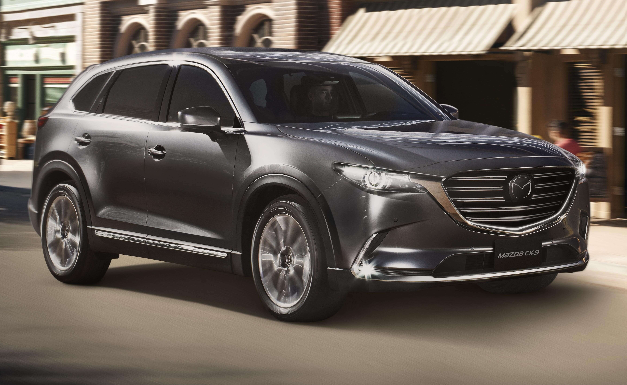
If you have been searching for the Mazda CX 9 weight, you may have already noticed something slightly frustrating: there is no single number that applies to every CX-9 ever built.
Depending on the model year, drivetrain, trim level, equipment, and even the market where the vehicle was sold, the Mazda CX-9 can weigh considerably more or less. A front-wheel-drive model from several years ago, for example, is noticeably lighter than one of the final all-wheel-drive versions.
As a useful reference point, the 2023 Mazda CX-9 has an official curb weight of 4,409 pounds (2,000 kg). Mazda also lists its Gross Vehicle Weight Rating, or GVWR, at 5,822 pounds (2,641 kg).
But those two numbers describe very different things.
So, rather than throwing one weight figure at you and calling it a day, we're going to unpack what the numbers actually mean, how CX-9 weight changed through the years, how AWD affects it, and why weight matters for fuel economy, handling, payload, towing, tires, and everyday driving.
Content in this publication
- How Much Does a Mazda CX 9 Weigh?
- What Does Curb Weight Actually Mean?
- Mazda CX 9 Gross Vehicle Weight Rating
- How AWD Changes the Mazda CX 9 Weight
- First-Generation vs Second-Generation Mazda CX 9 Weight
- 2023 Mazda CX 9 Weight
- Mazda CX 9 GVWR by Drivetrain
- Why Mazda CX 9 Weight Matters for Fuel Economy
- Does the CX 9 Feel Heavy to Drive?
- Mazda CX 9 Weight and Acceleration
- Mazda CX 9 Weight and Braking Distance
- Mazda CX 9 Weight and Towing
- Can You Determine Payload From Curb Weight?
- Does Fuel Add to Mazda CX 9 Weight?
- How Does the Mazda CX 9 Compare With Typical Midsize SUVs?
- How to Find the Exact Weight of Your Mazda CX 9
- Mazda CX 9 Weight: The Numbers That Matter Most
- Is the Mazda CX 9 a Heavy SUV?
- Final Thoughts: Understanding Mazda CX 9 Weight
- Frequently Asked Questions About Mazda CX 9 Weight
How Much Does a Mazda CX 9 Weigh?
For most second-generation CX-9 models, we are generally looking at a curb weight somewhere around 4,200 to 4,400 pounds, depending mainly on drivetrain and model year.
The final 2023 Mazda CX-9 is simpler because Mazda sold the U.S. version exclusively with all-wheel drive. Its curb weight is listed at 4,409 pounds, or approximately 2,000 kilograms.
That's roughly two metric tons.
It sounds heavy—and it is—but remember what we're dealing with. The CX-9 is a three-row midsize crossover measuring roughly 199 inches from nose to tail. It carries multiple passengers, substantial safety equipment, a turbocharged engine, automatic transmission, available luxury equipment, and, on later models, standard AWD.
In that context, 4,409 pounds isn't particularly shocking.
Mazda CX 9 Weight in Pounds
Here are some useful examples:
| Model | Approximate Curb Weight |
|---|---|
| 2015 CX-9 FWD | 4,323 lb |
| 2015 CX-9 AWD | 4,559 lb |
| 2019 CX-9 FWD | 4,217 lb |
| 2019 CX-9 AWD | 4,383 lb |
| 2022 CX-9 AWD | 4,409 lb |
| 2023 CX-9 AWD | 4,409 lb |
Published specifications list the 2015 front-wheel-drive CX-9 at 4,323 pounds and the AWD version at 4,559 pounds. The redesigned 2019 CX-9 became lighter, with figures of about 4,217 pounds for FWD and 4,383 pounds for AWD.
That comparison tells us something interesting: newer doesn't automatically mean heavier.
Mazda CX 9 Weight in Kilograms
If you prefer metric measurements, the 2023 CX-9's 4,409-pound curb weight converts to approximately 2,000 kg.
That is wonderfully convenient—it is essentially a two-ton vehicle.
Older and lighter front-wheel-drive versions can sit closer to roughly 1,900–1,960 kg, while some earlier AWD CX-9 models approach or exceed 2,050 kg.
Exact figures depend on specification.
What Does Curb Weight Actually Mean?
This is where weight discussions often go off the rails.
Curb weight is not the maximum weight of the vehicle when fully loaded.
Mazda defines base curb weight as the weight of the vehicle with its standard equipment and a full fuel tank, but without passengers, cargo, or optional equipment.
Think of curb weight as the CX-9 sitting in your driveway ready to travel, but before your family climbs aboard and fills the cargo area.
Curb Weight vs Vehicle Curb Weight
Mazda makes another useful distinction.
Vehicle curb weight may include accessories or aftermarket equipment that have been added to the vehicle. Roof racks, running boards, towing hardware, and other accessories don't simply vanish because we'd rather ignore them—they add real mass.
That additional weight becomes especially important when calculating available payload.
Why the Difference Matters
Suppose you add 100 pounds of equipment.
You haven't increased the manufacturer's payload rating by 100 pounds. You've effectively consumed 100 pounds of the capacity that was available for passengers and cargo.
That's why the sticker on the driver's door jamb matters more than a generic specification found online when you're trying to determine exactly how much your particular CX-9 can carry.
Mazda CX 9 Gross Vehicle Weight Rating
The Gross Vehicle Weight Rating (GVWR) represents the maximum permitted weight of the vehicle after accounting for the vehicle itself, passengers, cargo, accessories, and other applicable loads.
For the 2023 Mazda CX-9, Mazda lists a GVWR of:
5,822 pounds (2,641 kg).
Compare that with the 4,409-pound curb weight and you can immediately see why curb weight and GVWR shouldn't be used interchangeably.
One describes approximately what the empty vehicle weighs.
The other describes how heavy Mazda allows the complete loaded vehicle to become.
Is GVWR the Same as Payload?
No.
Payload is essentially the weight you can add to the vehicle within its permitted limits, including passengers and cargo.
Mazda specifically defines payload as the combined weight of occupants and cargo that the vehicle is designed to carry. The manufacturer directs owners to the Tire and Load Information label on the driver's door frame or pillar for the maximum applicable payload of the individual vehicle.
This is important because a generic mathematical calculation using advertised curb weight and GVWR isn't necessarily the exact payload allowance for your CX-9.
Check the vehicle-specific label.
How AWD Changes the Mazda CX 9 Weight
All-wheel drive rarely comes free—in price or pounds.
An AWD system needs additional hardware to transfer power to the rear wheels. Driveshafts, differentials, axles, and associated components all add weight.
Earlier second-generation CX-9 models clearly demonstrate the difference.
For example, published specifications for the 2019 CX-9 show approximately:
- FWD: 4,217 pounds
- AWD: 4,383 pounds
That's a difference of roughly 166 pounds.
Imagine carrying an extra adult passenger around permanently. That's roughly what the drivetrain hardware adds.
Why Later CX 9 Models Are Heavier
By the end of the CX-9's U.S. production run, Mazda had simplified the equation.
The 2023 CX-9 came with AWD, and its curb weight was listed at 4,409 pounds.
Consequently, anyone comparing a late CX-9 against an older FWD model should expect the newer model to carry somewhat more mass.
That difference isn't necessarily negative. You're gaining additional traction capability and equipment in return.
First-Generation vs Second-Generation Mazda CX 9 Weight
Here is where things become especially interesting.
The original CX-9 was built around a very different mechanical formula than the second-generation vehicle.
Early CX-9s used a naturally aspirated V6 engine, whereas the second-generation model switched to Mazda's smaller turbocharged four-cylinder engine.
First-Generation CX 9
Late first-generation examples could be fairly substantial.
The 2015 model, for instance, has published curb weights of approximately:
- 4,323 pounds for FWD
- 4,559 pounds for AWD
That 4,559-pound AWD figure is heavier than the later 2023 CX-9.
Second-Generation CX 9
The redesigned CX-9 demonstrated what thoughtful engineering can accomplish.
A 2019 FWD version weighs approximately 4,217 pounds, while the AWD version is around 4,383 pounds.
In other words, Mazda managed to build a newer three-row SUV without allowing weight to balloon uncontrollably.
Sometimes automotive progress isn't about adding more. It's about doing more with less.
2023 Mazda CX 9 Weight
The 2023 model deserves special attention because it was the final CX-9 model year in the United States.
Its key numbers are straightforward:
| Specification | 2023 Mazda CX-9 |
|---|---|
| Curb weight | 4,409 lb |
| Approx. curb weight | 2,000 kg |
| GVWR | 5,822 lb |
| GVWR | 2,641 kg |
| Maximum towing capacity | 3,500 lb |
| Fuel tank | 19.5 gal |
Mazda's official 2023 specification material lists the curb weight at 4,409 pounds, GVWR at 5,822 pounds, and towing capacity at 3,500 pounds.
Does Trim Level Change the 2023 CX 9 Weight?
Real-world individual vehicle weight can differ slightly because equipment differs.
Sunroofs, wheel designs, seating configurations, accessories, towing equipment, and dealer-installed items all have mass.
However, Mazda's published U.S. specification figure gives 4,409 pounds as the standard reference curb weight for the 2023 CX-9.
If exact weight is critical—for commercial transport, trailer calculations, vehicle shipping, or another technical purpose—we would use the information attached to the specific vehicle rather than relying entirely on a generalized trim chart.
Mazda CX 9 GVWR by Drivetrain
Older CX-9s are particularly interesting because GVWR could differ depending on whether the vehicle was front- or all-wheel drive.
For example, Mazda's 2021 documentation lists:
- FWD GVWR: 5,670 pounds (2,572 kg)
- AWD GVWR: 5,822 pounds (2,641 kg)
The AWD version therefore receives a higher gross vehicle weight rating.
The difference makes sense because the AWD vehicle itself is heavier and uses different drivetrain components.
Mazda CX 9 Axle Weight Ratings
There's another number that owners sometimes overlook: GAWR.
GAWR means Gross Axle Weight Rating, the maximum permitted load on a particular axle.
For the AWD specification shown in Mazda's later documentation, Mazda lists:
- Front GAWR: 2,756 pounds
- Rear GAWR: 3,146 pounds
Why should we care?
Because remaining under overall GVWR isn't the only consideration. Poorly distributed cargo could potentially place too much weight over one axle even if total vehicle weight appears acceptable.
Think of carrying groceries in a bag: total weight matters, but where that weight sits matters too.
Why Mazda CX 9 Weight Matters for Fuel Economy
Moving two tons of metal, glass, passengers, and luggage requires energy.
There is no escaping physics.
A heavier vehicle generally requires more energy to accelerate than a lighter one. That doesn't mean weight alone determines fuel economy—engine efficiency, gearing, aerodynamics, tires, temperature, driving style, traffic, and elevation matter enormously—but mass certainly plays a role.
City Driving Magnifies the Effect
Weight matters most when we repeatedly accelerate.
Imagine pushing a shopping cart. Once it's rolling, keeping it moving is relatively easy. Getting a heavily loaded cart moving from rest requires much more effort.
Cars behave according to the same basic principle.
Stop-and-go urban driving repeatedly asks the engine to accelerate the vehicle's mass. That's one reason reducing unnecessary cargo can make a small difference in efficiency.
Highway Driving Is Different
At constant highway speed, aerodynamic drag becomes increasingly important.
Once the CX-9 is cruising steadily, its weight becomes less dominant than when accelerating repeatedly.
Still, extra weight remains extra work—especially on hills.
Does the CX 9 Feel Heavy to Drive?
Here's the funny thing: numbers don't always tell you how a vehicle feels.
A 4,400-pound SUV sounds like it should move with the enthusiasm of a refrigerator sliding across carpet.
The CX-9 was instead designed to deliver relatively responsive, car-like handling for a three-row crossover.
Weight Distribution Matters
Total weight is only part of the equation.
Suspension tuning, steering calibration, tires, wheelbase, center of gravity, track width, and where heavy components sit within the chassis influence how the vehicle responds.
A well-engineered 4,400-pound SUV can feel more composed than a poorly tuned vehicle weighing several hundred pounds less.
That's why evaluating vehicles only by curb weight is like judging runners only by height. It's relevant—but nowhere near the whole story.
Mazda CX 9 Weight and Acceleration
Every pound the engine has to move affects the relationship between power and performance.
The CX-9's turbocharged engine has to accelerate not only passengers and cargo but also roughly two tons of vehicle.
Add six or seven occupants plus luggage and that workload increases substantially.
Loaded vs Empty Performance
You may notice that a fully loaded CX-9 feels different when:
- accelerating onto a highway,
- climbing steep grades,
- overtaking,
- braking,
- cornering,
- or towing.
That's normal.
Vehicle manufacturers engineer their cars to operate under permitted loads, but an SUV loaded near its maximum allowable weight simply doesn't respond exactly like the same SUV carrying one driver and an empty cargo area.
Mazda CX 9 Weight and Braking Distance
More mass means more kinetic energy.
And when it's time to stop, the brakes have to convert that energy into heat.
Mazda explicitly warns owners that overloading can make the vehicle harder to drive and control and can increase stopping distance.
That's not fine-print trivia.
It's one of the most practical reasons weight ratings exist.
Overloading Is More Than a Numbers Problem
An overloaded CX-9 can potentially affect:
- braking performance,
- steering response,
- tire loading,
- suspension behavior,
- stability,
- acceleration,
- and overall vehicle control.
So when packing for that epic family road trip, treating every empty corner of the CX-9 as permission to add another suitcase isn't necessarily the best strategy.
Volume and weight aren't the same thing.
You can have room left while already approaching the vehicle's load limit.
Mazda CX 9 Weight and Towing
Here's another area where terminology creates confusion.
The CX-9's curb weight does not mean you can simply subtract that amount from another rating and assume the remainder is available for towing.
Trailer calculations involve several interconnected limits.
Mazda's 2023 specifications give the CX-9 a maximum towing capacity of 3,500 pounds.
Tongue Weight Counts Too
When towing, part of the trailer's weight presses downward on the hitch.
Mazda notes that trailer tongue load becomes part of cargo weight and recommends keeping trailer tongue load within the specified proportion of total trailer load.
That means passengers, luggage, accessories, and hitch load all compete for the vehicle's available carrying capacity.
Why Families Should Pay Attention
Imagine loading:
two adults, three children, luggage, coolers, camping equipment, bicycles, accessories, and a trailer.
Each individual item might seem insignificant.
Together, they add up remarkably quickly.
That's why serious towing calculations should start with the door-jamb loading label and Mazda's towing instructions for the specific model year.
Can You Determine Payload From Curb Weight?
We can estimate, but we shouldn't treat an estimate as the vehicle's official payload rating.
Mazda specifically tells owners to check the Tire and Load Information label for the maximum combined weight of occupants and cargo applicable to the individual vehicle.
That is the number that should guide loading decisions.
Passenger Weight Is Payload
This catches people surprisingly often.
Payload isn't just whatever you throw into the trunk.
Passengers count.
So does luggage.
So do accessories.
And, while towing, tongue weight contributes as well.
If five occupants weigh a combined 800 pounds, that's already 800 pounds of vehicle load before you've loaded a suitcase.
Does Fuel Add to Mazda CX 9 Weight?
Yes—but standard published base curb weight normally already accounts for fuel.
Mazda describes base curb weight as including a full fuel tank and standard equipment.
The 2023 CX-9 has a published fuel capacity of 19.5 gallons, so a substantial amount of its ready-to-drive mass comes from fuel.
This is another reason we shouldn't take a curb-weight specification and then unnecessarily add the weight of a full fuel tank again.
We would be counting it twice.
How Does the Mazda CX 9 Compare With Typical Midsize SUVs?
At roughly 4,400 pounds in its final AWD form, the CX-9 sits comfortably within the sort of weight territory we'd expect from a modern three-row midsize crossover.
The more interesting story isn't that the CX-9 is heavy.
Three-row SUVs are heavy.
The interesting story is that Mazda managed to combine that mass with driving dynamics that often make the vehicle feel smaller and lighter from behind the wheel.
Is a Lighter SUV Always Better?
Not necessarily.
Lower mass can help with efficiency and performance, but weight doesn't exist in isolation.
A larger vehicle may carry additional structural material, sound insulation, drivetrain hardware, seats, safety technology, and comfort equipment.
The better question isn't simply:
“Which vehicle weighs less?”
It's:
“What does the vehicle achieve with the weight it carries?”
That's a far more meaningful comparison.
How to Find the Exact Weight of Your Mazda CX 9
If you're checking weight for casual comparison, an online specification is normally enough.
If the exact figure matters, go directly to the vehicle.
Start with:
- The certification label on the driver's door jamb.
- The Tire and Load Information label.
- Your model-year owner's manual.
- Mazda's official specifications.
- A certified vehicle scale if actual real-world loaded weight is required.
Remember, your vehicle may carry aftermarket accessories that aren't represented by the original published curb weight.
Mazda CX 9 Weight: The Numbers That Matter Most
If all the terminology is starting to resemble alphabet soup, here's the simple version.
Curb weight tells us roughly what the vehicle itself weighs in ready-to-drive condition.
Payload tells us how much passenger and cargo weight the vehicle can accommodate, subject to its specific rating.
GVW is what the vehicle actually weighs after occupants and cargo are added.
GVWR is the maximum allowable total vehicle weight.
GAWR establishes the maximum permissible load on each axle.
Towing capacity determines the permitted trailer weight under specified conditions.
These figures are related—but they are absolutely not interchangeable.
Is the Mazda CX 9 a Heavy SUV?
Yes, in everyday terms.
A vehicle weighing roughly 4,409 pounds is obviously substantial.
But within the three-row crossover world, that mass makes sense. We're talking about a large cabin, three seating rows, AWD hardware, crash protection, comfort equipment, a turbocharged powertrain, and the structure needed to tie everything together.
The final CX-9 weighs roughly two metric tons, yet clever chassis tuning helps keep that weight from defining the entire driving experience.
And perhaps that's the more interesting achievement.
It's not about making a large family SUV magically light.
It's about making a heavy vehicle avoid constantly reminding you that it's heavy.
Final Thoughts: Understanding Mazda CX 9 Weight
So, how much does a Mazda CX-9 weigh?
For the 2023 Mazda CX-9, the headline figure is 4,409 pounds, or about 2,000 kilograms, in curb weight, while its GVWR is 5,822 pounds (2,641 kg).
Earlier examples vary.
A 2019 CX-9, for instance, ranges from around 4,217 pounds in FWD configuration to roughly 4,383 pounds with AWD, while the older 2015 model ranges from approximately 4,323 to 4,559 pounds depending on drivetrain.
The key lesson is simple: don't confuse curb weight with maximum vehicle weight.
When we're comparing cars, curb weight is useful.
When we're loading passengers, luggage, accessories, or trailers, GVWR, axle ratings, payload limits, and the vehicle's own Tire and Load Information label become much more important.
A CX-9 may have plenty of physical space left inside, but physics doesn't care how neatly we packed the suitcases.
Frequently Asked Questions About Mazda CX 9 Weight
1. How much does a 2023 Mazda CX 9 weigh?
The 2023 Mazda CX-9 has an official published curb weight of 4,409 pounds, which is approximately 2,000 kilograms. Mazda lists its GVWR at 5,822 pounds.
2. How much does a Mazda CX 9 weigh in kg?
The final U.S.-spec 2023 CX-9 weighs approximately 2,000 kg in curb-weight terms. Earlier versions vary depending on year and whether they use front-wheel or all-wheel drive.
3. What is the Mazda CX 9 GVWR?
The 2023 Mazda CX-9 has a published GVWR of 5,822 pounds, or 2,641 kg. Earlier FWD versions can have lower GVWR figures; Mazda's 2021 documentation, for example, lists 5,670 pounds for FWD and 5,822 pounds for AWD.
4. Is the AWD Mazda CX 9 heavier than the FWD version?
Generally, yes. AWD requires additional drivetrain components. The 2019 CX-9 provides a good example: published specifications list approximately 4,217 pounds for FWD versus 4,383 pounds for AWD, a difference of around 166 pounds.
5. Does Mazda CX 9 curb weight include passengers?
No. Mazda states that base curb weight includes the vehicle, standard equipment, and a full tank of fuel, but does not include passengers, cargo, or optional equipment. Passengers and cargo contribute toward payload and actual gross vehicle weight.
If you want to know other articles similar to Mazda CX 9 Weight: Complete Guide by Year and Drivetrain you can visit the category Service and Parts.
Volvo S90 Engine Oil: Type, Capacity & Change Guide
Volvo S90 Boot Space: Size, Capacity and Practicality
SEO Title: Volvo S90 Oil Capacity: Complete Guide by Engine

Kia Sorento Oil Type: Complete Guide by Year & Engine
Kia Sorento Engine Capacity: Complete Guide by Year
Peugeot 308 Clutch Replacement Cost: Complete UK Guide for 2026
Leave a Reply
More content of your interest