
Mazda CX-90 vs CX-9: Which Three-Row Mazda Is Better?

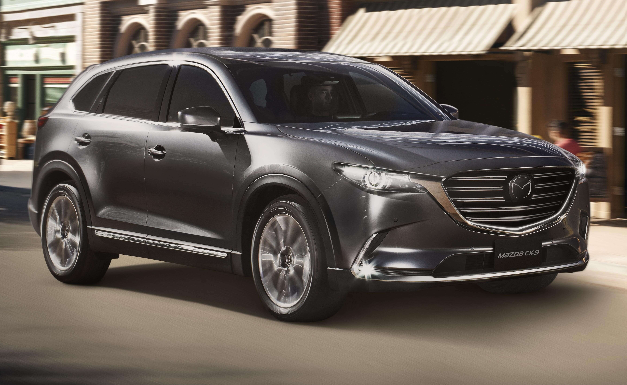
Comparing the Mazda CX-90 vs CX-9 is a little more interesting than comparing two ordinary SUVs sitting side by side on a dealership lot. The CX-9 represents the end of one chapter for Mazda, while the CX-90 opens a considerably more ambitious one.
Mazda discontinued the CX-9 in the United States after the 2023 model year, with the CX-90 effectively stepping into its role as the brand's flagship three-row SUV. But calling the CX-90 a simple replacement does not quite tell the whole story.
The CX-9 uses a turbocharged four-cylinder engine, a six-speed automatic transmission, and the familiar architecture Mazda refined over many years. The CX-90 moves to Mazda's newer Large Platform, introduces a longitudinal inline-six engine, an eight-speed automatic transmission, mild-hybrid assistance, and even a plug-in hybrid option.
In other words, this is less like Mazda remodeling an old house and more like knocking it down and building something more ambitious on the same property.
So, which one should we choose? Let's dig into the Mazda CX-90 vs Mazda CX-9 comparison and look at performance, dimensions, interior space, efficiency, towing capacity, comfort, technology, reliability considerations, and overall value.
Content in this publication
- Mazda CX-90 vs CX-9 at a Glance
- Mazda CX-90 vs CX-9 Engine Options
- Mazda CX-90 PHEV Adds Another Choice
- CX-90 vs CX-9 Performance
- Mazda CX-90 vs CX-9 Size
- Mazda CX-90 vs CX-9 Interior Space
- Cargo Space: Is the CX-90 Much Bigger?
- Mazda CX-90 vs CX-9 Towing Capacity
- Fuel Economy Comparison
- CX-9 vs CX-90 Transmission
- Interior Quality and Design
- Technology Comparison
- Safety Features
- Reliability: CX-90 vs CX-9
- Maintenance and Ownership Costs
- Styling: Which Mazda Looks Better?
- Driving Around Town
- CX-90 vs CX-9 for Families
- Which Is Better for Long Road Trips?
- Which One Offers Better Value?
- Who Should Buy the Mazda CX-9?
- Who Should Buy the Mazda CX-90?
- Mazda CX-90 vs CX-9: Our Verdict
- Frequently Asked Questions About Mazda CX-90 vs CX-9
- Conclusion
Mazda CX-90 vs CX-9 at a Glance
The biggest difference is philosophy.
The CX-9 was designed as an athletic midsize crossover that happened to have three rows. It prioritized steering feel, manageable dimensions, elegant styling, and a surprisingly upscale interior.
The CX-90 pushes Mazda further toward the premium end of the market.
Its longer wheelbase, rear-biased vehicle architecture, available turbocharged inline-six engine, standard all-wheel drive, and more sophisticated cabin make it feel closer to an entry-level luxury SUV than a traditional mainstream family crossover.
For many buyers, the comparison boils down to this:
| Category | Mazda CX-9 | Mazda CX-90 |
|---|---|---|
| Final/current model compared | 2023 CX-9 | 2026 CX-90 |
| Standard engine | 2.5L turbo four-cylinder | 3.3L turbo inline-six mild hybrid |
| Maximum gasoline horsepower | 250 hp | 340 hp |
| Transmission | 6-speed automatic | 8-speed automatic |
| Drivetrain | AWD on 2023 U.S. models | Standard AWD |
| Maximum seating | Up to 7 depending on model/year | Up to 8 |
| Maximum towing | 3,500 lb | Up to 5,000 lb |
| Wheelbase | 115.3 in | 122.8 in |
| Overall length | 199.8 in | About 200.8-201.6 in |
| Plug-in hybrid available | No | Yes |
The CX-90 immediately looks like the stronger vehicle on paper. Yet specs alone do not automatically make it the smarter purchase.
Used CX-9 prices can make the older SUV extremely appealing.
Mazda CX-90 vs CX-9 Engine Options
CX-9: The Familiar 2.5-Liter Turbo
The 2023 CX-9 uses Mazda's 2.5-liter turbocharged four-cylinder Skyactiv-G engine paired with a six-speed automatic transmission.
With 93-octane premium gasoline, Mazda rated it at up to 250 horsepower and 320 lb-ft of torque. On regular 87-octane fuel, output drops to 227 horsepower and 310 lb-ft.
Those numbers may not sound spectacular today, but the CX-9 has always been more about usable torque than headline horsepower.
Press the accelerator around town and the engine delivers its shove early. That makes the SUV feel responsive during everyday driving without constantly chasing high rpm.
For commuting, school runs, highway merging, and normal family duties, it rarely feels underpowered.
CX-90: Mazda Goes Inline-Six
The CX-90 changes the formula dramatically.
Its standard gasoline powertrain uses a 3.3-liter turbocharged inline-six engine paired with a 48-volt mild-hybrid system and eight-speed automatic transmission.
For the 2026 CX-90, standard 3.3 Turbo versions produce 280 horsepower and 332 lb-ft of torque on regular fuel. Higher-output Turbo S models can make up to 340 horsepower and 369 lb-ft when using recommended premium gasoline.
That is a substantial jump.
The inline-six also changes the character of the vehicle. It feels smoother and more sophisticated, and it suits the CX-90's premium ambitions nicely.
Why an Inline-Six Matters
Inline-six engines naturally lend themselves to smooth operation because of their inherent balance.
That does not automatically make every inline-six magical, of course, but it gives Mazda an excellent foundation for a refined flagship SUV.
The engine also sits longitudinally rather than transversely, helping give the CX-90 proportions and driving characteristics that feel more reminiscent of rear-wheel-drive luxury SUVs.
Mazda CX-90 PHEV Adds Another Choice
The CX-9 never offered hybrid assistance or plug-in capability.
The CX-90 does.
Mazda sells a plug-in hybrid version combining a gasoline engine with an electric motor and rechargeable battery. For the 2026 U.S. model, Mazda lists 323 total horsepower with premium fuel and an estimated 26 miles of electric range.
That creates an interesting scenario.
Someone who drives 15 or 20 miles most days and charges regularly could potentially complete a large percentage of local trips using electricity while still having a gasoline engine available for long-distance journeys.
The CX-9 simply cannot offer that flexibility.
CX-90 vs CX-9 Performance
When we drive these SUVs aggressively, their personalities begin to separate.
The CX-9 feels lighter on its feet. Its steering communicates well for a three-row crossover, and its relatively compact wheelbase helps it feel manageable through tighter bends.
The CX-90 feels more substantial.
Its longer wheelbase and heavier, more complex powertrain give it a more planted personality. Yet Mazda has clearly tried to prevent it from becoming a soft, disconnected family barge.
The CX-90 uses a double-wishbone front suspension and multilink rear suspension. Mazda also equips it with Kinematic Posture Control, a system designed to reduce unwanted body movement during cornering.
The result is an SUV that still remembers it came from the same company that builds the MX-5 Miata.
Which One Is More Fun to Drive?
This one depends on how we define fun.
The CX-9 feels nimble and familiar. Its controls are straightforward, and it does not feel especially intimidating despite its three rows.
The CX-90 feels more sophisticated and powerful.
Push harder and the inline-six gives us considerably more performance, especially in Turbo S form.
We would give the CX-9 a slight edge for simplicity and lightness, but the CX-90 wins for overall capability and refinement.
Mazda CX-90 vs CX-9 Size
At first glance, these SUVs look similar in overall length.
The difference becomes much more meaningful when we examine the wheelbase.
Mazda lists the 2023 CX-9 at 199.8 inches long, 77.5 inches wide, and 115.3 inches between the axles.
The 2026 CX-90 measures approximately 200.8 inches long without the front license-plate holder, 78.5 inches wide, and 122.8 inches in wheelbase.
That wheelbase difference is enormous.
We are talking about roughly 7.5 additional inches between the front and rear axles without dramatically increasing overall length.
Why the Longer CX-90 Wheelbase Is Important
A longer wheelbase can help engineers create more passenger room while improving high-speed stability and proportions.
Visually, the CX-90 has a longer hood and more premium stance than the CX-9.
It looks less like a conventional front-wheel-drive-based crossover and more like something that could easily wear a luxury badge.
The downside?
Parking lots and narrow urban streets may feel slightly easier in the CX-9.
Mazda CX-90 vs CX-9 Interior Space
Neither vehicle is a Chevrolet Suburban.
If we need enormous third-row space for adults every single day, there are roomier alternatives.
Still, the CX-90 generally makes better use of its larger platform.
Depending on configuration, it can carry up to eight passengers, while different trims can use bench seats or second-row captain's chairs.
The CX-9 commonly uses six- or seven-passenger layouts depending on trim and model year. Mazda's 2023 Touring, for example, came standard with six-passenger seating and second-row captain's chairs.
Second-Row Comfort
Both SUVs are comfortable in row two.
The CX-9's captain's-chair configurations feel particularly pleasant because passengers gain extra personal space and easier third-row access.
The CX-90 takes things further in upper trims with available premium upholstery, heated and ventilated seating features, more USB-C connectivity, and a more upscale overall atmosphere.
For adults regularly riding in the second row, the CX-90 feels like the more expensive vehicle.
Because, well, it often is.
Third-Row Practicality
The third row remains best suited to children, teenagers, or adults on shorter trips.
That statement applies to both vehicles.
You may be interested in reading Mazda CX-9 Best Years: Which Models Are Worth Buying?
The CX-90's larger architecture gives Mazda more flexibility, but shoppers should still physically sit in the back before purchasing if third-row adult comfort is important.
Numbers cannot tell us whether our knees will dislike a three-hour road trip.
Cargo Space: Is the CX-90 Much Bigger?
Surprisingly, the CX-90 is not a giant cargo hauler simply because it rides on a larger platform.
Mazda advertises up to 14.9 cubic feet of initial cargo space behind the occupied rear seating area on the current CX-90, with considerably more room available once the second- and third-row seatbacks are folded.
The important takeaway is not that the CX-90 suddenly turns into a moving van.
Instead, Mazda has used its larger platform to improve passenger accommodation, proportions, chassis sophistication, and powertrain packaging while preserving family-friendly cargo flexibility.
If maximum luggage capacity is our main priority, competitors such as the Chevrolet Traverse, Honda Pilot, Toyota Grand Highlander, or Hyundai Palisade may deserve attention.
If we want utility wrapped in something that feels unusually elegant to drive, Mazda's approach starts making sense.
Mazda CX-90 vs CX-9 Towing Capacity
This is one of the clearest victories for the CX-90.
The 2023 CX-9 carries a maximum trailer weight rating of 3,500 pounds under Mazda's U.S. towing specifications.
Properly equipped gasoline CX-90 models can tow up to 5,000 pounds when configured with the required Mazda Genuine Towing Accessories, depending on trim.
That extra 1,500 pounds expands what the CX-90 can realistically handle.
A small utility trailer? Both should be perfectly capable when properly configured.
A heavier camper or boat?
The CX-90 gives us considerably more headroom.
CX-90 PHEV Towing
The PHEV does not necessarily match the highest-output inline-six versions.
Mazda lists current CX-90 PHEV models at up to 3,500 pounds of towing capacity with the appropriate towing equipment.
So buyers specifically interested in towing should compare individual trims carefully rather than assuming every CX-90 has the same rating.
Fuel Economy Comparison
Here the newer architecture shows one of its most interesting tricks.
More cylinders and more horsepower usually sound like ingredients for worse fuel economy.
Yet the CX-90's mild-hybrid system and newer drivetrain help offset the larger engine.
Mazda rates the 2026 CX-90 3.3 Turbo at approximately 23 mpg city, 28 highway, and 25 combined, with the Turbo S also rated around 25 mpg combined.
The exact comparison with a CX-9 depends on trim, driving conditions, tire size, fuel quality, and model year, but the larger point is compelling: Mazda managed to add substantially more performance and sophistication without turning the CX-90 into an obvious fuel hog.
And if our daily driving fits within the CX-90 PHEV's electric operating range, the efficiency equation becomes completely different.
CX-9 vs CX-90 Transmission
The CX-9 uses a traditional six-speed automatic transmission.
It is not glamorous, but it is familiar, well matched to the turbo four-cylinder, and generally predictable.
The CX-90 introduces an eight-speed automatic transmission as part of Mazda's newer drivetrain architecture.
More gears help keep the inline-six operating efficiently across a broader range of speeds.
However, newer and more complicated does not always mean smoother in every situation.
Early CX-90s generated some criticism from owners and reviewers regarding low-speed drivetrain behavior and shift smoothness. Buyers considering an early used example should therefore test-drive the exact vehicle rather than assuming every CX-90 behaves identically.
The CX-9's older setup lacks technological novelty but benefits from years of refinement.
Interior Quality and Design
This is where the Mazda philosophy becomes obvious.
Even when the CX-9 was new, its interior looked considerably more expensive than many mainstream competitors.
Soft-touch materials, minimal button clutter, tasteful trim, and a driver-focused dashboard made it one of the easiest three-row SUVs to mistake for something wearing a premium badge.
The CX-90 takes that strategy further.
Upper trims can include Nappa leather, larger digital displays, a panoramic moonroof, Bose audio, a head-up display, sophisticated interior trim, and a Driver Personalization System.
CX-90 Feels More Like a Luxury SUV
The CX-9 is upscale for a mainstream SUV.
The CX-90 often feels deliberately premium.
That distinction sounds subtle until we sit in them back to back.
The CX-9's cabin says, "We spent the money wisely."
The CX-90's cabin says, "Are you sure you still need that luxury badge?"
Technology Comparison
Technology is one area where age catches the CX-9.
Its infotainment system still handles everyday basics such as smartphone integration and navigation on equipped models, but the CX-90 benefits from being designed for a newer generation of connected vehicles.
Depending on trim, the 2026 CX-90 can feature a 12.3-inch center display, wireless Apple CarPlay and Android Auto, wireless phone charging, multiple USB-C ports across all three rows, a digital instrument panel, head-up display, Alexa functionality, and enhanced parking-camera technology.
For families carrying several phones and tablets, those extra charging options matter more than any brochure photograph suggests.
Safety Features
Both vehicles belong to Mazda's modern safety era, so the CX-9 is hardly primitive.
The CX-9 offers driver-assistance technology such as adaptive cruise control, lane-departure warning, lane-keeping assistance, blind-spot monitoring, and automatic emergency braking depending on model and market.
The CX-90 builds on that foundation with more advanced available systems.
Upper trims can add features including Front Cross Traffic Alert, enhanced 360-degree monitoring, Trailer Hitch View, Driver Monitoring, and additional Smart Brake Support functions.
From a technology perspective, the CX-90 clearly has the higher ceiling.
Reliability: CX-90 vs CX-9
This may be the most important section for used-car shoppers.
The CX-9 has one enormous advantage: maturity.
By 2023, Mazda had been producing the second-generation CX-9 for years. Mechanics knew it. Owners knew it. Common problems were better documented, and Mazda had refined the platform through successive model years.
The CX-90 arrived with an almost entirely different technical recipe.
New platform.
New inline-six powertrain.
New hybrid systems.
New eight-speed transmission.
More complex electronics.
That does not automatically make the CX-90 unreliable, but complexity inevitably creates more unknowns during the first years of ownership.
Why a Late CX-9 Can Still Make Sense
Suppose we are deciding between a lightly used 2023 CX-9 and a newer CX-90.
The CX-90 is unquestionably the more advanced machine.
But the CX-9 might offer a compelling combination of lower purchase price, proven mechanical architecture, familiar drivetrain behavior, and cheaper depreciation-adjusted ownership.
That makes the outgoing Mazda far from obsolete.
Sometimes yesterday's flagship becomes today's bargain.
You may be interested in readingMazda CX-9 Best Years: Which Models Are Worth Buying?You may be interested in reading
Mazda CX-9 Trim Levels: Complete Guide to Every VersionMaintenance and Ownership Costs
The CX-90's more complex architecture deserves consideration beyond the purchase price.
An inline-six mild-hybrid powertrain, eight-speed transmission, additional electronics, available plug-in hybrid components, larger wheels, and more sophisticated chassis systems can potentially create higher repair costs as the vehicle ages.
The CX-9 uses a relatively simpler mechanical recipe.
We should not interpret that as saying every CX-90 will be expensive to maintain. New models also benefit from warranty coverage, and Mazda's service requirements are hardly exotic.
Still, buyers planning to keep a vehicle for 10 or 15 years may find the CX-9's relative mechanical familiarity comforting.
Styling: Which Mazda Looks Better?
Now we enter completely subjective territory.
The CX-9 still looks good.
Its long, sweeping body, narrow lights, and restrained chrome detailing have aged gracefully. Mazda avoided many of the oversized grilles and awkward creases that date some competing SUVs.
The CX-90 looks more muscular.
A longer hood, broader stance, larger wheels, and cab-rearward proportions make it appear more substantial and expensive.
If the CX-9 resembles a tailored sport coat, the CX-90 feels more like a structured overcoat.
Both are elegant.
The CX-90 simply makes a stronger entrance.
Driving Around Town
The CX-9's slightly narrower body and shorter wheelbase make it easy to understand in crowded environments.
That can matter if we regularly deal with underground parking garages, tight driveways, or dense city streets.
The CX-90 is only modestly longer overall, but its one-inch increase in width and much longer wheelbase make it feel like a larger machine.
Once moving, however, its cameras and available parking technology help compensate.
For urban simplicity, we prefer the CX-9.
For highway refinement and long-distance cruising, the CX-90 gets the nod.
CX-90 vs CX-9 for Families
Families rarely choose SUVs based purely on horsepower.
The important questions are usually less exciting.
Can the children reach the third row?
Where do we put backpacks?
How many USB ports are available?
Will a stroller fit behind the rear seats?
Can the grandparents get into the second row comfortably?
Both Mazdas address these questions reasonably well, but the CX-90's broader seating configurations and newer technology give it greater versatility.
Its available eight-passenger capacity can also be decisive for larger households.
Which Is Better for Long Road Trips?
We would choose the CX-90.
Its longer wheelbase, smoother inline-six powertrain, stronger highway performance, more sophisticated cabin, available panoramic roof, newer infotainment technology, and expanded passenger amenities make it an excellent long-distance cruiser.
The CX-9 remains a very competent road-trip SUV, particularly if we find a high-spec Signature or Grand Touring model.
Yet the CX-90 feels like Mazda designed it with cross-country comfort much higher on the priority list.
Which One Offers Better Value?
This answer changes depending on whether we are buying new or used.
A new CX-90 obviously brings modern technology, available electrification, greater towing ability, stronger engines, and a more premium cabin.
But depreciation has transformed used CX-9s into fascinating alternatives.
A well-maintained late-model CX-9 can give us leather upholstery, AWD, strong turbocharged torque, three-row seating, attractive styling, and excellent road manners for significantly less than many new three-row SUVs.
That value gap can easily outweigh the CX-90's superior specifications for budget-conscious shoppers.
Who Should Buy the Mazda CX-9?
The CX-9 still makes sense when our priorities lean toward simplicity, used-car value, manageable dimensions, proven engineering, and traditional Mazda driving dynamics.
It can be especially attractive for families who occasionally use the third row rather than transporting six or seven people every day.
The sweet spot may be a clean late-model example with comprehensive service records.
We get much of Mazda's premium atmosphere without paying flagship-new-car money.
Who Should Buy the Mazda CX-90?
The CX-90 makes more sense when we want maximum performance, more seating flexibility, improved towing capacity, newer safety technology, premium cabin materials, or hybrid capability.
It is also the obvious choice if we simply want a new three-row Mazda.
Mazda no longer sells the CX-9 new in the U.S., having officially ended the model after 2023.
For drivers considering luxury SUVs but uncomfortable with luxury-brand pricing, the CX-90 deserves serious attention.
Mazda CX-90 vs CX-9: Our Verdict
The Mazda CX-90 is the better vehicle overall.
It is more powerful, more sophisticated, more spacious in important areas, capable of carrying up to eight people, available as a plug-in hybrid, and able to tow as much as 5,000 pounds in properly equipped gasoline configurations. Its 122.8-inch wheelbase is substantially longer than the CX-9's 115.3-inch measurement, illustrating just how much Mazda changed beneath the skin.
Yet we would not automatically call it the better purchase.
That distinction matters.
The CX-9 remains one of the most appealing used three-row SUVs for someone who values handling, design, turbocharged performance, and a high-quality cabin without needing the latest drivetrain technology.
Think of the CX-9 as the polished final draft of Mazda's previous philosophy.
The CX-90 is the ambitious first chapter of a new one.
If budget is flexible and we want the strongest overall package, choose the CX-90.
If value, simplicity, and proven engineering matter more, a late-model CX-9 can still be remarkably difficult to beat.
Frequently Asked Questions About Mazda CX-90 vs CX-9
Is the Mazda CX-90 replacing the CX-9?
Yes, effectively. Mazda discontinued the CX-9 in the U.S. after the 2023 model year and introduced the CX-90 as its newer flagship three-row SUV. The CX-90 is not simply a renamed CX-9, however; it uses Mazda's newer Large Platform and substantially different powertrains.
Is the Mazda CX-90 bigger than the CX-9?
Yes, although the difference in overall length is relatively small. The bigger change is wheelbase. The 2023 CX-9 has a 115.3-inch wheelbase, while the 2026 CX-90 stretches to 122.8 inches. The CX-90 is also approximately one inch wider.
Does the Mazda CX-90 have more power than the CX-9?
Yes. The final CX-9's 2.5-liter turbo engine produces up to 250 horsepower with premium gasoline. The CX-90's standard 3.3-liter inline-six produces 280 horsepower, while Turbo S versions can produce up to 340 horsepower with premium fuel.
Which can tow more, the Mazda CX-90 or CX-9?
The CX-90 wins. Mazda rated the 2023 CX-9 for up to 3,500 pounds, while properly equipped gasoline CX-90 models can tow as much as 5,000 pounds. Some CX-90 configurations, including the PHEV, remain rated at 3,500 pounds, so trim selection matters.
Should we buy a used CX-9 or a CX-90?
Choose the CX-9 if lower purchase cost, simpler proven engineering, and strong used-car value matter most. Choose the CX-90 if we want greater power, newer technology, higher towing capability, seating for up to eight, or plug-in hybrid availability. For most buyers without strict budget limits, the CX-90 is the more capable overall SUV.
Conclusion
The Mazda CX-90 vs CX-9 comparison shows how dramatically Mazda's three-row SUV strategy has evolved.
The CX-9 remains elegant, engaging, comfortable, and surprisingly premium. Its 2.5-liter turbo engine delivers strong everyday torque, and the mature platform makes late examples particularly compelling on the used market.
The CX-90 aims considerably higher.
Its inline-six engine, mild-hybrid technology, available PHEV powertrain, eight-speed transmission, longer wheelbase, stronger towing capability, improved technology, and luxury-inspired cabin move Mazda into territory normally occupied by more expensive brands.
Does that make the CX-9 irrelevant?
Not at all.
You may be interested in readingMazda CX-9 Best Years: Which Models Are Worth Buying?You may be interested in reading
Mazda CX-9 Trim Levels: Complete Guide to Every VersionYou may be interested in reading
 BMW M4 vs M2: Which BMW M Coupe Is Better?
The CX-90 wins the specification battle, but the CX-9 can win the value battle.
And when we are actually spending our own money, that second contest may be the one that matters most.
If you want to know other articles similar to Mazda CX-90 vs CX-9: Which Three-Row Mazda Is Better? you can visit the category Models.
Honda Passport vs Toyota 4Runner: Which SUV Is Better?
Honda Passport vs Ford Bronco: Which SUV Is Better?
Honda Passport vs Ford Explorer: Which SUV Is Better?
Honda Passport or Pilot: Which SUV Is Better?
Honda Passport vs Jeep Grand Cherokee: Which SUV Is Better?
Honda Passport vs Nissan Pathfinder: Which SUV Is Better?
Leave a Reply
More content of your interest