

BMW M4 vs M2: Which BMW M Coupe Is Better?

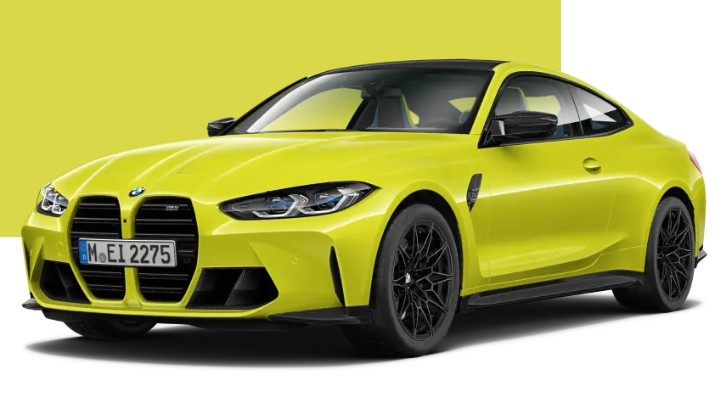
The BMW M4 vs M2 debate is one of those automotive arguments that sounds simple until we actually drive—or seriously compare—the two cars. Both use BMW M’s muscular turbocharged inline-six formula. Both can embarrass genuinely exotic machinery on the right road. Both offer rear-wheel-drive character, serious chassis hardware, and enough performance to turn an ordinary highway entrance into an event.
Yet they do not feel like the same car wearing different clothes.
The BMW M2 is the smaller bruiser. It feels compact, mischievous, and deliberately concentrated. The M4 is the more mature weapon: longer, more sophisticated, available with significantly more power, and better suited to covering large distances without feeling like it is constantly asking us to attack the next corner.
So which one should we buy?
For most enthusiasts who prioritize involvement, size, value, and old-school sports-car personality, the M2 is arguably the sweeter choice. If we want maximum acceleration, greater refinement, more cabin space, stronger grand-touring ability, and access to the 523-horsepower Competition xDrive model, the M4 is the more complete performance car.
The fascinating part is that neither answer is wrong.
Content in this publication
- BMW M4 vs M2 at a Glance
- BMW M2 vs M4: The Core Difference
- BMW M4 vs M2 Engine Comparison
- BMW M2 vs M4 0–60 MPH
- BMW M4 Competition vs M2
- BMW M2 vs M4 Handling
- BMW M4 vs M2 Size
- BMW M2 vs M4 Interior
- Technology and Features
- BMW M4 vs M2 Manual Transmission
- BMW M2 vs M4 xDrive
- BMW M4 vs M2 Daily Driving
- Ride Comfort
- BMW M2 vs M4 Styling
- BMW M4 vs M2 Price and Value
- BMW M2 vs M4 Reliability and Running Costs
- BMW M2 vs M4 for Track Driving
- BMW M2 vs M4 for Mountain Roads
- BMW M2 vs M4 for Highway Driving
- BMW M4 vs M2 Sound and Character
- Which Is More Fun: BMW M2 or M4?
- Which Is Faster: BMW M2 or M4?
- Who Should Buy the BMW M2?
- Who Should Buy the BMW M4?
- BMW M2 vs M4: Which One Would We Buy?
- BMW M4 vs M2 Final Verdict
- Frequently Asked Questions
BMW M4 vs M2 at a Glance
Before diving into steering feel, daily usability, and ownership considerations, here is how the current cars stack up.
| Specification | BMW M2 | BMW M4 Coupe | M4 Competition | M4 Competition xDrive |
|---|---|---|---|---|
| Engine | 3.0L twin-turbo inline-6 | 3.0L twin-turbo inline-6 | 3.0L twin-turbo inline-6 | 3.0L twin-turbo inline-6 |
| Horsepower | 473 hp | 473 hp | 503 hp | 523 hp |
| Drive | RWD / available AWD | RWD | RWD | AWD |
| Transmission | 6-speed manual / 8-speed auto | 6-speed manual | 8-speed auto | 8-speed auto |
| 0–60 mph | 3.6–4.1 sec depending on version | 4.1 sec | 3.8 sec | 3.4 sec |
| Length | About 180.3 in | About 182.9 in | About 182.9 in | About 182.9 in |
| Character | Compact and playful | Balanced GT/sports coupe | Faster and more serious | Maximum traction and pace |
BMW currently rates the rear-drive M2 at 473 horsepower, with 0–60 mph taking about 4.1 seconds with the manual or 3.9 seconds with the automatic. The M2 M xDrive cuts that figure to approximately 3.6 seconds.
The current M4 lineup starts with the same 473 horsepower in the manual M4 Coupe, climbs to 503 hp in the Competition, and reaches 523 hp in the Competition xDrive. BMW quotes 0–60 mph times of 4.1, 3.8, and 3.4 seconds respectively.
That already reveals something important: comparing an M2 with an M4 is not merely comparing two performance levels. The specific M4 version dramatically changes the equation.
BMW M2 vs M4: The Core Difference
Think of the M2 as a clenched fist and the M4 as a sharpened sword.
The M2 places nearly everything we love about modern BMW M cars into a shorter package. It feels intentionally dense. The wheelbase is shorter, the body is compact, and the driver senses that the rear axle is closer behind them.
The M4 spreads the same philosophy across a larger platform. Its longer proportions create more stability and a calmer demeanor at high speeds. Instead of constantly feeling restless, it seems to breathe with the road.
That distinction defines almost everything else.
The M2 Is the More Playful Car
The M2's personality becomes obvious when a road tightens.
Turn into a sequence of bends and the smaller coupe feels eager to rotate. It changes direction with a certain puppy-like enthusiasm, as though the car has been waiting all afternoon for us to finally find an interesting road.
Its short wheelbase contributes greatly to that sensation.
The M2 has a wheelbase of approximately 108.1 inches and measures around 180.3 inches long, according to BMW's current technical specifications.
Those numbers aren't tiny by historical sports-car standards, but in today's world of increasingly large performance cars, the M2 feels refreshingly manageable.
The M4 Feels More Mature
The M4 does not feel lazy. Far from it.
It simply carries itself differently.
Its longer chassis helps it remain remarkably settled during fast sweepers and high-speed transitions. Where the M2 may encourage us to play with weight transfer, the M4 tends to say, "Give me more speed."
That makes it especially appealing to drivers who use their performance car for long interstate trips, fast country roads, or regular highway driving.
BMW M4 vs M2 Engine Comparison
Both cars are built around one of the strongest ingredients in BMW's current performance catalog: the 3.0-liter turbocharged inline-six.
The engine's broad torque delivery is central to both personalities. Rather than forcing us to wring the engine's neck every time we want acceleration, it provides tremendous thrust across a broad portion of the rev range.
BMW M2 Power
The current M2 produces 473 horsepower.
Manual versions produce 406 lb-ft of torque, while BMW lists greater torque for automatic configurations. The standard rear-wheel-drive M2 can be paired with either a six-speed manual or eight-speed automatic. BMW has also expanded the range with an M xDrive version using the eight-speed automatic.
That means the M2 is no longer automatically the slower sibling.
An M2 xDrive launching aggressively can now deliver acceleration that would have sounded absurd for a compact BMW coupe not long ago.
BMW M4 Power
The M4 gives us three distinct levels.
The standard M4 Coupe delivers 473 hp and retains the six-speed manual transmission.
Move into the M4 Competition and output rises to 503 horsepower.
Choose the M4 Competition xDrive and we get 523 horsepower combined with BMW's M xDrive system.
That top version is a different animal.
Put your foot down and the M4 Competition xDrive doesn't so much accelerate as compress the road ahead.
Which Engine Feels Better?
Interestingly, outright horsepower does not necessarily determine which car feels more exciting.
The M2's shorter dimensions make 473 hp feel enormous. There's something comical about putting that much power into a relatively compact rear-drive coupe.
The M4 Competition xDrive, however, delivers power with much greater authority. Its traction allows us to exploit more of its performance more often.
For visceral drama, we lean slightly toward the M2.
For devastating effectiveness, the M4 wins.
BMW M2 vs M4 0–60 MPH
Acceleration shoppers should pay close attention to the exact configuration.
BMW's current quoted figures put the cars roughly as follows:
- M2 manual: 4.1 seconds
- M2 automatic RWD: 3.9 seconds
- M2 M xDrive: 3.6 seconds
- M4 manual: 4.1 seconds
- M4 Competition RWD: 3.8 seconds
- M4 Competition xDrive: 3.4 seconds
BMW notes that acceleration figures can vary depending on specification, conditions, testing procedures, and driving style.
The surprising result?
A regular manual M4 isn't inherently faster to 60 mph than a manual M2.
The performance hierarchy only becomes obvious as we climb into the Competition versions.
BMW M4 Competition vs M2
This is arguably the comparison most buyers actually care about.
The standard M4 and M2 are closely related in raw output, but the M4 Competition creates clearer separation.
With 503 hp in rear-wheel-drive form—or 523 hp with xDrive—the Competition gives us the effortless punch expected from the more expensive BMW.
The M2 still feels lively, but the M4 Competition piles on speed with noticeably greater confidence.
Where the M2 Fights Back
Corners.
Not necessarily lap times—feel.
The M2's compact dimensions make the driver feel more involved in the car's movement. It can feel almost cheeky when we add throttle while exiting a slow corner.
The M4 Competition feels more serious. Its limits are incredibly high, but that competence can make ordinary roads feel less dramatic.
This raises an important question: do we want the car that is faster, or the car that makes moderate speeds feel faster?
Those aren't always the same thing.
BMW M2 vs M4 Handling
On paper, both cars have all the necessary ingredients: adaptive suspension technology, powerful brakes, sophisticated differentials, substantial tires, and extensive electronic adjustment.
But geometry matters.
M2 Handling Character
The M2 feels slightly more alive underneath us.
We sense its shorter proportions when turning into tighter corners. The car feels willing to pivot, and throttle inputs can noticeably alter its attitude.
That creates an entertaining dialogue between driver and chassis.
You don't merely point the M2 down a road. You negotiate with it.
M4 Handling Character
The M4's handling is more polished.
It feels planted at speed, particularly through long bends where the M2's extra liveliness becomes less advantageous.
On a fast circuit, the M4's stability can inspire tremendous confidence. Drivers looking for predictability and composure may prefer it.
Which Handles Better?
Technically, the M4 Competition—especially with its additional performance capability—can be the more formidable machine.
Emotionally, we prefer the M2 on tight roads.
It is a bit like comparing a go-kart with a grand touring race car. One dances around us; the other attacks the horizon.
BMW M4 vs M2 Size
Size may be the single most underrated difference.
The M2 measures approximately 180.3 inches long, while BMW lists the current M4 Coupe at around 182.9 inches long. BMW also lists the M4 at roughly 76 inches wide, compared with around 74.3 inches for the M2.
On paper, a few inches sound trivial.
Behind the wheel, they matter.
Why the M2's Smaller Footprint Matters
A narrower, shorter performance car is easier to place on real roads.
On a racetrack we have enormous paved surfaces. On a mountain road, we may have rock on one side and a guardrail on the other.
Suddenly those inches feel important.
The M2 is also easier to maneuver in parking garages and urban streets.
Why the M4's Larger Body Helps
The M4's dimensions bring benefits.
Cabin space feels less compromised. The car feels more relaxed on long journeys, and the trunk is useful for a genuine performance coupe.
You may be interested in reading BMW M4 and M3: Which BMW M Car Is Right for You?
BMW states that the current M4 Coupe offers up to 15.5 cubic feet of cargo capacity.
For drivers who want one high-performance car to perform nearly every role, that practicality matters.
BMW M2 vs M4 Interior
Sit in both cars and the family relationship is obvious.
BMW's current M cabins emphasize wide digital displays, configurable M controls, sporty steering wheels, heavily bolstered seats, and a tech-heavy environment.
Neither feels stripped down.
The M2 Cabin
The M2 interior suits its personality.
It is compact but far from primitive. The driving position feels serious, particularly with available carbon bucket seats.
The rear seats are usable in the technical sense rather than limousine-comfortable.
Adults can fit for shorter journeys, but the M2 remains a coupe first.
The M4 Cabin
The M4 feels airier.
Passengers gain more breathing room, and the overall experience better suits long-distance driving.
If we regularly travel with another adult plus luggage—or occasionally use the rear seats—the M4's additional space becomes valuable.
Technology and Features
Neither car forces us to surrender modern technology in exchange for performance.
BMW equips its contemporary M cars with extensive infotainment functionality and configurable driving settings.
The current M4 uses BMW Operating System 8.5 and offers integration with features such as BMW Intelligent Personal Assistant and the My BMW app.
But this technology also illustrates why modern M cars feel very different from older analog BMWs.
We can configure steering, engine behavior, suspension, braking response, transmission settings, traction control, and more.
It's powerful, although sometimes we miss the simplicity of turning a key and immediately driving.
BMW M4 vs M2 Manual Transmission
For driving enthusiasts, this section may decide the entire comparison.
Both the regular M2 and standard M4 retain a six-speed manual transmission.
That alone makes them increasingly special.
Why We Would Choose the Manual M2
A manual gearbox complements the M2 beautifully.
The whole car already feels designed around involvement rather than merely extracting the fastest possible acceleration number.
Changing our own gears turns every commute into a small ritual.
Yes, the automatic is faster.
We don't always care.
Driving enjoyment isn't a spreadsheet.
Why the Automatic Makes Sense
BMW's eight-speed automatic is extraordinarily effective.
It shifts quickly, works smoothly in traffic, and allows the engine to stay in its strongest operating range when we're driving hard.
In Competition models, it also contributes to dramatically quicker acceleration.
If the car serves as a daily driver in congested traffic, the automatic can make life much easier.
BMW M2 vs M4 xDrive
All-wheel drive once separated the two more clearly.
Not anymore.
BMW now offers an M2 with M xDrive, while the M4 Competition xDrive remains the flagship traction monster within the regular M4 lineup.
That means M2 buyers no longer have to choose the M4 simply to get four driven wheels.
When xDrive Makes Sense
M xDrive is especially appealing if we:
- Drive regularly in rain or cold weather
- Want maximum launch performance
- Prefer traction over rear-wheel-drive theatrics
- Use the car year-round
- Frequently deploy full power on imperfect surfaces
Rear-wheel drive remains the enthusiast's romantic choice.
All-wheel drive is usually the quicker real-world choice.
BMW M4 vs M2 Daily Driving
Here, the M4 begins earning its price premium.
The M2 can absolutely function as a daily driver, but its smaller cabin and more intense personality make compromises more noticeable.
The M4 is calmer.
It feels like a genuinely premium coupe even when we are merely heading to work or crawling through traffic.
M2 Daily Driver Advantages
The M2 counters with easier dimensions.
Its smaller footprint makes it friendlier in crowded cities, narrow streets, and tight garages.
It may be the less luxurious choice, yet it can actually be the easier car to live with depending on where we drive.
Ride Comfort
Neither car rides like a standard 2 Series or 4 Series.
These are serious M cars with serious suspension.
Still, adaptive dampers give us some flexibility.
The M4's longer wheelbase generally helps it feel more composed over undulations and highway surfaces.
The M2 feels busier underneath us.
For weekend fun, that sensation is part of the attraction.
For a 600-mile road trip, we would probably reach for the M4 keys.
BMW M2 vs M4 Styling
Now we enter dangerous territory.
Styling is subjective, and both cars have been controversial.
M2 Exterior
The M2 is chunky, muscular, and unapologetically geometric.
Its proportions emphasize width. From certain angles it resembles a compact touring car that escaped the paddock.
Some people adore it.
Others need time.
M4 Exterior
The M4 is longer and more dramatic.
Its large vertical kidney grilles remain one of BMW's most recognizable—and debated—design decisions.
But the rest of the body has strong proportions. Wide rear haunches, an aggressive stance, and a low roofline give it considerable presence.
Which Looks Better?
We would call the M2 more playful and the M4 more exotic.
An M2 attracts enthusiasts.
An M4 tends to attract everybody's attention.
BMW M4 vs M2 Price and Value
Price is where the M2 lands a heavy punch.
BMW currently lists the M2 at a significantly lower starting price than the M4 in the U.S. market, while the latest M4 range climbs substantially as we move into Competition and xDrive territory. BMW's current listings put the M2 around the high-$60,000 range and the 2027 M4 Coupe at $82,200 before options, with Competition variants costing more.
And BMW options have a habit of multiplying faster than rabbits.
Carbon seats? More money.
Special paint? More money.
Packages? More money.
Before long, a heavily specified M4 can occupy a completely different financial category.
M2 Value Proposition
This is arguably the M2's greatest strength.
We get an authentic BMW M product, a 473-horsepower inline-six, manual transmission availability, serious brakes, aggressive suspension hardware, and enormous performance.
The fact that it costs notably less than the M4 makes the M2 difficult to ignore.
The extra money is not simply paying for another badge.
We get:
- More interior and cargo space
- Greater high-speed refinement
- More mature road manners
- Access to 503- and 523-hp configurations
- Quicker maximum acceleration
- More grand-touring capability
- A stronger sense of occasion and road presence
Whether those advantages justify the premium depends entirely on what we value.
BMW M2 vs M4 Reliability and Running Costs
Mechanically, these cars share significant DNA, which means there is less separation here than their prices might imply.
You may be interested in readingBMW M4 and M3: Which BMW M Car Is Right for You?You may be interested in reading
BMW M4 vs M8: Which BMW M Car Is Better?However, running either BMW M car cheaply is unlikely.
Expect premium tires, premium fuel, expensive brake components, and higher insurance costs than ordinary BMW models.
Tires Can Become a Serious Expense
Performance tires disappear surprisingly quickly if we use the cars as BMW intended.
Aggressive alignment, tremendous torque, and enthusiastic driving can shorten their life considerably.
The same applies to brakes.
Track use changes the financial equation entirely.
M4 Ownership Can Cost More
The M4's higher purchase price can translate into greater insurance exposure, while Competition and xDrive versions add complexity and performance that may increase operating expenses.
But maintenance history matters more than whether an M badge says "2" or "4."
A meticulously maintained M4 can be a safer used purchase than a neglected M2 that spent every weekend doing smoky donuts.
BMW M2 vs M4 for Track Driving
Which one would we take to a track?
That depends on the track.
Tight Technical Circuit: M2
On a smaller course with frequent direction changes, the M2's compact dimensions are entertaining.
We can explore its balance without requiring ludicrous speed.
It feels interactive and energetic.
Fast Circuit: M4
Give us long straights and high-speed corners and the M4 Competition becomes fearsome.
Additional power, stability, and available xDrive traction make it exceptionally effective.
The faster the circuit becomes, the more the M4's strengths make sense.
BMW M2 vs M4 for Mountain Roads
Here we choose the M2.
Not because the M4 cannot handle mountain roads—it can demolish them.
The problem is that it is almost too capable.
On public roads, we cannot safely approach its limits.
The M2 provides more sensation at lower speeds. It moves underneath us, responds eagerly to small inputs, and feels compact between road markings.
That's exactly what we want on a Sunday morning.
BMW M2 vs M4 for Highway Driving
Reverse the situation and the M4 wins.
Highways reward stability, refinement, passing power, comfort, and luggage capacity.
Those are M4 strengths.
At high cruising speeds it feels wonderfully composed, with enormous reserves available whenever traffic opens.
The M2 can make the same journey.
The M4 makes it feel easier.
BMW M4 vs M2 Sound and Character
Because both use turbocharged inline-six engines, their fundamental soundtrack is related.
Neither recreates the naturally aspirated scream of older BMW M engines.
However, there is plenty of mechanical theater.
The M2's smaller body makes the drivetrain seem more dominant. Its engine feels like an oversized heart stuffed into a compact chest.
The M4 surrounds that same fundamental experience with greater polish.
Again, the distinction is personality rather than quality.
Which Is More Fun: BMW M2 or M4?
For us, the M2 wins pure fun.
It combines ridiculous power with dimensions that remain reasonably accessible. The shorter chassis feels more eager, and the manual transmission suits its personality perfectly.
The M4 is faster in its strongest configurations, but speed alone does not generate fun.
Sometimes 473 horsepower in a compact rear-wheel-drive car is already hilariously excessive.
More isn't always more.
Which Is Faster: BMW M2 or M4?
The answer depends on configuration.
Base manual versions are remarkably close. BMW quotes both the M2 manual and standard M4 Coupe at around 4.1 seconds from 0–60 mph.
The hierarchy changes when we reach Competition territory.
The M4 Competition xDrive hits 60 mph in approximately 3.4 seconds, making it quicker than the regular M2 range, while the M2 xDrive is rated around 3.6 seconds.
So:
Maximum acceleration winner: M4 Competition xDrive.
Who Should Buy the BMW M2?
Choose the M2 if our priorities look something like this:
- Driving involvement matters more than luxury.
- We want a smaller performance coupe.
- A manual transmission is important.
- We drive twisty roads frequently.
- We want strong value within the BMW M range.
- We rarely need adult-friendly rear-seat space.
- We prefer playful handling over absolute stability.
- We want enormous performance without entering M4 Competition pricing.
The M2 is particularly appealing as a second car.
If we already own something practical, the M2 becomes an almost perfect weekend toy that can still perform daily duties when needed.
Who Should Buy the BMW M4?
Choose the M4 if:
- We regularly travel long distances.
- We want greater cabin and luggage space.
- Maximum acceleration matters.
- We want an M Competition model.
- We prefer stable, polished handling.
- We frequently carry passengers.
- We want a stronger luxury-car experience.
- We want one performance car that can handle nearly everything.
The M4 is easier to recommend as an only car.
It gives away relatively little in usability while offering extraordinary performance.
BMW M2 vs M4: Which One Would We Buy?
With our own money?
We would choose the BMW M2 with the six-speed manual.
Why?
Because modern performance cars are becoming astonishingly fast, but raw speed is increasingly easy to find. Electric sedans can accelerate like supercars. SUVs now produce power figures that would once have belonged on racing grids.
What is becoming rare is personality.
The M2 feels special precisely because it is slightly unnecessary, slightly unruly, and unapologetically driver-focused.
It asks us to participate.
The M4 Competition xDrive is objectively more formidable. If somebody handed us a stopwatch and told us to complete a lap as quickly as possible, we would probably want the M4.
But nobody spends every morning chasing lap times.
Sometimes we're simply driving for the sake of driving.
And that is where the M2 shines.
BMW M4 vs M2 Final Verdict
The BMW M4 vs M2 decision ultimately comes down to whether we prioritize compact fun or complete performance.
The M2 delivers the more concentrated driving experience. Its smaller footprint, manual gearbox availability, muscular inline-six and lower entry price make it one of the most compelling enthusiast cars in BMW's current lineup.
The M4 feels like the grown-up version.
It is roomier, calmer, more stable at speed and potentially much faster. In Competition xDrive form, its 523 horsepower and 3.4-second 0–60 mph capability push it toward supercar territory while retaining the practicality of a four-seat coupe.
If we want the most entertaining BMW M coupe for the money, buy the M2.
If we want the more complete, luxurious and devastatingly fast machine, buy the M4.
Neither is simply better.
The M2 makes us want to find a winding road.
The M4 makes us want to find a winding road that's 500 miles away.
That might be the best way to understand the difference.
Frequently Asked Questions
Is the BMW M4 better than the M2?
The BMW M4 is better if we prioritize maximum performance, high-speed stability, cabin space, cargo capacity and refinement. The M2 may be better for enthusiasts who value compact dimensions, playful handling and a lower purchase price. In other words, the M4 is more complete, while the M2 can feel more involving.
Is the BMW M2 as fast as the M4?
It depends on the version. BMW currently quotes approximately 4.1 seconds to 60 mph for both the manual M2 and manual M4. The automatic M2 is quicker at about 3.9 seconds, while the M2 xDrive drops to around 3.6 seconds. The 523-hp M4 Competition xDrive remains faster at roughly 3.4 seconds.
Does the BMW M2 have the same engine as the M4?
Both current models use a high-performance 3.0-liter turbocharged inline-six, and the standard M2 and standard M4 both produce 473 horsepower in current U.S. specifications. However, M4 Competition versions receive higher-output configurations delivering 503 or 523 horsepower depending on drivetrain.
Which is better for daily driving, BMW M2 or M4?
The BMW M4 is generally the better daily driver because its larger dimensions, additional cabin space, useful trunk and more relaxed high-speed behavior make it easier to live with on longer journeys. The M2 counters with a smaller footprint that can be easier to manage in cities and parking garages.
Should I buy an M2 or M4 Competition?
Buy the M2 if driving enjoyment and value matter more than outright speed. Choose the M4 Competition if we want stronger acceleration, greater refinement and more high-speed capability. The M4 Competition xDrive is the obvious choice when maximum traction and straight-line performance are major priorities.
You may be interested in readingBMW M4 and M3: Which BMW M Car Is Right for You?You may be interested in reading
BMW M4 vs M8: Which BMW M Car Is Better?You may be interested in reading
BMW M4 vs M4 Competition: Which One Should You Buy?If you want to know other articles similar to BMW M4 vs M2: Which BMW M Coupe Is Better? you can visit the category Models.
Honda Passport vs Toyota 4Runner: Which SUV Is Better?
Honda Passport vs Ford Bronco: Which SUV Is Better?
Honda Passport vs Ford Explorer: Which SUV Is Better?
Honda Passport or Pilot: Which SUV Is Better?
Honda Passport vs Jeep Grand Cherokee: Which SUV Is Better?
Honda Passport vs Nissan Pathfinder: Which SUV Is Better?
Leave a Reply
More content of your interest