
BMW M4 and M3: Which BMW M Car Is Right for You?

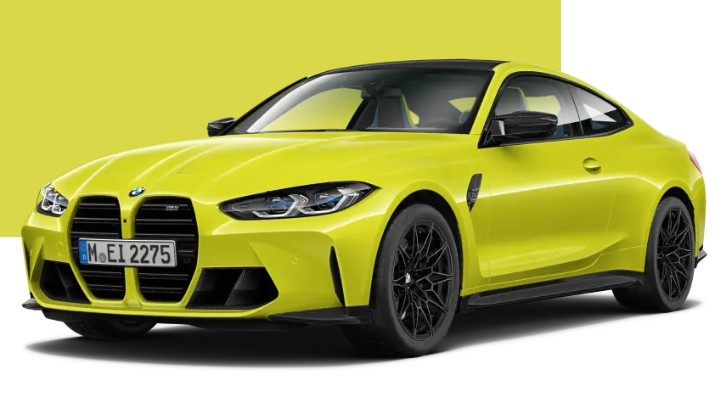
Few automotive rivalries are as strange—or as entertaining—as the one between the BMW M4 and M3. They come from the same family, share much of the same mechanical DNA, deliver almost identical straight-line performance, and yet somehow attract slightly different buyers.
Think of them as siblings who went to the same school, learned the same tricks, and then developed completely different wardrobes.
The BMW M3 is the practical one. Four doors, a usable rear seat, a conventional sedan profile, and enough everyday versatility to make you wonder whether you really need an SUV.
The BMW M4 is the theatrical sibling. Two doors, a lower-looking coupe shape, dramatic proportions, and the sort of presence that makes parking-lot glances part of the ownership experience.
But underneath? Things become much closer.
In this guide, we're digging deep into BMW M3 vs M4 differences, including performance, engines, practicality, styling, handling, ownership costs, comfort, transmissions, and which one we'd choose for different types of drivers.
Content in this publication
- BMW M4 and M3 at a Glance
- What Is the Difference Between the BMW M3 and M4?
- BMW M3 vs M4 Engine
- BMW M3 vs M4 Performance
- BMW M3 vs M4 Handling
- BMW M3 vs M4 Manual Transmission
- BMW M3 vs M4 Exterior Design
- BMW M3 vs M4 Interior
- BMW M3 vs M4 Rear Seat Space
- BMW M3 vs M4 Cargo Space
- BMW M3 vs M4 Dimensions
- BMW M3 vs M4 Daily Driving
- BMW M4 and M3 Technology
- BMW M3 vs M4 Sound
- BMW M3 vs M4 Price
- BMW M3 vs M4 Insurance Cost
- BMW M3 vs M4 Maintenance Costs
- BMW M3 vs M4 Reliability
- BMW M3 vs M4 for Track Driving
- BMW M3 vs M4 for Families
- BMW M3 vs M4 for Weekend Driving
- BMW M3 vs M4 for Long Road Trips
- Should You Buy an M3 or M4 Competition?
- BMW M3 and M4 Generations Explained
- BMW M3 vs M4 Used: Which Is the Better Buy?
- BMW M3 vs M4: Pros and Cons
- Who Should Buy the BMW M3?
- Who Should Buy the BMW M4?
- BMW M3 vs M4: Which Would We Choose?
- Conclusion: M3 Practicality or M4 Style?
- Frequently Asked Questions About BMW M4 and M3
BMW M4 and M3 at a Glance
Before getting lost in the details, here's the easiest way to understand these two cars.
| Category | BMW M3 | BMW M4 |
|---|---|---|
| Body style | Four-door sedan | Two-door coupe |
| Seating | 5 | 4 |
| Engine | 3.0L twin-turbo inline-six | 3.0L twin-turbo inline-six |
| Manual available | Yes, selected version | Yes, selected version |
| Automatic available | Yes | Yes |
| Rear-wheel drive | Available | Available |
| M xDrive AWD | Available | Available |
| Best for | Daily practicality | Style and coupe experience |
| Driving character | Extremely similar | Extremely similar |
| Main advantage | Four doors | Sportier coupe appearance |
That's the central story.
If performance alone determines your decision, separating the M3 and M4 is like trying to choose between two identical espresso shots because one arrived in a prettier cup.
The real differences involve body style, practicality, appearance, access, and personal preference.
What Is the Difference Between the BMW M3 and M4?
The simplest difference is body configuration.
The BMW M3 is a sedan, while the BMW M4 is primarily a coupe.
BMW essentially separated its performance naming strategy when the regular 3 Series coupe evolved into the 4 Series. The M3 name remained attached to the four-door performance sedan, while the two-door performance model became the M4.
That explains why today's M3 and M4 can feel like two versions of the same fundamental machine.
M3 Means Four-Door Performance
The BMW M3 gives us genuine super-sedan versatility.
You can drive it hard on a winding road Saturday morning, load passengers through four proper doors Saturday evening, and commute in it Monday morning without feeling as though you've brought a race car to an office parking garage.
That combination has always been a major part of the M3 formula.
M4 Means Coupe Style
The M4 sacrifices some convenience for visual drama.
Its longer doors, coupe roofline, and two-door layout make the car feel more like a dedicated sports machine.
Is it drastically faster because of that?
No.
Does it feel more special every time we walk toward it?
For some buyers, absolutely.
BMW M3 vs M4 Engine
Mechanically, this is where the rivalry becomes remarkably close.
Modern M3 and M4 models use BMW M's 3.0-liter twin-turbocharged inline-six engine. Current U.S.-market M3 and M4 variants use the same engine family, and BMW lists equivalent outputs across matching configurations.
That's important because it means buying the M4 does not automatically unlock some dramatically more powerful coupe engine.
Likewise, choosing the practical M3 doesn't mean accepting watered-down performance.
The S58 Inline-Six
At the heart of the current generation sits BMW's high-performance six-cylinder architecture.
It is muscular, responsive, and wonderfully excessive.
Turbocharged performance engines can sometimes feel like giant waves of torque with little personality. The M3 and M4 avoid much of that problem. Their engines still encourage us to explore the rev range rather than simply flooring the accelerator at 2,000 rpm and waiting for the electronics to do everything.
Current Horsepower Figures
Current BMW USA listings show three familiar output levels:
- M3 and M4 base models: 473 hp
- M3 and M4 Competition models: 503 hp
- M3 and M4 Competition xDrive models: 523 hp
BMW also lists the same basic 0–60 mph estimates for equivalent M3 and M4 configurations: 4.1 seconds for the base rear-wheel-drive cars, 3.8 seconds for Competition versions, and 3.4 seconds for Competition xDrive models.
Exact specifications can change between markets and model years, so buyers should always check the particular vehicle they're considering.
BMW M3 vs M4 Performance
Here's where some buyers expect a huge distinction.
There really isn't one.
Match an M3 against an equivalent M4 with the same drivetrain, transmission, tires, and output, and their performance is extraordinarily similar.
Acceleration
An M3 Competition xDrive launches with the sort of violence that would have seemed exotic-car ridiculous not long ago.
So does an M4 Competition xDrive.
BMW currently quotes 3.4 seconds from 0–60 mph for both xDrive variants in the United States.
That's properly quick.
More importantly, the acceleration doesn't disappear after the first traffic light. The engine delivers substantial midrange punch, making passing maneuvers almost comically easy.
Which Is Faster, BMW M3 or M4?
In equivalent configurations, neither deserves to be called meaningfully faster in ordinary driving.
Minor differences in curb weight, aerodynamics, testing conditions, tires, fuel load, launch quality, and even temperature can influence results.
If we're choosing between an M3 and M4 based purely on whether one might cross a quarter-mile finish line a fraction sooner, we're missing the point.
Pick the body style you prefer.
BMW M3 vs M4 Handling
Both cars are enormous fun when the road begins to twist.
Sharp steering response, massive tire grip, serious braking capability, and sophisticated electronically controlled chassis systems help disguise how powerful these cars really are.
The rear-drive versions feel more traditional.
The xDrive cars deliver staggering traction.
Rear-Wheel Drive Character
Rear-wheel drive remains the romantic choice.
Power goes to the rear axle, the front tires concentrate on steering, and the car can feel beautifully adjustable with the throttle.
For an enthusiast who enjoys interaction more than outright acceleration numbers, the rear-wheel-drive M3 or M4 can be incredibly appealing.
M xDrive Traction
BMW's M xDrive system gives the Competition xDrive versions enormous launch capability.
Current M3 Competition xDrive specifications list 523 horsepower and a BMW-estimated 3.4-second 0–60 mph time.
The equivalent M4 offers the same quoted output and acceleration figure.
In poor weather or during hard acceleration, that extra traction can make the car easier to exploit.
Does AWD Ruin the M Experience?
Not really.
Purists may always prefer a manual gearbox and rear-wheel drive, but the xDrive models aren't sleepy luxury sedans wearing oversized wheels.
They're brutally capable performance cars.
If anything, their biggest problem is that they make enormous speed feel alarmingly easy.
BMW M3 vs M4 Manual Transmission
Here BMW deserves some applause.
Manual transmissions have become endangered wildlife in the performance-car world, yet the standard M3 and M4 remain available with a six-speed manual in the U.S. market. BMW lists the base M3 as a 473-hp rear-wheel-drive manual, while the base M4 Coupe also combines 473 horsepower with a six-speed manual transmission.
For drivers who still want to choose gears themselves, that's a huge selling point.
Manual or Automatic?
Choose the manual if:
- You value involvement over maximum acceleration.
- You enjoy heel-and-toe driving.
- You want your commute to feel more interactive.
- You don't care about winning every traffic-light launch.
- You believe changing gears is part of the entertainment.
Choose the automatic Competition model if outright pace matters more.
Its eight-speed transmission shifts rapidly and works extremely well with the engine's huge torque output.
BMW M3 vs M4 Exterior Design
We could spend hours discussing this one because design is deeply subjective.
Mechanically, these cars are nearly twins.
Visually, they tell different stories.
Why the M3 Looks More Aggressive Than a Normal Sedan
The M3's appeal comes from contrast.
We see a familiar sedan silhouette wearing huge air intakes, widened bodywork, serious wheels, enormous brakes, and quad exhaust outlets.
It's a business suit with boxing gloves hidden in the pockets.
That contradiction makes the M3 fascinating.
Why the M4 Feels More Exotic
The M4 looks like the more obviously sporting car.
Its coupe profile creates a lower, more dramatic visual impression.
Long doors emphasize the car's proportions, while the roofline flows toward the rear instead of prioritizing passenger access.
Which Looks Better?
There is no universal winner.
If we want understated menace, we'd lean toward the M3.
If we want something that announces itself as a performance coupe before the engine even starts, the M4 makes more sense.
BMW M3 vs M4 Interior
Sit inside either car and the family resemblance becomes immediately obvious.
The general dashboard architecture, technology, infotainment, performance controls, seats, steering wheel, and materials are closely related.
That means the M4 doesn't suddenly feel like an exotic supercar while the M3 feels like a commuter sedan.
Both cabins blend modern BMW technology with serious M hardware.
Carbon Bucket Seats
Available carbon bucket seats can transform the atmosphere.
They're visually spectacular and provide substantial support when cornering hard.
However, we'd strongly recommend sitting in them before ordering.
A seat that feels wonderful during a 20-minute spirited drive may become much less charming when climbing out of it three times every morning.
Everyday Cabin Comfort
The standard sports seats are generally the more sensible option for drivers using the car daily.
That's especially true in the M3, where practicality is usually part of the reason we chose the sedan in the first place.
BMW M3 vs M4 Rear Seat Space
Now we've reached one of the biggest practical differences.
The M3 wins.
Not because the M4 doesn't have rear seats, but because reaching the M3's rear seats requires opening a door rather than performing a small yoga routine.
Why Four Doors Matter
Imagine regularly carrying:
You may be interested in reading BMW M4 vs M8: Which BMW M Car Is Better?
children,
coworkers,
friends,
older relatives,
or anyone who doesn't enjoy folding themselves behind a front seat.
The M3 quickly becomes the logical choice.
Four doors sound boring until you're using them every day.
Then they feel brilliant.
Is the M4 Rear Seat Usable?
Yes.
This isn't a tiny two-seat sports car with decorative cushions behind the driver.
The M4 can genuinely carry rear passengers.
But frequent rear-seat use favors the M3 by a huge margin.
BMW M3 vs M4 Cargo Space
Surprisingly, practicality isn't as simple as saying sedan equals huge trunk and coupe equals tiny trunk.
BMW lists up to 15.5 cubic feet of cargo capacity for the current M4 Coupe in the U.S. market.
Still, the M3's four-door layout makes the complete passenger-and-cargo package much easier to live with.
For weekend bags, groceries, laptops, and everyday equipment, either car can work.
For family life, the M3 wins.
BMW M3 vs M4 Dimensions
Dimensions change slightly depending on generation and market, but these aren't tiny machines.
BMW currently lists the U.S.-market M3 at approximately 189.1 inches long, with a 112.5-inch wheelbase.
That size explains part of their personality.
Modern M cars aren't featherweight analog sports cars.
They're sophisticated, fast, technologically dense performance machines capable of doing several jobs exceptionally well.
Does the M4 Feel Smaller?
Sometimes it looks smaller because of its coupe proportions.
From behind the wheel, though, both cars have substantial width and presence.
On a narrow road, you'll know you're driving something serious.
BMW M3 vs M4 Daily Driving
This category belongs to the M3.
The M4 isn't difficult to drive every day, but the M3 removes friction from ordinary life.
Need to put a backpack on the rear seat?
Open the rear door.
Picking up three friends?
Open four doors.
Installing a child seat?
Again, four doors.
That sounds painfully ordinary until you've lived with a coupe long enough.
Ride Comfort
Both M cars prioritize control over cloud-like softness.
They're performance cars, after all.
But modern adaptive suspension technology means they don't need to punish us every time we encounter broken pavement.
In softer settings, either can function as a realistic everyday vehicle.
Switch everything into aggressive modes and the personality sharpens considerably.
BMW M4 and M3 Technology
Modern M cars aren't merely engines and suspension systems anymore.
They're rolling computers with serious horsepower.
Drive modes allow adjustment of multiple characteristics, including engine response, transmission behavior, suspension firmness, steering assistance, braking settings, and stability-control intervention depending on equipment.
Some enthusiasts consider this complexity excessive.
We understand the argument.
Older M cars often felt like precision mechanical instruments. Modern versions can initially feel like someone handed us the control panel for a fighter jet.
But after creating preferred settings, the flexibility becomes useful.
BMW M3 vs M4 Sound
Both models use fundamentally the same engine architecture in equivalent trims, so don't expect the M4 to sound dramatically different simply because it has fewer doors.
The sound is aggressive, mechanical, and unmistakably modern turbocharged BMW M.
Older naturally aspirated M cars produced more theatrical high-rpm soundtracks.
The modern M3 and M4 compensate with far more torque and explosive acceleration.
It's a different kind of excitement.
BMW M3 vs M4 Price
The M4 generally carries a modest premium over the corresponding M3.
For example, BMW USA currently lists starting prices of $79,300 for the M3 Sedan and $82,200 for the M4 Coupe before options and applicable fees. Equivalent Competition and Competition xDrive M4 variants are also listed above their M3 counterparts.
Prices will vary by year, country, specification, options, taxes, dealer pricing, and availability.
Why Does the M4 Cost More?
Part of the answer is positioning.
Coupes traditionally command a slight premium because they're marketed as more style-focused and emotionally driven products.
Whether the M4 is worth paying extra for depends almost entirely on how much we value its shape.
Mechanically, the M3 gives away surprisingly little.
BMW M3 vs M4 Insurance Cost
Insurance can be expensive for both.
That should surprise precisely nobody.
We're talking about powerful German performance cars with costly body panels, sophisticated electronics, expensive wheels and tires, and enough acceleration to reach questionable speeds remarkably quickly.
Insurance premiums depend on variables including:
- Driver age
- Driving history
- ZIP code or location
- Annual mileage
- Coverage level
- Deductible
- Vehicle year
- Trim
- Security equipment
- Insurance company
Get actual quotes before buying either vehicle.
A surprisingly attractive purchase price can lose some sparkle once annual insurance enters the equation.
BMW M3 vs M4 Maintenance Costs
Neither should be purchased with Toyota Corolla maintenance expectations.
Performance brings consumable costs.
Wide high-performance tires aren't cheap.
Large brakes aren't cheap.
Premium fluids aren't cheap.
And once warranties expire, sophisticated German performance-car repairs can become expensive.
Consumables Matter
Enthusiastic driving increases wear on:
tires,
brake pads,
brake rotors,
fluids,
and suspension components.
Track driving magnifies those costs.
Used M3 and M4 Buyers Should Budget Carefully
A cheap used M car can become an expensive M car surprisingly quickly.
We'd rather buy a well-maintained example with complete records than save thousands upfront on a suspiciously inexpensive car with unknown history.
Maintenance records matter.
So does a pre-purchase inspection.
BMW M3 vs M4 Reliability
Modern M3 and M4 reliability cannot be reduced to a simple "good" or "bad" label.
These are complicated high-performance vehicles.
Proper servicing matters enormously.
An enthusiast-owned car that's been warmed properly, serviced on time, and maintained without shortcuts may be a much safer purchase than a lower-mileage example that has spent its life bouncing between launch-control demonstrations.
What to Check on a Used BMW M3 or M4
Before buying, we'd examine:
- Complete maintenance history.
- Evidence of modifications or tuning.
- Tire condition and matching tire brands.
- Brake wear.
- Cooling-system condition.
- Oil leaks.
- Accident history.
- Suspension noises.
- Warning lights or stored diagnostic faults.
- Signs of repeated track use.
Modifications don't automatically make a car bad.
Poor modifications should make us cautious.
BMW M3 vs M4 for Track Driving
This is almost a draw.
Both can be spectacular track machines.
Their engines, chassis technology, braking performance, and available drivetrain configurations give them enormous capability.
The M4's coupe body may psychologically feel like the natural track choice.
But don't underestimate the M3.
The sedan is perfectly happy terrorizing apexes while carrying four doors.
That's part of its charm.
BMW M3 vs M4 for Families
M3.
Next question.
If we need rear-seat access regularly, the sedan is simply easier.
The fascinating part is that we barely sacrifice performance by choosing practicality.
Usually automotive life forces compromises.
Want a practical car? Lose excitement.
You may be interested in readingBMW M4 vs M8: Which BMW M Car Is Better?You may be interested in reading
BMW M4 vs M4 Competition: Which One Should You Buy?Want a sports car? Lose practicality.
The M3 essentially looks at that rule and ignores it.
BMW M3 vs M4 for Weekend Driving
Here we'd choose the M4.
If this is a second car, rear-seat convenience becomes less important.
Suddenly, style matters more.
Walking into the garage and seeing the coupe waiting for a Sunday morning blast can make ownership feel slightly more special.
Is that rational?
Not particularly.
But emotional decisions are a huge part of buying performance cars.
Otherwise we'd all drive appliances.
BMW M3 vs M4 for Long Road Trips
Both work surprisingly well.
The engines barely notice highway speeds, modern infotainment makes navigation easy, and the suspension can settle down considerably compared with its most aggressive settings.
However, if traveling with several people, the M3 again wins through easier access.
Two people and luggage?
We'd happily take either.
Should You Buy an M3 or M4 Competition?
Competition models trade some old-school simplicity for extra output and rapid automatic shifting.
They're devastatingly quick and arguably better suited to buyers who prioritize performance statistics and effortless speed.
The regular manual-transmission versions feel different.
They're slower on paper but potentially more involving.
Choose the Base Manual Model If...
You see driving as an activity rather than transportation.
You want to interact with the engine.
You enjoy timing shifts.
You'd sacrifice a few tenths to 60 mph for greater involvement.
Choose the Competition If...
You want more horsepower.
You prefer automatic shifting.
You frequently encounter traffic.
You care about outright acceleration.
Choose Competition xDrive If...
You want maximum launch performance.
You drive in poor-weather conditions.
You want extra traction.
You believe 500-plus horsepower and rear-wheel drive occasionally sounds like unnecessary drama.
BMW M3 and M4 Generations Explained
The relationship between the M3 and M4 makes more sense when we look backward.
For decades, the M3 badge covered several body styles.
Eventually BMW repositioned its coupe lineup under the 4 Series name.
That produced the modern distinction:
3 Series performance sedan = M3.
4 Series performance coupe = M4.
F80 M3 and F82 M4
The F80/F82 era established the modern M3/M4 split.
Both adopted turbocharged six-cylinder power and aggressive styling.
These models remain enormously popular on the used market.
G80 M3 and G82 M4
The G80 M3 and G82 M4 moved the formula forward dramatically.
They brought more power, sophisticated chassis technology, available xDrive, modern digital interiors, and one of the most debated front-end designs BMW has ever created.
People argued about the grille.
They continued arguing.
Then they drove the cars.
Performance has a funny way of ending conversations.
BMW M3 vs M4 Used: Which Is the Better Buy?
Used prices vary significantly by generation, mileage, transmission, color, specification, accident history, and region.
The smarter purchase isn't automatically whichever badge costs less.
We'd focus on the individual car.
A pristine M4 with full records beats a neglected M3.
A carefully maintained M3 beats an M4 with questionable tuning and five different owners.
Condition first.
Badge second.
BMW M3 vs M4: Pros and Cons
BMW M3 Pros
- Four doors
- Easier rear-seat access
- Excellent everyday usability
- Near-M4 performance
- Manual transmission available
- Available xDrive
- Iconic M3 badge
- Perfect one-car solution for many enthusiasts
BMW M3 Cons
- Less coupe-like visual drama
- Still expensive to own
- Performance may be excessive for ordinary roads
- Options can push pricing considerably higher
BMW M4 Pros
- Dramatic coupe styling
- Same extraordinary performance potential
- Manual transmission available
- Available xDrive
- Feels more like a dedicated sports car
- Excellent weekend-car appeal
BMW M4 Cons
- Rear-seat access is less convenient
- Usually costs slightly more
- Longer doors can be awkward in tight parking spaces
- Offers little extra performance versus equivalent M3 versions
Who Should Buy the BMW M3?
Buy the M3 if you need one performance car to do nearly everything.
It is the perfect answer for someone who wants serious acceleration without explaining to the family why everyone must climb through the front doors.
We'd pick it for:
daily commuting,
family duties,
regular passenger use,
business travel,
road trips,
and owners with only one primary vehicle.
It might be one of the finest examples of the "one car for everything" philosophy.
Who Should Buy the BMW M4?
Buy the M4 if practicality ranks slightly lower than emotion.
Choose it because you look back at it after parking.
Choose it because two doors feel special.
Choose it because you don't regularly carry passengers.
And perhaps most importantly, choose it because you genuinely prefer the shape—not because you believe the M4 is automatically the faster or more serious performance model.
It isn't.
The M3 is every bit an M car.
BMW M3 vs M4: Which Would We Choose?
If we could own only one car, we'd choose the BMW M3.
The reason is wonderfully boring.
Doors.
Four of them.
The M3 provides virtually all the excitement we want from the M4 while demanding fewer compromises during ordinary life.
That's difficult to beat.
If we already had another practical vehicle sitting beside it in the garage, however, we'd seriously consider the M4.
Why?
Because practicality would no longer matter.
And once logic leaves the room, the coupe becomes very persuasive.
Conclusion: M3 Practicality or M4 Style?
The BMW M4 and M3 aren't really rivals in the traditional sense.
They're two interpretations of the same performance philosophy.
Both offer explosive six-cylinder power, sophisticated chassis engineering, available rear-wheel drive or M xDrive depending on configuration, serious braking performance, premium interiors, and enough speed to make ordinary roads feel suddenly very short.
The M3's superpower is versatility.
It can play sports car, commuter car, family car, and highway cruiser without feeling completely misplaced in any role.
The M4 prioritizes emotion.
Its coupe shape feels more deliberate, more dramatic, and slightly less ordinary.
So which one should we buy?
Choose the BMW M3 if practicality matters.
Choose the BMW M4 if coupe styling matters more.
If you're expecting some enormous performance gap to make the decision for you, you'll probably be disappointed.
That's actually the beauty of the comparison.
BMW lets us choose the shape without giving up much of the speed.
Frequently Asked Questions About BMW M4 and M3
Is the BMW M4 Better Than the M3?
Not objectively. The M4 offers a sportier two-door coupe shape, while the M3 provides four-door practicality. Equivalent versions offer extremely similar engines and performance, so the better choice depends largely on how you use the car.
Are the BMW M3 and M4 the Same Engine?
Equivalent current-generation versions use the same high-performance 3.0-liter BMW M TwinPower Turbo inline-six engine architecture. Current U.S. models also offer matching horsepower levels across comparable base, Competition, and Competition xDrive configurations.
Which Is Faster, the BMW M3 or BMW M4?
Equivalent configurations are essentially matched. BMW currently quotes 0–60 mph times of 4.1 seconds for the base M3 and M4, 3.8 seconds for Competition versions, and 3.4 seconds for Competition xDrive versions in the U.S. market.
Why Is the BMW M4 More Expensive Than the M3?
The M4 is positioned as the more style-focused coupe and typically carries a modest price premium. Current U.S. pricing, for example, places the M4 Coupe above the equivalent entry-level M3 Sedan, although prices vary by year, market, equipment, and dealer.
Should I Buy an M3 or M4 for Daily Driving?
For most drivers, we'd choose the M3. Its four doors make carrying passengers and accessing the rear seats much easier while retaining almost all the performance appeal of the M4. The M4 makes more sense when coupe styling matters more than maximum practicality.
You may be interested in readingBMW M4 vs M8: Which BMW M Car Is Better?You may be interested in reading
BMW M4 vs M4 Competition: Which One Should You Buy?You may be interested in reading
BMW M4 vs M440i: Which BMW Coupe Should We Choose?If you want to know other articles similar to BMW M4 and M3: Which BMW M Car Is Right for You? you can visit the category Models.
Haval Jolion vs Omoda C5: Which SUV Is Better?
Haval Jolion vs Chery Tiggo 4 Pro: Full Comparison
Haval Jolion vs H6: Which SUV Is Better in 2026?
Haval Jolion vs Toyota Corolla Cross: Which SUV Is Better?
Haval Jolion vs Jaecoo J5: Which SUV Is Better?
Volkswagen T-Cross vs Volkswagen T-Roc: Which Is Better?
Leave a Reply
More content of your interest