
BMW M4 vs M8: Which BMW M Car Is Better?

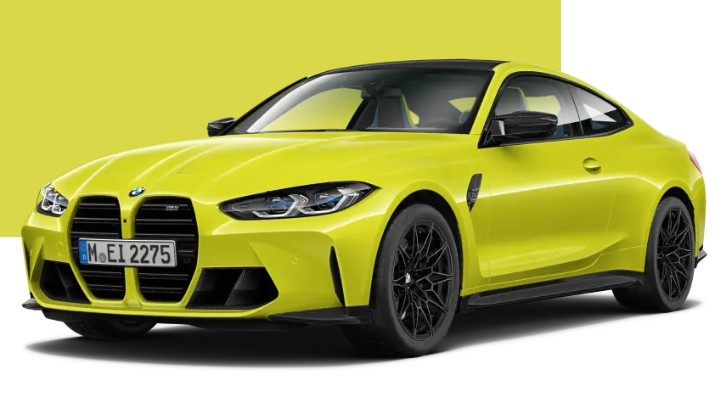
Choosing between the BMW M4 vs M8 is a little like choosing between a fighter jet and a private jet that happens to have missiles strapped underneath its wings. Both are brutally quick. Both carry genuine BMW M engineering. Both can turn an ordinary highway entrance into something that feels suspiciously like the opening lap of a race.
Yet they approach performance from completely different directions.
The BMW M4 is smaller, lighter, less expensive, and more focused on driver involvement. The BMW M8, particularly the M8 Competition Coupe, takes the grand-touring formula and injects it with a monstrous twin-turbo V8, more luxury, and almost absurd straight-line performance.
So, which one deserves our money?
For most driving enthusiasts, the M4 is the smarter and more engaging choice. For buyers who want effortless speed, V8 drama, long-distance comfort, and flagship-level presence, however, the M8 remains something special.
Let’s break down the BMW M4 vs M8 comparison from every angle.
Content in this publication
- BMW M4 vs M8 at a Glance
- BMW M4 vs M8 Engine Comparison
- BMW M4 vs M8 Horsepower
- BMW M4 vs M8 0-60 MPH
- BMW M4 vs M8 Handling
- BMW M4 vs M8 Driving Experience
- BMW M4 vs M8 Interior
- BMW M4 vs M8 Comfort
- BMW M4 vs M8 Exterior Design
- BMW M4 vs M8 Size
- BMW M4 vs M8 Practicality
- BMW M4 vs M8 Transmission Choices
- BMW M4 vs M8 Sound
- BMW M4 vs M8 Fuel Economy
- BMW M4 vs M8 Maintenance Costs
- BMW M4 vs M8 Price
- BMW M4 vs Used M8: An Interesting Battle
- BMW M4 vs M8 for Daily Driving
- BMW M4 vs M8 for Road Trips
- BMW M4 vs M8 for Track Driving
- BMW M4 vs M8 for Highway Performance
- BMW M4 vs M8 Reliability
- Which One Has Better Tuning Potential?
- BMW M4 vs M8 Resale Value
- BMW M4 vs M8: Which Feels More Special?
- BMW M4 vs M8: Which Is More Fun?
- Who Should Buy the BMW M4?
- Who Should Buy the BMW M8?
- BMW M4 vs M8 Final Score
- BMW M4 vs M8: Our Final Verdict
- Frequently Asked Questions
BMW M4 vs M8 at a Glance
Before diving into the details, here is the basic personality difference.
| Feature | BMW M4 | BMW M8 Competition |
|---|---|---|
| Engine | 3.0L twin-turbo inline-six | 4.4L twin-turbo V8 |
| Horsepower | Up to 523 hp in current M4 Competition xDrive | 617 hp |
| Torque | Up to 479 lb-ft | 553 lb-ft |
| Drive | RWD or M xDrive, depending on version | M xDrive AWD |
| Transmission | 6-speed manual or 8-speed automatic, depending on M4 | 8-speed automatic |
| 0-60 mph | As quick as 3.4 sec in current Competition xDrive | About 3.0 sec |
| Character | Sports coupe | Luxury grand tourer |
| Best For | Handling, involvement, value | Luxury, V8 power, highway speed |
BMW currently rates the M4 Competition xDrive Coupe at 523 horsepower and 3.4 seconds from 0–60 mph. The earlier M8 Competition specification uses a 4.4-liter twin-turbo V8 producing 617 horsepower and 553 lb-ft, with BMW quoting roughly 3.0 seconds to 60 mph.
Those numbers already tell us something important.
The M8 has more muscle.
The M4 has fewer pounds and fewer pretensions.
And that shapes almost everything that follows.
BMW M4 vs M8 Engine Comparison
BMW M4: The Legendary Inline-Six Formula
The M4 stays loyal to one of BMW's most recognizable engineering traditions: the straight-six.
Current M4 models use a 3.0-liter BMW M TwinPower Turbo inline-six. Depending on configuration, outputs range from 473 horsepower in the standard M4 Coupe to 523 horsepower in the M4 Competition xDrive Coupe.
More importantly, the engine feels eager.
It likes revs. It responds quickly. And when we push deeper into the throttle, the power continues building rather than arriving in one overwhelming explosion.
The M4's engine feels like something designed for attacking corners.
Why the M4 Inline-Six Works So Well
Its strengths include:
- Strong high-rpm performance
- Quick turbo response
- Relatively compact dimensions
- Lower engine weight than a large V8
- Excellent tuning potential
- Classic BMW straight-six character
The engine also complements the M4 chassis beautifully.
There is enough power to make the car seriously fast without completely overwhelming the driver's senses.
BMW M8: Twin-Turbo V8 Thunder
Then we have the M8.
The M8 Competition uses BMW's 4.4-liter twin-turbocharged V8, producing 617 horsepower and 553 lb-ft of torque in its established Competition specification.
Press the accelerator and the difference becomes immediately obvious.
Where the M4 builds speed aggressively, the M8 seems to compress the road ahead.
There is simply more shove.
A lot more.
Its enormous torque output means overtaking barely requires preparation. Touch the throttle at highway speeds and the horizon seems to move toward us.
The M8 V8 Feels Effortless
The beauty of the M8 engine is not simply that it makes more power.
It is how casually it produces that power.
We don't need to chase the redline to feel the performance. The V8 produces massive torque throughout the rev range.
That gives the M8 the character of a proper grand tourer: calm when cruising, borderline ridiculous when provoked.
BMW M4 vs M8 Horsepower
If horsepower wins arguments at coffee shops, the M8 has the advantage.
A current M4 Competition xDrive produces 523 hp, while the M8 Competition produces 617 hp.
That is a difference of 94 horsepower.
But numbers don't tell the full story.
Because the M8 is considerably larger and heavier, some of that additional power has to move more automobile.
Think of the M4 as a middleweight boxer and the M8 as a heavyweight.
The heavyweight hits harder.
The middleweight moves faster.
BMW M4 vs M8 0-60 MPH
Which BMW Is Faster?
In straight-line acceleration, the M8 Competition historically holds the advantage.
BMW quoted approximately:
- M4 Competition xDrive: 3.4 seconds
- M8 Competition Coupe: 3.0 seconds
Four-tenths of a second doesn't sound enormous until we actually experience acceleration at this level.
Below four seconds, every tenth matters.
The M8 launches with the violence of something far smaller than it actually is.
Its M xDrive system finds grip, the V8 unleashes its torque, and suddenly we are traveling at speeds that demand serious restraint.
Real-World Speed Matters More Than 0-60
Around town, however, both vehicles are ridiculously fast.
Nobody buying an M4 Competition xDrive is going to feel that their car lacks acceleration.
At highway speeds, the M8's extra displacement and torque become more noticeable.
That is where the flagship M car truly flexes its muscles.
BMW M4 vs M8 Handling
Here the fight changes dramatically.
The M4 Feels Smaller Because It Is Smaller
Take both cars onto a winding back road and the M4 begins clawing back points quickly.
Its smaller footprint makes it easier to position.
We can place the front end more accurately, change direction more confidently, and generally feel more connected to what the chassis is doing.
The M4 encourages us to search for corners.
The M8 makes us search for empty highways.
That distinction matters.
The M8 Handles Better Than Its Size Suggests
Calling the M8 clumsy would be completely unfair.
It isn't.
BMW M engineers gave it sophisticated suspension, powerful brakes, an active differential, and M xDrive.
The result is astonishing capability for such a substantial grand tourer.
The M8 can carry tremendous speed through corners.
But physics never completely disappears.
The car feels wider, heavier, and more substantial than the M4.
There is always the sensation that we are managing a very fast luxury machine rather than wearing a sports car around our hips.
BMW M4 vs M8 Driving Experience
M4: More Conversation Between Car and Driver
The M4 gives us more feedback.
The chassis feels alive.
Throttle input matters. Steering input matters. Weight transfer matters.
And if we choose the rear-wheel-drive M4 with the six-speed manual transmission, the experience becomes even more interactive.
That manual gearbox alone gives the M4 something the M8 simply cannot offer.
Driver involvement.
Changing gears ourselves may technically make the car slower than its automatic siblings, but driving isn't always about shaving tenths from acceleration times.
Sometimes enjoyment matters more.
M8: Devastating Speed With Luxury Attached
The M8 offers a completely different experience.
Instead of demanding constant involvement, it makes enormous performance feel effortless.
Put it into a comfortable driving mode and it can behave like a luxurious touring coupe.
Then switch everything into its aggressive settings and the personality changes.
The suspension tightens.
The transmission becomes more eager.
The V8 wakes up.
And suddenly the elegant grand tourer feels like it wants to devour entire continents.
BMW M4 vs M8 Interior
The M4 Interior Is Sportier
Inside the M4, the atmosphere is unmistakably performance-oriented.
Depending on configuration, we find aggressive sport seats, M-specific controls, large digital displays, carbon-fiber trim options, and programmable M driving modes.
Everything reminds us that this is the high-performance version of BMW's compact luxury coupe platform.
It is modern and premium.
But the emphasis remains sport.
The M8 Interior Feels More Expensive
The M8 operates one level higher.
Materials feel richer.
Cabin isolation is better.
Seats feel more substantial.
The overall environment resembles a luxury flagship that just happens to possess supercar-level acceleration.
Where the M4 says, "Let's drive," the M8 says, "Where would you like to cross the continent?"
That extra luxury makes a major difference during long journeys.
You may be interested in reading BMW M4 vs M4 Competition: Which One Should You Buy?
BMW M4 vs M8 Comfort
The M8 takes this category.
There isn't much debate.
Despite its enormous performance potential, the M8 was designed as a grand tourer.
That means long-distance comfort matters.
The longer wheelbase, more substantial seats, quieter cabin, and generally softer grand-touring character make the M8 easier to live with during extended highway journeys.
The M4 can absolutely function as a daily driver.
But it feels busier.
Road imperfections are more noticeable.
Sportier configurations can become firm over broken pavement.
For some enthusiasts, that's part of the charm.
For others, the M8's refinement will be worth the added cost.
BMW M4 vs M8 Exterior Design
Here our answer depends heavily on taste.
The M4 Looks Aggressive
The modern M4 isn't shy.
Its giant vertical kidney grilles generated enormous debate when they first appeared, and they remain one of the car's most recognizable features.
The M4 has:
- Muscular wheel arches
- Aggressive bumpers
- Quad exhaust outlets
- Low coupe proportions
- An unmistakably modern M identity
It wants attention.
The M8 Looks Sophisticated
The M8 takes a more traditional grand-touring approach.
It is long, low, wide, and beautifully proportioned.
Rather than screaming for attention, it has presence.
There is something almost exotic about seeing an M8 Competition Coupe on the road because these cars are relatively uncommon compared with M3s and M4s.
Park the two next to each other and the M4 looks like the track athlete.
The M8 looks like the billionaire who owns the racetrack.
BMW M4 vs M8 Size
Size dramatically changes how these cars feel.
The M8 occupies considerably more road space.
Its broader proportions help create that exotic grand-tourer appearance, but they also make parking garages and narrow urban streets less enjoyable.
The M4 feels more manageable.
Neither is tiny, but the M4 is easier to thread through traffic and easier to place on narrow roads.
This difference shouldn't be underestimated.
We experience the dimensions every single time we drive the car.
BMW M4 vs M8 Practicality
Neither coupe exists primarily for transporting refrigerators.
Still, practicality matters.
M4 Practicality
The M4's rear seats can actually be useful for shorter passengers or occasional trips.
The trunk is also perfectly reasonable for weekend luggage or normal daily errands.
As performance coupes go, it is surprisingly usable.
M8 Practicality
The M8 Coupe looks enormous from outside, but its dramatic proportions don't translate into SUV-like interior space.
Rear seats remain secondary accommodations.
If rear-seat usability matters, the M8 Gran Coupe makes far more sense than the two-door version.
For two adults traveling long distances, however, the M8 Coupe works beautifully.
BMW M4 vs M8 Transmission Choices
This is another clear philosophical difference.
The M8 Competition uses BMW's eight-speed M Steptronic automatic transmission.
It suits the car perfectly.
Shifts are quick, smooth when required, and aggressive when the driving modes demand it.
The M4 gives us more choice.
Depending on version, buyers can choose between a traditional manual transmission and the eight-speed automatic.
That matters enormously to enthusiasts.
Want Three Pedals? Choose the M4
If our dream BMW M car includes a clutch pedal, the decision becomes simple.
Buy the M4.
The M8 never offered the same modern manual-transmission experience.
BMW M4 vs M8 Sound
The M8 wins.
A turbocharged BMW straight-six can sound fantastic.
But six cylinders can't quite reproduce the deep mechanical authority of a large twin-turbo V8.
The M8 has a darker, richer soundtrack.
It feels expensive even with our eyes closed.
The M4 sounds sportier and more frantic.
The M8 sounds powerful.
BMW M4 vs M8 Fuel Economy
Nobody buys either of these cars because they enjoy visiting fuel stations.
Still, operating costs matter.
The smaller 3.0-liter six-cylinder M4 generally has the advantage when driven sensibly.
The M8's 4.4-liter V8 has eight hungry cylinders, serious turbocharging, and tremendous performance.
Use that performance frequently and fuel disappears quickly.
The M8 also encourages highway speeds effortlessly, which means our right foot can become the biggest threat to fuel economy.
BMW M4 vs M8 Maintenance Costs
The M4 Should Generally Cost Less to Own
Neither car qualifies as inexpensive to maintain.
These are sophisticated high-performance German vehicles with:
- Large performance brakes
- Expensive tires
- Complex turbocharged engines
- Adaptive suspension components
- Advanced electronics
- Premium fluids
- High-performance cooling systems
However, the M8 sits further up BMW's hierarchy.
Its V8 powertrain, flagship components, larger tires, braking hardware, and greater complexity can result in very substantial repair bills once warranties expire.
The M4 isn't cheap.
The M8 can make the M4 look cheap.
Used M8 Buyers Should Budget Carefully
Depreciation can make used M8s look surprisingly affordable.
That's seductive.
A car that originally occupied six-figure luxury territory can eventually appear next to much less prestigious cars in used listings.
But depreciation reduces the purchase price.
It does not magically turn M8 parts into economy-car parts.
Keep a healthy maintenance reserve.
BMW M4 vs M8 Price
This is perhaps the biggest reason the M4 makes sense for more buyers.
For the current U.S. lineup, BMW lists the 2027 M4 Coupe starting around $82,200, with the M4 Competition and Competition xDrive positioned above it. The Competition xDrive starts around $91,700 on BMW's current model page.
The M8 historically occupied a dramatically higher price category. At its original U.S. introduction, for example, the M8 Competition Coupe carried a $146,000 MSRP before destination.
New-versus-used comparisons therefore require care because the two cars may no longer be competing as same-model-year showroom alternatives in some markets.
But the fundamental difference remains.
The M8 was built as a flagship.
The M4 was built as the sharper sports coupe.
BMW M4 vs Used M8: An Interesting Battle
This might actually be the most interesting comparison today.
Suppose our budget puts us between a newer M4 and an older M8 Competition.
What should we buy?
Choose the Newer M4 If We Want
- Lower ownership risk
- Newer technology
- A more agile chassis
- Potential warranty coverage
- Easier daily use
- Better track behavior
- Manual transmission availability
- Lower expected running costs
Choose the Used M8 If We Want
- A twin-turbo V8
- Flagship luxury
- More exclusivity
- Highway-crushing performance
- Dramatic acceleration
- A richer interior
- More visual presence
This is where emotion enters the conversation.
The sensible part of our brain says M4.
Then the M8 starts its V8.
Suddenly the sensible part becomes much quieter.
BMW M4 vs M8 for Daily Driving
For daily driving, we'd choose the M4 for most people.
Why?
It is smaller.
Easier to park.
Less intimidating around town.
You may be interested in readingBMW M4 vs M4 Competition: Which One Should You Buy?You may be interested in reading
BMW M4 vs M440i: Which BMW Coupe Should We Choose?Potentially cheaper to fuel.
Potentially less painful when consumable items need replacing.
And still outrageously quick.
But commuters who spend hours on highways may actually prefer the M8.
Its increased refinement becomes valuable when we're driving long distances every week.
BMW M4 vs M8 for Road Trips
The M8 wins.
This is its natural habitat.
Fill the fuel tank, load the trunk, select a comfortable suspension setting, and start covering distance.
The M8 can turn a 500-mile highway journey into something we look forward to rather than endure.
It has enormous passing power, supportive seating, better isolation, and that wonderful sensation of always having another reserve of performance waiting underneath our right foot.
BMW M4 vs M8 for Track Driving
The M4 gets our vote.
The M8 is remarkably capable on track, but the M4 feels more at home there.
Its smaller dimensions and lighter character make it easier to exploit.
Consumables matter too.
Track days destroy tires and brake pads at an impressive rate.
Doing that repeatedly with an M8 can become expensive very quickly.
The M4 feels closer to BMW M's traditional sports-car philosophy.
BMW M4 vs M8 for Highway Performance
Now we reverse the result.
Give the M8 a long highway and it becomes difficult to beat.
This is where its gigantic torque reserves make sense.
Acceleration from higher speeds feels relentless.
The M4 remains extremely quick, of course.
But the M8's V8 gives it an extra layer of authority when speeds rise.
BMW M4 vs M8 Reliability
Reliability depends heavily on maintenance history, model year, driving habits, modifications, and previous ownership.
That last point matters particularly with used M cars.
A carefully maintained stock M4 may be a safer purchase than a neglected M8.
Likewise, a well-documented M8 owned by a meticulous enthusiast could be preferable to an abused M4 that spent every weekend bouncing off its rev limiter.
Pre-Purchase Inspection Is Essential
For either used vehicle, we would strongly recommend a specialist inspection.
Pay attention to:
- Cooling system condition
- Oil leaks
- Service history
- Transmission behavior
- Differential noises
- Suspension wear
- Brake condition
- Tire condition
- Previous modifications
- Accident repairs
- Diagnostic fault codes
With high-performance cars, buying the cheapest example available can become the most expensive strategy imaginable.
Which One Has Better Tuning Potential?
Both respond well to aftermarket modifications.
The M4's turbocharged inline-six has developed a huge performance-tuning ecosystem.
Software tunes, downpipes, intake systems, exhausts, suspension upgrades, and cooling improvements are widely available.
The M8's V8 can also produce enormous power with tuning.
But once we begin modifying a 600-plus-horsepower luxury coupe, supporting modifications become increasingly important.
More power creates more heat.
More speed demands more braking capability.
More torque stresses the drivetrain.
Power isn't free.
BMW M4 vs M8 Resale Value
The M4 generally appeals to a broader enthusiast audience.
Manual-transmission examples may become particularly desirable because high-performance manual cars are becoming increasingly uncommon.
The M8 has another advantage: rarity.
However, expensive luxury flagships historically tend to experience substantial depreciation during their early years.
That makes a used M8 potentially tempting for second or third owners.
It can also make depreciation painful for original buyers.
BMW M4 vs M8: Which Feels More Special?
The M8.
We have to give it this category.
An M4 is undeniably special, but M4s are relatively familiar sights in enthusiast communities.
The M8 Competition Coupe is different.
Its enormous body.
Its low roofline.
Its V8 soundtrack.
Its rarity.
Its almost unnecessary performance.
Everything feels indulgent.
The car has occasion built into it.
We don't merely drive somewhere.
We arrive.
BMW M4 vs M8: Which Is More Fun?
The M4.
Fun isn't the same thing as speed.
A 617-horsepower V8 does not automatically make a car more entertaining.
The M4 communicates more clearly.
It feels more compact.
More playful.
More eager to rotate.
And in manual form, it makes us participate in the process.
That involvement matters.
We may reach our destination slightly slower than in an M8.
We may also have a bigger smile.
Who Should Buy the BMW M4?
The M4 is the better choice if we prioritize driver engagement over luxury.
It makes particular sense for enthusiasts who:
- Regularly drive winding roads
- Want occasional track days
- Prefer a smaller car
- Want a manual transmission
- Want serious performance without flagship pricing
- Need something usable every day
- Enjoy modifying their vehicles
- Value handling above outright horsepower
The M4 provides more performance than almost anyone can reasonably exploit on public roads.
And crucially, it makes that performance entertaining.
Who Should Buy the BMW M8?
Choose the M8 if we want the most dramatic experience.
It suits buyers who:
- Love V8 engines
- Want supercar-level acceleration
- Take frequent long highway trips
- Prefer luxury over maximum agility
- Want something more exclusive
- Don't mind higher running costs
- Want flagship BMW presence
- Prefer effortless performance
The M8 is less of a traditional sports coupe and more of a grand tourer with superhero abilities.
BMW M4 vs M8 Final Score
If we were scoring the two cars category by category, the results might look like this:
| Category | Winner |
|---|---|
| Acceleration | M8 |
| Horsepower | M8 |
| Engine Sound | M8 |
| Handling | M4 |
| Driver Engagement | M4 |
| Manual Transmission | M4 |
| Highway Performance | M8 |
| Long-Distance Comfort | M8 |
| Daily Usability | M4 |
| Track Use | M4 |
| Running Costs | M4 |
| Luxury | M8 |
| Value | M4 |
| Exclusivity | M8 |
| Overall Enthusiast Choice | M4 |
Neither car dominates every category because they were never really trying to achieve the same objective.
BMW M4 vs M8: Our Final Verdict
So, BMW M4 vs M8: which should we buy?
For most enthusiasts, we'd choose the BMW M4.
It gives us nearly everything that makes a modern BMW M car exciting: explosive acceleration, excellent handling, aggressive styling, a powerful turbocharged straight-six, available M xDrive, and even a manual gearbox in the appropriate version.
Most importantly, it feels like a performance car at ordinary speeds.
The BMW M8, however, operates on another level of extravagance.
Its 617-horsepower V8 turns acceleration into an event. Its cabin feels more luxurious. Its highway performance is outrageous. And its rarity gives it a sense of occasion that the M4 can't quite replicate.
If our dream involves weekend mountain roads, track sessions, and maximum driver involvement, take the M4.
If our dream involves crossing entire countries at questionable speeds while wrapped in leather with a twin-turbo V8 rumbling ahead of us, take the M8.
The M4 is the better sports car.
The M8 is the better grand tourer.
And perhaps that's the simplest way to understand this battle.
Frequently Asked Questions
Is the BMW M8 faster than the M4?
Yes. In comparable high-performance configurations, the M8 Competition has more horsepower and historically posted a quicker manufacturer-estimated 0-60 mph time. BMW rated the M8 Competition Coupe at around 3.0 seconds, while the current M4 Competition xDrive is rated at 3.4 seconds. Actual performance varies with conditions.
Does the BMW M8 have the same engine as the M4?
No. The M4 uses a 3.0-liter twin-turbo inline-six, while the M8 Competition uses a 4.4-liter twin-turbo V8. The engines give the cars dramatically different personalities: the M4 feels lighter and more responsive, while the M8 delivers substantially greater low- and mid-range authority.
Is the BMW M4 better than the M8?
The M4 is better for buyers prioritizing handling, driver involvement, affordability, and track use. The M8 is better for buyers prioritizing luxury, V8 power, straight-line acceleration, exclusivity, and long-distance comfort.
You may be interested in readingBMW M4 vs M4 Competition: Which One Should You Buy?You may be interested in reading
BMW M4 vs M440i: Which BMW Coupe Should We Choose?You may be interested in reading
BMW M4 vs Porsche 911: Which Performance Coupe Is Better?Is an M8 more expensive to maintain than an M4?
Generally, yes. Both are expensive high-performance vehicles, but the M8's V8 engine, flagship-level components, large wheels, brakes, and greater complexity can make repairs and consumables particularly costly. Maintenance history should matter more than purchase price when shopping for either car used.
Should I buy a used BMW M8 or a newer BMW M4?
For most buyers, a newer M4 is the safer all-around choice because it offers newer technology, easier daily use, excellent performance, and potentially greater warranty protection. A used M8 becomes tempting when luxury, rarity, and V8 performance matter more than minimizing ownership costs.
If you want to know other articles similar to BMW M4 vs M8: Which BMW M Car Is Better? you can visit the category Models.
Haval Jolion vs Omoda C5: Which SUV Is Better?
Haval Jolion vs Chery Tiggo 4 Pro: Full Comparison
Haval Jolion vs H6: Which SUV Is Better in 2026?
Haval Jolion vs Toyota Corolla Cross: Which SUV Is Better?
Haval Jolion vs Jaecoo J5: Which SUV Is Better?
Volkswagen T-Cross vs Volkswagen T-Roc: Which Is Better?
Leave a Reply
More content of your interest