
Leapmotor C10 Charging Speed: How Fast Does It Really Charge?

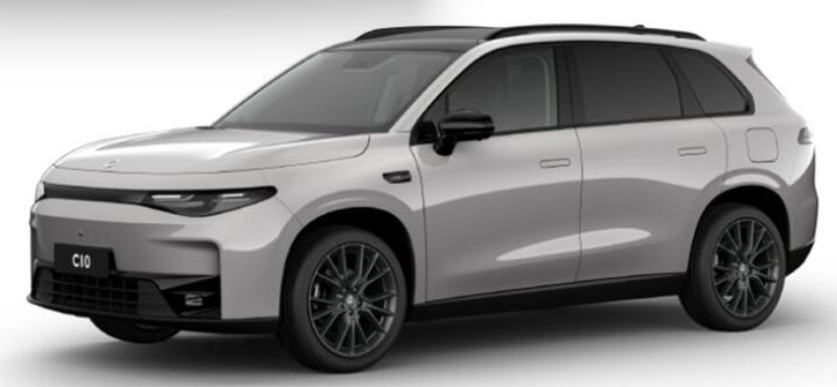
The Leapmotor C10 charging speed matters far more than a flashy peak-kilowatt number on a specification sheet. When we actually own an electric SUV, what we care about is simpler: how long are we going to stand beside a charger before getting back on the road?
That question is especially interesting with the Leapmotor C10 because there isn't one universal answer.
Depending on the version, battery and model year, the C10 can have dramatically different DC fast-charging performance. Earlier 69.9 kWh rear-wheel-drive models are considerably slower at rapid chargers, while newer 81.9 kWh versions can accept up to around 180 kW DC under suitable conditions. Both support up to 11 kW AC charging in European specifications.
So, is the C10 a slow-charging bargain EV, or has Leapmotor turned it into a genuinely road-trip-friendly electric SUV?
Let's plug in and find out.
Content in this publication
- What Is the Leapmotor C10 Charging Speed?
- Leapmotor C10 69.9 kWh Charging Speed
- Leapmotor C10 81.9 kWh Charging Speed
- Why Peak Charging Speed Isn't Everything
- Leapmotor C10 AC Charging Speed
- Charging the C10 From a 7.4 kW Wallbox
- Can You Charge the Leapmotor C10 on a 22 kW AC Charger?
- Leapmotor C10 Charging on a 50 kW DC Charger
- What Size Rapid Charger Should We Use?
- Does the Leapmotor C10 Have Battery Preconditioning?
- Factors That Affect Leapmotor C10 Charging Speed
- Why Charging Slows Down After 80%
- Should We Charge the C10 to 100% on Road Trips?
- Is the Leapmotor C10 Good for Long-Distance Driving?
- How Much Range Can the C10 Add in 30 Minutes?
- Is 180 kW Charging Fast Enough?
- Older vs Newer Leapmotor C10 Charging
- How to Get the Fastest Charging Speed From a Leapmotor C10
- Leapmotor C10 Charging Speed in Cold Weather
- Leapmotor C10 Charging Speed in Hot Weather
- Does a Faster Charger Damage the Leapmotor C10 Battery?
- Is Home Charging Better Than DC Fast Charging?
- What Charging Connector Does the Leapmotor C10 Use?
- Leapmotor C10 Charging Cost vs Charging Speed
- Who Should Choose the Faster-Charging 81.9 kWh C10?
- Is Leapmotor C10 Charging Speed a Deal-Breaker?
- Final Verdict: How Good Is the Leapmotor C10 Charging Speed?
- Frequently Asked Questions
What Is the Leapmotor C10 Charging Speed?
The short answer is that the Leapmotor C10's charging capability depends heavily on which battery version we're discussing.
The commonly available specifications can broadly be divided like this:
| Leapmotor C10 version | AC charging | Peak DC charging | Approx. 10–80% |
|---|---|---|---|
| C10 RWD 69.9 kWh | 11 kW | 84 kW | Around 44 min |
| C10 RWD 81.9 kWh | 11 kW | 180 kW | Around 30 min |
| C10 AWD 81.9 kWh | 11 kW | 180 kW | Around 30 min |
EV Database estimates the older 69.9 kWh version at a maximum of approximately 84 kW DC, averaging around 70 kW between 10% and 80%. The newer 81.9 kWh RWD and AWD models are rated at up to 180 kW DC, with an estimated average of about 120 kW through the 10–80% window.
That is not a small improvement.
It's the difference between stopping long enough for a quick coffee and beginning to wonder why everyone else at the service station has already left.
Leapmotor C10 69.9 kWh Charging Speed
Let's start with the version many early C10 buyers will encounter.
DC Fast Charging
The 69.9 kWh rear-wheel-drive C10 can accept approximately 84 kW of maximum DC power according to current European specification data.
Its estimated 10–80% charging session takes roughly 44 minutes, with an average charging power around 70 kW.
That isn't terrible, but it isn't particularly quick by today's EV standards either.
A decade ago, 80-odd kilowatts would have sounded impressive. Now we're surrounded by electric cars capable of 150, 200 or even 250-plus kW.
The important point, though, is that peak power doesn't tell us the whole story.
How Long Does 10–80% Take?
For the 69.9 kWh model, a 10–80% charge takes roughly 44 minutes under good conditions on a sufficiently powerful charger.
Think about that practically.
Arrive at a motorway charger with 10% remaining, connect the CCS plug, grab a coffee and perhaps some food, and you'll probably still have a little waiting left before reaching 80%.
For occasional motorway travel? Manageable.
For somebody covering hundreds of motorway miles every week? We'd definitely consider the newer C10 first.
Leapmotor C10 81.9 kWh Charging Speed
This is where the story gets much more interesting.
Newer 81.9 kWh versions substantially improve the C10's rapid-charging capability.
Up to 180 kW DC Charging
Both the RWD and AWD 81.9 kWh C10 are listed with 180 kW maximum DC charging capability. EV Database estimates approximately 120 kW average power across a typical 10–80% fast-charge session.
That's a major jump compared with the 69.9 kWh model.
The bigger battery doesn't merely give us additional energy capacity. It comes alongside far stronger rapid-charging performance, which is arguably even more important for long-distance usability.
Leapmotor C10 10–80 Charging Time
On an adequately powerful DC charger, the 81.9 kWh Leapmotor C10 is estimated to charge from 10% to 80% in about 30 minutes.
Manufacturer-claimed figures listed by EV Database also indicate that a 30–80% charge can take about 22 minutes under suitable conditions.
Thirty minutes isn't class-leading, but it's much more competitive.
And that's the distinction we should keep in mind throughout this article: the newer C10 isn't necessarily an ultra-fast charging champion, yet it has moved from the slow lane into respectable mainstream territory.
Why Peak Charging Speed Isn't Everything
Here's where EV specifications can become slightly misleading.
A manufacturer might advertise 180 kW charging, but that doesn't mean the battery sits at 180 kW from 10% all the way to 80%.
Far from it.
Understanding the Charging Curve
EV charging behaves more like filling a theatre than filling a fuel tank.
When the theatre is mostly empty, everyone rushes inside quickly. Once nearly every seat is occupied, finding the remaining empty ones takes longer.
An EV battery works similarly.
At low state of charge, the battery can usually accept greater power. As the battery fills, the battery-management system progressively restricts current to control heat and protect the cells.
That's why average charging power matters.
The newer 81.9 kWh C10 may peak at 180 kW, but an estimated 10–80% average closer to 120 kW gives us a more realistic picture of what happens during an actual charging stop.
Peak Power vs Average Power
Suppose two EVs both claim 180 kW charging.
Car A briefly touches 180 kW and then falls sharply to 80 kW.
Car B reaches 170 kW and remains above 120 kW for much longer.
Which car finishes first?
Probably Car B.
That's why we should never judge EV charging performance solely by the largest number printed in the brochure.
Leapmotor C10 AC Charging Speed
Most charging doesn't actually happen on motorway rapid chargers.
It happens while we're asleep.
And that's where AC charging enters the picture.
11 kW AC Charging
European C10 specifications show an 11 kW three-phase onboard AC charger across both the 69.9 kWh and 81.9 kWh versions discussed here.
That's good news.
Eleven kilowatts is a useful sweet spot for an electric SUV because it means we can replenish a large portion of the battery overnight when connected to an appropriate three-phase wallbox.
Leapmotor C10 Home Charging Time
The estimated full charging times vary by battery.
For the 69.9 kWh model, an 11 kW charging point can take around 7 hours 30 minutes for a full charge in EV Database's European calculation.
The larger 81.9 kWh version takes approximately 8 hours 45 minutes at 11 kW.
So if we arrive home at 20% in the evening, plug the car in and leave again the following morning, there's little reason to worry.
It'll usually be ready long before we are.
Charging the C10 From a 7.4 kW Wallbox
Not every household has access to three-phase electricity.
A 7.4 kW single-phase home wallbox is much more common in several markets.
For the 69.9 kWh C10, estimated empty-to-full charging time rises to approximately 11 hours 15 minutes at 7.4 kW.
The 81.9 kWh model needs roughly 13 hours 15 minutes under equivalent conditions.
That sounds long until we remember one thing:
We rarely arrive home with 0%.
If we return at 40%, we only need to replace roughly 60% of the battery.
Suddenly that overnight charge becomes completely realistic.
Can You Charge the Leapmotor C10 on a 22 kW AC Charger?
Yes, but don't expect 22 kW going into the battery.
The car's onboard charger limits AC charging to approximately 11 kW, meaning a 22 kW public AC charger won't make the C10 charge twice as quickly.
The charger might offer 22 kW.
The car simply says, "Thanks, I'll take 11."
This is a common misunderstanding among new EV owners.
The charging station's number tells us what the station can supply. The car determines how much of that available power it can actually accept.
Leapmotor C10 Charging on a 50 kW DC Charger
What happens if we're travelling and the only available rapid charger is a 50 kW unit?
The good news is that all the C10 versions discussed here can make proper use of it.
The bad news is obvious: we're leaving performance on the table with the newer 180 kW-capable cars.
For the 81.9 kWh version, EV Database estimates that a 10–80% charge on a 50 kW DC charger could take around 72 minutes.
That's more than twice as long as using a high-power charger.
So charger selection matters.
A lot.
What Size Rapid Charger Should We Use?
For the older 69.9 kWh model, chasing down a 350 kW charger doesn't accomplish much because the car itself is capped at a much lower rate.
For an 81.9 kWh C10, however, a charger capable of 180 kW or more allows us to access the car's maximum potential.
A practical hierarchy looks something like this:
- 50 kW DC: usable, but comparatively slow.
- 100 kW DC: reasonable for the older C10 and workable for the newer version.
- 150 kW DC: a good match for everyday rapid charging.
- 180+ kW DC: necessary to access the maximum capability of newer 81.9 kWh versions.
- 350 kW DC: works perfectly well, but the C10 itself won't accept the full station output.
In other words, plugging a C10 into a 350 kW charger doesn't magically turn it into a 350 kW charging car.
The vehicle remains the bottleneck.
Does the Leapmotor C10 Have Battery Preconditioning?
Battery temperature has an enormous impact on fast charging.
A freezing-cold battery doesn't want a huge electrical meal any more than we want to sprint immediately after waking up.
Battery preconditioning solves that problem by bringing the battery closer to its preferred charging temperature before a rapid-charge session.
EV Database lists battery preconditioning capability for the C10 variants covered here, although automatic preconditioning through navigation is not shown as supported in its current listings.
That's worth understanding before planning winter road trips.
Why Battery Temperature Matters
Lithium-based batteries generally accept high charging power most readily within a suitable operating-temperature window.
If the pack is too cold:
- charging power may be restricted;
- the car can remain below its advertised peak;
- 10–80% charging takes longer;
- the first charging stop on a cold morning may be noticeably slower.
If the battery is extremely hot, the system can also reduce charging performance to protect the cells.
So when people ask, "Why isn't my C10 charging at 180 kW?" the answer isn't necessarily that something is wrong.
The battery may simply not be ready for 180 kW.
Factors That Affect Leapmotor C10 Charging Speed
Real-world charging performance is shaped by several variables.
1. Battery State of Charge
An EV will normally charge fastest at relatively low battery percentages.
Arrive at 65% and don't expect maximum power.
Arrive closer to 10–20%, and the battery has much more room to accept energy quickly.
2. Battery Temperature
A properly conditioned battery usually charges faster than one that's extremely cold or hot.
3. Charger Capacity
Connect a 180 kW-capable C10 to a 50 kW charger and the station becomes the limiting factor.
4. Charger Sharing
Some rapid-charging installations split available power between stalls.
If another EV connects beside us, charging speed can sometimes drop depending on the hardware.
5. Battery Protection
The C10's battery-management system controls power dynamically.
The car is always balancing speed, temperature, battery longevity and safety.
Why Charging Slows Down After 80%
This catches many new EV drivers by surprise.
We arrive at a rapid charger, watch the battery rise rapidly from 20% to 60%, then suddenly everything seems to move in slow motion.
That's intentional.
As an EV battery approaches full charge, the charging system reduces power significantly.
Imagine pouring water into an empty glass. At first, we can pour quickly. Near the rim, we slow down because we don't want it spilling everywhere.
Batteries don't spill electricity, of course, but the principle is similar.
That's why long-distance EV drivers typically target something like 10–80% rather than 10–100%.
Should We Charge the C10 to 100% on Road Trips?
Usually, no.
Not unless we genuinely need the extra range.
If our next destination is reachable at 80%, staying plugged in for the final 20% can be inefficient because charging speed generally declines toward the top of the battery.
We can often cover a long trip faster by:
- Arriving at a rapid charger with a relatively low battery.
- Charging to around 70–80%.
- Driving onward.
- Making another quick charging stop later.
Shorter, faster charging sessions often beat one long 100% session.
Is the Leapmotor C10 Good for Long-Distance Driving?
The answer changes depending on which C10 we're discussing.
69.9 kWh Version
With its lower peak DC rate and roughly 44-minute 10–80% estimate, the earlier 69.9 kWh model is adequate rather than outstanding for long-distance driving.
We could certainly tour in one.
We'd just want to plan longer charging breaks.
81.9 kWh Version
The newer 180 kW-capable model makes a considerably stronger argument.
Around 30 minutes for 10–80% brings it closer to what many buyers now expect from a modern family EV.
It still isn't the fastest-charging EV in the world.
But the road-trip penalty is much smaller.
How Much Range Can the C10 Add in 30 Minutes?
This is often more useful than asking about kilowatts.
According to EV Database's estimates, the 81.9 kWh RWD C10 can charge from approximately 10% to 80% in around 30 minutes, corresponding to about 287 km of estimated real-world range added under its methodology.
Obviously, actual additional driving distance depends on weather, speed, heating, air conditioning, terrain and driving style.
Motorway travel in cold weather will consume energy considerably faster than relaxed suburban driving on a mild day.
Still, approximately half an hour can meaningfully reset the car for the next leg of a journey.
Is 180 kW Charging Fast Enough?
For most drivers?
Yes.
For specification-sheet enthusiasts?
Maybe not.
Some modern EVs exceed 200 kW or even 300 kW. Premium 800-volt vehicles can complete strong 10–80% sessions in roughly 20 minutes or less under ideal conditions.
But chasing the biggest peak charging number can become a little like buying a laptop purely because its processor has more cores.
Numbers matter.
How those numbers behave in reality matters more.
A stable 180 kW peak combined with a respectable charging curve can be perfectly practical for family road trips.
Older vs Newer Leapmotor C10 Charging
This is probably the most important takeaway of the entire article.
Don't assume every Leapmotor C10 charges at the same speed.
The difference between roughly 84 kW and 180 kW maximum DC capability is too large to ignore.
If you're buying used, ask:
- Which battery capacity does the car have?
- What is its maximum DC charging rate?
- Does that specification apply to your market?
- What model year is it?
- Has the vehicle received relevant software updates?
- Does it support battery preconditioning?
- What charging speed does the seller actually quote?
Don't simply search "Leapmotor C10 charging speed" and assume the first figure you see applies to every C10 ever produced.
It may not.
How to Get the Fastest Charging Speed From a Leapmotor C10
We can improve rapid-charging performance with a few sensible habits.
Arrive With a Low Battery
Try to arrive at the fast charger somewhere around 10–20% when practical.
Use a Powerful Enough Charger
For an 81.9 kWh C10, use a charger rated around 180 kW or more if you want the possibility of reaching peak power.
Prepare the Battery
Use battery-preconditioning features when available and appropriate.
Avoid Charging to 100% Unless Necessary
The final portion generally takes disproportionately longer.
Check the Charger
If charging power seems unusually low, the station may be the problem rather than the vehicle.
Sometimes unplugging and trying another stall solves the mystery faster than staring angrily at the dashboard.
Leapmotor C10 Charging Speed in Cold Weather
Cold weather is where brochure figures start melting away.
Ironically.
When temperatures drop significantly, chemical processes inside the battery slow down. The battery-management system may then restrict how quickly energy enters the cells.
That means a C10 capable of 180 kW under ideal conditions might initially pull considerably less on a freezing morning.
The solution is preparation.
If possible, warm the battery before rapid charging and plan the stop after driving for a while rather than immediately after leaving a cold parking space.
Leapmotor C10 Charging Speed in Hot Weather
Extreme heat can also reduce charging speed.
The battery cooling system works to keep cell temperatures within their ideal range, but sustained high-speed driving followed by repeated rapid-charging sessions can generate substantial heat.
If thermal limits are approached, the car may reduce charging power.
Again, that's normal protective behaviour rather than necessarily a mechanical fault.
Does a Faster Charger Damage the Leapmotor C10 Battery?
No, not simply because the charger advertises more power than the car can accept.
If we connect a C10 capable of 180 kW to a 350 kW charging station, the station doesn't force 350 kW into the battery.
The car communicates with the charger and determines how much power it is prepared to accept.
Think of the charger as a large water reservoir and the car as a tap.
A bigger reservoir doesn't force more water through a tap that can only flow at a certain rate.
Is Home Charging Better Than DC Fast Charging?
For everyday ownership, we'd generally treat home charging as the default whenever it's available.
Why?
Because it's convenient.
Plug in when we arrive home. Disconnect the next morning.
No detours.
No waiting.
No service-station coffee required.
DC rapid charging is brilliant when travelling, but we shouldn't necessarily think of it as the normal daily routine.
The C10's 11 kW AC capability means home or workplace charging can handle most regular use very comfortably.
What Charging Connector Does the Leapmotor C10 Use?
European versions listed by EV Database use Type 2 for AC charging and CCS for DC rapid charging.
That gives the C10 access to the widespread European CCS rapid-charging network.
Connector standards can vary between markets, however, so owners outside Europe should always verify local vehicle specifications before buying cables or planning charging infrastructure.
Leapmotor C10 Charging Cost vs Charging Speed
Fast charging and cheap charging aren't necessarily the same thing.
Home electricity is often substantially cheaper per kilowatt-hour than motorway rapid charging.
So even though a DC charger is dramatically faster, charging at home can still make more economic sense.
A good EV routine often looks like this:
Slow and cheap when we have time. Fast and convenient when we don't.
That's the beauty of electric-car ownership once charging becomes part of the routine rather than something we consciously think about every day.
Who Should Choose the Faster-Charging 81.9 kWh C10?
The 81.9 kWh version makes particular sense if we:
- regularly drive long motorway distances;
- frequently rely on public charging;
- want shorter charging stops;
- take family road trips several times per year;
- don't have guaranteed home charging;
- expect charging infrastructure to form a meaningful part of everyday ownership.
By contrast, someone who drives 30 miles a day, charges overnight and rarely travels long distances might barely notice the slower DC capability of an earlier version.
That's why charging speed should always be judged in context.
Is Leapmotor C10 Charging Speed a Deal-Breaker?
For the early 69.9 kWh model, we'd certainly put charging performance on the list of things to consider carefully.
Around 44 minutes from 10–80% isn't disastrous, but rivals with significantly faster charging can make frequent long-distance driving easier.
The newer 81.9 kWh C10 changes the argument substantially.
With up to 180 kW DC capability and roughly 30-minute 10–80% performance in current estimates, charging becomes far less of a weakness.
So the answer is version-dependent.
And that's really the theme here.
Final Verdict: How Good Is the Leapmotor C10 Charging Speed?
The Leapmotor C10 charging speed ranges from merely adequate to genuinely competitive, depending on the battery version.
The earlier 69.9 kWh rear-wheel-drive C10 is the slowest of the versions discussed here, with approximately 84 kW peak DC charging and a roughly 44-minute 10–80% charging time. Its 11 kW AC system is perfectly respectable for overnight charging.
The newer 81.9 kWh C10 is a very different proposition.
With up to approximately 180 kW DC charging, around 120 kW estimated average power during a 10–80% session and roughly 30-minute rapid charging, it's far better suited to regular long-distance driving.
Is it the fastest-charging electric SUV on the market?
No.
Does it need to be?
Probably not.
For many families, a half-hour charging stop fits naturally into a motorway journey. Stretch your legs, use the bathroom, grab a coffee, check your phone and the C10 may already be ready for another substantial stretch of road.
The bigger lesson is simple: check which C10 you're buying.
Because when someone tells us how quickly a Leapmotor C10 charges, our next question should always be:
"Which one?"
Frequently Asked Questions
1. How fast does the Leapmotor C10 charge?
Charging speed depends on the version. The 69.9 kWh RWD C10 is listed at roughly 84 kW maximum DC charging, while newer 81.9 kWh RWD and AWD variants can accept up to approximately 180 kW DC.
2. How long does the Leapmotor C10 take to charge from 10% to 80%?
The 69.9 kWh model takes approximately 44 minutes under suitable conditions. Newer 81.9 kWh versions are estimated at about 30 minutes from 10% to 80%.
3. What is the Leapmotor C10 AC charging speed?
European C10 specifications covered here support up to approximately 11 kW AC charging. That translates to roughly 7 hours 30 minutes for a full charge on the 69.9 kWh model and about 8 hours 45 minutes for the 81.9 kWh version under EV Database's estimates.
4. Can the Leapmotor C10 use a 350 kW charger?
Yes. A compatible C10 can connect to a sufficiently powerful CCS charger, but the car only draws as much power as its charging system permits. An 81.9 kWh version rated at 180 kW will therefore not charge at 350 kW simply because the charging station can provide that amount.
5. Why is my Leapmotor C10 charging slower than advertised?
Actual charging speed varies with battery temperature, battery percentage, charger output, charger congestion, thermal conditions and the vehicle's charging curve. Peak charging figures represent the highest power the vehicle may achieve under suitable conditions, not a guaranteed rate throughout the entire charging session.
If you want to know other articles similar to Leapmotor C10 Charging Speed: How Fast Does It Really Charge? you can visit the category Service and Parts.
Volvo S90 Engine Oil: Type, Capacity & Change Guide
Volvo S90 Boot Space: Size, Capacity and Practicality
SEO Title: Volvo S90 Oil Capacity: Complete Guide by Engine

Kia Sorento Oil Type: Complete Guide by Year & Engine
Kia Sorento Engine Capacity: Complete Guide by Year
Peugeot 308 Clutch Replacement Cost: Complete UK Guide for 2026
Leave a Reply
More content of your interest