
Leapmotor C10 Insurance Group: Costs, Ratings and What UK Drivers Should Know

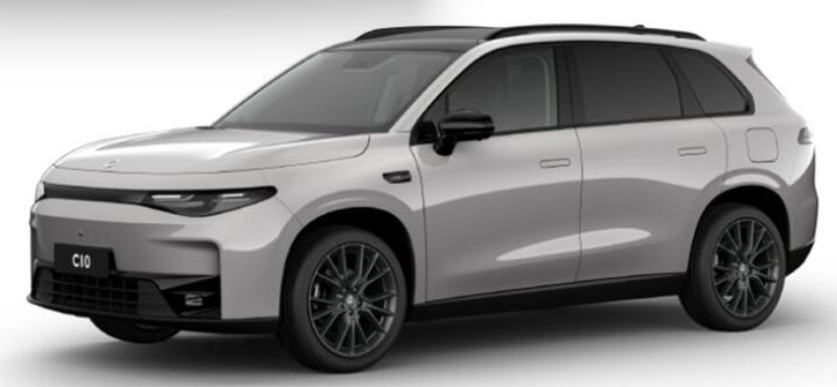
The Leapmotor C10 insurance group is one of those details that can quietly change the whole ownership calculation. On paper, the C10 looks like a compelling electric family SUV: generous equipment, plenty of cabin space, competitive pricing and technology stacked almost to the roof. Then we reach the insurance section and discover something slightly less exciting.
In the UK, the Leapmotor C10 generally sits around insurance group 41 out of 50. Auto Express currently lists group 41 for both the electric C10 and the range-extender version, while RAC places the battery-electric model in group 40 and the REEV in group 41. Either way, we are firmly toward the expensive end of Britain's 1-to-50 insurance scale.
Does that automatically make the C10 painfully expensive to insure? Not necessarily.
Insurance groups are important, but they are only one ingredient in a much larger recipe. Where we live, our age, occupation, annual mileage, driving record, parking arrangements and even when we request a quote can dramatically affect the final premium.
So let's unpack what the Leapmotor C10's insurance rating actually means, why it appears surprisingly high and whether insurance costs should make us reconsider buying one.
Content in this publication
- What Is the Leapmotor C10 Insurance Group?
- Why Is the Leapmotor C10 Insurance Group So High?
- How Does the Leapmotor C10 Compare With Rival Insurance Groups?
- How Much Does Leapmotor C10 Insurance Cost?
- Can Group 41 Still Produce Affordable Insurance?
- How UK Insurance Groups Actually Work
- Will the Leapmotor C10 Insurance Group Change?
- Does the C10's Stellantis Connection Help?
- C10 Warranty and Insurance: Don't Confuse the Two
- Is the C10 Expensive to Insure for Young Drivers?
- Can We Reduce Leapmotor C10 Insurance Costs?
- Should We Get a Quote Before Ordering a Leapmotor C10?
- What Else Should We Budget for Alongside Insurance?
- Leapmotor C10 Insurance Group and Overall Value
- Who Should Be Most Concerned About Group 41?
- Is the Leapmotor C10 Insurance Group a Deal-Breaker?
- Conclusion: Is Leapmotor C10 Insurance Expensive?
- FAQs About the Leapmotor C10 Insurance Group
What Is the Leapmotor C10 Insurance Group?
For UK buyers, the safest general answer is that the Leapmotor C10 falls into approximately insurance group 41 of 50.
Auto Express lists the 69.9kWh C10 EV in group 41 and states that the REEV also sits in group 41. The Car Expert similarly gives the C10 an average insurance-group rating of 41. GreenCarGuide also records the 2025 C10 in insurance group 41.
There is a small wrinkle, however. RAC currently places the fully electric version in group 40 and the range-extender C10 in group 41.
That discrepancy is a useful reminder that insurance information can change as vehicles, versions and rating databases are updated. Before buying, we should therefore check the exact registration and derivative with insurers rather than treating one generic group number as permanent.
Leapmotor C10 EV Insurance Group
The pure-electric C10 uses a 69.9kWh battery in its current UK specification and produces roughly 218hp. Auto Express lists this version in group 41, while RAC reports group 40.
Whichever database we use, the conclusion barely changes: this isn't a low-insurance-group SUV.
For context, insurance groups run from 1 to 50, with vehicles toward the top generally carrying greater insurance risk or repair expense.
Leapmotor C10 REEV Insurance Group
The range-extender version is currently associated with insurance group 41. RAC and Auto Express both place the REEV at this level.
The REEV combines electric propulsion with a petrol engine used to extend driving capability, adding mechanical complexity compared with a conventional battery-only EV.
That does not mean complexity alone caused the rating, but insurers assess a broad mix of repair costs, performance, security, replacement parts and accident-related factors.
Is Group 41 High?
Yes. Group 41 is unquestionably toward the upper end of the UK insurance scale.
Think of insurance groups like floors in a 50-storey building. The C10 is not sitting somewhere comfortably around the lobby. We're already looking out of a window near the top.
That doesn't automatically translate into a massive premium, but it does suggest insurers consider the C10 relatively costly or complex from a risk perspective compared with many mainstream family SUVs.
Why Is the Leapmotor C10 Insurance Group So High?
This is probably the more interesting question.
The C10 has neither supercar acceleration nor an exotic six-figure price tag. So why should a relatively affordable family SUV find itself around insurance group 41?
There is no single publicly stated explanation tying the rating to one specific factor. Instead, several characteristics can influence how vehicles like the C10 are viewed by insurers and rating organisations.
1. Leapmotor Is Still a Relatively New UK Brand
Leapmotor officially launched its UK sales operation in March 2025, initially selling the T03 and C10. The UK operation is backed through the Leapmotor International venture with Stellantis and uses an expanding Stellantis retail and aftersales network.
That backing matters, but insurers naturally have less historical UK claims information for a recently introduced model than for something that has spent 10 or 15 years on British roads.
A Toyota RAV4, Nissan Qashqai or Skoda Kodiaq carries years of repair and accident data behind it.
The C10 entered the room much more recently.
Uncertainty can matter when insurers assess risk.
2. Electric Cars Can Be Expensive to Repair
Modern EVs package large batteries, sensors, cameras, high-voltage equipment and sophisticated electronics into their bodies.
A seemingly modest accident can therefore involve much more than replacing a bumper and applying fresh paint.
Repairers might need to inspect battery structures, recalibrate driver-assistance systems or replace electronic modules after a collision.
None of this means the C10 is especially fragile. Rather, it illustrates why an inexpensive purchase price doesn't always equal inexpensive insurance.
3. The C10 Is a Large, Heavy SUV
The C10 is not a tiny urban EV.
GreenCarGuide lists the 2025 model at about 1,980kg, meaning we're dealing with a vehicle weighing close to two tonnes.
Weight itself doesn't dictate an insurance group, but heavier, technologically complex vehicles can create substantial repair costs after serious accidents.
They also contain more expensive structural and electrical components than lightweight conventional hatchbacks.
4. Performance Is Strong Enough to Matter
The electric C10 produces approximately 218hp and can accelerate from 0-62mph in around 7.5 seconds according to published UK specifications.
Seven-and-a-half seconds doesn't turn it into a Porsche Taycan, of course.
Still, this is considerably quicker than many traditional family cars from previous generations. EV torque arrives rapidly, so even fairly ordinary-looking electric SUVs can deliver performance that would once have belonged to warm hatchbacks.
5. Replacement Parts and Repair Networks Matter
A vehicle's insurance cost isn't simply about how likely we are to crash it. Insurers also care about what happens after the crash.
How quickly can replacement panels arrive?
How expensive are headlights?
Can damaged sensors be calibrated easily?
How many approved repairers understand the vehicle?
Leapmotor benefits from Stellantis infrastructure in Britain. At its UK launch, Leapmotor highlighted access to an established Stellantis retailer, logistics and aftersales network, which should help support owners as the brand expands.
Even so, the C10 remains much newer to British roads than established rivals.
How Does the Leapmotor C10 Compare With Rival Insurance Groups?
This is where group 41 becomes particularly noticeable.
Auto Express notes that the Skoda Enyaq sits roughly between groups 27 and 37, depending on specification, while the Renault Scenic E-Tech occupies approximately groups 28 to 32. Against that backdrop, the C10's rating around 41 looks relatively steep.
RAC reaches a similar conclusion, describing the C10's insurance groups as higher than average for a family SUV.
That doesn't automatically make one rival cheaper to own overall. Purchase discounts, depreciation, finance, electricity consumption, servicing and taxation all matter.
But anyone comparing the C10 with an Enyaq or Scenic should absolutely obtain insurance quotes before making the final decision.
Leapmotor C10 vs Skoda Enyaq Insurance
The Skoda Enyaq has been sold in Britain for considerably longer and generally occupies lower insurance groups.
Depending on the version, Auto Express cites a range from approximately 27 to 37, compared with around 41 for the Leapmotor C10.
That's a meaningful gap.
However, insurance premiums don't increase in a perfectly linear fashion. Group 41 won't automatically cost, say, 25% more than group 31.
Real premiums depend heavily on the driver.
Leapmotor C10 vs Renault Scenic E-Tech Insurance
The Renault Scenic E-Tech is another useful benchmark because it offers a similar electric-family-SUV proposition.
Auto Express reports insurance groups around 28 to 32 for the Scenic, which again puts it noticeably below the C10.
For buyers prioritising low running costs, this gap deserves attention.
You may be interested in reading Leapmotor C10 Reliability: Is It a Dependable SUV?
Does a Higher Insurance Group Mean the C10 Is a Bad Buy?
No.
That would be like rejecting a house because the electricity bill is slightly higher without considering its purchase price, location or size.
Insurance is just one line on the ownership spreadsheet.
The C10 counters its relatively high insurance rating with a strong standard specification, competitive pricing and a simple model structure. The UK C10 was introduced at an on-the-road price of £36,500, placing it competitively among large electric SUVs.
The correct question isn't simply, "Is group 41 high?"
It is:
Does the complete C10 ownership package still make financial sense after we include our personal insurance quote?
That's much more useful.
How Much Does Leapmotor C10 Insurance Cost?
There isn't a meaningful universal answer.
One driver could receive a quote of several hundred pounds while another receives one well above £1,000 for exactly the same car.
That's because insurers are effectively pricing the combination of car + driver + location + usage, not merely the car.
Factors that can affect a C10 premium include:
- Driver age and driving experience
- Number of years of no-claims discount
- Postcode and local theft or accident statistics
- Previous claims or convictions
- Annual mileage
- Occupation
- Where the C10 is parked overnight
- Voluntary excess
- Additional named drivers
- Whether the vehicle is owned, financed or leased
- Exact C10 derivative and registration
- Intended business or commuting use
- Insurance provider and current underwriting appetite
That last point is easily overlooked.
Different insurers can view the same risk remarkably differently. One might quote a perfectly sensible premium while another effectively says "not for us" by generating a price that looks as though someone added an extra zero.
Can Group 41 Still Produce Affordable Insurance?
Absolutely.
Insurance groups provide guidance, not destiny.
Real-world owner discussions already demonstrate how dramatically individual C10 premiums can vary. Some UK owners have reported fully comprehensive quotations in the low-to-mid hundreds, although such anecdotal figures should never be treated as representative because personal circumstances are enormously influential.
The important lesson isn't the specific number.
It's that group 41 doesn't automatically mean astronomical insurance.
An experienced driver living in a low-risk postcode with years of no-claims discount may still receive an attractive quote.
A younger driver in a high-risk postcode could see a dramatically different figure.
How UK Insurance Groups Actually Work
UK vehicles are commonly placed within a 1-to-50 insurance grouping framework.
Generally speaking, low-group cars tend to be cheaper and simpler to insure, while high-group cars tend to represent greater claims costs or risks.
But the system considers far more than horsepower.
Repair Costs
Imagine two cars suffer exactly the same front-corner collision.
Car A needs a bumper, headlight and paint.
Car B needs those items plus radar recalibration, camera alignment and specialist electronic checks.
Even if both vehicles originally cost similar money, Car B could generate a much larger insurance bill.
That's why sophisticated modern cars sometimes occupy surprisingly high groups.
Parts Prices
Replacement lights, cameras, body panels, wheels and other components all influence repair economics.
Manufacturers can improve the picture over time by strengthening parts distribution and reducing repair delays.
This is one reason Leapmotor's Stellantis partnership may prove useful as its UK presence matures.
Repair Time
Time matters almost as much as parts.
If a car remains in a repair centre for weeks awaiting components, insurers may also face longer courtesy-car or hire-car costs.
Multiply those expenses across thousands of claims and insurers start paying close attention.
Security
Vehicle security is another element of insurance assessment.
Immobilisers, alarm systems, key protection, theft resistance and electronic security measures can all affect how insurers view a model.
Performance
More power and acceleration can increase perceived risk, particularly when combined with higher vehicle values.
The C10 isn't extraordinarily fast by EV standards, but roughly 218hp and 0-62mph in about 7.5 seconds means it isn't exactly moving at geological speed either.
Will the Leapmotor C10 Insurance Group Change?
The published group attached to an existing version generally isn't something we should expect to move constantly.
However, future trims, powertrains or model-year versions could receive different ratings.
We can also see differences between current data providers, with group 40 appearing for the EV in RAC's information while several other sources report group 41.
More importantly, the price insurers charge for a C10 can evolve even without a change in the headline insurance group.
As more vehicles reach the road, insurers collect better claims data.
Parts availability changes.
Repair networks expand.
Theft experience develops.
Vehicle values fall.
All these ingredients can affect real-world premiums over time.
Does the C10's Stellantis Connection Help?
Potentially, yes.
Leapmotor International is a joint venture involving Stellantis, and the UK launch specifically emphasised access to Stellantis retail, aftersales and logistics infrastructure.
That's significant because Leapmotor hasn't arrived in Britain completely alone and attempted to create every support system from scratch.
Repair infrastructure matters to insurers as well as owners.
Still, insurance companies ultimately work from their own risk and claims models. Corporate backing doesn't automatically guarantee low premiums.
C10 Warranty and Insurance: Don't Confuse the Two
Warranty coverage and motor insurance solve different problems.
Leapmotor UK provides a four-year/60,000-mile vehicle warranty, while the battery receives separate cover extending to eight years or 100,000 miles on current UK models.
A warranty generally covers eligible defects or manufacturing-related failures.
You may be interested in readingLeapmotor C10 Reliability: Is It a Dependable SUV?You may be interested in reading
 BMW M2 Reliability: How Dependable Is BMW’s Small M Car?
Insurance deals with events such as accidents, theft and insured damage according to the individual policy.
A strong battery warranty therefore provides ownership reassurance but doesn't mean accident-related battery damage will automatically be inexpensive for an insurer.
Is the C10 Expensive to Insure for Young Drivers?
Potentially, yes.
Combining a high insurance group with a young or inexperienced driver can create some unfriendly quotations.
Young drivers already face elevated premiums because insurers see much greater claims risk within inexperienced age groups.
Adding a group-40-or-41 electric SUV may amplify the problem.
For younger C10 buyers, checking insurance before paying a deposit is especially important.
Never assume the premium will be acceptable because someone older on a forum insured the same vehicle cheaply.
Insurance is almost aggressively personal.
Can We Reduce Leapmotor C10 Insurance Costs?
We cannot change the vehicle's underlying insurance classification, but we can improve the way insurers view our individual risk.
Shopping around remains the obvious starting point. Don't stop at one comparison website either; some insurers price directly or appear on different platforms.
Increasing a voluntary excess can sometimes reduce the premium, although we'd never choose an excess so high that making a claim becomes financially painful.
Accurate annual mileage matters too. Someone travelling 6,000 miles shouldn't automatically enter 10,000 "just in case."
Security and overnight parking can also help where applicable, as can building a strong no-claims record.
But there is an important boundary here: everything supplied to an insurer must be accurate. Saving a few pounds through inaccurate information can cause enormous problems if we later need to claim.
Should We Get a Quote Before Ordering a Leapmotor C10?
Yes—100%.
In fact, we'd treat the insurance quote like a test drive.
Neither should be skipped.
Find the exact C10 model you're considering, enter accurate personal details into several insurance platforms and compare the results.
If the premium is reasonable, great. The group-41 headline becomes much less important.
If the premium is unexpectedly painful, we've discovered the problem before committing thousands of pounds.
That ten-minute exercise could alter the entire ownership equation.
What Else Should We Budget for Alongside Insurance?
A C10 ownership calculation shouldn't stop at the monthly finance payment.
We should also consider electricity, servicing, tyres, vehicle tax, depreciation, home-charger installation where applicable and insurance.
Electric vehicles can deliver attractive energy costs, particularly when charged cheaply at home, but insurance is one area where those savings can sometimes be partially eroded.
The goal is therefore to calculate the complete monthly ownership cost rather than celebrating one cheap ingredient while ignoring the others.
Leapmotor C10 Insurance Group and Overall Value
Here's where the story gets interesting.
A group-41 insurance rating looks disappointing beside the C10's otherwise value-focused positioning.
But value is contextual.
Suppose the C10 costs thousands less to acquire than an alternative but £200 more per year to insure. Depending on depreciation, financing and energy use, it could still be the cheaper car overall.
On the other hand, if your personal C10 premium comes out £1,000 higher every year than a comparable rival, the financial calculation could quickly swing the other way.
There is no substitute for using real quotes.
Who Should Be Most Concerned About Group 41?
The rating matters most to buyers whose personal circumstances already push insurance costs upward.
Young drivers, recently qualified motorists, people with recent claims and those living in higher-risk insurance areas should investigate the C10 carefully before ordering.
Experienced drivers with substantial no-claims discounts may find the difference far less dramatic.
This is why simply declaring that "the Leapmotor C10 is expensive to insure" is too simplistic.
The vehicle has a relatively high insurance group.
Your actual insurance premium is another question entirely.
Is the Leapmotor C10 Insurance Group a Deal-Breaker?
For most buyers, we wouldn't treat it as an automatic deal-breaker.
We would treat it as a reason to obtain quotes early.
The C10 still brings considerable appeal as a spacious, well-equipped electric SUV, and its growing UK presence benefits from Stellantis-backed retail and aftersales infrastructure.
Insurance group 41 is undeniably higher than we'd ideally like to see.
But if your actual premium is competitive, worrying excessively about the group number becomes a little like refusing to board a flight because you dislike the seat number.
The real cost is what matters.
Conclusion: Is Leapmotor C10 Insurance Expensive?
The Leapmotor C10 insurance group is around 40-41 out of 50 in the UK, with multiple current sources placing the model at group 41. That makes it relatively expensive on paper compared with several established family EVs.
Yet the insurance group shouldn't be confused with an actual annual premium.
Driver profile, postcode, mileage, claims history, occupation and insurer can completely reshape the final figure.
Our approach would therefore be straightforward: price the C10, arrange a test drive, obtain several insurance quotes using the exact registration or derivative, and calculate the total cost of ownership.
If those quotes come back sensibly, insurance group 41 shouldn't scare us away from what remains an interesting value-focused electric SUV.
If they're eye-wateringly expensive, no amount of standard equipment can make that bill disappear.
Sometimes the smartest car-buying decision isn't hiding beneath the bonnet or inside the infotainment screen.
It's sitting quietly inside the insurance quotation.
FAQs About the Leapmotor C10 Insurance Group
1. What insurance group is the Leapmotor C10 in?
The Leapmotor C10 is generally listed in insurance group 41 out of 50 in the UK. Auto Express and The Car Expert currently report group 41, although RAC lists the battery-electric C10 in group 40 and the REEV in group 41.
2. Is insurance group 41 expensive?
Group 41 is relatively high on Britain's 1-to-50 insurance scale, so the C10 may cost more to insure than vehicles occupying groups in the 20s or low 30s. However, actual premiums depend heavily on the individual driver.
3. Why is the Leapmotor C10 insurance group high?
There isn't one officially stated reason. Potential considerations include repair complexity, replacement-part costs, EV battery systems, vehicle performance and the relatively limited UK claims history of a recently introduced brand and model.
4. Is the Leapmotor C10 more expensive to insure than a Skoda Enyaq?
On insurance-group classification alone, generally yes. Auto Express lists the C10 around group 41 while quoting approximately groups 27-37 for the Skoda Enyaq, depending on version. Personal premiums can nevertheless produce different results.
5. Should I check Leapmotor C10 insurance before buying one?
Definitely. Obtain several quotes using the exact C10 derivative or registration before placing an order. Insurance-group ratings provide a useful indication, but only a personalised quote reveals what the vehicle will actually cost you to insure.
You may be interested in readingLeapmotor C10 Reliability: Is It a Dependable SUV?You may be interested in reading
BMW M2 Reliability: How Dependable Is BMW’s Small M Car?You may be interested in reading
 Subaru XV Reliability: How Dependable Is This Compact SUV?
If you want to know other articles similar to Leapmotor C10 Insurance Group: Costs, Ratings and What UK Drivers Should Know you can visit the category Blog.
Volvo S90 Reliability: Problems, Costs & Best Years
Is Haval Jolion a Good Car? Honest Review, Reliability, Pros and Cons
How to Start Haval Jolion With Spare Key: Complete Guide
How to Calculate Per Diem on an Auto Loan

How to Calculate the Residual Value of a Car

Is the Honda Passport Selling Well? Sales Numbers Tell the Story
Leave a Reply
More content of your interest