

BMW M2 Reliability: How Dependable Is BMW’s Small M Car?

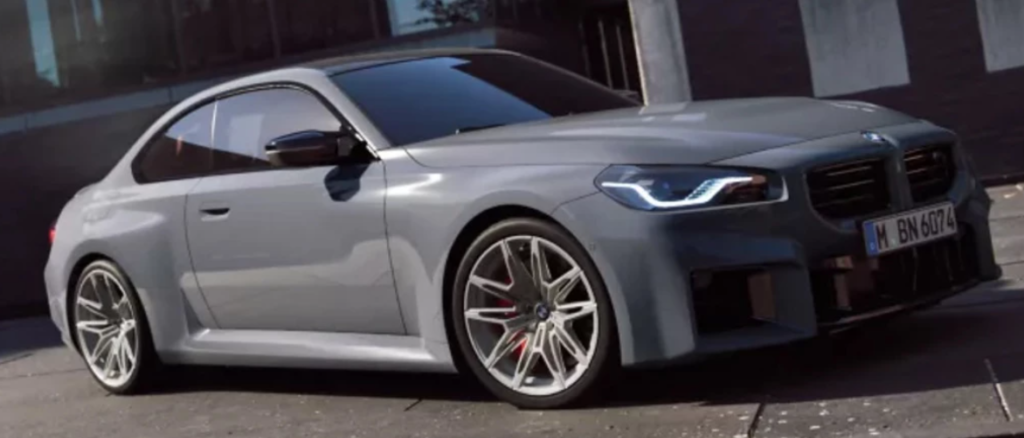
The BMW M2 has always felt a little rebellious. While modern performance cars keep getting larger, softer, and more complicated, the M2 sticks to a simpler recipe: compact dimensions, a powerful straight-six engine, rear-wheel-drive character, and enough attitude to make an empty back road feel like our own private racetrack.
But there is one question that matters considerably more once the excitement of the test drive wears off: how good is BMW M2 reliability?
A used M2 can look surprisingly affordable compared with a new sports car, yet the purchase price is only the opening chapter. An inexpensive performance BMW can become an expensive one remarkably quickly if its previous owner treated maintenance as an optional extra.
Fortunately, the picture isn't nearly as frightening as internet horror stories sometimes suggest.
Neither the original F87 M2 nor the newer G87 deserves to be labelled inherently unreliable. Their turbocharged six-cylinder engines are fundamentally strong, and well-maintained examples can handle substantial mileage. What separates a satisfying M2 from a money pit is usually maintenance history, modifications, previous use, and how quickly small problems were addressed.
Let's dig into what actually matters.
Content in this publication
- BMW M2 Reliability at a Glance
- BMW M2 Generations and Their Reliability
- BMW M2 N55 Reliability
- Common BMW M2 Problems
- BMW M2 S55 Reliability
- BMW M2 S58 Reliability
- BMW M2 Transmission Reliability
- Does the BMW M2 Have Cooling Problems?
- BMW M2 Oil Leaks and Fluid Leaks
- BMW M2 Electrical Reliability
- BMW M2 Reliability After 50,000 Miles
- BMW M2 Reliability After 100,000 Miles
- Are Modified BMW M2s Reliable?
- Does Track Driving Hurt BMW M2 Reliability?
- BMW M2 Maintenance and Reliability
- BMW M2 Reliability Versus BMW M3 and M4
- BMW M2 Reliability Versus Porsche Cayman
- Which BMW M2 Is Most Reliable?
- How to Buy a Reliable Used BMW M2
- Signs of a BMW M2 You Should Avoid
- BMW M2 Running Costs
- Is BMW M2 Reliability Good Enough for Daily Driving?
- Can the BMW M2 Be Reliable Long Term?
- BMW M2 Reliability Verdict
- Frequently Asked Questions About BMW M2 Reliability
BMW M2 Reliability at a Glance
If we had to summarize BMW M2 reliability in one sentence, it would be this:
The M2 is generally mechanically robust for a high-performance car, but neglect, aggressive modifications, and deferred maintenance can become expensive.
That's an important distinction.
We're not evaluating an economy hatchback designed to spend its life commuting gently at 2,000 rpm. The M2 uses high-output turbocharged engines, sophisticated cooling systems, performance brakes, wide tires, electronically controlled components, and suspension parts designed for serious driving.
That additional performance naturally creates additional complexity.
Still, the M2's basic mechanical foundations are encouraging. The F87 uses either BMW's N55 or S55 inline-six depending on the version, while today's G87 employs the newer S58 engine.
All three engines have established themselves across numerous BMW applications.
Is the BMW M2 a Reliable Car?
For the right owner, yes.
We would describe the M2 as dependable rather than cheap to own.
Those two ideas shouldn't be confused.
A properly serviced M2 may run for years without a catastrophic mechanical failure, but normal maintenance items such as tires, brakes, fluids, ignition components, suspension pieces, and cooling-system repairs cost considerably more than equivalents on an ordinary compact car.
That's the price of admission.
Think of the M2 like an athletic dog. Feed it properly, exercise it intelligently, and look after it, and it can remain energetic for years. Ignore its needs and suddenly everything gets expensive.
BMW M2 Generations and Their Reliability
Before comparing reliability, we need to separate the different versions.
The M2 badge may appear the same on the trunk, but mechanically the cars have changed considerably over time.
| Version | Generation | Engine | General Reliability Outlook |
|---|---|---|---|
| Original M2 | F87 | N55 turbo inline-six | Very good when maintained |
| M2 Competition | F87 | S55 twin-turbo inline-six | Strong, more complex |
| M2 CS | F87 | S55 twin-turbo inline-six | Strong but expensive to repair |
| Current M2 | G87 | S58 twin-turbo inline-six | Promising, but less long-term history |
F87 BMW M2 Reliability
The first-generation M2 arrived with exactly the sort of personality enthusiasts wanted.
It was fast without feeling clinically perfect, compact without feeling cramped, and powerful enough to slide its rear tires around without requiring supercar speeds.
From a reliability perspective, the F87 has another major advantage today: time.
Years of real-world ownership mean we now have plenty of evidence about what commonly wears, what rarely fails, and what buyers should inspect.
For many enthusiasts, that makes the F87 a surprisingly sensible performance-car purchase.
G87 BMW M2 Reliability
The G87 M2 represents a much newer engineering generation.
Its S58 engine shares architecture with other modern BMW M vehicles and is capable of enormous power. BMW also improved cooling, electronics, chassis technology, and drivetrain management compared with older generations.
The trade-off is complexity.
There are more electronic systems and fewer years of high-mileage ownership data to study.
So while early indications surrounding the S58 are encouraging, declaring a G87 completely bulletproof would be premature.
Long-term reliability isn't measured at 20,000 miles. It's measured when cars start crossing 80,000, 100,000, and 150,000 miles.
BMW M2 N55 Reliability
The original M2's N55 engine is arguably one of the biggest reasons used F87 models remain attractive.
BMW produced numerous versions of the N55 across many vehicles, allowing its strengths and weaknesses to become well understood.
The M2 received a performance-oriented version rather than simply borrowing an ordinary BMW engine untouched.
How Durable Is the N55 Engine?
The fundamental engine is strong.
When properly serviced, an N55 can reach substantial mileage without needing an engine rebuild. The internal components generally aren't the first place we would look when evaluating an older M2.
Instead, concern usually shifts toward components surrounding the engine.
This is common with modern turbocharged BMWs. The core engine may remain healthy while plastic fittings, hoses, pumps, gaskets, sensors, ignition parts, or intake components age around it.
The N55's Biggest Advantage
Its greatest advantage is familiarity.
BMW specialists have been working on N55 engines for years. Replacement parts are widely available, known weaknesses are documented, and diagnosing common problems is generally easier than dealing with an obscure performance engine.
That matters tremendously once a car is outside warranty.
Common BMW M2 Problems
No car is flawless, and the M2 certainly isn't.
Yet we should distinguish between genuine recurring weaknesses and isolated failures amplified by online discussion.
Owner communities have reported issues including charge-pipe failures on N55-powered cars, occasional fuel-delivery concerns under hard use, amplifier problems on some early vehicles, and moisture appearing in certain rear lights. These reports are useful indicators, although forum anecdotes should not be interpreted as failure-rate statistics.
Here are the principal areas we would inspect when buying or maintaining an M2:
- Charge pipe and intake plumbing on N55 cars
- Oil leaks around aging seals and gaskets
- Cooling-system condition
- Spark plugs and ignition coils
- Fuel-system behavior under load
- Suspension bushings and mounts
- Brake wear
- Differential and transmission servicing
- Electronic accessories and sensors
- Evidence of aggressive tuning or track use
None automatically makes an M2 unreliable. They simply deserve attention.
BMW M2 Charge Pipe Problems
Among original F87 M2 discussions, the charge pipe is one of the better-known weaknesses.
The factory plastic component can eventually crack or separate, particularly as age, heat cycles, and boost pressure take their toll.
If that happens, the car may suddenly lose boost and display drivetrain warnings.
The good news?
This isn't normally an engine-destroying event.
Many owners replace the factory component with a stronger aftermarket metal charge pipe, particularly on tuned cars.
It is exactly the sort of problem we prefer to see on a performance car: relatively predictable, easy to diagnose, and reasonably straightforward to prevent.
BMW M2 S55 Reliability
When BMW introduced the M2 Competition, the car received the S55 engine associated with the contemporary M3 and M4.
That transformed its personality.
Instead of the N55's relatively simple single-turbo configuration, the S55 uses a twin-turbo arrangement and was engineered specifically for serious M-car duty.
It is enormously capable.
Is the S55 Reliable?
In stock or mildly modified form, the S55 has proven to be a durable performance engine.
It handles heat and repeated hard use better than many casual observers expect.
Owners who regularly track these cars have discussed intake-temperature behavior and timing reduction under extreme heat, but that is different from saying the engine itself is chronically unreliable.
Where things get complicated is modification.
The S55 responds extremely well to tuning. That makes it tempting to add considerably more power.
Once boost levels rise and owners start chasing dyno numbers, however, we're no longer evaluating the reliability of the factory car.
We're evaluating a modified performance engine.
Those are two different conversations.
What About the S55 Crank Hub?
Ah, yes. The phrase that has launched approximately one million BMW forum arguments.
The S55 crank-hub issue has generated disproportionate anxiety because the potential consequences can be severe.
Failures have occurred, so dismissing the subject entirely would be foolish.
At the same time, assuming that every S55 engine is destined to suffer crank-hub failure is equally misleading.
Even enthusiast communities remain divided about how widespread the issue is, particularly on stock vehicles. Some owners view it as a meaningful design vulnerability, while others consider the risk heavily amplified by tuned cars and internet attention.
For us, the sensible approach is simple.
A stock, documented, sympathetically maintained M2 Competition is much more reassuring than a heavily tuned example with unknown software, repeated launches, and no supporting maintenance records.
BMW M2 S58 Reliability
The G87 M2's S58 engine is a different beast again.
This twin-turbocharged inline-six comes from BMW's newer generation of M engines and has demonstrated extraordinary tuning capability.
Even at factory output, the engine feels understressed relative to what the architecture can produce.
That is encouraging for longevity.
Why the S58 Looks Promising
BMW engineered the S58 for modern high-performance applications where cooling, power delivery, emissions requirements, and durability all matter.
Its design benefits from lessons learned through earlier turbocharged M engines.
You may be interested in reading Subaru XV Reliability: How Dependable Is This Compact SUV?
However, we should resist calling any relatively young drivetrain immortal.
Age introduces problems that mileage alone doesn't reveal. Seals harden. Plastic heat-cycles. Electronic modules age. Cooling components weaken. Sensors become temperamental.
The real G87 reliability story will become clearer as the earliest examples grow older.
BMW M2 Transmission Reliability
Engine reliability gets all the attention, but the transmission matters just as much.
Depending on generation and specification, M2 buyers encounter manual gearboxes, BMW's dual-clutch transmission in older cars, and an eight-speed automatic in newer models.
BMW M2 Manual Transmission Reliability
The manual is mechanically appealing and generally durable.
Its biggest variable is the owner.
A well-driven manual may remain healthy for a very long time. One subjected to countless hard launches, poor shifting technique, clutch abuse, or substantially increased torque might eventually need expensive clutch or drivetrain work.
During a test drive, we want clean gear engagement, predictable clutch behavior, and no unusual vibration or noise.
BMW M2 DCT Reliability
The F87's dual-clutch gearbox provides brutally quick shifts and suits the car beautifully.
It is also more complicated than a traditional manual.
That doesn't mean unreliable. It means maintenance history matters more.
Old fluid plus aggressive driving plus additional engine torque isn't exactly a recipe we'd frame and hang on the garage wall.
G87 Eight-Speed Automatic Reliability
The G87 moved to a conventional torque-converter automatic.
Some purists miss the DCT's aggressive character, but from an ownership perspective, the eight-speed configuration is appealing.
BMW has extensive experience using modern automatic transmissions, and the setup provides smooth everyday driving while still handling the S58's torque.
Does the BMW M2 Have Cooling Problems?
Heat is the silent enemy of performance cars.
An M2 driven gently on the highway and an M2 spending twenty-minute sessions attacking a racetrack are technically the same vehicle, yet they live completely different mechanical lives.
The original N55 M2 can experience rising intake temperatures when subjected to demanding track use, something owners have discussed extensively.
For street use, that shouldn't automatically worry us.
For track use, cooling-system condition becomes critical.
Why Cooling Maintenance Matters
Old coolant, damaged radiators, tired pumps, leaking hoses, blocked heat exchangers, or neglected intercoolers can quickly turn a manageable situation into an expensive one.
If we're buying a higher-mileage M2, inspecting the entire cooling system makes considerably more sense than simply checking whether the dashboard currently shows a warning light.
Preventive maintenance is cheaper than cooked machinery.
Every time.
BMW M2 Oil Leaks and Fluid Leaks
A small oil seep doesn't necessarily mean disaster.
BMW engines have historically developed leaks around various seals and gaskets as mileage accumulates.
What matters is severity.
A light film around an aging gasket and oil dripping onto the floor represent very different stages of deterioration.
Leaks near hot engine components should be addressed particularly quickly.
We would also inspect underneath the car for transmission, differential, and cooling-system leaks.
A dry garage floor doesn't prove a car is healthy, but a wet one is certainly trying to tell us something.
BMW M2 Electrical Reliability
Modern BMWs contain a small city of electronic modules quietly communicating with one another.
Most work flawlessly.
Until one doesn't.
Electrical complaints can include sensors, infotainment glitches, battery-related warnings, lighting issues, or accessory failures.
Some early F87 owners reported problems involving the audio amplifier, while others have encountered condensation or moisture in rear lighting assemblies.
These aren't generally the kind of failures that destroy an engine.
They can, however, become annoying and expensive if diagnosis requires hours of specialist labor.
Don't Underestimate the Battery
A weak battery can produce a surprising collection of seemingly unrelated warnings in modern BMWs.
Before assuming multiple electronic systems have simultaneously failed, checking battery condition and charging voltage is often sensible.
Sometimes the monster under the bed is just a tired battery wearing a dramatic costume.
BMW M2 Reliability After 50,000 Miles
Around 50,000 miles, an M2 shouldn't be considered old.
But it is reaching the stage where maintenance history begins speaking louder than the odometer.
At this mileage, we'd rather own a meticulously maintained 60,000-mile M2 than a neglected 30,000-mile example.
Look beyond mileage.
Check servicing, tires, brakes, suspension condition, fluids, leaks, modifications, accident repairs, and ownership patterns.
A garage-kept weekend car and a repeatedly launched, tuned, track-driven M2 can display the same mileage while having lived entirely different lives.
BMW M2 Reliability After 100,000 Miles
Can an M2 reach 100,000 miles?
Absolutely.
The more useful question is whether it can do so without requiring maintenance.
Of course not.
No high-performance car should be expected to.
At six-figure mileage, age-related items become increasingly relevant: suspension bushings, engine mounts, cooling components, gaskets, ignition parts, wheel bearings, drivetrain seals, and electronic hardware.
Can a BMW M2 Last 150,000 Miles?
With careful maintenance, there is no fundamental reason a healthy M2 cannot reach 150,000 miles or more.
But longevity becomes a financial question as much as a mechanical one.
Eventually the owner must decide whether repairing an aging performance car still makes economic sense.
Enthusiasts often say, "The engine will last forever."
Maybe.
Unfortunately, the engine is surrounded by an entire car.
Are Modified BMW M2s Reliable?
This may be the single most important question in the used-M2 market.
The M2 practically begs to be modified.
Software tunes can unlock additional power surprisingly easily, and owners often upgrade downpipes, intercoolers, suspension, exhausts, intake systems, wheels, brakes, and drivetrain components.
Some modifications are excellent.
Others aren't.
A Modified M2 Isn't Automatically Bad
A carefully modified car owned by an obsessive enthusiast may actually have received better maintenance than a completely stock car.
Documentation matters.
If the seller can explain exactly what was changed, who performed the work, what software is installed, what supporting components were upgraded, and how frequently fluids were changed, we're dealing with useful information.
If the answer is essentially, "My friend flashed something onto it," our enthusiasm should cool rapidly.
The Problem With Big Power
Turbocharged BMW engines can produce spectacular power.
But increased boost means increased cylinder pressure, additional heat, greater demand on the fuel system, more drivetrain stress, and less margin for error.
Factory reliability estimates no longer mean much once the factory calibration disappears.
Does Track Driving Hurt BMW M2 Reliability?
Track use isn't automatically bad.
The M2 was built to enjoy hard driving.
But repeated circuit use increases wear dramatically.
Brakes work harder. Tires experience enormous loads. Engine oil reaches higher temperatures. Suspension components take more punishment. Differentials and transmissions work relentlessly.
Ironically, we might prefer a properly serviced track car over a neglected street car.
The crucial word is properly.
Track use demands shorter maintenance intervals.
You may be interested in readingSubaru XV Reliability: How Dependable Is This Compact SUV?You may be interested in reading
 Is Mazda CX-9 a Good Car? A Complete Owner-Focused Guide
BMW M2 Maintenance and Reliability
Reliability isn't something an M2 simply possesses.
We help create it.
Preventive maintenance transforms ownership.
Waiting for warning lights to determine the maintenance schedule is like waiting for smoke before checking whether dinner is burning.
We want to stay ahead of the car.
Oil Changes Matter More Than Marketing
For enthusiasts intending to keep an M2 long-term, conservative oil-change intervals make sense, particularly when the vehicle sees repeated short journeys or hard driving.
The additional cost of regular high-quality oil is tiny compared with major engine work.
Likewise, gearbox, differential, brake, and coolant servicing shouldn't disappear from our radar simply because the car currently feels perfect.
Perfect is precisely when maintenance is easiest.
BMW M2 Reliability Versus BMW M3 and M4
Mechanically, the M2 Competition shares significant technology with contemporary M cars, particularly through its S55 engine.
That means its reliability profile isn't completely isolated.
The original N55 M2 arguably has an advantage for owners prioritizing simplicity because its engine is less complicated than the twin-turbo S55.
The M2 Competition offers stronger cooling capability and greater performance potential but introduces additional hardware.
The G87 follows the same pattern: spectacular capability paired with increasingly sophisticated technology.
If simplicity is our priority, the original N55 F87 remains extremely appealing.
BMW M2 Reliability Versus Porsche Cayman
Comparisons with the Porsche Cayman are inevitable.
Both cars target enthusiasts, but reliability can't be distilled into a single winner.
Routine BMW repairs may benefit from a broader independent-specialist network and widespread parts familiarity. Porsche ownership may involve different servicing costs depending on model and region.
Condition still matters more than badge mythology.
A carefully maintained Cayman can be a fantastic ownership proposition.
So can an M2.
A neglected example of either can empty a wallet with impressive enthusiasm.
Which BMW M2 Is Most Reliable?
If our priority were long-term simplicity, the original N55-powered F87 M2 would be extremely tempting.
Its engine is mature, well understood, widely supported, and comparatively straightforward.
If we wanted additional performance while accepting more complexity, the M2 Competition's S55 remains attractive.
And if we're buying newer, the G87's S58 looks exceptionally promising, although it hasn't yet accumulated the same decades-worth of aging data available for older BMW engine families.
Best BMW M2 for a Used Buyer
A stock or lightly modified F87 with comprehensive service records is probably the sweet spot.
We would prioritize condition over specification.
Fancy wheels can't repair neglect.
Carbon fiber doesn't replace maintenance history.
And an aggressive exhaust note cannot drown out a bad pre-purchase inspection forever.
How to Buy a Reliable Used BMW M2
Before buying, we want documentation.
Service invoices can reveal more about the car than a polished paint finish ever will.
A professional pre-purchase inspection by an independent BMW specialist is also worth the expense.
Ask about previous tuning, accidents, track use, oil consumption, warning lights, cooling repairs, drivetrain maintenance, and modifications.
Check for outstanding safety recalls using the vehicle's VIN rather than assuming every campaign has already been completed. NHTSA specifically recommends VIN-based recall checking because model-level searches cannot determine whether a particular vehicle still has an unrepaired recall.
Signs of a BMW M2 You Should Avoid
Walk away when the story doesn't add up.
A suspiciously cheap M2 with no service history, mismatched budget tires, multiple unexplained modifications, warning lights, poor paint repairs, and an owner who somehow "doesn't know much about cars" despite installing a massive turbo deserves skepticism.
The bargain purchase price could merely be unpaid repair bills wearing a shiny coat of paint.
BMW M2 Running Costs
Reliability and ownership cost aren't identical.
Even a completely reliable M2 consumes expensive wear items.
Performance tires aren't cheap.
Performance brakes aren't cheap.
Insurance may not be cheap.
Fuel certainly doesn't behave like an economy car's.
Yet predictable maintenance is much easier to tolerate than unpredictable failure.
A well-kept M2 tends to reward an owner who budgets realistically.
Is BMW M2 Reliability Good Enough for Daily Driving?
Definitely.
In fact, daily driving can suit the M2 remarkably well.
The cabin is comfortable enough, the engine behaves smoothly at normal speeds, and the car doesn't require exotic-car rituals every morning.
The biggest compromises are more practical than mechanical: firm suspension, tire costs, fuel consumption, limited rear-seat space, and the constant temptation to take the long route home.
If we maintain it properly, there is little reason an M2 cannot serve as a daily driver.
Can the BMW M2 Be Reliable Long Term?
Yes, but long-term ownership requires the right mindset.
Don't buy an aging M2 expecting Toyota Corolla maintenance costs.
Buy it knowing that performance components cost performance-car money.
The upside is that the major engines used throughout the M2 family are fundamentally capable units.
That gives us a strong starting point.
Then maintenance takes over.
The Reliability Formula Is Surprisingly Simple
A stock car with sensible ownership, frequent servicing, proper warm-up habits, quality fluids, timely repairs, and good records represents a dramatically safer proposition than the opposite.
There is no magical model year that makes neglect harmless.
Maintenance beats mythology.
Every time.
BMW M2 Reliability Verdict
So, is the BMW M2 reliable?
Overall, yes—especially by high-performance-car standards.
The original N55-powered F87 may be the most attractive choice for buyers seeking a balance of performance, simplicity, and proven long-term dependability.
The S55-powered M2 Competition raises performance significantly and remains mechanically strong, although its additional complexity and popularity among tuners mean we need to evaluate used examples carefully.
The G87's S58 appears to continue the trend of robust BMW turbocharged six-cylinder engines, but younger cars naturally have less long-term aging data.
More than anything, the M2 reminds us that reliability isn't simply a number printed beside a model name.
History matters.
Owners matter.
Maintenance matters.
Buy the cheapest M2 we can find and we may spend years chasing repairs.
Buy the best-maintained M2 we can afford and the experience can be entirely different.
For enthusiasts willing to maintain one properly, that's great news, because few cars blend compact dimensions, rear-wheel-drive character, six-cylinder power, and everyday usability quite like an M2.
And when that straight-six wakes up on an empty road, we probably won't be thinking about reliability anyway.
We'll just be wondering where the next corner went.
Frequently Asked Questions About BMW M2 Reliability
1. Is the BMW M2 expensive to maintain?
The M2 is more expensive to maintain than an ordinary BMW because tires, brakes, fluids, suspension components, and performance-related parts cost more. However, routine preventive maintenance is generally much cheaper than repairing problems caused by neglect. Independent BMW specialists can also help reduce ownership costs once the factory warranty ends.
2. How many miles can a BMW M2 last?
A properly maintained BMW M2 can potentially exceed 100,000 miles comfortably, and well-maintained examples may reach 150,000 miles or beyond. Mileage alone shouldn't determine whether we buy one. Maintenance records, previous modifications, driving history, and overall condition are considerably more important.
3. Is the N55 or S55 BMW M2 more reliable?
Both engines can be dependable, but the N55-powered original M2 has a simplicity advantage. The S55 offers greater performance capability and improved hardware for demanding use but uses a more complex twin-turbo configuration. For buyers prioritizing straightforward long-term ownership, a stock N55 M2 with excellent service history is particularly attractive.
You may be interested in readingSubaru XV Reliability: How Dependable Is This Compact SUV?You may be interested in reading
Is Mazda CX-9 a Good Car? A Complete Owner-Focused GuideYou may be interested in reading
How Long Does a Mazda CX-9 Last? Mileage, Lifespan, and Reliability Explained4. What is the most common BMW M2 problem?
There isn't one universal failure affecting every M2. On N55-powered F87 cars, the factory charge pipe is among the better-known weaknesses. Owners also need to watch for aging gaskets, cooling-system components, ignition parts, electronic issues, suspension wear, and problems related to previous modifications.
5. Should I buy a high-mileage BMW M2?
A high-mileage M2 can be an excellent purchase when it has comprehensive maintenance records and passes a specialist inspection. We would rather buy a carefully serviced car with 70,000 miles than a neglected example with 35,000. Condition, servicing, previous tuning, accident history, and ownership quality should drive the decision.
If you want to know other articles similar to BMW M2 Reliability: How Dependable Is BMW’s Small M Car? you can visit the category Blog.
Volvo S90 Reliability: Problems, Costs & Best Years

Is Haval Jolion a Good Car? Honest Review, Reliability, Pros and Cons
How to Start Haval Jolion With Spare Key: Complete Guide

How to Calculate Per Diem on an Auto Loan

How to Calculate the Residual Value of a Car

Is the Honda Passport Selling Well? Sales Numbers Tell the Story
Leave a Reply
More content of your interest