

BMW M2 MPG: Real-World Fuel Economy, Range, and Running Costs

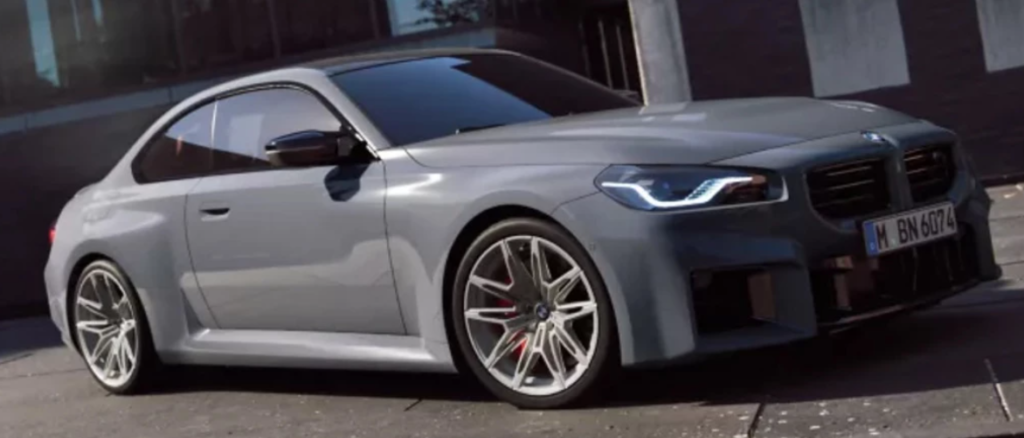
The BMW M2 MPG figure probably isn't the first specification enthusiasts look at when shopping for BMW's smallest full-fat M car. Horsepower? Absolutely. Zero-to-60 times? Of course. Manual transmission availability? Definitely.
Fuel economy tends to arrive a little later in the conversation.
Yet once we actually own an M2 and start visiting the fuel station every week, MPG becomes surprisingly relevant.
The BMW M2 combines a turbocharged six-cylinder engine, serious performance hardware, wide performance tires, and enough horsepower to turn an ordinary highway ramp into something resembling a racetrack entrance. Naturally, none of that was designed primarily with fuel conservation in mind.
Still, the M2 isn't necessarily the fuel-guzzling monster we might expect.
The current U.S.-market M2 is built around BMW's 2,993 cc turbocharged inline-six engine, and BMW lists a 13.7-gallon fuel tank. Current BMW specifications list an EPA-estimated 16 MPG city, 23 MPG highway, and 19 MPG combined for the automatic configuration shown in its technical data.
Those numbers tell only half the story.
Driving style, transmission, traffic, temperature, tire pressure, trip length, and how frequently we unleash the turbocharged engine can dramatically change the mileage we actually see.
So what kind of fuel economy should an M2 owner realistically expect?
Let's dig into it.
Content in this publication
- What Is the BMW M2 MPG?
- Why Does the BMW M2 Use So Much Fuel?
- BMW M2 City MPG
- BMW M2 Highway MPG
- BMW M2 Real-World MPG
- BMW M2 Manual MPG vs Automatic MPG
- BMW M2 Fuel Tank Capacity
- Does the BMW M2 Require Premium Gas?
- How Much Does It Cost to Fuel a BMW M2?
- BMW M2 MPG by Generation
- BMW M2 MPG vs BMW M240i
- Does Sport Mode Reduce BMW M2 MPG?
- Why Short Trips Hurt BMW M2 MPG
- How Tires Affect BMW M2 Fuel Economy
- Can We Improve BMW M2 MPG?
- What Can Cause Suddenly Poor BMW M2 MPG?
- Is BMW M2 MPG Bad for a Performance Car?
- Should BMW M2 MPG Stop Us From Buying One?
- BMW M2 MPG: The Bottom Line
- Frequently Asked Questions About BMW M2 MPG
What Is the BMW M2 MPG?
For the current BMW M2, an official combined figure around 19 MPG gives us a useful starting point.
BMW currently lists:
- 16 MPG city
- 23 MPG highway
- 19 MPG combined
- 13.7-gallon fuel capacity
BMW also makes clear that actual mileage varies according to speed, driving habits, trip length, road conditions, and other factors.
That disclaimer matters enormously on a car like the M2.
Drive gently at steady highway speeds and the fuel economy can look surprisingly reasonable.
Spend the afternoon accelerating hard through second, third, and fourth gear and the fuel gauge can fall like sand through an hourglass.
BMW M2 MPG at a Glance
| Driving situation | Typical expectation |
|---|---|
| Official city rating | Around 16 MPG |
| Official highway rating | Around 23 MPG |
| Official combined rating | Around 19 MPG |
| Gentle highway driving | Potentially low-to-mid 20s |
| Mixed everyday driving | Roughly high teens to low 20s |
| Aggressive performance driving | Potentially well below official combined MPG |
| Fuel tank capacity | 13.7 gallons |
Real-world results shouldn't be treated as guarantees. Two drivers can own essentially identical M2s and achieve dramatically different averages.
That's the fascinating—and slightly painful—thing about performance cars.
Why Does the BMW M2 Use So Much Fuel?
We shouldn't judge the M2 using the same standards we'd apply to a 230i.
The M2 belongs to BMW's genuine M division. Its job isn't merely to move us from home to the supermarket efficiently. It's engineered to deliver acceleration, throttle response, braking performance, grip, cooling capacity, and repeatable high-performance driving.
The engine alone explains plenty.
The current M2 uses a 2,993 cc six-cylinder gasoline engine producing substantial horsepower and torque. BMW's current U.S. technical specifications list 473 horsepower for the manual M2 configuration.
Making that much power requires fuel.
Lots of air enters the engine under boost, and enough gasoline must accompany it to maintain the correct air-fuel mixture.
Turbocharging Doesn't Automatically Mean Great MPG
Turbochargers are often associated with efficiency because they allow manufacturers to generate more power from smaller engines.
That's true—but only partly.
A turbocharger can improve efficiency during moderate driving. But when we bury the accelerator, the engine demands substantially more fuel.
Think of the accelerator pedal like the faucet on a garden hose.
At light throttle, we're barely opening the tap.
At full boost, we've turned it almost completely open.
And an M2 makes it extraordinarily tempting to do exactly that.
BMW M2 City MPG
City driving is where the M2 struggles most.
BMW currently gives the automatic configuration a 16 MPG city estimate.
That isn't particularly surprising.
Urban driving repeatedly forces the car to accelerate its mass from low speeds. Every red light turns kinetic energy into heat through the brakes, and then the engine must burn more fuel to rebuild that speed.
Short trips make matters worse.
When the engine is cold, efficiency typically drops. If we repeatedly drive just two or three miles at a time, the powertrain may spend much of its operating life warming up rather than cruising efficiently.
Traffic Can Push MPG Even Lower
Heavy traffic can drag fuel economy down substantially.
Imagine a commute involving:
- stop-and-go traffic,
- repeated acceleration,
- prolonged idling,
- air conditioning,
- short distances,
- steep hills.
That's almost a recipe for disappointing MPG.
An owner seeing numbers below the official combined figure in those conditions shouldn't immediately assume something is wrong with the car.
Context matters.
BMW M2 Highway MPG
The highway is where the M2 begins showing another personality.
BMW's current rating of 23 MPG highway indicates that the M2 can become relatively efficient when speed and throttle input stabilize.
Once we're cruising in a high gear, the engine no longer needs to produce anywhere near its maximum power.
That's why a 470-plus-horsepower performance coupe can still return respectable highway mileage.
Can a BMW M2 Get More Than 23 MPG?
Potentially, yes.
Official EPA figures aren't maximum possible figures. They're standardized estimates intended to help compare vehicles.
Under favorable circumstances—steady speed, mild weather, properly inflated tires, little traffic, and restrained throttle use—some drivers may see numbers above the official highway figure during individual journeys.
But there's an important distinction.
A dashboard showing 26 MPG during a relaxed highway trip doesn't mean the car averages 26 MPG overall.
Once city driving and enthusiastic acceleration enter the equation, the long-term average usually falls.
BMW M2 Real-World MPG
Real-world MPG is where things get interesting.
A sensible expectation for mixed driving is somewhere around the official combined neighborhood, perhaps roughly 17-21 MPG, depending heavily on conditions and driving style.
Some drivers will beat that.
Others won't come close.
The M2 has one unusual MPG problem that many ordinary cars don't: its engine sounds and feels better when we use more of it.
That's dangerous for fuel economy.
A commuter car encourages gentle acceleration because there's little reward for flooring it.
The M2 practically whispers, "Go on—one more pull."
Driving Style Makes an Enormous Difference
Suppose two people own identical M2s.
Driver A:
- accelerates gradually,
- cruises at moderate speeds,
- anticipates traffic,
- avoids unnecessary braking,
- uses higher gears,
- rarely explores full boost.
Driver B:
- accelerates hard,
- enjoys downshifts,
- drives in aggressive performance settings,
- frequently reaches higher RPM,
- uses the engine's boost whenever possible.
Their fuel consumption might look like it came from completely different cars.
That's how sensitive performance-car MPG can be.
BMW M2 Manual MPG vs Automatic MPG
Transmission choice creates another interesting question.
Many M2 enthusiasts choose the six-speed manual because involvement matters more than absolute efficiency.
The automatic, meanwhile, can manage gear selection more consistently and may spend more time in ratios optimized for fuel economy during relaxed driving.
But the difference isn't always dramatic enough to make transmission choice an MPG decision.
Should MPG Determine Which Transmission We Buy?
Probably not.
If we're buying an M2 because we love manual gearboxes, sacrificing that experience simply to save a modest amount of fuel defeats the purpose of the car.
Likewise, someone who prefers the automatic shouldn't feel they're settling.
BMW's modern automatic transmissions are extremely capable, fast-shifting, and well suited to both commuting and performance driving.
Choose the transmission based on how we want the M2 to feel.
Treat fuel economy as a secondary consideration.
BMW M2 Fuel Tank Capacity
Fuel economy becomes much easier to understand when combined with tank size.
BMW lists the current M2 with a 13.7-gallon fuel tank.
That's not enormous for a performance car.
The smaller tank helps control vehicle weight and packaging, but it also means enthusiastic drivers may become familiar with local premium-fuel stations remarkably quickly.
BMW M2 Driving Range
If we multiply fuel economy by the 13.7-gallon capacity, theoretical range looks something like this:
At 16 MPG:
16 × 13.7 = approximately 219 miles
At 19 MPG:
19 × 13.7 = approximately 260 miles
At 23 MPG:
23 × 13.7 = approximately 315 miles
These are theoretical figures using the entire tank.
In reality, we normally refuel before the tank becomes completely empty, so usable driving range between fuel stops will be lower.
Still, the exercise shows why highway drivers might comfortably travel much farther between refills than owners spending most of their time in urban traffic.
A high-performance turbocharged engine like the M2's is engineered around high-quality gasoline requirements specified by BMW.
Owners should follow the fuel-octane recommendation printed in the owner's manual and on the fuel-filler information.
Using the correct fuel matters because modern turbocharged engines operate under substantial cylinder pressures.
The engine management system can compensate for certain fuel-quality variations, but that doesn't mean cheaper fuel is automatically the smartest long-term strategy.
Here's where M2 fuel economy becomes more painful.
Getting 19 MPG in a car using ordinary fuel is one thing.
Getting approximately 19 MPG while regularly buying premium gasoline is another.
The difference might seem small during one fill-up, but over 10,000 or 15,000 miles per year it becomes meaningful.
How Much Does It Cost to Fuel a BMW M2?
Let's use a hypothetical example.
Suppose we drive:
12,000 miles per year
And average:
19 MPG
Annual gasoline consumption would be:
12,000 ÷ 19 = approximately 632 gallons
If premium gasoline costs $4.00 per gallon:
632 × $4.00 = approximately $2,528 per year
At $5.00 per gallon:
632 × $5.00 = approximately $3,160 per year
Of course, gasoline prices vary wildly depending on location and time.
But the formula gives us an easy way to calculate our own running costs:
Annual miles ÷ average MPG × fuel price = estimated annual fuel cost
Performance Driving Changes the Math Fast
Suppose instead we average just 15 MPG.
Twelve thousand miles would consume:
12,000 ÷ 15 = 800 gallons
At $4.00 per gallon, that's:
$3,200 annually
So reducing average mileage from 19 MPG to 15 MPG could cost roughly another $670 per year in this example.
Our right foot can become an expensive accessory.
BMW M2 MPG by Generation
We shouldn't assume every M2 delivers the same fuel economy.
The model has evolved significantly since its introduction.
Earlier cars were lighter and used different versions of BMW's turbocharged six-cylinder engines.
Later Competition models gained more powerful hardware.
The current G87 generation is larger, more powerful, and technologically more advanced.
First-Generation BMW M2
The original M2 established the formula many enthusiasts still adore: compact dimensions, rear-wheel drive, turbocharged straight-six power, and a chassis that felt lively without requiring absurd speeds.
Its lighter construction can help fuel economy under certain conditions, but age, maintenance, modifications, tires, and driving habits now play a major role in used examples.
BMW M2 Competition
The M2 Competition raised performance substantially.
It adopted an M-derived twin-turbocharged engine and transformed the original M2 into a more serious performance machine.
Naturally, more performance doesn't magically create better fuel economy.
Anyone shopping for a used M2 Competition should prioritize condition and maintenance history over chasing tiny differences in official MPG.
BMW M2 CS
The M2 CS pushed the formula even further toward performance.
Fuel efficiency was clearly not the defining objective.
We're dealing with a special enthusiast model whose desirability is driven by its chassis, engine, rarity, and driving experience.
Anyone buying a CS primarily because of MPG has probably arrived at the wrong dealership.
Second-Generation G87 BMW M2
The G87 M2 represents a major step forward in capability.
Its current specification includes BMW's turbocharged 2,993 cc inline-six, with the latest manual configuration rated at 473 horsepower in BMW's U.S. technical information.
The current M2 is also substantially more powerful than BMW's regular 2 Series models.
For comparison, BMW lists the 2026 230i at 255 horsepower and the M240i at 382 horsepower.
That helps explain why anyone expecting ordinary 2 Series fuel economy from an M2 will be disappointed.
The cars may share a family resemblance.
Mechanically, they're playing very different games.
BMW M2 MPG vs BMW M240i
The M240i deserves attention because it's perhaps the most logical alternative for someone who wants strong BMW performance without committing fully to M-car operating costs.
It still uses a six-cylinder engine and delivers serious acceleration.
But it isn't tuned as aggressively as the M2.
BMW's current U.S. specifications list the M240i with 382 horsepower, considerably below the 473-horsepower M2 manual figure.
That difference affects more than straight-line speed.
The M2 also carries more aggressive cooling, chassis, tire, braking, and drivetrain hardware.
Which One Is Better for Daily Driving?
If fuel consumption matters significantly, the M240i may be the easier car to live with.
If steering feel, chassis response, track capability, manual availability, and full M character matter more, the M2 justifies its appetite.
We can think of the M240i as an extremely fast road car.
The M2 feels more like a road-going performance machine that happens to be perfectly capable of commuting.
Does Sport Mode Reduce BMW M2 MPG?
Usually, yes—although not because selecting Sport mode suddenly pours fuel into the engine by itself.
Performance modes often sharpen throttle response, alter transmission behavior, change steering calibration, and encourage the engine to remain in more responsive operating ranges.
The bigger issue is behavioral.
When the accelerator becomes sharper and the transmission holds gears longer, we tend to drive faster.
And when we drive faster, fuel consumption rises.
Efficient Mode Doesn't Perform Miracles
Likewise, choosing a more relaxed driving mode won't magically transform an M2 into a hybrid.
It can soften throttle mapping and encourage smoother operation, which may help us drive more efficiently.
But physics still wins.
We still have a powerful turbocharged inline-six moving a performance-oriented coupe on wide tires.
Why Short Trips Hurt BMW M2 MPG
Short-distance driving is one of the easiest ways to produce surprisingly poor MPG.
Cold engines require richer operating strategies during warm-up.
Fluids are thicker.
Components haven't reached their ideal operating temperatures.
And if our journey ends before everything stabilizes, we never experience the efficient cruising phase that helps average MPG recover.
Someone driving five short urban journeys every day may therefore see much worse mileage than someone traveling 30 uninterrupted highway miles—even if both cover roughly the same weekly distance.
How Tires Affect BMW M2 Fuel Economy
Performance tires create grip partly through large contact patches and sticky rubber compounds.
That's fantastic during cornering.
Less fantastic when we're trying to maximize fuel economy.
Rolling resistance matters.
So does pressure.
BMW's maintenance documentation specifically includes checking tire tread condition, wear patterns, and inflation pressure as part of vehicle maintenance.
Driving on underinflated tires increases rolling resistance and can worsen fuel consumption.
Keep the Correct Tire Pressure
Don't blindly inflate the tires to some generic number found online.
Use the pressure specification provided for the vehicle and tire configuration.
Correct inflation helps:
- fuel economy,
- handling,
- tire life,
- braking consistency,
- stability.
That's one of the rare situations where efficiency and performance actually want the same thing.
Can We Improve BMW M2 MPG?
Yes, although nobody buys an M2 hoping to win a hypermiling championship.
Small changes can still make a meaningful difference.
Use Smooth Throttle Inputs
The simplest strategy is avoiding unnecessary acceleration.
We're not suggesting driving painfully slowly.
Instead, imagine the accelerator as a dimmer switch rather than an on/off button.
Smooth throttle inputs reduce the amount of energy repeatedly wasted through acceleration and braking.
Look Further Down the Road
Efficient drivers anticipate traffic.
If we can already see a red light 300 yards ahead, accelerating toward it makes little sense.
Coasting early conserves momentum and reduces unnecessary braking.
Avoid Excessive Idling
Zero miles divided by gasoline consumed produces exactly zero MPG.
Long periods of idling hurt average fuel economy quickly.
Maintain the Car Properly
Mechanical condition matters.
BMW's scheduled maintenance documentation includes checks involving tires, cooling systems, electrical systems, and other components.
A properly maintained performance car is more likely to operate as intended.
Reduce Unnecessary Weight
Removing hundreds of pounds isn't realistic during ordinary ownership, but driving around permanently with a trunk full of heavy equipment doesn't help.
Every extra pound requires additional energy during acceleration.
Moderate Highway Speed
Aerodynamic drag rises dramatically as speed increases.
That's why driving at very high highway speeds can destroy fuel economy even when the car remains in top gear.
The engine might sound relaxed.
The atmosphere isn't.
What Can Cause Suddenly Poor BMW M2 MPG?
A noticeable fuel-economy drop deserves attention when our driving routine hasn't changed.
Possible contributors include:
- lower tire pressure,
- colder weather,
- heavier traffic,
- shorter journeys,
- extended idling,
- aggressive driving,
- different fuel quality,
- alignment issues,
- worn or incorrect tires,
- mechanical faults,
- sensor or engine-management problems.
One bad tank isn't necessarily meaningful.
Several tanks showing a persistent unexplained decline are more interesting.
Track Mileage Over Multiple Fill-Ups
The dashboard computer is convenient, but manually calculating fuel economy can give us a useful second reference.
The formula is simple:
Miles driven ÷ gallons added = MPG
Reset the trip computer after filling the tank.
At the next refill, divide miles driven by the number of gallons required.
Repeat across several tanks.
A longer-term average tells us much more than one unusually good or bad journey.
Is BMW M2 MPG Bad for a Performance Car?
Context changes the answer.
Compared with an economy hatchback?
Yes, it's poor.
Compared with a hybrid?
Terrible.
Compared with a nearly 500-horsepower performance coupe capable of serious track driving?
Suddenly, 19 MPG combined doesn't sound outrageous.
That's the key.
We shouldn't compare the M2 solely with vehicles designed around economy.
It competes with high-performance machines where fuel consumption is only one part of the ownership equation.
The remarkable thing isn't that the M2 uses plenty of gasoline when driven hard.
The remarkable thing is that it can behave relatively normally when we're gentle with it.
Should BMW M2 MPG Stop Us From Buying One?
That depends on our budget and annual mileage.
Someone driving 5,000 miles a year might barely care.
Someone commuting 25,000 miles annually could spend thousands more on gasoline over the ownership period.
Before buying, estimate:
- annual mileage,
- realistic average MPG,
- local premium-fuel cost,
- annual fuel expense,
- insurance,
- tires,
- maintenance,
- depreciation.
Fuel economy shouldn't be examined in isolation.
Performance tires, for example, may become a more painful recurring expense than the difference between 19 and 22 MPG.
The M2 is a performance purchase.
We should make sure the entire ownership budget works—not simply the monthly payment.
BMW M2 MPG: The Bottom Line
The BMW M2 MPG story is pretty straightforward.
BMW currently lists an estimated 16 MPG city, 23 MPG highway, and 19 MPG combined for the automatic configuration shown in its U.S. technical data, alongside a 13.7-gallon fuel tank.
Those figures are reasonable for a car offering the M2's level of performance, but actual consumption can vary enormously.
Drive gently on the highway and the M2 can be surprisingly civilized.
Spend every journey chasing boost and high RPM and the fuel gauge begins behaving like a countdown timer.
That's part of the M2's personality.
It's a car capable of wearing two faces.
One moment, we're cruising calmly with the engine barely working.
The next, we're pressing the throttle and awakening nearly 500 horsepower.
Naturally, the second personality drinks more.
Ultimately, MPG probably shouldn't determine whether we buy an M2. But understanding fuel consumption before signing the paperwork means fewer surprises afterward.
And that's always a good thing.
Frequently Asked Questions About BMW M2 MPG
1. What MPG Does a BMW M2 Get?
BMW currently lists approximately 16 MPG city, 23 MPG highway, and 19 MPG combined for the automatic M2 configuration shown in its U.S. specifications. Actual mileage depends heavily on driving conditions and behavior.
2. Can a BMW M2 Get 25 MPG?
It may be possible during favorable highway driving, particularly with steady speeds and gentle throttle use. However, that shouldn't necessarily be expected as a long-term average because city traffic and hard acceleration will reduce overall MPG.
3. How Far Can a BMW M2 Travel on a Full Tank?
With a 13.7-gallon tank, theoretical range is roughly 219 miles at 16 MPG, 260 miles at 19 MPG, or 315 miles at 23 MPG. Real-world range will be lower because drivers normally refuel before using every gallon.
4. Why Is My BMW M2 Getting Poor MPG?
Heavy traffic, short trips, cold weather, underinflated tires, hard acceleration, prolonged idling, high highway speeds, and mechanical issues can all lower fuel economy. Track results over several tanks before assuming there's a problem.
5. Is the BMW M2 Expensive to Fuel?
It can be. Its fuel economy sits around the high teens in combined official estimates, and a high-performance turbocharged engine also makes fuel quality important. Owners covering high annual mileage should calculate expected fuel costs before buying.
If you want to know other articles similar to BMW M2 MPG: Real-World Fuel Economy, Range, and Running Costs you can visit the category Driving.
Can Nissan Rogue Pull a Boat? Complete Towing Guide
Can Nissan Rogue Be Flat Towed? Complete Towing Guide
Are Nissan Rogue Good on Gas? MPG, Fuel Economy, and Real-World Costs
Can Nissan Rogue Drive in Snow? Complete Winter Driving Guide

Kia Sorento Diesel Fuel Consumption: MPG, Efficiency and Real-World Range
Haval Jolion Hybrid Fuel Consumption: How Efficient Is It Really?
Leave a Reply
More content of your interest