
BMW M2 Weight: How Much Does the M2 Really Weigh?

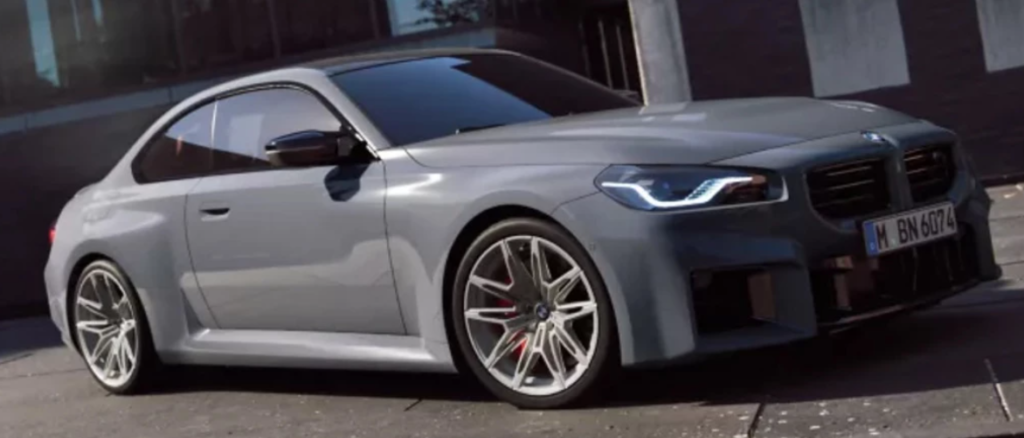
The BMW M2 weight is one of those specifications enthusiasts love to debate, and for good reason. The M2 has always been pitched as the compact, playful member of BMW's M family—the car that takes serious performance hardware and squeezes it into a relatively small coupe. Yet over the years, "small" hasn't necessarily meant "light."
Depending on the generation, model year, transmission, equipment, and even the method used to measure it, a BMW M2 can weigh anywhere from roughly 3,450 lb to well over 3,800 lb in road-going U.S. specification.
That's a considerable spread.
The original F87 M2 earned a reputation for feeling muscular but agile. The later M2 Competition gained some weight while adding more serious M hardware. Then the G87 arrived with significantly more power, a wider body, more sophisticated technology, and—you guessed it—more mass.
So, how much does a BMW M2 weigh? Does the extra weight actually hurt the driving experience? And which generation offers the best balance between power and kilograms?
Let's dig into the numbers.
Content in this publication
- BMW M2 Weight at a Glance
- What Does BMW M2 Curb Weight Actually Mean?
- First-Generation F87 BMW M2 Weight
- BMW M2 Competition Weight
- BMW M2 Competition Manual vs DCT Weight
- Current G87 BMW M2 Weight
- Why Is the G87 BMW M2 So Heavy?
- BMW M2 Weight in KG
- BMW M2 Weight Distribution
- How BMW M2 Weight Affects Acceleration
- How Weight Affects BMW M2 Handling
- Does the Carbon Roof Reduce BMW M2 Weight?
- BMW M2 Weight vs Everyday Usability
- Is the BMW M2 Too Heavy?
- Which BMW M2 Is Best If Weight Matters Most?
- Can You Make a BMW M2 Lighter?
- BMW M2 Road Car vs M2 Racing Weight
- Why BMW M2 Weight Keeps Increasing
- What Is the Ideal BMW M2 Weight?
- BMW M2 Weight: Final Verdict
- FAQs About BMW M2 Weight
BMW M2 Weight at a Glance
If you're looking for the short answer, here it is.
| BMW M2 version | Approximate U.S. curb weight |
|---|---|
| Original F87 M2 manual | 3,450 lb (1,565 kg) |
| Original F87 M2 DCT | 3,505 lb (1,590 kg) |
| F87 M2 Competition manual | 3,600 lb (1,633 kg) |
| F87 M2 Competition DCT | 3,655 lb (1,658 kg) |
| Current-generation G87 M2 | Around 3,800+ lb depending on configuration |
BMW's original U.S. technical specifications listed the manual F87 M2 at 3,450 lb and its dual-clutch counterpart at 3,505 lb.
The U.S.-spec M2 Competition later increased those figures to 3,600 lb with the manual gearbox and 3,655 lb with the DCT.
The current G87 generation moves the M2 firmly into the 3,800-lb neighborhood. BMW's current U.S. specifications list figures such as 3,814 lb depending on configuration, illustrating just how much the platform has evolved since the original car.
The interesting part isn't simply that the M2 became heavier. It's why it became heavier—and what BMW did to compensate.
What Does BMW M2 Curb Weight Actually Mean?
Before comparing numbers, we need to clear up one surprisingly messy detail: vehicle weight isn't always measured the same way.
"Curb weight" generally refers to a vehicle ready to drive with its normal operating fluids and equipment. However, manufacturers and markets use different standards.
That's why you might visit two perfectly legitimate websites and see two different weights for what appears to be the same M2.
U.S. Curb Weight vs DIN and EU Weight
BMW commonly publishes European specifications using DIN and EU measurement standards.
DIN weight and EU weight aren't necessarily equivalent to the U.S. curb-weight number you see on BMW USA.
For example, BMW's global technical documentation for the M2 Competition quoted 1,550 kg DIN / 1,625 kg EU for the manual model, while the DCT figures were shown separately in parentheses.
Meanwhile, BMW's North American specifications listed the same general model at 3,600 lb and 3,655 lb, depending on transmission.
Nothing mysterious is happening. We're simply looking at different regulatory measurement conventions.
Why This Matters When Comparing Cars
If we're comparing a BMW M2 against a Porsche Cayman, Toyota GR Supra, Ford Mustang, or another M car, we should use numbers measured under similar standards.
Otherwise, we're comparing apples with oranges wearing racing helmets.
For this guide, we'll emphasize U.S. curb weights whenever practical because they're intuitive for North American buyers while noting international figures where useful.
First-Generation F87 BMW M2 Weight
For many enthusiasts, the F87 represents the M2 formula in its purest form.
Introduced for the 2016 model year in the United States, the original M2 combined the compact 2 Series shell with widened bodywork, serious suspension hardware, a turbocharged inline-six, and rear-wheel drive.
And compared with today's M2, it was relatively light.
BMW listed the original car at:
3,450 lb with the six-speed manual and 3,505 lb with the seven-speed M dual-clutch transmission.
That makes the manual approximately 55 lb lighter.
This wasn't Lotus Elise territory, obviously. Yet for a modern performance coupe with four seats, a turbocharged six-cylinder engine, substantial brakes, safety equipment, air conditioning, infotainment, and everyday usability, 3,450 lb was respectable.
Why the Manual F87 M2 Was Lighter
Automatic transmissions often add weight because they require additional hydraulic, electronic, and mechanical components.
The original M2's seven-speed DCT was no exception.
Although it shifted extremely quickly and could improve acceleration consistency, the transmission hardware came with a weight penalty.
The six-speed manual therefore delivered two things traditional enthusiasts tend to love: a clutch pedal and fewer pounds.
There's something satisfyingly old-school about that combination.
How the Original M2 Carried Its Weight
Numbers only tell part of the story.
The F87 had a short 106-inch wheelbase, wide track, rear-wheel-drive layout, and near-balanced weight distribution. BMW's technical information placed its empty-car rear weight distribution around the 48% range, depending on transmission.
That helped the M2 feel compact and eager.
Rather than shrinking around the driver because it was extraordinarily light, it shrank because of its dimensions, steering response, torque delivery, and chassis balance.
That's an important distinction.
A car doesn't need to be featherweight to feel playful.
BMW M2 Competition Weight
Then BMW turned the dial upward.
The M2 Competition, introduced for the 2019 model year in the U.S., replaced the original N55-powered M2 and borrowed more serious hardware from its M3 and M4 relatives.
The centerpiece was the S55 twin-turbocharged inline-six.
Power climbed. Cooling capability improved. Chassis reinforcement increased. Braking and performance hardware became more substantial.
The scales noticed.
BMW listed U.S. curb weight at 3,600 lb with the six-speed manual and 3,655 lb with the seven-speed DCT.
Compared with the original M2, that's an increase of about 150 lb for comparable transmissions.
Where Did the Extra Weight Come From?
The additional mass wasn't simply BMW throwing luxury equipment into the cabin.
The Competition received meaningful mechanical upgrades.
A stronger engine configuration, additional cooling, reinforced chassis components and upgraded performance hardware all contributed to the increase.
In other words, much of the weight was working for a living.
That's a little different from adding 150 lb of leather, screens and cupholders.
Did the M2 Competition Feel Too Heavy?
Not necessarily.
Weight affects acceleration, braking, tire load, transient response and inertia, but chassis tuning determines how obvious that mass feels from behind the wheel.
The M2 Competition still had relatively compact proportions, rear-wheel drive and substantial performance capability.
Its character shifted, though.
The original M2 could feel slightly more playful and accessible. The Competition felt more serious—a little like the small boxer in the gym who suddenly started training with the heavyweight team.
It gained muscle and some mass with it.
BMW M2 Competition Manual vs DCT Weight
This is one of the easiest M2 weight comparisons.
BMW's U.S. figures were:
Manual: 3,600 lb
DCT: 3,655 lb
So the DCT added roughly 55 lb.
Interestingly, that's almost exactly the same transmission-related difference BMW quoted for the original M2.
For buyers obsessed with minimizing weight, the manual was the obvious winner.
But 55 lb isn't transformational.
A passenger, half a tank of fuel or a trunk full of luggage can easily alter the operating weight by more than that.
The gearbox choice matters far more for driving personality than those 55 pounds alone.
Current G87 BMW M2 Weight
Here's where the conversation gets spicy.
When the second-generation G87 M2 arrived, many enthusiasts immediately noticed its increased dimensions—and increased weight.
Today's M2 is built from newer BMW architecture and uses an extraordinarily capable version of BMW's S58 3.0-liter twin-turbo inline-six. It also benefits from more advanced electronics, stronger structural components, sophisticated cooling, larger wheels, substantial brakes and hardware capable of dealing with far greater performance.
All that engineering has mass.
BMW's current U.S. technical information places the M2 curb weight around the 3,800-lb range, with BMW USA listing figures such as 3,814 lb for current configurations. Exact weight depends on the model and drivetrain specification being referenced.
That's more than 350 lb heavier than the lightest original F87 M2.
Suddenly, the compact M car isn't quite so compact on the scales.
Why Is the G87 BMW M2 So Heavy?
This is the question enthusiasts keep asking.
The answer isn't one thing. It's the accumulated effect of modern performance-car engineering.
The G87 has grown physically. It uses more substantial structural components and modern crash protection. The engine produces dramatically more power than the original F87 unit. Cooling requirements are greater. Tires and wheels are larger. Brakes are more serious. Electronics are more extensive. Interior technology has expanded.
Each improvement might add only a little mass.
Pile them together and suddenly we're carrying hundreds of additional pounds.
The M2 Has Become a More Serious Performance Car
It's easy to romanticize weight figures without considering capability.
The current M2 isn't simply an older M2 with another 350 lb tossed into the trunk.
Its chassis, engine, brakes and cooling system are designed to tolerate levels of speed that would have seemed remarkable for a compact BMW coupe not long ago.
The newer car has effectively moved closer to previous generations of the M3 and M4 in outright performance.
That requires hardware.
Hardware weighs something.
Modern Safety and Structural Rigidity Add Mass
Modern cars must satisfy increasingly demanding crash and structural requirements.
Greater stiffness also helps suspension tuning because a rigid structure provides a more consistent platform for dampers, springs and geometry to work from.
Drivers love chassis rigidity.
Bathroom scales don't.
BMW M2 Weight in KG
For readers outside the United States, kilograms are more useful.
The commonly cited M2 weights translate roughly as follows:
| Version | Weight in pounds | Approx. weight in kg |
|---|---|---|
| F87 M2 manual | 3,450 lb | 1,565 kg |
| F87 M2 DCT | 3,505 lb | 1,590 kg |
| M2 Competition manual | 3,600 lb | 1,633 kg |
| M2 Competition DCT | 3,655 lb | 1,658 kg |
| G87 M2 | ~3,800+ lb | ~1,730+ kg |
Remember, however, that converting U.S. curb weight into kilograms does not magically turn it into a DIN or EU specification.
The units may change while the measurement methodology remains the same.
That's why official European BMW documents can show figures that don't match a simple pounds-to-kilograms conversion.
BMW M2 Weight Distribution
Absolute weight matters, but where the weight sits matters almost as much.
Imagine carrying a 40-pound backpack.
Put it tightly against your back and it's manageable. Hold the same backpack at arm's length and suddenly it feels much heavier.
Cars behave similarly.
Mass close to the center of gravity produces different handling characteristics than the same amount of mass hanging far beyond the axles.
BMW has traditionally placed substantial emphasis on balanced weight distribution, and the original M2 came remarkably close to an even front/rear split.
BMW's U.S. specifications for the original F87 showed rearward percentages around 48%, while the M2 Competition's official figures were also close to a balanced distribution.
Why Weight Distribution Matters
A balanced performance car generally feels more neutral when cornering.
Too much front bias can encourage understeer. A very rear-heavy layout produces a different set of dynamics.
But percentages alone aren't magic.
Suspension geometry, tire sizes, differential calibration, damping, steering, aerodynamics and electronic stability systems all influence how a vehicle behaves.
Weight distribution is one ingredient in a complicated recipe.
How BMW M2 Weight Affects Acceleration
A simple rule applies to performance cars: if power remains equal, less weight generally improves acceleration.
But power hasn't remained equal across M2 generations.
That's why the heavier G87 can still be significantly quicker than the original F87.
The newest M2's engine produces vastly more performance, offsetting the additional mass.
Think of it like putting a stronger engine in a heavier speedboat. The boat gained weight, yes, but the additional thrust can more than compensate.
This is where power-to-weight ratio becomes more useful than weight alone.
Power-to-Weight Ratio Matters More Than Weight Alone
Suppose Car A weighs 3,400 lb and produces 350 hp.
Car B weighs 3,800 lb but produces nearly 500 hp.
Car B is considerably heavier, yet its power-to-weight ratio can still be superior.
That's essentially how modern performance cars have continued getting quicker even as safety equipment, technology and dimensions increase.
Still, power can't erase every disadvantage associated with mass.
How Weight Affects BMW M2 Handling
Acceleration is only one part of the equation.
When a car changes direction, its mass must move.
More weight creates more inertia. That affects braking zones, tire temperatures, suspension loads and directional transitions.
On a flowing road, the difference might feel modest.
On a technical track packed with braking zones and left-right transitions, extra mass becomes harder to hide.
A Lighter Car Can Feel More Communicative
This helps explain why some enthusiasts prefer the original F87 even though newer M2 versions are objectively faster.
Speed and enjoyment aren't identical.
The older car's smaller dimensions and lower mass can make it feel more approachable and lively at ordinary speeds.
You don't need to be attacking a racetrack to discover its personality.
The G87 Fights Weight With Chassis Technology
BMW hasn't ignored physics.
The newer M2 counters its mass with wider tires, stronger brakes, sophisticated damping, rigid body construction, electronically controlled differential technology and considerably more advanced chassis tuning.
The result is a car whose real-world capability can disguise its curb weight surprisingly well.
But disguise isn't deletion.
Physics always keeps the receipt.
Does the Carbon Roof Reduce BMW M2 Weight?
Lightweight components can reduce mass in particularly valuable areas.
A carbon-fiber roof, for example, doesn't merely remove weight—it removes it from high on the vehicle.
That can help lower the center of gravity.
From a dynamics perspective, losing weight near the roof is arguably more useful than removing an equivalent amount near floor level.
Likewise, lightweight seats, wheels and exhaust components can contribute to reductions, although modifications should always be evaluated carefully for safety, legality, durability and actual measured savings.
BMW M2 Weight vs Everyday Usability
Here's the funny thing about all this talk of pounds and kilograms: part of the M2's appeal comes precisely from the equipment that adds weight.
We get comfortable seats.
Climate control.
Modern infotainment.
Driver assistance.
Four-seat practicality.
A real trunk.
Crash protection.
Sound insulation.
Powerful cooling systems.
Large brakes.
The M2 isn't trying to be a stripped-out track special.
It's trying to deliver serious performance without becoming miserable during a Tuesday commute.
That mission inevitably creates compromises.
Is the BMW M2 Too Heavy?
This depends entirely on what we expect from it.
If our benchmark is a Mazda MX-5 Miata or Lotus sports car, absolutely—the M2 is heavy.
If our benchmark is a powerful modern coupe capable of commuting every day, carrying four occupants in a pinch and attacking a circuit on weekends, the picture changes.
The current M2 is undeniably heavier than enthusiasts might ideally want, but it compensates with extraordinary power, chassis sophistication and braking capability.
That's why simply declaring "heavy equals bad" misses the point.
The better question is:
Does the car deliver the driving experience we want despite its weight?
For many drivers, the answer will still be yes.
Which BMW M2 Is Best If Weight Matters Most?
If low weight sits near the top of our priority list, the original F87 M2 with the six-speed manual is the obvious starting point.
At around 3,450 lb in BMW's U.S. specification, it is considerably lighter than later versions.
It also combines that lower mass with compact dimensions and a traditional manual transmission.
The M2 Competition adds weight but gives us the celebrated S55 engine and a more serious performance package.
The G87 adds another layer of mass but offers enormous capability and far more power.
So we'd describe them this way:
F87 M2: best for simplicity and lower weight.
M2 Competition: best middle ground between old-school character and serious M performance.
G87 M2: best for outright capability, even if the scales aren't flattering.
Can You Make a BMW M2 Lighter?
Yes, but weight reduction becomes expensive remarkably quickly.
Removing unnecessary cargo is free. Choosing lighter wheels can help. Lightweight seats, exhaust components, carbon body panels and track-focused interior changes can remove additional kilograms.
But there's a point of diminishing returns.
We can spend thousands chasing 30 or 40 pounds while carrying a suitcase, tools and half the contents of our garage in the trunk.
For a street-driven M2, tires, alignment, brake pads and driver training will often transform the experience more dramatically than extreme weight reduction.
For a dedicated track build, that's a different story.
BMW M2 Road Car vs M2 Racing Weight
If you want to see what happens when BMW builds an M2 specifically around motorsport requirements, the numbers become interesting.
BMW M Motorsport lists the M2 Racing at 1,498 kg, considerably below the current road-going M2.
That race car isn't simply a stripped production coupe, of course. It has purpose-built motorsport equipment and an entirely different mission.
Still, the comparison illustrates an important point.
Removing road-car comfort and convenience can save substantial mass—but it creates a vehicle most of us wouldn't want to commute in.
Why BMW M2 Weight Keeps Increasing
Performance cars have been caught in an engineering tug-of-war for decades.
Drivers ask for more power, better crash protection, larger screens, stronger brakes, quieter cabins, more comfort, more technology and better everyday usability.
Then we ask why the car got heavier.
Manufacturers attempt to offset those demands with aluminum, composites and smarter engineering, but there's only so much mass they can remove while adding capability.
The M2's evolution demonstrates that conflict perfectly.
The original F87 was the cheeky younger sibling.
The M2 Competition grew muscles.
The G87 walked into the room built like a professional fighter.
Not as light, perhaps—but unquestionably more formidable.
What Is the Ideal BMW M2 Weight?
There's no objective answer.
A 3,000-lb M2 with today's power would sound spectacular to enthusiasts, but producing such a vehicle while retaining modern safety, refinement, durability and an attainable price would be extremely difficult.
Around 3,400–3,500 lb arguably represents a sweet spot for the M2 concept.
That's light enough to feel relatively nimble while still allowing the car to function as a comfortable premium coupe.
And conveniently, that's roughly where the original F87 lived.
It helps explain why that generation remains so admired.
BMW M2 Weight: Final Verdict
The BMW M2 weight tells the story of how BMW's smallest M coupe evolved.
The original F87 M2 weighed approximately 3,450 lb with a manual transmission and 3,505 lb with the DCT in U.S. specification. The later M2 Competition increased those figures to roughly 3,600 and 3,655 lb, respectively.
The current G87 pushes into the 3,800-lb range, with BMW's current U.S. specifications listing around 3,814 lb for certain configurations.
That sounds like bad news until we look at everything that came with the additional mass.
More power. More rigidity. Bigger brakes. More cooling. Greater capability. More technology.
Still, if pure lightness and compactness are our priorities, the original manual F87 remains difficult to beat.
The real lesson is simple: weight matters, but weight alone doesn't define a great driver's car.
What matters is how effectively the chassis controls that mass—and whether the car puts a smile on our face when the road starts twisting.
On that front, every generation of M2 has something interesting to say.
FAQs About BMW M2 Weight
1. How much does a BMW M2 weigh?
BMW M2 weight varies by generation and configuration. The original U.S.-spec F87 weighed approximately 3,450 lb with the manual transmission and 3,505 lb with the DCT. The M2 Competition weighed about 3,600–3,655 lb, while the current G87 sits around the 3,800-lb range depending on configuration.
2. How much does the BMW M2 weigh in kg?
A 3,450-lb original M2 translates to approximately 1,565 kg. The 3,600-lb M2 Competition manual is roughly 1,633 kg, while a current M2 weighing around 3,800 lb converts to approximately 1,724 kg or more. Official DIN and EU figures may differ because they use different measurement standards.
3. Is the BMW M2 heavier than the M2 Competition?
The current G87 M2 is heavier than the previous-generation F87 M2 Competition. The Competition itself was also heavier than the original F87 M2 because it incorporated additional engine, cooling, chassis and performance hardware.
4. Why is the new BMW M2 so heavy?
The newer M2 uses a larger and more sophisticated platform with stronger structural components, a powerful S58 engine, substantial cooling hardware, larger wheels and brakes, advanced electronics, modern safety equipment and additional comfort technology. Those improvements collectively increase curb weight.
5. Which BMW M2 is the lightest?
Among the mainstream U.S.-spec production M2 versions discussed here, the original F87 with the six-speed manual is the lightest, with BMW listing a U.S. curb weight of approximately 3,450 lb.
If you want to know other articles similar to BMW M2 Weight: How Much Does the M2 Really Weigh? you can visit the category Service and Parts.
Volvo S90 Engine Oil: Type, Capacity & Change Guide
Volvo S90 Boot Space: Size, Capacity and Practicality
SEO Title: Volvo S90 Oil Capacity: Complete Guide by Engine

Kia Sorento Oil Type: Complete Guide by Year & Engine
Kia Sorento Engine Capacity: Complete Guide by Year
Peugeot 308 Clutch Replacement Cost: Complete UK Guide for 2026
Leave a Reply
More content of your interest