
Leapmotor C10 Boot Space: Full Size and Practicality Guide

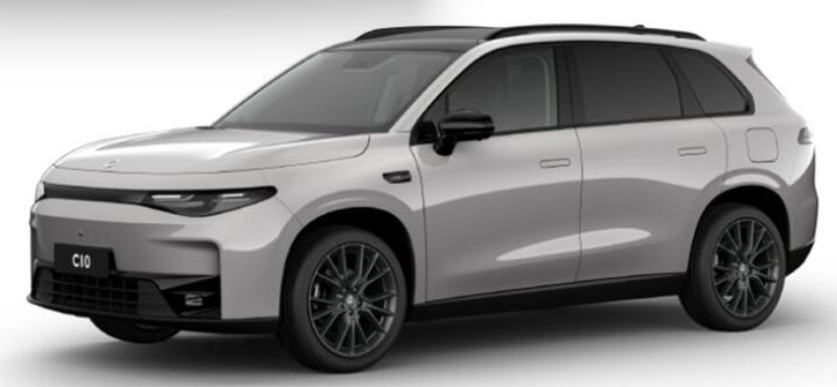
The Leapmotor C10 boot space is one of those specifications that looks straightforward until we start comparing brochures, reviews, and different C10 powertrains. One source says 400 litres. Another says 435 litres. Fold the rear seats and we may see either 1,375 or 1,410 litres.
So, what do we actually get?
For the fully electric Leapmotor C10, the commonly quoted luggage capacity is 435 litres with the rear seats upright and up to 1,410 litres with them folded. Leapmotor has also stated that the cargo area can reach around 1,820 mm in maximum depth and 1,110 mm in width.
Meanwhile, the C10 Hybrid EV sold in markets such as the UK is officially rated using the VDA measurement method at 400 litres with the seats up and 1,375 litres with the rear seats folded.
Numbers matter, but they aren't the whole story. A boot can have a huge advertised capacity and still be awkward to use if the opening is narrow, the floor is oddly shaped, or the rear seats leave a large step when folded.
That's why we're going beyond the headline figure.
Content in this publication
- Leapmotor C10 Boot Space at a Glance
- How Big Is the Leapmotor C10 Boot?
- Why Do Some Sources Say 400 Litres Instead of 435?
- Leapmotor C10 Boot Space With Rear Seats Down
- Leapmotor C10 Boot Width
- Is the Leapmotor C10 Boot Easy to Load?
- Does the Leapmotor C10 Have an Electric Tailgate?
- Can You Fit Suitcases in a Leapmotor C10?
- Can a Stroller Fit in the Leapmotor C10 Boot?
- Leapmotor C10 Boot Space for Family Use
- How Does the Leapmotor C10 Boot Compare With Rivals?
- Leapmotor C10 Versus Skoda Elroq Boot Space
- Leapmotor C10 Versus Skoda Enyaq Boot Space
- Leapmotor C10 Versus Kia EV3 Boot Space
- Does the Leapmotor C10 Have Underfloor Storage?
- Does the Leapmotor C10 Have a Frunk?
- Leapmotor C10 Boot Space for Road Trips
- Can the Leapmotor C10 Carry a Bicycle?
- Is the C10 Good for Camping?
- What Could Be Better About the Leapmotor C10 Boot?
- What Does the Leapmotor C10 Boot Do Well?
- Is 435 Litres Enough for an SUV?
- Who Will Be Happy With the Leapmotor C10 Boot?
- Leapmotor C10 Boot Space: Final Verdict
- Frequently Asked Questions About Leapmotor C10 Boot Space
Leapmotor C10 Boot Space at a Glance
Before we unpack everything, here's the simple version.
For the electric C10, expect roughly:
- 435 litres with five seats in use
- 1,410 litres with the rear seats folded
- 1,820 mm maximum cargo depth
- Around 1,110 mm of cargo width
- A 60/40 split-folding rear bench
- Five passenger seats
- A broad, family-friendly luggage opening
Leapmotor has even claimed the regular 435-litre configuration can accommodate as many as seven 20-inch suitcases, while the seats-down layout can take considerably more.
The Hybrid EV is slightly different, with official VDA figures of 400 and 1,375 litres respectively.
That distinction is worth remembering whenever we're comparing specifications online.
How Big Is the Leapmotor C10 Boot?
At roughly 435 litres in the electric model, the Leapmotor C10's boot is large enough for normal family duties without being one of the biggest cargo areas in the electric SUV class.
Think of it as a solid family wardrobe rather than an aircraft hangar.
A weekly supermarket run? Easy.
A pushchair plus a couple of shopping bags? Usually manageable.
Two adults heading away for a week with several suitcases? No major drama.
A family of four packing everything except the kitchen sink for a summer holiday? That's when those extra litres offered by some competitors start to matter.
Independent reviewers have also noted that the C10's luggage compartment is smaller than those of several similarly sized electric SUVs. What Car, for example, lists the electric C10 at 435 litres and highlights larger capacities in models such as the Skoda Enyaq and other family EVs.
Why 435 Litres Is Still Enough for Many Buyers
A boot doesn't need to win a spreadsheet competition to be useful.
For most owners, the biggest question isn't whether one SUV offers 435 litres while another offers 470. It's whether the luggage they regularly carry actually fits.
And here the C10 should satisfy plenty of households.
We can realistically use the cargo area for things such as grocery bags, cabin-size suitcases, backpacks, sports equipment, small travel bags, and many typical baby accessories.
Its boxy SUV body also makes the available volume easier to exploit than the same theoretical capacity in a sharply sloping coupé-style crossover.
Why Do Some Sources Say 400 Litres Instead of 435?
This is probably the most confusing part of researching Leapmotor C10 boot capacity.
The reason is that there are multiple C10 configurations and measurement standards.
Leapmotor's earlier European material for the battery-electric C10 specifies 435 litres in normal conditions and 1,410 litres with the rear seats down.
By contrast, current UK technical information for the C10 Hybrid EV lists 400 litres and 1,375 litres using the VDA method.
Carwow consequently shows a C10 range of approximately 370–400 litres seats up and 1,375–1,410 litres seats down, depending on the version covered in its specifications.
Measurement Standards Can Change the Number
Boot capacity isn't always measured exactly the same way.
Some manufacturers calculate every usable recess and cavity. Others publish a standardized VDA figure, which effectively measures how many standardized blocks fit inside the luggage compartment.
That's why comparing raw litre numbers without checking the methodology can sometimes be like comparing two houses where one includes the garage in its floor area and the other doesn't.
Both numbers may be technically correct, but they aren't necessarily measuring exactly the same thing.
Our Practical Rule
If we're researching a particular C10 before buying, we should check the specification sheet for the exact:
- Model year
- Country
- EV or Hybrid EV version
- Trim level
- Measurement standard
For general discussion, 435 litres for the electric C10 and 400 litres for the Hybrid EV are the useful headline figures currently found in European-market information.
Leapmotor C10 Boot Space With Rear Seats Down
Things become much more interesting once we fold the rear seats.
The electric C10 can expand from 435 litres to about 1,410 litres, while the Hybrid EV is quoted at approximately 1,375 litres using the VDA method.
That turns the C10 from an ordinary family luggage carrier into something much closer to a compact moving van.
Well, a very quiet moving van with a panoramic roof.
This expanded area is useful for transporting larger objects such as boxed furniture, bicycles with some disassembly, camping equipment, bulky luggage, DIY supplies, flat-pack furniture, large pet carriers, or sports gear.
Do the Leapmotor C10 Rear Seats Fold Flat?
The C10 uses 60/40 split-folding rear seatbacks, allowing us to trade passenger space for luggage space.
Independent testing has found that the folded rear seats create a generally flat extended load area, which is a significant advantage when sliding longer objects inside.
The split configuration is also handy.
Instead of choosing between five seats or maximum cargo capacity, we can fold only one portion of the bench and keep one or two rear passenger positions available.
What Is the Maximum Load Length?
Leapmotor's European information states that the cargo compartment can achieve a maximum depth of approximately 1,820 mm.
That's 1.82 metres.
To put that into everyday perspective, we're approaching the height of a fairly tall adult.
It means long boxes, pieces of furniture, sporting equipment, or other awkward items have a reasonable chance of fitting once the rear seats are folded.
Leapmotor C10 Boot Width
Leapmotor has published a cargo width figure of approximately 1,110 mm.
That translates to about 1.11 metres.
Width is an underrated specification because it often determines whether something truly practical—like a large suitcase, folded pushchair, storage box, or golf equipment—can be loaded sideways without playing a frustrating game of luggage Tetris.
The C10's relatively squared-off rear body helps here.
We don't lose as much usable room to dramatic body sculpting as we might in an SUV-coupé with a sharply tapered tail.
Is the Leapmotor C10 Boot Easy to Load?
Capacity tells only half the story.
Fortunately, the C10 scores reasonably well when it comes to basic usability.
Reviews describe the opening as broad, while the loading edge doesn't create a major obstacle for lifting heavier objects into the cargo area. What Car notes that the Hybrid EV has a large, wide opening and no substantial load lip to climb over, although the floor itself sits fairly high.
That's exactly the type of detail we care about once we leave the specification sheet behind.
High Boot Floor: Good or Bad?
A relatively high floor has pros and cons.
The downside is obvious: we're lifting heavy objects a little higher.
The upside is that a higher cargo floor can create a flatter transition when the rear seatbacks are folded, reducing the annoying staircase effect we sometimes see in SUVs.
For regular luggage, groceries, and lightweight bags, it's unlikely to be a major concern.
If we're repeatedly loading heavy tools or mobility equipment, however, we'd want to examine the loading height in person.
Does the Leapmotor C10 Have an Electric Tailgate?
Yes, European specifications include an electric tailgate, adding another layer of convenience.
That sounds like a small luxury until we're standing behind the car with both hands occupied by supermarket bags.
Then it suddenly feels like one of humanity's better inventions.
An electrically operated tailgate also fits the overall personality of the C10, which leans heavily toward technology and comfort rather than rugged minimalism.
Can You Fit Suitcases in a Leapmotor C10?
Leapmotor has claimed that the 435-litre cargo space can accommodate up to seven 20-inch suitcases, while the expanded 1,410-litre configuration can accommodate significantly more.
Of course, suitcase shapes vary dramatically.
One airline's "20-inch" cabin case can resemble a slim briefcase while another looks as though it was designed to smuggle a refrigerator onto a plane.
So we'd treat manufacturer suitcase counts as illustrative rather than guaranteed.
Still, they give us a useful picture of the C10's intended role.
It is unquestionably designed to handle family travel.
Can a Stroller Fit in the Leapmotor C10 Boot?
In most cases, yes.
A typical folding baby stroller should fit comfortably in a 400–435-litre SUV boot, although the answer depends heavily on the stroller's folded dimensions.
Compact travel pushchairs should leave considerable room around them.
Large all-terrain strollers with oversized wheels consume much more of the available floor area and may need to be positioned diagonally.
For parents, the more important consideration is what fits alongside the stroller.
Can we still add the changing bag, groceries, or two holiday cases?
With the C10, that's likely to be possible for many everyday configurations, although some larger rivals offer more breathing room.
Leapmotor C10 Boot Space for Family Use
This is where the C10 makes the most sense.
The car itself measures around 4,739 mm long, 1,900 mm wide, and 1,680 mm tall, placing it firmly in family-SUV territory.
Its passenger compartment is exceptionally spacious relative to its price, particularly in the rear.
That does explain one thing: some of the vehicle's generous external footprint has clearly been allocated to passenger comfort rather than maximizing the boot.
Passenger Space Versus Luggage Space
There's always a compromise.
Move the rear bench forward and we can create a larger boot.
Move it backward and rear passengers feel like they're travelling in business class.
Leapmotor has clearly leaned toward the second philosophy.
Reviewers repeatedly praise the C10's rear legroom, but the rear bench doesn't slide, meaning we cannot temporarily sacrifice some of that legroom to gain extra luggage capacity.
That's one area where a sliding bench would have transformed the car's versatility.
Would a Sliding Rear Seat Make the C10 Better?
Absolutely.
Imagine we're travelling with small children whose legs barely reach past the seat cushion. We probably don't need acres of rear legroom.
A sliding bench could let us move them forward and reclaim perhaps dozens of litres of cargo capacity.
Unfortunately, the current layout doesn't provide that flexibility.
How Does the Leapmotor C10 Boot Compare With Rivals?
This is where the C10's weaknesses become more visible.
A 435-litre electric-SUV boot is useful, but it isn't class-leading.
What Car cites 470 litres for the Skoda Elroq and approximately 490 litres for some other competing electric SUVs, while the larger Skoda Enyaq offers substantially more.
Carwow similarly notes that competitors including the Renault Scenic E-Tech and Kia EV3 provide greater luggage capacity.
So if maximum boot volume is our number-one buying criterion, the C10 probably won't sit at the top of the shortlist.
But Boot Capacity Isn't the C10's Whole Value Proposition
Cars aren't bought by litre alone.
The C10 counters its merely average boot with a particularly roomy passenger cabin, plenty of standard equipment, an airy interior, a flat rear floor, and competitive pricing in many markets.
That's important.
Sometimes the better family car isn't the one that holds one extra suitcase. It's the one where three passengers can actually sit in the back without negotiating territorial boundaries like diplomats at a summit.
Leapmotor C10 Versus Skoda Elroq Boot Space
The Skoda Elroq is one of the obvious European comparisons.
Its quoted luggage volume is around 470 litres, putting it ahead of the C10's 435-litre electric-car figure.
That difference isn't enormous, but 35 litres can matter.
It's roughly the amount of space occupied by a decent backpack or compact overnight bag.
If we frequently fill the car to the roof, the Elroq's advantage becomes useful.
If our boot normally contains three shopping bags and an umbrella, the difference will probably disappear into daily life.
Leapmotor C10 Versus Skoda Enyaq Boot Space
The Enyaq is tougher competition.
Its boot is considerably larger, and independent comparisons commonly position it among the more practical family EVs. What Car cites a capacity of 585 litres, considerably more than the C10.
Here the difference is large enough to notice.
Families routinely carrying pushchairs, sports kits, school bags, suitcases, and grocery shopping simultaneously may find the Enyaq easier to live with.
The C10 fights back with interior space and value rather than outright cargo supremacy.
Leapmotor C10 Versus Kia EV3 Boot Space
The Kia EV3 is physically smaller than the C10 yet makes clever use of its footprint.
Carwow lists roughly 469 litres for the EV3, meaning it can offer more luggage volume despite occupying less road space.
That demonstrates why vehicle length doesn't automatically predict boot size.
Packaging is everything.
The C10 dedicates more of its cabin length to rear passenger comfort, while competitors may prioritize luggage capacity differently.
Does the Leapmotor C10 Have Underfloor Storage?
Smaller storage areas can matter almost as much as the main cargo figure.
Even when underfloor space isn't enormous, compartments around or beneath the cargo floor are useful for keeping charging accessories, emergency equipment, cleaning supplies, or small valuables away from the main luggage area.
Leapmotor has highlighted numerous storage locations throughout the C10's cabin and luggage area, with European material mentioning multiple dedicated storage spaces around the vehicle.
That helps compensate for the fact that the main boot isn't class-leading.
Does the Leapmotor C10 Have a Frunk?
Some versions of the battery-electric C10 provide additional storage beneath the bonnet, and reviewers have highlighted this as a useful place for charging cables.
A frunk doesn't necessarily transform the car's overall luggage capacity, but it solves an irritating EV problem.
Instead of burying the charging cable under four suitcases and then needing it at the hotel charger, we can keep cables separated from our luggage.
Small detail. Big difference.
Leapmotor C10 Boot Space for Road Trips
Would we take the C10 on a long family road trip?
Definitely.
A 435-litre boot gives us enough flexibility for a realistic holiday load, particularly if we pack intelligently.
Soft-sided bags make better use of irregular gaps than rigid suitcases. Smaller bags can fill the space beside wheel-arch intrusions. Charging accessories can be kept outside the main luggage compartment when dedicated storage is available.
And if there are only two or three passengers, folding part of the rear bench massively expands our options.
Best Packing Strategy for the C10
We'd start with the largest rigid cases laid flat against the rear seatbacks.
Then we can fit soft bags around the edges and keep lightweight or frequently accessed items toward the tailgate.
If we're carrying only one rear passenger, fold the larger section of the 60/40 bench and suddenly long items become much easier to accommodate.
Simple packing beats raw capacity surprisingly often.
Can the Leapmotor C10 Carry a Bicycle?
With the rear seats folded, the C10's approximately 1.82-metre maximum load depth makes transporting a bicycle realistic, particularly if the front wheel is removed.
Whether a particular bike fits fully assembled depends on wheel size, frame geometry, handlebar width, and seat position.
Mountain bikes can be especially awkward because their handlebars seem genetically engineered to catch every interior trim panel.
Still, the expanded luggage area gives us useful flexibility.
Is the C10 Good for Camping?
Potentially, yes.
Leapmotor has actually emphasized the C10's flexible seating arrangements, describing configurations in which folded seating can produce a large, rest-friendly interior space. European promotional material has even referenced a bed-like area measuring around 1.8 metres long and 1.2 metres wide when the seating is arranged appropriately.
We wouldn't confuse it with a purpose-built camper van, but for occasional overnight adventures or carrying tents, coolers, sleeping bags, and chairs, the C10 has plenty going for it.
What Could Be Better About the Leapmotor C10 Boot?
There are three main weaknesses.
First, the raw capacity is merely average considering the C10's substantial exterior dimensions.
Second, the rear bench slides neither forward nor backward, so we can't trade unused passenger legroom for extra cargo space.
Third, the standard 60/40 split is less flexible than the 40/20/40 arrangement offered by some competitors.
A 40/20/40 system is particularly handy for carrying long objects such as skis while retaining two proper rear passenger seats.
The C10's arrangement works, but it's more conventional.
What Does the Leapmotor C10 Boot Do Well?
Plenty.
Its opening is large, the overall shape is useful, the rear seats fold to create a substantial extended cargo area, and an electric tailgate adds convenience.
More importantly, the boot doesn't exist in isolation.
The C10 combines usable cargo space with an extremely roomy passenger compartment.
That balance may appeal more to everyday families than winning the biggest-boot trophy.
Is 435 Litres Enough for an SUV?
Yes—but context matters.
Around 435 litres would once have been considered generous family-car territory. Modern electric SUVs have pushed expectations higher, with many now offering somewhere around 450 to 600 litres.
So 435 litres is no longer exceptional.
But it isn't tiny either.
For most households, the difference between 435 and 500 litres won't be noticeable every morning. It becomes important during holidays, airport runs, camping trips, or those mysterious occasions when we leave a furniture shop convinced that a six-foot flat-pack box will "definitely fit."
Who Will Be Happy With the Leapmotor C10 Boot?
The C10 should work particularly well for couples, small families, households with one or two children, commuters who occasionally need serious cargo capacity, and drivers who value rear passenger space more than maximum luggage volume.
It may be less ideal for owners who routinely carry very large pushchairs, multiple large dogs, extensive work equipment, four passengers plus bulky holiday luggage, or sports equipment that demands a particularly long or modular cabin.
Leapmotor C10 Boot Space: Final Verdict
The Leapmotor C10 boot space lands in an interesting middle ground.
It isn't enormous for a vehicle measuring almost 4.74 metres long, and rivals such as the Skoda Enyaq offer substantially more luggage capacity. But dismissing the C10 simply because another electric SUV offers more litres would miss the bigger picture.
The battery-electric C10 is commonly quoted with 435 litres behind the rear seats and up to 1,410 litres when those seats are folded, while the newer C10 Hybrid EV carries official VDA figures of 400 and 1,375 litres respectively.
The boot itself is broad, sensibly shaped, and sufficiently large for shopping, luggage, strollers, sports equipment, and ordinary family adventures. Folding the rear seats unlocks considerably more carrying ability, and the available maximum load length of roughly 1.82 metres adds useful versatility.
Would we call it class-leading?
No.
Would we call it genuinely practical?
Absolutely.
The important thing is understanding the C10's priorities. This isn't an SUV designed to turn every available centimetre into cargo capacity. Instead, Leapmotor has given a substantial share of the cabin to passenger comfort—especially rear legroom—and left enough luggage capacity to cover most everyday needs.
For many families, that's a compromise worth making.
Frequently Asked Questions About Leapmotor C10 Boot Space
1. How many litres is the Leapmotor C10 boot?
The battery-electric Leapmotor C10 is commonly quoted at 435 litres with the rear seats upright. Current UK specifications for the C10 Hybrid EV list 400 litres using the VDA method.
2. What is the Leapmotor C10 boot capacity with the seats folded?
The electric C10 offers up to approximately 1,410 litres when the rear seats are folded. The Hybrid EV is officially rated at around 1,375 litres under the VDA measurement method.
3. Will a stroller fit in the Leapmotor C10 boot?
Most standard and compact folding strollers should fit easily. Very large all-terrain pushchairs may occupy a substantial amount of the 400–435-litre cargo area, so checking the stroller's folded dimensions is advisable.
4. Is the Leapmotor C10 boot bigger than the Skoda Enyaq's?
No. The Skoda Enyaq offers considerably more luggage capacity. What Car cites roughly 585 litres for the Enyaq compared with 435 litres for the battery-electric C10.
5. Is the Leapmotor C10 good for family luggage?
Yes. Its boot should comfortably cope with normal grocery runs, several travel bags, many pushchairs, and weekend luggage. Families who regularly travel with four or five occupants and bulky equipment may prefer an SUV with a larger 500-plus-litre cargo area.
If you want to know other articles similar to Leapmotor C10 Boot Space: Full Size and Practicality Guide you can visit the category Service and Parts.
Volvo S90 Engine Oil: Type, Capacity & Change Guide
Volvo S90 Boot Space: Size, Capacity and Practicality
SEO Title: Volvo S90 Oil Capacity: Complete Guide by Engine

Kia Sorento Oil Type: Complete Guide by Year & Engine
Kia Sorento Engine Capacity: Complete Guide by Year
Peugeot 308 Clutch Replacement Cost: Complete UK Guide for 2026
Leave a Reply
More content of your interest