

Leapmotor C10 Tyre Pressure: Complete PSI and Bar Guide

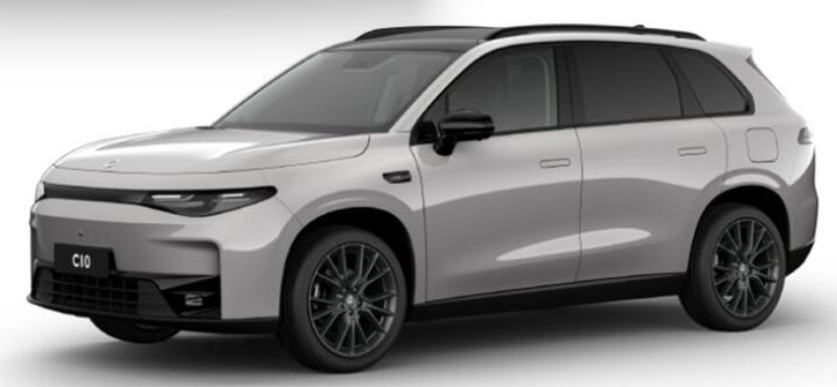
Getting the Leapmotor C10 tyre pressure right might sound like one of those tiny maintenance jobs we can deal with whenever the warning light appears. In reality, tyre pressure has a surprisingly large influence on how this electric SUV feels, how efficiently it uses its battery, how evenly its tyres wear, and how confidently it stops and corners.
The good news? The numbers themselves are straightforward.
For the Leapmotor C10, the owner's manual lists a cold tyre pressure of 250 kPa at the front and 270 kPa at the rear when the vehicle is unloaded or carrying a moderate load. That converts to approximately 2.5 bar / 36 psi at the front and 2.7 bar / 39 psi at the rear. When the C10 is fully loaded, the manual specifies 270 kPa, or roughly 2.7 bar / 39 psi, on all four tyres.
Those figures give us a solid starting point, but tyre pressure isn't quite a "set it once and forget it" affair. Temperature, passenger load, tyre size, driving conditions and even when we measure the tyres can alter what we see on the gauge.
Let's unpack everything properly.
Content in this publication
- What Is the Correct Leapmotor C10 Tyre Pressure?
- Leapmotor C10 Tyre Pressure in PSI
- Leapmotor C10 Tyre Sizes and Recommended Pressure
- Should Leapmotor C10 Tyre Pressure Be Checked Cold?
- Why Correct Tyre Pressure Matters More on an EV
- How Often Should We Check Leapmotor C10 Tyre Pressure?
- Leapmotor C10 TPMS Explained
- Why Leapmotor C10 Tyre Pressure Changes With Temperature
- Leapmotor C10 Tyre Pressure With Passengers and Luggage
- Can We Put 40 PSI in a Leapmotor C10?
- Should Front and Rear C10 Tyres Have the Same Pressure?
- What If a Tyre Keeps Losing Pressure?
- Can We Trust Petrol-Station Tyre Gauges?
- Does Tyre Brand Change the Recommended Pressure?
- Common Leapmotor C10 Tyre Pressure Mistakes
- How Tyre Pressure Influences C10 Handling
- Tyre Pressure Before a Long C10 Road Trip
- Leapmotor C10 Tyre Pressure: Our Recommended Approach
- Conclusion: Small Numbers That Make a Big Difference
- FAQs About Leapmotor C10 Tyre Pressure
What Is the Correct Leapmotor C10 Tyre Pressure?
According to the C10 owner's manual, recommended pressures depend primarily on how heavily the vehicle is loaded.
| Driving condition | Front tyres | Rear tyres |
|---|---|---|
| No load / half load | 250 kPa | 270 kPa |
| No load / half load | 2.5 bar | 2.7 bar |
| No load / half load | Approx. 36 psi | Approx. 39 psi |
| Full load | 270 kPa | 270 kPa |
| Full load | 2.7 bar | 2.7 bar |
| Full load | Approx. 39 psi | Approx. 39 psi |
So, for typical everyday driving with one or two occupants and normal luggage, we're generally looking at 36 psi at the front and 39 psi at the rear when the tyres are cold.
Heading away with a cabin full of people and luggage? The manual raises the front pressure to approximately 39 psi, matching the rear.
There is one important caveat: specifications can vary between markets, production dates and approved tyre combinations. We should therefore treat the tyre-pressure label fitted to the actual vehicle—usually around the driver's door opening—as the final authority.
Why Is the Rear Pressure Higher?
At first glance, having 2.5 bar in front and 2.7 bar behind can seem slightly unusual. Many vehicles use identical front and rear pressures, while others run higher figures at the front because that's where a combustion engine lives.
But an EV doesn't necessarily follow those old conventions.
The C10's mass distribution, chassis tuning, suspension geometry and tyre loading all influence the pressures selected by the manufacturer. The recommended numbers aren't simply about how much the car weighs overall. They're designed around how each axle carries and manages that weight in real driving.
Think of tyre pressure like the tension in a pair of running shoes. Too loose and everything feels sloppy; too tight and comfort disappears. The sweet spot lies where the manufacturer designed it to be.
Leapmotor C10 Tyre Pressure in PSI
For drivers accustomed to PSI rather than bar or kPa, the useful numbers are simple:
2.5 bar = approximately 36.3 psi, while 2.7 bar = approximately 39.2 psi.
In everyday use, that means we can generally think in terms of 36 psi front and 39 psi rear under normal loading, or roughly 39 psi front and rear when fully loaded.
We don't need to chase decimal points with a service-station inflator. The recommended pressure itself matters far more than trying to reproduce a laboratory conversion to the tenth of a PSI.
Leapmotor C10 Tyre Pressure in Bar
For European drivers, bar is probably the easiest unit to remember.
Normal or moderate load:
Front: 2.5 bar
Rear: 2.7 bar
Full load:
Front: 2.7 bar
Rear: 2.7 bar
Michelin's current C10 tyre database also lists 2.5 bar at the front and 2.7 bar at the rear for commonly listed C10 tyre sizes, independently supporting the everyday figures found in the vehicle documentation.
Leapmotor C10 Tyre Pressure in kPa
The owner's manual expresses the specification directly in kilopascals.
Normal or half load:
250 kPa front
270 kPa rear
Full load:
270 kPa front
270 kPa rear.
Drivers in markets such as Australia may see kPa more frequently at filling stations, so these are useful numbers to memorise.
Leapmotor C10 Tyre Sizes and Recommended Pressure
The owner's manual lists two tyre specifications for the C10:
235/55 R18 104V and 245/45 R20 103V.
Michelin's C10 fitment information currently shows the same two tyre-size families and associates both with a normal recommendation of 2.5 bar front and 2.7 bar rear.
That means owners don't automatically need to inflate the 20-inch tyre dramatically higher simply because the wheel is larger.
A lower-profile tyre looks quite different and contains a different volume of air, but the vehicle manufacturer accounts for those characteristics when specifying the approved combination.
235/55 R18 Leapmotor C10 Tyre Pressure
For a C10 fitted with 235/55 R18 tyres, the published everyday recommendation is approximately:
Front: 2.5 bar / 250 kPa / 36 psi
Rear: 2.7 bar / 270 kPa / 39 psi.
This 18-inch setup uses a relatively tall sidewall, which usually gives the tyre more ability to absorb sharp road imperfections compared with a low-profile alternative.
Pressure still matters enormously, though. An underinflated 18-inch tyre can feel soft without looking obviously flat.
245/45 R20 Leapmotor C10 Tyre Pressure
The manual also lists 245/45 R20 tyres among the C10 specifications.
Michelin currently publishes the same everyday 2.5-bar front and 2.7-bar rear recommendation for the 245/45 R20 C10 fitment.
With a 20-inch wheel, pressure deserves particular attention because there is less sidewall between the wheel and the road.
That doesn't mean we should overinflate the tyre for protection. Rather, it means regularly maintaining the specified pressure becomes even more valuable.
Always Check Your Vehicle's Placard
There's an important rule worth repeating: the pressure label on our own C10 beats a generic internet chart.
Vehicles can receive market-specific tyres, revised homologation specifications or running changes during their production life.
If the sticker on the vehicle gives figures different from an online guide, use the vehicle's sticker unless Leapmotor has issued a specific updated instruction.
Should Leapmotor C10 Tyre Pressure Be Checked Cold?
Yes.
Recommended tyre pressures are normally based on cold tyres. In practical terms, that means checking before a substantial drive, ideally after the vehicle has been parked for several hours.
Why?
Because tyres warm up as they roll.
The rubber flexes. The tyre's internal air heats. Pressure naturally rises.
If we drive for 30 minutes, see 42 psi on the display and immediately release air until it falls to 39 psi, we've potentially created an underinflated tyre once it cools down again.
What Does “Cold Tyre Pressure” Actually Mean?
A cold tyre isn't necessarily a tyre sitting in freezing weather. It means a tyre that hasn't accumulated significant heat through driving.
An early-morning check before leaving home is ideal.
If we've just driven down a motorway, the measurement is no longer directly comparable with the manufacturer's cold recommendation.
Don't Bleed a Warm Tyre to the Cold Specification
This is one of the easiest mistakes to make.
Imagine the cold target is 2.7 bar. After a long drive, the dashboard reports a noticeably higher figure. That increase can be perfectly normal.
Releasing air while the tyre is hot means we may wake up the next morning to find it below the recommended pressure.
Unless there is clear evidence of severe overinflation, it's better to verify the tyre again once cold.
Why Correct Tyre Pressure Matters More on an EV
Tyre pressure matters on every vehicle, but electric cars add another layer to the equation.
The C10 carries a substantial traction battery and relies heavily on efficiency to extract useful driving range from each kilowatt-hour.
Tyres are literally where all of that engineering meets the road.
Slight underinflation increases rolling resistance. The motor must then work harder to move the vehicle. On a petrol car we may barely notice the resulting fuel difference from one journey to another. In an EV, drivers watching the range display can become much more aware of efficiency changes.
Tyre Pressure and Leapmotor C10 Range
Underinflated tyres deform more as they roll.
That flexing consumes energy.
Imagine trying to push a shopping trolley with four slightly soft rubber wheels rather than four properly inflated ones. Nothing dramatic happens, but every metre takes slightly more effort.
The same principle applies to an electric SUV.
Maintaining the manufacturer's pressure therefore isn't a magical range hack. It's simply part of keeping the car operating under the conditions for which it was designed.
Tyre Pressure and Ride Comfort
More pressure doesn't automatically equal better performance.
Push pressures substantially above the recommendation and the tyre can become unnecessarily firm. Small bumps may transmit more harshly through the cabin, while the contact patch and tyre behaviour can move away from what the chassis engineers intended.
Go too low and the opposite happens. Steering can become less crisp, the vehicle can feel heavier and the tyre may flex excessively.
Correct pressure is the balance point.
Tyre Pressure and Tyre Wear
Repeatedly running low pressure can contribute to excessive shoulder wear because the tyre doesn't maintain its intended shape.
Excessive pressure can encourage wear toward the centre of the tread in some circumstances.
But wear patterns aren't always caused purely by inflation. Wheel alignment, driving style, suspension condition, tyre rotation strategy and road surfaces also matter.
If one C10 tyre consistently wears differently from the other three, simply adding more air isn't a proper diagnosis.
How Often Should We Check Leapmotor C10 Tyre Pressure?
A sensible routine is to inspect pressure roughly once a month and before longer journeys, while also responding promptly to a TPMS warning or an obviously abnormal reading.
Drivers covering large distances may want to check more frequently.
It takes only a few minutes, and once it becomes part of our routine it feels no more troublesome than checking that the car has enough charge for tomorrow.
A practical pressure routine looks like this:
- Check the tyres when cold.
- Confirm the required figures on the vehicle's tyre-pressure label.
- Measure all four tyres with a reliable gauge or inflator.
- Adjust the front and rear tyres to their appropriate specification.
- Inspect each tyre for damage, cuts, bulges or unusual tread wear while we're there.
- Replace the valve caps.
- Recheck before carrying unusually heavy loads or beginning a long trip.
That tiny routine can reveal much more than pressure alone.
Leapmotor C10 TPMS Explained
The C10 uses tyre-pressure monitoring to help alert the driver when pressure is abnormal.
A TPMS is useful, but we shouldn't treat it as permission to ignore tyres until the dashboard complains.
Think of TPMS as a smoke detector rather than a housekeeping service. It warns us when something deserves attention; it doesn't remove the need for basic maintenance.
What If the Leapmotor C10 Shows Low Tyre Pressure?
Start by checking the physical tyre rather than immediately assuming the electronics are wrong.
If one tyre is noticeably lower than the others, there could be a puncture, leaking valve or bead leak.
If all four pressures have fallen by a similar amount after a spell of colder weather, temperature may be the main reason.
Inflate according to the pressure label and keep monitoring the readings.
If the same tyre loses pressure again, have it inspected professionally. Repeatedly pumping up a leaking tyre is treating the symptom rather than the cause.
Does the C10 TPMS Need Resetting After Inflation?
TPMS behaviour varies according to software implementation and market specification, so owners should follow the procedure displayed by their vehicle or described in their version of the owner's documentation.
In many modern vehicles, readings update once the vehicle has been driven and the sensors communicate again.
The important point is not to start resetting systems blindly when a warning returns. A persistent warning may be telling us that a genuine pressure loss still exists.
Pressure Reading vs Warning Threshold
Another useful distinction: the recommended pressure and the warning threshold are not necessarily the same number.
A tyre can be somewhat below its ideal operating pressure before the TPMS decides the deviation is large enough to generate a prominent warning.
So "there's no warning light" doesn't necessarily mean "every tyre is perfectly inflated."
Why Leapmotor C10 Tyre Pressure Changes With Temperature
Air pressure changes with temperature. That's physics rather than a fault with the car.
When ambient temperatures fall significantly, tyre pressures tend to fall too. When the weather becomes hotter, readings tend to rise.
This is why a perfectly inflated car in warm autumn weather can suddenly display lower pressures during the first cold mornings of winter.
Should We Add Air in Winter?
If cold tyre pressure has fallen below the vehicle's specified figure, yes: adjust it back to the recommended cold pressure.
We shouldn't deliberately leave the tyres low simply because warmer weather might eventually return.
The manufacturer gives us an operating target. Our job is to maintain that target under current conditions.
What Happens During Summer?
Summer introduces the reverse concern.
The tyres may begin at their recommended cold pressure and then climb considerably during motorway driving as the tyre carcass and contained air heat up.
That increase alone doesn't mean we should immediately let air out.
Again, the key comparison is cold versus cold, not hot versus cold.
Leapmotor C10 Tyre Pressure With Passengers and Luggage
This is where the owner's manual provides an especially useful detail.
For no or half load, the specification is 250 kPa front and 270 kPa rear.
At full load, it changes to 270 kPa at both ends.
That additional front pressure may not sound like much, but the manufacturer's engineers have accounted for the extra weight being carried.
When Should We Use the Full-Load Pressure?
Think family holiday rather than grocery run.
A cabin occupied by several adults, luggage packed into the cargo area and perhaps additional equipment creates a very different loading condition from commuting alone.
Before a heavily loaded road trip, checking pressure should be part of the preparation.
It's much easier to adjust four tyres at home than deal with an avoidable tyre issue hundreds of kilometres into the journey.
Can We Put 40 PSI in a Leapmotor C10?
This question often comes up because 40 psi is conveniently close to the C10's approximately 39 psi rear recommendation.
But arbitrary round numbers aren't the best strategy.
For an everyday lightly loaded C10, the manual's specification corresponds to roughly 36 psi at the front and 39 psi at the rear, not 40 psi everywhere. At full load, approximately 39 psi on all four is specified.
A gauge being a fraction of a PSI away from the target isn't worth losing sleep over.
Deliberately changing pressure substantially from the specification, however, is different.
Is 36 PSI Too Low for a Leapmotor C10?
Not necessarily.
Approximately 36 psi corresponds almost exactly to the 2.5-bar front recommendation under normal loading found in the manual.
But 36 psi would be below the listed normal rear recommendation of approximately 39 psi.
This is why asking "Is 36 psi good?" without specifying which axle can lead to misleading advice.
Is 39 PSI Too High?
Again, no—not by itself.
Approximately 39 psi corresponds to 2.7 bar, which is the manual's normal rear pressure and the full-load figure for both axles.
Context matters.
Should Front and Rear C10 Tyres Have the Same Pressure?
Under typical no-load or half-load conditions, the owner's manual says no.
The front target is 250 kPa and the rear is 270 kPa.
Under full load, however, Leapmotor specifies 270 kPa at both front and rear.
That alone shows why copying the same pressure into all four tyres without checking the loading condition isn't always the ideal approach.
What If a Tyre Keeps Losing Pressure?
A repeated pressure drop deserves investigation.
Possible causes include a nail or screw in the tread, a damaged valve, rim damage, sealing problems around the bead or physical tyre damage.
Simply reinflating every few days isn't a long-term solution.
This is particularly important on a heavy electric SUV, where tyres carry substantial loads and play a crucial role in managing braking and cornering forces.
If pressure falls rapidly, avoid continuing to drive simply because the tyre still appears reasonably round.
Modern tyres can conceal surprisingly significant pressure loss visually.
Can We Trust Petrol-Station Tyre Gauges?
They're convenient, but condition and calibration can vary.
Having a decent personal digital gauge provides a useful second opinion, especially if we regularly maintain the vehicle ourselves.
More important than obsessing over tiny differences between instruments is consistency.
If one machine says 36 psi and another says 36.5 psi, that's not a crisis. If one says 36 and another says 42, something clearly deserves checking.
Does Tyre Brand Change the Recommended Pressure?
Replacing the original tyre with another approved tyre doesn't automatically mean we should invent a new pressure.
Vehicle pressure recommendations are developed around vehicle load and approved tyre specifications.
However, if we change tyre dimensions, load ratings or specifications outside the original approved setup, the appropriate pressure may need professional reassessment.
Michelin itself notes that when an alternative tyre size or different load/speed rating is fitted, a qualified tyre professional should determine whether inflation pressure needs adjustment.
That distinction matters.
Changing brands within the correct approved specification is one thing. Fundamentally changing tyre size or load capability is another.
Common Leapmotor C10 Tyre Pressure Mistakes
The biggest errors aren't complicated mechanical failures. They're usually habits.
Checking pressure immediately after a long journey, setting all four tyres to the same number regardless of load, inflating according to the maximum pressure printed on the tyre sidewall, ignoring slow pressure loss, or assuming TPMS will catch every minor deviation can all create unnecessary problems.
The maximum pressure moulded onto a tyre sidewall is particularly misunderstood.
It is not automatically the vehicle's recommended operating pressure.
For day-to-day inflation, the vehicle manufacturer's pressure label and applicable owner's documentation are the references that matter.
How Tyre Pressure Influences C10 Handling
Tyres are part of the suspension system whether we think of them that way or not.
Their sidewalls flex during cornering. The tread deforms under braking. Air pressure supports the tyre's structure and helps maintain the intended shape of its contact patch.
Run too little pressure and responses can become softer or less precise.
Run excessive pressure and the ride may become unnecessarily brittle while changing how the tyre contacts the road.
The recommended setting exists because handling engineers already did the experimentation we'd otherwise be attempting ourselves.
For most road drivers, returning to the specification is smarter than improvising.
Tyre Pressure Before a Long C10 Road Trip
Before covering hundreds of kilometres, pressure deserves the same attention as battery charge.
Check it cold, determine whether we're operating at normal or full load, inspect tread and sidewalls, and make sure there is no slow leak developing.
Then we can get on with the trip.
Correct pressure won't make the journey glamorous. Nobody is going to post a picture of 2.7 bar on social media.
But boring maintenance is often what prevents exciting problems.
Leapmotor C10 Tyre Pressure: Our Recommended Approach
For the C10 configuration covered by the referenced owner's manual, the everyday specification is remarkably easy to remember:
2.5 bar front and 2.7 bar rear when cold under no or half load.
That's approximately:
36 psi front and 39 psi rear.
When fully loaded:
2.7 bar / 39 psi front and rear.
Michelin's current fitment information also lists 2.5 bar front and 2.7 bar rear for the 235/55 R18 and 245/45 R20 C10 applications it covers.
Still, we should always compare those numbers with the pressure label on our specific vehicle.
That's particularly sensible if the C10 comes from a different country, carries a different original-equipment tyre specification or belongs to a newer model year than the documentation being referenced.
Conclusion: Small Numbers That Make a Big Difference
Tyre pressure is one of the simplest things we can maintain on a Leapmotor C10, yet its influence reaches surprisingly far.
It affects rolling resistance, steering response, ride comfort, tyre wear and the way the vehicle carries passengers and luggage.
For normal driving, the referenced C10 manual gives us a clear starting point: 250 kPa or 2.5 bar at the front and 270 kPa or 2.7 bar at the rear. In PSI, that's approximately 36 front and 39 rear.
When the vehicle is fully loaded, the recommendation becomes 270 kPa / 2.7 bar / approximately 39 psi on all four tyres.
Check those figures cold, compare them against the sticker fitted to your own C10 and resist the temptation to treat the number printed on the tyre sidewall as the recommended vehicle pressure.
A couple of minutes with a gauge can save us from uneven tyre wear, unwanted warnings and needless efficiency losses.
Sometimes good car maintenance really is that simple.
FAQs About Leapmotor C10 Tyre Pressure
1. What tyre pressure should a Leapmotor C10 have?
The referenced C10 owner's manual specifies 250 kPa (2.5 bar / roughly 36 psi) at the front and 270 kPa (2.7 bar / roughly 39 psi) at the rear for no or half load. At full load it specifies 270 kPa (2.7 bar / roughly 39 psi) front and rear. Always confirm against your own vehicle's tyre-pressure placard.
2. What is the Leapmotor C10 tyre pressure for 20-inch wheels?
The owner's documentation lists a 245/45 R20 tyre specification, while Michelin's current C10 fitment data lists 2.5 bar front and 2.7 bar rear for that size. Check the vehicle placard because market-specific specifications can differ.
3. Should I check C10 tyre pressure when the tyres are hot or cold?
Use a cold tyre reading when comparing pressure with the vehicle's recommended specification. Driving warms tyres and naturally increases their pressure, so releasing air simply because a warm tyre reads higher can leave it underinflated after cooling.
4. Why does my Leapmotor C10 tyre pressure increase while driving?
The air and tyre structure heat up as the tyre rolls, causing internal pressure to rise. Some increase during a journey is normal. Compare the manufacturer's recommendation with the tyres when cold rather than trying to keep the hot pressure identical to the cold target.
5. Is 39 PSI suitable for a Leapmotor C10?
Approximately 39 psi corresponds to 2.7 bar, which the referenced manual specifies for the rear tyres under normal loading and all four tyres at full load. Under no or half load, however, the front recommendation is lower at approximately 36 psi, so 39 psi isn't automatically the correct target for every wheel in every situation.
If you want to know other articles similar to Leapmotor C10 Tyre Pressure: Complete PSI and Bar Guide you can visit the category Service and Parts.
Volvo S90 Engine Oil: Type, Capacity & Change Guide
Volvo S90 Boot Space: Size, Capacity and Practicality
SEO Title: Volvo S90 Oil Capacity: Complete Guide by Engine

Kia Sorento Oil Type: Complete Guide by Year & Engine
Kia Sorento Engine Capacity: Complete Guide by Year
Peugeot 308 Clutch Replacement Cost: Complete UK Guide for 2026
Leave a Reply
More content of your interest