
Leapmotor C10 Towing Capacity: Complete Guide

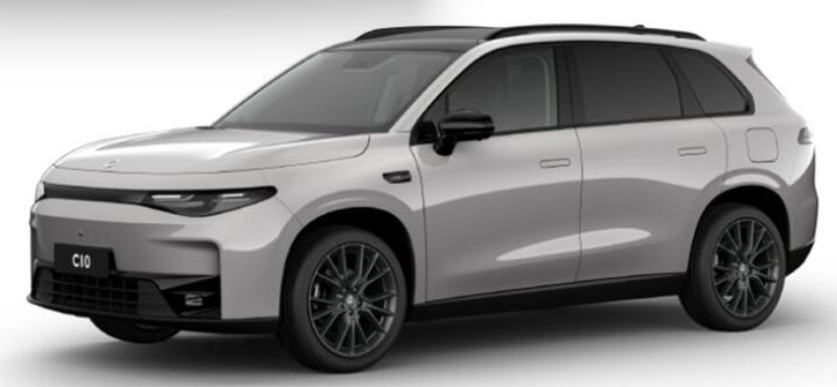
The Leapmotor C10 towing capacity is an increasingly important specification for buyers looking at this electric SUV as more than a comfortable family runabout. After all, an SUV may look ready for weekends away, but appearance tells us very little about what it can safely pull.
For the C10, the headline figure is encouraging. In markets where Leapmotor has approved the vehicle for towing at these specifications, the C10 can tow up to 1,500 kg with a braked trailer and up to 750 kg with an unbraked trailer. Leapmotor documentation for Australia has also specified a maximum tongue download of 150 kg.
That puts the C10 firmly in useful light-to-medium towing territory. We are not looking at a heavy-duty tow vehicle designed to drag enormous caravans across continents. Instead, think small caravans, camping trailers, utility trailers, motorcycle trailers, and other recreational loads.
There is more to towing than one number, though. Battery range, payload, trailer brakes, tongue weight, passengers, terrain, speed, weather, and even tyre pressure can dramatically change the experience.
So, how capable is the Leapmotor C10 when a trailer is actually attached? Let's unpack it.
Content in this publication
- What Is the Leapmotor C10 Towing Capacity?
- Can the Leapmotor C10 Tow a Caravan?
- Can the Leapmotor C10 Tow a Trailer?
- Leapmotor C10 Towing Capacity and Vehicle Weight
- Does the Leapmotor C10 REEV Have the Same Towing Capacity?
- What About the Leapmotor C10 AWD?
- How Does Towing Affect Leapmotor C10 Range?
- Regenerative Braking While Towing
- Is 1,500 kg a Good Towing Capacity for an Electric SUV?
- Leapmotor C10 vs Traditional Tow Vehicles
- Charging the Leapmotor C10 While Towing
- Trailer Stability and the C10
- Does Towing Affect Tyre Pressure?
- How to Tow More Efficiently With the Leapmotor C10
- Should You Tow at the Maximum 1,500 kg Limit?
- How to Check Your Exact C10 Towing Limit
- Is the Leapmotor C10 a Good Car for Towing?
- Common Leapmotor C10 Towing Mistakes to Avoid
- Leapmotor C10 Towing Capacity: The Practical Verdict
- Conclusion
- Frequently Asked Questions
What Is the Leapmotor C10 Towing Capacity?
The most important figures are straightforward:
| Specification | Leapmotor C10 |
|---|---|
| Maximum braked towing capacity | 1,500 kg |
| Maximum unbraked towing capacity | 750 kg |
| Maximum tongue download in published Australian specification | 150 kg |
| Driven wheels on original BEV | Rear-wheel drive |
| Original BEV maximum power | 160 kW |
| Original BEV maximum torque | 320 Nm |
Leapmotor's published Australian specification sheet lists a 1,500 kg maximum braked towing capacity, 750 kg maximum unbraked towing capacity, and 150 kg maximum tongue download for the C10 BEV configuration covered by that document.
That 1.5-tonne rating makes the C10 surprisingly practical for an electric family SUV.
Still, we should treat the manufacturer's figure as a ceiling rather than a target. Just because a trailer weighs exactly 1,500 kg does not automatically mean every journey with it will be comfortable or practical.
Leapmotor C10 Braked Towing Capacity
The Leapmotor C10 braked towing capacity is up to 1,500 kg in the markets and variants carrying that rating.
A braked trailer has its own braking system. When the vehicle slows down, the trailer contributes braking force instead of relying entirely on the C10's brakes.
This becomes increasingly important as trailer weight rises.
A 1,500 kg maximum means the C10 could potentially handle equipment such as a relatively lightweight caravan, enclosed cargo trailer, compact boat trailer, or substantial camping trailer, provided the trailer's actual loaded mass remains within all relevant ratings.
Notice the phrase actual loaded mass.
A caravan advertised as weighing 1,250 kg empty could easily become much heavier after we add water, gas bottles, food, batteries, camping equipment, clothing, bicycles, and accessories.
That is why experienced towers look at loaded weights, not brochure fantasies.
Leapmotor C10 Unbraked Towing Capacity
The maximum published unbraked towing capacity is 750 kg.
An unbraked trailer has no independent braking system, so the tow vehicle does all the stopping.
Because of that, allowable weights are considerably lower.
A lightweight garden trailer, small box trailer, or compact recreational trailer may fall into this category.
Once loads become substantial, however, a properly braked trailer is normally the more appropriate solution and may also be legally required depending on the jurisdiction.
Why Braked and Unbraked Ratings Are So Different
Imagine pushing a shopping trolley downhill.
Now imagine the trolley weighs three-quarters of a tonne.
You would certainly want it to help stop itself.
That is essentially the difference between braked and unbraked towing. The heavier the trailer becomes, the more important it is that the trailer contributes to controlled braking instead of simply pushing against the rear of the vehicle.
Can the Leapmotor C10 Tow a Caravan?
Yes, the Leapmotor C10 can tow some caravans, assuming the specific vehicle is approved for towing and the caravan remains within its legal weight limits.
With a 1,500 kg braked capacity, the C10 is best matched with lightweight caravans rather than large family touring caravans.
Plenty of compact caravans have sensible empty weights, but we need to consider their fully loaded mass.
That distinction matters enormously.
If a caravan weighs 1,300 kg empty but reaches 1,550 kg after loading, it exceeds a 1,500 kg tow rating even though its brochure weight initially looked acceptable.
What Size Caravan Is Realistic?
Rather than shopping for a caravan sitting exactly at the vehicle's maximum towing figure, many drivers will find a lighter combination more relaxing.
A trailer somewhere comfortably below the maximum gives us breathing room for cargo and reduces the strain imposed by steep hills, crosswinds, repeated acceleration, and motorway speeds.
We should check:
- The caravan's actual loaded mass
- The C10's permitted trailer mass
- Maximum tow-ball or tongue load
- Vehicle payload
- Axle limits
- Gross combination restrictions where applicable
- Local towing legislation
The exact legal terminology varies between countries, but the principle remains identical: every relevant limit must be respected simultaneously.
Can the Leapmotor C10 Tow a Trailer?
Absolutely.
In fact, general-purpose trailers are arguably where the C10's towing capacity makes the most sense.
A small utility trailer carrying gardening equipment or furniture presents a much easier challenge than a tall caravan weighing close to the maximum rating.
Trailer shape matters almost as much as weight for an EV.
Why?
Aerodynamic drag.
A low trailer can slip through the air relatively quietly. A full-height caravan behaves more like someone opening a giant umbrella behind the car.
At motorway speeds, moving that wall of air consumes substantial energy.
Typical Loads the C10 Could Potentially Tow
Depending on actual trailer mass and local regulations, its towing capability could suit:
- Small box trailers
- Camping trailers
- Lightweight caravans
- Motorcycle trailers
- Jet-ski trailers
- Some compact boat-and-trailer combinations
- Small equipment trailers
- Utility trailers for household projects
We deliberately say could rather than automatically can.
The weight of the trailer plus everything loaded onto it determines whether the combination stays legal.
Leapmotor C10 Towing Capacity and Vehicle Weight
One reason the C10 feels relatively substantial on the road is that it is not a tiny EV.
Leapmotor's earlier published BEV specification lists a tare vehicle mass around 1,995 kg and a gross vehicle mass of 2,460 kg for the configuration represented in that sheet.
Later specification material shows that vehicle weight varies across the expanding C10 range. For example, newer documentation lists different weights for BEV, long-range, AWD, and range-extender derivatives.
This matters because towing should never be evaluated using trailer weight alone.
We also need to know what is inside the vehicle.
Five adults, luggage, accessories, a tow-bar load, and equipment can consume available payload surprisingly quickly.
Payload Matters When Towing
Suppose we load the C10 for a family camping holiday.
We may have:
- Driver and passengers
- Suitcases
- Food
- Camping gear
- Charging cables
- Child equipment
- Accessories
- Trailer tongue weight pressing downward on the vehicle
Each item contributes to the vehicle's load.
The trailer may technically remain below 1,500 kg while the vehicle itself becomes overloaded.
This is one of the most frequently misunderstood aspects of towing.
Tongue Weight Is Not Weightless
The downward force exerted by a trailer on the tow hitch becomes part of the load carried by the vehicle.
Leapmotor's Australian C10 specification has listed a maximum tongue download of 150 kg.
Think of the tow ball as another passenger sitting right at the back of the car.
That weight affects the suspension, rear axle loading, steering balance, and remaining payload capacity.
Does the Leapmotor C10 REEV Have the Same Towing Capacity?
The range-extender version adds an interesting dimension to the towing discussion.
Current Australian-market listings for the Leapmotor C10 REEV show a 1,500 kg braked and 750 kg unbraked towing capacity.
European technical information for the C10 REEV likewise reports a 1,500 kg braked and 750 kg unbraked figure for relevant versions.
That makes the REEV particularly intriguing for people who regularly travel beyond convenient fast-charging networks.
Why the REEV Could Appeal to Towers
Towing increases energy consumption substantially in any electrified vehicle.
With a conventional battery-electric C10, that means shorter distances between charging stops.
The REEV, by contrast, combines electric propulsion with a petrol-powered range-extending system.
For touring, that can provide another layer of flexibility.
It does not magically eliminate the extra energy required to tow a caravan—the laws of physics remain stubbornly employed—but refuelling can make long-distance route planning easier in regions where charging infrastructure is sparse.
What About the Leapmotor C10 AWD?
The C10 family has continued to expand beyond the original rear-wheel-drive configuration.
Current Leapmotor material for Australia includes newer BEV Long Range and AWD derivatives alongside the standard BEV and Ultra Hybrid REEV. The published technical specifications show substantially higher power for the AWD model than for the original 160 kW rear-wheel-drive BEV.
More power does not automatically mean a higher legal towing rating.
This is crucial.
Towing capacity is established through vehicle engineering, structural limits, braking, thermal management, suspension, homologation, and manufacturer certification. It cannot be calculated simply from horsepower.
Always use the towing rating printed for the exact variant and model year you own.
How Does Towing Affect Leapmotor C10 Range?
This is where EV towing becomes interesting.
Attaching a caravan can significantly reduce driving range.
The amount lost depends on the trailer.
A small aerodynamic trailer might create a relatively modest penalty. A tall, square caravan at motorway speed can consume dramatically more energy.
Weight Matters Most During Acceleration and Climbing
Moving additional mass requires extra energy.
Every time we accelerate the combined vehicle and trailer, the motor must work harder.
Climbing hills magnifies the effect.
Imagine carrying a backpack upstairs. A lightly loaded backpack is noticeable. A heavy one suddenly makes every flight of stairs feel twice as long.
The same basic principle applies to towing.
Aerodynamic Drag Matters at Higher Speeds
Once cruising speeds increase, aerodynamic drag becomes the bigger enemy.
A caravan may weigh less than the C10 itself, yet create a disproportionately large range reduction simply because it punches a huge hole through the air.
This explains why slowing slightly can make a surprisingly meaningful difference to towing efficiency.
Cold Weather Adds Another Layer
Battery efficiency generally deteriorates in cold conditions, while cabin heating consumes additional energy.
Combine:
cold temperatures + trailer + headwind + motorway speeds + hills,
and real-world range can fall well below an unloaded official test figure.
Anyone planning a winter towing trip should build generous charging margins into the route.
Regenerative Braking While Towing
Regenerative braking is one of the pleasures of towing with an EV.
When we lift off the accelerator or brake, the electric motor can recover some kinetic energy and send it back toward the battery.
A heavy vehicle-and-trailer combination contains substantial kinetic energy, so regeneration may help recover part of what would otherwise be lost as heat through conventional brakes.
But regeneration does not replace properly functioning trailer brakes.
That distinction is essential.
The C10's regenerative system manages the vehicle. A braked trailer must still have an appropriate braking setup that complies with local regulations.
Is 1,500 kg a Good Towing Capacity for an Electric SUV?
It is respectable rather than exceptional.
A 1,500 kg capacity gives the Leapmotor C10 genuine recreational usefulness without pretending to be something it is not.
This is not an electric equivalent of a large ladder-frame diesel 4x4 intended to haul massive caravans or horse floats.
Instead, it sits in a practical middle ground.
For many families, 1,500 kg is enough.
For people towing large caravans approaching two or three tonnes, it clearly is not.
And that is perfectly fine. A vehicle should be judged against its intended job, not against machinery designed for an entirely different mission.
Leapmotor C10 vs Traditional Tow Vehicles
Electric motors possess one characteristic we love for towing: immediate torque.
There is no waiting for an engine to rev into its power band.
Press the accelerator and torque arrives smoothly.
The original C10 BEV specification lists 320 Nm of maximum torque and 160 kW of power.
That should make pulling away with a moderate trailer feel effortless compared with some smaller naturally aspirated petrol SUVs.
Where an EV Has the Advantage
Electric towing can offer wonderfully smooth low-speed control.
There are no gear changes interrupting power delivery, and precise accelerator response can make manoeuvring trailers less stressful.
Reversing slowly onto a campsite or boat ramp benefits from that predictable torque delivery.
Where an EV Faces Challenges
Range remains the obvious compromise.
A petrol or diesel vehicle may suffer worse fuel economy while towing, but refuelling takes only a few minutes and fuel stations are widespread.
A battery EV needs charging.
More importantly, not every charging bay is trailer-friendly.
Sometimes the greatest annoyance is not range itself but discovering that reaching the charger requires unhitching the trailer.
Charging the Leapmotor C10 While Towing
Route planning becomes more important when we tow with the battery-electric C10.
Instead of planning to arrive at a charger with the battery almost empty, we would leave ourselves a comfortable reserve.
Unexpected headwinds, elevation changes, rain, cold temperatures, detours, and traffic can all shift consumption.
Choose Trailer-Friendly Chargers
Where possible, look for charging locations with:
- Pull-through bays
- Large parking areas
- Easy access roads
- Space to manoeuvre
- Multiple chargers
- Nearby amenities
A charging hub designed like a petrol station is a tower's dream.
A charger squeezed into the corner of a multi-storey car park is rather less romantic.
Trailer Stability and the C10
Towing safely is not merely about whether the electric motor can move the load.
Weight distribution is fundamental.
Poorly loaded trailers can sway, especially at speed.
Heavy objects should generally be positioned according to the trailer manufacturer's loading instructions, with suitable tongue weight and balanced axle loading.
Too little weight on the hitch can encourage instability. Too much can overload the rear axle or hitch.
That is why guessing is a bad strategy.
Use scales where appropriate and follow the limits specified by the vehicle, tow-bar, and trailer manufacturers.
Does Towing Affect Tyre Pressure?
It can.
A heavily loaded vehicle may require different tyre pressures from an unladen vehicle.
The correct figures should come from the C10's tyre-pressure label and owner's documentation rather than generic internet advice.
We should also inspect both vehicle and trailer tyres before a towing journey.
Look for:
- Correct cold inflation pressure
- Cuts or cracking
- Bulges
- Uneven wear
- Adequate tread
- Suitable load rating
- Correct trailer tyre pressures
Tyres are the only parts of the whole combination actually touching the road.
Four small patches of rubber are doing an astonishing amount of work.
How to Tow More Efficiently With the Leapmotor C10
If we want to preserve as much range as possible, driving style matters enormously.
Smooth acceleration is our friend.
So is moderate speed.
Aggressive acceleration repeatedly asks the powertrain to move two heavy objects instead of one. High cruising speeds make aerodynamic drag soar.
A few sensible habits can transform the experience:
- Keep the trailer comfortably within permitted limits.
- Remove unnecessary cargo.
- Maintain correct tyre pressures.
- Accelerate progressively.
- Reduce cruising speed when safe and appropriate.
- Leave greater stopping distances.
- Anticipate traffic so regenerative braking can work progressively.
- Plan charging stops with additional reserve.
- Check weather and wind conditions before long journeys.
- Recheck hitch, lights, safety connections, and trailer brakes before departure.
None of these tricks is glamorous.
Together, however, they can make towing calmer, safer, and considerably more efficient.
Should You Tow at the Maximum 1,500 kg Limit?
Legally permitted does not always mean desirable.
Running close to the maximum leaves little room for measurement errors, additional equipment, or changes in cargo.
A lighter trailer will usually produce:
- Better acceleration
- Shorter energy stops
- Improved efficiency
- Greater range
- Easier braking
- More relaxed handling
- Lower mechanical and thermal stress
We should think of the maximum rating as the outer boundary of the envelope.
There is no prize for touching the edge of the envelope on every camping trip.
How to Check Your Exact C10 Towing Limit
This part deserves emphasis because the Leapmotor C10 is now sold in multiple countries and increasingly in multiple powertrain configurations.
Do not assume an online specification for one C10 automatically applies to another.
Before towing, check the exact rating shown in:
1. The Owner's Manual
This should provide towing instructions and applicable vehicle restrictions.
2. Vehicle Certification or Compliance Information
Depending on the country, officially approved masses may be listed on certification plates or registration documents.
3. The Genuine Tow-Bar Documentation
A tow bar can carry its own maximum ratings.
The lowest applicable limit wins.
4. Local Leapmotor Documentation
Current brochures and technical specifications should be checked for your exact model year and market.
5. Local Towing Regulations
National and regional laws determine trailer brake requirements, licence rules, speed restrictions, safety chains, breakaway systems, and other obligations.
Specifications are not universal.
The safest approach is simple: verify your exact VIN/model configuration before hitching up.
Is the Leapmotor C10 a Good Car for Towing?
For light-to-medium recreational towing, the answer is potentially yes.
A 1,500 kg braked rating makes the C10 far more useful than an EV with little or no approved towing capability.
Its electric power delivery should also suit controlled low-speed manoeuvring and smooth acceleration.
The compromise is energy consumption.
Tow a tall caravan and we should expect substantially less range than when cruising solo.
For someone taking a lightweight caravan away several times per year, that might be perfectly manageable.
For someone covering enormous distances every week with a heavy trailer, a different vehicle could be more suitable.
Who Is the C10 Best Suited To?
The C10 makes the strongest towing case for drivers who:
- Tow occasionally rather than professionally
- Own relatively lightweight trailers
- Travel routes with decent charging coverage
- Value quiet, smooth electric driving
- Do not need more than 1,500 kg of capacity
- Are willing to plan charging stops carefully
The REEV version could be particularly appealing to people who like electrified driving but regularly travel through areas with limited fast-charging coverage.
Common Leapmotor C10 Towing Mistakes to Avoid
A surprising number of towing problems start before the vehicle moves.
One mistake is using the trailer's empty weight instead of its loaded weight.
Another is ignoring tongue load.
We also should not assume that because the C10's motor feels powerful, the vehicle can exceed its certified towing limit.
Power and legal towing capacity are not interchangeable.
Finally, avoid copying ratings from another country without verification.
A C10 sold in Australia, Europe, the UK, or another region may be subject to different equipment, homologation, paperwork, or regulatory requirements.
Leapmotor C10 Towing Capacity: The Practical Verdict
The Leapmotor C10 towing capacity of up to 1,500 kg braked and 750 kg unbraked gives this electric SUV meaningful versatility.
That is enough for numerous lightweight caravans, camping trailers, small boats, utility trailers, and recreational loads.
The number also feels well judged for the vehicle.
Leapmotor has not tried to paint the C10 as a heavy-duty towing monster. Instead, it offers enough capability to cover the kind of occasional towing many SUV owners genuinely perform.
The bigger question is not whether the C10 can pull a trailer.
It clearly can, when properly specified.
The question is whether its combination of towing capacity, payload, range, charging infrastructure, and trailer size fits our particular journey.
And that is where smart buyers should focus.
A compact caravan and an intelligently planned route? The C10 could make a surprisingly pleasant touring companion.
A huge caravan loaded for six months of cross-country travel?
We would be shopping in another aisle.
Conclusion
The Leapmotor C10 is more capable as a tow vehicle than its sleek electric-SUV appearance might initially suggest.
Its published maximum braked towing capacity reaches 1,500 kg, while unbraked trailers are rated up to 750 kg on versions carrying these specifications. Leapmotor has additionally listed 150 kg maximum tongue download in its Australian documentation for the relevant C10 configuration.
Those numbers place the C10 in a genuinely useful category for recreational towing.
We can tow lightweight caravans, utility trailers, camping equipment, and numerous small recreational loads without needing a giant 4x4.
But towing capacity is only half of the story.
Payload, tongue weight, range loss, charging access, trailer aerodynamics, tyre condition, braking equipment, road conditions, and local laws all matter.
Treat the 1,500 kg figure as a limit rather than a goal, choose a sensibly weighted trailer, and the C10's quiet electric powertrain could make towing remarkably civilised.
Sometimes the best tow vehicle is not the one capable of pulling the biggest trailer.
It is the one that comfortably pulls the trailer we actually own.
Frequently Asked Questions
1. What is the Leapmotor C10 towing capacity?
The Leapmotor C10 is rated for up to 1,500 kg of braked towing capacity and 750 kg unbraked in published specifications for relevant markets and variants. Always confirm the specification for your exact model and country before towing.
2. Can a Leapmotor C10 tow a caravan?
Yes. A C10 carrying the 1,500 kg braked towing rating can tow lightweight caravans whose actual loaded weight remains within the vehicle's certified limits. Remember that caravan accessories, water, food, gas bottles, and luggage increase the real trailer weight.
3. Can the Leapmotor C10 tow 1,500 kg?
Yes, relevant C10 specifications list a 1,500 kg maximum braked trailer capacity. That means the trailer must have an appropriate braking system and every other applicable vehicle, hitch, axle, payload, and legal limit must also be respected.
4. How much range will the Leapmotor C10 lose when towing?
There is no universal percentage because consumption depends heavily on trailer weight, aerodynamic shape, speed, weather, temperature, terrain, and driving style. A tall caravan will normally affect range far more severely than a small low-profile utility trailer of comparable weight.
5. Does the Leapmotor C10 REEV have a 1,500 kg towing capacity?
Published specifications for relevant C10 REEV versions also show 1,500 kg braked and 750 kg unbraked towing capacity. Australian-market data and European technical information support those figures, although buyers should still verify the rating of their exact vehicle.
If you want to know other articles similar to Leapmotor C10 Towing Capacity: Complete Guide you can visit the category Service and Parts.
Volvo S90 Engine Oil: Type, Capacity & Change Guide
Volvo S90 Boot Space: Size, Capacity and Practicality
SEO Title: Volvo S90 Oil Capacity: Complete Guide by Engine

Kia Sorento Oil Type: Complete Guide by Year & Engine
Kia Sorento Engine Capacity: Complete Guide by Year
Peugeot 308 Clutch Replacement Cost: Complete UK Guide for 2026
Leave a Reply
More content of your interest