
Leapmotor C10 Battery Capacity: Complete Guide

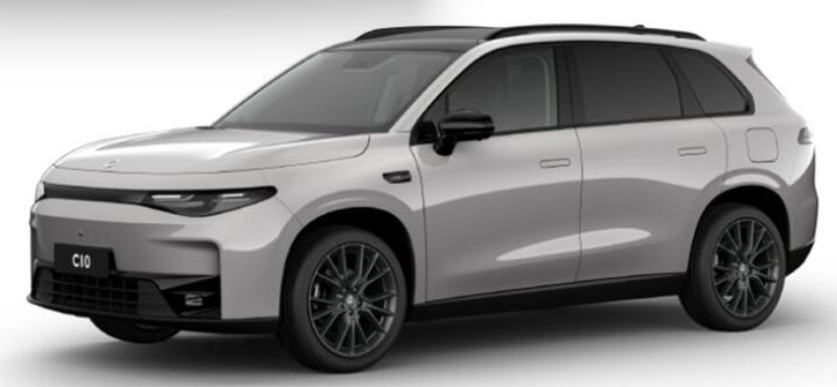
The Leapmotor C10 battery capacity is one of the first specifications worth understanding before buying this electric SUV. On the surface, the answer seems wonderfully simple: the familiar rear-wheel-drive electric Leapmotor C10 comes with a 69.9 kWh battery. Dig a little deeper, though, and the picture becomes more interesting.
Depending on the version and market, we can now find the C10 with different battery configurations. The regular battery-electric C10 has commonly been offered with a 69.9 kWh pack, while newer C10 variants have introduced an 81.9 kWh battery. There is also the C10 REEV range-extender, which takes a very different approach with a substantially smaller 28.4 kWh battery supported by a petrol-powered generator.
So, which number actually matters to us?
That depends on whether we're comparing driving range, charging time, efficiency, daily usability, long-distance ability or even future battery degradation. Battery capacity is the fuel-tank equivalent of an electric vehicle, but judging an EV purely by kilowatt-hours is a little like judging a restaurant by the size of its kitchen. Capacity matters, yet what the vehicle does with that capacity matters even more.
Let's unpack everything.
Content in this publication
- What Is the Leapmotor C10 Battery Capacity?
- Leapmotor C10 69.9 kWh Battery Explained
- Leapmotor C10 81.9 kWh Battery
- Leapmotor C10 REEV Battery Capacity
- What Type of Battery Does the Leapmotor C10 Use?
- Leapmotor C10 Cell-to-Chassis Technology
- How Much Range Does the 69.9 kWh C10 Provide?
- Leapmotor C10 Battery Efficiency
- How Long Does the Leapmotor C10 Battery Take to Charge?
- How Much Energy Is Added From 30% to 80%?
- Home Charging the Leapmotor C10
- How Much Does It Cost to Charge the C10 Battery?
- Does Battery Capacity Decrease Over Time?
- Should We Charge the C10 to 100%?
- 69.9 kWh C10 vs 28.4 kWh C10 REEV
- Is the 69.9 kWh Battery Big Enough?
- Is the 81.9 kWh C10 Worth Choosing?
- Leapmotor C10 Battery and Cold Weather
- How Battery Capacity Affects C10 Performance
- What Makes the Leapmotor C10 Battery Interesting?
- Which Leapmotor C10 Battery Would We Choose?
- Conclusion: Understanding Leapmotor C10 Battery Capacity
- Frequently Asked Questions
What Is the Leapmotor C10 Battery Capacity?
For the conventional battery-electric C10 sold in many international markets, the headline figure is:
69.9 kWh
Leapmotor's published C10 specifications list this battery alongside a rear-mounted permanent-magnet synchronous motor producing around 160 kW and 320 Nm. European specifications have quoted roughly 420–424 km of combined WLTP driving range depending on the particular homologation and specification.
However, the growing C10 family means there are now several battery capacities to know:
- 69.9 kWh – widely used in the standard rear-wheel-drive C10 BEV.
- 81.9 kWh – offered in newer, more powerful C10 configurations in selected markets.
- 28.4 kWh – used by the C10 REEV range-extender.
That variation explains why we may see apparently contradictory figures while researching the car online. They can all be correct—they simply describe different versions.
Leapmotor C10 69.9 kWh Battery Explained
The 69.9 kWh pack is effectively the battery most people associate with the global C10.
Official specifications for this model have paired it with approximately 160 kW of power, 320 Nm of torque and rear-wheel drive. Leapmotor has used lithium iron phosphate, commonly abbreviated LFP, for this configuration.
Why 69.9 kWh Is a Sensible Size
A battery close to 70 kWh sits in an appealing middle ground for a family SUV.
It's large enough to provide serious real-world usability without drifting toward the enormous 90–110 kWh packs sometimes fitted to bigger premium EVs. Those huge batteries can deliver excellent range, but they're also heavy, costly and resource-intensive.
With roughly 70 kWh available, the C10 can cover commuting, school runs, shopping trips and weekend travel without making charging feel like a daily ritual.
Think of it as carrying a reasonably large backpack instead of dragging an entire suitcase everywhere.
Is 69.9 kWh Gross or Usable Capacity?
This is where EV specifications can become murky.
Manufacturers may publish either the total physical—or gross—capacity of a battery or the usable energy available to the driver. A battery management system normally keeps a protective reserve at the top and bottom of the pack, which means the entire theoretical capacity is not necessarily accessible.
For day-to-day ownership, the precise distinction matters less than the combination of officially tested energy consumption and range.
Still, when comparing two EVs, we should make sure we're comparing like with like rather than assuming every published battery number represents usable capacity.
Leapmotor C10 81.9 kWh Battery
The C10 story no longer stops at 69.9 kWh.
Leapmotor has expanded the range with an 81.9 kWh battery, including higher-performance configurations. Malaysian specifications, for example, show a C10 Plus using an 81.9 kWh battery with 220 kW output and maximum DC charging power of 180 kW. Leapmotor also announced a C10 Design AWD using an 81.9 kWh battery in 2025.
That represents a substantial step upward.
69.9 kWh vs 81.9 kWh
The difference is exactly:
12 kWh
That works out to roughly 17% more nominal battery capacity.
Does that automatically give us 17% more driving range? Not necessarily.
The bigger-battery vehicle can also have:
- Greater motor output
- Additional drivetrain hardware
- Higher weight
- Different wheels and tyres
- AWD rather than RWD
- Different charging electronics
All of those variables influence efficiency.
A battery is only one side of the equation. Consumption is the other.
When the 81.9 kWh Version Makes More Sense
We'd lean toward the larger battery if our driving routinely involves:
- Long motorway journeys
- Large annual mileage
- Sparse charging infrastructure
- Frequent intercity travel
- Cold-weather driving
- High-speed cruising
- A desire for larger charging buffers
Someone covering 30 miles a day, however, may barely notice the practical difference during normal weekly driving.
Leapmotor C10 REEV Battery Capacity
Now things get particularly interesting.
The Leapmotor C10 REEV has a 28.4 kWh battery, considerably smaller than the 69.9 kWh pack in the regular battery-electric version.
At first glance, that sounds like a major downgrade.
It isn't.
The REEV follows an entirely different philosophy.
What Does REEV Mean?
REEV stands for Range Extender Electric Vehicle.
The wheels are driven electrically, while a 1.5-litre combustion engine acts as a generator when additional electrical energy is needed. Leapmotor has quoted approximately 145 km of WLTP electric range for the 28.4 kWh battery and total combined driving range exceeding 950 km in its European launch material.
Instead of carrying one giant battery, the vehicle effectively carries two energy sources.
That's rather like taking a portable charger with us instead of fitting an enormous battery into the phone itself.
Who Is the REEV Best For?
The REEV can make sense if we want an electric driving experience but still worry about charging availability on occasional long journeys.
Imagine our routine looks like this:
Monday through Friday, we travel 30–60 km per day.
The 28.4 kWh battery could cover much of that electrically.
Then Saturday arrives and we need to drive several hundred kilometres.
Instead of planning multiple fast-charging stops, the range extender can generate electricity along the way.
It's a compromise, certainly, but potentially a very useful one.
What Type of Battery Does the Leapmotor C10 Use?
The widely sold 69.9 kWh C10 uses LFP battery chemistry, or lithium iron phosphate.
LFP has become increasingly important across the EV industry.
Why LFP Matters
Compared with common nickel-rich lithium-ion chemistries, LFP batteries are valued for several characteristics:
- Strong thermal stability
- Long cycle life
- Lower dependence on nickel and cobalt
- Good resistance to repeated charging
- Competitive manufacturing cost
Their traditional disadvantage is lower energy density.
In plain English, an LFP pack can need more physical mass or volume to store the same amount of energy as some higher-energy-density alternatives.
Yet for a large family SUV, that trade-off is often perfectly acceptable.
Leapmotor C10 Cell-to-Chassis Technology
One of the more distinctive elements of the C10 is Leapmotor's Cell-to-Chassis, or CTC, approach.
Rather than treating the battery as a completely separate box bolted underneath the vehicle, this technology integrates battery-related structures more closely into the chassis.
Leapmotor itself highlights CTC as one of its core technologies.
Why Battery Integration Matters
Better packaging can potentially help manufacturers use interior and structural space more efficiently.
For us as drivers, the result isn't something we stare at from behind the steering wheel. Instead, we experience the consequences indirectly through:
- Cabin packaging
- Vehicle rigidity
- Centre of gravity
- Battery protection
- Overall weight distribution
It's one of those engineering details hiding below the surface, doing its job without shouting about it.
How Much Range Does the 69.9 kWh C10 Provide?
Official European material has quoted approximately 420 to 424 km of combined WLTP range for the 69.9 kWh C10, with the variation depending on market and specification.
That's roughly:
261–263 miles
Of course, official laboratory figures and actual driving are not identical.
Real-World Range Depends on More Than Battery Size
Our real range can change dramatically depending on:
- Speed
- Temperature
- Heating and air-conditioning
- Elevation
- Passenger load
- Tyre pressure
- Driving style
- Rain and wind
- Wheel choice
- Urban versus motorway use
An EV cruising through town at moderate speeds can be remarkably efficient.
The same vehicle travelling at sustained motorway speeds in cold weather will consume considerably more energy.
That isn't a Leapmotor-specific issue. It's basic physics.
Leapmotor C10 Battery Efficiency
An interesting way to evaluate the C10 is to compare its battery capacity with its official range.
Australian specification material for the 69.9 kWh model lists WLTP energy consumption around 198 Wh/km, or 19.8 kWh/100 km.
That's a useful benchmark for a vehicle of this size.
What Does 20 kWh/100 km Mean?
If we use 20 kWh per 100 km as a simple example, then:
- 10 kWh ≈ 50 km
- 20 kWh ≈ 100 km
- 40 kWh ≈ 200 km
- 60 kWh ≈ 300 km
Real-world efficiency will move above and below this figure.
Urban traffic with regenerative braking could improve it, while fast motorway driving could worsen it.
How Long Does the Leapmotor C10 Battery Take to Charge?
Battery capacity tells us how much energy the C10 can hold.
Charging power tells us how quickly we can put that energy back.
And here's where version differences become important.
Early 69.9 kWh European C10 specifications list maximum DC charging around 83–84 kW, with a claimed 30–80% charging time of about 30 minutes.
Newer specifications have evolved considerably. For example, an 81.9 kWh C10 Plus specification lists DC charging at up to 180 kW.
So we should never assume charging speed solely from battery size.
Why Peak Charging Power Doesn't Tell the Whole Story
A car advertised at 180 kW won't necessarily remain at 180 kW throughout the charging session.
EV batteries typically follow a charging curve.
They may charge rapidly when the battery is relatively low, then progressively reduce power as the state of charge increases.
That's why manufacturers usually advertise something such as 30–80% charging time instead of zero to 100%.
How Much Energy Is Added From 30% to 80%?
Let's use the 69.9 kWh battery as an easy illustration.
A 30–80% session represents half the battery's nominal capacity.
So:
69.9 × 0.50 = 34.95 kWh
In simplified terms, we're adding around 35 kWh during that charging window.
Real electricity drawn from the charger will normally be higher because some energy is lost through charging electronics, battery conditioning and heat.
Why 80% Is Such a Common Charging Target
Charging tends to slow significantly as we approach a full battery.
When travelling, stopping at around 80% and continuing the journey can therefore be faster than waiting for the final 20%.
A second short charging stop can sometimes beat one painfully long session.
Home Charging the Leapmotor C10
Home charging is where a 69.9 kWh EV can become remarkably convenient.
Instead of thinking like we do with petrol—run nearly empty, then refill—we can plug in whenever the car is parked.
It's closer to charging a smartphone overnight.
How Long Will a Full Home Charge Take?
The answer depends on the charger and the onboard charging hardware fitted to our particular C10.
A theoretical calculation is easy:
Battery capacity ÷ charging power = approximate charging time
For example:
69.9 kWh ÷ 7 kW ≈ 10 hours
But real charging takes somewhat longer because energy losses and charging behaviour prevent the process from being perfectly efficient.
And most owners won't repeatedly charge from 0% to 100% anyway.
If we arrive home at 45% and charge to 80%, the required energy is dramatically lower.
How Much Does It Cost to Charge the C10 Battery?
Charging cost depends almost entirely on our electricity tariff.
The basic calculation is:
Battery capacity × electricity price = theoretical full-charge cost
Suppose electricity costs £0.25 per kWh.
For the 69.9 kWh model:
69.9 × £0.25 = £17.48
At £0.30 per kWh:
69.9 × £0.30 = £20.97
These simple figures exclude charging losses.
Public rapid charging can also cost substantially more than home electricity.
Why Home Charging Changes the Ownership Equation
If we can charge at home on an off-peak tariff, the C10 may be significantly cheaper to fuel than a comparable petrol SUV.
Without home charging, the economics become more dependent on local public-charger pricing.
That's why two people owning exactly the same EV can have completely different charging costs.
Does Battery Capacity Decrease Over Time?
Yes.
Every lithium-based EV battery gradually loses some usable capacity through ageing and charging cycles.
That doesn't mean the battery suddenly "dies."
Instead, degradation normally appears as a gradual reduction in the amount of energy the pack can store.
What Accelerates Battery Degradation?
Several factors can contribute:
- Prolonged exposure to extreme heat
- Frequent storage at very high state of charge
- Repeated deep discharge
- High annual mileage
- Aggressive charging habits
- Simply getting older
Battery management software helps protect modern EV packs from the worst conditions.
The C10 owner's documentation also advises maintaining an appropriate state of charge during long periods of storage rather than abandoning the battery completely full or nearly empty.
Should We Charge the C10 to 100%?
There's no need to become obsessive about battery percentages.
For normal daily use, many EV owners choose a moderate charging limit when the full range isn't required.
Then, before a long trip, charging to 100% can be perfectly practical.
LFP chemistry is generally tolerant of regular charging, although the correct approach should always follow the instructions supplied for the exact vehicle and market.
The key is convenience.
An electric car shouldn't turn us into full-time battery managers.
69.9 kWh C10 vs 28.4 kWh C10 REEV
These two C10 versions serve very different buyers.
| Feature | C10 BEV | C10 REEV |
|---|---|---|
| Battery capacity | 69.9 kWh | 28.4 kWh |
| Main energy source | Battery | Battery + petrol generator |
| Electric-only focus | Yes | Yes, with range extender |
| WLTP electric range | Around 420 km | Around 145 km |
| Long-trip strategy | Recharge battery | Recharge or use range extender |
| Best suited to | Full EV ownership | Drivers wanting EV use with backup |
The REEV shouldn't be viewed as a C10 with a "small battery."
It's better understood as a fundamentally different powertrain strategy.
Is the 69.9 kWh Battery Big Enough?
For many drivers, absolutely.
A 400-plus-kilometre WLTP rating gives the C10 enough theoretical range to cover several days of normal driving before charging.
Suppose we drive 50 km each day.
Even after accounting for real-world conditions, we're unlikely to need daily charging purely because of range.
Someone driving 250–300 km every day has different requirements, of course.
That's where the larger 81.9 kWh versions—or simply access to fast charging—become much more valuable.
Is the 81.9 kWh C10 Worth Choosing?
The larger battery is attractive, but bigger isn't automatically better.
More battery usually means more stored energy, yet it can also mean more vehicle weight and potentially a higher purchase price.
We should ask a more useful question:
Will we actually use the additional capacity?
If most journeys are under 100 km and we have home charging, probably not very often.
If we're regularly crossing regions, driving on motorways or operating where charging infrastructure is limited, the answer may quickly become yes.
Think in Terms of Charging Frequency, Not Maximum Range
This is one of the simplest ways to choose between battery sizes.
Instead of asking:
"How far can the car possibly travel?"
Ask:
"How often will I realistically need to plug it in?"
That's the number we'll actually experience.
Leapmotor C10 Battery and Cold Weather
Cold temperatures can reduce EV range because battery chemistry becomes less efficient and cabin heating consumes additional electricity.
A C10 that comfortably covers a particular distance in mild weather may therefore need a larger energy buffer during winter.
The degree of reduction varies with temperature, journey type and heating use.
Why Short Winter Journeys Can Be Surprisingly Inefficient
Heating the cabin consumes energy every time we start from cold.
On a 10-minute journey, that initial heating load represents a large percentage of total consumption.
On a two-hour drive, the same initial load becomes much less significant.
That's why winter efficiency figures can look particularly poor for repeated short trips.
How Battery Capacity Affects C10 Performance
We normally associate batteries with range, yet batteries also affect performance.
A larger or newer battery pack can sometimes support greater electrical output, provided the motors and power electronics are designed accordingly.
That's visible in newer C10 versions.
The 69.9 kWh C10 has widely been specified around 160 kW, whereas an 81.9 kWh C10 Plus specification lists 220 kW.
But again, the battery alone doesn't create that extra performance.
Motor design, inverter capability, thermal management and drivetrain configuration all work together.
What Makes the Leapmotor C10 Battery Interesting?
If we're comparing the C10 against more established electric SUVs, its battery isn't revolutionary simply because it holds 69.9 kWh.
The more interesting story lies in the combination of:
- LFP battery chemistry
- Cell-to-Chassis integration
- Competitive battery capacity
- Multiple powertrain choices
- Newer higher-capacity versions
- A REEV alternative for long-distance flexibility
That gives buyers more choice than a single headline figure initially suggests.
Which Leapmotor C10 Battery Would We Choose?
For straightforward electric ownership, the 69.9 kWh C10 BEV remains a balanced option.
It offers enough battery capacity for normal family driving without carrying an unnecessarily enormous pack.
The 81.9 kWh version becomes more appealing for regular long-distance use, performance-oriented buyers or anyone who simply wants a larger energy reserve.
The 28.4 kWh C10 REEV, meanwhile, is the wildcard.
It's suited to someone who wants to handle everyday trips electrically but isn't ready to depend entirely on charging infrastructure during long journeys.
There isn't one universally best battery.
There's only the one that matches how we actually drive.
Conclusion: Understanding Leapmotor C10 Battery Capacity
The simplest answer to the question "What is the Leapmotor C10 battery capacity?" remains 69.9 kWh for the familiar rear-wheel-drive battery-electric model. Official Leapmotor specifications have paired this battery with around 420 km of WLTP range in several markets.
But the complete answer is more nuanced.
The expanding C10 range also includes 81.9 kWh battery versions, while the C10 REEV uses a 28.4 kWh pack alongside its petrol range-extending generator.
For most buyers, battery capacity should be viewed as the starting point rather than the final verdict.
Range, efficiency, charging speed, climate, journey length and charging access matter just as much.
A 69.9 kWh battery that fits our weekly routine perfectly is more useful than a gigantic pack whose extra capacity we rarely touch.
And that may be the C10's strongest argument: rather than simply chasing the biggest possible battery number, Leapmotor now offers different ways of solving the same everyday problem—getting us where we need to go without making energy management a headache.
Frequently Asked Questions
1. What battery capacity does the Leapmotor C10 have?
The standard battery-electric Leapmotor C10 sold in many markets uses a 69.9 kWh battery. Newer versions can use an 81.9 kWh pack, while the C10 REEV range-extender uses a 28.4 kWh battery.
2. What type of battery does the Leapmotor C10 use?
The widely sold 69.9 kWh C10 uses a lithium iron phosphate (LFP) battery. LFP chemistry is known for good thermal stability, long cycle life and relatively durable charging characteristics.
3. How far can a 69.9 kWh Leapmotor C10 travel?
European specifications have quoted approximately 420–424 km of combined WLTP range, although actual range depends on temperature, driving speed, terrain, climate-control use and other conditions.
4. Does the Leapmotor C10 have an 81.9 kWh battery?
Yes. Leapmotor has introduced C10 variants using an 81.9 kWh battery, including an AWD version announced in 2025 and other higher-specification models in selected markets.
5. How big is the Leapmotor C10 REEV battery?
The Leapmotor C10 REEV uses a 28.4 kWh battery. Leapmotor's European launch information quoted approximately 145 km of WLTP electric driving range, with a petrol-powered range extender increasing total driving range to more than 950 km.
If you want to know other articles similar to Leapmotor C10 Battery Capacity: Complete Guide you can visit the category Service and Parts.
Volvo S90 Engine Oil: Type, Capacity & Change Guide
Volvo S90 Boot Space: Size, Capacity and Practicality
SEO Title: Volvo S90 Oil Capacity: Complete Guide by Engine

Kia Sorento Oil Type: Complete Guide by Year & Engine
Kia Sorento Engine Capacity: Complete Guide by Year
Peugeot 308 Clutch Replacement Cost: Complete UK Guide for 2026
Leave a Reply
More content of your interest