
BMW M2 Engine Specs: Complete Guide to Every M2 Engine

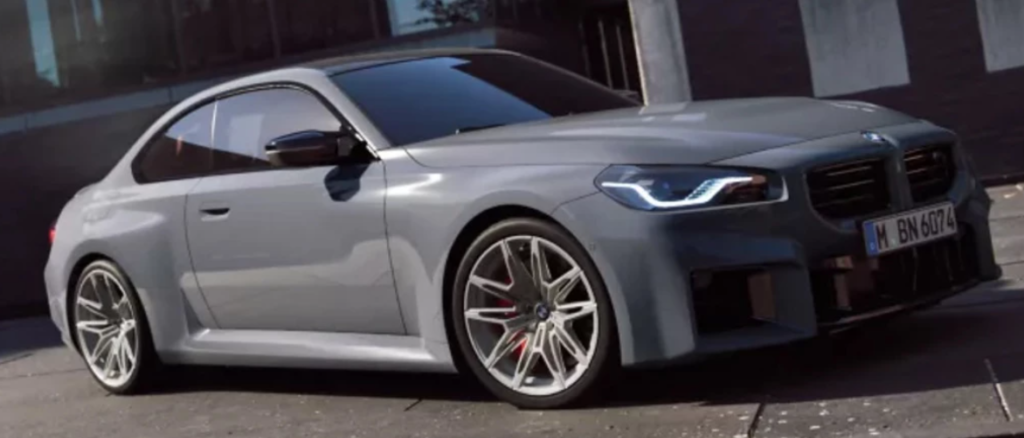
The BMW M2 engine specs tell a much bigger story than horsepower alone. Since the first M2 appeared, BMW has transformed its smallest full-fat M car from a wonderfully rowdy turbocharged coupe into something packing an engine closely related to the heart of the M3 and M4.
And that evolution has been fascinating.
We have gone from the original F87's 3.0-liter N55 straight-six, through the harder-edged S55 of the M2 Competition and first M2 CS, to the mighty S58 powering today's G87 generation. The basic recipe sounds almost suspiciously unchanged: six cylinders arranged in a line, roughly three liters of displacement, turbocharging, and rear-wheel-drive attitude.
Underneath, though, these engines are remarkably different.
If you're comparing generations, shopping for a used M2, researching tuning potential, or simply wondering what makes the current model so brutally quick, this guide breaks down the BMW M2 engine specifications, power figures, torque, turbocharger layouts, internal architecture, transmissions, and performance differences.
Content in this publication
- BMW M2 Engine Specs at a Glance
- What Engine Does the BMW M2 Have?
- Original BMW M2 F87 Engine Specs
- BMW M2 Competition Engine Specs
- BMW M2 CS F87 Engine Specs
- G87 BMW M2 S58 Engine Specs
- How the S58 Engine Works
- 2026 BMW M2 CS Engine Specs
- BMW M2 N55 vs S55 vs S58
- BMW M2 Manual vs Automatic Engine Performance
- BMW M2 Turbocharger Specifications
- BMW M2 Horsepower by Generation
- BMW M2 Torque Specs
- How High Does the BMW M2 Engine Rev?
- Is the BMW M2 Engine the Same as the M3 Engine?
- How Much Tuning Potential Does the M2 Engine Have?
- BMW M2 Engine Cooling System
- Which BMW M2 Engine Is Best?
- Why the M2 Engine Matters More Than the Numbers
- Final Thoughts on BMW M2 Engine Specs
- Frequently Asked Questions About BMW M2 Engine Specs
BMW M2 Engine Specs at a Glance
Before we dive deep into valves, turbos, crankshafts, and boost pressure, here's the simplified family tree.
| BMW M2 version | Engine | Displacement | Turbo setup | Approx. output |
|---|---|---|---|---|
| Original F87 M2 | N55 | 2,979 cc | Single twin-scroll turbo | 365-370 hp |
| F87 M2 Competition | S55 | 2,979 cc | Twin turbo | 405-410 hp |
| F87 M2 CS | S55 | 2,979 cc | Twin turbo | 444-450 hp |
| G87 M2 | S58 | 2,993 cc | Twin mono-scroll turbo | Up to 473 hp |
| G87 M2 CS | S58 | 2,993 cc | Twin mono-scroll turbo | 523 hp US / 530 PS Europe |
Regional horsepower standards can make the same engine appear to produce slightly different numbers. European BMW literature, for example, quoted 370 PS for the original M2, while U.S. ratings were expressed differently. The underlying engines were not magically gaining or losing power at the border.
The progression is nevertheless clear: BMW has pushed the M2 from roughly 365 hp to more than 520 hp while keeping displacement remarkably close to three liters.
What Engine Does the BMW M2 Have?
The current-generation BMW M2 uses BMW M's S58 3.0-liter twin-turbocharged inline-six engine.
Its displacement is 2,993 cc, and the architecture includes six cylinders and 24 valves. Current U.S.-market specifications list the standard M2 at 473 hp at 6,250 rpm. Depending on transmission configuration, torque reaches either 406 or 443 lb-ft.
That alone makes the modern M2 substantially more powerful than the original.
But the engine badge "S58" matters just as much as those figures.
The S58 is a genuine BMW M high-performance engine rather than simply a mildly upgraded mainstream BMW six-cylinder. Versions of the same basic engine family power cars such as the M3 and M4.
Think of it as BMW stuffing a heavyweight fighter's lungs inside its compact coupe.
BMW M2 Engine Size
Every production M2 so far has remained around the magic three-liter mark.
The first-generation engines displaced 2,979 cc, while today's S58 measures 2,993 cc. The difference is tiny on paper, yet their internal designs and performance potential differ dramatically.
The modern S58 uses an 84.0 mm bore and a 90.0 mm stroke in M2 CS specification. It retains six cylinders arranged longitudinally in a straight line, keeping one of BMW's most recognizable engineering traditions alive.
Why Does BMW Keep Using an Inline-Six?
An inline-six fits the M2's personality beautifully.
This layout naturally lends itself to smooth operation because primary and secondary engine forces balance exceptionally well. It also produces the long, progressively building power delivery traditionally associated with performance BMWs.
A V6 could theoretically do the job, but it wouldn't feel quite as authentically BMW.
The straight-six is part engineering decision, part brand DNA.
Original BMW M2 F87 Engine Specs
The original F87 BMW M2 launched with a specially developed version of BMW's N55B30T0 engine.
BMW's official technical data identifies it as a turbocharged 3.0-liter inline-six with M TwinPower Turbo technology, High Precision Injection, VALVETRONIC variable valve lift, and Double-VANOS variable camshaft timing.
Specifications included:
- 2,979 cc displacement
- Inline-six configuration
- 24 valves
- Single twin-scroll turbocharger
- 370 PS in European specification
- 365 hp in U.S. specification
- 465 Nm normal maximum torque
- Up to 500 Nm during overboost
- 7,000-rpm maximum engine speed
- Six-speed manual or seven-speed M DCT
BMW quoted the European engine at 272 kW/370 hp at 6,500 rpm. Normal torque reached 465 Nm between 1,400 and 5,560 rpm, while an overboost function temporarily raised torque to 500 Nm.
The N55 Wasn't Just an Ordinary BMW Engine
Calling the original M2 engine "just an N55" undersells it.
Yes, the engine shared its broader architecture with N55 units found elsewhere in the BMW lineup. But BMW modified it extensively for sustained high-performance driving and incorporated components inspired by the contemporary M3 and M4.
That distinction matters.
The original M2 was never intended to be an M235i with a tune and wider fenders. Its cooling, lubrication considerations, calibration, chassis integration, differential, exhaust, and power delivery all worked together to create something considerably more serious.
Single Twin-Scroll Turbocharger Explained
Unlike the later S55 and S58 engines, the original M2's N55 used one twin-scroll turbocharger.
A twin-scroll turbo divides exhaust pulses into separate channels before they reach the turbine. That improves energy utilization and reduces interference between exhaust pulses.
In ordinary language?
You get faster response and strong low-end torque without needing two separate turbochargers.
The N55's broad torque curve was a big reason why the original M2 felt so muscular leaving corners.
BMW M2 Competition Engine Specs
BMW fundamentally changed the M2 formula when the M2 Competition arrived.
Out went the N55.
In came the S55, derived from the engine used by the F80 M3 and F82 M4.
BMW quoted the M2 Competition's 3.0-liter twin-turbocharged inline-six at 302 kW/410 hp and 550 Nm of torque in European specification. Peak horsepower arrived across a relatively broad 5,250-7,000 rpm range.
U.S. output was rated at approximately 405 hp.
Why the S55 Changed the Character of the M2
The differences weren't merely numerical.
The S55 was designed from the outset as a serious M engine capable of repeatedly operating under much heavier thermal and mechanical loads.
Its twin-turbo arrangement, cooling capacity, stronger construction, and higher-output potential made the M2 Competition feel more relentless as revs climbed.
Where the N55-powered car could feel like a muscular street machine that happened to love a racetrack, the S55-equipped Competition moved the M2 closer to a junior M4.
Some drivers still prefer the warmer exhaust note and slightly softer personality of the N55. Others consider the S55 the moment the M2 became technically complete.
Neither view is ridiculous.
They're simply different flavors of fast.
M2 Competition Power and Torque
The headline figures are:
Power: 410 PS / roughly 405 hp in U.S. specification
Torque: 550 Nm, or approximately 406 lb-ft
The extra torque is particularly important.
Compared with the original M2's 465 Nm baseline figure, the Competition offers substantially greater sustained pulling power without relying on an overboost function.
Put your foot down halfway through third gear and the difference becomes obvious long before you've looked at a speedometer.
BMW M2 CS F87 Engine Specs
Then BMW decided the Competition wasn't spicy enough.
Enter the first-generation BMW M2 CS.
Its S55 engine was turned up to 331 kW/450 PS, approximately 444 hp in U.S. measurement, while retaining the familiar 3.0-liter twin-turbo inline-six architecture. BMW describes the F87 CS engine as using two twin-scroll turbochargers, high-pressure fuel injection, and VALVETRONIC.
That meant roughly 40 additional horsepower compared with the M2 Competition.
What Made the Original M2 CS Special?
Horsepower was only one piece.
The CS paired its uprated engine with weight-saving measures, more focused suspension tuning, additional carbon-fiber components, and available M DCT.
Consequently, its engine didn't have to fight alone.
The entire vehicle was sharpened around it.
This is a recurring theme with BMW CS models. Instead of simply increasing boost and attaching a special badge, BMW usually tries to improve response, weight, chassis behavior, cooling, and track durability simultaneously.
G87 BMW M2 S58 Engine Specs
The second-generation G87 M2 introduced the biggest engine leap in the car's history.
The S58 replaced the S55 and turned the M2 into a compact machine with serious M3/M4-level hardware.
Current BMW U.S. specifications list:
| Specification | Current M2 |
|---|---|
| Engine | S58 3.0L twin-turbo inline-six |
| Displacement | 2,993 cc |
| Cylinders | 6 |
| Horsepower | 473 hp |
| Power peak | 6,250 rpm |
| Manual torque | 406 lb-ft |
| Automatic torque | 443 lb-ft |
| Manual transmission | 6-speed |
| Automatic transmission | 8-speed M Steptronic |
BMW currently rates the rear-drive automatic M2 at 473 hp and 443 lb-ft of torque, while the six-speed manual retains 473 hp but produces 406 lb-ft.
That's a remarkable amount of output for what remains BMW M's compact two-door coupe.
Why Manual and Automatic M2 Torque Differ
The automatic's higher torque figure isn't an accident.
Transmission capacity, drivetrain calibration, gear ratios, emissions certification, traction management, and BMW's desired drivability targets all influence engine mapping.
The manual gives us 473 hp without delivering the full automatic torque peak.
That might sound disappointing until you remember something important: 406 lb-ft in a rear-wheel-drive manual coupe is hardly starvation.
In fact, the lower torque peak may contribute to a more progressive relationship between your right foot and the rear tires.
How the S58 Engine Works
The modern M2's S58 is vastly more sophisticated than a simple turbocharged six-cylinder.
It uses two turbochargers, direct fuel injection, electronically controlled wastegates, sophisticated variable valve control, extensive cooling systems, and a structurally robust bottom end designed to survive considerable cylinder pressure.
BMW's description of the latest S58 in the M2 CS includes:
- Two mono-scroll turbochargers
- Indirect charge-air cooling
- High Precision Injection
- VALVETRONIC fully variable valve control
- Double-VANOS variable camshaft timing
- Closed-deck crankcase construction
- Forged crankshaft
- Wire-arc sprayed cylinder bore coating
- 3D-printed cylinder-head core
Those aren't marketing confetti. They're engineering choices supporting high output and prolonged hard use.
Closed-Deck Engine Construction
A closed-deck block provides additional support around the cylinder bores.
Imagine the cylinder walls as tall drinking glasses. If you only support them near the bottom, high pressure can cause more distortion. Secure them closer to the top and the whole structure becomes more rigid.
That's a simplified analogy, but it captures why closed-deck construction is desirable when turbo boost and cylinder pressure become serious.
Forged Crankshaft
The S58's lightweight forged crankshaft is another performance-oriented component.
Forging compresses and aligns the material's grain structure differently from conventional casting, allowing manufacturers to create extremely strong parts suitable for high loads.
For us, the practical result is an engine designed with far greater performance headroom than its displacement might suggest.
VALVETRONIC and Double-VANOS
BMW loves complicated names, so let's make these simple.
Double-VANOS adjusts intake and exhaust camshaft timing.
VALVETRONIC changes how far the intake valves open.
Together, they allow the engine to adjust breathing according to rpm, throttle demand, load, temperature, and driving conditions.
At low speed, that helps efficiency and response.
At high rpm, it helps the engine inhale the huge quantities of air needed to make serious horsepower.
2026 BMW M2 CS Engine Specs
For anyone wondering where the S58's ceiling lies in a production M2, the 2026 BMW M2 CS provides a convincing answer.
In the United States, BMW rates it at:
Engine: 2,993 cc S58 inline-six
Power: 523 hp at 6,250 rpm
Torque: 479 lb-ft
Torque band: approximately 2,750-5,730 rpm in U.S. technical data
Redline: 7,200 rpm
Transmission: eight-speed M Steptronic
Drive: rear-wheel drive
European specifications quote 390 kW/530 PS and 650 Nm.
That's roughly 150 more U.S.-rated horsepower than the original M2 produced.
From essentially the same nominal engine displacement.
Let that sink in.
How Does the M2 CS Make More Power?
BMW states that the increased output is achieved through modifications to engine management, taking advantage of the S58's inherent performance potential.
The hardware foundation was already enormously capable.
Rather than requiring an entirely new engine, BMW could turn up the wick while optimizing accelerator response and supporting the extra performance with proper thermal management.
This tells us something important about the standard S58: BMW didn't design it to live permanently at the edge of destruction.
There is meaningful engineering headroom built into the architecture.
BMW M2 N55 vs S55 vs S58
Here is where the M2 family becomes really interesting.
N55: The Charismatic Original
The N55 gives us the most old-school interpretation of the M2.
Its single turbo, slightly lower output, broad torque, and energetic character make the original car feel playful rather than overwhelmingly powerful.
For road driving, that can be a virtue.
You can explore more of the throttle more often.
S55: The Motorsport-Flavored Middle Child
The S55 brings considerably greater thermal capability and a more serious high-performance identity.
It loves revs more aggressively than the N55 and produces significantly stronger sustained torque.
The Competition and CS versions finally gave the first-generation chassis an engine directly related to BMW's contemporary flagship M3/M4 powerplant.
S58: The Powerhouse
The S58 is another level.
Its ability to make well above 500 factory horsepower while retaining excellent everyday drivability shows how much turbocharged performance engineering has advanced.
It's denser, harder, stronger and more explosive.
Imagine the N55 as a talented street boxer, the S55 as that boxer after professional training, and the S58 as the same athlete arriving with an entire sports-science department.
BMW M2 Manual vs Automatic Engine Performance
The M2 has always appealed strongly to manual-transmission enthusiasts.
The original F87 offered either a six-speed manual or seven-speed dual-clutch gearbox. The G87 changed the automatic option to an eight-speed M Steptronic torque-converter transmission.
That sounds less exotic than a dual clutch, but modern performance automatics shift astonishingly quickly while offering smoother behavior during ordinary driving.
Six-Speed Manual
The manual is for involvement.
You'll surrender a little objective acceleration and, in current specification, some torque compared with the automatic.
What you gain is something a stopwatch can't record: responsibility.
Every downshift is yours. Every badly timed gear change is yours too.
For some of us, that's exactly the point.
Eight-Speed M Steptronic
The automatic extracts performance with ruthless efficiency.
Current U.S. figures put the rear-drive automatic M2 at approximately 3.9 seconds from 0-60 mph, compared with 4.1 seconds for the manual.
Those differences may sound small, but two-tenths is noticeable when you're already below four seconds.
BMW M2 Turbocharger Specifications
Turbo layout changed substantially between generations.
Original M2 N55
The N55 uses one twin-scroll turbocharger.
Exhaust channels are divided to preserve pulse energy and improve spool.
Simple, effective, responsive.
M2 Competition and F87 CS S55
The S55 uses two turbochargers.
Each works with a portion of the straight-six's exhaust flow, allowing BMW to support more airflow and higher sustained output.
G87 M2 S58
The S58 takes the twin-turbo concept much further.
BMW's current M2 CS technical description specifically identifies two mono-scroll turbochargers, each supplying three cylinders, accompanied by electronically controlled wastegates and sophisticated intercooling.
That configuration helps provide both immediate midrange torque and huge high-rpm airflow.
BMW M2 Horsepower by Generation
The M2's horsepower evolution looks something like this:
Original F87: about 365 hp U.S. / 370 PS Europe
M2 Competition: about 405 hp U.S. / 410 PS Europe
F87 M2 CS: about 444 hp U.S. / 450 PS Europe
Current G87 M2: 473 hp in current U.S. specification
G87 M2 CS: 523 hp U.S. / 530 PS Europe
This progression illustrates something fascinating.
BMW hasn't increased displacement meaningfully.
Instead, almost all the additional performance comes from improved airflow, turbocharger technology, cooling, internal strength, engine management, fueling, and calibration.
BMW M2 Torque Specs
Horsepower gets the headlines, but torque determines much of what we feel during everyday acceleration.
The original M2 generated 465 Nm normally, temporarily increasing to 500 Nm using overboost.
The M2 Competition raised output to 550 Nm.
Today's automatic M2 reaches 443 lb-ft, while the 2026 M2 CS increases maximum torque to 479 lb-ft in U.S. specification.
That enormous midrange thrust is why modern M2s don't require constant downshifts to feel fast.
You squeeze the accelerator, boost builds, and the horizon seems to reel itself toward you.
How High Does the BMW M2 Engine Rev?
Turbocharged engines used to have a reputation for strong low-end shove followed by a disappointing top end.
The M2 largely refuses to behave that way.
The original N55 could rev to around 7,000 rpm, while BMW specifies a 7,200-rpm redline for the latest M2 CS.
That combination of turbo torque and a willingness to rev is central to the M2 experience.
You aren't forced to short-shift because the engine runs out of enthusiasm.
It keeps pulling.
Is the BMW M2 Engine the Same as the M3 Engine?
Sometimes yes, sometimes not exactly.
The original M2's N55 was not the same engine used by the contemporary M3 and M4, although BMW incorporated selected components and engineering ideas from its larger M siblings.
That changed with the M2 Competition.
Its S55 was directly based on the M3/M4 engine.
The current G87 M2 uses the S58 engine family also found in modern M3 and M4 models.
However, identical engine codes don't automatically mean identical output.
BMW changes boost targets, calibration, cooling arrangements, exhaust tuning and drivetrain configuration depending on the model.
Think of the M2, M3, and M4 as musicians playing the same instrument with different amplifiers.
How Much Tuning Potential Does the M2 Engine Have?
All three M2 engine families have attracted a huge aftermarket.
The N55 can produce meaningful gains with software and supporting modifications.
The S55 generally offers greater high-output potential thanks to its stronger M-specific architecture.
The S58 sits in another league entirely.
The existence of a factory 523-hp M2 CS illustrates how much performance BMW itself can extract from the architecture while maintaining full production-car standards.
That doesn't mean every standard M2 should immediately receive an aggressive tune.
More boost means more heat, cylinder pressure, drivetrain load, and dependency on proper fuel quality. A modified engine may also affect emissions compliance, warranties, reliability, and insurance depending on where the car is registered.
Factory engineering headroom isn't a blank cheque.
BMW M2 Engine Cooling System
Cooling rarely receives the attention horsepower does, but for track driving it's arguably just as important.
Making horsepower once is relatively easy.
Making horsepower lap after lap without coolant, oil, intake temperatures, brakes, or transmission temperatures spiraling upward is far harder.
BMW gives the S58 an M-specific cooling package intended to maintain suitable powertrain temperatures even under heavy loads. The CS's additional performance also comes with chassis and thermal systems engineered for demanding use.
This separates genuine high-performance engineering from a dyno-sheet number.
Which BMW M2 Engine Is Best?
There's no universally correct answer because the engines satisfy different personalities.
Choose the N55 M2 if you value character, simplicity relative to later cars, a playful chassis, and the feel of the original formula.
Choose the S55 M2 Competition if you want first-generation dimensions combined with a genuine M3/M4-derived engine and substantially greater performance.
Choose the F87 M2 CS if you want one of the most focused and collectible interpretations of the original platform.
Choose the S58 G87 M2 if outright engine performance, tuning potential, cooling capability, and modern technology matter most.
And choose the G87 M2 CS if the idea of more than 520 horsepower in BMW's compact M coupe sounds perfectly reasonable rather than mildly absurd.
Why the M2 Engine Matters More Than the Numbers
A spec sheet can tell us displacement, horsepower and torque.
It can't fully explain why these engines are memorable.
The M2 works because BMW has resisted several easy shortcuts.
It hasn't downsized the car to a four-cylinder engine.
It hasn't eliminated the straight-six.
It hasn't abandoned rear-wheel-drive-focused dynamics.
And, remarkably in this era, BMW continues to offer a manual gearbox on the standard M2.
Those decisions mean the M2 feels connected to decades of BMW performance history even while using thoroughly modern turbocharging and electronics.
Final Thoughts on BMW M2 Engine Specs
Looking across the BMW M2 engine specs, the evolution is almost comical.
The original M2 arrived with roughly 365-370 horsepower and seemed extremely powerful for such a compact coupe.
The Competition pushed beyond 400.
The original CS approached 450.
Today's standard M2 delivers 473 hp.
And now the second-generation M2 CS produces 523 hp in U.S. specification and 530 PS in Europe from its 2,993 cc S58.
Same basic idea. Radically different execution.
That's what makes the M2 engine story interesting.
The car has never relied on exotic cylinder counts or gigantic displacement. BMW simply kept refining a formula it understands better than almost anyone: a turbocharged straight-six mounted longitudinally in a relatively compact coupe.
For outright performance, the S58 is unquestionably the technical champion. For character, however, arguments about the N55, S55 and S58 may continue anywhere BMW enthusiasts gather.
And we're perfectly happy to let that argument run.
Frequently Asked Questions About BMW M2 Engine Specs
1. What engine is in the current BMW M2?
The current G87 BMW M2 uses BMW M's S58 3.0-liter twin-turbo inline-six. Current U.S. specifications rate the standard car at 473 hp, with torque differing between manual and automatic configurations.
2. Is the BMW M2 engine a six-cylinder?
Yes. Every production-generation BMW M2 has used a turbocharged 3.0-liter inline-six engine. The original M2 used an N55, the Competition and first CS used the S55, and the second-generation G87 uses the S58.
3. How much horsepower does a BMW M2 have?
It depends on the version. The original F87 produced roughly 365 hp in U.S. specification, while the current standard M2 reaches 473 hp. The 2026 M2 CS takes output to 523 hp in U.S. specification.
4. Does the BMW M2 have the same engine as the M3 and M4?
The current G87 M2 uses the same S58 engine family found in contemporary M3 and M4 models, although calibration and power outputs vary. The earlier M2 Competition similarly adopted an S55 derived from the contemporary M3/M4 powertrain. The original N55-powered M2 did not use the same complete engine as those models.
5. What is the most powerful BMW M2 engine?
The most powerful factory-production M2 to date is the second-generation M2 CS. Its 2,993 cc S58 produces 523 hp and 479 lb-ft in U.S. specification, while European BMW literature lists 390 kW/530 PS and 650 Nm.
If you want to know other articles similar to BMW M2 Engine Specs: Complete Guide to Every M2 Engine you can visit the category Service and Parts.
Volvo S90 Engine Oil: Type, Capacity & Change Guide
Volvo S90 Boot Space: Size, Capacity and Practicality
SEO Title: Volvo S90 Oil Capacity: Complete Guide by Engine

Kia Sorento Oil Type: Complete Guide by Year & Engine
Kia Sorento Engine Capacity: Complete Guide by Year
Peugeot 308 Clutch Replacement Cost: Complete UK Guide for 2026
Leave a Reply
More content of your interest