
Subaru XV Hybrid Problems: What Owners Should Know

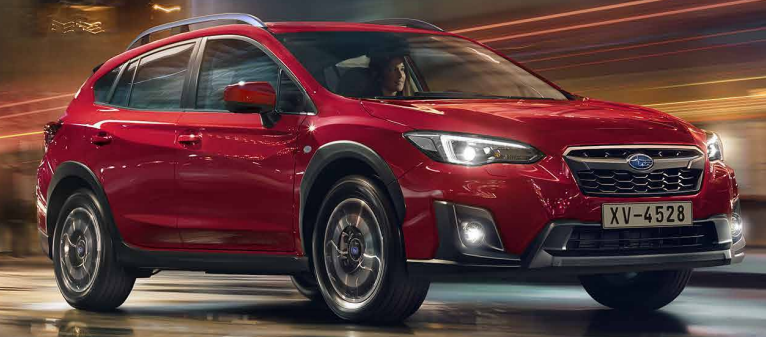
The Subaru XV Hybrid looks like a pretty compelling recipe on paper. We get Subaru’s familiar permanent all-wheel-drive character, a practical compact crossover body, a Boxer petrol engine, and an electric motor designed to trim fuel consumption without asking us to plug the car into a wall.
Sounds straightforward, right?
Mostly, it is. But anyone researching Subaru XV hybrid problems will quickly discover a mixture of legitimate mechanical concerns, owner complaints, misunderstood hybrid behaviour, battery worries, and expectations that do not always match what Subaru's e-BOXER system was designed to accomplish.
That distinction matters.
The XV e-BOXER is not a Toyota-style hybrid built primarily around maximizing electric driving. Subaru designed its system to preserve the company's permanent AWD philosophy while adding electric assistance. According to Subaru, the system automatically moves between electric driving, combined petrol-electric assistance, and petrol-engine operation depending on conditions.
That gives the XV Hybrid a personality of its own, but it also creates a few quirks.
In this guide, we'll examine the most commonly discussed Subaru XV Hybrid issues, including battery concerns, CVT behaviour, poor fuel economy, electrical glitches, braking sensations, hybrid warning messages, and expensive components that used buyers should inspect carefully.
Content in this publication
- Are Subaru XV Hybrids Actually Problematic?
- 1. Subaru XV Hybrid Battery Problems
- 2. Poor Fuel Economy
- 3. CVT Transmission Complaints
- 4. Hybrid System Warning Lights
- 5. Regenerative Braking Can Feel Unusual
- 6. Engine Starting and Stopping Frequently
- 7. Reduced Electric-Only Driving as the Vehicle Ages
- 8. Hybrid Cooling and Overheating Concerns
- 9. Strange Sounds at Low Speed
- 10. EyeSight and Electronic Warning Messages
- 11. All-Wheel-Drive Tyre Sensitivity
- 12. Boxer Engine Issues Still Matter
- 13. Expensive Hybrid Components After Warranty
- 14. Hybrid System Safety Should Not Be Taken Lightly
- 15. Problems Caused by Leaving the Car Unused
- Which Subaru XV Hybrid Problems Are Most Serious?
- Subaru XV Hybrid Problems by Mileage
- How to Diagnose Subaru XV Hybrid Problems
- How to Prevent Subaru XV Hybrid Problems
- Is the Subaru XV Hybrid Reliable Long Term?
- Should You Buy a Used Subaru XV Hybrid?
- How Does the XV Hybrid Compare With the Petrol XV?
- Signs You Should Walk Away From a Used XV Hybrid
- What Owners Sometimes Mistake for Problems
- Final Verdict: Should Subaru XV Hybrid Problems Worry You?
- Frequently Asked Questions About Subaru XV Hybrid Problems
Are Subaru XV Hybrids Actually Problematic?
We shouldn't label the Subaru XV e-BOXER an inherently unreliable vehicle.
Its basic architecture is relatively conservative. The XV Hybrid combines a 2.0-litre horizontally opposed petrol engine, Subaru's Lineartronic continuously variable transmission, an electric motor, a lithium-ion traction battery, and permanent Symmetrical All-Wheel Drive. Subaru's Australian specifications confirm that the Hybrid L and Hybrid S versions used both the 2.0-litre e-BOXER engine and Lineartronic CVT.
The additional hybrid hardware naturally means there are more components than in a conventional XV. That does not automatically mean those components fail frequently.
Instead, many complaints fall into three categories.
Some are genuine faults. Others relate to ageing 12-volt batteries, sensors, software or routine wear. And quite a few are simply characteristics of Subaru's hybrid system that surprise drivers coming from a petrol car or a stronger full hybrid.
That is why diagnosis matters more than internet horror stories.
The XV Hybrid Is Different From Many Rival Hybrids
One of the biggest sources of disappointment is expecting the XV Hybrid to behave like a Toyota Corolla Hybrid, Prius, or similar efficiency-focused full hybrid.
The Subaru system has different priorities.
Subaru says electric-only operation depends on battery and vehicle conditions and may range from only a few hundred metres to approximately 1.6 km, with EV operation available only under suitable circumstances and at speeds up to around 40 km/h.
In other words, seeing the petrol engine start frequently is not automatically evidence of a fault.
Think of the electric motor as a helpful teammate rather than the star striker. It assists, recovers energy and occasionally takes over, but the Boxer engine remains central to the experience.
1. Subaru XV Hybrid Battery Problems
Battery anxiety tends to dominate conversations about ageing hybrids.
We actually need to talk about two different batteries: the conventional low-voltage auxiliary battery and the high-voltage lithium-ion traction battery.
They perform completely different jobs.
12-Volt Battery Failure Can Cause Strange Symptoms
A weak auxiliary battery can create surprisingly dramatic symptoms in modern vehicles.
The car might refuse to start normally, warning lamps may illuminate, electronic systems can behave strangely, or drivers may assume the expensive hybrid system has failed.
Sometimes the culprit is much simpler.
Subaru itself explains that an e-BOXER with a flat regular battery can be jump-started through the auxiliary battery in the engine compartment. It specifically warns owners not to attach the booster cables to the restart battery terminals.
If an XV Hybrid suddenly throws several unrelated warnings after sitting unused or during cold weather, checking the health and voltage of the ordinary battery is therefore a sensible early diagnostic step.
Why Low-Voltage Problems Can Look Serious
Modern cars depend heavily on stable voltage.
Control modules, sensors, the engine management system, safety technology and hybrid electronics are constantly communicating. When voltage drops outside the expected range, the vehicle can behave like a laptop running on a dying power supply—everything becomes unpredictable at once.
That does not mean we should automatically blame every dashboard warning on the battery.
It does mean voltage testing should happen before somebody begins replacing expensive hybrid parts unnecessarily.
High-Voltage Battery Degradation
The more expensive concern is the lithium-ion traction battery.
Like virtually every lithium-ion battery, its usable capacity can gradually decline with age, operating conditions and usage.
Subaru Australia states that under normal use the high-voltage battery should not require replacement within the first eight years or 160,000 km, while also acknowledging that battery capacity naturally declines over time. Its Australian hybrid battery warranty is eight years or 160,000 km.
UK warranty terms differ slightly in units: Subaru UK lists traction-battery coverage of eight years or 100,000 miles, whichever comes first.
That doesn't mean a battery suddenly dies when its warranty ends. Warranty length is not a predicted lifespan.
For a used XV Hybrid, however, battery condition becomes increasingly important as the vehicle ages.
2. Poor Fuel Economy
This might be the most common disappointment rather than the most common actual mechanical problem.
Buyers see the word "Hybrid" and understandably expect spectacular fuel consumption.
Then reality walks through the door wearing muddy boots.
The XV still carries an all-wheel-drive system, SUV-like ground clearance and the mechanical architecture associated with Subaru's design philosophy.
The electric motor helps, particularly in low-speed and stop-start operation, but it doesn't transform the XV into an ultra-efficient city hatchback.
Subaru itself says the e-BOXER system can improve fuel consumption particularly in urban stop-and-go traffic, wording that appropriately reflects how dependent the result is on driving conditions.
Why Highway Economy May Disappoint
At higher speeds the benefits of a small hybrid battery become less dramatic.
Subaru describes its operating strategy as using petrol power at high speeds while regenerative braking and coasting replenish the battery.
So if most of our driving consists of motorway cruising, we shouldn't expect the same percentage improvement that hybrid assistance can deliver around town.
Short winter journeys, steep terrain, heavy acceleration, roof racks, low tyre pressures and repeated cold starts can further hurt economy.
3. CVT Transmission Complaints
The Subaru XV e-BOXER uses a Lineartronic continuously variable transmission rather than a conventional stepped automatic gearbox.
CVTs have their own feel.
Press the accelerator hard and engine speed can rise quickly while road speed builds more progressively. Drivers accustomed to traditional gear changes may describe this as slipping, flaring or excessive revving.
Sometimes that's normal.
Sometimes it isn't.
Normal CVT Behaviour vs a Genuine Problem
A healthy CVT should still deliver consistent, smooth acceleration.
What should concern us more is a significant change from the vehicle's established behaviour: strong shuddering, delayed engagement into Drive or Reverse, abnormal vibration, new whining noises, warning lights, fluid leaks or repeated hesitation.
A test drive should include cold operation, gentle acceleration, harder acceleration, hills and low-speed manoeuvring.
A ten-minute spin around a dealership block isn't enough.
Why Service History Matters
Transmission repairs are rarely cheap.
A properly documented maintenance history therefore carries real value on a used XV Hybrid. Service requirements can also vary by market and usage conditions, so we should check the schedule applicable to the exact VIN and country rather than relying on a generic internet interval.
4. Hybrid System Warning Lights
A hybrid system warning deserves attention even if the vehicle appears to drive normally.
The XV contains interconnected control systems. A warning may originate from the traction battery, power electronics, cooling arrangements, wiring, sensors, low-voltage system or another component whose data affects hybrid operation.
Guessing is expensive.
Scanning the car for stored diagnostic trouble codes is far more useful.
Don't Automatically Assume the Traction Battery Has Failed
This is one of the easiest mistakes to make.
A hybrid-related warning does not automatically equal a dead lithium-ion battery.
Think of the dashboard message as a smoke alarm. It tells us something needs investigation; it doesn't tell us which piece of toast is burning.
A Subaru-capable diagnostic scan is consequently valuable before approving major repairs.
5. Regenerative Braking Can Feel Unusual
Another "problem" that can partly be a characteristic is brake feel.
Regenerative braking captures some of the vehicle's kinetic energy during slowing and uses it to recharge the hybrid battery. Subaru confirms that the process occurs automatically during deceleration and braking.
That means braking isn't purely mechanical in every situation.
The system blends energy recovery with conventional friction brakes.
When Brake Feel Becomes a Concern
Slightly different pedal response compared with a non-hybrid car is not necessarily problematic.
But violent pulsation, grinding, pulling to one side, excessive stopping distance, warning lights or dramatically inconsistent pedal pressure shouldn't be written off as "just the hybrid."
Those symptoms warrant inspection.
Hybrid regenerative braking may be clever, but physics still sends us the bill when conventional pads, discs, tyres or suspension parts wear out.
6. Engine Starting and Stopping Frequently
Some new owners become suspicious because the engine seems to start, stop and restart without any obvious command from the driver.
That's intentional.
Subaru's control unit automatically selects the operating mode based on driver input, battery state and driving conditions. Drivers do not manually select between EV and motor-assist operation.
At low speed the electric motor may move the vehicle alone. At other times the engine and motor work together. Under different circumstances the petrol engine operates by itself.
The transitions are part of the system's design.
When Frequent Engine Operation May Be Normal
Cold engines, cabin heating demands, battery state, acceleration and road speed can all reduce opportunities for electric-only driving.
Remember that Subaru describes EV range as potentially only a few hundred metres to 1.6 km depending on conditions.
If we bought the XV expecting several kilometres of silent electric commuting every morning, the problem may be expectations rather than hardware.
7. Reduced Electric-Only Driving as the Vehicle Ages
Owners of an older XV Hybrid may notice fewer occasions when the vehicle remains under electric power.
Battery ageing could contribute, but it isn't the only explanation.
Temperature, driving style, battery charge, speed, climate-control use and route all influence hybrid behaviour.
Comparing EV operation from one random journey with another therefore tells us surprisingly little.
For meaningful diagnosis, we want battery data, fault codes and repeated observations under similar conditions.
8. Hybrid Cooling and Overheating Concerns
Hybrid batteries and power electronics prefer controlled temperatures.
Cooling restrictions, contamination, damaged components or abnormal operating temperatures can potentially affect performance and longevity.
Owners should pay attention to warning messages rather than ignoring them until the vehicle enters some form of reduced-performance behaviour.
Cargo-area care deserves mention too.
Subaru states that high-voltage components are packaged beneath the cargo floor and warns owners to avoid large amounts of water entering that area because it can contribute to electrical hazards or system malfunction.
A normal wet umbrella isn't reason for panic. A seriously flooded cargo compartment is a different story.
Flood-Damaged XV Hybrids Require Extra Caution
We would be extremely careful with any used hybrid showing evidence of significant water intrusion.
Corrosion and electrical problems can appear long after the original incident.
With high-voltage equipment involved, this is one area where bargain hunting can become false economy spectacularly quickly.
9. Strange Sounds at Low Speed
Imagine reversing silently through a parking area and hearing an artificial electronic noise.
Is something breaking?
Probably not.
Subaru equips its hybrid vehicles with a pedestrian-alert sound during electric operation. In Australia, Subaru says the system operates at speeds up to 24 km/h when driving electrically.
It exists because an electric-powered vehicle can otherwise be difficult for pedestrians to hear.
Some noises are therefore completely intentional.
Metallic knocking, grinding, persistent whining or sounds that suddenly become louder are another matter.
10. EyeSight and Electronic Warning Messages
The XV Hybrid integrates Subaru's EyeSight driver-assistance system alongside the electrified powertrain. Subaru equipped XV e-BOXER models with driver-assistance technology including EyeSight, while various versions also incorporated systems such as blind-spot monitoring and rear cross-traffic alert.
That creates an important distinction.
Not every warning on a hybrid XV comes from the hybrid drivetrain.
Camera visibility, electrical voltage, sensors and other systems can trigger messages of their own.
A dashboard resembling a Christmas tree needs systematic diagnosis, not immediate conclusions about the traction battery.
11. All-Wheel-Drive Tyre Sensitivity
Subaru's permanent AWD system gives the XV much of its appeal, but it also means tyre matching matters.
Subaru UK warns that all four tyres should share the same size, circumference, speed rating, load index, construction, manufacturer, tread pattern and degree of wear, and recommends inspection or rotation according to service requirements.
That deserves particular attention when buying used.
One shiny new tyre beside three heavily worn tyres might look like sensible maintenance. On an AWD vehicle, significant circumference differences are something we'd want investigated.
Inspect the Tyres Before Blaming the Drivetrain
Uneven tyres can also create vibrations, traction irregularities and handling sensations that owners may mistakenly blame on the transmission or AWD hardware.
Check all four corners before entering expensive diagnostic territory.
12. Boxer Engine Issues Still Matter
It's easy to become so focused on the word "Hybrid" that we forget there's still a conventional internal-combustion engine under the bonnet.
Oil level, coolant, spark plugs, filters, ignition components, sensors, gaskets and ordinary mechanical wear remain relevant.
Hybrid assistance does not magically remove normal petrol-engine maintenance.
The good news is that the basic Boxer layout is hardly experimental Subaru technology.
Listen to the Engine From Cold
When evaluating a used XV Hybrid, ask to see the car before the seller warms it up.
Cold starts can reveal noises, roughness, warning lights or smoke that disappear once everything reaches operating temperature.
The same principle applies to almost any used vehicle, but it becomes particularly useful when several propulsion systems interact.
13. Expensive Hybrid Components After Warranty
This is the concern we would take most seriously on a high-mileage older XV Hybrid.
Even if major hybrid components prove durable, replacement of a traction battery, inverter or another high-voltage part can be considerably more consequential than replacing an ordinary starter battery.
That doesn't mean every ageing XV Hybrid becomes a financial time bomb.
It means purchase price should reflect age, condition, service history and remaining warranty coverage.
Battery Warranty Can Reduce Used-Car Risk
Subaru's hybrid battery warranty was substantial when these vehicles were sold new.
As noted earlier, Australia specifies eight years/160,000 km, while Subaru UK currently describes eight years/100,000 miles for e-BOXER traction batteries.
If we're buying used, we should verify the original registration date and the exact warranty conditions attached to the specific market and car.
Don't assume warranty eligibility simply because an online article says "eight years."
14. Hybrid System Safety Should Not Be Taken Lightly
DIY enthusiasm has limits.
Subaru identifies high-voltage cables and components with orange coverings and explicitly warns owners not to touch high-voltage equipment or leaking battery components.
That's good advice.
Routine maintenance around a hybrid is one thing. Opening or dismantling high-voltage components without suitable training and equipment is another.
Leave High-Voltage Repairs to Qualified Technicians
There's no prize for proving we can troubleshoot everything ourselves.
An electrical system carrying potentially dangerous voltage deserves the same respect we'd give household mains electricity—only with a moving vehicle wrapped around it.
15. Problems Caused by Leaving the Car Unused
Hybrid vehicles don't necessarily love spending months as garage ornaments.
Subaru Australia recommends driving an e-BOXER for at least 30 minutes once per month to help maintain battery condition.
This becomes relevant when shopping for extremely low-mileage examples.
Low kilometres can be attractive, but a car that has barely moved for years may have its own issues: ageing tyres, discharged low-voltage batteries, sticking brakes and neglected fluids among them.
Mileage is only one chapter of the story.
Which Subaru XV Hybrid Problems Are Most Serious?
If we're trying to separate annoying quirks from wallet-emptying concerns, major high-voltage faults and serious CVT problems deserve the most attention.
A tired auxiliary battery is usually less frightening.
Lower-than-expected fuel economy may cost money at the pump but isn't necessarily a defect.
Normal engine cycling and pedestrian-alert sounds may not require repair at all.
Here is the practical hierarchy we'd use when inspecting an XV e-BOXER:
- High priority: persistent hybrid warnings, transmission shuddering, major battery faults, water intrusion near high-voltage components, overheating indications or evidence of collision/flood damage.
- Medium priority: repeated electrical warnings, poor 12-volt battery health, abnormal brake behaviour, uneven tyre wear, suspension noise or unexplained decline in performance.
- Lower priority unless accompanied by other symptoms: brief electric range, frequent engine operation, noticeable CVT revving during hard acceleration, regenerative-braking sensations and the artificial pedestrian sound.
That order helps prevent us from treating every unfamiliar hybrid characteristic as a disaster.
Subaru XV Hybrid Problems by Mileage
Mileage doesn't provide a magic timetable for failures.
How the car was driven, where it was driven, servicing quality, climate, age and previous repairs may matter just as much.
Still, our priorities should change as kilometres accumulate.
Lower-Mileage XV Hybrids
At lower mileage, we'd focus heavily on history.
Has the car been serviced correctly?
Has it been involved in an accident?
Do all electronic systems operate?
Has the auxiliary battery already needed replacement?
Are the tyres correctly matched?
A low odometer cannot erase neglect.
Higher-Mileage XV Hybrids
As mileage increases, transmission behaviour, battery performance, suspension wear, cooling-system health and evidence of oil or fluid leaks become increasingly meaningful.
A high-mileage car with meticulous maintenance can be a better purchase than a low-mileage example with mysterious history.
Paperwork talks.
How to Diagnose Subaru XV Hybrid Problems
Good diagnosis moves from cheap and simple checks toward complicated ones.
We don't start by replacing the traction battery because a warning lamp appeared.
We start with fundamentals.
Check battery voltage. Retrieve diagnostic codes. Inspect service history. Examine tyres. Look for fluid leaks. Confirm coolant levels when the vehicle is safe and cold. Test every electrical accessory. Drive the car under multiple conditions.
Then investigate what the evidence points toward.
Why Generic Code Readers May Not Tell the Whole Story
A basic OBD scanner can be useful for engine-related codes, but hybrid, transmission, AWD and manufacturer-specific systems may require more capable diagnostic equipment.
If you're purchasing a used XV e-BOXER that raises any doubts, a Subaru specialist or dealer-level inspection can be money exceptionally well spent.
The cheapest repair is often the car we decide not to buy.
How to Prevent Subaru XV Hybrid Problems
No maintenance routine can guarantee perfect reliability, but disciplined ownership can tilt the odds our way.
Follow the correct Subaru service schedule for the exact market and model year. Keep the tyres correctly matched and inflated. Don't ignore warning lights. Replace a weakening auxiliary battery before it repeatedly drops voltage. Keep significant water away from the battery compartment. Address unusual transmission behaviour early. Maintain proper fluid levels. Drive the car periodically if it is stored for extended periods.
Most importantly, don't treat the hybrid system as completely maintenance-free just because there is no charging cable hanging from the garage wall.
Self-charging doesn't mean self-maintaining.
Is the Subaru XV Hybrid Reliable Long Term?
For the right buyer, it can be a sensible long-term vehicle.
The XV Hybrid's strength is that it retains Subaru's familiar formula while adding relatively modest electric assistance. We get permanent AWD, useful ground clearance and automatic hybrid operation without needing home charging.
The trade-off is equally clear.
Its hybrid system doesn't produce the dramatic EV driving or fuel-efficiency gains some buyers associate with the word "hybrid."
That can make the system feel underwhelming rather than unreliable.
Reliability Depends Heavily on the Car You Buy
The badge on the tailgate tells us much less than the individual vehicle's history.
A carefully maintained XV Hybrid with matching tyres, clean diagnostics, healthy batteries and complete records is a different proposition from an identical-looking example with missing history and warning lamps conveniently erased before the test drive.
Buy the condition, not merely the model.
Should You Buy a Used Subaru XV Hybrid?
We would not reject one simply because it has hybrid hardware.
But we'd be selective.
An XV e-BOXER makes the most sense for somebody who values all-wheel drive, crossover practicality, ground clearance and Subaru's driving character and views the electric system as an efficiency assistant rather than the entire reason for buying the car.
If maximum fuel economy is priority number one, alternatives built more aggressively around hybrid efficiency may make more sense.
If poor-weather traction, light off-pavement ability and Subaru character matter more, the XV becomes easier to appreciate.
Pre-Purchase Inspection Checklist
Before handing over the money, we want confirmation of several things: no persistent hybrid or drivetrain warnings, smooth transmission operation, complete maintenance documentation, healthy low-voltage battery performance, consistent tyres across all four wheels, no signs of major cargo-area water intrusion, no suspicious accident history, normal cold-start behaviour and sensible hybrid operation once warmed up.
A diagnostic scan should be part of the inspection whenever possible.
For an older vehicle, we'd also want to understand the health of the traction battery and whether any relevant warranty remains.
How Does the XV Hybrid Compare With the Petrol XV?
The ordinary petrol XV is mechanically simpler.
The e-BOXER adds an electric motor, lithium-ion battery, power electronics and additional control systems.
More hardware does create more theoretical failure points.
But the hybrid version also gains smoother low-speed assistance and energy regeneration while retaining Subaru's AWD concept.
So the question isn't simply, "Which has fewer components?"
It's, "What do we actually want from the car?"
Petrol May Suit Simplicity-Focused Buyers
If we're buying an older XV primarily because we want uncomplicated long-term ownership, the conventional petrol model has an obvious appeal.
There is no ageing traction battery to evaluate.
Hybrid May Suit Urban Drivers Better
Drivers spending more time in stop-start conditions can make better use of regenerative braking and electric assistance.
That aligns with Subaru's own explanation that e-BOXER's fuel-saving potential is particularly relevant in urban stop-and-go driving.
Neither version wins automatically.
Signs You Should Walk Away From a Used XV Hybrid
Some flaws are negotiating points.
Others are invitations to leave.
Persistent hybrid warnings with no documented diagnosis would make us cautious. So would transmission shudder, obvious flood evidence, several unrelated electronic faults, mismatched tyres combined with drivetrain symptoms, missing service history or a seller who refuses an independent inspection.
The biggest red flag?
A suspiciously cheap example with an explanation for everything.
Used cars rarely become inexpensive by accident.
What Owners Sometimes Mistake for Problems
Hybrid vehicles challenge our mechanical instincts.
We expect the engine to run whenever the car is moving. Then it switches off.
We expect silence to mean the car is off. Yet Subaru's rescue guidance for newer e-BOXER systems specifically warns that a hybrid should not be assumed shut down simply because it is silent.
We expect engine revs to rise proportionally with road speed. A CVT behaves differently.
We expect braking to waste motion as heat. Regeneration captures some of that energy instead.
Understanding these differences saves worry—and occasionally saves an unnecessary repair bill.
Final Verdict: Should Subaru XV Hybrid Problems Worry You?
The Subaru XV Hybrid problems story is more nuanced than a simple reliable-or-unreliable verdict.
There are genuine areas worth watching. The high-voltage battery becomes increasingly important as vehicles age. CVT abnormalities should never be ignored. Low-voltage batteries can create confusing electronic symptoms. Older cars deserve careful inspection for electrical faults, water intrusion, poor maintenance and drivetrain wear.
But some frequently reported "problems" aren't failures at all.
Short EV distances are consistent with the e-BOXER design. Frequent petrol-engine operation can be normal. Artificial low-speed sounds are intentional. CVT engine revving isn't automatically transmission slip. Regenerative braking naturally changes the driving sensation.
Once we understand what the XV Hybrid actually is, the picture becomes clearer.
It's not a Prius wearing hiking boots.
It's a Subaru that happens to have electric assistance.
And that distinction might be the single most useful thing to remember when deciding whether a used XV e-BOXER belongs in our driveway.
Frequently Asked Questions About Subaru XV Hybrid Problems
1. What is the most common Subaru XV Hybrid problem?
There isn't one universally established failure that defines every XV Hybrid. Owners researching these cars commonly focus on low-voltage battery issues, fuel economy, CVT behaviour and hybrid-system warnings. Some perceived problems, particularly short electric-only operation, are characteristics of the e-BOXER design rather than faults.
2. How long does the Subaru XV Hybrid battery last?
There is no fixed replacement age. Subaru Australia states that under normal use the lithium-ion battery should not require replacement during the first eight years or 160,000 km, while acknowledging that capacity naturally diminishes over time. Battery warranty terms vary by country.
3. Is the Subaru XV e-BOXER a full hybrid?
It is a self-charging hybrid capable of moving under electric power in certain conditions, but its EV capability is modest compared with some efficiency-focused hybrids. Subaru says electric-only travel may range from a few hundred metres to roughly 1.6 km depending on battery and operating conditions.
4. Is a used Subaru XV Hybrid worth buying?
Yes, potentially. We'd prioritize a complete service history, clean diagnostic scan, healthy batteries, smooth CVT operation and properly matched tyres. A well-maintained example can be much more attractive than simply choosing the lowest-mileage vehicle available.
5. Is the petrol Subaru XV more reliable than the Hybrid?
The petrol model is mechanically simpler because it lacks the traction battery, electric motor and associated hybrid electronics. That theoretically reduces the number of expensive components that can fail. However, individual vehicle condition and maintenance history remain more useful predictors of a used car's future than drivetrain type alone.
If you want to know other articles similar to Subaru XV Hybrid Problems: What Owners Should Know you can visit the category Common Problems.
Volvo S90 Common Problems: Reliability & Repair Guide
Volvo S90 No Sound: Causes, Fixes and Solutions

Nissan Rogue Smells Like Gas: Causes and Fixes
Vauxhall Agila Problems: Common Faults & Fixes

Kia Sorento Jerking When Accelerating: Causes & Fixes

Jaguar F-Pace Low Battery: Causes, Warning Signs, and How to Fix It
Leave a Reply
More content of your interest