
Kia Carnival vs Hyundai Santa Fe: Which Family Car Makes More Sense?

Choosing between the Kia Carnival vs Hyundai Santa Fe is a little like deciding between a spacious apartment and a well-designed cabin in the mountains. Both can comfortably handle family life, luggage, road trips, groceries, and school runs, but they approach those jobs from completely different directions.
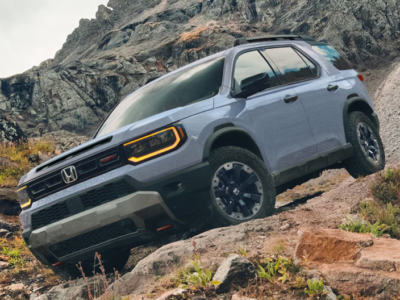
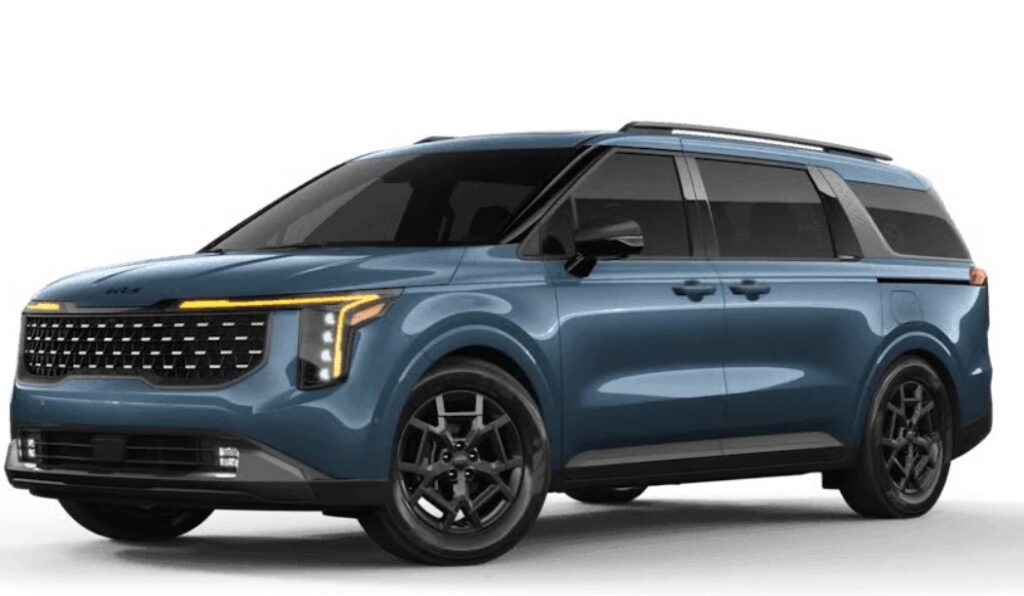
The Kia Carnival is technically an MPV, although Kia has deliberately styled it to look more like an SUV than the traditional minivan we grew up seeing. The Hyundai Santa Fe, meanwhile, is unmistakably an SUV, complete with available all-wheel drive, chunky styling, a higher-riding personality, and three rows of seats.
So, which one should we buy?
For most large families, the Carnival wins on passenger space, cargo capacity, and day-to-day practicality. For buyers who want a smaller footprint, available AWD, greater rough-road ability, and SUV styling, the Santa Fe is arguably the more versatile choice.
Let's dig much deeper.
Content in this publication
- Kia Carnival vs Hyundai Santa Fe at a Glance
- Exterior Design: SUV Attitude vs Clever Disguise
- Interior Space: Carnival Takes an Early Lead
- Kia Carnival vs Hyundai Santa Fe Seating Capacity
- Third-Row Space: Where the Carnival Earns Its Keep
- Cargo Space: Kia Carnival Wins by a Huge Margin
- Sliding Doors: The Carnival's Secret Weapon
- Engine Performance: V6 Smoothness vs Turbo Torque
- Kia Carnival Hybrid vs Hyundai Santa Fe Hybrid
- Fuel Economy: Santa Fe and Hybrid Carnival Fight Back
- Driving Experience: Santa Fe Feels More Like a Conventional SUV
- AWD and Bad-Weather Capability: Santa Fe Wins
- Towing Capacity: Santa Fe Can Take the Lead
- Technology: Both Cars Feel Thoroughly Modern
- Safety and Driver Assistance
- Interior Quality: Much Closer Than Expected
- Kia Carnival vs Hyundai Santa Fe for Families
- City Driving: Santa Fe Has an Advantage
- Road Trips: Carnival Strikes Back Hard
- Kia Carnival vs Hyundai Santa Fe Reliability
- Which One Is Better Value?
- Carnival vs Santa Fe: Biggest Pros and Cons
- Kia Carnival vs Hyundai Santa Fe: Which Should We Buy?
- Final Verdict: Carnival Wins Space, Santa Fe Wins Versatility
- Frequently Asked Questions
- 1. Is the Kia Carnival bigger than the Hyundai Santa Fe?
- 2. Which has more cargo space, Kia Carnival or Hyundai Santa Fe?
- 3. Which is better for a large family, Carnival or Santa Fe?
- 4. Does the Kia Carnival have AWD like the Hyundai Santa Fe?
- 5. Which is better for road trips, Kia Carnival or Hyundai Santa Fe?
Kia Carnival vs Hyundai Santa Fe at a Glance
Before pulling these vehicles apart piece by piece, here's the easiest way to understand the difference.
| Category | Kia Carnival | Hyundai Santa Fe |
|---|---|---|
| Vehicle type | MPV/minivan | Midsize SUV |
| Rows | 3 | 3 |
| Maximum seating | Up to 8 in U.S. versions | Up to 7 depending on configuration |
| Standard gasoline engine | 3.5L V6 | 2.5L turbo four-cylinder |
| Gasoline output | 287 hp | 277 hp |
| Hybrid available | Yes | Yes |
| AWD | No in U.S. Carnival | Available |
| Sliding rear doors | Yes | No |
| Cargo behind third row | About 40.2 cu. ft. | 14.6 cu. ft. |
| Maximum gasoline towing | 3,500 lb | Up to 4,500 lb on XRT |
| Best suited to | Families and maximum space | SUV buyers and mixed-road use |
That table reveals the central theme of this comparison.
The Carnival behaves like a family transportation specialist. The Santa Fe behaves like an SUV that happens to be extremely family-friendly.
Neither philosophy is automatically better. It depends on how we actually use the vehicle.
Exterior Design: SUV Attitude vs Clever Disguise
At first glance, we might not even identify the Carnival as a conventional minivan.
Kia has deliberately minimized the usual minivan cues. The Carnival has a broad grille, squared proportions, distinctive lighting, pronounced wheel arches, and an SUV-like profile. It still has sliding doors, of course, but visually it sits somewhere between a crossover and a traditional people carrier.
The Santa Fe takes the rugged theme considerably further.
Its current-generation design is remarkably boxy, with squared-off bodywork, distinctive H-shaped lighting elements, a near-vertical tailgate, and an adventurous silhouette. Park one beside the previous-generation Santa Fe and they almost look unrelated.
Which One Looks Better?
Appearance is subjective, but we'll call this a draw.
The Carnival is the better option for someone who wants minivan practicality without screaming, "I bought a minivan."
The Santa Fe, however, has more genuine SUV presence.
The Important Difference Isn't Really Styling
Looks shouldn't distract us from the structural difference.
The Carnival's long body and sliding doors have been designed around carrying people.
The Santa Fe has been designed around balancing passengers, cargo, maneuverability, AWD capability, and SUV proportions.
That distinction becomes increasingly obvious once we step inside.
Interior Space: Carnival Takes an Early Lead
If interior room sits near the top of our shopping list, the Carnival quickly starts pulling away.
The Carnival is substantially longer than the Santa Fe and has a much longer wheelbase. That extra real estate matters.
The result is more usable passenger space across all three rows, particularly when adults or teenagers occupy the back.
The Santa Fe has become remarkably spacious for an SUV. Its boxy roof helps maximize headroom, and Hyundai has made the third row considerably more usable than the cramped emergency seats found in many three-row crossovers.
Still, physics wins.
The Carnival simply has more cabin to work with.
Kia Carnival vs Hyundai Santa Fe Seating Capacity
The U.S.-market Carnival can carry up to eight passengers, depending on trim and seating configuration.
The Santa Fe generally accommodates six or seven, depending on whether the second row contains captain's chairs or a bench.
That one-seat difference might sound insignificant until we're regularly transporting grandparents, cousins, children's friends, or an entire family.
Seven seats might work perfectly Monday through Friday.
Then Saturday arrives, two friends jump in, and suddenly that eighth seat feels priceless.
Carnival Second-Row Seating
One of the Carnival's greatest strengths is flexibility.
Certain configurations use a three-seat second row, while more luxurious versions can offer VIP-style captain's chairs with features designed to make the second row feel almost limousine-like.
That makes the Carnival unusual.
It can behave like a practical eight-seat family shuttle or an upscale long-distance people carrier depending on configuration.
Santa Fe Second-Row Experience
The Santa Fe fights back with a comfortable, SUV-like cabin.
Second-row passengers get generous space, and available captain's chairs can make six-seat versions especially pleasant.
The difference is that the Santa Fe prioritizes comfort within a smaller overall package rather than maximum people-moving capacity.
Third-Row Space: Where the Carnival Earns Its Keep
Here's where we'd pay particular attention during a test drive.
Many SUVs advertise seven seats, but those last two seats sometimes feel like folding camping chairs hidden beneath the cargo floor.
The latest Santa Fe is considerably better than that stereotype. Hyundai increased third-row room, and its squared roofline improves headroom.
Nevertheless, the Carnival's third row is more naturally suited to frequent passenger use.
If adults regularly sit in row three, we would favor the Carnival.
If children occupy the third row occasionally, the Santa Fe works much better.
That's an important distinction.
Think About How Often You'll Use All Three Rows
A simple question can narrow this comparison quickly:
Will we use the third row every day?
If yes, Carnival.
If occasionally, Santa Fe remains firmly in contention.
Cargo Space: Kia Carnival Wins by a Huge Margin
This might be the most dramatic difference in the entire Kia Carnival vs Hyundai Santa Fe comparison.
The 2026 U.S.-market Carnival offers approximately 40.2 cubic feet of cargo room behind its third row.
The Santa Fe provides approximately 14.6 cubic feet behind its third row.
That's not a small victory.
It's a landslide.
With every seat occupied, the Carnival still leaves enough room for considerably more luggage, shopping bags, sports equipment, or baby gear.
The Santa Fe's cargo area is useful when its third row is folded. Hyundai lists roughly 40.5 cubic feet behind the second row and around 79.6 cubic feet behind the front seats.
Those are useful SUV numbers.
The problem is that the Carnival starts from a completely different level of practicality.
Why Cargo Space Matters More Than We Think
Imagine seven people taking a week-long vacation.
Seats are easy.
Suitcases are the problem.
A three-row vehicle that accommodates everyone but leaves nowhere for luggage isn't really solving the entire transportation equation.
That's why the Carnival makes so much sense for larger families.
Sliding Doors: The Carnival's Secret Weapon
We can debate horsepower, screens, styling, and wheel sizes for hours.
Then we park beside another car in a narrow supermarket space.
Suddenly, power sliding doors become the greatest invention since air conditioning.
Carnival passengers can enter and exit without swinging a large rear door outward. Parents loading toddlers into child seats will immediately understand the benefit.
The Santa Fe uses conventional rear doors.
They're perfectly normal, but there's no escaping the convenience advantage of sliding doors.
You may be interested in reading Kia Carnival vs Kluger: Which Family Car Makes More Sense?
Parents Should Pay Particular Attention Here
Anyone regularly installing children into car seats should physically test both vehicles.
Open the doors.
Load a child seat.
Reach across it.
Imagine doing that while holding a backpack and standing beside another parked vehicle.
Real-world practicality often reveals more than specification sheets ever will.
Engine Performance: V6 Smoothness vs Turbo Torque
The gasoline Carnival uses a 3.5-liter naturally aspirated V6 producing 287 horsepower in the U.S.
The 2026 gasoline Santa Fe uses a 2.5-liter turbocharged four-cylinder producing 277 horsepower and 311 lb-ft of torque.
On paper, their horsepower figures are remarkably close.
Their personalities aren't.
The Carnival's V6 delivers power progressively. There's something pleasantly old-school about a naturally aspirated six-cylinder engine in an era dominated by small turbo engines.
The Santa Fe's turbo four produces strong low- and mid-range torque, helping it feel punchy during everyday acceleration.
Which Engine Feels Better?
For smoothness and linear power delivery, we'd lean toward the Carnival V6.
For strong low-speed response and SUV character, we'd choose the Santa Fe turbo.
Neither feels dramatically underpowered for normal family driving.
Kia Carnival Hybrid vs Hyundai Santa Fe Hybrid
Things become considerably more interesting when electrification enters the conversation.
Both manufacturers offer hybrid versions.
The Carnival Hybrid combines a turbocharged 1.6-liter gasoline engine with electric assistance. Kia quotes 271 lb-ft of torque and an estimated 32 mpg combined for the 2026 Carnival Hybrid.
The Santa Fe Hybrid also uses a 1.6-liter turbo-based hybrid system, though exact output and fuel-economy figures depend on market and configuration.
The biggest reason to consider either hybrid isn't speed.
It's efficiency.
A large family vehicle can accumulate mileage at an astonishing rate: school runs, commuting, grocery trips, weekend activities, family visits, road trips. Reducing fuel consumption across thousands of miles annually can matter much more than shaving half a second from an acceleration run.
Which Hybrid Makes More Sense?
If we already want the Carnival's enormous cabin, the hybrid arguably makes it an even more rounded family vehicle.
If we want AWD capability alongside hybrid efficiency, the Santa Fe Hybrid becomes especially attractive because Hyundai offers HTRAC AWD configurations in many markets.
Fuel Economy: Santa Fe and Hybrid Carnival Fight Back
The V6 Carnival pays for its size and smooth power delivery at the fuel pump.
The current gasoline Carnival is rated around the low-20s mpg combined depending on configuration and model year.
The 2026 gasoline Santa Fe can reach an EPA-estimated 24 mpg combined with front-wheel drive, with AWD versions generally slightly lower.
That isn't a night-and-day difference, but the Santa Fe has an advantage.
Choose hybrid versions and the equation improves significantly.
Don't Compare Fuel Economy Alone
We should calculate efficiency alongside capacity.
If a Carnival replaces the need to occasionally take two cars when transporting eight people, its higher fuel consumption might suddenly look less painful.
Context matters.
Driving Experience: Santa Fe Feels More Like a Conventional SUV
Behind the wheel, the Santa Fe feels more compact and manageable.
The Carnival is long. There's no hiding it.
It drives surprisingly well for its size, but tight parking structures, narrow city streets, and short garages remind us that this is a genuinely large family vehicle.
The Santa Fe feels easier to position.
Its shorter overall length also makes urban life less intimidating.
For buyers who spend most of their time navigating crowded cities, that difference deserves serious consideration.
Highway Comfort
Turn onto an open highway and the Carnival's disadvantages become advantages.
Its long wheelbase, spacious cabin, comfortable seating, and calm demeanor make it an excellent road-trip machine.
The Santa Fe remains comfortable, but the Carnival feels built for eating highway miles with a family aboard.
AWD and Bad-Weather Capability: Santa Fe Wins
This is one area where the decision becomes remarkably straightforward.
The U.S.-market Carnival is front-wheel drive.
The Santa Fe offers Hyundai's HTRAC all-wheel-drive system, and the XRT version adds a more adventure-oriented specification.
For buyers living around snow, steep mountain roads, loose surfaces, or frequently poor weather, that difference can be substantial.
AWD isn't magic, of course. Proper tires still matter enormously.
But distributing power across four wheels can provide additional traction when conditions deteriorate.
What About Off-Road Driving?
Neither vehicle should be mistaken for a Jeep Wrangler or Toyota Land Cruiser.
Still, between these two, the Santa Fe is clearly the better option once pavement becomes questionable.
Its available AWD, SUV proportions, and XRT configuration give it greater flexibility.
The Carnival is happiest on asphalt.
Towing Capacity: Santa Fe Can Take the Lead
The gasoline Kia Carnival can tow up to approximately 3,500 pounds when properly equipped.
Standard gasoline versions of the Santa Fe can also reach around 3,500 pounds, while the adventure-oriented Santa Fe XRT can tow as much as 4,500 pounds with trailer brakes according to Hyundai's U.S. specifications.
That makes the Santa Fe the stronger option for buyers with heavier towing needs.
However, don't assume hybrid models automatically share the same rating.
Hybrid towing capacities may be lower, and ratings differ by market.
Always check the exact owner's manual for the engine, drivetrain, trim, trailer-brake configuration, and model year being purchased.
Technology: Both Cars Feel Thoroughly Modern
Neither Kia nor Hyundai treats technology as an afterthought anymore.
Available features across these vehicles include large digital displays, smartphone connectivity, advanced navigation, multiple cameras, wireless device connectivity, digital instrumentation, premium audio, driver-assistance systems, and sophisticated parking technology.
Higher Carnival trims can feel surprisingly luxurious.
The Santa Fe's dashboard, meanwhile, has an attractive horizontal design that suits its squared exterior.
Carnival Technology Has a Family Focus
Some Carnival features feel specifically designed around carrying children.
Available passenger-view cameras can help the driver see what's happening behind them, while passenger communication systems make speaking with rear-seat occupants easier.
Those details won't win horsepower competitions.
They might save parental sanity on a six-hour road trip.
And that's arguably more important.
Safety and Driver Assistance
Both vehicles offer extensive active-safety technology.
Depending on trim, buyers can find features such as:
- Automatic emergency braking
- Blind-spot monitoring
- Lane-keeping assistance
- Adaptive cruise control
- Rear cross-traffic assistance
- Surround-view cameras
- Parking sensors
- Highway driving assistance
- Driver-attention monitoring
The exact feature package varies by trim and market, so we'd compare specific versions rather than assuming every advertised system comes standard.
You may be interested in readingKia Carnival vs Kluger: Which Family Car Makes More Sense?You may be interested in reading
Kia Carnival vs Kia Sorento: Which One Is Better for Your Family?Modern driver-assistance equipment can reduce workload, but none replaces an attentive driver.
Interior Quality: Much Closer Than Expected
Years ago, we might have assumed the SUV automatically had the more premium cabin.
Not anymore.
A high-spec Carnival can feel genuinely upscale, especially with premium second-row seating.
Materials, screens, seat designs, ambient lighting, and overall presentation can push it closer to luxury-MPV territory.
The Santa Fe also performs impressively, particularly in upper trims such as Calligraphy.
Its interior arguably looks more contemporary and SUV-like.
Which Cabin Would We Choose?
For driver-centered design: Santa Fe.
For rear-passenger comfort: Carnival.
For maximum family functionality: Carnival.
For a more adventurous atmosphere: Santa Fe.
Kia Carnival vs Hyundai Santa Fe for Families
Here's where the Carnival becomes difficult to beat.
If our priorities include three children, strollers, grandparents, sports gear, suitcases, car seats, and regular road trips, the Carnival fits that lifestyle like a tailored jacket.
The Santa Fe can absolutely serve a family.
It simply asks us to compromise more when every seat is occupied.
Choose the Carnival for a Big Family If:
- We regularly carry six to eight people.
- We need meaningful cargo space with the third row raised.
- Sliding doors would make daily life easier.
- Adults regularly use the third row.
- Road-trip comfort matters more than AWD capability.
- Maximum cabin flexibility is a major priority.
Choose the Santa Fe for a Family If:
- We usually carry four or five people.
- The third row is mainly occasional.
- We prefer SUV styling.
- AWD matters.
- We want a shorter, easier-to-park vehicle.
- We occasionally drive on rough roads.
- Higher towing capacity could be useful.
City Driving: Santa Fe Has an Advantage
Big vehicles shrink emotionally after a few weeks of ownership.
Parking spaces don't.
The Santa Fe's shorter dimensions make it easier to maneuver around city streets, garages, drive-through lanes, and crowded parking lots.
The Carnival compensates with excellent visibility and available parking-assistance technology, but we cannot digitally erase its physical length.
For dense urban environments, we'd lean Santa Fe unless the Carnival's extra seating capacity is essential.
Road Trips: Carnival Strikes Back Hard
Load both vehicles with passengers and point them toward a destination six hours away.
This is where the Carnival shines.
More passenger space means fewer knees pressed into seats. More cargo volume means fewer bags piled around occupants. Sliding doors simplify rest stops. Available rear-seat luxury features help passengers relax.
The Santa Fe remains a capable road-trip vehicle.
The Carnival feels like it was designed specifically for one.
Kia Carnival vs Hyundai Santa Fe Reliability
Kia and Hyundai share considerable engineering expertise and components, but reliability can't reasonably be reduced to the logo on the grille.
Engine choice, maintenance history, model year, manufacturing changes, driving conditions, and servicing matter.
For either vehicle, we recommend following the manufacturer maintenance schedule closely, especially with turbocharged and hybrid powertrains.
Someone shopping used should also check the VIN for outstanding recalls and obtain a pre-purchase inspection.
Which Powertrain Is Simpler?
From a mechanical-complexity perspective, the Carnival's naturally aspirated V6 avoids turbocharging and hybrid hardware.
That doesn't automatically mean it will last longer, but buyers who value conventional engineering may appreciate it.
Hybrid systems add components yet can reduce gasoline-engine workload in certain driving conditions.
Again, maintenance matters more than simplistic assumptions.
Which One Is Better Value?
Value isn't simply about purchase price.
It's about how much of the vehicle we actually use.
If we buy a Carnival and regularly exploit its eight seats, sliding doors, enormous cargo area, and flexible interior, it delivers exceptional utility.
If we rarely carry more than five people, we're transporting a lot of unused vehicle every day.
In that situation, the Santa Fe makes more sense.
Its third row becomes a useful bonus rather than the central reason for owning it.
Carnival vs Santa Fe: Biggest Pros and Cons
Kia Carnival Pros
- Exceptional interior space
- Huge cargo capacity
- Up to eight seats
- Power sliding doors
- Adult-friendly third-row packaging
- Smooth V6 option
- Fuel-efficient hybrid available
- Excellent long-distance family vehicle
Kia Carnival Cons
- No AWD in the U.S.
- Large exterior dimensions
- V6 fuel economy isn't exceptional
- Less suited to rough roads
- Still fundamentally a minivan/MPV despite SUV-inspired styling
Hyundai Santa Fe Pros
- Available AWD
- Easier urban maneuverability
- Bold SUV styling
- Strong turbocharged engine
- Hybrid option
- Useful third row
- Up to 4,500-pound towing capacity on XRT
- Better suited to mixed road conditions
Hyundai Santa Fe Cons
- Much less cargo room behind row three
- Lower maximum passenger capacity
- Third row isn't as spacious as Carnival
- Conventional rear doors are less convenient with children
- Less practical when every seat is occupied
Kia Carnival vs Hyundai Santa Fe: Which Should We Buy?
We can make the decision surprisingly simple.
Buy the Kia Carnival if passenger space and family practicality are the priority.
It's the better people mover. Full stop.
The Carnival carries more passengers, provides dramatically more luggage room behind the third row, offers sliding doors, and makes extended three-row use easier.
Buy the Hyundai Santa Fe if we want SUV versatility.
Its available AWD, shorter body, rugged styling, stronger maximum towing capability in XRT form, and easier maneuverability make it the better all-round SUV.
The biggest mistake would be choosing based purely on appearance.
The better question isn't, Which vehicle looks cooler?
It's:
What will our most difficult day of vehicle ownership look like?
Eight people plus luggage? Carnival.
Snowy mountain road? Santa Fe.
Three child seats in a tight parking lot? Carnival.
Daily city commute followed by occasional family trips? Santa Fe.
Long family road trips every month? Carnival.
Weekend camping and mixed surfaces? Santa Fe.
Once we picture the actual job, the winner becomes much clearer.
Final Verdict: Carnival Wins Space, Santa Fe Wins Versatility
The Kia Carnival vs Hyundai Santa Fe comparison proves that two three-row family vehicles can solve the same problem in completely different ways.
The Carnival is the space specialist.
Its cavernous cabin, eight-passenger potential, sliding doors, large cargo hold, flexible seating, and road-trip comfort make it one of the more practical family vehicles available.
The Santa Fe is the versatility specialist.
It sacrifices passenger and cargo space in exchange for available AWD, easier maneuverability, SUV capability, distinctive styling, and a more compact footprint.
If we have a large family and regularly use every seat, we'd choose the Kia Carnival.
If we usually carry fewer passengers and want one vehicle that can commute, travel, tow, tackle winter roads, and occasionally use a third row, we'd choose the Hyundai Santa Fe.
Neither vehicle is universally superior.
But they're surprisingly easy to separate once we stop asking which one is "better" and start asking which one better fits our life.
Frequently Asked Questions
1. Is the Kia Carnival bigger than the Hyundai Santa Fe?
Yes. The Kia Carnival is noticeably longer and has a longer wheelbase. Its larger footprint translates into significantly more passenger and cargo space, particularly behind the third row.
2. Which has more cargo space, Kia Carnival or Hyundai Santa Fe?
The Kia Carnival wins comfortably. In current U.S.-market specifications, it offers roughly 40 cubic feet behind the third row, while the Santa Fe provides about 14.6 cubic feet. The difference becomes especially important when travelling with every seat occupied.
3. Which is better for a large family, Carnival or Santa Fe?
For families regularly transporting six, seven, or eight occupants, we'd generally choose the Kia Carnival. Its sliding doors, available eight-passenger seating, larger third row, and superior luggage capacity make daily family life easier.
4. Does the Kia Carnival have AWD like the Hyundai Santa Fe?
The U.S.-market Carnival does not currently offer AWD, whereas the Hyundai Santa Fe offers HTRAC all-wheel drive. Buyers frequently dealing with snow, steep roads, or loose surfaces may therefore prefer the Santa Fe.
You may be interested in readingKia Carnival vs Kluger: Which Family Car Makes More Sense?You may be interested in reading
Kia Carnival vs Kia Sorento: Which One Is Better for Your Family?You may be interested in reading
Kia Carnival vs Toyota Alphard: Which Premium MPV Is Better?5. Which is better for road trips, Kia Carnival or Hyundai Santa Fe?
The Carnival is usually the better choice for long journeys with a full passenger load because it provides more room for people and luggage. The Santa Fe may be preferable when the trip involves rough roads, winter weather, tighter urban destinations, or conditions where AWD provides an advantage.
If you want to know other articles similar to Kia Carnival vs Hyundai Santa Fe: Which Family Car Makes More Sense? you can visit the category Models.
Honda Passport vs Toyota 4Runner: Which SUV Is Better?
Honda Passport vs Ford Bronco: Which SUV Is Better?
Honda Passport vs Ford Explorer: Which SUV Is Better?
Honda Passport or Pilot: Which SUV Is Better?
Honda Passport vs Jeep Grand Cherokee: Which SUV Is Better?
Honda Passport vs Nissan Pathfinder: Which SUV Is Better?
Leave a Reply
More content of your interest