

Kia Carnival vs Hyundai Staria: Which MPV Is Better?

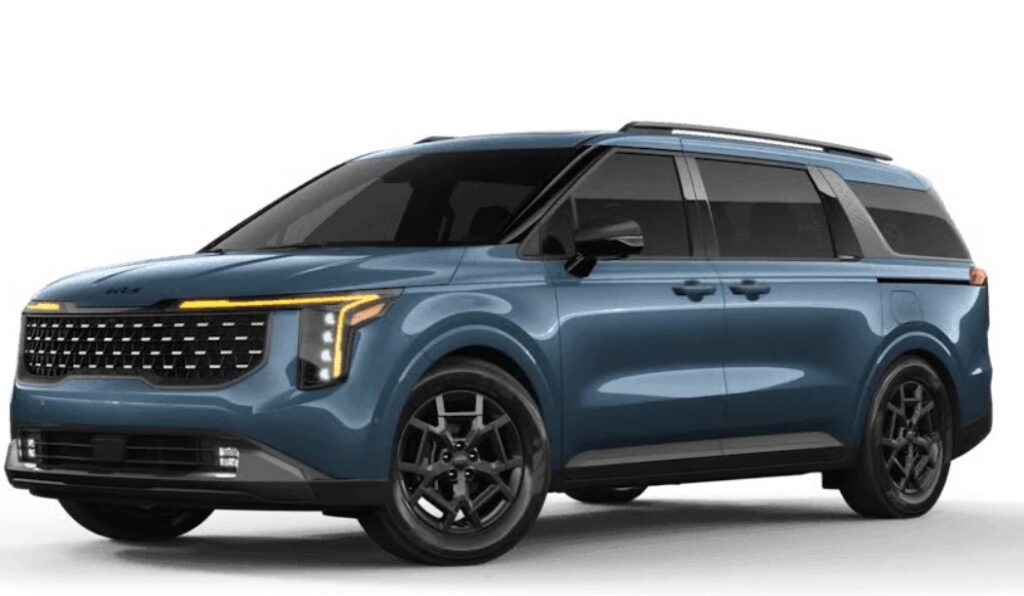
Put the Kia Carnival vs Hyundai Staria side by side and we quickly realize these two family movers are chasing the same customers from very different directions.
The Kia Carnival disguises its people-moving ability beneath styling that almost looks like a large SUV. The Hyundai Staria does the opposite. It embraces the MPV formula with a futuristic, almost spaceship-like body and an enormous glasshouse.
Both can haul families, luggage, friends, and enough weekend gear to make us question why we packed so much in the first place. Yet the driving experience, cabin packaging, seating philosophy, and overall character are surprisingly different.
So which one should we buy?
For many families, we think the Carnival is the easier vehicle to live with every day. It feels more car-like, its cabin is beautifully executed, and its combination of passenger space and luggage capacity is difficult to fault.
But dismissing the Staria would be a mistake. If maximum cabin room, easy passenger access, and genuine people-moving ability sit at the top of our priority list, Hyundai's giant MPV can make the Carnival feel almost conventional.
Let's break down the Hyundai Staria vs Kia Carnival comparison properly.
Content in this publication
- Kia Carnival vs Hyundai Staria at a Glance
- Design: Two Completely Different Personalities
- Size and Dimensions
- Interior Design and Cabin Quality
- Seating Capacity and Passenger Comfort
- Sliding Doors: The Feature We Quickly Learn to Love
- Cargo Space: Kia Carnival vs Hyundai Staria
- Kia Carnival vs Hyundai Staria Engine Options
- Performance and Driving Experience
- Ride Comfort
- Fuel Economy
- Technology and Infotainment
- Safety: Kia Carnival vs Hyundai Staria
- Kia Carnival vs Hyundai Staria for Families
- Which Is Better for Large Families?
- Which Is Better for Road Trips?
- Which Is Better for Business Use?
- Practicality Around Town
- Reliability and Ownership Considerations
- Kia Carnival vs Hyundai Staria: Pros and Cons
- Carnival vs Staria: Which One Feels More Premium?
- Which Has Better Value?
- Who Should Buy the Kia Carnival?
- Who Should Buy the Hyundai Staria?
- Kia Carnival vs Hyundai Staria: Which Is Better?
- Frequently Asked Questions
- Conclusion
Kia Carnival vs Hyundai Staria at a Glance
Before diving into the details, here's the simplest way to understand these vehicles.
| Category | Kia Carnival | Hyundai Staria |
|---|---|---|
| Overall personality | SUV-inspired family MPV | Futuristic full-size people mover |
| Length | Around 5.16 m | Around 5.26 m |
| Wheelbase | Around 3.09 m | Around 3.28 m |
| Typical seating | 7–8 seats depending on market | 7–11 seats depending on market |
| Driving feel | More car-like | More van-like and spacious |
| Cabin strength | Comfort and refinement | Sheer room and visibility |
| Styling | Conventional and premium | Radical and futuristic |
| Best suited to | Families and everyday driving | Large families and passenger transport |
Specifications vary considerably between countries, particularly engines and seating arrangements. That's worth remembering if we're comparing a Carnival sold in Australia, Korea, North America, Europe, or another market with a locally available Staria.
Design: Two Completely Different Personalities
Park these vehicles together and nobody will confuse one with the other.
Kia Carnival Looks More Like an SUV
Kia has deliberately moved the Carnival away from traditional minivan styling.
Its long hood, bold grille, relatively squared-off body, and sculpted sides give it something closer to the stance of a large crossover. If we've always liked the practicality of a minivan but disliked looking as though we're driving one, the Carnival solves much of that problem.
There's a clever bit of visual trickery happening here.
The Carnival remains a big vehicle with sliding rear doors and three-row versatility, but those practical elements are hidden beneath styling that feels surprisingly premium.
Recent models push the idea further with more distinctive lighting, cleaner surfaces, and an increasingly upscale appearance.
Hyundai Staria Looks Like It Arrived From the Future
Then we have the Staria.
There's nothing subtle about it.
Its enormous windshield, almost uninterrupted glass area, smooth front end, low-mounted headlights, and horizontal lighting signature make it look like something designed for an airport terminal in 2040.
Some people will adore it.
Others won't.
But boring? Absolutely not.
The design isn't purely cosmetic either. The huge windows create an exceptionally open cabin, while the tall roof and boxier rear section contribute to the Staria's tremendous passenger space.
Which Exterior Design Wins?
For most private buyers, we'd give the Carnival the advantage.
It fits naturally into a suburban driveway and looks closer to a premium SUV.
The Staria wins if originality matters more than convention. Few large family vehicles create such an unmistakable visual identity.
Size and Dimensions
This is where the Hyundai begins flexing its muscles.
The current Staria stretches to roughly 5,255 mm in length, compared with approximately 5,155 mm for the Carnival. Hyundai also gives the Staria a substantially longer wheelbase of about 3,275 mm, versus roughly 3,090 mm for the Kia.
Those extra centimeters may sound insignificant on paper.
Inside, they're anything but.
The Staria feels enormous.
Its tall roof amplifies the sensation, producing an interior that feels more like a lounge than a conventional passenger vehicle.
The Carnival is hardly cramped, though. In fact, its slightly more manageable proportions may actually be preferable when navigating city streets, underground parking garages, or narrow residential areas.
Which Is Easier to Park?
Neither vehicle is tiny.
Let's get that out of the way.
But the Carnival generally feels less intimidating because it sits lower and doesn't have quite the same bus-like footprint.
Modern parking cameras and sensors help enormously, but buyers moving from a compact SUV should still expect an adjustment period.
The Staria's fantastic visibility partially compensates for its dimensions. Those huge windows provide an almost panoramic view of the surroundings.
Interior Design and Cabin Quality
Opening the door changes the character of this comparison completely.
The Carnival's cockpit feels familiar in the best possible way.
Instead of sitting behind the wheel of something resembling a commercial van, we get the sensation of driving an upscale crossover.
Depending on trim and market, modern Carnival models can offer large digital displays, sophisticated infotainment systems, premium upholstery, electrically adjustable seating, multiple USB ports, wireless connectivity, climate controls for rear passengers, and numerous convenience features.
The dashboard sits relatively low, while the center console makes the driver's environment feel substantial and luxurious.
It's a cabin we'd happily spend several hours in.
Staria Interior: Space Takes Center Stage
The Staria approaches things differently.
Its dashboard feels more open, and the towering windshield creates a tremendous sensation of space.
Visibility is exceptional.
Passengers sit surrounded by large windows, which makes the second and third rows feel less claustrophobic than they can in conventional SUVs.
Depending on configuration, Hyundai also offers sophisticated lounge-style versions designed around passenger comfort rather than simply maximizing seat count.
The Staria's interior isn't necessarily cheap, but its architecture constantly reminds us that space and practicality came first.
Cabin Quality Winner
The Kia Carnival wins for perceived sophistication.
The Hyundai Staria wins for openness.
Think boutique hotel versus modern airport lounge. Both can be comfortable; they simply achieve comfort differently.
Seating Capacity and Passenger Comfort
This could be the deciding factor.
Both vehicles are designed around moving people, but the Staria offers extraordinary flexibility in markets where multiple seating configurations are available.
Kia Carnival Seating
Depending on country and trim, Carnival configurations commonly include seven or eight seats, while certain markets have offered higher-capacity variants.
A major advantage is that Kia doesn't simply squeeze extra seats into the cabin.
Second-row comfort can be outstanding.
Some premium versions feature lounge-style captain's chairs with substantial adjustment, creating an experience that feels closer to business class than the middle row of a family van.
The third row remains genuinely useful for adults, rather than being an emergency bench intended primarily for children.
Hyundai Staria Seating
The Staria takes passenger transport even further.
Depending on market, configurations can stretch from luxury seven-seat layouts to nine-seat, eleven-seat, or commercial arrangements.
That's enormously important.
If we regularly carry eight or more people, the Staria can enter territory where the Carnival may not even offer a comparable local configuration.
The taller body also makes moving through the cabin easier.
Which Has the Better Third Row?
For everyday family use, both are strong.
The Staria's longer wheelbase and taller cabin create the stronger sense of space.
The Carnival counters with a more refined passenger-car atmosphere.
If grandparents frequently ride in row three, we'd pay close attention to entry height, seat arrangement, and the specific trim we're considering rather than choosing based purely on exterior dimensions.
Sliding Doors: The Feature We Quickly Learn to Love
Anyone switching from a three-row SUV may underestimate the value of sliding doors.
Then we park beside another car.
Suddenly they seem genius.
Both vehicles allow rear passengers to enter without swinging a huge conventional door into the vehicle parked next to us.
Parents loading children into car seats will appreciate this constantly.
Power-operated doors available on many versions add another layer of convenience.
For large families, sliding doors alone can make either MPV significantly more practical than many three-row SUVs.
Cargo Space: Kia Carnival vs Hyundai Staria
Cargo comparisons get complicated because manufacturers measure luggage capacity differently and because the number, type, and position of seats dramatically change available volume.
The bigger point is easier to understand.
Both vehicles can carry far more luggage than typical three-row SUVs.
You may be interested in reading Kia Carnival vs Hyundai Santa Fe: Which Family Car Makes More Sense?
The Carnival offers an exceptionally deep and usable luggage area behind the third row in many configurations. Kia documentation for certain versions lists more than 600 liters using VDA measurements with all seating rows available, although exact capacities differ by seat layout.
Fold or remove seats where permitted and the available space becomes huge.
The Staria takes advantage of its taller, squarer body and long wheelbase.
Commercial configurations show just how much volume Hyundai's basic architecture can accommodate.
Which One Is Better for Family Luggage?
The Carnival's luggage area is often more convenient than its lower exterior shape suggests.
For vacations involving seven people and suitcases, it performs extremely well.
The Staria becomes especially attractive when we're transporting bulky objects rather than ordinary luggage.
Its tall rear opening and boxier cargo area feel almost purpose-built for oversized loads.
If we're regularly moving bicycles, business equipment, camping supplies, or mountains of luggage, the Hyundai's van-derived shape becomes an advantage rather than a compromise.
Kia Carnival vs Hyundai Staria Engine Options
This category requires caution because powertrains differ dramatically between markets.
The Carnival has been offered globally with combinations including a 3.5-liter petrol V6, 2.2-liter turbo-diesel, and increasingly a 1.6-liter turbocharged hybrid system.
The Staria has likewise appeared with different petrol, diesel, LPG, hybrid, and now electric configurations depending on country.
That means a simple universal engine comparison would be misleading.
Carnival Petrol
The 3.5-liter V6 suits the Carnival's character beautifully.
It's smooth, responsive, and strong enough to move a fully loaded vehicle without feeling strained.
The downside is predictable: fuel consumption.
Large naturally aspirated petrol engines rarely behave like economy champions when they're pushing two tonnes of family transport through traffic.
Carnival Diesel
Where available, the 2.2-liter diesel is arguably one of the most logical engines for high-mileage Carnival buyers.
Strong low-end torque suits a heavy MPV, particularly when loaded.
Diesel can also make sense for owners regularly tackling highway journeys.
Carnival Hybrid
The hybrid changes the equation.
Kia's turbocharged hybrid setup gives buyers the low-speed efficiency of electrification without requiring external charging.
For urban families, that can significantly improve the Carnival's appeal.
Staria Diesel
The 2.2-liter turbo-diesel has been a key Staria powertrain in several markets.
Its torque suits the Hyundai's size, and it feels especially appropriate for owners using the vehicle as a serious people mover.
Staria Hybrid
Hyundai's newer Staria Hybrid combines a 1.6-liter turbo petrol engine with electric assistance and a six-speed automatic transmission.
In its current Korean-market specification, combined system output reaches approximately 245 PS.
That's an interesting development because it attacks one of the biggest criticisms associated with large MPVs: fuel consumption.
Staria Electric
The comparison has become even more interesting with the arrival of the Staria Electric in selected markets.
Hyundai has announced an 84-kWh battery, a 160-kW electric motor and an estimated WLTP driving range of up to around 400 km, although availability and final specifications depend on the region.
That gives the Staria a zero-emission option the Carnival lineup doesn't universally match.
Performance and Driving Experience
Here's where the Carnival begins pulling away.
Carnival Drives More Like a Car
The driver's seat may be high, but the controls, steering response, dashboard placement, and general road behavior feel closer to a large crossover than a traditional van.
Body movement exists—we're not driving a sports sedan—but the Carnival hides its size impressively well.
On long highway journeys, it's comfortable and settled.
Around town, it feels surprisingly natural once we've adapted to the dimensions.
Staria Feels Bigger
The Staria's high roof and expansive cabin never let us forget what we're driving.
We sit higher, with enormous glass around us.
It's easy to place on the road thanks to strong visibility, but the experience feels more obviously like operating a full-size people mover.
That's not necessarily negative.
In fact, passengers may prefer it.
But keen drivers will almost certainly gravitate toward the Carnival.
Ride Comfort
Both vehicles prioritize comfort rather than aggressive handling.
And that's exactly what they should do.
A vehicle carrying children, grandparents, luggage, groceries, and perhaps one very unhappy dog doesn't need razor-sharp steering.
It needs composure.
The Carnival's lower stance helps it feel controlled over faster roads.
The Staria's passenger-oriented setup provides a relaxed cruising environment, but depending on trim and load, its taller body can feel more susceptible to noticeable body movement.
Wheel size also matters.
Large fashionable alloy wheels may look better, yet versions fitted with more tire sidewall can often deliver a softer ride.
Fuel Economy
Choosing a winner without identifying the engine would be impossible.
A Carnival V6 and Staria Hybrid aren't remotely comparable.
Neither are a Carnival Hybrid and diesel Staria.
Instead, we should approach fuel costs by use case.
City Driving
For repeated urban journeys, hybrid variants make enormous sense.
Regenerative braking allows them to recover energy during slowing and braking, exactly where a large conventional engine tends to waste fuel.
Highway Driving
Diesel versions remain compelling in markets where they're offered, especially for drivers covering long distances.
The advantage of hybridization typically narrows once we're cruising steadily at highway speeds.
Occasional Driving
If annual mileage is modest, paying substantially more for the most efficient powertrain may never produce meaningful savings.
Purchase price matters just as much as fuel economy.
Technology and Infotainment
Kia and Hyundai share considerable technology across their broader corporate family, so neither vehicle feels generations behind the other.
Equipment depends heavily on trim.
Typical features available across the two model ranges can include:
- Large infotainment displays
- Digital instrument clusters
- Apple CarPlay and Android Auto
- Multiple USB charging points
- Wireless phone charging
- Premium audio systems
- Surround-view cameras
- Rear passenger monitoring features
- Multi-zone climate control
- Power sliding doors
- Smart tailgates
- Advanced navigation and connected services
Where the Carnival often wins is presentation.
Its dashboard integration can feel more luxurious.
Where the Staria wins is visibility and cabin architecture. Technology never overwhelms the enormous sense of interior space.
Safety: Kia Carnival vs Hyundai Staria
Modern versions of both vehicles can carry extensive driver-assistance technology.
Depending on market and specification, that may include autonomous emergency braking, blind-spot monitoring, rear cross-traffic assistance, lane-keeping technology, adaptive cruise control, parking cameras, and numerous airbags.
Family buyers should avoid assuming every trim receives identical equipment, though.
Safety Features We Would Prioritize
If we were buying either vehicle for family use, we'd particularly want:
- Autonomous emergency braking
- Blind-spot collision warning or intervention
- Rear cross-traffic alert
- Surround-view parking cameras
- Adaptive cruise control
- Safe-exit assistance
- Strong third-row airbag coverage
- Front and rear parking sensors
These systems are especially valuable in vehicles this large.
Kia Carnival vs Hyundai Staria for Families
For the average family, we'd lean toward the Carnival.
Why?
Because it blends minivan practicality with the social acceptability and driving character of an SUV.
We get sliding doors, real third-row usability, huge luggage capacity, and excellent passenger comfort without feeling as though we've bought a commercial shuttle.
The Staria makes more sense as family size increases.
Have four children? Frequently bring grandparents? Regularly transport friends? Suddenly Hyundai's enormous cabin becomes difficult to ignore.
Which Is Better for Large Families?
This is one of the Staria's strongest categories.
You may be interested in readingKia Carnival vs Hyundai Santa Fe: Which Family Car Makes More Sense?You may be interested in reading
Kia Carnival vs Kluger: Which Family Car Makes More Sense?If our definition of "family car" means moving seven, eight, or potentially even more occupants depending on the local configuration, Hyundai has an undeniable advantage.
The cabin isn't merely long.
It's tall.
That matters when passengers enter, exit, move between rows, or simply spend several hours together.
The Staria feels like a room on wheels.
The Carnival feels like a luxury family vehicle.
That's the fundamental difference.
Which Is Better for Road Trips?
We'd call this category incredibly close.
The Carnival's advantages include:
- More car-like driving manners
- Strong luggage practicality
- Comfortable seating
- Easier maneuverability
- Excellent highway refinement
The Staria counters with:
- Greater sense of interior room
- Excellent visibility
- Easier movement through the cabin
- Flexible passenger layouts
- Tremendous space for long journeys
If we're driving six hours with four passengers, we'd probably choose the Carnival.
If we're driving six hours with eight passengers, we'd want the Staria.
Simple.
Which Is Better for Business Use?
Staria.
And this one isn't particularly close.
Hyundai's layout lends itself naturally to hotels, airport transfers, private transportation services, tour companies, and other commercial applications.
Its futuristic styling also gives it visual presence without necessarily looking excessively expensive.
Passengers get enormous windows and easy access.
High-capacity configurations further strengthen the business case.
The Carnival can certainly serve professionally, particularly in premium transport roles, but its strongest identity remains that of a luxurious family MPV.
Practicality Around Town
This is where size starts fighting back.
Shopping-center parking spaces weren't designed by people who own five-meter-long MPVs.
The Carnival's slightly shorter body and lower height can make life easier in crowded environments.
The Staria requires more awareness, particularly in tight parking structures.
However, sliding doors save both vehicles from one classic large-car problem: passengers opening enormous rear doors into whatever happens to be parked beside us.
Once we've lived with powered sliding doors, returning to a traditional three-row SUV can feel strangely primitive.
Reliability and Ownership Considerations
Because Kia and Hyundai share engineering resources, we're not choosing between two completely unrelated mechanical philosophies.
Still, reliability depends on far more than the badge.
Engine type, service history, climate, driving conditions, trim complexity, and maintenance all matter.
A heavily used diesel airport shuttle and a privately owned hybrid doing school runs live completely different lives.
For used examples, we'd pay particular attention to:
- Complete maintenance history
- Sliding-door operation
- Electronic accessories
- Air-conditioning performance in every seating row
- Diesel emissions equipment where applicable
- Hybrid-system warranty coverage
- Tire wear
- Suspension noises
- Previous commercial use
A large MPV can hide enormous mileage surprisingly well, so condition and documentation matter.
Kia Carnival vs Hyundai Staria: Pros and Cons
Kia Carnival Pros
The Carnival gives us stylish SUV-inspired looks, a polished interior, excellent family practicality, comfortable seating, strong cargo capacity, and driving manners that feel remarkably normal for such a large vehicle.
Kia Carnival Cons
Its lower roof means it cannot match the Staria's cavernous feeling, some premium configurations become expensive, and petrol versions can use significant amounts of fuel.
Hyundai Staria Pros
The Staria delivers outstanding passenger room, huge windows, excellent accessibility, flexible seating choices in many markets, distinctive styling, and impressive suitability for very large families or commercial passenger transport.
Hyundai Staria Cons
Its size can be cumbersome, styling won't appeal to everyone, and the taller body feels more obviously van-like from behind the wheel.
Carnival.
The Kia's driving position, dashboard layout, exterior proportions, and overall ambience create a more convincing luxury-family-car experience.
Higher trim levels can feel impressively sophisticated.
The Staria can also become extremely luxurious, particularly in lounge-oriented specifications, but its sense of luxury revolves around passenger space rather than driver engagement.
Think of it this way.
The Carnival tries to make us forget we're driving an MPV.
The Staria makes the MPV concept feel special.
Which Has Better Value?
Value is impossible to determine globally because prices and standard equipment vary substantially by country.
But we can still identify the broader equation.
The Carnival may represent better value for conventional family buyers because it can replace both an SUV and a minivan without demanding many compromises.
The Staria offers extraordinary value when passenger capacity and interior volume are priorities.
Don't compare prices without matching trims carefully.
A base eight-seat model and a luxury seven-seat version may share the same badge while delivering completely different experiences.
Who Should Buy the Kia Carnival?
We'd choose the Carnival if we:
- Need three genuinely useful seating rows
- Want sliding-door practicality
- Prefer SUV-inspired styling
- Care about driving refinement
- Regularly carry children rather than nine adults
- Want generous luggage capacity
- Prefer a conventional, premium cabin
- Need one vehicle to handle both commuting and family vacations
It's arguably one of the best compromises between an SUV and a traditional minivan.
Who Should Buy the Hyundai Staria?
We'd choose the Staria if we:
- Prioritize passenger room above almost everything else
- Regularly carry large groups
- Want exceptional visibility
- Need flexible seating arrangements
- Use the vehicle for passenger transportation
- Carry bulky equipment
- Appreciate unconventional styling
- Want maximum interior space without moving to a traditional commercial van
The Staria doesn't disguise what it is.
It celebrates it.
And that's precisely why it works.
Kia Carnival vs Hyundai Staria: Which Is Better?
For most families, the Kia Carnival is our winner.
It delivers the practicality we expect from a proper MPV while remaining easy to drive, attractive, comfortable, and premium enough to replace a large SUV.
It's the more balanced vehicle.
But "better" changes once passenger capacity becomes the priority.
The Hyundai Staria is the stronger choice for maximum interior space, larger passenger groups, commercial transport, and buyers who value cabin flexibility above sporty styling or car-like handling.
So our final decision looks like this:
Choose the Kia Carnival for the better all-round family vehicle.
Choose the Hyundai Staria for the better pure people mover.
Neither approach is wrong.
They're simply solving the same problem from opposite ends of the driveway.
Frequently Asked Questions
Is the Kia Carnival bigger than the Hyundai Staria?
No. The Hyundai Staria is generally larger. Current specifications place the Staria at roughly 5,255 mm long with a 3,275 mm wheelbase, while the Carnival is around 5,155 mm long with a 3,090 mm wheelbase. Exact figures can vary slightly by specification and market.
Which has more seats, Kia Carnival or Hyundai Staria?
The Hyundai Staria generally offers the greater potential passenger capacity. Depending on market, Staria versions may be available with seven, nine, eleven, or other seating arrangements. Carnival seating configurations also vary internationally, but seven- and eight-seat passenger versions are particularly common.
Is the Hyundai Staria better than the Kia Carnival for families?
For a typical family, we think the Carnival is better because it combines excellent space with more car-like road manners and SUV-inspired styling. For exceptionally large families, the Staria's greater cabin volume and seating flexibility may make it the smarter choice.
Which is more comfortable, Kia Carnival or Hyundai Staria?
Both are comfortable, but in different ways. The Carnival feels more refined and car-like, particularly from the driver's seat. The Staria feels airier and more spacious, particularly for rear passengers. Higher-end captain's-chair or lounge configurations can make either model exceptionally comfortable.
Which is better for long trips, Kia Carnival or Hyundai Staria?
The Kia Carnival is likely to suit smaller families better because of its refined driving characteristics, luggage capacity, and comfortable highway manners. The Hyundai Staria becomes especially attractive when we're traveling with a larger number of passengers because its taller, longer cabin provides outstanding room.
Conclusion
The Kia Carnival vs Hyundai Staria debate isn't really about finding a universal winner. It's about deciding which interpretation of the modern MPV fits our life.
Kia has created something remarkably clever. The Carnival provides nearly everything families love about traditional minivans—sliding doors, huge luggage space, three useful rows, flexible seating—while wrapping it in a package that feels closer to a premium SUV.
Hyundai went the other way.
Instead of hiding the Staria's people-moving mission, it exaggerated it. The giant windows, long wheelbase, towering cabin, and dramatic styling turn practicality into the vehicle's main attraction.
For five- or six-person households, we'd usually take the Carnival.
For very large families, passenger transport, airport runs, or anyone obsessed with interior space, we'd take the Staria.
And perhaps that's the best compliment we can give both vehicles.
Neither feels like a compromise anymore.
You may be interested in readingKia Carnival vs Hyundai Santa Fe: Which Family Car Makes More Sense?You may be interested in reading
Kia Carnival vs Kluger: Which Family Car Makes More Sense?You may be interested in reading
Kia Carnival vs Kia Sorento: Which One Is Better for Your Family?The Carnival makes the minivan desirable.
The Staria makes it futuristic.
If you want to know other articles similar to Kia Carnival vs Hyundai Staria: Which MPV Is Better? you can visit the category Models.
Honda Passport vs Toyota 4Runner: Which SUV Is Better?
Honda Passport vs Ford Bronco: Which SUV Is Better?
Honda Passport vs Ford Explorer: Which SUV Is Better?
Honda Passport or Pilot: Which SUV Is Better?
Honda Passport vs Jeep Grand Cherokee: Which SUV Is Better?
Honda Passport vs Nissan Pathfinder: Which SUV Is Better?
Leave a Reply
More content of your interest