

Kia Carnival vs Hyundai Palisade: Which Family Hauler Wins?

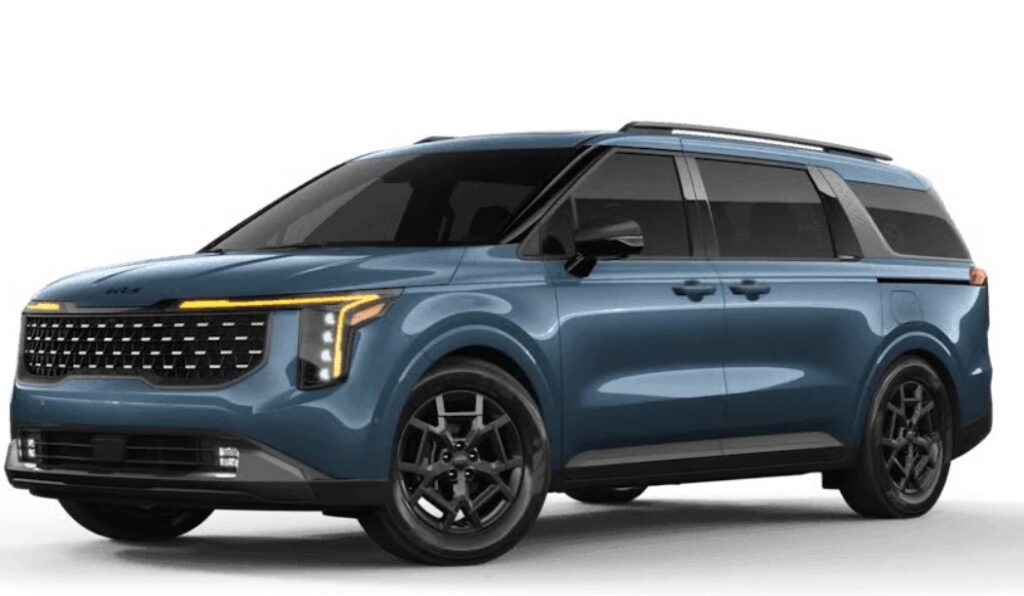
Choosing between the Kia Carnival vs Hyundai Palisade is a little like choosing between a Swiss Army knife and a rugged travel backpack. Both can carry nearly everything your family throws at them, both can seat up to eight people in certain configurations, and both offer impressive comfort and technology. Yet they approach family transportation from completely different directions.
The Kia Carnival is technically an MPV—a multipurpose vehicle—but let's call it what it really is: a cleverly disguised minivan. It gives us sliding doors, enormous cargo capacity, a low step-in height, and one of the most practical interiors on the market.
The Hyundai Palisade, meanwhile, is a genuine three-row midsize SUV. It sits higher, offers available all-wheel drive, can tow more than the Carnival, and delivers the tougher SUV image many buyers prefer.
So which one should we park in our driveway?
For most large families focused on passenger comfort, cargo space, and everyday practicality, the Kia Carnival is the stronger people mover. If we want all-wheel drive, greater towing capability, additional ground clearance, or simply prefer an SUV driving position, however, the Hyundai Palisade makes more sense.
Let's dig much deeper.
Content in this publication
- Kia Carnival vs Hyundai Palisade at a Glance
- What's the Main Difference Between the Kia Carnival and Hyundai Palisade?
- Exterior Design: Minivan Without Looking Too Much Like One
- Interior Space: Kia Carnival Takes the Lead
- Passenger Space and Third-Row Comfort
- Sliding Doors vs Regular Doors
- Engine Performance: Surprisingly Similar on Gas Models
- Kia Carnival Hybrid vs Hyundai Palisade Hybrid
- Fuel Economy: Hybrids Change Everything
- All-Wheel Drive: Palisade Wins Easily
- Towing Capacity: Another Palisade Victory
- Ride Comfort: Different Flavors of Relaxation
- Handling and Driving Experience
- Technology and Infotainment
- Interior Luxury: Palisade Makes a Strong Case
- Family Practicality: Carnival Dominates
- Kia Carnival vs Hyundai Palisade for Car Seats
- Kia Carnival vs Hyundai Palisade for Road Trips
- Kia Carnival vs Hyundai Palisade for Camping
- Safety and Driver-Assistance Technology
- Which Is Easier to Park?
- Reliability and Ownership Considerations
- Which Costs More to Run?
- Who Should Buy the Kia Carnival?
- Who Should Buy the Hyundai Palisade?
- Kia Carnival vs Hyundai Palisade: Pros and Cons
- Kia Carnival vs Hyundai Palisade: Which Is Better?
- Final Verdict: Carnival for Families, Palisade for SUV Buyers
- Frequently Asked Questions
- 1. Is the Kia Carnival bigger than the Hyundai Palisade?
- 2. Which has more cargo space, Kia Carnival or Hyundai Palisade?
- 3. Does the Kia Carnival have AWD?
- 4. Which can tow more, Kia Carnival or Hyundai Palisade?
- 5. Is the Kia Carnival better than the Hyundai Palisade for a family?
Kia Carnival vs Hyundai Palisade at a Glance
Before exploring every detail, here's the big-picture comparison based primarily on current U.S.-market models.
| Category | Kia Carnival | Hyundai Palisade |
|---|---|---|
| Vehicle type | MPV/minivan | Three-row SUV |
| Maximum seating | Up to 8 | Up to 8 |
| Gas engine | 3.5L V6 | 3.5L V6 |
| Gas horsepower | 287 hp | 287 hp |
| Hybrid available | Yes | Yes |
| AWD available | No | Yes |
| Maximum cargo volume | About 145.1 cu. ft. | 86.7 cu. ft. |
| Cargo behind third row | About 40.2 cu. ft. | 19.1 cu. ft. |
| Gas towing capacity | Up to 3,500 lb. | Up to 5,000 lb. |
| Sliding rear doors | Yes | No |
| Best suited for | Maximum family practicality | SUV versatility |
Kia lists 40.2 cubic feet of cargo capacity behind the Carnival's third row and a 3,500-pound towing rating for the gasoline version. Hyundai lists 19.1 cubic feet behind the Palisade's third row, 86.7 cubic feet behind the front seats, and up to 5,000 pounds of braked towing capacity for its gasoline model.
Those figures immediately reveal the personalities of these vehicles. The Carnival is built around passengers and cargo. The Palisade trades some interior packaging efficiency for SUV capability.
What's the Main Difference Between the Kia Carnival and Hyundai Palisade?
The fundamental difference isn't horsepower, screens, leather, or even price. It's architecture.
The Carnival behaves like a minivan, even though Kia deliberately styles it to resemble an SUV. Its long cabin, low floor, sliding doors, and enormous cargo area are optimized around moving people.
The Palisade behaves like a traditional midsize SUV. We climb slightly higher into it, conventional rear doors swing outward, and available HTRAC all-wheel drive gives the vehicle more confidence in snow, mud, loose surfaces, and difficult weather.
Think about school pickup.
With the Carnival, children press a button, the sliding door glides backward, and they climb directly inside. Nobody throws a rear door into the car parked beside us.
With the Palisade, the experience feels more like driving a premium SUV. We get a higher seating position and more traditional SUV proportions.
Neither approach is inherently better. The question is which advantage matters more to us.
Exterior Design: Minivan Without Looking Too Much Like One
Kia Carnival Styling
Kia has worked hard to make the Carnival look less like the stereotypical family van.
The front end features a broad grille, squared-off proportions, prominent lighting, and SUV-inspired styling. From certain angles, somebody unfamiliar with the Carnival could easily mistake it for a large crossover.
And that's probably intentional.
Many buyers love minivan practicality but dislike the traditional minivan image. The Carnival tries to give us both worlds.
Hyundai Palisade Styling
The latest Palisade leans much harder into a substantial, upscale SUV appearance.
It's taller and visually more imposing than the Carnival. The squared bodywork and upright stance give it greater road presence, especially in rugged-oriented versions such as the XRT Pro.
If curb appeal means "I want this to look unmistakably like an SUV," the Palisade wins.
If curb appeal means "I want minivan practicality without screaming minivan," the Carnival is remarkably convincing.
Interior Space: Kia Carnival Takes the Lead
This is where the contest starts moving decisively toward Kia.
Minivans are packaging magicians.
Because their bodies are essentially large rectangular boxes with low floors, engineers can devote an enormous percentage of the vehicle's footprint to usable interior space.
The Carnival is a prime example.
Kia's specifications indicate approximately 40.2 cubic feet of cargo volume behind the third row and up to 145.1 cubic feet at maximum capacity in relevant seating configurations.
The 2026 Hyundai Palisade provides:
- 19.1 cu. ft. behind the third row
- 46.3 cu. ft. behind the second row
- 86.7 cu. ft. behind the front seats
That's not a small difference.
It's enormous.
Why Carnival Cargo Space Matters in Real Life
Numbers can feel abstract until we imagine packing for vacation.
Eight passengers plus:
- suitcases,
- backpacks,
- a stroller,
- beach equipment,
- groceries,
- children's toys,
- and perhaps a cooler.
Suddenly 19 cubic feet disappears incredibly quickly.
The Carnival's deep cargo well behind the third row makes it far easier to transport passengers and luggage simultaneously.
That's the key distinction. Many SUVs become spacious cargo vehicles only after we fold the third row. The Carnival remains remarkably useful while the third row is occupied.
Cargo Winner: Kia Carnival
For families regularly carrying six, seven, or eight people, we'd choose the Carnival without hesitation.
Passenger Space and Third-Row Comfort
Both vehicles offer legitimate three-row seating rather than the tiny emergency seats found in some smaller crossovers.
However, the Carnival again benefits from minivan architecture.
Current Carnival specifications list approximately 35.6 inches of third-row legroom, while second-row legroom is around 40.5 inches.
More important than the number itself is how easily passengers reach those seats.
Carnival Third-Row Access
Sliding doors create a huge opening.
Parents installing child seats will immediately understand the advantage. Instead of squeezing ourselves between an open door and the vehicle next to us, we can stand beside the seat with far more space.
Grandparents benefit too.
The lower floor means less climbing.
Palisade Third-Row Access
The Palisade is still one of the more accommodating three-row SUVs, and second-row configurations can make rear access relatively straightforward.
Yet physics remains physics.
Conventional doors and a taller floor make getting into the third row slightly more cumbersome.
If we regularly transport adults in all three rows, the Carnival is the easier vehicle to live with.
Sliding Doors vs Regular Doors
This might sound trivial until we have children.
Then it becomes one of the biggest differences between the two vehicles.
The Carnival's power sliding doors are brilliant in:
- school parking lots,
- narrow garages,
- shopping centers,
- apartment parking spaces,
- and crowded city streets.
A child can't enthusiastically fling a sliding door into somebody else's car.
That's one less thing for us to worry about.
The Palisade's conventional doors feel more traditional and arguably reinforce the upscale SUV experience. But practical families will immediately recognize the sliding-door advantage.
Engine Performance: Surprisingly Similar on Gas Models
Here's where things become interesting.
For current U.S.-market gasoline models, both vehicles use 3.5-liter V6 engines producing 287 horsepower. Hyundai lists its 2026 Palisade gasoline engine at 287 hp, while Kia lists 287 hp for the current Carnival V6.
So don't expect one to blow the other away in a straight line.
Kia Carnival Gas Engine
The Carnival's naturally aspirated V6 suits the vehicle well.
Power delivery feels predictable rather than dramatic. There's enough strength for highway merging, passing, and loading the van with passengers without turning every acceleration run into an event.
That's exactly what we want from a family vehicle.
Hyundai Palisade Gas Engine
The Palisade's 3.5-liter V6 plays essentially the same role.
It emphasizes smoothness and everyday drivability rather than outright performance.
With both vehicles loaded, neither feels like a sports car—but neither needs to.
Gas Performance Verdict
Call this one close.
Power output is similar enough that we'd make our decision based on practicality, drivetrain, towing, efficiency, and driving environment rather than horsepower.
Kia Carnival Hybrid vs Hyundai Palisade Hybrid
This comparison has become much more interesting now that both vehicles offer hybrid powertrains.
Carnival Hybrid
The Carnival Hybrid combines a turbocharged 1.6-liter four-cylinder engine with an electric motor. Kia's current system produces around 242 combined horsepower and 271 lb-ft of torque. Current Kia information also lists approximately 32 mpg combined for the hybrid.
For a vehicle this large, that's attractive.
The hybrid makes particular sense for families spending significant time in urban traffic, where electrification can provide greater efficiency benefits.
Palisade Hybrid
The 2026 Palisade Hybrid takes a different approach.
You may be interested in reading Kia Carnival vs Hyundai Staria: Which MPV Is Better?
Its turbocharged 2.5-liter four-cylinder hybrid system produces 329 combined horsepower and 339 lb-ft of torque. Hyundai rates certain front-wheel-drive versions at up to 33 mpg city, 35 highway, and 34 combined, while AWD versions can achieve around 29 mpg combined depending on trim.
That's impressive.
The Palisade Hybrid therefore delivers something unusual: significantly more combined output than the Carnival Hybrid while remaining remarkably efficient.
Hybrid Winner: Hyundai Palisade
Purely from a powertrain perspective, the Palisade Hybrid is the more impressive package.
But the Carnival still wins the interior-space contest.
Fuel Economy: Hybrids Change Everything
If fuel costs matter, we'd strongly consider the hybrid version of either vehicle.
Traditional V6 three-row family vehicles aren't famous for sipping fuel like espresso. Large body, substantial weight, and seven or eight passengers require energy.
The hybrids fundamentally change the equation.
Hyundai's front-wheel-drive Palisade Hybrid can reach an EPA-estimated 34 mpg combined in applicable trims, while Kia cites around 32 mpg combined for the Carnival Hybrid.
For families driving 15,000 or 20,000 miles annually, that difference between a conventional large V6 vehicle and an efficient hybrid can add up quickly.
All-Wheel Drive: Palisade Wins Easily
Here's one category where there's basically no debate.
Kia Carnival
The Carnival remains front-wheel drive.
There is no AWD option in the U.S. model lineup.
Hyundai Palisade
The Palisade offers Hyundai's HTRAC all-wheel-drive system, including drive and terrain-related functionality depending on specification.
If we regularly encounter:
- snow,
- muddy roads,
- steep gravel driveways,
- loose surfaces,
- mountain conditions,
- or poor-weather travel,
the Palisade becomes much easier to recommend.
Modern winter tires can dramatically improve any vehicle's winter performance, including a front-wheel-drive Carnival. But the availability of AWD still gives the Palisade a significant advantage.
AWD Winner: Hyundai Palisade
No contest.
Towing Capacity: Another Palisade Victory
Planning to tow a boat or camper?
Pay attention here.
The gasoline Kia Carnival is rated to tow up to 3,500 pounds when properly equipped.
The gasoline Hyundai Palisade can tow up to 5,000 pounds with trailer brakes, according to Hyundai's current specifications.
That 1,500-pound gap is meaningful.
What Can the Difference Mean?
A 3,500-pound rating may work perfectly for:
- lightweight utility trailers,
- small boats,
- compact campers,
- personal watercraft.
A 5,000-pound rating gives us considerably more flexibility.
Neither vehicle should be treated like a heavy-duty truck, of course. Payload, tongue weight, passengers, equipment, trailer brakes, and vehicle configuration all matter.
But for serious recreational towing, the Palisade is clearly the better starting point.
Towing Winner: Hyundai Palisade
Ride Comfort: Different Flavors of Relaxation
Both vehicles prioritize comfort, but they deliver it differently.
Carnival Ride
The Carnival feels planted and relaxed.
Its long wheelbase and family-focused suspension help smooth out highway travel, while the relatively low seating position creates more of a large-car sensation than a trucklike one.
This is exactly the sort of vehicle we'd happily use for a 700-mile interstate trip.
Palisade Ride
The Palisade provides a taller driving position and more substantial SUV sensation.
We sit higher and get a more commanding view forward.
Some buyers will immediately prefer that.
The Palisade doesn't drive like an old body-on-frame SUV; it's still a modern unibody crossover underneath. Yet its seating position and overall character feel more SUV-like than the Carnival.
Handling and Driving Experience
Nobody buys either vehicle because they dream of attacking mountain switchbacks on Sunday morning.
Still, driving character matters.
The Carnival's lower body gives it a naturally stable feeling. There's less of the tall-SUV sensation when entering corners, and highway behavior is relaxed.
The Palisade gives us the higher perspective many SUV owners love. AWD availability can also deliver extra confidence when road surfaces deteriorate.
For normal suburban driving, we'd call both easy and predictable.
Our preference depends on whether we want lower and car-like or higher and SUV-like.
Technology and Infotainment
This category is remarkably competitive because Kia and Hyundai share a great deal of corporate technology.
Expect sophisticated digital displays, smartphone connectivity, navigation availability, USB charging, driver-assistance systems, and various convenience technologies depending on trim.
Higher Carnival trims can feature a dual panoramic-display arrangement, a head-up display, digital rearview mirror, surround-view technology, passenger-view camera, and premium audio. Kia also emphasizes family-oriented features such as the Passenger View in-cabin camera and Passenger Talk system.
The Palisade similarly offers large digital displays and a broad suite of premium cabin technology, with top versions moving impressively close to luxury-SUV territory.
Which Technology Is Better for Families?
We'd give the Carnival a slight practical advantage.
Why?
Its family-specific systems complement the architecture of the vehicle. An interior camera combined with massive cabin space and sliding doors feels designed around parents rather than simply added to a luxury SUV.
Interior Luxury: Palisade Makes a Strong Case
Practical doesn't have to mean cheap.
Both vehicles can become surprisingly upscale in their higher trims.
The Carnival SX Prestige can include premium materials, sophisticated displays, available VIP-style second-row seating, Bose audio, a head-up display, and digital rearview technology.
Yet the Palisade's luxury-oriented versions arguably feel more cohesive as premium vehicles.
Higher Palisade trims combine upscale materials, sophisticated seating features, large displays, and an SUV-style cabin that could make shoppers question whether they really need to spend considerably more on a luxury badge.
Luxury Winner
This one depends on taste.
For VIP second-row relaxation, the Carnival is fantastic.
For an overall luxury SUV atmosphere, we'd lean Palisade.
Family Practicality: Carnival Dominates
Let's strip away horsepower and styling for a moment.
Imagine daily life.
Monday: school run.
Tuesday: soccer practice.
Wednesday: supermarket.
Thursday: grandparents visit.
Friday: airport pickup.
Saturday: furniture store.
Sunday: road trip.
Which vehicle makes all seven jobs easier?
Probably the Carnival.
Its combination of sliding doors, massive cargo capacity, flexible seating, low step-in height, deep rear cargo area, and three genuinely useful rows is incredibly difficult for a conventional SUV to match.
The Palisade is very practical for an SUV.
The Carnival is practical, period.
Kia Carnival vs Hyundai Palisade for Car Seats
Parents with multiple young children should pay special attention to this category.
Sliding doors are transformational when installing and using child seats.
You may be interested in readingKia Carnival vs Hyundai Staria: Which MPV Is Better?You may be interested in reading
Kia Carnival vs Hyundai Santa Fe: Which Family Car Makes More Sense?We can open the entire side of the vehicle without worrying about clearance from the car next to us. Reaching inside to fasten harnesses is easier. Children can enter without swinging doors into nearby objects.
Three-row SUVs aren't terrible for child seats, but minivans were practically born for this job.
If we're transporting three or four young children regularly, we'd take the Carnival.
Kia Carnival vs Hyundai Palisade for Road Trips
This contest is closer.
The Palisade offers:
- a comfortable highway ride,
- available AWD,
- strong hybrid performance,
- greater towing capability,
- an upscale cabin.
The Carnival counters with:
- dramatically more cargo capacity,
- excellent passenger access,
- comfortable rear seating,
- huge luggage space behind row three,
- family-focused technology.
For six or more passengers plus luggage, the Carnival is our road-trip champion.
For four or five passengers traveling through mountains, winter weather, or mixed road conditions, we'd probably prefer the Palisade.
Kia Carnival vs Hyundai Palisade for Camping
Here's where the Palisade fights back.
If camping means paved campgrounds, tents, chairs, coolers, sleeping bags, and mountains of equipment, the Carnival's huge cargo area is brilliant.
If camping means rougher roads, towing a camper, traveling through snow, or driving over loose surfaces, the Palisade makes more sense.
Ask ourselves one question:
Do we need more room inside the vehicle or more capability underneath it?
Carnival for the first.
Palisade for the second.
Safety and Driver-Assistance Technology
Both Kia and Hyundai have invested heavily in modern driver-assistance technology.
Depending on trim, buyers can find technologies related to:
- automatic emergency braking,
- lane-keeping assistance,
- blind-spot monitoring,
- adaptive cruise control,
- rear cross-traffic protection,
- surround-view cameras,
- parking assistance.
Kia currently promotes 18 standard driver-assistance technologies on the Carnival in its U.S. materials.
Still, we shouldn't treat driver-assistance systems as substitutes for attentive driving. Specifications and standard equipment also vary between trims and model years, so compare the exact vehicles you're considering.
Which Is Easier to Park?
This sounds counterintuitive.
The Carnival is huge.
Yet sliding doors make parking-lot life much easier once we're actually inside a space.
The Palisade may feel more familiar to SUV drivers, and surround-view camera systems can make either vehicle surprisingly manageable.
But imagine squeezing between two cars.
With the Palisade, we still need enough side clearance to open the rear doors.
With the Carnival, the doors slide backward.
Parents know exactly why that matters.
Reliability and Ownership Considerations
Kia and Hyundai vehicles share some engineering philosophies, but we wouldn't declare either one automatically more reliable based solely on the badge.
Long-term reliability depends heavily on:
- engine and transmission configuration,
- model year,
- maintenance history,
- recalls and service campaigns,
- driving conditions,
- and how the vehicle has been treated.
Hybrid versions introduce additional components but also reduce certain demands on the gasoline engine during portions of everyday driving.
For anyone buying used, we'd pay more attention to the specific year and powertrain than to Carnival-versus-Palisade internet stereotypes.
A complete pre-purchase inspection remains money well spent.
Which Costs More to Run?
Running costs depend heavily on configuration.
A front-wheel-drive hybrid Carnival may be cheaper to fuel than a gasoline AWD Palisade.
But comparing hybrid against hybrid narrows the difference substantially.
Hyundai's efficient front-wheel-drive Palisade Hybrid can return up to an EPA-estimated 34 mpg combined in applicable trims, while Kia cites roughly 32 mpg combined for the Carnival Hybrid.
Insurance costs can swing either way depending on location, driver history, trim, replacement costs, and insurer.
Tires may also become more expensive as wheel sizes increase on high-end trims.
Our advice? Compare total ownership cost on specific trims, not simply vehicle names.
Who Should Buy the Kia Carnival?
The Carnival makes the most sense if our priorities look something like this:
- We regularly carry six to eight passengers.
- We need maximum cargo room with the third row occupied.
- We have young children.
- Sliding doors sound incredibly useful.
- We rarely drive off pavement.
- We don't need AWD.
- We tow less than 3,500 pounds.
- We care more about usability than SUV image.
For this buyer, the Carnival isn't merely competitive with the Palisade.
It's probably the better tool.
Who Should Buy the Hyundai Palisade?
Choose the Palisade if:
- We strongly prefer SUV styling.
- We want available AWD.
- We frequently encounter snow or poor road conditions.
- We need up to 5,000 pounds of towing capacity with the gasoline model.
- We don't require minivan-level cargo volume.
- We value a higher driving position.
- We want an SUV-oriented luxury experience.
- We like the stronger performance of the Palisade Hybrid.
That's a compelling combination.
Kia Carnival vs Hyundai Palisade: Pros and Cons
Kia Carnival Pros
- Huge cargo capacity
- Power sliding rear doors
- Excellent third-row usability
- Great for car seats
- Lower step-in height
- Gas and hybrid options
- SUV-inspired styling
- Outstanding family practicality
Kia Carnival Cons
- No AWD
- Less towing capability
- Still fundamentally a minivan
- Lower ground clearance than an SUV
- Hybrid has less power than Palisade Hybrid
Hyundai Palisade Pros
- Available AWD
- Up to 5,000-pound gas towing capacity
- Strong hybrid powertrain
- Premium SUV interior
- Higher driving position
- Good three-row passenger accommodation
- More rugged capability
Hyundai Palisade Cons
- Much less cargo room than Carnival
- Conventional rear doors
- Harder third-row access
- Less convenient for young families
- Not as efficient at packaging passengers and luggage
Kia Carnival vs Hyundai Palisade: Which Is Better?
If we judge these vehicles purely as family transportation, the Kia Carnival wins.
It simply uses space better.
The Carnival gives us sliding doors, significantly more cargo capacity, easier child-seat access, better luggage flexibility, and an interior explicitly designed for moving large groups.
The Palisade, though, is the more versatile vehicle outside normal suburban family duty.
Its available AWD, greater towing capability, higher ground clearance, SUV driving position, and powerful hybrid option make it more suitable for buyers whose lives extend beyond paved school runs and interstate road trips.
So our final score looks something like this:
| Buyer Priority | Winner |
|---|---|
| Cargo space | Kia Carnival |
| Large-family practicality | Kia Carnival |
| Child-seat friendliness | Kia Carnival |
| Third-row access | Kia Carnival |
| Sliding-door convenience | Kia Carnival |
| AWD capability | Hyundai Palisade |
| Towing | Hyundai Palisade |
| SUV styling | Hyundai Palisade |
| Hybrid performance | Hyundai Palisade |
| Passenger-and-luggage road trips | Kia Carnival |
| Rough-weather versatility | Hyundai Palisade |
Final Verdict: Carnival for Families, Palisade for SUV Buyers
The Kia Carnival vs Hyundai Palisade comparison isn't really about discovering which vehicle is objectively superior.
It's about recognizing that these two vehicles solve the same problem differently.
The Carnival asks, "How can we make transporting people as easy as possible?"
The Palisade asks, "How can we combine three-row family space with SUV capability?"
If we have three children, regularly transport grandparents, carry sports gear, take family vacations, and constantly find ourselves wishing the trunk were larger, the Kia Carnival is difficult to beat. It embraces practicality so thoroughly that conventional SUVs struggle to compete.
If we live somewhere snowy, tow a camper, venture onto rougher roads, prefer sitting high, or simply don't want a minivan, the Hyundai Palisade is the more natural choice.
Our overall pick for pure family duty?
Kia Carnival.
Our pick for the more versatile SUV?
Hyundai Palisade.
Sometimes choosing the right family vehicle isn't about finding the one with the biggest numbers. It's about choosing the vehicle whose compromises line up with our life.
Frequently Asked Questions
1. Is the Kia Carnival bigger than the Hyundai Palisade?
In terms of usable interior cargo space, yes. The Carnival offers dramatically more maximum cargo capacity and roughly 40.2 cubic feet behind its third row, compared with approximately 19.1 cubic feet in the current Palisade.
That makes the Carnival particularly useful for families who need all three seating rows and still want room for luggage.
2. Which has more cargo space, Kia Carnival or Hyundai Palisade?
The Kia Carnival has considerably more.
Relevant Carnival configurations provide around 145.1 cubic feet of maximum cargo volume, whereas Hyundai lists 86.7 cubic feet behind the front seats for the current Palisade.
The difference is especially noticeable when the third row remains upright.
3. Does the Kia Carnival have AWD?
No. The U.S.-market Kia Carnival uses front-wheel drive.
The Hyundai Palisade offers available HTRAC all-wheel drive, making it the better option for buyers who frequently encounter snow, loose roads, steep terrain, or challenging weather.
4. Which can tow more, Kia Carnival or Hyundai Palisade?
The Hyundai Palisade.
The gasoline Carnival is rated for up to 3,500 pounds of towing, while the gasoline Palisade can tow up to 5,000 pounds with trailer brakes when properly equipped.
Buyers should always verify towing limits for the exact trim, drivetrain, trailer configuration, and market before towing.
5. Is the Kia Carnival better than the Hyundai Palisade for a family?
For a large family primarily driving on paved roads, we'd generally choose the Kia Carnival. Sliding doors, huge cargo capacity, easier third-row access, and excellent passenger packaging make everyday family life simpler.
You may be interested in readingKia Carnival vs Hyundai Staria: Which MPV Is Better?You may be interested in reading
Kia Carnival vs Hyundai Santa Fe: Which Family Car Makes More Sense?You may be interested in reading
Kia Carnival vs Kluger: Which Family Car Makes More Sense?However, families needing AWD, additional towing capacity, or greater rough-road versatility should choose the Hyundai Palisade.
If you want to know other articles similar to Kia Carnival vs Hyundai Palisade: Which Family Hauler Wins? you can visit the category Models.
Honda Passport vs Toyota 4Runner: Which SUV Is Better?
Honda Passport vs Ford Bronco: Which SUV Is Better?
Honda Passport vs Ford Explorer: Which SUV Is Better?
Honda Passport or Pilot: Which SUV Is Better?
Honda Passport vs Jeep Grand Cherokee: Which SUV Is Better?
Honda Passport vs Nissan Pathfinder: Which SUV Is Better?
Leave a Reply
More content of your interest